Yearly Archives: 2013

Byram: City in Pole Position?

Super Sam

Super Sam

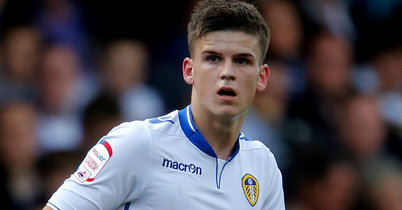
It’s a slightly worrying time for Leeds fans – otherwise known as “summertime” – the months when the “For Sale” signs start appearing above the heads of our latest prized asset.  The boy wonder in question this time is Sam Byram, and the usual loud denials and pledges of allegiance are to be heard already. Brian McDermott is “almost certain” that Byram will be at Elland Road next season.  The player himself has hinted he’d like to stay.  An ominous silence is noticeable from the direction of the owners.

I’ve written elsewhere  that it might not be the end of the world if Byram did end up following the footsteps of Delph and other richly-promising youngsters, away from LS11 to fulfill their undeniable potential elsewhere.  Historical precedent appears to favour the likelihood of this happening: we don’t have to go much further back to the loss of Aaron Lennon for a paltry million – what might he have added to the game plan of successive United bosses in the years since?
Reece Wabara

Reece Wabara

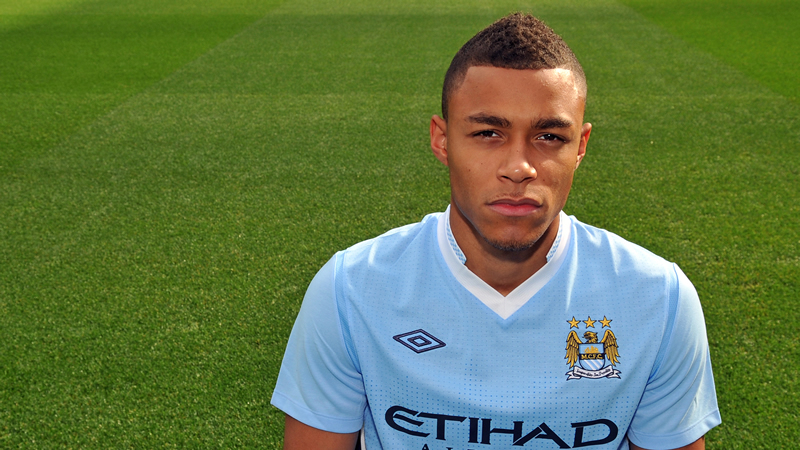
Now we hear that Reece Wabara, an extremely promising Man City starlet capable of operating in a variety of roles, is tipped for a loan move to Leeds this summer.  Quite apart from that little frisson of pleasure that goes with any link to players from such an elevated environment, this rumour should be seen in the context of Byram’s future, both over the short-term and perhaps slightly further ahead.  Are City throwing us a crumb from their bountiful table in order to pave the way for them to pick our ripest and juiciest plum?  Or are we far-sighted enough to want to add a player of Wabara’s potential and quality, in order to free up the even more sumptuous skills of Byram to operate further forward, possibly as a wide midfielder?

Whatever happens this summer, and fairly or unfairly, the ability or otherwise of United to hang on to Byram will be seen as the acid test of the still-quite-new owners’ ability to run the club along ambitious lines.  The retention of star players has never been a strong point; even during our last period of relative success in the nineties, when we had a team to compete with the very best – we couldn’t hang on to an unhappy Jimmy Floyd Hasselbaink.  So if Leeds DO manage to keep young Sam on the payroll, then we could perhaps say that sends out the right kind of optimistic message to pave the way for a real challenge for promotion next season.

It may be of course that City are playing a long game of their own.  A club with their virtually unlimited resources can buy just about anyone they like, Financial Fair Play rules permitting, naturally.  But maybe the advent of those rules are persuading the Premier League high-rollers to look at more creative ways of ensuring a flow of incoming talent.  The loan of a top-class youngster, and maybe a few million chucked our way and a loan-back option to sweeten the unpalatable pill – and City could well have secured themselves an option on a player who is likely (really highly likely) to be a major performer at the highest level and quite soon at that.

If Wabara does end up at Elland Road for next season, I’ll applaud United’s ambition, as far as it goes.  And if Byram is either sold or mortgaged, I won’t be screaming abuse from the rooftops – as long as the deal is done with the best interests of the club at heart, and especially if – in his own heart of hearts – Sam wants to ply his trade further up the food chain.  It’s going to be an interesting summer, and maybe a pivotal one in the history of our great club.  Whatever juggling act goes on, let’s hope that we don’t drop too many clangers this time.

Leeds United Such a Massive Pull in the Blogosphere: Just Ask West Ham

Dr. Weevil Of West Ham - Obsessed With LUFC

Dr. Weevil Of West Ham – Obsessed With LUFC

“We’re not famous any more” sing the Leeds fans, showing a neat grasp of irony in a medium too often dominated by the literal and the just plain crass.  The point is, of course, that we still are famous.  Hugely so.  Our fans scattered all over the globe mean that wherever you go, you’re likely to see a visiting Leeds United shirt to provide a welcome relief from all the tedious Man U rags sported by the clueless locals.  Listen to any Sky Live broadcast from the Theatre of Hollow Myths, and you’ll hear those wurzelly Devon accents mixing in with the nasal cockney whine as the Man U faithful describe how they “all ‘ate Leeds scam, innit”.

And the evidence is there in the ether too, as the web buzzes with references to our beloved Whites, ensuring that even the most facile and puerile of blogs can guarantee itself hits aplenty merely by mentioning those magic words “Leeds United”.  Some have taken it to such lengths that their Leeds-related output has shoved the more mundane stuff about their own desperately anonymous favourites way into the background, which is peculiar, but hey – you have to provide your readers with what they want to read, apparently – and if possible you have to try to attract some of football’s most fanatical fans by being “controversial” – or as we might more accurately describe it: by talking bollocks.

The leading contender for “biggest culprit” in these dubious and unprofessional tactics is a poorly-constructed and ill-written blog, ostensibly concerned with minor London club West Ham United, and entitled “The Game’s Gone Crazy”, which has a specially-created page to allow it to burble on about matters which are, frankly, none of its concern.  The Leeds United content of this page is out of all proportion to the interest you might expect the ‘Appy ‘Ammers to take in our beloved club, and of course it tends to paint the goings-on down at LS11 in the most negative light possible.  He’s been at it again today, capitalising on the 24th anniversary of Don Revie’s death to write another “controversial” article which – naturally – consists of second-hand lies and rumours recycled from various down-market tabloids, some successfully sued by former Leeds United personalities in the past.

Now, it must be said that a cursory examination of the contents of this upstart site (I’d caution you, gentle reader, not to waste too many of your valuable minutes on it) will reveal that the site-owner’s tactics are a hell of a lot sounder than his less-than-impressive literary ability.  He manages to attract a lot of comment and abuse from outraged fans of other clubs, with Leeds obviously prominent among their number.  The simple process of writing about Leeds, writing often and writing groundless rubbish, generates a lot of traffic for this site, traffic that its ‘Ammers stuff could not possibly hope to generate.  So, from that point of view, the author is running a successful operation, but one which owes little to the merits of his creation – which are appallingly few.  The sly Bubble-blower has fastened onto the global appeal of Leeds United to his advantage, and we should perhaps praise his acumen; it certainly far outstrips his ability to string enough sentences together for a decent piece of writing.

As you might expect, a number of his West Ham-oriented readership are a bit embarrassed about this craven behaviour – but their criticism falls on deaf ears by and large.  It’s quite obvious that “Dr. Evil”, as he is referred to by himself (and we presume he fondly hopes that others so refer to him as well), is preoccupied by getting as many reads as possible for his site and – only too well aware that his meagre talent is not going to get him far down that road – has opted instead for setting up as an irritant that will attract opprobrium and attention in equal measures.

It’s a back-handed compliment of course – the world knows that Leeds United is still big news out there, and any LUFC tag will pretty much guarantee a readership made up of Leeds fanatics (many thousands of us) and those who detest the very mention of our great club’s name (positively millions in the Devon/Cornwall hotbed of Man U support alone.)  So we should perhaps be flattered by the attention – it’s better than the dreadful and depressing anonymity suffered by West Ham and other such small fry.  And viewing it like that – not taking it too seriously and dismissing it as the unsubtle attempt to drag in readers that it undoubtedly is – we can smile ruefully and reflect on how much quieter a place the internet would be if Leeds United didn’t exist.  What would they all talk about then?  And where would the hapless and not-terribly-good Dr. Weevil find his victims… ahem… readers??

Beckham To Retire At Last

Beckham To Retire At Last.

Dortmund Über Alles

Image

The Germans are marching on Wembley with the aim of conquering Europe. It’s going to be Totally Teutonic, an island of internecine rivalry in North London. Some of the Little Englander persuasion, always ready to laugh when Germany lose in the World Cup (having recovered from England’s own earlier exit) or even when they get “keine Punkte” in the Eurovision song contest, will declare they have no interest in the result beyond a wistful longing to see them both lose. Others will aver that it’s really none of our business, and we should just play the genial hosts to a world-class event and stand ready to clap the winners on the back, whoever they might be, and say “Jolly well done, chaps”. Wrong, wrong, wrong. This result matters – well it does if you’re a Leeds United fan.

Firstly, let’s not forget that the city of Dortmund is actually twinned with Leeds, so we have those ready-made links which can be dressed up as brotherhood should the occasion require. This occasion does so require. We Leeds fans should stand four-square behind our European partners and wish them all success against Bayern Munich on Saturday evening. It’s only right and proper – after all, what are twinned cities expected to do other than support each other? But there’s another, far more compelling reason for wishing Bayern misery at Wembley. In fact, there are two.

Rewind firstly to 1999 and the culmination of the jammiest season an English club has ever had. Everything went right for Man U that year, and they walked off with a highly fortunate treble, after a series of unlikely comebacks and distinctly fluky wins in various competitions. At the death, they were one down in the Champions League final in Barcelona, having been outplayed by a massively superior Bayern side who had been thwarted by the woodwork on at least two occasions. Then – as we know – they scored twice late on, the usual jammy bounces and ricochets, and we’ve all had to live with the memory of Ferguson’s smug “Football, eh? Bloody hell” quote ever since. Bayern let us down that night, and they should not be forgiven.

And further back even than that – all the way back to 1975 and the night Leeds United became Champions of Europe in all but name, a moral status we have defiantly hailed loud and proud ever since. That we don’t have the trophy on our sideboard is an open sore that festers still and will never heal – as great an injustice as that perpetrated in Salonika two years previously. Penalty claims, really clear-cut, but turned down flat. Beckenbauer, der Kaiser, the guilty man. Bayern totally out-played by a Leeds side pursuing their last hurrah, committed heart and soul to winning it for The Don who was watching on from the commentary box in the Parc des Princes. A goal for Leeds, struck powerfully and true by Lorimer on the volley, Maier beaten all ends up, the very least our superiority deserved. Then, der Kaiser persuades the referee – damn him for all eternity – to speak to his linesman and see if there wasn’t maybe some way this inconvenient goal could be disallowed. And of course that is what happened. Thrown, deflated, outraged, the Leeds United side were hit by two late sucker punches, and Bayern were the most undeserving Champions of Europe ever – even more so than those spawny gits of ’99.

Those two Finals – the win for Bayern and the loss for Bayern – are a thorn in the side of every Leeds fan who can bear a grudge as a Leeds fan should. If the two results had been reversed – if they’d lost (as they should have) in 1975, and won (as they should have) in 1999, then we might well now be abandoning our civic links with the good Burghers of Dortmund, and saying a sentimental prayer for Munich. We’d probably have shouted for them last year against those fancy dans from Stamford Bridge. But justice prevailed on neither occasion, and Bayern Munich is a name inscribed forever on the Leeds United wall of hate.

So come on Dortmund. Get into them and make ’em have it. Let’s hope it’s another atonement and – as with last year at the hands of Chelsea – Bayern end up with nowt to show for their showpiece appearance and crying into their beer. Fingers crossed.

Shameful: BBC Spit on Don Revie’s Grave

Don Revie OBE:  The Greatest

Don Revie OBE: The Greatest

History, they say, is written by the winners.  In last night’s “Match of the Day”, the BBC provided ample evidence to show that it is also rewritten by hypocritical sycophants who should know better.

The events of the afternoon had not panned out as the scriptwriters would have wished, though all looked well ten short minutes from the end of Man U’s match at West Brom, S’ralex’s last game as manager.  The Plastic Champions were 5-2 ahead, and John Motson had purred, gasped and chuckled his way through 80 minutes of exhibition football, punctuated by comical home defending, and it looked very much as though another team was going to roll over meekly for the men from Salford.

Then S’ralex brought on Paul Scholes for the Ginger Minger’s own last appearance before his latest retirement.  The cameras prepared to adjust to soft focus, Motson drew in another breath preparatory to more shudderingly orgasmic tributes as he was consumed by an ecstasy of highly marketable sentimentality.  The stage was set for the Govan Guv’nor to stump off into the sunset, his purple-blotched features lacerated by a parody of a smile.

Then it all went wrong.  West Brom struck three times in the last ten minutes, Ferguson’s smile dropped to the floor quicker than a Gareth Bale dive and the mighty Man U were holding on at the end to avoid saying goodbye in the face of a last blast from a defeated Hairdryer.  5-5 it finished, and the BBC were denied their expected valedictory stroll in the sun; the Baggies had pooped the Corporation’s party.

Maybe it was this that prompted the spite and small-minded pettiness of the montage which prefaced the Match of the Day highlights late last night.  More likely though that it was always going to be yet another calculated slap in the face to the memory of a great man, a man whose boots the assembled hacks and ex-pros on the MOTD couch are not fit to lick, a true great of the game that the Establishment seem determined to pretend was never there.  Ferguson was painted in admiring and rose-hued tones, to a background of his many achievements as compared to the other “managerial greats.”  Bob Paisley, Brian Clough, Jock Stein, Bobby Robson, Ron Greenwood, Bill Shankly, Matt Busby, Bill Nicholson; all these legends were held up as examples of managerial excellence to be rightly lauded for their achievements and the mark they left on the game.

But no mention of the greatest of them all: Donald George Revie OBE.

This was no mere oversight.  It’s been going on for years, and it’s a premeditated and vicious attempt at the excision from public memory of football’s greatest manager, a cowardly and shameful act of malice aforethought.  It reflects ill on the researchers who put these things together; aren’t they aware of their history, we in the know might wonder.  Don’t they have access to Google?  But they know all about the Don, they know he transformed a tired old joke of a football club into the most feared and respected force in Europe; they know he did it without massive financial backing and without paying obscene wages; they know how he did it all to the dubious background of an initially apathetic support, fans who had only ever known mediocrity at best, and expected nothing else.  Out of all this, Don Revie wrought a miracle – a team that respected judges of the game have described as the finest club side in English football history.

The accidental omission of Revie’s name for any TV item concerning itself with managerial greatness would be unforgivably slipshod; the act of a clueless nincompoop.  But this was much, much worse than that.  It was an exposition of hypocrisy underpinned by malice and the bile of fifty years’ accumulated resentment.  It was a crass attempt at revisionism, a blunderingly clumsy try at pretending Don Revie never existed.  It was wishful thinking in its bitterest and most destructive form, a playground insult to a giant of the game.  The BBC cowards and toadies have exposed themselves as classless fools, deserving only of contempt and ridicule.

“And Leeds will go mad.  And they’ve every right to go mad!” – as Barry Davies memorably put it back in the day, in more realistic times before the game turned plastic, when everybody knew who the heroes were and we weren’t fed a diet of pap and lies.  And Leeds should go mad again.  The city, the club, the fans – none of them should continue to lie down and accept this disgraceful treatment, this attempted erasure of an iconic figure whom we all worship as “Simply The Best.”  There should be a loud outcry, a vehement protest.  This is my small contribution, but the fans as a body have form for hitting back at media and establishment when they feel one of their own wronged.

In 1994, the FA handed down a mandate that all clubs should observe a minute’s silence in respect for the late Matt Busby.  They did this because it’s what you do when a respected figure dies – except of course they’re not consistent.  They failed to mark the death of Don Revie, a tragic and cruel end from Motor Neurone Disease.  They failed even to send a representative to his funeral, although – to his eternal credit – Alex Ferguson was there, and Denis Law, as well as most of the Leeds United greats and other proper football men.  But none of the hypocrites in suits from the game’s ruling authorities saw fit to get off their backsides and pay tribute.  Revie was dead; let them get on with pretending he never existed.  So in 1994, when they were supposed to lapse into a respectful silence, the Leeds fans at Blackburn Rovers’ ground exploded in a raucous and repeated cry of “One Don Revie!  There’s only one Don Revie!!”  The great and the good of the sport were scandalised.  People pursed their lips and shook their heads sadly.  How dare these yobboes ruin our tribute to our Chosen One?  But I’m so, so glad that it happened.  We should not knuckle under to the official view; we should never bow down before such blatant hypocrisy.

They’re getting wise to rebellion now.  There tends to be a minute’s applause these days, lest any disrespectful mob should see fit to assert their unwanted point of view the next time some officially-beloved figure keels over.  But the fans will be heard, believe me.  And if the media – typified by these contemptible fools in charge of the increasingly poodle-like Match of the Day – continue so determinedly to ignore and try to obliterate the legacy of The Don, then I hope that defiant cry will be heard again, loud and proud.  While ever Leeds United fans are prepared to stand up and be counted, happy to raise their arms and voices and be heard – then Don Revie will never be forgotten, whatever the wishes of the pompous suits and deluded TV types.

Don Revie, “The Don” (1927 – 1989)  A true legend and a great of the game.  Whatever you might think of him – and God knows, I’m no fan – just ask S’ralex.

The Pride of “The Damned United”

Image

Was ever another phrase so obviously coined with one intention, only to be taken up and brandished with pride to the completely opposite effect? Author David Peace – a Huddersfield Town fan – has described his book “The Damned United” as “an occult history of Leeds United.” The word “history” in this connection is somewhat optimistic – the book is decidedly fictionalised, and the point of view is the imagined perspective of Brian Clough as he struggled through his 44 days in what could fairly be described as enemy territory. The book was a success, met by a measure of critical acclaim. The film it spawned was of more dubious quality, famous for the lengthy list of goofs on its Internet Movie Database page, and widely regarded as particularly one-eyed in its depiction of personalities and events, none of which bears much resemblance to actuality.

It is the tag though – that Damned United tag – which seems set fair to achieve iconic status, and not with the intended pejorative effect. With a typical sense of gallows humour, devotees of the Elland Road club have taken the label and made of it a badge of honour, waving it under the nose of the millions who despise Leeds United as a symbol of inverted defiance. We Are The Damned United, they say – do your worst. The tiresome recycling of allegations about Don Revie, the endless litany of “Dirty Leeds” myths and the omnipresent attitude that the West Yorkshire club exemplify all that is shady about football, all of this is held up to ridicule as those who love the club glory in the new name. Sod the lot of you. We are Dirty Leeds, The Damned United, and we are proud. It’s a unifying message, the foundations of a siege complex that can rally support behind any popularly-hated institution. It’s an assertion of individuality, of a refusal to conform to the cosy standards beloved of media and Establishment. It takes gritty character to be a Leeds fan in the face of such universal hatred, and those of sufficient character know they’re part of something unique and special. We Are The Damned United.

It’s also had the welcome effect of reclaiming a measure of ownership and identification with that word “United”. It’s highly doubtful that Town fan Peace could have foreseen or desired that effect, but there it undoubtedly is. For decades, the press, the football establishment in the UK and elsewhere – and of course Man U themselves – have been unrelenting in their efforts to corner the term “United” exclusively for the Salford-based franchise. It’s been an important marketing tool, a vital part of the attempt to sell the myth of The Biggest Club In The World™ (Copyright © The Gutter Press since the late 50’s) to children of all ages from Devon to Singapore. It’s seeped into the public consciousness like the subliminally insidious selling technique it is, and of course the tat-consuming, replica-shirt-buying, Sky-subscribing suckers have fallen for it in their millions. But now there is The Damned United, inextricably linked with Dirty Leeds, and suddenly that formerly football-related suffix isn’t quite so exclusively Man U any more.

Dirty Leeds The Damned United

The contrasting psyches of the Leeds United and Man U support is an apt illustration of how the two sets of fans have embraced such polar-opposites in terms of club and image. The Man U fans desperately want that monopoly of terminology, they need to believe the press-powered fairy-tale that there’s “only one United”. The motivation for being identified with what they are always being told is the “biggest and best” has a Freudian compulsion at the back of it, a sense that there is an inadequacy which yearns to be compensated for, an insecurity which needs bolstering. There are people like that everywhere, victims of society, and so you find Man U fans all over the place, as common and undiscriminating as flies. Leeds fans, on the other hand, tend to support their team – where the connection isn’t simply local and tribal – for reasons of perverse pride. It’s a manifestation of defiance and a refusal to be categorised as a commercial target group. The pride is palpable, and the negative image of the club feeds this. Sod you lot. We Are The Damned United. The emergence of such a potentially iconic label was not good news for Man U-inclined inhabitants of armchairs everywhere, and again, this is not an effect the author would have counted as one of his aims in producing his work.

Thanks, Mr Peace. You could hardly have aided our cause any more effectively, and Dirty Leeds have gained from the exposure in popular culture. The book may have been an attempted exposition of Clough’s state of mind as that complex character negotiated his time in purgatory; the film may have been an amusing romp through the mythical hinterland that borders but rarely intrudes on the territory of actual fact. But the label will probably out-live the pair of them, and will flutter bravely and proudly in the vanguard of the Leeds United juggernaut as it – eventually – thunders its way back to The Top.

Beckham To Retire At Last

Beckham: Hanging Up Boots

Beckham: Hanging Up Boots

So, the day has arrived at last.  An icon is to depart the game.  England’s “Goldenballs”, the man with the most famous metatarsal the world has ever seen, he of the sculpted facial furniture with chiseled jaw and cheekbones to die for, David Robert Joseph Beckham OBE is finally to quit the game he has – more or less – adorned since 1995.  Everybody is sitting up and taking notice at what is the end of an era.  Leyton Orient have felt it necessary to remind the world in a timely tweet that the Coiffed One is to make his last appearance against French side Lorient – NOT the English League One denizens L.Orient.  Thanks for clearing that up, lads.

 My first memory of David Beckham is necessarily hazy – I was quite intoxicated, and stood high up in the away end at The Theatre of Hollow Myths as Leeds United’s all-conquering youth side trampled the budding superstars of Man U into the turf on their way to an eventual 4-1 aggregate FA Youth Cup win.  That was in 1993, and it was some small measure of compensation for the transition from our status of Last Real Champions to that of Man U as first holders of the Premier League Plastic Trophy.  As the new era dawned, an epic career was off to an inglorious start, but it was destined to contrast starkly with the doomed efforts of that night’s winners.

Since then, even so jaundiced an observer as I must admit that Beckham has scaled Olympian Heights, and on one foot, too.  No less a footballing authority than the late, grating George Best described him in less than glowing terms: “He cannot kick with his left foot, he cannot head a ball, he cannot tackle and he doesn’t score many goals. Apart from that he’s all right.”  Not that he was bitter or anything – but maybe the fact that Beckham’s earnings in any given calendar month eclipsed the entire career earnings of the self-styled “Greatest Ever” had touched a raw nerve or two.  Whatever Bestie might have thought of the shortcomings of Becks talent-wise, the London boy could surely have taught him a thing or two about application, dedication and – crucially – not being caught with his pants down before important semi-final matches.

That ability to dedicate himself and make it big, on the back of a less-than-completely full box of tricks, certainly redounds to Beckham’s credit.  His habit of creating the most spectacular results with one swing of that cultured right foot did him no harm either.  On loan at Preston as a youngster, he created a stir by scoring direct from a corner, and not too long afterwards, establishing himself in the Man U first team, he looked up from just inside his own half at Selhurst Park, and lobbed the ball mightily over the back-pedaling ‘keeper Neil Sullivan to score an outrageously long-range goal against long-ball merchants Wimbledon.  The most famous exponent of this type of effort up to that time had been a chap called Pele, who tried it in the World Cup; but Pele had missed.

The path to World Superstardom was not, however, always strewn with rose petals.  Attitude problems surfaced, petulance would be a problem throughout most of his career (not an uncommon problem among graduates of the Man U finishing school), there were run-ins with his irascible mentor Ferguson, and he could be impulsive too.  He saw a young lass on a pop video, and he decided on the spot to marry her.  His judgement on that occasion at least was reasonably sound, or so it seems; the marriage is still going strong and from tacky beginnings with a wedding that would have figured large in any style guru’s nightmares, the couple have built a family with their weirdly-named brood and two large fortunes securing a stable future for all concerned.

So how will Beckham best be remembered?  Some will say as the archetypal Man U fan – he was born and raised in London after all, which is a headline qualification for that status.  Others will remember his flirtation with the extreme edges of fashion – his famous experiment with girly clothing as he sported a sarong, for instance.  But whatever he did, whatever style he either aped or created, there were millions queuing up to follow his every footstep.  He had the knack of capturing the hearts of a whole generation with the totality of the Beckham package – the talent, the looks, the style, the pop-star wife.  Some of it was grossly kitsch, Beckingham Palace was the venue for many sins against the Manual of Good Taste.  Some of it took your breath away with the sheer, daring nerve of it – the revelation that his son Brooklyn was named after the site of his conception had people offering up prayers of thanks that the tender moment hadn’t taken place in Peckham.  Subsequent male children were named Romeo and Cruz and then a girl arrived to be lumbered with the curiously android-like Harper Seven.  There is, after all, no accounting for taste.

Some will remember the iconic free-kicks for England, the most famous of which secured his country’s automatic World Cup 2002 qualification.  What people forget is that, had we been doomed to the play-offs, we might have taken Germany’s easier route to the Final – but who ever knows what fate might hold?  In the end, England and Beckham, together with his famously bust metatarsal, appeared in the global tournament, but for once Beckham wasn’t really up to it, and it was his half-hearted, half-baked, half-fit attempt at a tackle which let Brazil in for the equaliser at the quarter-final stage, the Samba Stars going on to eliminate England 2-1.

But whatever you might think of Beckham, my fondest memories of him will be in that England shirt – not for his flashes of temper, leading to notorious dismissals, but for the massively evident pride with which he wore the Three Lions over his heart, the utter commitment and dedication with which he put himself about the pitch in the England cause, be it merely as a star player, or eventually as captain of his country.  Nobody set a better example of leadership than David Beckham when he had that international shirt on, and nobody could ever doubt on those occasions that everything else – the endorsements, the mansions, the publicity stunts, the lurid tales of his off-field life – all of that was secondary to his intense, burning patriotism.  If that alone had been enough, England may well have had three winners’ stars to embroider above the Three Lions on the Shirt, instead of that solitary one.

So it’s farewell, Goldenballs.  He was a player of his times, a man who would be a superstar  among superstars, someone who would attract fan fervour and inspire adulation and hero-worship out of all proportion to his essentially modest character – and some would say disproportionately to his talent too.  Be that as it may, it’s unlikely we will see such a phenomenon again, unless the ingredients are coming together even as we speak, and yet another cockney Man U fan is bubbling under up Salford way.  You just never know.

Man City Will Bounce Back

Mancini: Sacked

Mancini: Sacked

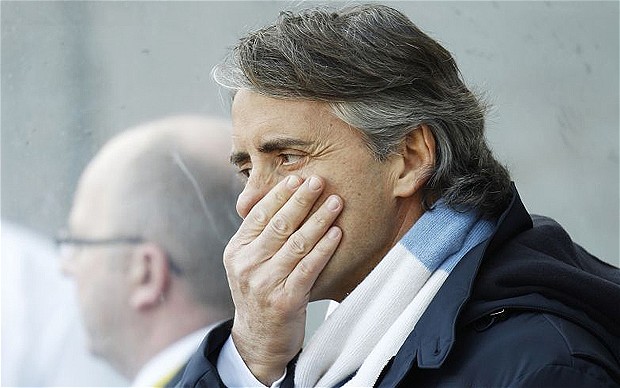
Events at Manchester City this last day or so were flagged up well in advance – the media screamed “Mancini Out!” from every outlet – and despite scornful denials by the man himself, and messages of support from the fans, you felt it would turn out to be a case of “no smoke without fire.”

Even so, the news when it arrived, poignantly on the very anniversary of that last-gasp Title triumph, was a shock of sorts.  The club moved swiftly to justify their action – Mancini had “failed to meet football targets”, it was said.  Criticism was made too of his inability or reluctance to communicate, of an aloof and arrogant attitude, of his lack of interest in club matters below first-team level; specifically an apathy where bringing youngsters through was concerned.  Clearly all was not sweetness and light on the good ship City, and the mystery of their rudderless run-in for the league campaign, and how they sank without trace in the second half of the FA Cup Final may not be such a mystery after all.

In the odd spare moment I’ve had this season to glance upwards towards the Premier League summit, and away from Leeds United’s mid-table Championship toilings, City have puzzled and frustrated me.  At the outset, they seemed well-equipped to mount a reasonable defence of their title.  There were clearly two sides to this equation.  On the one hand, the squad at The Etihad was, in my view, the best in the Premier League – rivalled only by that at Stamford Bridge.  On the other – Man U are notoriously capable at employing a siege complex in order to use resentment to fuel their fightback.  They are also, undeniably, helped in large measure by the number of weird decisions that seem to go in their favour.  The away game at Chelsea was a good example of this, when Torres was sent off for being fouled by a Man U defender already on a yellow, and then the Salford side scored a late and clearly offside winner. This sort of thing tends to pepper Man U’s most successful seasons, and it’s not an attractive facet of the Premier League.

I’ve never subscribed to this “van Persie made the difference” nonsense.  I’m sure he made A difference – but not that much.  It’s been a stroll for Man U in a league in which they should – by all considerations of relative quality – have struggled to finish third.  Chelsea have had their own problems.  The phrase “Interim Coach” needs nothing added to it for an explanation of their failure.  But Man City was a conundrum, and it is only now, in the wake of Mancini’s sacking, that we are perhaps gaining a more complete picture of what things were like behind the scenes.

Now a tell-tale tweet from former kit man Stephen Aziz may have shed some light on just how negative the atmosphere has been at Man City.  The phrase “arrogant, vain and self-centred” appeared briefly before the tweet was removed. And there was more: “no manners ignorant just some of the daily traits really made going into work a daily grind!! #karma”.  That’s all pretty damning stuff, and quite frankly at top professional level, it doesn’t take one tenth of that apparent level of unhappiness and discontent to derail a club’s bid for honours completely.  This, more than the failure to pick up a trophy, may well be what lies behind Mancini’s abrupt departure on the first anniversary of his finest hour.

Man City fans feel an understandable affection and loyalty to the man who has given them their finest moments in over thirty years.  I too recall the expression on his face as City hammered Man U 6-1 at The Theatre of Hollow Myths, and I remember thinking that here was a man who would end up as loved as Malcolm Allison in his late-sixties incarnation, or Colin Bell, or any one of City’s heroes you may care to name.  He had the opportunity to instill himself into the DNA of the club, but – inexplicably – it looks more and more as though he’s been too arrogant to see the need to treat people as they need to be treated, and has therefore lost his fledgling Legend status.  The City fans will always remember him, of course.  He delivered, albeit at the last gasp, and put an end to an aching void where they’d won nothing as their despised neighbours cleaned up.  Of course he will always have a place in the collective City heart.

The next appointment is vital, however.  If City get it right, the quality of this squad can carry all before them next season.  Man U have a rookie at the highest level, and must expect a bedding-in period.  This year has been bizarrely tilted away from the finest talent in the league.  Next year may well be very different.

Matt Mills £1m Leeds Target?

Mills:  Leeds-bound?

Mills: Leeds-bound?

The Swindon-born former Reading and Leicester defender has not been an outstanding success at Bolton Wanderers, his last start for them being against Huddersfield on December 8, when he injured a thigh and has managed only one substitute appearance since.  His time at Leicester City was hardly wonderful either, and Mills was a loan target for former United boss Neil Warnock early in his Elland Road tenure.  That failed to happen, and a rumoured £2m fee saw the defender link up with Bolton – but it seems likely his time there is now up, with an offer in the region of £1m being thought sufficient to secure his services.

The player himself – according to the familiar “sources close to…” – is keen on the chance to renew his working relationship with his old Reading boss Brian McDermott.  Central defence is on the list of positions needing to be strengthened at Elland Road, and it may just be that the Old Pals’ Act could secure a reliable performer for United. This optimistic assessment is certainly not based on recent form, but there have been many instances down the years of players in the doldrums being reinvigorated by a reunion with a former mentor.  McDermott’s success at the Madejski throws up a few names, some still at Reading, some that have since moved on – that could be identified as players who would relish another crack of the whip under an old boss at a club like Leeds – enough of a pull in its own right.

Mills has certainly waxed lyrical about his past service under McDermott and assistant Nigel Gibbs. “My first few months at Reading didn’t pan out as the move I expected and wanted, but that all changed when Brian got the job and Gibbo became assistant manager.” the ex-Royal has been quoted as saying. “They gave me a new lease of life, and the opportunity and coaching they gave me has honestly made me the player I am now.”  As fulsome tributes go, this is very much in “come and get me plea” territory, and it has been suggested that Mills is willing to reject overtures from elsewhere in favour of a switch to LS11.

My own view is that, at only 26, Mills has many miles left on the clock, and the class he has undoubtedly displayed in the past will not have deserted him permanently.  A happy player is more likely to be a top-performing player, and the fruitful coaching relationship between Brian, Gibbo and Matt at their former club seems to suggest that its a scenario which could unfold again, to the satisfaction of all parties.

Whether the powers that be are prepared to stump up £1million is of course another matter, and wages are always an issue as well.  But there is some pedigree here, and the chance to build on some good history too.  So I feel there may just be some legs in this rumour, and it’s a move I would love to see happen.  “Lees and Mills” could well be the central defensive partnership on everybody’s lips in the Championship next season.

True Cost of Thatcher’s 1983 Election Win to be Revealed??

Image

Later today, figures on the number of suicides since the early eighties among British armed forces personnel who served in the Falklands Conflict are due to be revealed.  The headline figure on casualties of the fighting is clear cut: 649 on the Argentine side, 255 British and 3 Falkland Islanders for a total of 907 human souls lost over a rocky outcrop or two thousands of miles from the supposed “mother country” UK.  Arguments may well wax and wane over the correctness of Britain’s historical claims to the Falklands, or Malvinas as they are known in Argentina.  A rhetorical question often asked goes along the lines of: how would the British national psyche take it if Jersey or Guernsey, for instance, were to be claimed as sovereign territory by, say, Peru?  It’s a hypothesis that perhaps doesn’t get us far, other than maybe to provide an insight into the sensitivity of feeling over the Falklands/Malvinas issue for the citizens of Argentina.

Thatcher: In Command

Thatcher: In Command

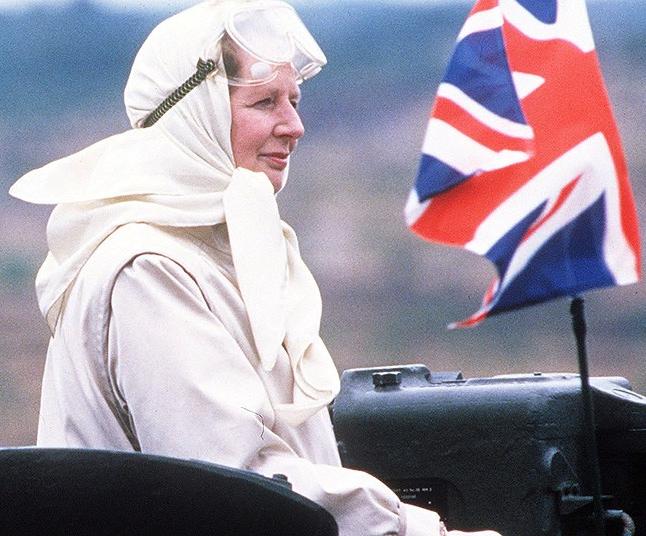
Whatever the true cost in lives of the Falklands conflict, what seems indisputable is that the military operation and its success in terms of objective achieved certainly boosted a Tory administration that had seemed in terminal decline at the time of the Argentine invasion.  It has been alleged that the British Government had prior intelligence of a pending military operation  planned by General Leopoldo Galtieri‘s ruling junta, the implication being that Thatcher’s cabinet saw the political potential of a decision to war-war rather than jaw-jaw, and so elected not to nip the situation in the bud.  The extent of the mess that this government found itself in is difficult to over-state; had they successfully deflected any threat of invasion, or had they launched a diplomatic initiative in the wake of the Argentine occupation, it is doubtful whether the impact on the subsequent general election would have been as great.  Pragmatically, “war” (even an undeclared war) was a better option than “jaw” – or so the conspiracy theory goes.

On the Argentinean side too, there appeared to be significant political advantage to be gained from a successful re-acquisition of Las Malvinas.  The Argentine economy was in an even bigger hole than that of the UK, and the effect of the invasion was a major boost to patriotic sentiment and the consequent short-term popularity – or at least acceptance – of the previously despised junta.  The historical precedent of a convenient war, to arouse jingoistic feelings and a surge in national pride, is there for all to see.  Both sides will have been well aware of the stakes, and a certain amount of brinkmanship may well have been at play.  This was probably more the case on the Argentine side, where it seems likely their military operation was calculated on the basis that the British would have neither the will not the logistical capability to mount a response in kind over such a long distance with all the problems of cost, supply lines and communications.  In the UK, the swiftness with which that response actually materialised was a tell-tale sign that Thatcher’s government were not only willing, but eager to launch the most emphatic counter-strike possible, and the fervour with which the public hailed the departing task force was a massive encouragement to the hastily-assembled War Cabinet.

The Sun's Perspective

The Sun’s Perspective

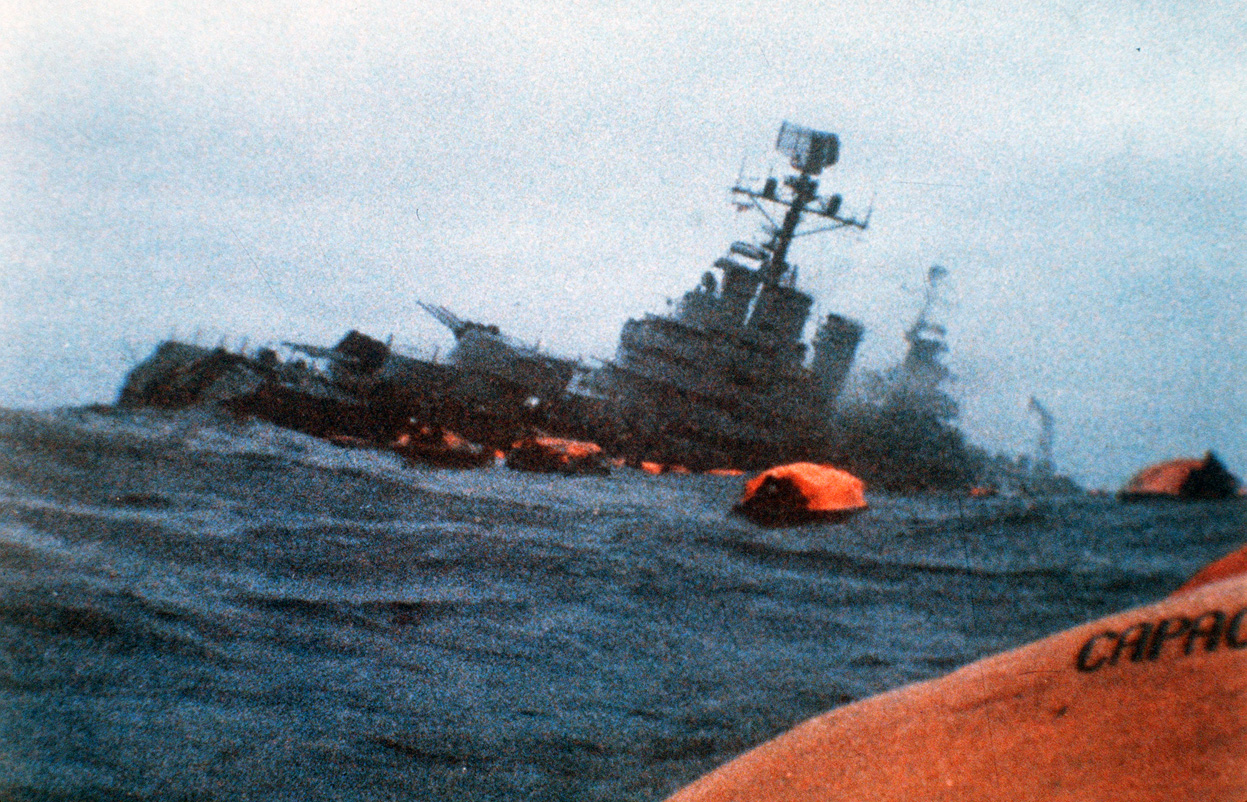
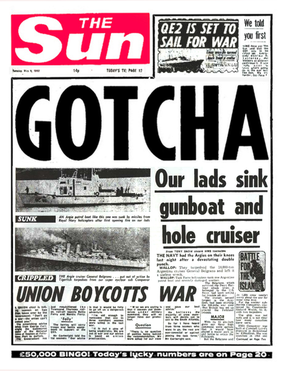
The attitude on the part of the British forces seems throughout to have been one of belligerent determination and ruthlessness.  Despite the problems of distance (mitigated to a large extent by the availability of the strategically-located Ascension Island as a stopping-off point), the task force had the inestimable advantage of its professional make-up; the troops were regulars, hardened pros, and many feared for the fate of the Argentinean rag-bag of conscripts should they ever meet in direct combat.  In the event, the Argentine forces fought bravely and effectively, leading to unexpectedly bloody and costly land engagements such as the Battle of Goose Green.  The conflict as a whole was more a series of sharp engagements on land, at sea and in the air, than any drawn-out and attritional process.  British naval losses were significant – the attack on HMS Sheffield following hard on the heels of the notorious action to sink the ARA General Belgrano.  Both sides were being hard-pressed to hold their political nerve in the face of dramatic losses such as these.

In the end, of course, there could only be one winner and the likelihood all along was that the British forces, superior in training and equipment even though stretched logistically over such a vast distance, would succeed in re-taking the islands.  So it proved, but at a tragic cost on both sides in terms of lives lost.  The die had been cast right from the start in that the losing side would almost inevitably see political change in the wake of the conflict and many now view this, from the perspective of over thirty years, as a calculated risk on the part of both governments concerned.  The determination to press ahead with military action and the relative marginalisation of the United Nations in the matter speaks of a strong political resolve on either side, and the results are clear to see; Galtieri was removed from power in January 1983, whereas Thatcher received an immense boost in the polls, and this “Falklands Factor” saw her sweep to victory with a landslide later that same year.  The monetarist Tory government was not, after all, destined to be a one-term experiment as had seemed so likely prior to 1982.  The course was well and truly set and the old-style of government, with full employment at the root of all its thinking, was consigned to history.  Thatcher may have been the economic disciple of Keith Joseph, but she showed the survival instincts of a polecat to go with her determination to make Monetarism work and banish old-style Socialism.  From that perspective, the loss of a few hundred lives in the South Atlantic may well have been considered expedient against the probability of electoral defeat and a return to what she will have thought of as the economics of disaster.

Thatcher was the big winner in the Falklands conflict.  It has been posited since that a great saving, in terms of money and human lives, could have been effected by ceding the territory to Argentina and providing each islander with a bounty of £1 million and a villa in the South of France.  This is, of course, a simplistic hypothesis, but the numbers certainly add up.  The British government of the day could not contemplate what they would have seen as a craven climb-down, with a devastating effect on how the UK was seen in the eyes of the world.  To this day, pro-Thatcher apologists refer to the way she “made Britain great again” or similarly extravagant claims.

Simon Weston OBE

Simon Weston OBE

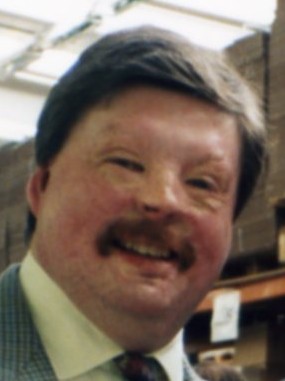
It is notable in this context that one of the most fulsome tributes paid to the late PM, after her death in April this year, was from Welsh Guards veteran Simon Weston OBE who famously suffered extensive burn injuries during the Falklands campaign in the attack on RMS Sir Galahad. Weston is now seen as an inspirational figure for his recovery from his injuries and his charity work, and his endorsement of Thatcher’s premiership was seen as a powerful vindication of her policies, particularly where the Falklands issue was concerned.

What appears absolutely certain is that Thatcher gained herself an extra seven years she would not otherwise have had, to advance her own agenda, and change the face of Britain forever.  Whether you regard the number of lives lost as a price worth paying for that will depend, naturally, on your own political convictions.  But it may be worth noting, later today, just how high that price was when those official Falklands-related suicide figures are finally released.  At a time when our government today is starting to pile up the body count as people take a drastically simple way out of the world being foisted on them, we may reflect on this depressing tendency of governments to view individuals as mere political pawns or economic units, rather than people imbued with a spark of life and the right to an existence outside of macro political considerations.  Life should be seen as far too precious to end up as a statistic of the battle to stay in power.