Author Archives: Rob Atkinson

Boston Marathon Atrocity

I couldn’t take this in when I first heard.  I was at a play rehearsal, and when my mate told me – may the Higher Powers forgive me – I thought he was telling me some sick joke.  He said he didn’t joke about things like that and I thought, no, of course you don’t, who does?   Who that’s in any way human could make something like this up?  Then again, who actually perpetrates a horror like this?  But it’s a fact, somebody has most likely planned and compassed the death and maiming of people who were just out to take part in a joyous event, innocent people who have done no harm, random victims of someone’s cowardly determination to inflict pain suffering and death on fellow human beings.  It defies comprehension.

I say “most likely” because – as I write – there remains a shred of possibility that this wasn’t a terrorist attack.  But it seems almost certain that a terrorist attack it will have been, that yet again shadowy figures have decided to take human life to make some esoteric point.

There’s no point calling these people animals.  Animals don’t do this; it’s the sort of uncivilised behaviour confined to – supposedly – the most civilised species on the planet. Only “intelligent”, “cultured”, “civilised” Man does this.  Only Man has the tools; only Man has the urge to slaughter his fellow beings on such a gross scale, for reasons that don’t stack up against the primal need to eat and survive.  Man is a predator, like so many other animals.  But Man alone kills for reasons of sport, culture, ideology.  It’s a sickness not shared by other predators, and that means that a tiger or a lion or anything else that kills to eat has a nobility that we sometimes call savage, but is in reality a whole hell of a lot more noble and understandable than the base and repulsive urges that drive members or our species to visit these horrors upon each other.  Go figure.  Really, we owe the rest of the Animal Kingdom a massive apology for every time any of us has ever called some depraved human killer “an animal”.  It’s the most ironically insulting and groundless snub we could deliver to other species who conduct themselves in a far more admirable manner than we “civilised humans” do.

Sorry, I’m rambling on because I’m shocked, disgusted and ashamed.  Who knows what we will find out in the next few days as this situation develops, but it seems certain that lives have been lost, and other lives will be changed irrevocably; and no-one affected was given any choice in the matter, nor any chance to escape the fate wished upon them by anonymous cowards.

No cause is worth this.  No religion is worth this.  Nothing is worth the tiniest fraction of the suffering that has been caused.  We need to get over ourselves as a species.  We’re all here for a short span only, and nothing is more important than being alive, and making the most of every moment we’re here.  For all we know, this is our only existence, at any time in the vast span of Creation; we’ve waited billions of years to be alive, and we’ll be gone after a century, give or take, and then there’ll be billions more years when we’re not here.  And yet people regard this rare and precious phenomenon of life so cheaply, so casually, that they presume to deprive others of it, for some pathetic creed or notion that they wish to impose on others, and devil take the hindmost.  The arrogance and ignorance of that just beats the hell out of me.

I know I’ll dream tonight about the pictures I’ve seen.  I know that I feel guiltily glad it’s someone else torn and tattered, or dead – and not me or anybody I love.  I don’t want it to happen to anybody, but Hell, I don’t want it to happen to me or mine.  That’s my human selfishness, and I can’t deny it – but how much more selfish do you have to be to actually plot and do something like this?  My mind is boggling at that.

I wish the dead peace, the injured the best recovery they can have, the bereaved what comfort and support they can get.  And I wish the rescue and medical services the strength and resolve they will need.  For those who did it – I wish some sense of perspective so that they can see how awful is the thing they’ve done, instead of living in some cloud-cuckoo mindset where they feel it’s in any way justified.  Don’t call them animals.  They’re nothing so dignified.  They’re the most despicable, wretched kind of human being, and you can’t say worse than that.

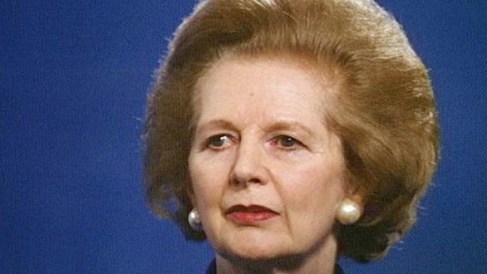
In Memoriam: Margaret Hilda Thatcher (1925 – 2013)

Image

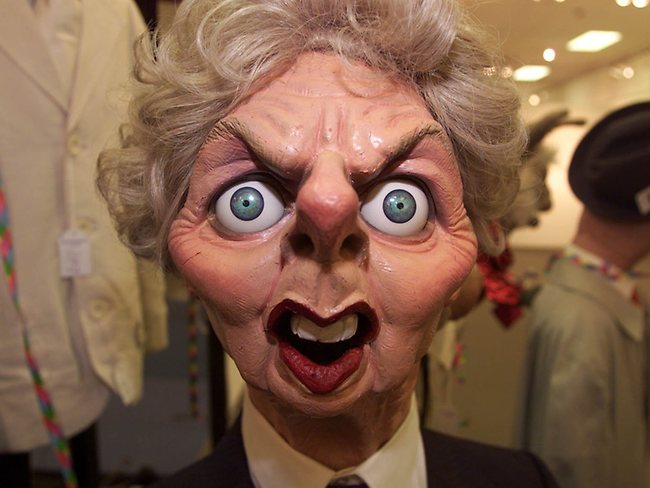
HM Maggie the Thatch

An evil old woman was Thatcher
For cruelty you just couldn’t match ‘er
She said she’d not turn
But now she can burn
For the Reaper has managed to catch ‘er

Leeds United – Does the Fightback Start With This Sweetest of Wins?

Welcome to Leeds, Brian McDermott.  Whatever else happens during your reign at Elland Road, you could hardly have had a better start, and there were signs aplenty of much-needed change in application, atmosphere and attitude in the team, the crowd, the whole club.  And who better to win against in your first game?  Sweet as a nut.  Thank you so much.

Saturday’s 2-1 victory over Sheffield Wednesday was actually beyond sweet, for several reasons. Probably the most important of these was the fact that, after months of saying “we must win today to squeeze into the play-offs”, we’d finally woken up to the brutal reality that a run of poor results had brought us juddering down to; so now it was “we must win today because, oh sweet Jesus, we could get bloody relegated.”  That pressure has at least eased off slightly in the wake of a somewhat nervous but rapturously welcomed win.  We’re not out of the woods yet, but we may at least be out-distancing the wolf and leaving poor Grandma to face a bottom three finish on her own.

The other reasons for relishing Leeds United’s win at the expense of the Wendies, as we fondly think of them, date back to the return fixture at Hillsborough earlier in the season. For those who have forgotten, Leeds played awfully, went behind and looked well on the way to defeat.  Then Michael Tonge’s stunning equaliser was followed immediately by a yob invading the pitch from among the Leeds fans who’d turned up merely to watch the game, and proceeding to land the third-best punch of the evening on the unsuspecting face of Wendies ‘keeper Chris Kirkland.  The two best punches had been landed earlier in the piece by thuggish home defender Miguel Llera on two different Leeds players, and were ignored by the ref, in the normal FA-approved manner.  Llera, a lanky dork in a head-guard, might normally have been subject to some scrutiny after the game for his free interpretation of the rules regarding lamping your opponents in the jaw, but on this occasion the focus was almost entirely upon the actions of the miscreant who’d emerged from the away support.  Questions were asked in the House, resolutions were passed by the United Nations, the NATO alert status was upgraded to Amber and the Galactic Federation issued an ultimatum demanding that Leeds United be relocated to dwarf planet Pluto.  Or that’s how it felt.

Strangely, the only person even slightly to distract the full attention of the Fourth Estate from this heinous act of a drunken thug, was Wendies manager Dave Jones, who seemed confused as to who the real victim was in the whole sorry episode.  Interviewed directly after the match, an over-emotional and highly-strung Jones was asked about his take on events, the interviewer clearly expecting a confirmation that his ‘keeper had been assaulted, that it was disgusting and that it was all Leeds United’s fault.  What Jones came up with though was a protracted whinge about the chants directed at him by Leeds fans, that he’d had this for years, that it was disgusting and that it was all Leeds United’s fault.  He rounded off his tirade of barely-suppressed sobs by stating that the Leeds fans were “vile animals”.  All of them.  No exceptions.

In the next few days, once the laughing over Jones’ histrionics had died down somewhat, many Leeds fans took to posting pictures on social media of their sweet little eight or nine-year old lad or lass, clad in Leeds United regalia, clearly incapable of melting butter in their innocent little mouths, to point out that said little lass or lad had been tarred by the obnoxious and unwisely gobby Jones as a “Vile Animal”.  It was an apt demonstration of how silly it is to open your trap without first engaging your brain, but there was no real climb-down from the defiant Wendies boss, and – the rantings of the gutter press aside – it was generally agreed that he hadn’t come out of it too well, and had indeed made something of a prat of himself.  Apart from seeming entirely focused on his own perceived (non-physical) injuries, to the exclusion it appeared of his poor goalkeeper who had actually copped for a fourpenny one, Jones had also managed to cock a deaf ‘un to the vile – if I may borrow his word of choice – chants from the Wendies faithful about the two Leeds fans murdered in Istanbul.  Jones’ lexicon of sick insults  would seem to be a highly selective publication.  If only he could have foreseen how the “Vile Animals” tag would be taken up by the Leeds faithful, almost as an inverted badge of honour, maybe wiser counsel would have prevailed.  But it’s probably fair to say that Jones doesn’t have a wiser counsel.

Annoyingly after all this, Mr David Jones, Sheffield Wednesday’s current manager, was not apparent on the touchline at Elland Road on Saturday.  We’d all been looking forward to renewing the acquaintance, to seeing Jones trying to avoid the scornful gaze of twenty thousand people, to watching him squirm as the hated Whites (hopefully) trod his on-form Wendies into the turf.  The victory came to pass, as we know; but Jones had managed to incur a highly convenient and opportune touchline ban, so was mercifully spared running the gauntlet of vile animals and copping for another load of earthy West Yorkshire humour.  Some would say that Jones had engineered this situation by deliberately making intemperate comments after a draw at Bristol City which he knew would see him wriggle out of an Elland Road ordeal, and that it was the act of a coward and a hypocrite.  And I’d be among their number.  Dave Jones is a ridiculous and embittered little man, and I can hardly think of a more fitting victim for what was – I sincerely hope – only the first of many McDermott-inspired victories for Leeds United.

So this victory was the ideal start, but the Strife of Brian may yet be lurking ahead.  Even if Leeds do finally pull well clear of the drop-zone in the remainder of this season, the new Gaffer certainly has his work cut out to rebuild the morale of a club that has lurched through a long drawn-out crisis of a season which has brought massive disappointment in the league, only partly assuaged by two decent Cup runs and the slaying of several Premier League “giants” at Elland Road – just to remind us what being Leeds used to be all about.  Can Brian restore these heady times and glory days?  It all depends, not least on the support he can winkle out of whoever owns the club by the time summer finally comes.  Next season will be a success if the playing style can be found to suit the personnel available, and if the team actually compete like they mean it, instead of strolling through the motions like case-studies for chronic apathy.  Promotion would be nice, but it’s not mandatory, not in a manager’s first season.  Let’s just battle, show some application and skill, and let’s get that old Leeds United spirit back, so that we can be not just loud, but proud again.

Oh – and if Mr Jones has somehow clung on to his Hillsborough hot-seat – six points off the Wendies would be just lovely too.  Thanks again.

After Thatcher – What Does Her Death and Her Legacy Mean To Us Now?

Image

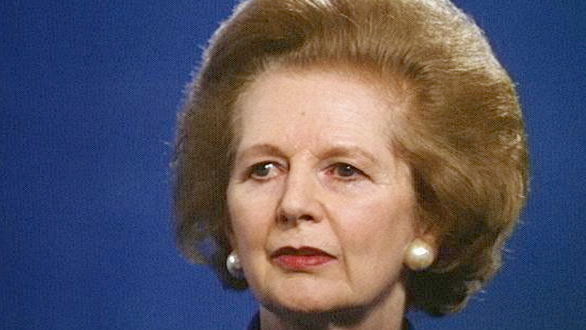
Thatcher: 1925 – 2013

I’ve left it nearly a week after the death of the former Leaderene to chip in with my two penn’orth on her demise, and on the legacy she’s left behind. In that time, I’ve read many and varied accounts of what Margaret Hilda Thatcher’s death means to us, here and now – given that her term of office ended nearly 23 years ago. Those accounts have encompassed widely varying points of view, and have ranged from vitriolic hatred with a joyous celebration of the fact that she’s gone, to real grief arising out of sheer adulation and an evident belief that she was some sort of Messiah for our country.

My own position lies at neither extreme, but somewhere in between – though I will freely admit that I lean significantly towards that end of the scale where people do not have much positive to say about the late former Prime Minister. For what it’s worth, I feel that she was a divisive and damaging influence on the country; indeed such a massive effect did she have on the political and economic landscape, that we simply no longer have the options – in terms of achieving increased fairness in society – that we potentially had before she entered Number 10. She greatly reduced – in fact almost destroyed – the manufacturing industry in this country, advancing the cause of financial services and speculative banking to take its place as the main means of wealth creation. She sold off a large proportion of the social housing stock and failed to invest in construction to replenish it, thus creating a shortage of homes for the less well-off at reasonable rent levels, and forcing a greater reliance on private landlords, with rent levels being set by the market. The long term consequence of THAT was an exponential growth in the Housing Benefits bill, which has led in turn (in these times of austerity) to the perceived need for the Government’s unpopular “Bedroom Tax”. Even though it’s nearly 23 years since Thatcher left Number 10 for the last time as PM, tear-stained but defiant, her legacy affects us to this day, regardless of what they might say who would defend her with the specious “Well, it was all a long time ago.”

Those who still idolise her seem to do so for reasons which would appear not unadjacent to self-interest. Former footballer Paul Parker has blogged:

“Personally, I don’t see why football shouldn’t pay respect to Thatcher. She should be given a minute’s silence at football grounds because without Margaret Thatcher my mum and dad would have never been able to buy a house.”

Presumably, Parker is including in his rationale thousands of others besides his mum and dad, who were also given the opportunity to buy their council houses, many at hefty discounts. But the theme of “well, she was wonderful because, hey – look what she did for me” is a recurrent one among those who remember her most fondly. Parker goes on to say:

“At the end of the day, she was the Primer (sic) Minister of Great Britain so there should be a minute’s silence as far as I’m concerned.”

He doesn’t elaborate on his views as to whether or not Heath, Wilson or Callaghan should have been so honoured (they weren’t) – but I suspect his devotion is to The Lady alone – and good defender though he might have been, Parker is clearly not a cerebral heavyweight.

The other end of the scale is represented (at its extreme) by people who felt moved to dance in the streets in celebration, and contribute to a surge up the music charts for “Ding Dong, The Witch is Dead” by Judy Garland. Yes, I bought it too. Sue me. Rather than simply bemoaning human nature for these displays of jubilation at the death of a bewildered old woman, it would perhaps serve us better to re-examine some other factors lying behind such hatred.

Quite apart from the policies I’ve referred to above, it’s also possible to find fault in what might be termed Thatcher’s unfortunate personal style. Early in her long stint as leader of the Tories, she was taking elocution lessons to modulate her slightly shrill voice, but the effect was of suburban faux gentility, with a teeth-grindingly patronising edge, rather than anything persuasive or statesmanlike. She was ironically at her most effective when she became strident, as she often did when faced with anything other than unquestioning agreement and obedience; then, she simply blew everything but the most determined opposition clear out of the water, terrifying male colleagues with smaller, less hairy balls than hers, and encouraging cowed Soviets to dub her the “Iron Lady”. She was also referred to as “The Iron Chicken” and “Attila the Hen”.

Still others who remember her less than fondly will recall that she was in very real danger of becoming just another one-term PM, and the least popular ever at that, when an opportune military conflict with Argentina cropped up in 1982. The summer of ’81 had seen a wave of riots as her policies saw unemployment rise sharply, seemingly a price her government was willing to pay for the economic direction it was so rigidly set on. Thatcher was in trouble at this point, trailing massively in the polls, but as a result of the “Falklands Factor” she won a landslide in 1983. Then the miners were unwise enough to take her on in the middle of the decade, pronouncing themselves determined to bring her government down. But Thatcher was wise to them; she had learned from Edward Heath’s mistakes in the early 70’s and had stockpiled enough coal to, in effect, starve the pit-men back to work – albeit with much human suffering and collateral damage, not least on the picket-lines at Orgreave and elsewhere. It was a humiliating defeat for miners’ leader Arthur Scargill, but – whatever you may think about him – his prediction that the Tories were out to kill the mining industry, along with its close-knit and long-standing communities, proved to be spot-on. Relatively fresh from subduing Scargill and his followers, Thatcher won again in 1987, and would eventually occupy the office of PM for over eleven years. In the end, it took her own colleagues to remove her in a coup that she ever after thought of as the basest treachery. But the fact remains that she clung on to power despite profound levels of unpopularity, aided in her latter two election victories by what many still see as naked opportunism and the survival instincts of a mongoose.

Some would seek to defend her place in history as the first – and to date only – female Prime Minister. Even I might be tempted to support a historical achievement such as that – if she had done more for women whilst in power. But she didn’t. Her Cabinet composition remained predominantly male, and you can search throughout her record for anything of note to ameliorate the lot of women in society, but you will search in vain. Glenda Jackson, speaking in the so-called “Tribute Debate” two days after Thatcher’s death, conceded the fact that Thatcher was Britain’s first female Premier but added: ‘A woman? Not on my terms.’

When push comes to shove, I would argue that Thatcher’s legacy is an almost wholly negative one; her Premiership saw a massive rise in unemployment, the decimation of manufacturing industry, a bizarre promotion of greed and acquisitiveness as hideously acceptable virtues, a decrease in growth relative to the previous thirty-four years since Clement Attlee became Prime Minister in 1945, a widening of the gap between richest and poorest where that gap had been narrowing somewhat and of course the selling-off of “the family jewels” in the shape of any nationalised industry she could lay her hands on, without sufficient regard to what would happen come the next rainy day. And there have been many rainy days since, but none rainier than the one we’re living through right now, and nothing to fall back on.

Against that, we have the perceived rise in the stock of the UK in the eyes of the rest of the world; she “made Britain great again” – some say. This presumably refers to her determination in recovering a few large pebbles in the South Atlantic at the cost of many young lives, including those of conscript Argentinians who drowned when the General Belgrano was torpedoed as it sailed away from the combat zone. “Gotcha!” crowed the Sun, while mothers of sons on both sides wept. I have to say, I don’t value an enhanced international reputation or the approval of jingoistic nations like the USA – not at that price.

And now we have to pay the cost of her funeral, having already shelled out many thousands in expenses for a one-off recall of Parliament only five days before a new session was due to start anyway. Funeral cost estimates vary between £8m and £14m depending on who you listen to, and how much her successful arms-dealer son Mark is prepared to stump up. He should really be generous – she helped him a hell of a lot. All this furore over money, at a time also when we hear her £6m London town house will not incur any inheritance duty as its actual ownership appears to be vested in an offshore company. Companies, of course, don’t die – and so don’t pay inheritance tax. These are murky waters, and it becomes ever easier to see exactly why so many regard her, and the goings-on around her in life and afterwards, with feelings of antipathy amounting to loathing.

For myself, I’ll be glad when her funeral is over and paid for, and we can all move on – and refocus on the urgent need to get rid of the current shoddy lot. Thatcher is dead; but we’re still living with a society that, in a lot of its negative characteristics can be traced back to the sea-changes she ushered in post-1979. It’s no defence against vilification to say that she left office in 1990, and can’t be blamed for what’s happened since. She created the conditions whereby what has happened since could happen, and she took away a lot of the more benign possibilities that a more sympathetic and caring attitude to investment, social care and collective responsibility in society might have realised. For that, I blame her and her alone.

Ding dong.
Manchester United – They’re Just Not All That Good

Image

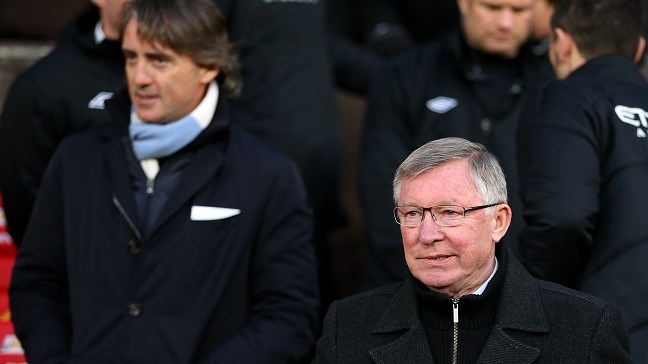
Accuser and Accused

At last, a Premier League football manager has gone public and given voice to a dark suspicion that thousands of us fans have harboured for a long time now. Roberto Mancini, may his name be blessed, says that teams facing the Mighty Manchester United are infected with a fatal lack of belief which amounts a lot of the time to actual fear. This, says Mancini, explains a large proportion of the Red Devils’ domestic dominance. It’s not that they’re that good, he argues; rather it’s that a lot of the opposition simply fail to mount a robust challenge and end up meekly relinquishing league points that nobody really expects them to gain.

Predictably, Man U’s long-serving manager Alex Ferguson is having none of this, accusing the Italian coach of Manchester City of seeking “self-sympathy” – whatever that might be. But the Mancini case is quite persuasive, particularly for anyone whose second-favourite team is whoever the Champions-elect happen to be playing on any given occasion. For those people (and I am proud to count myself among their number) the ongoing spectacle is one of a succession of teams turning up to face Ferguson’s side, and doing very little apart from that – spineless capitulations being the industry standard or so it seems. Very unedifying for those with Manchester United’s worst interests at heart but also, I would strongly suggest, pretty bad for the game as a whole.

So what is the evidence for this alleged collective lack of bottle and professional application? And if it’s true, where does the fear come from? Whence, the lack of self-belief?

Let’s initially get down to cases. As I mentioned earlier, I am a steadfast watcher of the televised games of Manchester United (of which, courtesy of Mr Murdoch, a man who knows his markets, there are many.) I don’t watch with any real expectation of enjoyment; that outcome will only come about if Man U slips to an unexpected defeat or, rarely and joyfully, a real hammering. Much more often though, I sit there in an increasingly foul frame of mind as the latest feeble challengers to the Mighty Reds roll over to have their bellies tickled prior to succumbing politely, without much of a fight at all. All too often this process is aided by the dodgy decisions which famously tend to fall the way of Mr Ferguson’s men, or maybe by copious amounts of what has become known as “Fergie Time”, the perceived need for which varies according to whether his charges are winning or losing. However it happens, it’s all the more depressing because of this pitiful lack of resistance displayed by all too many opponents. You feel frustrated – on your own behalf because you want “Them” to lose – but also on behalf of all those who switch on just hoping to see a good competitive game, with both sides giving their all. That just doesn’t happen often enough, and you sit there and wonder why.
A big factor at play here could well be the psychological gap hinted at by Mancini. What exactly are teams up against Man Utd facing? Not merely eleven chaps clad in red, or whichever of their numerous other kits they might be sporting. In professional competition, especially at the very top level, at least half the battle is in the head; that’s well-established fact. Do these opposing players believe they can win, or do they enter the arena as lambs to the slaughter? Do they feel any real pressure to win from their fans, or do they suspect those fans will quite understand and accept a defeat? Not very much of this type of thinking is required to take that psychological edge off performance.

The particularly annoying thing is that this Man Utd team really aren’t all that good. They got found out twice in Europe last season, latterly by Atletico Bilbao, a team who finished well out of the running in La Liga, but who gave the Mancs the most terrible seeing-to in both legs of an extremely one-sided tie. They’ve been beaten by Chelsea – a side who are themselves in transition – in both domestic Cups this season, and chucked out of Europe this time around by a Real Madrid side who hardly let them have the ball at all.

The European element is of particular interest as it may well be significant that, outside of this country, opposing players aren’t subjected to the constant drip, drip, drip of Man U media adulation that is visited upon domestic foes. Everywhere a player might turn in this country, there’s another article or broadcast or pundit, invariably churning out copious praise of “United”, with emetic results for those of us who don’t buy into the popular legend. What is the cumulative effect of all this? Another dulling of that psychological edge, that’s what.

The media love to talk about Ferguson’s “mind games”, but they’ve never really been anything other than the ramblings of an ever older gentleman, notorious for his inability to see more than one point of view – his own. Greater and wiser exponents of psychological warfare exist in Mourinho, Wenger and Mancini himself – all continental chaps, significantly enough. The edge given to Man U in the battle of wits and wills tends to be provided by a complaisant media and that, I believe, is precisely what the astute Mancini is getting at.

Maybe this is why Ferguson felt the need to come out with such an immediate if not altogether fluent rebuttal. Other clubs have caught up with and perhaps surpassed his own in terms of talent on the field and punch in the transfer market. Ferguson is not likely to want to see any narrowing of the psychological advantage afforded to him by his yes-men in the Fourth Estate. If the Premier League were to be transformed – by such a relieving of the mental barrage – into a level playing field with some willingness on the part of current also-rans to compete and believe, then the current gulf at the top would be a heck of a lot smaller. And then, perhaps, we’d see Champions on merit; not merely winners by default as we will get this season, who have had almost literally nothing to beat for a large portion of the time.

Now that’s the kind of Premier League I’d like to see. Well said, Signor Mancini. Keep the pressure on.

There’s Only Two Brian McDermotts

In 1996, Arsenal confirmed the appointment as their new manager of one Monsieur Arsène Wenger. I took a distant but distinct interest as I did with any news story concerning Arsenal, a club I have always thoroughly admired. And I must confess; at first I thought it was a wind-up, some weak attempt at a joke. An Arsenal manager called Arsène? Were our major clubs recruiting managers on the basis of weirdly appropriate names now? How ridiculous. You couldn’t make it up.

History shows of course that Arsenal FC was being deadly serious and decidedly astute. They were appointing a man who would become their longest-serving and most successful manager, a man widely credited with revolutionising the whole of English football, a cerebral man with a scientific approach to the art of beautiful football. But others reacted initially as I had. Former Arsenal captain Tony Adams has said

“At first, I thought: What does this Frenchman know about football? He wears glasses and looks more like a schoolteacher. He’s not going to be as good as George [Graham]. Does he even speak English properly?”

This seemed to reflect most people’s level of incredulity at what appeared an odd decision. Who, indeed, was Wenger? What had he done? He was certainly no Johan Cruyff, a global “name” who had been touted by many for the Highbury hot-seat. Rarely though can such a seemingly strange appointment have turned out so well. Despite the more recent lack of actual silverware, look at Arsenal now. Look at the football they play. It’s enough to make a Leeds fan drool – I know I do.

Image

Dioufy meets McDermotty

Fast forward to 2013 and there has been another “you couldn’t make it up” appointment – the strangeness being of a somewhat different nature, but nonetheless bizarre for that. Leeds United have recruited one Brian McDermott, recently sacked by Reading FC. This appointment has come with just five games to go of a season that was always supposed to be about promotion to the top league, but has latterly taken a nightmare downturn towards a struggle to avoid relegation back to the third tier. United of course share the city of Leeds with Rugby League superstars Leeds Rhinos – Coach: another Brian McDermott. Furthermore, the Rhinos have an outstanding winger called Ryan Hall, a world-class exponent of the game and prolific try-scorer; a major contributor to his club’s dominance of the Super League. And – lo and behold – we find that Leeds United also have a winger called Ryan Hall, a man of more modest accomplishments but much promise; one who produced a game-changing, match-winning performance at Huddersfield which gave Leeds United fans a lot of hope for his future.

Two clubs in two different sports sharing one city; both managed by a Brian McDermott, both with wingers named Ryan Hall. That’s stretching credibility quite a long way; has anything like it happened before? Could weirdness of that degree have a happy ending comparable to the way the weird Wenger story turned out?

Well, maybe it could. Once you get past the long-odds coincidence which certainly rivals the strangeness of Arsenal’s Arsène, you begin to look at the merits of the appointment. It’s an move being welcomed quite whole-heartedly by long-suffering Leeds fans, who had been certain for a while that former manager Neil Warnock’s approach was going to produce nothing but dire football, inexplicable substitution decisions and a heavy reliance on his old favourites from previous incarnations of his managerial career. He was going to build on his excellent record of promotions gained; he was going to top off that record by returning his biggest-ever club to the Premier League. But it all went horribly wrong, and Neil has clearly been yearning for his Cornwall home, hearth and tractor for months now. He’s seemed tired and dispirited, forced to defend the inadequate efforts of a palpably rudderless team, reduced to cliché after cliché as he attempted to deflect criticism of the performances of a squad he’d recently described as “Leeds’ best in years.”

McDermott though appears to be a horse of a different colour. A younger, hungry man, a still slightly angry man who you’d guess feels wronged by his dismissal from Premier League Reading, a club he’d served undeniably well and against whom he now seems destined to compete in the Championship next season. That’s if Leeds stay in that league – which is by no means certain as yet. With five games to go, McDermott quite possibly needs at least four more points to secure Championship football for next season and give him the chance to plan in the longer term. He has said already that he’s been given “assurances of support”, and we can but hope that these don’t turn out to be yet more of the same forked-tongue promises we’ve heard for a good many seasons now. McDermott though has the air of a man who is happy and confident as he picks up what many in the game see as a poisoned chalice. Leeds United has the reputation of a managers’ graveyard going back many years now and – surely – nobody entering via the revolving doors that have seen so many unceremonious exits can be at all optimistic they won’t share the same fate. Nevertheless, Brian McDermott has made all the right confident and determined noises, he has his right-hand man with him and he says he can’t wait to get stuck in. This is what we want to hear.

At some point, for heaven’s sake, Leeds United’s owners have to get it right. We’ve had a decade or more of stumbling, shambling descent into the pits of despair, followed by an almost equally stumbling and shambling partial recovery. As yet another era starts – and at Leeds we seem to have two or three new eras per season – the patience of the always potentially truculent masses cannot be relied upon for much longer. Leeds could so easily go the wrong way in just the next few weeks, and that would make for a terrifyingly long journey back at a time when – as in wider society – the rich are getting ever rich while the rest scrap for crumbs. Those who seek happy omens might look at how Arsenal’s strange appointment of Arsène turned out, or they may look across the city and look at the Brian McDermott who is in charge of the current Super League Champions. The omens are there, and in hard times they’re the straws we might reasonably clutch at.

We could go the wrong way – but we simply can’t afford to. It has to be safety first, followed as soon as possible by definite progress on and off the field. New investment is clearly sought, and appears to be a must-have without which the club will, at very best, continue to tread water.

This is not an option if the club is to have any real success in the foreseeable future, so the owners must deliver support to their new man. And Brian McDermott just has to be the right man; he has to get it very right very soon, establishing a pattern of success comparable with his fine work at Reading and leading us back to the top before the club is cut irretrievably adrift of the powers in the game.

That’s the scale of his task. That’s the urgency of the situation we now face. Good luck, Brian.

Osborne ‘in tune’ with majority – but do the majority have all the facts?

A brilliant and forensic exposé of this government’s propaganda policy, backed by facts – those inconvenient morsels so despised by the ConDems – and presented in fluent and convincing fashion.

Mike Sivier's avatarMike Sivier's blog

osborne embarrassed
Gideon does it again!

After sticking his foot in his mouth last week – both with his speech about how great the benefit cuts are, and his attempt at using Estuary English rather than Received Pronunciation to deliver it to unimpressed workers at Morrisons – he has pronounced himself “in tune” with what the majority of the country thinks about those cuts.

He might be right; most people might think, as he does, that there is a large amount of social security fraud and the cuts will force people to get off their backsides and go to work (never mind, for a moment, the fact that the jobs don’t exist because those places are full of people on Mandatory Work Activity, making oodles of money for Poundland or whatever other companies are still clinging to that albatross of a scheme).

It begs a few questions.

Firstly: How knowledgeable is the…

View original post 1,827 more words

An Acrostic Call to Arms

Virtue, it’s said, is its own best reward
Often we’re put to that test
To fight for our rights with a pen, not a sword
Elections must bring out our best

Let us stand firm and keep fighting our end
And never be beaten or cowed
Brave to the last, though our spirits might bend
Out of hardship, we’ll still shout out loud
Under vicious oppression though we live now
Remember to stay strong and proud

Never shall we be cast down by our foes
Even though tyranny reign
Vainly they seek to cut down the red rose
Efforts that we shall disdain
Ready to fight for the causes we chose

Tyrants have never been masters for long
Out of this darkness we’ll rise up reborn
Ready and able, our rallying song
Young or old, we will find our new dawn

Memory Match No. 6: West Ham 1, Leeds United 5 – 1.5.1999

It’s about time this Memory Match series featured loveable, chirpy cockneys West Ham United, usually obliging victims for Leeds teams of most eras, and notable as lenders of a helping hand towards the end of the title run-in of 1992 when they defeated Man U in a game that turned Alex Ferguson the deepest shade of exasperated purple I’ve ever seen. It’s fitting that I should write a little about the ‘Appy ‘Ammers; at least one irritatingly chirpy blog which claims to support them spends most of its time obsessing over our own beloved United, so perhaps here I can redress the balance a little.

Image

Jimmy Floyd Hasselbaink

This Mayday fixture in front of a packed Boleyn Ground crowd of 25997 found Leeds United in a rich run of form, ten games unbeaten since an early February reverse to Newcastle at Elland Road, after which they had reeled off seven consecutive league victories followed by three draws on the trot. The Whites’ determination to get back to winning ways after those six dropped points was exemplified by the fastest possible start. A mere twenty seconds had ticked by when the ball nestled in the West Ham net, put there emphatically by the ebullient Jimmy Floyd Hasselbaink who ran at a retreating Neil Ruddock before finishing neatly with a left-foot shot past Shaka Hislop.

And then the game went ever so slightly mad.

Jimmy’s goal apart, the opening sallies had seen both sides engaging in tackles which verged on the thuggish side of enthusiastic. West Ham’s Eyal Berkovic was a victim early on, and Lee Bowyer was on the end of a clattering as the home side sought revenge. Then Ian Wright, no stranger to controversy and the disciplinary attentions of referees, led with his elbow when challenging for a high ball, and copped for a yellow card that looked a lot more justified than the second yellow he got after only 15 minutes, following an altercation with Ian Harte, Harte, Harte. So Wright was on his way back to the stand after a mere quarter of an hour, loudly protesting the injustice of the case and hell-bent, as it turned out, on venting his frustrations on the décor of the ref’s room.

For the next half-hour, leading up to the interval, Leeds proceeded to make a one man advantage look anything but as West Ham pressed them back, causing panic in the away defence as the promptings of Berkovic and Paolo di Canio created some decent chances to possibly level the game. Leeds had managed to be distinctly the poorer side in that first half, and yet – as if to prove once again what a daft game football can be – they hit West Ham with a sucker punch in stoppage time. David Batty appeared to have committed a foul in midfield which might well have justified a booking had the ref not totally ignored it and waved for play to continue. Harry Kewell obliged, picking the ball up wide on the left and mesmerising the overstretched Hammers defence before cutting the ball back from the by-line for Alan Smith to convert gleefully. 2-0 at half time and – for once – it had pretty much all gone Leeds’ way. They had been outplayed for most of the first forty-five minutes, but were somehow two goals and one man to the good; courtesy, it has to be said, of some not exactly even-handed refereeing.

The second half began much as most of the first had been spent, with Leeds on the back foot and defending precariously. Straight away, the dangerous Berkovic bamboozled Jonathan Woodgate, turning him inside out before supplying di Canio with the perfect chance to pull a goal back. 2-1 to the visitors then, but the balance of the play had been with West Ham, and maybe now the momentum was theirs too. None of us could feel over-confident despite a man and a goal advantage, because all of us could recall Leeds blowing such enviable positions many times in the past. This time, for once, we were not to be let down. A rare defensive slip just after the hour from the otherwise excellent Marc-Vivien Foé saw Hasselbaink sprint clear to round Hislop, who then brought him down. Penalty to Leeds and, despite the presence of defensive cover, Hislop was sent off. It was a slightly unfortunate second red card for West Ham, who felt compelled to replace star man Berkovic with reserve keeper Craig Forrest as the calamities mounted for the home team. Forrest’s first act was to pick Harte’s penalty out of the back of the net, and Leeds were 3-1 up and cruising against 9 men. Foé, we will remember, sadly died four years later at the tragically young age of 28, from an unsuspected heart condition whilst representing his country in the FIFA Confederations Cup.

Image

Alf-Inge Haaland

Now at last Leeds started to dominate as a two-man advantage would suggest they should. The best goal of the game arrived on 78 minutes, Bowyer hitting an unstoppable right-footed shot from twenty-five yards, which curved slightly as it found the corner of Forrest’s net. Just a minute later, Alf-Inge Haaland sprinted on to a Hasselbaink pass into a massive amount of space on the right hand side. Unchallenged, he was able to advance into the penalty area and beat Forrest with an accurate shot just inside the far post.

The eight outfield players in claret and blue were clearly finding the pace too hot, and suddenly there was room aplenty all over the pitch for Leeds to exploit, and exploit it they did. Aided by the fact that the Hammers – to their eternal credit – were still trying to attack Leeds in spite of their depleted resources, our heroes were granted the licence to ping the ball about as they pleased, always able to find a man or two in space, making the tired home players work overtime to chase possession as the Upton Park faithful bayed their hate at the referee. Truth to tell, we could easily empathise with the ‘Arrassed ‘Ammers; far too many times down the years had we been in their shoes, watching impotently enraged as some git of a ref casually destroyed our afternoon. It was somewhat bizarre to watch the situation unfold in reverse – but what the hell. We made hay while the sun was shining, and happily the team was doing the same.

The game had long been over as a contest and, at 5-1 up with no credible opposition to deal with, Leeds seemed intent solely on playing out time. Smith still managed to miss a passable chance to make it 6-1 and Clyde Wijnhard contrived to get himself booked, eliciting gleefully ironic chants of “Who’s the bastard in the black” from the jubilant Leeds fans, displaying a gallows humour not altogether appreciated by the home supporters. Finally, hothead Irons defender Steve Lomas allowed his mounting frustration to get the better of him, launching an agricultural challenge in the direction of Harte and duly collecting his marching orders to reduce the hapless, helpless Hammers to eight at the death.

Image

Dirty Den

It had been a strange game, a romp for the Whites on the face of it – judging by the lop-sided score line anyway. But it had never been quite like that; not that our awareness of having been outplayed for long stretches diluted our joy one tiny bit. 5-1 away wins do not come along every day, and we enjoyed this one to the full. We enjoyed it for the whole of the slightly perilous walk back to the tube station, and we were still enjoying it when we beheld the distinctly pissed-off figure of Leslie Grantham heading down the stairway to the platform where we were celebrating noisily. Leslie Grantham, soap-opera legend as Eastenders’ Dirty Den, Leslie Grantham who had done time for killing a German taxi-driver, Leslie Grantham, Hammers fanatic, who – despite being accompanied by his two young boys – bore a grim aspect which looked rather as if he wouldn’t mind adding a couple of Leeds fans to that record.

Tactful and understanding to the last of private grief, we wisely kept our distance and refrained from seeking autographs. It had been a memorably bizarre day for Leeds United and an equally happy summer evening awaited us in the sinful fleshpots of London, crap cockney beer and semi-hostile natives notwithstanding. Dirty Den 1, Dirty Leeds 5.

Next: Memory Match No. 7: Blackburn Rovers 3, Leeds United 4. Another game to give the lie to those who insist that George Graham’s reign at Elland Road was dour and colourless. This televised match at Ewood Park was a real roller-coaster affair, punctuated with some great goals.

Widespread Disgust as the Coalition and Press Lurch Further Down the Path of Herr Doktor Goebbels

Image

The not-so-good Doktor

For some time now a lot of us out here in Leftie-Land have been worrying out loud, and in print, at the direction this Coalition Government are taking. We have concerns over their policies and the way they’re being presented; we have concerns over their rhetoric, directed invariably at sections of society against whom they wish to justify savage cuts; we have concerns about the very language they use, language calculated to stir up hatred in the less intellectually-acute of their supporters, terms such as “shirkers”, “malingerers” and “something-for-nothing culture”. I’ve written myself about the transparent desire on the part of Cameron, Gideon Osborne and their colleagues to divide and rule, and the way in which they’ve spread malicious falsehoods about the targets of their policies, lies that have been eagerly taken up and spread far and wide by the right wing coterie in the Press. I compared the phenomenon of their wilful deceit to the “Big Lie” technique employed by Josef Goebbels for the embryonic Nazi party in the late 20’s and early 30’s. Basically, if you repeat a lie often enough – and the bigger the lie, the better – it will seep into the public consciousness and be accepted. I feel that the Government’s endorsement of this tactic is the fair and obvious conclusion to draw from the way they have relentlessly sought to paint the poor and helpless as a malign, self-seeking and parasitical section of society.

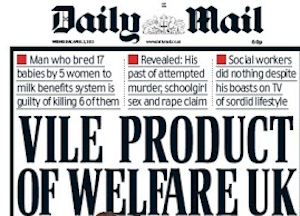
The turn of events this week, though, has taken even the most cynical and suspicious of us by surprise. In a shocking and rather sinister plunge towards the gutter-end of their ideology, the Government and certain sections of the press have decided to use a criminal case which concerns the unlawful killing of six young children as material for a further attack on their hated and hapless targets at the bottom of the economic pile. In the wake of the conviction of Mick Philpott and his accomplices for the manslaughter of six out of seventeen children, the lamentable Mail has – without allowing a decent interval to elapse, indeed hardly pausing to draw breath – launched a bitter front-page broadside against a welfare state which, it astonishingly contended, was at the root of the whole Philpott tragedy. This blatant tarring of all benefit claimants with the brush of a sociopath/psychopath like Philpott predictably and quite rightly brought vilification from proper newspapers and media outlets alike. Scandalous, opportunistic, tasteless, vile, they screamed, accusing a bang-to-rights Mail of making cheap political capital out of the deaths of innocents. Quite so.

Image

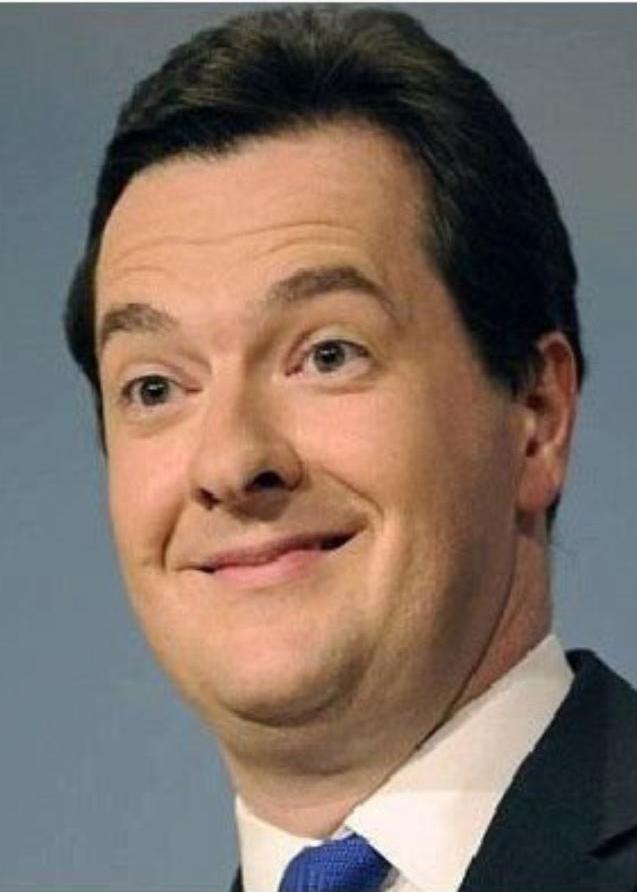
Silly Gideon

But then, whose trotters did we hear, galloping over the horizon as he raced to dump his porcine carcass on this timely bandwagon? None other than Gideon Osborne; failed Chancellor, shameless blagger of disabled parking spaces and determined first-class rail traveller (albeit with only a standard-class ticket.) Such is the measure of this vapid man; his brainless arrogance leads him to believe that what he wishes will naturally come to pass, that ordinary conventions are for ordinary people and not for such bright shining stars as Gideon. Now he could hardly wait to endorse the Mail’s bile-ridden outburst in his haste to appeal to little Hitlers everywhere and further perpetuate – indeed enlarge – The Big Lie. He was swiftly backed by his boss, Cameron, a beleaguered PM whose eggs are now clearly all in one basket. Shocked and horrified, the rest of us were left gaping at the sheer, malevolent viciousness of it; the appalling timing, the unwarranted slur on people who wouldn’t dream of harming a fly, the public-school adolescent nastiness of it. What to do?

Well, some thought they might try a little satire laced with logic, a standard procedure for putting in their place those of arrogant stupidity. By your own arguments, it was forcibly and eruditely pointed out to the Gruesome Twosome, the crimes of Peter Sutcliffe could be laid at the door of the Road Haulage Association; those of Harold Shipman at the feet of the NHS and provincial medical practices everywhere; while the evil-doings of Fred West are to be blamed on private enterprise and aspirational construction workers throughout the land. The effect of all this admirable logic? Negligible at best. Those who are currently on the attack and have the poor, disabled and vulnerable in their sights are in talk mode, with a view to draconian action. They are not for listening. And readers of the Sun and the Mail are likely to listen, sadly enough, only to other such readers – or perhaps to like-minded know-it-alls down the pub.

Image

The Offensive Daily Fail

In the absence of many other practical options, I’ve made my views known to the Press Complaints Commission. I’m not exactly holding my breath for a positive response though, as high-ups at the Mail are also influential in the PCC, so it’s a little bit like complaining to your mother-in-law about your wife’s nagging. But something clearly has to be done; this is not the kind of “politics” that can be taken lying down. The utter, untimely viciousness of it, as well as the blatant opportunism, leaves a rancid taste in the mouth. It’s easy to forget in these alarming times that this is a coalition we have in charge, with – supposedly – a restraining, moderating influence ready built-in as it were. The shocking lack of balls displayed by the Liberals in matters like this and many others will — if there’s any justice* — contribute to their deserved annihilation at the next election. But that’s not going to come soon enough to protect this country from a Tory Party that seems to be diseased at the very top, intoxicated with the sickness of megalomania and determined to visit their own brand of evil on their own chosen targets.

The spirit of Josef Goebbels is alive and well in the corridors of Tory High Command as well as in the editorial offices of our less salubrious newspapers. Those of us with opposing views – those who are resolved to speak out for the helpless and vulnerable – had better make sure we speak loudly and constructively enough to be heard over the brazenly unashamed rhetoric pouring like so much liquid sewage from the lips of Osborne and Cameron. If we don’t, we’ll simply be begging for more of the same, and worse.

*There isn’t; so don’t hold your breath there, either.