Daily Archives: 14/05/2013

Man City Will Bounce Back

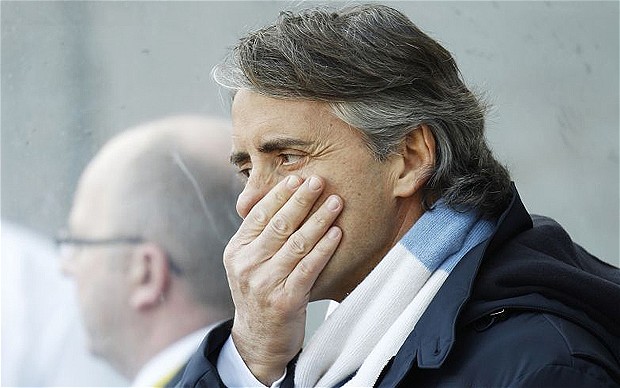
Mancini: Sacked

Mancini: Sacked

Events at Manchester City this last day or so were flagged up well in advance – the media screamed “Mancini Out!” from every outlet – and despite scornful denials by the man himself, and messages of support from the fans, you felt it would turn out to be a case of “no smoke without fire.”

Even so, the news when it arrived, poignantly on the very anniversary of that last-gasp Title triumph, was a shock of sorts.  The club moved swiftly to justify their action – Mancini had “failed to meet football targets”, it was said.  Criticism was made too of his inability or reluctance to communicate, of an aloof and arrogant attitude, of his lack of interest in club matters below first-team level; specifically an apathy where bringing youngsters through was concerned.  Clearly all was not sweetness and light on the good ship City, and the mystery of their rudderless run-in for the league campaign, and how they sank without trace in the second half of the FA Cup Final may not be such a mystery after all.

In the odd spare moment I’ve had this season to glance upwards towards the Premier League summit, and away from Leeds United’s mid-table Championship toilings, City have puzzled and frustrated me.  At the outset, they seemed well-equipped to mount a reasonable defence of their title.  There were clearly two sides to this equation.  On the one hand, the squad at The Etihad was, in my view, the best in the Premier League – rivalled only by that at Stamford Bridge.  On the other – Man U are notoriously capable at employing a siege complex in order to use resentment to fuel their fightback.  They are also, undeniably, helped in large measure by the number of weird decisions that seem to go in their favour.  The away game at Chelsea was a good example of this, when Torres was sent off for being fouled by a Man U defender already on a yellow, and then the Salford side scored a late and clearly offside winner. This sort of thing tends to pepper Man U’s most successful seasons, and it’s not an attractive facet of the Premier League.

I’ve never subscribed to this “van Persie made the difference” nonsense.  I’m sure he made A difference – but not that much.  It’s been a stroll for Man U in a league in which they should – by all considerations of relative quality – have struggled to finish third.  Chelsea have had their own problems.  The phrase “Interim Coach” needs nothing added to it for an explanation of their failure.  But Man City was a conundrum, and it is only now, in the wake of Mancini’s sacking, that we are perhaps gaining a more complete picture of what things were like behind the scenes.

Now a tell-tale tweet from former kit man Stephen Aziz may have shed some light on just how negative the atmosphere has been at Man City.  The phrase “arrogant, vain and self-centred” appeared briefly before the tweet was removed. And there was more: “no manners ignorant just some of the daily traits really made going into work a daily grind!! #karma”.  That’s all pretty damning stuff, and quite frankly at top professional level, it doesn’t take one tenth of that apparent level of unhappiness and discontent to derail a club’s bid for honours completely.  This, more than the failure to pick up a trophy, may well be what lies behind Mancini’s abrupt departure on the first anniversary of his finest hour.

Man City fans feel an understandable affection and loyalty to the man who has given them their finest moments in over thirty years.  I too recall the expression on his face as City hammered Man U 6-1 at The Theatre of Hollow Myths, and I remember thinking that here was a man who would end up as loved as Malcolm Allison in his late-sixties incarnation, or Colin Bell, or any one of City’s heroes you may care to name.  He had the opportunity to instill himself into the DNA of the club, but – inexplicably – it looks more and more as though he’s been too arrogant to see the need to treat people as they need to be treated, and has therefore lost his fledgling Legend status.  The City fans will always remember him, of course.  He delivered, albeit at the last gasp, and put an end to an aching void where they’d won nothing as their despised neighbours cleaned up.  Of course he will always have a place in the collective City heart.

The next appointment is vital, however.  If City get it right, the quality of this squad can carry all before them next season.  Man U have a rookie at the highest level, and must expect a bedding-in period.  This year has been bizarrely tilted away from the finest talent in the league.  Next year may well be very different.

Matt Mills £1m Leeds Target?

Mills:  Leeds-bound?

Mills: Leeds-bound?

The Swindon-born former Reading and Leicester defender has not been an outstanding success at Bolton Wanderers, his last start for them being against Huddersfield on December 8, when he injured a thigh and has managed only one substitute appearance since.  His time at Leicester City was hardly wonderful either, and Mills was a loan target for former United boss Neil Warnock early in his Elland Road tenure.  That failed to happen, and a rumoured £2m fee saw the defender link up with Bolton – but it seems likely his time there is now up, with an offer in the region of £1m being thought sufficient to secure his services.

The player himself – according to the familiar “sources close to…” – is keen on the chance to renew his working relationship with his old Reading boss Brian McDermott.  Central defence is on the list of positions needing to be strengthened at Elland Road, and it may just be that the Old Pals’ Act could secure a reliable performer for United. This optimistic assessment is certainly not based on recent form, but there have been many instances down the years of players in the doldrums being reinvigorated by a reunion with a former mentor.  McDermott’s success at the Madejski throws up a few names, some still at Reading, some that have since moved on – that could be identified as players who would relish another crack of the whip under an old boss at a club like Leeds – enough of a pull in its own right.

Mills has certainly waxed lyrical about his past service under McDermott and assistant Nigel Gibbs. “My first few months at Reading didn’t pan out as the move I expected and wanted, but that all changed when Brian got the job and Gibbo became assistant manager.” the ex-Royal has been quoted as saying. “They gave me a new lease of life, and the opportunity and coaching they gave me has honestly made me the player I am now.”  As fulsome tributes go, this is very much in “come and get me plea” territory, and it has been suggested that Mills is willing to reject overtures from elsewhere in favour of a switch to LS11.

My own view is that, at only 26, Mills has many miles left on the clock, and the class he has undoubtedly displayed in the past will not have deserted him permanently.  A happy player is more likely to be a top-performing player, and the fruitful coaching relationship between Brian, Gibbo and Matt at their former club seems to suggest that its a scenario which could unfold again, to the satisfaction of all parties.

Whether the powers that be are prepared to stump up £1million is of course another matter, and wages are always an issue as well.  But there is some pedigree here, and the chance to build on some good history too.  So I feel there may just be some legs in this rumour, and it’s a move I would love to see happen.  “Lees and Mills” could well be the central defensive partnership on everybody’s lips in the Championship next season.

True Cost of Thatcher’s 1983 Election Win to be Revealed??

Image

Later today, figures on the number of suicides since the early eighties among British armed forces personnel who served in the Falklands Conflict are due to be revealed.  The headline figure on casualties of the fighting is clear cut: 649 on the Argentine side, 255 British and 3 Falkland Islanders for a total of 907 human souls lost over a rocky outcrop or two thousands of miles from the supposed “mother country” UK.  Arguments may well wax and wane over the correctness of Britain’s historical claims to the Falklands, or Malvinas as they are known in Argentina.  A rhetorical question often asked goes along the lines of: how would the British national psyche take it if Jersey or Guernsey, for instance, were to be claimed as sovereign territory by, say, Peru?  It’s a hypothesis that perhaps doesn’t get us far, other than maybe to provide an insight into the sensitivity of feeling over the Falklands/Malvinas issue for the citizens of Argentina.

Thatcher: In Command

Thatcher: In Command

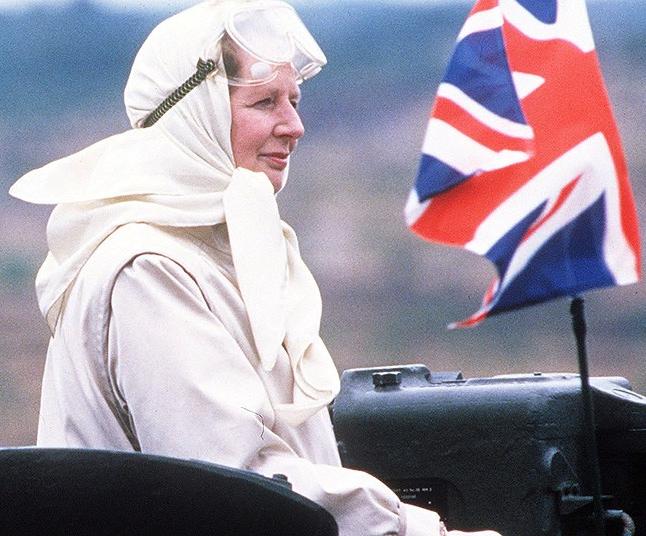
Whatever the true cost in lives of the Falklands conflict, what seems indisputable is that the military operation and its success in terms of objective achieved certainly boosted a Tory administration that had seemed in terminal decline at the time of the Argentine invasion.  It has been alleged that the British Government had prior intelligence of a pending military operation  planned by General Leopoldo Galtieri‘s ruling junta, the implication being that Thatcher’s cabinet saw the political potential of a decision to war-war rather than jaw-jaw, and so elected not to nip the situation in the bud.  The extent of the mess that this government found itself in is difficult to over-state; had they successfully deflected any threat of invasion, or had they launched a diplomatic initiative in the wake of the Argentine occupation, it is doubtful whether the impact on the subsequent general election would have been as great.  Pragmatically, “war” (even an undeclared war) was a better option than “jaw” – or so the conspiracy theory goes.

On the Argentinean side too, there appeared to be significant political advantage to be gained from a successful re-acquisition of Las Malvinas.  The Argentine economy was in an even bigger hole than that of the UK, and the effect of the invasion was a major boost to patriotic sentiment and the consequent short-term popularity – or at least acceptance – of the previously despised junta.  The historical precedent of a convenient war, to arouse jingoistic feelings and a surge in national pride, is there for all to see.  Both sides will have been well aware of the stakes, and a certain amount of brinkmanship may well have been at play.  This was probably more the case on the Argentine side, where it seems likely their military operation was calculated on the basis that the British would have neither the will not the logistical capability to mount a response in kind over such a long distance with all the problems of cost, supply lines and communications.  In the UK, the swiftness with which that response actually materialised was a tell-tale sign that Thatcher’s government were not only willing, but eager to launch the most emphatic counter-strike possible, and the fervour with which the public hailed the departing task force was a massive encouragement to the hastily-assembled War Cabinet.

The Sun's Perspective

The Sun’s Perspective

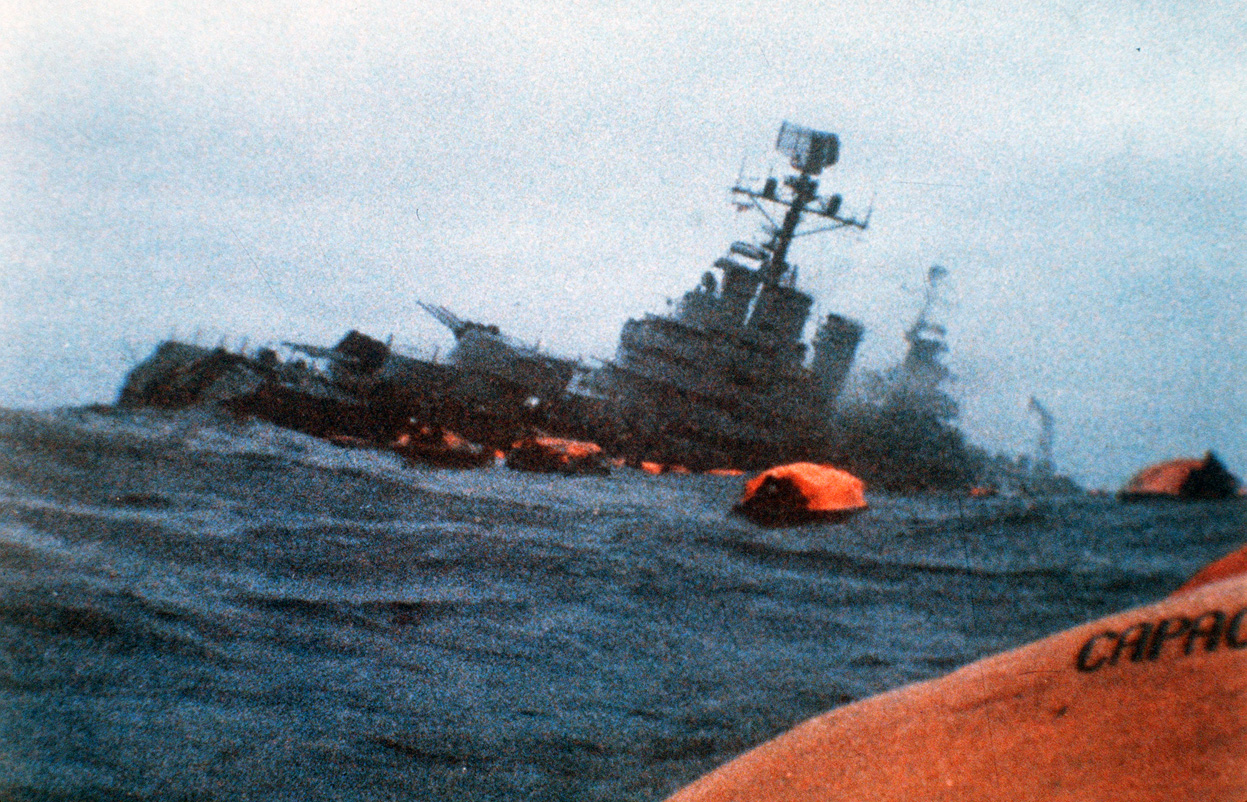
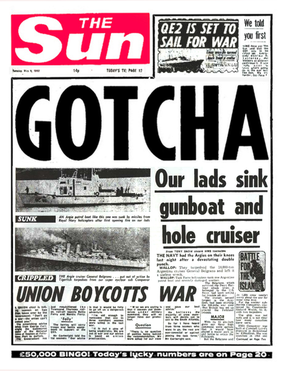
The attitude on the part of the British forces seems throughout to have been one of belligerent determination and ruthlessness.  Despite the problems of distance (mitigated to a large extent by the availability of the strategically-located Ascension Island as a stopping-off point), the task force had the inestimable advantage of its professional make-up; the troops were regulars, hardened pros, and many feared for the fate of the Argentinean rag-bag of conscripts should they ever meet in direct combat.  In the event, the Argentine forces fought bravely and effectively, leading to unexpectedly bloody and costly land engagements such as the Battle of Goose Green.  The conflict as a whole was more a series of sharp engagements on land, at sea and in the air, than any drawn-out and attritional process.  British naval losses were significant – the attack on HMS Sheffield following hard on the heels of the notorious action to sink the ARA General Belgrano.  Both sides were being hard-pressed to hold their political nerve in the face of dramatic losses such as these.

In the end, of course, there could only be one winner and the likelihood all along was that the British forces, superior in training and equipment even though stretched logistically over such a vast distance, would succeed in re-taking the islands.  So it proved, but at a tragic cost on both sides in terms of lives lost.  The die had been cast right from the start in that the losing side would almost inevitably see political change in the wake of the conflict and many now view this, from the perspective of over thirty years, as a calculated risk on the part of both governments concerned.  The determination to press ahead with military action and the relative marginalisation of the United Nations in the matter speaks of a strong political resolve on either side, and the results are clear to see; Galtieri was removed from power in January 1983, whereas Thatcher received an immense boost in the polls, and this “Falklands Factor” saw her sweep to victory with a landslide later that same year.  The monetarist Tory government was not, after all, destined to be a one-term experiment as had seemed so likely prior to 1982.  The course was well and truly set and the old-style of government, with full employment at the root of all its thinking, was consigned to history.  Thatcher may have been the economic disciple of Keith Joseph, but she showed the survival instincts of a polecat to go with her determination to make Monetarism work and banish old-style Socialism.  From that perspective, the loss of a few hundred lives in the South Atlantic may well have been considered expedient against the probability of electoral defeat and a return to what she will have thought of as the economics of disaster.

Thatcher was the big winner in the Falklands conflict.  It has been posited since that a great saving, in terms of money and human lives, could have been effected by ceding the territory to Argentina and providing each islander with a bounty of £1 million and a villa in the South of France.  This is, of course, a simplistic hypothesis, but the numbers certainly add up.  The British government of the day could not contemplate what they would have seen as a craven climb-down, with a devastating effect on how the UK was seen in the eyes of the world.  To this day, pro-Thatcher apologists refer to the way she “made Britain great again” or similarly extravagant claims.

Simon Weston OBE

Simon Weston OBE

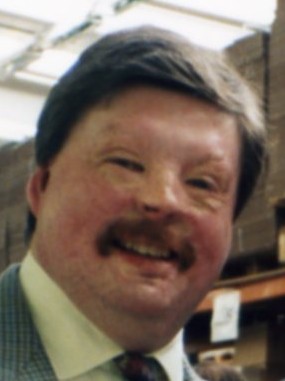
It is notable in this context that one of the most fulsome tributes paid to the late PM, after her death in April this year, was from Welsh Guards veteran Simon Weston OBE who famously suffered extensive burn injuries during the Falklands campaign in the attack on RMS Sir Galahad. Weston is now seen as an inspirational figure for his recovery from his injuries and his charity work, and his endorsement of Thatcher’s premiership was seen as a powerful vindication of her policies, particularly where the Falklands issue was concerned.

What appears absolutely certain is that Thatcher gained herself an extra seven years she would not otherwise have had, to advance her own agenda, and change the face of Britain forever.  Whether you regard the number of lives lost as a price worth paying for that will depend, naturally, on your own political convictions.  But it may be worth noting, later today, just how high that price was when those official Falklands-related suicide figures are finally released.  At a time when our government today is starting to pile up the body count as people take a drastically simple way out of the world being foisted on them, we may reflect on this depressing tendency of governments to view individuals as mere political pawns or economic units, rather than people imbued with a spark of life and the right to an existence outside of macro political considerations.  Life should be seen as far too precious to end up as a statistic of the battle to stay in power.