Category Archives: History

Scott Wootton Can Become the Latest to Leave Man United For “The Damned United” – and Find Success

Image

This week’s signing of young defender Scott Wootton has reminded us all that the transfer history between the two Uniteds of Leeds and Manchester is notable mainly for its scarcity – understandably so, considering the bitterness of the rivalry between the two clubs.  A mutual antipathy still festers among the fans on either side despite the rarity of actual meetings of the respective Reds and Whites on the field of play.  Anyone who has witnessed the poisonous atmosphere which prevails at such meetings will appreciate the difficulties which can arise for players who have sought to serve both clubs.  Accusations of betrayal are far more common than warm welcomes back when a player swaps one shirt for the other.

Revisionists who count their history from the founding of the Premier League might not appreciate that, in the comparatively few direct deals between Elland Road and Old Trafford, Leeds have come out not at all badly.  Two transfers in particular can be said to have sparked the Whites’ greatest historical successes, but the focus in more recent years has been on the move of a certain iconic Frenchman, and the kick-start that appeared to give to Man United, a club that had starved for title success for over a quarter of a century.

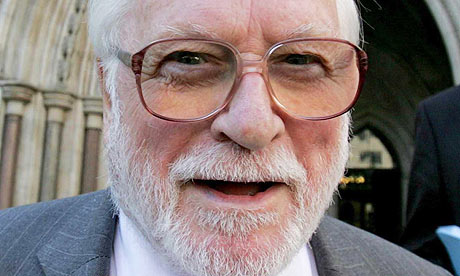
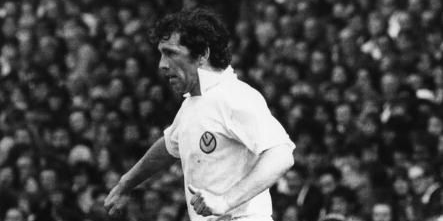
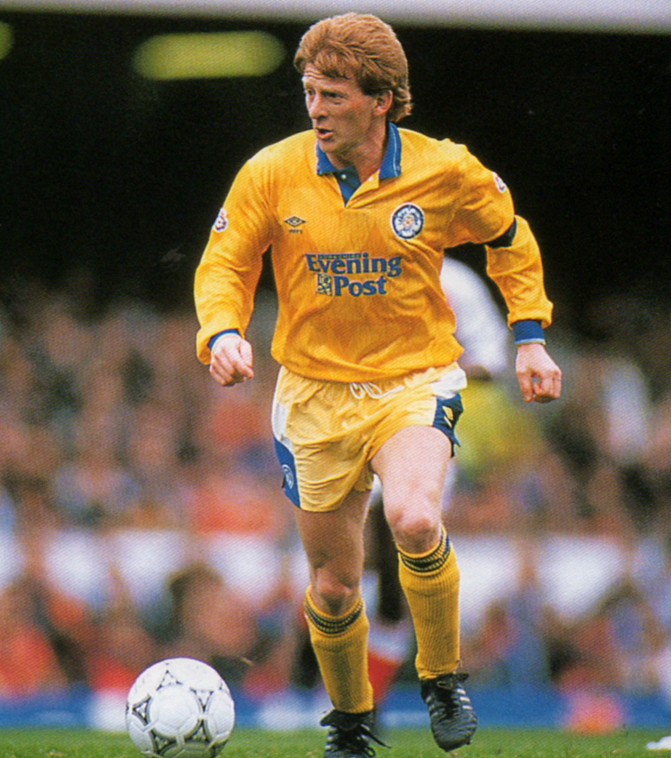
The fact remains, however, that Leeds can thank the management at Old Trafford for their generosity – or misjudgement – in two different eras, firstly when John Giles (pictured above) made the move to Elland Road in the sixties, sparking the Glory Years of Don Revie’s reign, a transfer later described by Revie as “robbery with violence”.  Gordon Strachan then arrived in LS11 to complete the renaissance of Leeds under Howard Wilkinson in the late 80’s and early 90’s, cementing their position as the Last Real Champions by finishing the pre-Sky era at the pinnacle of the domestic game.

Enfant terrible Eric Cantona did much to redress the balance of transfer success between the two clubs, but there are strong grounds for suspecting that Man U’s era of domination would have happened anyway, so favourable were the conditions for a global franchise in the Murdoch-funded Premier League.  Giles and Strachan, then, stand out as the two most influential transfers between the two clubs, and there are also a few memorable if slightly lesser transfers worthy of mention: Joe Jordan and Gordon McQueen left Leeds for Man U in the 70’s, but found limited success, as did Arthur Graham a few years later; while Brian Greenhoff and Danny Pugh were journeyman additions to the Leeds squad from the also-rans of the Man U gene pool.  The less said about Lee Sharpe, “Plug” Ferdinand and Alan Smith, the better.

It’s asking a lot of youngster Wootton to turn his career at Elland Road into anything like the glorious impact of a Strachan or a Giles, but there are grounds for supposing that he may have a significant contribution to make and maybe – just maybe – cause the fans of Man U to regret his departure.  Already there are wistful noises emanating from the hotbeds of support in Milton Keynes and Torquay.  One fan remarked that Wootton might have developed into “another Johnny Evans” – surely a case of being damned by faint praise. Another stated that if Wootton was to be denied his chance at Old Trafford, he might as well play for a proper club, which seems quite a generous attitude in the circumstances. Leeds fans don’t appear to hold the boy’s past against him – he seems to be regarded as a prospect rich in potential, and after all he’s made a career choice of which we can all heartily approve.

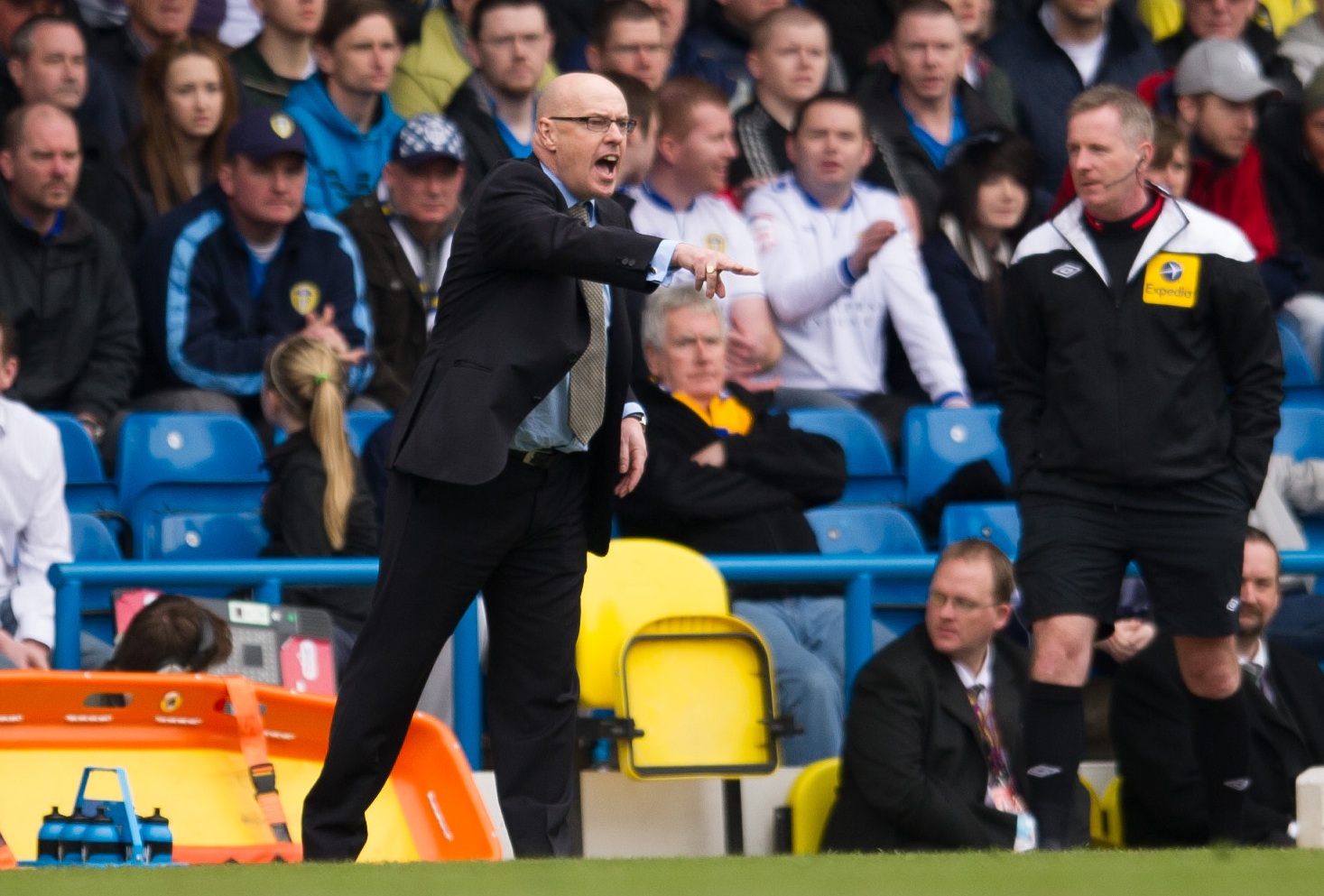
Above all, we have to respect Brian McDermott’s increasingly acute eye for a player, especially of the young, there-to-be-coached-and-improved variety.  Like it or not, Man U deal in an entirely different transfer sphere to Leeds, and it’s much more difficult for a rough diamond to be polished up for the first team there, when so many crown jewels are bought in every season.  They are bound to lose the odd star-to-be, and on this occasion we at Leeds may just be the beneficiaries of this kind of overspill.   We can certainly hope so, and hope also that this latest cross-Pennine import enjoys a long and successful career at Elland Road, returning frequently to Old Trafford to haunt those who have seen fit to let him go this week.  With our vivid memories of Gilesy and Wee Gordon, we’re certainly entitled to such a dream.

Is Nice-Guy Moyes Starting to “Fergify” Himself?

Image

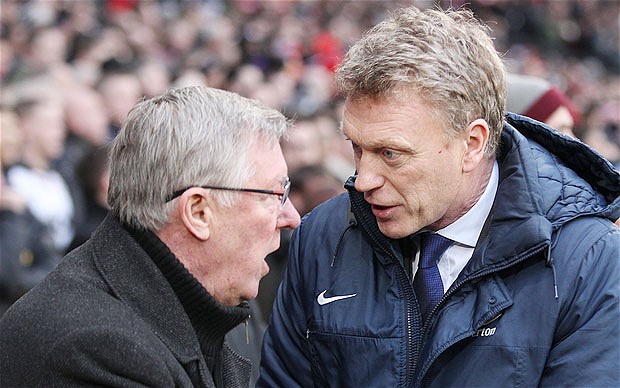
Many good judges are predicting that, with the Alex Ferguson era over at Man U, the club will now struggle to continue with their run of success.  By common consent, Fergie was not the greatest coach or tactician out there – his major contribution to the success down Salford way was more to do with his choleric temperament and his habitual intimidation of referees, reporters, players, other managers – just anyone who got in his way, really.  The terrifying effect of “The Fergie Factor” made the big difference in a game of fine margins, as a legion of cowed and downtrodden individuals would confirm, if they thought it was safe. But now we have ex-Everton boss David Moyes, and his track record suggests nothing of the talent Fergie had for using tantrums and hairdryer-like bollockings to get his own way. But could it be that the new gaffer is now setting out on the process of reinventing himself? Are we about to see the Fergification of David Moyes?

It wouldn’t be the first time that a youngish football manager, with illustrious predecessors inconveniently prominent in fans’ memories, has appeared as a sheep trying to don the clothing of a wolf.  Allan Clarke, after an apprenticeship at Barnsley, returned to Elland Road as manager, and immediately started trying to come over all Brian Clough.  “I’m a winner!” he would bark whenever a microphone was pointed his way.   As a player he certainly was just that, and he’d made a decent start in management too.  But as the new boss of Leeds United, following hard on the heels of the hapless Jimmy Adamson in 1979, he was suddenly operating in a goldfish-bowl environment, all eyes trained on him, all ears hanging on his every pronouncement.  His “I’m a winner” mantra swiftly made him a laughing-stock among local football writers, and he managed to fritter away the goodwill that had been built up between the club and the reporters by previous managers Don Revie and Jimmy Armfield.  Few tears were shed among the denizens of the local Fourth Estate when “the winner” turned into a loser and took Leeds down.  The moral would appear to be: Don’t reinvent yourself – just BE yourself.  Clarkey had some limited managerial success later on, so maybe he’d learned his lesson.

The early signs of similar folly are there with the Man U new boy Moyes.  Either off his own bat, or in response to a Govan Growl of advice, he’s setting forth to sound like an echo of Fergie – the accent is there to start with, but the incipient paranoia sounds familiar too. Take his comments about the Man U opening fixtures.  If you read them without knowing it’s a Moyes quote, you’d be looking for a name at the bottom and expecting to see that it was one A. Ferguson.  In a delayed response to the fact that Man U have to face Chelsea, Man City and Liverpool in the first five games, Moyes opined: “I find it hard to believe that’s the way the balls came out of the bag, that’s for sure.  I think it’s the hardest start for 20 years that Man U have had.  I hope it’s not because Man U won the league quite comfortably last year [that] the fixtures have been made much more difficult.”

It’s to be hoped that Moyes doesn’t feel he’s under any obligation to reprise his immediate predecessor’s policies of intimidation, or the tiresome “Mind Games” so beloved of a media in thrall to the grizzled and grizzling Glaswegian.  One of the many benefits of a Fergie-less football scene – apart from the very real prospect of Man U collapsing amid internal strife and external expectations – should be the chance of a rest from all of the nonsense that went with Ferguson and the way in which all and sundry used to defer to a man who really needed nothing more than a lesson or two in manners and deportment.  It seems highly unlikely that the relatively diffident Moyes could carry this tribute act off in the longer term, so surely he’d be better off setting out to stand or fall as his own man – not as some watered-down version of the tyrant he’s replaced.

The jokes have been going around along the lines of – oh dear, a nice Man U manager, how very unusual and depressing.  But in reality, Man U are in sore need of a bit of niceness at the top level of the club – they’ve had 27 years of the other thing, and have seen their image growing steadily grubbier in the process.  Good luck to Moyes – if that’s who he decides to be.  He could be instrumental in reinventing a once-great football club.  But if he chooses merely to ape Fergie in his pronouncements and his modus operandi – as suggested by his sulky comments over the opening fixtures – then he’ll deserve all he gets, which would probably amount to a needlessly sullied reputation – and a premature P45.

Bates Leaves Leeds on a Typically Sour Note

Not-So-Cuddly Ken

Not-So-Cuddly Ken

It came out of the blue in a terse statement from Leeds United: Ken Bates would no longer be club president, and all his connections with the club had been severed forthwith. No reasons were initially given – and quite frankly, nobody at first cared. The main thing was, Bates was gone. He was going to be President of the club for life, then it was going to be only three years (there may not actually have been much of a difference between those first two) – but now he was gone, history, end of. Bye bye, Ken. Don’t let the door whack you in the arse on the way out.

Now, though, more details have emerged as to the reason for Bates’ abrupt departure. It appears that Ken – never a man to underestimate his own importance – had committed the club to a £500k contract for private jet flight to and from the Monaco bolt-hole of il Presidente for matchday travel. No RyanAir or EasyJet for Uncle Ken, you see, he was going to do it in style and, as ever, the club – the fans – would be the ones forking out for it. This, then, is the straw that has broken the Dubai-based camel’s back. Ken received a missive, delivered by hand, informing him that his non-services would no longer be required.

Staggeringly, Ken seems to resent this. After all the legal shenanigans that have punctuated his reign of terror in LS11, costing the club a reported £4m, he now feels that he is a wronged party, that Leeds United have treated him “despicably” and that he should be compensated. So, he intends to sally forth to pursue his favourite pastime of litigation – with Leeds United this time in the respondent’s box, as opposed to blindly funding his deluded fantasies. The irony of this is breathtaking, and it is only to be hoped that the British legal system has finally had enough of this irascible old man’s nonsense and will proceed to laugh him out of court. Football’s had its fill of Ken – honestly, hasn’t the whole country?

This, let us not forget, is the man who proposed (quite seriously) that fences enclosing fans on the terraces should be electrified to dissuade those of an eager disposition from getting at rival fans or the field of play itself. Who knows what that might have led to if the whole concept of fencing hadn’t become deeply unfashionable in the wake of Hillsborough? This is the man who declared his ambition to be the ejection of Leeds United and its “animal” followers from the Football League, following the actions of a group of freelance demolition contractors from Yorkshire in disabling the Stamford Bridge electronic scoreboard in 1984. Big Brother was watching us, and he decreed we weren’t fit to be part of the football family. He wanted us out – and he so nearly achieved his objective, didn’t he? This is the man, after all, who presided over the lowest point in Leeds United’s history. Ken Bates is a name that will forever be associated in the minds of Leeds fans with failure, corruption and despair.

Ken Bates and his megaphone mouth, unconnected to anything remotely resembling a brain, has represented everything bad about football for decades now – and it’s time we all had a well-earned rest from him. It is perhaps fitting that Bates and Ferguson – two markedly less-than-pleasant football personalities – should be heading into the sunset at the same time. Having the name of Ken Bates connected to the club I love has been a deeply horrible experience for me and thousands of my fellow Leeds United fans. The final separation looks highly unlikely to be amicable – Uncle Ken is far too self-involved and vindictive for that – but it is nonetheless a most welcome development for anyone with the best interests of Leeds United at heart. Ironically, GFH Capital are now quoting a confidentiality clause in refusing to comment on the reasons for the End of Ken, something the Bearded Gob used extensively during the endless takeover saga last year. So for the time being, Bates is wasting his bile on the desert air and getting no official response. But many thousands of happy individuals in Leeds United colours would be happy to deliver one last message to him.

Sod off, Ken, and take your legal team with you.

What Price the Soul of Leeds United?

Image

After the brief optimism of a few weeks ago, when the first post-Bates day saw welcome changes in the boardroom and welcome signings on the pitch – including one for whom we supposedly paid actual BIG money – things have gone a bit gloomy again over at LS11. The pre-season programme has now brought three successive defeats, including a woeful display at Walsall which Brian McDermott described as his “worst day as Leeds United manager”. The perceived wisdom is that we still need quality additions, including a rock of a centre-half and at least one tricky, fleet-footed winger. Brian’s “priority signing” is still unsigned, and unidentified. Clearly, more serious money is needed. Where’s it coming from?

The sequence of news items has been interesting. Once all that early-July optimism started to wane, the Red Bull story surfaced, and it refused to go away. The fans of course immediately started adding two and two to make five, and the scare stories of team rebranding circulated, along with slightly more feasible rumours of stadium naming rights. The battle lines were drawn; one camp stands firm in its traditionalism and will not tolerate the idea of the team playing at the Red Bull Arena, nor even a glimpse of that devil’s colour red on our pristine white shirts (with the fat blue stripe). On the other side there are those who feel we’ve sunk too low to be coy about appearances and naming rights – show us the money, they say, and you can basically do what you like to us. But we need to be talking massive money – we’re not, after all, some cheap trollop of a club you can buy for a song.

Once the Red Bull story had been around a little, and it had been possible to gauge fans’ reactions, Brian started to appear in the media again with his gloomy face on, bemoaning the lack of progress in the transfer market and making pessimistic noises about having to sell before he can buy. It makes me wonder whether, having realised that there would be significant fan opposition to the idea of naming rights to Elland Road being sold off, GFH might just have briefed Brian to get out there and make these dolorous pronouncements, putting the fear of God up the support that another season of under-achievement awaits and basically softening us up for whatever commercial coup they might have lined up. I’m not saying that Brian will necessarily be so ready to dance to the GFH tune, but I do smell a big, fat rat in terms of how our expectations are being managed, and how our instinctive suspicion of corporate influence over our club’s traditions is being dissipated by worry over lack of transfer money.

The fact is that the precedents are already out there for success at any price, and that we will ignore these new trends at our peril. Man City play at the Etihad, and Arsenal at the Emirates. If corporate stadium names are OK at these two grand old clubs, then why not at Leeds? It’s not as if any Leeds fan would ever call it by any other name than Elland Road anyway, so why the big fuss? We can expect to be wound up by opposition fans and the media, but what’s new about that? Surely the priority now is to give Brian McDermott the tools to finish the job.

If we remain too ignorantly proud to go with the flow, then we have to accept that the price of pride might be one we don’t wish to pay. Do we want to play at the Red Bull Arena in the Premier League, or at Elland Road in the Championship – or maybe even in League One? It might just be that the choice is as simple and stark as that.

Can Olympic Champion Murray Mint Himself a Wimbledon Winner’s Medal at Last?

Image

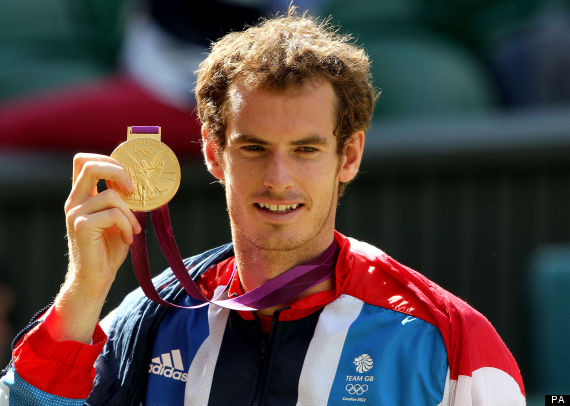
Two breathtaking, heart-quaking performances in this week’s Wimbledon quarter and semi-finals have seen British No. 1 Andy Murray through to the Final on Sunday, a progression many foretold from the start of the tournament, and all the more so following the early exit of both Federer and Nadal.  That formidable pair had loomed threateningly at the start of the Wimbledon Fortnight, promising to be Murray’s nemesis as they had each been on far too many previous occasions.  Their obliging co-operation in bowing out before any such calamity could strike has kept alive the dream of so many British tennis aficionados who have been yearning for a lifetime to see a British lad lift that famous trophy aloft.

Up to last year’s Final, Murray had been regarded by many with a sort of grudging respect which rarely if ever amounted to actual affection.  His slight tendency to taciturnity and the odd throwaway remark about his non-support of the England football team apparently did not endear him to many fireside patriots.  In the pubs and front rooms nationwide, as well as on the internet, you’d see many actively hoping for an early exit for our  only hope of ultimate glory.  Whether or not any of this was fair, it changed radically in a few tear-stained moments after Murray’s Final defeat to Roger Federer last summer. Trying manfully to fulfill his after-match obligation to speak to the crowd, Murray choked up with genuine emotion and palpable distress – and the stony old heart of England melted in a trice.  That iconic moment, together with the somewhat more relaxed and natural demeanour Murray displays since his happy partnership with coach Ivan Lendl began, seems to have converted the majority of the nation into supporters of our Andy. My wife, who is usually the best example of any feminine trait you might care to name, typified this sea-change.  She was a committed disciple before Murray’s first handkerchief was properly bedewed with manly tears, a complete volte-face from her position a mere few moments before when she had been relishing the Scot’s impending defeat.  Women, eh?

The thing is though, it’s not just the women.  Many blokes of my acquaintance and further afield – really, quite blokey blokes – now display positive support for Murray, and wish him well.  Apparently a few raw emotions, wrung from a stoic by the agony of defeat, can seduce even the proud male of the species.  I was a fan before, so I can’t really comment on the phenomenon, other than to observe that it has happened, and maybe just in time to stop the nation scowling sulkily at his ultimate triumph.

After last year’s Wimbledon, and the tears, Murray returned to the same venue shortly afterwards and carried off the Olympic Gold Medal, thrashing Federer in straight sets in a Final that he had reached – interestingly – via his only grass court meeting with Djokovic, his opponent on Sunday.  This also was a straight sets triumph.  An omen there, we may hope?  A first Grand Slam triumph followed too, with victory at the US Open where he beat Djokovic in the final. Another omen?  Murray is now very much “our lad” as he heads for his second consecutive Wimbledon Final on Sunday, and the vast majority will wish him success.

Murray can certainly seal himself in the affections of the nation for good this weekend. His demeanour on-court, and in his dealings with the press, still attracts criticism in certain quarters, but those people should remember that tennis is a game played, more than many others, in the head – the mental demands of a war of attrition over the best of five sets are gruelling at the best of times.  Murray will have learned from last year’s experience, and it seems likely that after his slightly less demanding semi-final, as compared to his quarter, or indeed to the epic semi that Djokovic had to weather, he should be in prime nick, both physically and mentally.  He’ll certainly need to be in order to beat the World No 1 again, and he’ll be aware too that in order to create further history, he now simply has to win the crown.  Last year, he wrote himself a page in the annals of British tennis just by reaching the final.  Now it’s time to take that last, decisive step.

Good luck, Andy Murray – we’re almost all right behind you.

Thatcher Day? No Thanks – Let’s Have a “Heroes Day” Late August Bank Holiday We Can ALL Support

British Heroes Day

British Heroes Day

Britain woke up on Wimbledon Men’s Semi-Final day to one of the dafter ideas of the year – the proposed re-naming of the late August bank holiday as “Margaret Thatcher Day” – shook its collective head incredulously and gaped in frank disbelief that anyone could suggest anything quite so stupidly divisive. Then it sighed with relief as it realised this was just another attention-seeking ploy by one Peter Bone – simply another of those tiresome so-called politicians who define their function by just how best they can publicise their tragically unremarkable careers – and fell instead to wondering whether to have toast or cornflakes for breakfast.

There was never anything to get really upset about, or to take too seriously.  Peter Bone MP has form for this sort of thing, after all.  His record reads a bit like a litany of gibbering lunacy and reactionary stances on issues such as abortion, gay marriage, the death penalty and conscription. He clearly subscribes to the maxim of “there’s no such thing as bad publicity”, and sallies forth on a regular basis, seemingly with one solitary thought in his head: how best to get Peter Bone MP in the news. He’s regularly one of the most enthusiastic expenses claimants, pays his wife top dollar for “secretarial duties” (so he’s big on nepotism too) and has a string of failed businesses and other ventures to his name. He also boasts a consistent record of losing supposedly safe seats in elections, sometimes bucking a national swing to the Tories by actually reducing their vote in the constituency he’s fighting.  All in all – not the sharpest or most useful tool in the box.

So those of us who do not inhabit the lunatic hinterland of the Tory Right can dispose of the latest Bone rant with a derisive sneer and a muffled chortle, and leave the Daily Heil readers to linger lovingly over what is a dead-in-the-water idea right from the start. But it does perhaps raise a legitimate question of the potential dedication of that anonymous late August holiday – many other countries use such occasions to pay tribute to their notable figures, so is it such a bad idea in principle?  Maybe not – so long as we manage to disregard the blithering of Bone and his ilk, and consider instead ideas from the saner end of the spectrum. The fact is that, whoever one might select as a deserving recipient of an honour such as becoming an eponymous bank holiday, the tribute is likely to be divisive to a greater or lesser degree. If you put forward the seemingly obvious name of Winston Churchill, you will hear voices raised by those with an awareness of his role in the General Strike in 1926. Those who espouse a free-market philosophy and howl in horror at the full-employment strategy that underpinned British politics until 1979 will not take kindly to any suggestion that Clement Attlee should be honoured by such a dedication. We’re a nation of many threads – and you can’t please all the people, all the time.

Why not then have a day when people of diverse views and differing affiliations can define their own tributes and make their own dedications – either singly or in smaller or larger groups?  It could be called “Heroes Day” and it would be an occasion for everyone to think of the person who means most to them personally, and commemorate that life and its achievements in the way they consider most fitting. Those who can gather like-minded people together could perhaps organise groups in tribute to a favourite hero or heroine. One group might have their Florence Nightingale Day, another might wish to raise a flag for Arthur Scargill.  Any or all of them could use their hero or heroine to create a local event, or maybe even something on a wider geographical scale.  They could raise funds for an allied cause, and generally do a lot of good.

Heroes Day.  It has a certain ring to it; the inclusive context tends towards the subjective nature of hero-worship, yet there is a patriotic flavour to it as well.  There might of course be a down-side: there will always be individuals or groups who will seek to ignite strife by seeking to glorify the names of those who most would feel are unfit to be remembered or revered.  That could be a knotty problem; the whole concept of a Heroes Day would be for self-expression to have its head and for people to be able to pay tribute as they see fit, and the introduction of any form of censorship would strike a jarringly flat note in that symphony of personal freedom.  It almost brings us back to the ridiculous idea which prompted this article.  Clearly, some careful thought would be needed.

On the whole, though, the idea of a Heroes Day has much to recommend it, and is no more open to abuse than any other such suggestion might be.  To a certain degree, you just have to accept that grown-up people have to be given the latitude to express their views and celebrate their beliefs as they see fit, and the existing laws and by-laws are after all in place already to deal with any extreme manifestations which might crop up.  On the positive side, there could be great benefits which might arise out of the events which could be organised nationwide to celebrate a Heroes Day.  Fund-raising and education spring to mind, cultural events and perhaps even job-creation could be possibilities.  And in these times of gloom, with austerity piling up all about us and threatening to drown us all under it’s murky incoming tide, don’t we need something positive to focus our attention and creativity?  A national holiday, with thousands of individual events dedicated to the whole panoply of heroes, both past and present, a source of pride perhaps comparable to last year’s Olympics and Paralympics, a surge of national well-being in the recognition of who we are and who we have been.  Heroes Day.  I really do think it’s worth considering.  Who would your August Bank Holiday hero or heroine be?

Liverpool FC Are Still the Greatest

Image

OK, so I’m a Leeds United fan – so what has this got to do with me?  Well, I’d have to start by declaring an interest – as a diehard supporter of the One True United from the right (Yorkshire) side of the Pennines, I’m not exactly enamoured of Man U.  I never had much time for them, even before that awful, whisky-nosed Govan Git came down to pour his choleric bile all over what had, until then, been a relatively civilised (give or take Brian Clough and nearly all the fans) English football scene.  There was always an air of spurious arrogance about them, as well as this “you’ve got to love us because of the Busby Babes” thing – which all the media seemed to lap up so eagerly, much to the disgust of real fans everywhere.  So clearly, I don’t like them – never did.  That’s in my Leeds United DNA.  But I’m not just a Leeds fan, I’m a fan of football in its widest sense – and I mourn the game we once knew which seems to be gone forever, swept away by a grotty tide of filthy lucre

Time was when Man U were grudgingly respected, other than by determined haters like me and my fellow Whites.  Since Sir Alex Taggart landed at the Theatre of Hollow Myths though, they’ve gone from “quite easy to dislike” to “impossible to stand the sight of” faster than you could say “Envious of Liverpool”.  The Purple-Conked One made it clear from the off that he was determined to “knock Liverpool off their perch”.  What we didn’t realise when he started his vendetta in 1988, showing no immediate sign of being any more successful than any of the other post-Busby failures, was that the whole face of football would have to change to realise Ferguson’s warped dream.

In 1967, Man U won their last ever proper League Title, making seven in total – quite respectable.  Then – nothing, for 26 years.  Since 1993, when a greedy Aussie bought the game and gift-wrapped it for a curmudgeonly Scot, the title “race” has been more of a procession.  The honour has ceased to be about virtuosity on the field; now it’s mainly about money and markets, and Man U have had much more of both during the whole Murdoch era.  Result: thirteen plastic titles.

Football is now a tacky, merchandise-driven, unseemly drive for profit over pride, and the dominance by Man U of such a grubby era is undeniably apt.  But we are still close enough in time to the pre-greed days for those of us of a certain age to remember when the game was about glory, not greed; when the aim was winning, not wonga, when the important people were supporters, not shareholders.  In those days, the distribution of wealth was far more even, and the field of possible title-winners was far wider; the competition (over a gruelling 42 match course, with un-manicured pitches and un-pampered pros) was far more fierce.  And yet, even in this environment of white-hot combat and intense rivalry, Liverpool reigned supreme, not for months, not years, but for literally two decades.  By 1992, they had compiled an honours list that seemed likely to see them at the top of the game for many years to come – unless someone sneaked in and moved the goalposts.  Cue Uncle Rupert.

Man U fans can crow all they want about 20 titles.  The evidence to confound them is there for all to see, like some geological stratum separating the dinosaurs from the mammoths.  That schism dividing the game up to ’92, from the showbiz shenanigans of ’93 onwards, stands out like a Tory at a Foodbank, exposing Man U as the wealth-backed, monopolising opportunists that they are.  And it has all been done with such bad grace, another indictment of this new and joyless age we’re plodding through.  No gentle wisdom of the Bob Paisley variety – instead we have the sour bile of Ferguson.  No loveable old-style hard-man Desperate Dan type like Tommy Smith – just the manufactured machismo of Roy Keane, a supposed tough-guy with an assumed snarl and trademark glower, whose typical party trick was to sneak up behind wee Jason McAteer and fell that not-exactly-scary individual with a sly elbow.

The comparisons could go on all day, but the bottom line is that Liverpool at their peak – and it was a hell of a peak – typified all the values of football that some of us remember from a pre-Sky, pre-glitz, pre-greed age when it really was all about a ball.  Now, it’s all about money, and contracts, and egos, and snide bitching to the media if you don’t get all your own way – and lo, we have the champions we deserve.

To apply a conversion rate which sums up all the anger and disgust I feel for the way our game has been degraded – I’d say each Premier League (or Premiership, or whatever else it’s been marketed as) is worth maybe half – at the very most – of each proper Football League Championship from the days when the game still belonged to us and the world was a happier and more carefree place.

At that rate, Man U are still a good long distance behind Liverpool, which is precisely where they belong.

Leeds United – the Top Five Injustices and the Refs Involved

Lorimer!

Lorimer!

When I heard that Brian McDermott was “optimistic” over Rudy Austin’s red card appeal this week, I had a little smile to myself and thought, “You’ve not been at Leeds long enough to know, mate.” It could be of course that a wily McDermott was doing his best to sway the appeal panel by opining the Austin incident was a “complete accident”. Whatever the case, the appeal was turned down, as most Leeds fans would have expected. We don’t really get the breaks where the football authorities are concerned. Sour grapes? Judge for yourselves.

Prompted to cast my mind back over history, I thought I’d highlight some famous instances where Leeds have signally failed to get the rub of the green. The focus is mainly on referees, and I’ve had no compunction about naming and shaming. In reverse order of spectacular bentness, the candidates for “Injustice of the 20th Century” are:

No. 5: Wolves 2, Leeds 1 – 8th May 1972 (Ref: Bill Gow)

I’ve placed this as least serious from a refereeing point of view because – in the crucial penalty incident – Mr Gow was unsighted and badly let down by his linesman J C Collins of Macclesfield, an inexperienced official who apparently “froze”. It does seem to have been a blatant handball and a definite penalty though – in a match where Leeds would win the Title and therefore the “Double” if they could avoid defeat. Tellingly, Mr Gow got home that night to be greeted by his wife saying “It looked a penalty on the telly.” My main culprits for this game are the callous officials of the FA and Football League, who insisted a tired team should play a title decider a mere two days after a gruelling FA Cup Final against Arsenal. Leeds did not even get to celebrate their Cup triumph, heading straight off to Wolverhampton with their battered and wounded bodies and their missing heroes. It was a shoddy affair that you could not envisage these days. Respected “Guardian” writer Eric Todd described the uncaring treatment of a gallant Leeds side as “scandalous”.

No. 4: Leeds United 1, West Brom 2 – 17 April 1971 (Ref: Ray Tinkler)

No doubts about the culprit here. Ray Tinkler’s face as he walked off the Elland Road pitch after this display wore a tellingly apprehensive expression; that of a man who knew he was walking out of a storm and into a typhoon. The game turned on an offside call – or more accurately, two of them. Already one down against opponents they’d been expected to beat easily, Leeds were pressing hard. A victory was vital in the race for the Title, anything less would pass the advantage to Arsenal. Then Norman Hunter gave the ball away on halfway with most of the Leeds side committed forward. The ball bounced off Tony Brown into the Leeds half where a clearly-offside Colin Suggett is loitering as the linesman flags for the free-kick. Tony Brown continues his run when Tinkler fails to blow in response to the flag, passes the ball to Astle – also in an offside position – who scores. A season’s work, in the words of Don Revie, is undone in a few mad moments. Barry Davies, commentating for the BBC, memorably remarked “…and Leeds will go mad. And they’ve every right to go mad..” Strong stuff from a sober professional. In the wake of the crowd disturbances that ensued, Leeds were forced to play their first home games of the following season away from Elland Road, a sanction that led to points being dropped, and probably contributing to their narrow failure to win the 1972 title as well. So Mr. Tinkler may well have done us for two Championship crowns. Cheers, Ray.
No. 3: Chelsea 1, Leeds United 0 – FA Cup Semi Final at Villa Park 29 April 1967 (Ref: Ken Burns)

The classic FA Cup Semi: two fine teams, not at all fond of each other – the fashionable Kings Road fancy dans of Chelsea against Don Revie’s battle-hardened stormtroopers. Or so the Press would have it. Chelsea were ahead late on, a fine goal from Tony Hately being the difference. Leeds thought they’d drawn level when Cooper scored, but the effort was chalked off for offside, despite vociferous complaints from the Leeds players who swore blind that Cooper had come from an onside position. Then, a free kick 25 yards out. The ref took some seconds organising Chelsea’s defensive wall, and then caught the eye of John Giles – a commonly-accepted signal for the free kick to be taken. Giles rolled the ball to Lorimer, who smashed it into Bonetti’s net. Leeds were joyful, Chelsea despaired – but referee Burns ruled the goal out, ordering a retake because Chelsea’s wall was not far enough back – a technical offence against Leeds. The retaken free-kick came to nothing, and Leeds were out of the Cup in the cruellest circumstances.

No. 2: Bayern Munich 2, Leeds United 0 – European Cup Final, Parc des Princes Paris May 28 1975 (Ref: Michel Kitabdjian)

38 years on, this still sticks in the collective craw of Leeds United fans. 38 years on, we still sing “We are the Champions, Champions of Europe” in ritual protest. Two blatant penalty shouts in the first half, the guilty man on both occasions was Der Kaiser, Franz Beckenbauer. First he handled blatantly in the area, and then a “scissors” tackle on Allan Clarke – you wondered how anyone could fail to give either. Leeds were completely outplaying Bayern, drawing sympathy even from the English TV commentator who was bemoaning the lack of a more even contest. Then in the second half the ball falls perfectly for Peter Lorimer just outside the Bayern penalty area. Lorimer times his volley superbly, and it flies into the net, beating Sepp Maier all ends up. Then confusion as the goal seems to be given, until Beckenbauer urgently directs the ref to speak to his linesman. More confusion, then the goal is disallowed. Bayern score twice against a demoralised Leeds near the end, and the European Cup is snatched from the hands of Revie’s old guard; the triumph that was to crown their careers torn away in the most dubious of circumstances.

No. 1: Leeds United 0, AC Milan 1 – ECWC Final, Salonika, Greece 16 May 1973 (Ref: Christos Michas)

This is the Grand-daddy of bent matches, a game almost universally acknowledged to have been as straight as a corkscrew, allegations of bribery, the referee banned by UEFA afterwards – and still the 1973 Trophy is written into the extensive honours list of AC Milan. Justice, as they say, is a gag. Peter Lorimer on the match: “It was wholly, indisputably and wretchedly bent…” Johnny Giles was out with an injured hamstring, but he’d been working for the media and had heard that the ref was “in Milan’s pocket”. His gloomy view before the game was that it was one Leeds United wouldn’t be allowed to win. Three minutes gone, and Milan are awarded a free-kick, a decision that could charitably be described as dodgy. A weak shot takes a cruel deflection on its way into the Leeds net, and it’s 1-0 early on. From then onwards, it was a story of United pressure thwarted by thuggish challenges from the Milanese, decision after decision going against the increasingly frustrated and demoralised Leeds team, two, possibly three good penalty shouts waved away by Michas, and inevitably the game finished with Milan leading by that early goal, collecting the trophy to hoots of anger and derision from the outraged Greek crowd who cheered the defeated Leeds side as they limped round on a lap of honour “after this most dishonourable of matches.”

There has been a petition to UEFA with a view to overturning the result in this wretched blot on the history of the game, awarding the trophy and medals retrospectively to Leeds. UEFA did nothing. I’ve opened another petition – since the original effort in 2009, Christos Michas has died. It seemed appropriate to try to revive the matter. That petition can be supported here.

Leeds have frequently been the victims of poor decisions and examples of prejudice against them over the years. They are still, to the best of my knowledge, the only team to concede a goal to the background of the referee punching the air in celebration – supposedly of a good advantage decision, but really? Would it happen if the victims had been Man U?

These are the 5 most blatant examples I could find of occasions when Leeds have suffered at the hands of officialdom, referees in particular. I’m sure there are many less famous instances, and I’d be interested to hear the recollections of others. It’s a well-known saying in the game that bad decisions, like bad luck, tend to even out over time so that all teams are more or less equal in the long run. I think any Leeds fan would have a wry grin at that one.

Another Hollow Triumph for Money, Murdoch and Man United

Image

We deserve the Title! We DO!!! Waaaahh!!!

More than likely they’ll be tenaciously cavorting away in dutiful triumph tonight at The Theatre of Hollow Myths, as Man United celebrate another processional title triumph, brushing aside what I expect to be feeble resistance from Aston Villa..

Since Murdoch bought the game, the Trafford-based club have been on easy street. Better-placed than the rest – given their global fan-base – to capitalise on a league based on glitz and merchandise, their fortunes have been linked inextricably with the fortunes of Murdoch’s Sky TV empire as it has tightened its grip on what used to be our national game.

In 1967, Manchester United won the Football League Championship.  Brief flickering highlights were shown in grainy black and white as the champions paraded the famous old trophy.  England were World Cup holders, Harold Wilson was Prime Minister and a pint of bitter cost about 8p.  It would be two years before Man set foot on the moon and Jimmy Greaves had hair.  It was that long ago.  Matt Busby and his team celebrated another trophy, but their era of success was coming to an end.  Man U would never win the Football League Championship again.

Fast forward 25 years, and Man U came as close as they had ever come to regaining the Holy Grail, only to see it snatched from their sight forever as Leeds United took the prize in 1992 by four clear points, becoming the last ever proper League Champions.  But things were about to change, and not before time.  It had been a clear quarter of a century since the media’s favourite team had won the league; that most marketable of clubs had failed, utterly, to rise to the top of the game where their profit potential could best be realised.  The money men in their grey suits were frustrated.  This could not be allowed to go on.

And so the Premier League was born, in a blitz of fireworks, tickertape and dancing girls, complete with cheesy music, the hirsute Richard Keys, a league title trophy modelled on the lines of Thunderbird One and all the bells and whistles an Australian entrepreneur could dream of.  Behind the window-dressing, bigger changes were afoot.  The money would be channelled upwards, in defiance of gravity and the previous trickle-down economics of the game which had afforded some protection to the relative paupers.  The big and the rich would get progressively bigger and richer; the days of the League Title being won mainly on merit were done.

From now on, the destiny of the title would be decided largely on the basis of pre-season balance sheets.  From a situation where he who dared, won – we would now see an era where he who spends biggest stands the best chance.  One club above all others stood to benefit from this Brave New World – Man U, heralded as the Biggest Club In The World (to a background of incredulous giggles in Milan, Barcelona and Madrid) had built up a worldwide following with their relentless harking-back to the legacy of the Busby Babes and the Munich disaster.  Their history had made them everyone’s second-favourite club; now Murdoch’s revolution put them in pole position to capitalise on that, and reap a harvest of trophies from the seeds they’d sown in flogging Man U tat to a globe-full of eager and undiscriminating consumers.

Resistance became sporadic; almost futile (were Man U the sporting equivalent of Star Trek’s Borg?)  Man U won the first two “Premiership” titles before a cash-rich Blackburn out-spent and out-fought them in 1995.  After that the procession continued, the titles piled up at the Theatre of Myths, only Arsenal, Chelsea and Man City have interrupted the monotonous toll of the bell signalling more success for the most effective franchise in football.

Tonight will see the 20th “Title” for the club that used to be loved by many outside of their immediate support, but are now regarded with a dull hatred by proper football fans.  This is put down to jealousy of course; but every fan has a choice, and jealousy is an unnecessary emotion.  Tonight’s latest success will see the appearance of more Man U acolytes everywhere, as the need to be identified with size and success sucks in those of questionable character and inadequate self-esteem.  More Man U shirts in Torquay and Milton Keynes, more tacky memorabilia sold in Stoke and Londonderry.

The 20th title then – but there remains a clear demarcation.  7 titles in their history up to 1967.  13 in the 20 years since 1993.  Is this just a coincidence?  Of course it’s not; if anything it’s an indictment of Man U’s failure.  Somehow, in seven of those years, they’ve failed to win the league, despite the financial and psychological disadvantages of their rivals, they’ve let it slip away.

The fact is that the titles won since 1993 are devalued by the steep slope in Man U’s favour of the playing field on which all have to compete.  Liverpool were dominant in an even competition for the best part of two decades up to the 90’s; it is now 23 years since they were Champions, but their overall record remains formidable.  Whatever Man U might want to make of it as they crow about 20 titles to 18, they know in their heart of hearts that the baubles won in the Murdoch era are of a lesser water than the diamonds Liverpool gathered to them.  The exchange rate is against them; their achievements are relatively less.  If they maintained their current rate of success for another twenty years (and who knows, they might – but it would kill the game), then maybe they could be compared to Liverpool, the acknowledged masters at the time Murdoch’s coup took place.

But for the moment, I say – as a devoted fan of Leeds United – Liverpool are still The Greatest.

Ingenious Suggestions Invited

ImageSo, I’m writing this book.

It’s going to be about my team, Leeds United, and how the club have accompanied me on the highs and lows of my life, giving me misery when I’ve been at my happiest, and more misery when I’ve been down. It’s been done before, but every fan’s story stands alone and is unique in its way. Football affects us all differently, and we all react in an individual way to the slings and arrows of outrageous misfortune that the game visits upon us. I started relatively late watching Leeds, and it was all my dad’s fault when I finally got round to it. Thanks, Dad. I think.

Really, I wasted the first 13 years of my life farting about watching old films and reading Biggles and Billy Bunter books, when I could have been watching Revie’s heroes stomping all the opposition into submission, and winning the occasional pot along the way. Instead of seeing us win our solitary FA Cup, I was reading a poem out loud at a Music Festival in Ponte, finishing runner-up in true Leeds United style. Instead of watching us take two league titles, I was being a bookworm and dreaming of a career as an astronaut. Talk about a misspent youth.

I finally started watching Leeds in April 1975. Revie had gone to his ill-fated stint as England boss. Big Jack had gone. The great days had gone too, although that wasn’t apparent at the time. Leeds were on their way to the European Cup Final, and my first game was a 0-2 defeat to Liverpool four days before I saw us beat Barcelona 2-1 in the European Cup Semi, First Leg, Cruyff, Neeskens and all. So, fittingly it was Billy Bremner who gave me my first Leeds goal, rocketing a shot into the top left corner in front of the South Stand as I watched stood precariously on my milk crate in that weird shelfy bit halfway up the Lowfields Stand. I still have the commentary of that goal as a ringtone on my iPhone. Fantastic.

And the rest is history; my history and the downs and ups of Leeds United FC over the subsequent 38 years to date. I hope you’ll buy the book, when it appears, and read more of my memories, interspersed with various rants here and there about how the game was, is and (I’m afraid) will be.

The thing is – I really need a title. I’m a bit stuck there, call it sub-editors’ block. The actual book is coming along nicely, and I think a lot of Leeds fans will empathise with what’s contained between the dust-covers – but I’m damned if I can think of a title for the front. Hang on – “The Damned United”?? Hmmmm, ideal – but I have the feeling it’s been done.

I would really appreciate some suggestions. If I end up using one of them, I will happily credit the owner of the idea on the inside front cover, as you do with proper books. And I’ll furnish a complimentary copy also, so you don’t have to wait for it to appear in the bargain bins for 99p. Can’t say fairer than that.

Honestly, I’m fresh out of original, snappy titles. Please help. As Brian McDermott says, we need to sing Marching On Together, and really mean it, suiting actions to words – so your support and inspired suggestions would be right in line with that Leeds United MOT spirit.

I look forward to some brilliant ideas, thanks in advance.