Tag Archives: death

True Cost of Thatcher’s 1983 Election Win to be Revealed??

Image

Later today, figures on the number of suicides since the early eighties among British armed forces personnel who served in the Falklands Conflict are due to be revealed.  The headline figure on casualties of the fighting is clear cut: 649 on the Argentine side, 255 British and 3 Falkland Islanders for a total of 907 human souls lost over a rocky outcrop or two thousands of miles from the supposed “mother country” UK.  Arguments may well wax and wane over the correctness of Britain’s historical claims to the Falklands, or Malvinas as they are known in Argentina.  A rhetorical question often asked goes along the lines of: how would the British national psyche take it if Jersey or Guernsey, for instance, were to be claimed as sovereign territory by, say, Peru?  It’s a hypothesis that perhaps doesn’t get us far, other than maybe to provide an insight into the sensitivity of feeling over the Falklands/Malvinas issue for the citizens of Argentina.
Thatcher: In Command

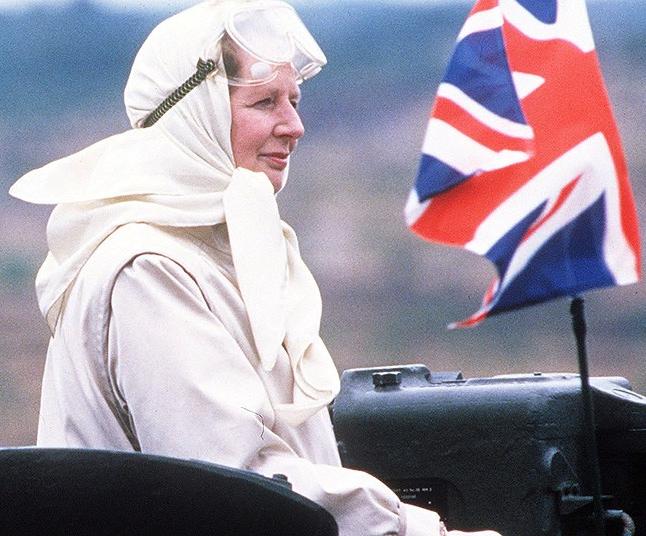
Thatcher: In Command

Whatever the true cost in lives of the Falklands conflict, what seems indisputable is that the military operation and its success in terms of objective achieved certainly boosted a Tory administration that had seemed in terminal decline at the time of the Argentine invasion.  It has been alleged that the British Government had prior intelligence of a pending military operation  planned by General Leopoldo Galtieri‘s ruling junta, the implication being that Thatcher’s cabinet saw the political potential of a decision to war-war rather than jaw-jaw, and so elected not to nip the situation in the bud.  The extent of the mess that this government found itself in is difficult to over-state; had they successfully deflected any threat of invasion, or had they launched a diplomatic initiative in the wake of the Argentine occupation, it is doubtful whether the impact on the subsequent general election would have been as great.  Pragmatically, “war” (even an undeclared war) was a better option than “jaw” – or so the conspiracy theory goes.

On the Argentinean side too, there appeared to be significant political advantage to be gained from a successful re-acquisition of Las Malvinas.  The Argentine economy was in an even bigger hole than that of the UK, and the effect of the invasion was a major boost to patriotic sentiment and the consequent short-term popularity – or at least acceptance – of the previously despised junta.  The historical precedent of a convenient war, to arouse jingoistic feelings and a surge in national pride, is there for all to see.  Both sides will have been well aware of the stakes, and a certain amount of brinkmanship may well have been at play.  This was probably more the case on the Argentine side, where it seems likely their military operation was calculated on the basis that the British would have neither the will not the logistical capability to mount a response in kind over such a long distance with all the problems of cost, supply lines and communications.  In the UK, the swiftness with which that response actually materialised was a tell-tale sign that Thatcher’s government were not only willing, but eager to launch the most emphatic counter-strike possible, and the fervour with which the public hailed the departing task force was a massive encouragement to the hastily-assembled War Cabinet.
The Sun's Perspective

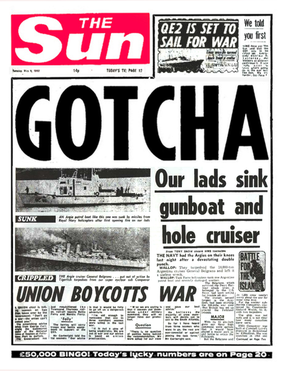
The Sun’s Perspective

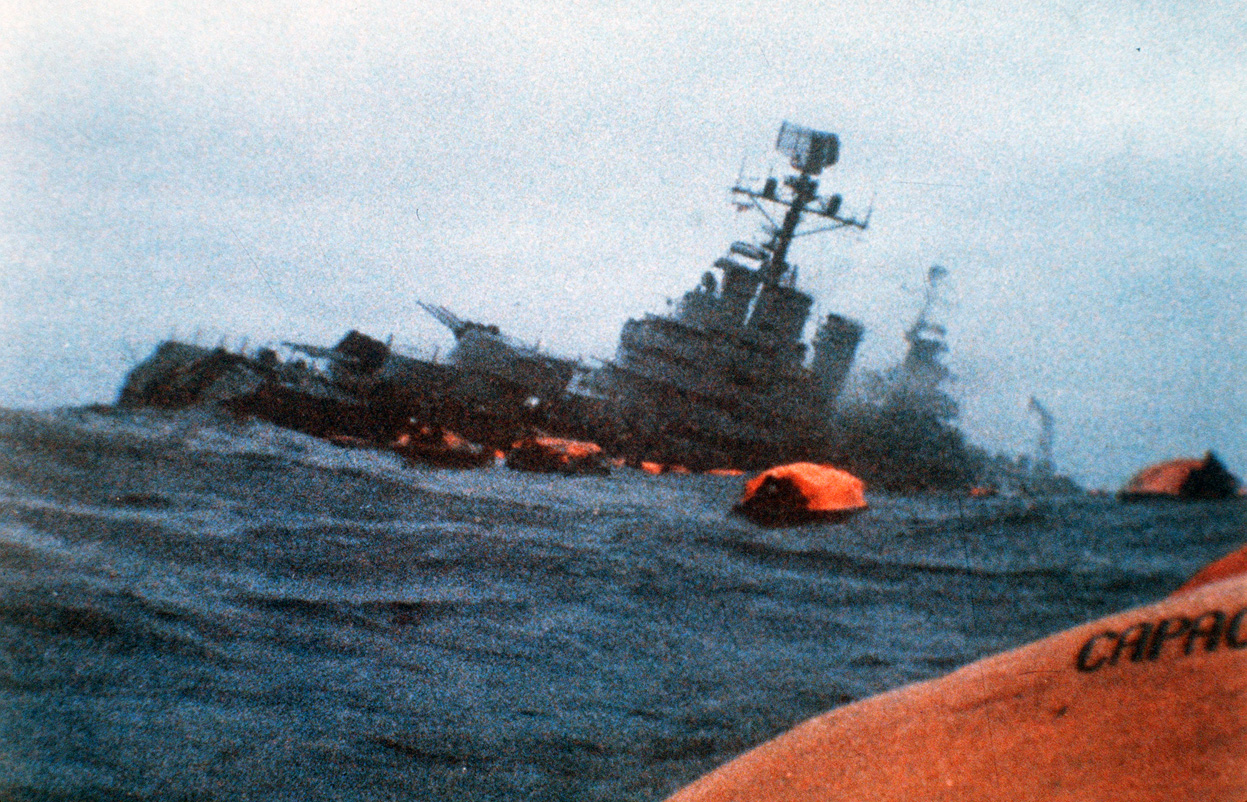
The attitude on the part of the British forces seems throughout to have been one of belligerent determination and ruthlessness.  Despite the problems of distance (mitigated to a large extent by the availability of the strategically-located Ascension Island as a stopping-off point), the task force had the inestimable advantage of its professional make-up; the troops were regulars, hardened pros, and many feared for the fate of the Argentinean rag-bag of conscripts should they ever meet in direct combat.  In the event, the Argentine forces fought bravely and effectively, leading to unexpectedly bloody and costly land engagements such as the Battle of Goose Green.  The conflict as a whole was more a series of sharp engagements on land, at sea and in the air, than any drawn-out and attritional process.  British naval losses were significant – the attack on HMS Sheffield following hard on the heels of the notorious action to sink the ARA General Belgrano.  Both sides were being hard-pressed to hold their political nerve in the face of dramatic losses such as these.

In the end, of course, there could only be one winner and the likelihood all along was that the British forces, superior in training and equipment even though stretched logistically over such a vast distance, would succeed in re-taking the islands.  So it proved, but at a tragic cost on both sides in terms of lives lost.  The die had been cast right from the start in that the losing side would almost inevitably see political change in the wake of the conflict and many now view this, from the perspective of over thirty years, as a calculated risk on the part of both governments concerned.  The determination to press ahead with military action and the relative marginalisation of the United Nations in the matter speaks of a strong political resolve on either side, and the results are clear to see; Galtieri was removed from power in January 1983, whereas Thatcher received an immense boost in the polls, and this “Falklands Factor” saw her sweep to victory with a landslide later that same year.  The monetarist Tory government was not, after all, destined to be a one-term experiment as had seemed so likely prior to 1982.  The course was well and truly set and the old-style of government, with full employment at the root of all its thinking, was consigned to history.  Thatcher may have been the economic disciple of Keith Joseph, but she showed the survival instincts of a polecat to go with her determination to make Monetarism work and banish old-style Socialism.  From that perspective, the loss of a few hundred lives in the South Atlantic may well have been considered expedient against the probability of electoral defeat and a return to what she will have thought of as the economics of disaster.

Thatcher was the big winner in the Falklands conflict.  It has been posited since that a great saving, in terms of money and human lives, could have been effected by ceding the territory to Argentina and providing each islander with a bounty of £1 million and a villa in the South of France.  This is, of course, a simplistic hypothesis, but the numbers certainly add up.  The British government of the day could not contemplate what they would have seen as a craven climb-down, with a devastating effect on how the UK was seen in the eyes of the world.  To this day, pro-Thatcher apologists refer to the way she “made Britain great again” or similarly extravagant claims.
Simon Weston OBE

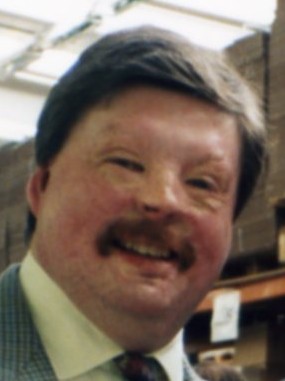
Simon Weston OBE

It is notable in this context that one of the most fulsome tributes paid to the late PM, after her death in April this year, was from Welsh Guards veteran Simon Weston OBE who famously suffered extensive burn injuries during the Falklands campaign in the attack on RMS Sir Galahad. Weston is now seen as an inspirational figure for his recovery from his injuries and his charity work, and his endorsement of Thatcher’s premiership was seen as a powerful vindication of her policies, particularly where the Falklands issue was concerned.

What appears absolutely certain is that Thatcher gained herself an extra seven years she would not otherwise have had, to advance her own agenda, and change the face of Britain forever.  Whether you regard the number of lives lost as a price worth paying for that will depend, naturally, on your own political convictions.  But it may be worth noting, later today, just how high that price was when those official Falklands-related suicide figures are finally released.  At a time when our government today is starting to pile up the body count as people take a drastically simple way out of the world being foisted on them, we may reflect on this depressing tendency of governments to view individuals as mere political pawns or economic units, rather than people imbued with a spark of life and the right to an existence outside of macro political considerations.  Life should be seen as far too precious to end up as a statistic of the battle to stay in power.

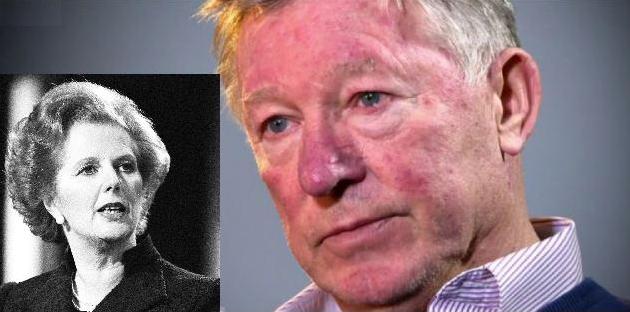
Thatcher & Fergie – Unlikely Bedfellows

Two Media Darlings

Two Media Darlings

It’s been an awkwardly stomach-churning day for any self-respecting Man U-hater with anything but the most robust of digestive systems.  The output of Sky TV and BBC Radio Five Live in the wake of the Govan Guv’nor’s resignation as Supremo at the Theatre of Hollow Myths has been wall-to-wall, sickly sweet revisionist nonsense.  It was perhaps predictable – Man U seem to attract this kind of attention quite regularly.  They hypocritically call Liverpool the “City of Pity” and “Shrine Worshipers”, and yet there was the cloying sentimentality of the Lone Piper at Old Trafford when Busby died, and of course there is the nauseatingly poorly-written “Flowers of Manchester” doggerel recycled every February 6th when the Man U Marketing Machine gears itself up for the annual “Let’s Make More Money Out of Munich” event.  The treatment of Man U in the media has a lot in common with the ingestion of a copious draught of heavily-salted water.  Both are pretty much guaranteed to make you sick.

For some of us, it’s only been a couple of short weeks recovery time since the last bilious attack brought on by an onslaught of gushing praise for a much-hated public figure.  To listen to the BBC’s output in the wake of Maggie Thatcher’s death, you’d think she was universally acknowledged as a saint who personally saved our country from the hordes of infidel savagery, instead of a humourless and uncaring woman who presided over the decimation of manufacturing industry and created an underclass of unemployed dole fodder.

Ironically, that assessment of Thatcher – the realistic one, not the BBC’s rose-tinted, soft-focus blarney – would almost certainly strike a chord with Ferguson, a man who has always made much of his Socialist roots.  And yet the fulsomely worshipful bilge poured all over her death and funeral has been rivalled today both in flavour and quantity as various media outlets have sought to paint a picture of “Fergie the Greatest”, conveniently ignoring the essential character of the man, which is that of a coarse bully and a ruthlessly competitive control-freak who would brook no opposition and practiced suppression of dissenting voices on a grand scale as well as nepotism, intimidation and other deeply unattractive tactics.  Ferguson and Thatcher operated in vastly different spheres, and pursued their objectives in vastly different ways, although the objectionable single-mindedness and refusal to acknowledge any other point of view was common to both.

It is arguable too that both shared a similarly dislikeable personal character and yet that both represented vested interests which have caused a complaisant media and establishment to bend over backwards in their efforts to hide these unfortunate facts.  However difficult they both were to handle at different times – Ferguson famously “banned” the BBC from his personal airspace for an extended period, claiming in a juvenile fit of petulance that the Corporation was “pro-Liverpool”, and objecting to their focus on the activities of his shady agent son Jason – the media still fall over themselves to praise both to the skies.  Powerful interests are at work here, rigid agendas are being pursued.

Ferguson will not relish any comparison with the Iron Lady, and yet such comparisons are irresistible.  Nepotism, for instance.  Thatcher was accused in many quarters of using her influence to smooth the path to riches of her not-outstandingly-bright son Mark, a man who would seem to have difficulty finding his way out of an open box.  Ferguson allegedly pushed the services of Agent Jason on young players at Man U and reacted with fury if the lad in question went elsewhere.  When his fledgling manager son Darren was sacked by his employers after his latest relegation, Fergie senior reacted by recalling two young Man U players who had been at that club on loan.  The similarities in modus operandi for Fergie and Thatch abound.

It is for the gross and over-the-top way in which both have been virtually canonised by the media in the wake of their exit from the stage that really sticks in the throat, however.  The tasteless extent of it, the gushing, nauseatingly deferential tone of the ubiquitous tributes, strike a remarkably similar tone in either instance.  In Thatcher’s case, the masses thus appeased were the blue-rinse brigade and their Colonel Blimp husbands, Tories to their last cell, and voraciously hungry for any news coverage to confirm their view that la Thatch was the greatest since Churchill, the greatest peacetime leader ever.  The claims of Clement Attlee, the authentic greatest PM ever, were callously overlooked, as was the fact that his funeral in 1967 was a quiet and dignified affair.  In the case of Ferguson, the masses are of course the legions of Man U fans all over the world and in Torquay and Milton Keynes in particular, who have been fed the myth of Man U being the greatest club in the world (Arf!) and who now wish to hear Fergie being called the greatest, against the claims of true greats like Busby, Revie, Shankly and the rest, proper managers who had to do it all on a level playing field and not the Sky-weighted Man U-centric environment we have now.

Radio Five Live are still at it, as I listen.  We go “back to Old Trafford” on a regular basis, to listen to the hushed tones of a reverential reporter, laying it on thick for the benefit of the thick.  It’s all so remarkably similar to the nonsense we all suffered in the wake of Thatcher’s passing.  Perhaps, for Ferguson, that is the unkindest cut of all.

Demand a Public Enquiry Into 1300 Deaths After Atos Medicals: Petition, Please Sign and Share

Image

Iain Duncan-Smith: Arrogant, contemptuous and out of touch

The petition calling upon Iain Duncan-Smith to instigate a Public Enquiry into the conduct of Atos, with particular reference to the appalling figure of 1300 deaths after Atos “medicals”, has so far attracted 4,346 signatures.  That’s not a bad start, but much more is needed.  YOUR support, and YOUR willingness to help network this petition could be vital; if a Public Enquiry could be brought about, Atos would be well and truly under the spotlight and it’s possible they may be forced to change their way of working.  It’s not over-stating the case to say that this could save lives.  YOUR signature, YOUR support could actually SAVE LIVES.  It’s that vital.

An Enquiry would seem appropriate in any case, for an organisation which has been branded “Not fit for purpose” by the British Medical Association, and which has itself recently issued a wheedling apology to the people it has wrongly found fit for work. The apology is aimed at the survivors of the Atos experience, you understand. Sadly, it is too late to apologise to the 1300 who have died.

The petition I’m asking you to sign can be accessed here. Please click the link, sign the petition, and share it as widely as possible. Share this article too, and follow this blog. It’s all about networking and it all helps  Just maybe, if things go well, we can make a difference. A lot of people are out there, counting on your support to start some sort of change for the better. Help them, in memory of the 1300 who have paid the ultimate price for official incompetence and callous disregard for how human beings are being treated.

Iain Duncan-Smith treated a previous petition started by Dom Aversano, calling on him to do as he said he could and live on £53 a week, with the utmost arrogance and contempt, dubbing it “a stunt”. This is the measure of the man’s utter disregard of public opinion, or indeed anything that doesn’t help advance his own malicious agenda.

Don’t let him get away with it again.  Become pro-active.  Make this man see that the voice of the people will not be ignored.  Sign and share, and make a difference today.

Please.  Share If You Care.

Demand a Public Enquiry Into 1300 Deaths After Atos Medicals: Petition, Please Sign and Share

Image

Iain Duncan-Smith

The petition calling upon Iain Duncan-Smith to instigate a Public Enquiry into the conduct of Atos, with particular record to this appalling fatality rate has so far attracted 4,346 signatures.  That’s not a bad start, but much more is needed.  YOUR support, and YOUR willingness to help network this petition could be vital; if a Public Enquiry could be brought about, Atos would be well and truly under the spotlight and it’s possible they may be forced to change their way of working.  It’s not over-stating the case to say that this could save lives.  YOUR signature, YOUR support could actually SAVE LIVES.  It’s that vital.

An Enquiry would seem appropriate in any case, for an organisation which has been branded “Not fit for purpose” by the British Medical Association, and which has itself recently issued a wheedling apology to the people it has wrongly found fit for work. The apology is aimed at the survivors of the Atos experience, you understand. Sadly, it is too late to apologise to the 1300 who have died.

The petition I’m asking you to sign can be accessed here. Please click the link, sign the petition, and share it as widely as possible. Share this article too. It all helps, and maybe if things go well, we can make a difference. A lot of people are out there, counting on your support to start some sort of change for the better. Help them, in memory of the 1300 who have paid the ultimate price for official incompetence and callous disregard for how human beings are being treated.

Iain Duncan-Smith treated a previous petition, calling on him to do as he said he could and live on £53 a week, with the utmost arrogance and contempt, dubbing it “a stunt”.  This is the measure of the man’s utter disregard of public opinion, or indeed anything that doesn’t help advance his own malicious agenda.

Don’t let him get away with it again.  Become pro-active.  Make this man see that the voice of the people will not be ignored.  Sign and share, and make a difference today.

Please.  Share If You Care.

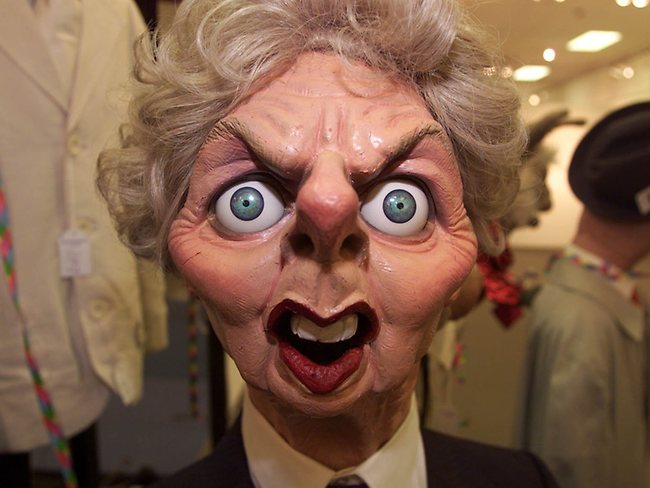
In Memoriam: Margaret Hilda Thatcher (1925 – 2013)

Image

HM Maggie the Thatch

An evil old woman was Thatcher
For cruelty you just couldn’t match ‘er
She said she’d not turn
But now she can burn
For the Reaper has managed to catch ‘er

When Winifred Died

(Inspired by my Mum’s poem of the same name, which is reproduced with her kind permission below this article)

june11Sometimes, a seemingly normal day can turn suddenly significant, and mark a change in your life.

On June the 11th 1986, I went along to the poky offices of the Citizens Advice Bureau in Moorthorpe, between South Elmsall and South Kirkby in West Yorkshire, for my regular stint as a volunteer adviser. At the age of 24, I had two abortive stabs at Higher Education behind me, I’d gained a rather sketchy qualification in computer programming, and I’d worked as a hospital gardener and as an assistant school caretaker. The bright young lad from Ponte was off to an indifferent start to what has turned out an indifferent career. But I was still optimistic back then, and I assumed I’d serve a breezy apprenticeship in advice work, and then a CAB of my own would just drop into my lap, and I’d be set. CAB Manager somewhere, they’d promised; inspirational motivator and trainer of volunteers, solver of multifarious problems and crusading campaigner on burning social policy issues, that’d be me. Rob Atkinson: success.

That it didn’t quite work out that way is incidental to this tale, but such was the backdrop to this particular sunny morning. It was a watershed in my life for quite another reason though; for on that unsuspecting June day, my Nana Cawthorne died. She was not the first grandparent I’d lost – I’d already run out of Grandads. Nan’s husband, Walter Michael, had died relatively young in the early 70’s when I was a skinny rabbit of 10 or 11. He’d been an object of terrified fascination for me, prone to loud bellows, snapping his leather belt suddenly and shatteringly, rattling his false teeth at me with no warning, and holding forth stridently about his health problems, the ones that eventually got him (they stuck a tube up my arse, the buggers, and drained about two pints of blood out, two bloody pints!) When he died, my Mum was deeply upset, as you might expect, and we kids dashed upstairs in tears when we heard. For myself back then, I wasn’t quite sure how I felt, but it seemed polite to join in the weeping. I think I was too young to appreciate what a character Grandad Cawthorne was – he’d been a Regimental Sergeant-Major in the Army, and was a bit of a lad all round – so my main impression of him was his larger than life scariness. Years later, I wished I’d have known him when I was older and could have better appreciated him as a bloke, but at the time I felt more sympathy for my Mum than any real sense of loss myself.

My other Grandad – my Dad’s dad – had been a vaguely gentle sort of man, a pillar of his local Working Men’s Club and much given to pulling a wooden trolley behind him as he wandered around his neighbourhood. He’d bring it home laden with various bits and pieces which he’d then stash in his shed, hoping they’d be useful at some unspecified future date. He also used to draw busy farmyard scenes in blue biro, and I remember watching these take shape and being impressed in a one-step-removed sort of way – I was really more of a reader, myself. Harold Atkinson died in my mid-teens, his passing eased and attended by my Mum, dutiful daughter-in-law, through the wee small hours of a summer night. We boys were left at home, and my brother Gray and I got up really early, still unaware of Grandad A’s demise. We went for a walk down to the Rookeries to watch the sun rise – because we could – and nicked a pint of milk from someone’s doorstep on the way back, to make Angel Delight for breakfast. When I heard I was now Grandad-less, I once again felt a weird and slightly guilty sense of detachment – a feeling that this didn’t really involve me. They told me my Nana Atkinson’s reaction had been to say “Oh dear, who’s going to run my errands now?” which did evoke a regretful feeling that this wasn’t much of an epitaph.

So, two grandparents down, and I was starting to wonder if I had any finer feelings to hurt. I’d been more upset so far at the passing of various small pet rodents, than these actual bereavements where I’d lost close relatives who’d embellished all my childhood occasions. It seemed strange, and a bit worrying. I think I pondered over whether I was some sort of emotional black hole.

But my Nana Cawthorne was different. She’d always been my special ally in family squabbles, and we used to swap books and share our opinions. She’d sit me down in front of her chair when she came to visit, and tell me stories of her days as a young girl “in service”, as they called it – when she worked as a lowly maid in some rich house. She was from the south, and her accent was music to my ears – she’d talk away gently, knitting all the while, and I was mesmerised by the flow of her narrative, punctuated with knitting-needle clicks and the odd chesty cough – she was a compulsive smoker until her last days. Many, many afternoons passed happily by like this, and yet I can’t now, for the life of me, recall any of the tales she told. I think perhaps it was the tone of her voice, calm and soothing, with a gentle southern burr that delighted me. I just know I was always happy when she was around, content to sit on the rug before her bony knees, looking up occasionally at the thin face behind the flickering knitting-needles, with its folds of skin and rheumy eyes, the wispy cloud of grey hair. Yes, I certainly loved my Nana Cawthorne.

In the normal run of life, though, I saw less of her as I got older, and of course I was away from home for a couple of years, discovering that I was not cut out for academic life. Then there were various brushes with the world of work, and I was seduced by the twin Sirens of beer and amateur theatre which, between them, pretty much accounted for my social life in my young adulthood. There was football, too, and I was either playing it for a lot of the early 80’s, or rampaging around the country following Leeds United in a more or less well-behaved way. All this time Nan grew older and steadily more crotchety, so I heard. It felt natural that I saw less of extended family now I was busy with friends in different spheres, and it became an infrequent treat for me to see my Nan and catch up. After I’d stopped gardening and computing and caretaking, I drifted into voluntary work of various types as a reaction against the rigidity of the Thatcher government, always doing something connected to helping people in dire situations. As with most types of volunteering, the money was non-existent, but the satisfaction was great, and there were evidently prospects. I landed up in the Citizens Advice Bureau in my Nan’s village, so I’d see more of her into the bargain. Good move.

Nan had recently accompanied Mum and Dad on a camping holiday – I think it was shortly after she’d had to have a spell in a Residential Care Home because my aunt and uncle, with whom she was living, had been away. She hated the Home – and made no bones about the fact. She’d also been prevailed upon to stop smoking, because of the state of her lungs, and her generally frail condition. I still think that these two unavoidable factors were the beginning of the end for my Nan.

The camping holiday itself was not an unqualified success, as Nan was in a wheelchair by now, and needed a great deal of looking after. I think she also harboured a lingering resentment over her time in the Home – “that place” – and was not disposed, on that account, to be all sweetness and light. Whatever the whys and wherefores, it seems that all was not harmony, and my Mum was weary and disillusioned when they got home. The last time I saw my Nan properly – in an able-to-chat, compos mentis sort of way – was when she came to our house just as I was ready to go out somewhere. As she was getting through the front door, I was heading down the hallway, and I gave her a quick kiss and asked if she’d enjoyed the camping break.
“Not really, Rob,” she said. “It was all a bit too much.” I distinctly remember thinking this was a little ungrateful after all my parents’ efforts, and I brushed it off as I departed, saying, oh well, never mind, see you soon. How I’ve regretted that, ever since.

The next time I saw her was on that pleasant June day which proved to be Nan’s last. After getting to the CAB to start my advice session, I got a phone call from Mum, who was at my aunt’s house in the village – she told me that Nan was very ill, and I’d better get up there to say goodbye. In a bit of a daze, yet with a sense of occasion, I asked the manager, Joan – a very dear friend – if she’d come with me. And off we went to say a last goodbye to my lovely Nan, and again I had that unsettling worry over just how I was feeling.

When we got to the house, we were ushered straight up to Nan’s room, and there she was, in bed and virtually breathing her last. I looked down at her, and immediately felt the sting of tears in my eyes as I realised a big part of my life was about to slip over the edge into eternity. She was quite far gone, just about beyond the power of speech, but as I bent over her she opened her eyes slowly, and almost smiled. “Hello, Nan”, I whispered. Her eyes had closed again, and when I looked at Mum, she just shook her head slowly and sadly. Thinking there was not a great deal I could do, and wary of getting in the way of Mum and my aunts who were also gathered around in the small room, I edged towards the door, whispering to Joan that we might as well get back to the Bureau. “See you later, Nan”, I called softly. Her eyes didn’t open this time, but again there was almost a smile, and now she breathed a barely audible “Goodbye, Rob.”

My thoughts were tinged with slight embarrassment as I made my way downstairs, because I’d nearly cried in front of everyone, and that doesn’t sit easily at twenty-four. Suddenly though, I was aware of the most delightful, wonderful fragrance, really heady and overpowering, but absolutely beautiful. I turned to my aunt and smiled, “Blimey, Mags, that air-freshener’s gorgeous!” She gave me a puzzled smile back, but said nothing. Joan and I drove back to the CAB in that silence that you can have quite comfortably between good friends, and I got on with my day as best I could.

Later, in the afternoon, I got another phone call, from my Auntie Mags this time, telling me that Nan had passed away. No doubts now over how I felt, but neither the urge nor the need for showy tears. I just cuddled the hollow sense of loss, and thought back to that last time I’d seen her coming through the front door at our house. As I have many times since, I wished I could go back to that day and have a final good old chat with her, the way we’d done so many times before. It was my first real taste of the dry ashes of bereavement. I headed back to Mags’ house, alone this time I think. The time for goodbyes had been and gone, but I could hug my Mum and talk to everyone who’d been there as Nan faded out of this life. And I could see my Nan at peace. She looked, to me, almost unrecognisable. Her face had smoothed out completely, all the wrinkles and folds that a long hard life had written over her features had been relaxed away by death. She looked even smaller than she actually was, and very, very still. It was the first time I’d seen someone dead, and I was duly impressed by the sheer, awesome finality of it.

The following morning, I was back at the CAB, and Joan gave me a hug and asked if I was alright. I was fine, I said, and I was happy to be back at work, happy that my Nan was out of a life that had become onerous to her and happy that my Mum was preoccupied with sweet memories, rather than their occasional tiffs and fallings-out. Joan smiled, and then she asked me if I remembered the previous day, and going down the stairs after Nan had said goodbye. “You could smell flowers, or something just as nice, couldn’t you?” she said. I nodded my head; it was a vivid memory – I’d never known a scent like it. Joan smiled again, a little sadly. “Your aunt couldn’t smell anything you know, Rob, and neither could I. The hairs on the back of my neck stood right up when you said you could smell it. It’s supposed to be a sign that someone close to you is near to dying, but that they’re going on somewhere wonderful.”

It’s 27 years now, since my Nana Cawthorne died. From that day to this, it’s as close as I’ve ever been to a supernatural experience, and I’m still not quite sure I believe it – though it’s an experience that you can see has been shared by others, as a Google search will readily confirm. I can’t deny that I definitely did smell that overpoweringly beautiful scent, and that it took me aback – enough for me to remark upon it. I’ve known nothing like it, before or since. And I’m assured that it was an experience confined to me alone, undetected by anyone else. Was it my Nana saying goodbye, as she had in so many words just a minute before? Did she know that she was leaving us, and was she certain that she was heading off in glory to somewhere better? I just don’t know, but I like to think so.

What I am certain of is that my lovely Nan was at peace that day, and that she would have smiled that old familiar smile at me if she’d been able to – she tried, twice, but it was beyond her. That she somehow gathered the strength to say “Goodbye, Rob” is something amazing that I’ll always be grateful for. And I’d love to think that she’s somewhere beautiful right now, and that maybe I’ll see her again one day. These are things I just can’t make up my mind over – but being with Winifred the day she died has taken away from me any horror or fear of death itself. A gentler passing you could not have witnessed; I know this, even though I wasn’t there at the moment she left us.

Nan had it sorted, in the end. She always was of an independent spirit, and she seemed contented enough, that last day. She was ready, she’d had enough, and she went. Whatever the ins and outs of supernatural signs, and wherever she ended up, if anywhere, I honestly don’t think anyone could ask for more or better than Nan’s final moments, when their tide finally runs out.

Winifred’s still with me, too. Whenever I smell flowers on a warm summer’s day, I smile – and think of my Nan.

Image

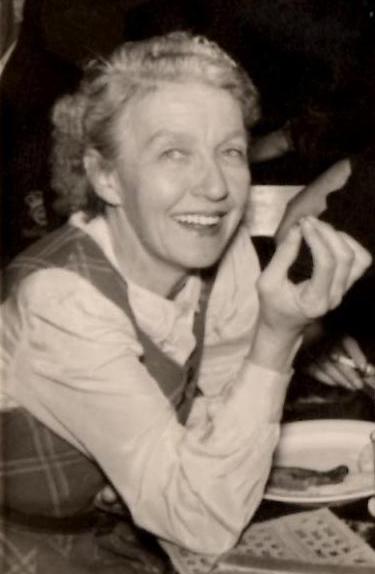
Winifred Margaret Laura Cawthorne

“When Winifred Died”

by Lesley Atkinson

On June the Eleventh, Winifred died

We sisters two, sat by her side

This is our mother, she’s dying we sighed

Our brother was waiting, our children were too

The cotton-wool clouds in the sky so blue

Were taking on shapes which blocked our view

Of eternity

Sometimes she was wicked, sometimes she was wise

Thinly-veined eyelids hid summer-blue eyes

She’s going, we said

She’s gone! we cried

The mother who tricked us so often, so sweetly

Had gone within seconds, and gone so completely!

We opened the window, her spirit rose free

Into the waiting sycamore tree

The sisters, the brother, the children all cried

The world lost a witch, when Winifred died

-o0o-

Thanks again, Mum xxx