Tag Archives: history

Snouts In The Trough – But It’s Time Those Living High On The Hog Picked Up The Tab

The Three-Party System

The Three-Party System

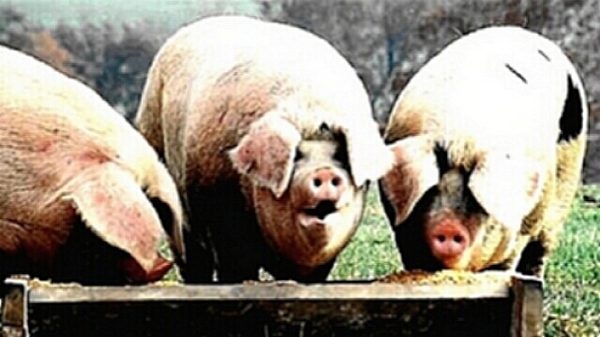
The thing about politicians is – if they’re not talking, or furiously thinking of a way out of their latest web of deceit, or maybe sleeping (a swift forty winks on the backbenches, the ultimate power nap), then they’re most likely at some or other official function, stuffing their faces with the finest of freebie food and drink.

Now, I’m not making a party political point here. I said “politicians”, and I meant the whole unsavoury crew of them, be they high-powered cabinet members, lobby fodder rank-and-file MP’s, or even your humble Joe Bloggs, Mavis Dogood or Tarquin FitzHerbert-Smythe in the local Council chambers. They all have the same basic bodily need for nourishment as us mere mortals. The difference is, they will quite often fill up to the Plimsoll line at the taxpayer’s expense. Is this fair or appropriate in these straitened times?

At a veritable crisis point of global financial meltdown, when our national debt is so high that even Wayne Rooney would need to ask for an extra week or two to pay it off, I find myself wondering: what’s the accumulated value of all the state and civic banquets, dinners, receptions, working lunches and other freebie jamborees that take place every day, all over the country? It must come to a good few bob. We’re not, after all, talking a few limp ham sandwiches, curling up at the edges and accompanied by motley shreds of anaemic lettuce. No, Sir. These people do not skimp; they do themselves well, very well indeed. There’s proper, grown-up, posh food on heavily-laden and groaning tables – and it must be highly debatable how much productive thinking is left in those bloated plutocrats, after the desserts have been and gone, and the port, nuts and cigars are passed around.

Of course, piling into the snap at the highest levels of power is nothing new. It’s been pretty much de rigueur ever since Henry I wolfed down half-a-dozen too many eels, and expired before he could gasp “surfeit of lampreys”. Kings, Queens, and assorted courtiers and other hangers-on have always been notable for their over-indulgence on rich food and fine wine. It sort of went with the territory in those far-off times, but it strikes a more discordant note these days when essential services – the culmination of the whole process of civilisation and enlightenment since before Henry I – are being cut left, right and centre. And yet still the state and political chomping goes on apace.

It’s only a matter of a few weeks since MP’s of all parties were calling for a 32% pay rise, despite their broad consensus that the rest of us should be grinning bravely and tightening our belts. Just what sort of message does that send out, when so much of their weekly calorific intake is provided and paid for, as part of their remit as legislators of our country? And the same applies at least in some degree to our business leaders – no subsidised canteen serving scrummy beans on toast with a poached egg on top for them – it’s Marco-Pierre White catering at the very least – and waiter, send that bill to Accounts, there’s a good chap.

What if – bear with me here – what if MP’s, ponderous boardroom types, and indeed power-brokers everywhere were to embrace a novel concept, and actually pay for some of the scrumptious fare that comes their way so often, and gratis at that? If this were the general principle, multiplied across all the many thousands of vastly expensive official meals and banquets that take place in this over-stretched nation every week, what would be the saving to the national purse? I’m struggling to work that out on my fingers and in my head, but it’s a big, big number, make no mistake. It’s not as if the people we’re talking about are exactly impoverished – are they now? And what do the rest of us do when it’s time for lunch at work? Not everyone has even the subsidised canteen; many of us are away down to the high street for a cheese roll, which we’re – quite reasonably – expected to fund out of our own pockets.

It’s about time we all woke up to the fact that – on a grand scale – we’re being made right mugs out of, you and me. Every time there’s a new cost-cutting measure, or another idea for a wage freeze, you can bet your life it’s been hatched over the smoked-salmon canapés and the pâté de foie gras. And what’s more, we’re the simple souls paying for it. Could that money not be used much more productively, elsewhere?

Just think about that, the next time you’re counting the pennies at the end of the month, and wondering whether you can delay the big shop till after the weekend. Then again, it might even act as an appetite suppressant. Just thinking of all those banquets, all that luxury food, and above all, where the bill’s heading – might just actually make you sick.

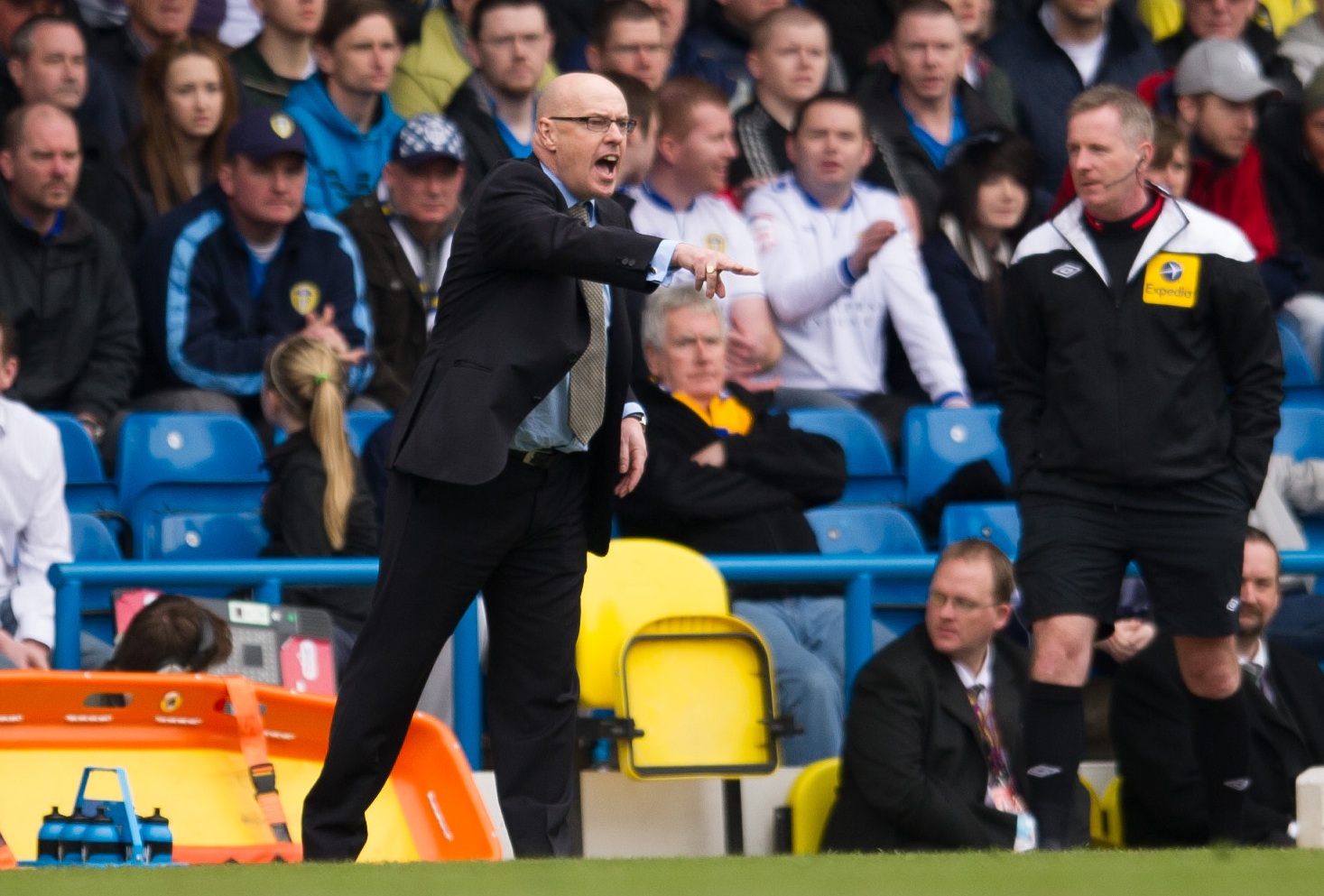
What Price the Soul of Leeds United?

Image

After the brief optimism of a few weeks ago, when the first post-Bates day saw welcome changes in the boardroom and welcome signings on the pitch – including one for whom we supposedly paid actual BIG money – things have gone a bit gloomy again over at LS11. The pre-season programme has now brought three successive defeats, including a woeful display at Walsall which Brian McDermott described as his “worst day as Leeds United manager”. The perceived wisdom is that we still need quality additions, including a rock of a centre-half and at least one tricky, fleet-footed winger. Brian’s “priority signing” is still unsigned, and unidentified. Clearly, more serious money is needed. Where’s it coming from?

The sequence of news items has been interesting. Once all that early-July optimism started to wane, the Red Bull story surfaced, and it refused to go away. The fans of course immediately started adding two and two to make five, and the scare stories of team rebranding circulated, along with slightly more feasible rumours of stadium naming rights. The battle lines were drawn; one camp stands firm in its traditionalism and will not tolerate the idea of the team playing at the Red Bull Arena, nor even a glimpse of that devil’s colour red on our pristine white shirts (with the fat blue stripe). On the other side there are those who feel we’ve sunk too low to be coy about appearances and naming rights – show us the money, they say, and you can basically do what you like to us. But we need to be talking massive money – we’re not, after all, some cheap trollop of a club you can buy for a song.

Once the Red Bull story had been around a little, and it had been possible to gauge fans’ reactions, Brian started to appear in the media again with his gloomy face on, bemoaning the lack of progress in the transfer market and making pessimistic noises about having to sell before he can buy. It makes me wonder whether, having realised that there would be significant fan opposition to the idea of naming rights to Elland Road being sold off, GFH might just have briefed Brian to get out there and make these dolorous pronouncements, putting the fear of God up the support that another season of under-achievement awaits and basically softening us up for whatever commercial coup they might have lined up. I’m not saying that Brian will necessarily be so ready to dance to the GFH tune, but I do smell a big, fat rat in terms of how our expectations are being managed, and how our instinctive suspicion of corporate influence over our club’s traditions is being dissipated by worry over lack of transfer money.

The fact is that the precedents are already out there for success at any price, and that we will ignore these new trends at our peril. Man City play at the Etihad, and Arsenal at the Emirates. If corporate stadium names are OK at these two grand old clubs, then why not at Leeds? It’s not as if any Leeds fan would ever call it by any other name than Elland Road anyway, so why the big fuss? We can expect to be wound up by opposition fans and the media, but what’s new about that? Surely the priority now is to give Brian McDermott the tools to finish the job.

If we remain too ignorantly proud to go with the flow, then we have to accept that the price of pride might be one we don’t wish to pay. Do we want to play at the Red Bull Arena in the Premier League, or at Elland Road in the Championship – or maybe even in League One? It might just be that the choice is as simple and stark as that.

Royalty: Isn’t it About Time For a Change at the Top?

Image

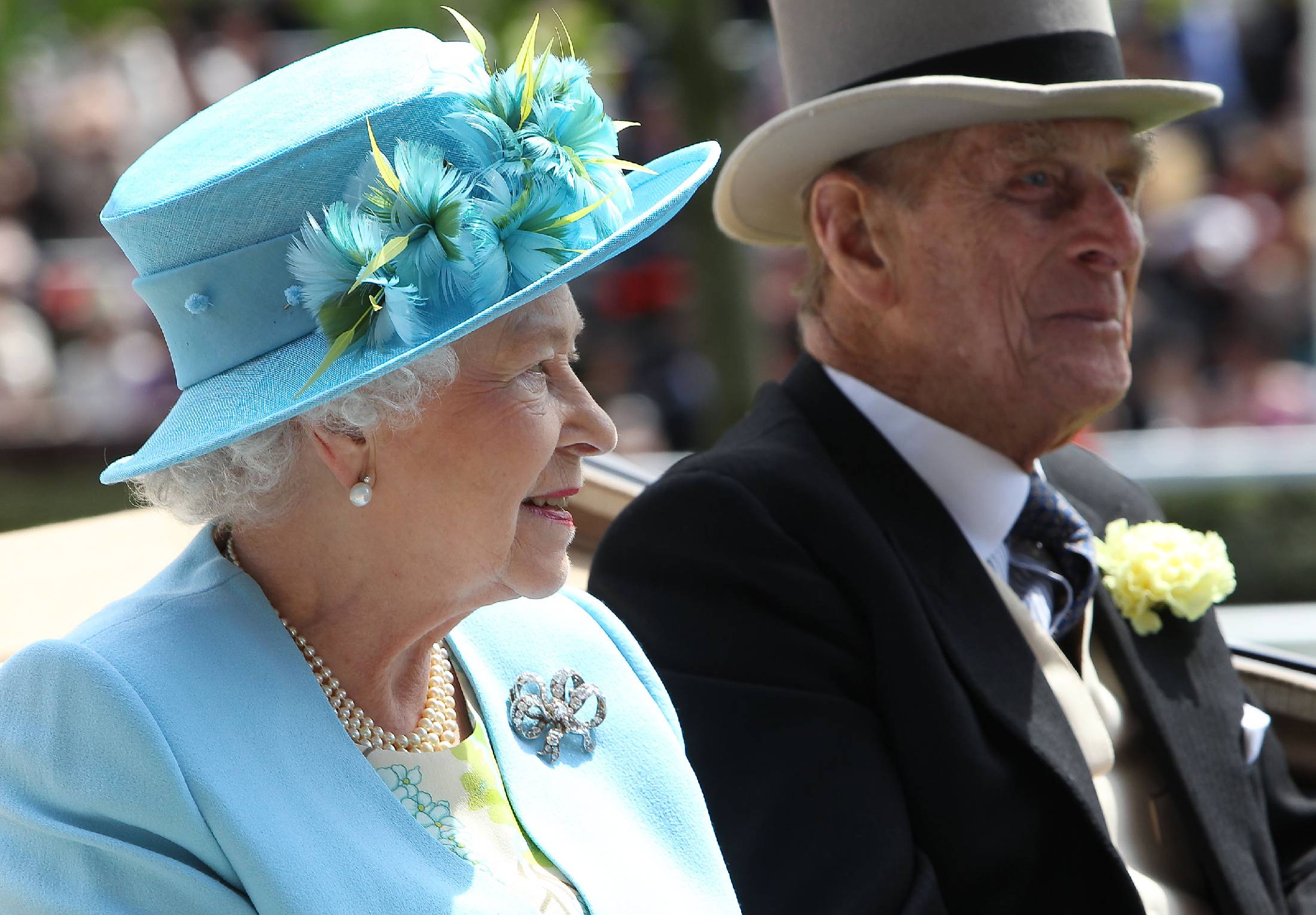
One of the many oddities in the life of our Queen, Elizabeth II, is the fact that she has two birthdays each year – as if one wasn’t enough when you already have rather too many years on your shoulders, weighing you down along with all those cares of state. That’s twice the messing about anyone else has, and there’s Christmas too, although happily there are flunkies by the dozen to lend a hand. But let’s face it, Brenda – as Private Eye magazine almost affectionately refers to her – is now in her 88th year even when you don’t count “Official” birthdays. Most ladies of her considerable wealth would expect to have had their feet up relaxing with the Dorgies for at least the last 27 years, rather than still be loaded with all these ceremonial duties. Is it not time, perhaps, for her to consider genteel retirement, or at least a more consultative and less active role?

Adding to the whole age question is the fact that her likely – though not inevitable – successor, son Charles, will himself reach state retirement age in November this year, and therefore stands the very real chance of becoming entitled to his pension before his pre-destined career has even got off the ground. The poor bloke finds himself in a dilemma uncannily similar to that which faced his illustrious forebear King Edward VII, known to his more intimate acquaintances (prior to his eventual accession) as Bertie the Bounder, due to his notorious predilection for the wilder pleasures of life. Bertie of course did realise his lifelong destiny, and became rather a successful King – entering history as “Edward the Peacemaker” due to his diplomatic efforts on the Continent. Sadly, all these admirable endeavours merely delayed a worldwide conflagration, and a scant four years after his death we were landed with the Great War. But Bertie the Bounder certainly Did His Bit while he was above ground and able to; Charles, who some might think has been a bit of a bounder himself on occasion, must be wondering if his own chance to serve will ever come.

The world nowadays is a very different place to the one which Queen Victoria left in early 1901. At that time, the Monarchy was simply a given – a fact of life along with the Empire over which it presided. The Monarchy and all the trappings thereof seemed in tune with the times, whereas now a lot of that ermine and jewellery has an almost defiant air of anachronism about it, as if the whole institution is saying to us, “Look – we know the Empire is long gone, and that we’re a tad outdated, but it’s just how we are – have you got a better idea?” The transition from a monarch who has been there forever, or so it seems, to a new King on the block (sorry, Charlie, if that’s a phrase which unhappily conjures up the headless spectre of the first King Charles) may well be much harder to manage today than it was when Bertie came to the throne 112 years ago. It may even be that there is a case for the new lad to be eased in to his unaccustomed role by an older and possibly wiser head. This is the argument for the Queen to step down now so that her guidance and counsel should be available to King Charles III, or even to King William V if that’s the way the Royal cookie crumbles.

Of course any suggestion like this, threatening as it does to advocate a departure from The Way Things Have Always Been Done, is likely to be met with a pretty frosty response from the patrician mandarins of the Establishment. They will tend to gaze snootily down a long collective nose and wonder out loud just who on earth this frightful oik IS, mooting such radical and frankly dangerous possibilities. But just because something has always been done a certain way is no reason to continue down that path. Small boys used to be shoved up chimneys to clean them, and they used to drag heavy loads in narrow seams underground in the mines as well. These are old traditions which nobody outside The Cabinet Office much misses. And we used to effect changes in the line of Succession to the Throne by the simple expedient of lopping the incumbent’s head off, or by defeating them in battle – a manifestation of the now unfashionable “Might is Right” syndrome. One such defeated King (Richard III) has only recently been dug out of a Leicester car park having wound up there over five centuries ago in the least dignified manner imaginable, mute testimony to the fact that lèse-majesté is not a new idea. And in any event, it’s not my intention to advocate abolition of the Monarchy – well, not in this article anyway – I just have the feeling that a few fresh ideas wouldn’t go amiss in the corridors of regal power.

One of the other oddities of the Queen’s life – so it has been suggested by various irreverent comedians – is that she thinks the world smells of fresh paint, as wherever she goes there is some industrious decorator a few steps ahead, adroitly wielding his brush and roller lest Her Maj should see a mucky mark and shame be piled on the heads of her civic or diplomatic hosts. Many a true word is spoken in jest – and she really has lived her whole long life, certainly since her maverick Uncle David gave up his Edward VIII crown for an American divorcée, with people trying to make things as brand-spanking glossy and new as possible for her. It’s a cosseted, artificial sort of existence, surrounded by eager sycophants, and let’s face it – you only live once. Shouldn’t our venerable Queen have the chance to savour a bit of real life before her time is up?

Isn’t it finally time for the job to be passed on to a new chap?

Shameful: BBC Spit on Don Revie’s Grave

Don Revie OBE:  The Greatest

Don Revie OBE: The Greatest

History, they say, is written by the winners.  In last night’s “Match of the Day”, the BBC provided ample evidence to show that it is also rewritten by hypocritical sycophants who should know better.

The events of the afternoon had not panned out as the scriptwriters would have wished, though all looked well ten short minutes from the end of Man U’s match at West Brom, S’ralex’s last game as manager.  The Plastic Champions were 5-2 ahead, and John Motson had purred, gasped and chuckled his way through 80 minutes of exhibition football, punctuated by comical home defending, and it looked very much as though another team was going to roll over meekly for the men from Salford.

Then S’ralex brought on Paul Scholes for the Ginger Minger’s own last appearance before his latest retirement.  The cameras prepared to adjust to soft focus, Motson drew in another breath preparatory to more shudderingly orgasmic tributes as he was consumed by an ecstasy of highly marketable sentimentality.  The stage was set for the Govan Guv’nor to stump off into the sunset, his purple-blotched features lacerated by a parody of a smile.

Then it all went wrong.  West Brom struck three times in the last ten minutes, Ferguson’s smile dropped to the floor quicker than a Gareth Bale dive and the mighty Man U were holding on at the end to avoid saying goodbye in the face of a last blast from a defeated Hairdryer.  5-5 it finished, and the BBC were denied their expected valedictory stroll in the sun; the Baggies had pooped the Corporation’s party.

Maybe it was this that prompted the spite and small-minded pettiness of the montage which prefaced the Match of the Day highlights late last night.  More likely though that it was always going to be yet another calculated slap in the face to the memory of a great man, a man whose boots the assembled hacks and ex-pros on the MOTD couch are not fit to lick, a true great of the game that the Establishment seem determined to pretend was never there.  Ferguson was painted in admiring and rose-hued tones, to a background of his many achievements as compared to the other “managerial greats.”  Bob Paisley, Brian Clough, Jock Stein, Bobby Robson, Ron Greenwood, Bill Shankly, Matt Busby, Bill Nicholson; all these legends were held up as examples of managerial excellence to be rightly lauded for their achievements and the mark they left on the game.

But no mention of the greatest of them all: Donald George Revie OBE.

This was no mere oversight.  It’s been going on for years, and it’s a premeditated and vicious attempt at the excision from public memory of football’s greatest manager, a cowardly and shameful act of malice aforethought.  It reflects ill on the researchers who put these things together; aren’t they aware of their history, we in the know might wonder.  Don’t they have access to Google?  But they know all about the Don, they know he transformed a tired old joke of a football club into the most feared and respected force in Europe; they know he did it without massive financial backing and without paying obscene wages; they know how he did it all to the dubious background of an initially apathetic support, fans who had only ever known mediocrity at best, and expected nothing else.  Out of all this, Don Revie wrought a miracle – a team that respected judges of the game have described as the finest club side in English football history.

The accidental omission of Revie’s name for any TV item concerning itself with managerial greatness would be unforgivably slipshod; the act of a clueless nincompoop.  But this was much, much worse than that.  It was an exposition of hypocrisy underpinned by malice and the bile of fifty years’ accumulated resentment.  It was a crass attempt at revisionism, a blunderingly clumsy try at pretending Don Revie never existed.  It was wishful thinking in its bitterest and most destructive form, a playground insult to a giant of the game.  The BBC cowards and toadies have exposed themselves as classless fools, deserving only of contempt and ridicule.

“And Leeds will go mad.  And they’ve every right to go mad!” – as Barry Davies memorably put it back in the day, in more realistic times before the game turned plastic, when everybody knew who the heroes were and we weren’t fed a diet of pap and lies.  And Leeds should go mad again.  The city, the club, the fans – none of them should continue to lie down and accept this disgraceful treatment, this attempted erasure of an iconic figure whom we all worship as “Simply The Best.”  There should be a loud outcry, a vehement protest.  This is my small contribution, but the fans as a body have form for hitting back at media and establishment when they feel one of their own wronged.

In 1994, the FA handed down a mandate that all clubs should observe a minute’s silence in respect for the late Matt Busby.  They did this because it’s what you do when a respected figure dies – except of course they’re not consistent.  They failed to mark the death of Don Revie, a tragic and cruel end from Motor Neurone Disease.  They failed even to send a representative to his funeral, although – to his eternal credit – Alex Ferguson was there, and Denis Law, as well as most of the Leeds United greats and other proper football men.  But none of the hypocrites in suits from the game’s ruling authorities saw fit to get off their backsides and pay tribute.  Revie was dead; let them get on with pretending he never existed.  So in 1994, when they were supposed to lapse into a respectful silence, the Leeds fans at Blackburn Rovers’ ground exploded in a raucous and repeated cry of “One Don Revie!  There’s only one Don Revie!!”  The great and the good of the sport were scandalised.  People pursed their lips and shook their heads sadly.  How dare these yobboes ruin our tribute to our Chosen One?  But I’m so, so glad that it happened.  We should not knuckle under to the official view; we should never bow down before such blatant hypocrisy.

They’re getting wise to rebellion now.  There tends to be a minute’s applause these days, lest any disrespectful mob should see fit to assert their unwanted point of view the next time some officially-beloved figure keels over.  But the fans will be heard, believe me.  And if the media – typified by these contemptible fools in charge of the increasingly poodle-like Match of the Day – continue so determinedly to ignore and try to obliterate the legacy of The Don, then I hope that defiant cry will be heard again, loud and proud.  While ever Leeds United fans are prepared to stand up and be counted, happy to raise their arms and voices and be heard – then Don Revie will never be forgotten, whatever the wishes of the pompous suits and deluded TV types.

Don Revie, “The Don” (1927 – 1989)  A true legend and a great of the game.  Whatever you might think of him – and God knows, I’m no fan – just ask S’ralex.

Should ‘Richard Crookback’ – The Vanquished Richard III – Be Welcomed “Home” To Yorkshire?

Image

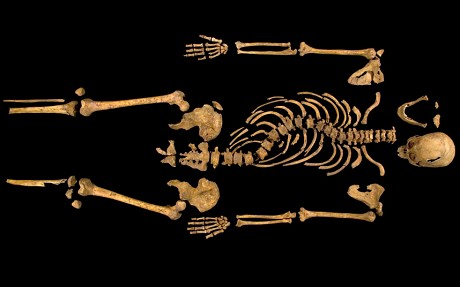
The late King Richard’s remains.  Note the pronounced spinal curvature.

The news that ancient remains, discovered under a Leicester car park, have been positively identified as those of King Richard III of England has led, predictably, to a bit of a tiff over where the late King should be re-interred.  There are some calls from traditionalists for the royal bones to find a final resting place at Westminster Abbey, where so many of our rulers are whiling away eternity.  Then again, there are those who argue that Richard’s own desire was to find a resting place at York Minster; and he was indeed the last king of the House of York – but he left no explicit instructions, and the sudden, violent nature of his demise would have made it difficult to be certain of the Royal Prerogative.

The argument for the remains to travel “home” to York may, in any event, be a little dubious, as the identification of the House of York with the geographical area of Yorkshire is less than completely accurate.  Those who see the Wars of the Roses as a battle between factions equivalent to modern-day Lancashire and Yorkshire, are somewhat wide of the mark – the alignments were more upon ancient heraldic lines than any local rivalry.  So estates and houses of the Duchy of York were spread throughout England and the Welsh Marches, rather than being confined to the Broad Acres.

In any event, it has to be said that some of Richard’s alleged activities during his lifetime would not reflect well upon any region claiming him as an Old Boy.  On the death of his older brother, Edward IV in 1483, Richard was named Lord Protector, with responsibility for the 12 year old King Edward V and his younger brother Richard.  However, our potential fellow Tyke acted swiftly to have his late brother’s marriage to the boys’ mother declared invalid, resulting in their illegitimacy – and meaning young Edward was ineligible for the throne.  Richard was subsequently crowned King, and the two young princes were never again seen in public.  Accusations were rife that Richard had fatally disposed of them, thus creating the legend of the Princes in the Tower.

Richard’s reign proved to be short – only two years – and tempestuous.  After suppressing a rebellion led by supporters of the late Edward IV, including the Second Duke of Buckingham who was then executed at Salisbury, Richard was less fortunate when Henry Tudor challenged for the throne, and he eventually became the last English king to die in battle, slain on Bosworth Field in 1485.  Due to the manner of his death, he was afforded only a cursory battlefield burial, and there he remained until he was recently unearthed from beneath that Leicester car park.

So Richard’s place in history owes much to a fairly negative press over the centuries since his death.  The taint of innocent royal blood on his hands has never really gone away, despite many scholarly efforts to discover the fate of the lost princes.  The identification of his remains will do little to solve that particular mystery, though it does now seem clear that Shakespearian references to a withered arm were false, though poor Richard did indeed have a distinct curvature of the spine – but again, not the “hunchback” of popular legend.

It would seem that the late king’s supposed wishes as to his long-term home after his death are unlikely to bear fruit, just as his ambitions in life were doomed to be thwarted, and perhaps that is no bad thing   It seems after all more than likely that he was a fairly unscrupulous sort of chap, and given to the sort of behaviour in his own interests that we’d like to think ill befits a proper Yorkshire lad.

In any event, it would appear that the Ministry of Justice license permitting the excavation to proceed in the first place also provides that the legal partners, Leicester City Council and Leicester University, have the right to choose where Richard will end up; so a reburial with all due ceremony at Leicester Cathedral is set for early next year.

It is not yet known whether any of the present-day Royal Family plan to attend.