Tag Archives: history

When the Anfield Kop Saluted our Leeds United Champions – by Rob Atkinson

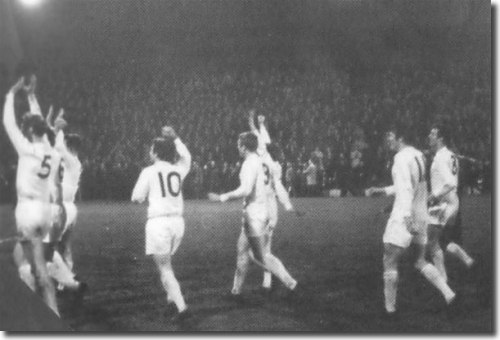
Leeds United's Champions take the tributes of the Liverpool Kop

Leeds United’s Champions take the tributes of the Liverpool Kop

Each of Leeds United’s three Football League Championship titles was clinched at Anfield, home of Liverpool FC.  In 1992, the Reds were good enough to beat a demoralised Man U 2-0 which, added to our earlier triumph at Bramall Lane, saw us as Champions by 4 points in the last ever proper old-style league competition.  In 1974, Liverpool obliged at Anfield again, losing at home to Arsenal to ensure that they couldn’t overhaul us at the top.  I remember a TV programme going to an ad break and then an information board coming up which read “Football result: Liverpool 0, Arsenal 1 – LEEDS UNITED ARE THE CHAMPIONS”  That simple memory still sends a tingle down my spine, even forty years on.

And of course – probably best of all – Leeds United’s first ever title success at the top level of the game came after a showdown between the two deadly but mutually respectful rivals on April 28 1969 – almost exactly 45 years ago. Leeds had come to Anfield knowing that a point would clinch the league, and they set out their stall as only they could to obtain that point, in the toughest place possible.  They would go on to beat Nottingham Forest in the last game of that season to reach a record 67 points – a mark that wasn’t beaten until Liverpool themselves recorded 68 points, ironically with a 3-0 win at Elland Road, in their fabulous 1978/79 Championship year.

That legendary Leeds United squad of the sixties and seventies hung on Don Revie’s every word, they would follow him into the pit of Hell itself and they trusted him implicitly.  This was the cornerstone of the relationship between team and boss; the unit thus formed was formidable indeed and, on their day, there was no-one to touch them.  It was often said of that Leeds side that if you cut one, they all bled – and then you’d better watch out, because they’d be after you as one man to seek retribution. They would do anything for each other and anything for the legendary Don – but on that historic night at Anfield 45 years back, they must have come as near as they ever came to saying “You what, gaffer?  Are you bloody sure??”

On the final whistle, as the Leeds players cavorted with joy in front of their delirious fans at this first delightful taste of being The Best – and as the weary Liverpool troops, having given their all in vain, sportingly congratulated the new Champions – Revie came over to Billy Bremner and confirmed to him that he was to lead his team over to the Kop. This, remember, was at a time when crowd violence was becoming very fashionable.  A similar gesture at the Theatre of Hollow Myths down Trafford way, and sundry other less-than-welcoming grounds around the country, might very well have got you a crack on the head with a pool ball or a dart in the eye. It did rather seem to be pushing things a bit – but Revie was insistent, and he was very definitely The Boss.

So it happened that Billy Bremner, captain of champions Leeds United, gathered his players together and led them on a long, slow walk to the legendary Anfield Kop.  When it was realised what was happening, a hush fell on the ground.  In near-silence, the heroes in white walked on, nearer and nearer to the most iconic terrace of them all.

On the night, Bremner had won the toss for Leeds, and had elected to make the Reds attack the Kop in the first half; a tactical ploy that went against the home side’s preference for a second half onslaught on their favourite end. So the Leeds players had to walk nearly the length of the pitch to approach the massed Liverpool fans behind the Kop goal, and with every passing second, the silence became more loaded – almost a solid thing you might cut with a knife.  Leeds United were asking for it – what would they get?

What they did get is now the stuff of legend and has passed deservedly into United and Liverpool folklore.  As the triumphant yet apprehensive Leeds warriors finally neared the Kop, the long silence was finally broken as the first cry of “Champions!” went up, swiftly echoed by others on the still-packed terrace – until finally the whole 27,000 population of that mighty hill were acclaiming the title-winners with the same shout, over and over again: “Champions! Champions! Champions!!”

This was completely unprecedented; a moment unparalleled before or since, something to raise the hairs on the back of your neck, the ultimate acknowledgement of respect and admiration even out of defeat – and a massive credit to the football fans of Liverpool FC.  It was the epitome of true rivalry between two crack teams, forged out of one of the grisliest on-field battles any football ground had witnessed for many a long year.  No finer tribute could have been paid by any fans, anywhere – and the Leeds players stayed out there, in front of the Kop, for a good quarter of an hour or more, paying their respects to both sets of fans.

Later, in the dressing room, Leeds celebrated anew with champagne provided by Bill Shankly, whose quote was short and to the point: ‘Leeds United are worthy champions,’ he said. ‘They are a great side.’  Revie responded by praising Liverpool, the club, the fans and their fine team. ‘The reception given us by the sporting Liverpool crowd was truly magnificent,’ he acknowledged, ‘and so, for that matter, was our defence tonight. It was superb in everything.’  The conduct and bearing of both managers was a mark of the relationship between the two top clubs in the land – and a marked contrast to the ungraceful reaction of Alex Ferguson at the same venue 23 years later, after the Leeds of 1992 had pipped his charges to the Last Championship Title and he, characteristically, dripped bile and acid all over the occasion.

Looking back from today’s perspective, with managers bitching about each other, players diving, cheating and trying to get each other into disciplinary trouble – and the stench of filthy lucre all-pervading – it seems far longer ago than 45 years to that Anfield night when the competition was so unremittingly fierce; white-hot, with no quarter given or asked for.   And yet after the battle was done, all that remained was respect from the teams for each other, of the staff for their opposite numbers, and of both sets of fans for an epic battle well fought.

Sadly, those days are gone, never to return.  But for those of us lucky enough to be able to remember, those images will never fade, the sound of those tributes can still be heard ringing out across the years.  It was a night of triumph and disaster, as these decisive nights tend to be, depending on whether you were White or Red; but it was also, let us not forget, a night of dignity, respect and utter, unalloyed class – not least from those 27,000 Liverpool fans on the Anfield Kop.    

Being Leeds: It’s Hoping for the Best but Always Expecting the Worst – by Rob Atkinson

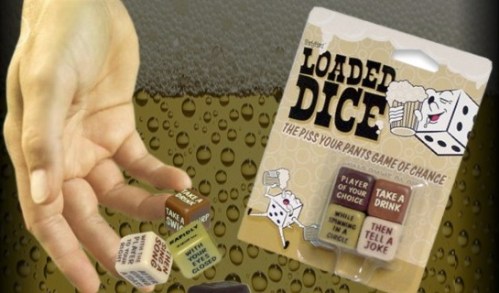
Leeds United - up against loaded dice

Leeds United – up against loaded dice

As the calendar tips over onto Friday, April the 4th – the day a QC is due to hand down his decision on the appeal of Massimo Cellino against his disbarring as Leeds United owner – it’s hard not to reflect on the track record of Leeds as a club, whenever these crucial days come around.  By and large, it’s been a tale of frustrated hope and seemingly inevitable disappointment, whether you’re talking about Cup replays, Cup Finals, points deductions or the attempted over-turning of massive miscarriages of justice.

Justice always seems to frown on my club.  It even did so when it was most urgently sought: in the matter of two lads who travelled abroad to watch their team play in a UEFA Cup semi-final, and who never returned home. On Saturday it’s the fourteenth anniversary of the senseless murder in Istanbul of Chris Loftus and Kevin Speight – and justice has never really been served for that despicable act.  RIP lads – you’d be as disgusted as the rest of us with what’s been going on at the club you loved.

Beside such human tragedy and wanton waste of life, lesser matters of course pale into virtual insignificance.  Nevertheless, Leeds United have faced another confrontation with the arbiters of justice this week – and it may well be that yet another slap in the face is about to be administered, after an agonisingly long and drawn-out process which has been dragging on now, through various twists and turns, since well before Christmas.

It’s a saga that has dragged down what had seemed a reasonably promising season with it.  The Leeds of pre-Christmas had been doing alright, without pulling up too many trees; they seemed well-placed to kick on in the new year and maybe challenge for a long-awaited return to the top flight.  Wind forward a few short months, and the picture is radically different. Distracted – apparently – by off-field issues and worries over ownership and payment, the team has performed dismally against a backdrop of cowardly betrayal by GFH, United’s current, spineless owners.  Now we look over our shoulders fearfully at the relegation dogfight, rather than upwards in aspiration towards the play-off zone.  The pattern is remarkably similar to last year; the fans do their bit, pay through the nose – only to see their club’s campaign implode and peter out into embarrassing failure.

Historically, we should be used to having our hopes raised in expectations of glory, only to see those hopes turn to dust as bitter disappointment invariably claims us yet again.  Without going over the dreadful list of all those near-misses – just think of two European Finals ruined for us by bent referees, of domestic ambitions in the early seventies thwarted by intransigent and vindictive League officials (thanks, Mr Hardaker), of an official FA dinner breaking out into spontaneous applause as Leeds were beaten in the 1987 play-off final, of a Premier League referee raising his arms in triumph as the opposition scored against us in a match he was controlling.  And so on and so forth.  We really should know better, by now, than to expect anything more than bad news, the cold flash of shock and bitter let-downs time and time again.

As we await the Cellino verdict, we are again hoping for better times – and we yet again find our mood turning towards pessimism as we realise that – as ever – this one will probably go against us.  In the last day or so, a senior politician has been given a gentle rebuke for another expenses swindle, and Sunderland FC have escaped severe disciplinary action for fielding an ineligible player in five matches this season.  Yet it’s more than likely that Leeds will finally be denied their saviour over a matter of import duty on a yacht which amounts to a measly few hundred grand against Cellino’s wealth of over a billion – and yet this has been gleefully accepted as dishonesty rather than the oversight it quite possibly was.

More happily, it turns out, Massimo Cellino may well be far down the road of  perfecting a Plan B, in anticipation of a stolid refusal to accept him as Leeds owner.  It is now being suggested that he could join forces with erstwhile rivals Together Leeds and their front-man Mike Farnan, to remain in the picture as Leeds move into a new era.  By the time Friday finishes, it’s quite probable that we will have all of our hopes invested in this Plan B if – as history teaches us is almost certain – United get their hopes dashed in Court yet again.  Perhaps the powers that be are even now figuring out a way to nip this idea in the bud.  Paranoia?  Maybe, maybe not.

It does sound, after all, like the old story of a hard-done-by sports team shouting resentfully, “We wuz robbed!”  But when you look at the history of Leeds United – and at what tends to happen every time one of these crunch times comes around – it’s hard to escape the conclusion that we’re rolling with the dice loaded against us.  Inevitably, we end up disappointed, hopelessly crying foul to wilfully deaf ears. There’s no real reason to suppose that things will be any different this time around.  Disappointment and injustice.  It just goes with the Leeds United territory.

Could it really be different today?  By the time our demoralised team takes the field at Wigan on Saturday, we’ll most probably know.  Meanwhile, it’s fingers crossed for Cellino and Plan A.  Surely, one of these days, Leeds United will cop for an even break?  It might be today – stranger things have happened.

Just – you know – don’t hold your breath. 

Happy Monday? It’s a Pivotal Day in Leeds United’s History – by Rob Atkinson


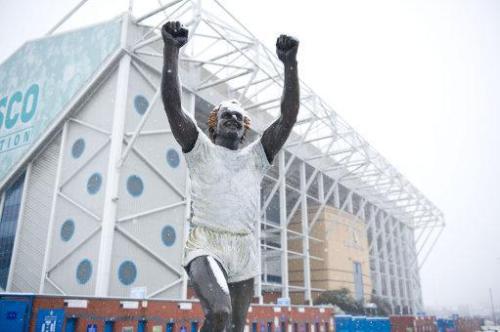
"Historic and Iconic" - Leeds United AFC

“Historic and Iconic” – Leeds United AFC

Forget March 2nd 1968, the day Leeds United won its first ever silverware, beating Arsenal at Wembley to lift the League Cup. Forget May 6th 1972 when, at the same venue, against the same opponents and by the same 1-0 score, United won their sole FA Cup. Forget, even, those three incredible days which saw the Whites hailed as the best in the land as our three Football League Championships were confirmed in 1969, 1974 and 1992.  All of those dates pale in comparison with the epochal significance of the legal fixture being played out in London tomorrow, March 31st 2014.  For tomorrow, it’s likely to be decided which of two well-defined paths Leeds United will be treading into the future.

On the one hand we have a signpost pointing upwards which says: possible fame and success, with a minted owner to put us on a par with those we should be emulating. On the other, there’s the signpost pointing downhill, with the equally unmistakable message: more of the same at best, with a distinct possibility of crisis and dissolution in the near future.  It’s not a choice Leeds United or their amazingly loyal and long-suffering fans are able to make for themselves.  We are all in the hands of the legal eagles as they fight it out over the technicality of whether or not the Football League were correct in saying that Massimo Cellino’s peccadilloes rule him out of fitness and propriety under their own test. Upon this technicality hangs the immediate, or short term – or even the whole future of a famous old club that has never been far from the headlines, for good reasons and bad.

A match-day commentator at Elland Road yesterday summed it up in one well-chosen phrase prior to kick-off against Doncaster Rovers.  Leeds, he said, should be mentioned in the same breath as the likes of Arsenal, Liverpool, Man U and Chelsea.  And so, of course, we should.  None of these clubs has more of a right than Leeds – and its magnificent support – to be fighting it out at the top table for the big prizes.  It’s ironic that such telling words should be spoken ahead of a league fixture – and a defeat – against little Donny Rovers.  That sums up the dire straits Leeds have been consigned to by bad leadership, self-interested owners and relentless ill-fortune.  Whatever may have been done wrong, whatever rules may have been broken in the name of Leeds United – it’s no fault of the fans.  And yet, time and again, it’s been the fans who have suffered – whilst the principals in the ongoing pantomime of LS11 have generally waxed fat and walked away happy when their particular final curtain has fallen.  A prime example of this is, of course, Shaun Harvey, CEO of the Football League and a man with a face in each camp, so to speak.  I wonder how he sleeps at night? Blissfully, I expect.

There are two constants in any football club, which transcend players, directors, administrators, League officials and even solicitors, barristers and judges.  One is the entity of the club itself, which in our case is now just five years shy of her 100th birthday.  Where will she be, what state of health will she be in, when that Centenary rolls around in 2019?

The other constant is, needless to say, the supporters.  Come rain, come hail, come snow, the supporters are always there. They were there to cheer on the Greatest Footballer in the World when John Charles plied his mighty trade at Elland Road.  They were there to support Don Revie’s nonpareil team of the sixties and seventies as they witnessed some of the finest football ever seen on the planet. They were there too when Wilko’s Warriors rose, like a Phoenix from the ashes, to swagger back into the big time as if they owned the place and end up, once again, on top of the pile.  And they’re here now, today, watching the dross currently being served up by a team weighed down with larger worries that what happens on the pitch – a team who, with a very few apparent exceptions, are preoccupied with where the next wage packet is coming from, and just how heavy or light will it be?

The supporters will be here in the future as well, whatever happens tomorrow. That is beyond doubt, save only for that nagging worry over the club’s very existence. Only the numbers of that indomitable band will remain open to any variation, depending upon which path we tread.  Any Leeds United fan will tell you what the club deserves – and it’s not more of the same grinding, morale-sapping poverty that we’ve been putting up with now for twelve long and dreary years. Leeds United and their supporters – especially their supporters – deserve some time in the sun.

It’s not United – club or fans – on trial tomorrow.  If anything is on trial, it’s the duty of care owed by the Football League to all of its member clubs – even Leeds. The questions before the appeal panel must include that consideration in the scope of its examination of this whole issue.  The Football League have sat by and they’ve shown every willingness to let their biggest club, their most tangible asset, wither and possibly die for want of sufficient funding to operate on a big club level and compete with their true peers.  And this is the kernel of the matter.

Because, with rapists, con men and porn barons among the current and recent number of their owners and directors, the League has elected to make a stand over an obscure tax question surrounding a yacht.  One little boat, which might be American, and in respect of which some duty allegedly had to be paid in Italy, but was not.  The League have chosen to accept that Cellino, a man of staggering wealth, would court trouble over a matter of what is, to him, small change.  They have leant over backwards to interpret the law and their own regulations such that United are to be denied a saviour and their fans are to continue suffering.  Where is the duty of care amid all of that?

Tomorrow will, in all probability, be the start of a new era at Leeds United. Whether it is an era of further degradation, more doubt, more humiliation, remains to be seen.  There has to be a possibility that things might – for once in a very long while – go in Leeds United’s favour.  And then what? Would we know quite what to do with ourselves in the absence of this millstone of penury and reduced status?  Poverty is not just a matter of not being able to meet the bills, or afford a tank of tropical fish to brighten the place up.  Poverty is much more than that.  It seeps into the very fabric of a place and it poisons the soul.  If we were suddenly to become “Dirty Leeds, Filthy Rich” – how would we cope?

I can tell you this much, especially you lot who occupy the anti-Cellino bandwagon.  I’m heartily sick to death of a penniless existence.  So if the “Filthy Rich” option is there, ripe for the sampling – let me at it.  I’d simply love to try it out.  We lived the dream in the nineties – but there was always that worm of doubt; where’s it all coming from?  With Cellino –  well, it looks as though we’d at last have a man of immense material wealth who is keen to invest it in reviving a fallen giant.  Fingers crossed that he finally gets that chance.

25 Years Today Since Gordon Strachan Signed for Leeds – by Rob Atkinson

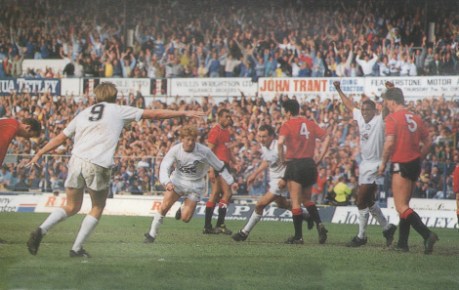
"Have you ever seen a better goal?  Have you ever seen one better timed??" John Helm, YTV

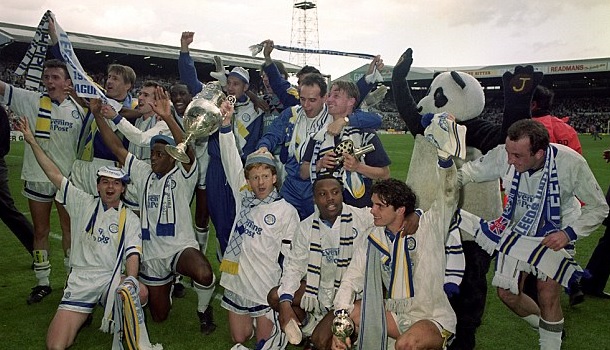
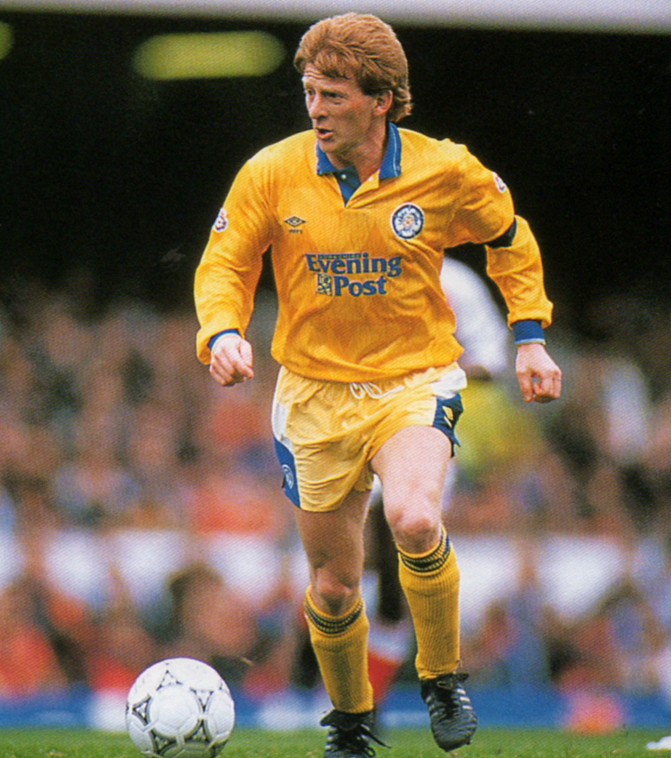
Amazingly, for those of us who remember the breaking of the news so well, it’s a quarter of a century today since Leeds United made the historic signing of Gordon Strachan from a minor club over the Pennines.  Over the next seven seasons as the Whites skipper, there were many, many memorable occasions for United’s second-most famous ginger Scottish captain.  Not least among these, of course, was hoisting the last ever Football League Championship Trophy, as well as scoring the first goal in the Stuttgart play-off at the Nou Camp in 1992.

But, as I’ve done before, I thought I’d look back to the famous Leicester City game in 1990 and what was probably Strachan’s defining moment as the man who did more than just about anyone to reinvent Leeds as a post-Revie force in English football.  It had been a long time coming since Don’s Glory Boys dispersed to pastures new and a Golden Era faded into the dim haze of memory.  We had been eight years in the second division doldrums and had almost forgotten what it was like to be a top team.  But – finally! – it looked as though the nightmare was ending as Sergeant Wilko and Captain Strachan were set to lead United back to the Promised Land at long last.  A home fixture against Leicester City was the penultimate hurdle to overcome, and expectations were soaring at Elland Road.

Twelve days before the Leicester game, United had appeared to strike a decisive blow, battering closest rivals Sheffield United 4-0 at Elland Road. But any hope that promotion could be clinched early was dashed over the next two fixtures, a draw at Brighton where the lead was squandered to sacrifice two points, and then a home defeat to a relegation-threatened Barnsley who even then had the ability to put one over on us with an inferior team.  So the nerves were jangling for this home date with the Foxes.

Leicester breezed into town with no pressure on them at all as they bobbed about serenely in mid-table, but Leeds just had to win. A victory could possibly clinch promotion; anything else and we would be relying on others to give us that final leg-up – not an attractive prospect. The atmosphere at Elland Road that day was something to behold as 32,597 packed the stands and terraces, the Kop a seething mass of bodies, a solid wall of sound. If the weight of support counted for anything, then it seemed Leicester might just as well turn around and go home – but to their eternal credit they fought the good fight and played their part in a memorable afternoon.

It all started well. Leeds pressed hard, this had been their preferred approach all season long. No opponent was allowed the luxury of untroubled possession as Leeds snapped at ankles and harried the enemy, hungry for the ball and well able to use it productively. At their best, United had proved a match for any team in the Division; as ever though it was the off days that had let us down. On this particular occasion, attacking the Kop End in the first half, the forward momentum seemed irresistible. Before long, the overlapping Mel Sterland fastened on to a ball at the right corner of the penalty area and fired low and hard into the net to open the scoring. The overwhelming relief was as evident as the unconfined joy around the packed stadium; surely now United would go on to consolidate their advantage and seal the promotion we’d wanted for so long.

It was not to be. Despite further pressure, Leeds failed to make another breakthrough before half-time and Leicester – relaxed and pressure-free – were looking more and more ominously like potential party-poopers. These fears solidified in the second half as the away side pressed an increasingly nervous Leeds back, and eventually – inevitably – they drew level. The blow when it came was struck by a rumoured transfer target for Leeds, promising young Scot Gary McAllister. He proved that he packed some punch by belting a fine strike past veteran Mervyn Day to shock the Kop rigid and momentarily silence Elland Road. Worse was so nearly to follow as McAllister almost did it again, another superb shot coming within an ace of giving Leicester the lead, something which would doubtless have produced the unedifying spectacle of grown men crying in their thousands. It may well be that McAllister sealed his move to Leeds with this performance and those two efforts, but I could have seen him far enough from LS11 that day. Leeds were rocking, looking at each other, scratching heads and clenching fists in the time-honoured “come on, let’s bloody sort this out” gesture. Slowly, by sheer force of will, the lads in White regained the initiative and it looked at least as though the danger of further damage was receding. The football was still nerve-shredding stuff, all urgency and little fluency, a desperate battle to eke out the extra two points that would make promotion so much more likely.

Time was ebbing away fast now, as Leeds hurled themselves time and again into the defensive barrier of red Leicester away shirts. Panic was setting in, the biggest enemy of constructive football. It was looking like a draw, which would not be enough. Then, a throw halfway inside the Leicester half in front of the West Stand, under the eyes of a bleakly worried Wilko. Sterland gathered himself and hurled a massively long throw deep into the away penalty area, only for it to be headed out from around the near post. McAllister attempted to complete the clearance with an overhead effort to get rid, but the ball hit Gordon Strachan to bounce back into the box. And there was Gary Speed to lay that ball back instantly to the still-lurking Strachan who simply lashed it, left-footed, into the net. The ball had gone in like a bullet; Strachan – too tired to control it and try to work a yard of space to dink one of those cute little far-post crosses as he might normally – settled instead for catching the ball right on the sweet spot and it arrowed home to a positive explosion of noise from all around Elland Road – the sudden release of what had been unbearable tension produced a massive roar to buffet the ear drums of innocent bystanders miles away.

It was one of those occasions when several things seem to happen at once. The crowd behind the goal at the South Stand end seemed to boil with passion and relief, a maelstrom of delighted celebration which was echoed across the whole stadium. Strachan himself ran to the byline, face contorted, weary limbs pumping in triumphant exultation as he took the plaudits of the faithful. A lone copper is visible on the TV footage between Strach and the cavorting hordes, a grin on his face as he moves to quell any ambitious pitch-invaders. In the commentary box, John Helm unwittingly propelled himself into immortality, not for the last time that afternoon. “Have you ever seen a better goal?” he demanded. “And have you ever seen one better timed?” It was a good question, and right then, right there, I doubt you’d have found a Leeds fan to answer “yes” to either part of it. The rest was a blur; Leeds held out, and we had won – and seemingly gained promotion. Rumours were flying around that Newcastle had failed to win, sending us up. But John Helm was at it again, more iconic words: “Is that confirmed…?” When the confirmation arrived, it was of a late Toon win; we still had it all to do at Bournemouth the following week. But Strachan’s late cracker had kept us in a race that we were ultimately destined to win.

My final memory of that day is of walking down off the Kop and onto the pitch as the masses there were starting to disperse. We crossed the sacred turf from goal-line to goal-line, eventually exiting the ground into Elland Road at the south-west corner, where the Jumbotron big screen now stands. I can still remember the heady scent of stud-holed mud and trodden turf, my head was still buzzing as I walked over the spot where wee Gordon had made that perfect half-volley contact to send us all into delirium. It had been an atmosphere the like of which I have rarely seen before or since, only the mayhem at Bramall Lane when Gayle scored that own-goal title-clincher coming anywhere near, or maybe that ankle-busting semi-riot of a celebration when Dave Batty broke his long goal drought against Man City in 1991.

For the sheer relief of it however – the absolute nerve-shredding, tension-breaking release of it – this was definitely THE one. Without Strachan’s sublime strike, we could well have missed out on automatic promotion, and we all know only too well that there’s a law against us succeeding in the play-offs. Gordon’s Golden Goal had kept the dream alive and made possible all that followed up to the League Championship triumph two years later. Make no mistake – it was THAT important. Thank you, wee man – 25 years on, Leeds United have yet to make another signing so vital and important in the history of a great club. Chances are, they never will.

So, Did Leeds United Ever REALLY Sort That Gypsy Curse?? – by Rob Atkinson

20140312-014348.jpg

I worship the memory of Don Revie.  He’s probably my all-time hero; he took over a nothing club with a nothing history, famous only as a stepping-stone for the World’s Greatest Footballer on his way to success with Juventus as Italian football’s finest-ever import (yes, step aside, Platini, Maradona, Law, Greaves et al – John Charles is still the King for the tifosi).  Don took over at Elland Road, instituted a scouting system second to none and – let’s cut to the chase here – gave us the finest club side these islands had ever seen.  But in one respect, Don’s effectiveness is open to doubt.  A notoriously superstitious man, he became convinced that Elland Road was under a malign curse – so he recruited a gypsy from Scarborough (I can personally confirm that the place is crawling with them) in order to exorcise the spell and ensure success.

The fact that Revie and his team achieved far, far less than they should have has been put down to various factors over the years, but the possibility that the lady from Scarborough was off-form the day she went about her curse-lifting cannot be excluded.  It would, perhaps, be the most likely cause of United’s managing to finish runners-up so often with easily the best team around.  Always the bridesmaids, never the brides, it was often and cruelly levelled at the peerless Whites – and while some trophies found their way to LS11, that legendary team – dominant during a viciously competitive decade – never won its proper dues.  And when the talent drained away from Leeds in the wake of Don’s departure – well, then the curse really bit.

From the perspective of a half-century on, it’s possible to argue the theory that Don failed in his efforts to rid Leeds United and Elland Road of supernatural barriers to success.  It’s even arguable that, since those halcyon times, the strength of whatever evil influence pervades LS11 has actually increased.  How else to explain the fact that so many players over the years have done well in elevated company, but arrive at Leeds United and are immediately transformed into bumbling failures?  Or, indeed, the number of players who have served a spell with the Whites, looked hopelessly out of their depth – and have then gone on to do distinctly OK elsewhere?

As a club, we do seem cursed in some vital particulars.  Look at the effect we have on centre-halves, for instance.  They come in, they look good, they earn a permanent deal – and then they start playing like Frank Spencer in the 1970’s sitcom “Some Mothers Do ‘Ave ‘Em“.  Likewise with managers.  Our last two were notable for the ease with which they have attained promotion from this league into the FA Barclays Promised Land.  But they come to Leeds, shine briefly before the Gypsy’s Curse gets under their skin – and they then start floundering horribly, unable to make a single coherent decision, at a loss to pick a winning team or choose effective tactics.  They end up at after match interviews or press conferences, looking like rabbits caught in the headlights.  It’s pitiful.

Never has this line of reasoning seemed so obvious to me as right now.  We’ve just had two home games against distinctly un-scary opposition – and we’ve contrived to lose both, heavily, with only late goals putting a rather flattering patina on the ugly landscape of abject failure.  We have an intimidating stadium, players who have been successful elsewhere – and who will doubtless be successful elsewhere in the future – we have the best fans in the world, we’ve had managers with proven track records.  And yet we’re still irretrievably, inexplicably crap.  What to do?

Maybe the Italian guy is the answer in more ways than just the obvious financial sense.  He’s quite a superstitious cove himself, is our Massimo.  Perhaps he will sense the malevolent ambience around the place and take steps of his own to get rid of any other-worldly nasties that Don’s Scarborough exorcist failed to blitz.  Maybe the key to Cellino’s revolution lies in his ability to follow his own superstitions, make whatever supernatural changes are necessary and see Elland Road emerge from under the cloud of an ancient curse and into a bright new future where we get a bit of bloody luck every now and then.  At least we can rest assured we won’t be sporting a purple strip, and we can hope against hope that Cellino’s lucky colour is all-white.

It’s got to be worth a try.  Let’s face it, we’ve tried just about everything else – and still the Gods have rarely smiled upon us.  Then again, they’re usually too busy sorting out a spawny late winner for Man U, damn them.  We’ll just have to hope it’s not too late to get rid of whatever shreds of curse are still left after Don Revie’s failed attempt to get us blessed back in the sixties.  And I still won’t have a word said against the Greatest Manager There Ever Was.  He may not have known how to pick an effective gypsy, but he sure as hell could build up a club from nothing.  How we could do with the Don of Elland Road now.

Leeds United Book Review: Heidi Haigh’s “Follow Me and Leeds United” – by Rob Atkinson

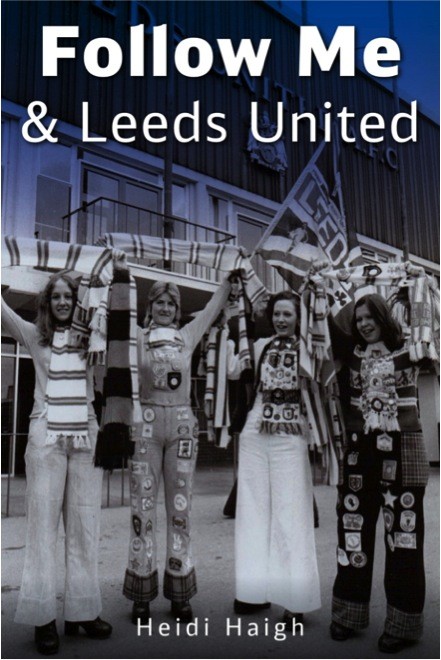
ImageThe first thing to make clear to anybody reading “Follow Me & Leeds United” is this: adjust your expectations relative to what you might expect from just about any other football book you’ve ever picked up.  This is a departure, something new.  It’s certainly not another in the long, long list of formulaic football fan reminiscences, with accounts of great games thrown in here and there, and a basically linear narrative taking you from the first game the fan ever attended right up to recent times. With that sort of fan memoir, there’s usually an attendant sense of growing disillusion as the “good old days” recede ever further into the past and the author writes tragically of past heroes and present ticket prices. Those books have a place – but it’s refreshing to read something different, as – for instance – Gary Edwards’ books were in the past couple of years.

Heidi’s book is even more different still, in style, perspective and tone. Once you have adjusted to these – because they really are quite unique – you find yourself drawn in and engrossed as you are put into a seat on the coach taking a young Heidi to Arsenal or Middlesbrough – or any of the many and varied other old-style grounds full of old school fans.   The descriptions of what these away days were like are gritty and real, and the sense is very strong of them having been plucked virtually “as is” from the pages of the author’s diary.  This gives an “instant” feel to the book – an impression of being in the moment, as a brick comes through the coach window, or as a lass that basically isn’t at all keen on violence witnesses it time and time again.  These were naughty times – unenlightened and often offensively sexist times.  Women who go to football matches today would do well to read this book for a vivid idea of exactly what it was like in those far-off days when, if the girls were spoken to at all, it was all about the size of their boobs or what a nice bum they’d got, usually with an accompanying nip or pinch.  This behaviour would send today’s female fan screaming to the nearest officer of the law, and quite right too.  Back then, it was simply part of the scene – and the lass either stuck up for herself and administered her own justice with a sharp kick or two, or she had to grimace and bear it.

Don’t expect either a book with a distinct beginning, middle and end.   This is a work of random recollections, dotting about in time to give it the feeling of being a little like Tom Hanks’ box of chocolates in “Forrest Gump” – you simply never know what you’re going to get.  What you do know is that it will be the sharp and impactful recollections of someone who was there, someone the players – legendary figures from the glory days of Leeds United – knew and acknowledged as she passed by, sometimes putting her in peril on hostile territory.  The violence and the difficulty of being female in an overwhelmingly male environment are both ever-present factors. Most of the recollections and anecdotes are flavoured by these two central themes, and less attention is paid to the scores and action of the games – which, let’s face it, we can get from the internet any old time – than to this sense of what it was like to be there, back in those days, when attitudes and behaviour were so very different to the way things are today.

As a fan’s retrospective it’s so unlike anything else I’ve ever read that really it demands attention.  For the women who accompanied Heidi back then, it will strike familiar chords aplenty.  The women who attend football today will raise their eyebrows and wonder how she stood all the unwanted attention, all the scary situations when she so often ended up “shaking like a leaf”.  And men reading this book are afforded an insight into the female perspective – the horror that violence can arouse, and yet how sometimes fellow Leeds fans were spurred on to “get” and “knack” opposing fans, because that was the way things were.

You’re reminded a little sometimes of scenes in the famous movie “Quadrophenia” when so many scenes of violence were witnessed by girls, who hated it and yet were caught up in the moment, half scared, half fascinated, totally immersed in the experience.  We’ve all heard how football lads get a “buzz” off the fights and the confrontations; this book tells us how the experiences of women are subtly different and yet not totally un-related.  As much as the physical violence, harsh words could hurt, tears could flow because of name-calling at away trips when strangers would recognise a girl who had attracted media attention because of the curiosity that she was; a female who attended football matches every bit as fanatically and faithfully as the lads.  Some of these lads worshipped her as an icon with her distinctive blonde hair and her beret.  Others saw her as an easy target for spite and cruelty, born out of hollow bravado and a sense of inadequacy – because she was well-known by fans and players alike, which was uncomfortable to certain resentful males who were stuck with their humdrum anonymity.  Throughout it all, you’re aware of a feeling of what it must have been like, because the memories recorded here are so raw and so real.

I have a very individual reason for recommending this book, but wider ones too.  My own particular reason first; I took to this book simply because of Heidi Haigh’s heart-warming (to me) convention of refusing to give the dignity of capital letters to the despised man utd.  All the way through the book, whenever she has to mention them, it’s man utd. That alone makes this title worth a place on my shelves – but there are other recommendations too.

If you were a fan in the seventies, read it.  You’ll recognise the times, you’ll be reminded of long-forgotten scenes.  If you’re a woman who watches football today, read this.  You’ll see how things have come on and how, though there’s still a long way to go, you can expect to be treated these days as other than a freak or a second-class citizen.  Both of those treatments were almost the norm in the seventies, when football was the working man’s sport and the working man relaxed and let his loutish side show – probably a reaction to a TV diet of “Love Thy Neighbour” and “The Sweeney“. And if you’re a bloke – read this.  It’ll teach you things about football support, and especially football support back in the day, that you never knew.  It’ll give you some perspective.

It’s a good read, it’s punchy and honest, it’s by one of our own, and it puts you right back to when Leeds United were simply the best. It doesn’t set out to be “War and Peace“, but it has its own appeal for those who want to know what those days were like. Do yourselves a favour and read it.  Or buy it for the Leeds fans in your life for Christmas. They won’t be disappointed.

Image

Heidi & friends – the Daily Express girls

A Day to Forget for Leeds United – by Rob Atkinson

All quiet on the Leeds United front

All quiet on the Leeds United front

One of the most fertile sources of inspiration for this Leeds United blog has let me down badly today. The quite wonderful in every way Vital Leeds has this endearing habit of publishing on a daily basis the notable United events for that date down the years. It’s thrown up a crop of birthdays recently – Norman Bites Yer Legs, Paul Madeley, Sergeant Wilko, Johnny Giles – which has allowed this blog to pay its own tribute to the celebrating stars concerned. To my shame, I missed out on Paul “Speedy” Reaney, who must have had this year’s big day when my back was turned. But I’ll catch you next time Paul, you legend, with your back pocket famously occupied throughout the sixties by a well-shackled George Best. I only wish such a worthy anniversary had coincided with today.

For today, my normally reliable fount of historical LUFC events is a dry hole. There’s some stuff in there alright, but really it’s not the sort you want to dig up. Frequently, the Vital Leeds retrospective will lay before me a nice, juicy away win, or a fondly-remembered tonking of some bitter rival to relive with lip-smacking relish. Or maybe a European adventure; a trip I was on myself, perchance, to one of the continental Superpowers like Milan or Barça or Real Madrid. Or perhaps simply some point of controversy that absolutely begs to be regurgitated and chewed on all over again, just as succulent and tangy the second time around and semi-digested to boot.

But not today. Today, the normally sparkling cornucopia of all things Leeds has become a barren gulch, offering nothing, nada, bupkis, zilch, zip. Some dusty draws and a few unpalatable defeats, and that’s it. No birthdays, or other points of interest. Well, ta very much. Ver non semper viret, and all that, as I know from my own experience – but I do hope the spring is flourishing tomorrow. I’ve come to rely on it.  At this rate, I’ll be forced to fall back on some gratuitous Man U bashing, or maybe have a pop at those malodorous troglodytes from Bermondsey with their guttural tribal chants and dubious ancestry.

The situation is exacerbated by the fact that it’s another pesky international break, coming just when we don’t need it too as our beloved Leeds lads have at last managed to find some form.  They supplied the bullets for Rossco to drill four lethal holes in Charlton Athletic’s rearguard last weekend, the first time a United player had scored four league goals away from home since Tom Jennings did it in the late twenties.  That outstanding performance was worth waiting for – but now a two week hiatus threatens to break our train of thought, so to speak.  We can but hope that the Whites are still bang at it when the Smoggies roll into town a week on Saturday.  That’s rather too far away to think about just now – first we have to worry about our bevy of international stars (alright then, mainly Ross and Rudy) and their chances of avoiding injury on the world stage. Fingers crossed there.

So there’s not really a hell of a lot to write about today, neither of a historically-significant nature nor any currently burning issues as we’re match-less for another eight days.  It might as well be the cricket season for all there is to chew the fat about – on which note I’m reminded that the Ashes Series down under is just around the corner. But still, it’s by far preferable to have something Leeds-oriented to write about – and if I hadn’t already managed to fill a blog of respectable length, I might very well try a bit harder to do just that.  Maybe tomorrow will bring me more in the way of inspiration, as I turn once more to Vital Leeds and check what’s been happening to our great club on November 16th down the years.

Failing that – the 16th is my Mum’s birthday, so I could write to her instead.  Something always turns up.

21 Years On, Ferguson is Still Bitter About The Last Champions – by Rob Atkinson

The Last Champions

The Last Champions

The 1991-92 Football League Championship title was an historic accolade, marking the end of a very long era.  From the next season, a breakaway elite would compete for “the FA Premier League”, with a Sky TV deal bankrolling the game at top level, new rules ensuring that income and wealth would trickle upwards to feather the nests of the better-off instead of down to nourish the grassroots of the game.  The increased pool of money would lure foreign players to dive into it, in hitherto unprecedented numbers.  Wealth and commercial interests, foreign syndication and new markets, these were the factors that would influence the game from now on.  The traditional purity of competition on a level playing field would henceforth be a thing of the past.  The winners of the 1992 League Title would be, in a very real sense, the Last Champions.

How inevitable it was, then, that we would hear more and more of the usual suspects throughout TV land and the media as a whole, ruminating on the place in history up for grabs, donning their red-tinted spectacles, taking out an onion and dreaming, wistful and misty-eyed of how “fitting” it would be if the mighty Man U could take the prize.  There was even talk of the title coming “home” to the Theatre of Hollow Myths – home, mark you, to a club that had never won the Championship in the era of colour television, whose finest hours were recorded on grainy monochrome fuzzycam as the Pride of Devon were overtaken by thoroughbreds such as Liverpool, Leeds United, Arsenal and Nottingham Forest.  Against all sense and logic, the feeble of mind, the hacks, the sentimental hypocrites all ached for the last real title to go to Man U.  How bitterly disappointed they all were when Leeds United callously, magnificently pooped their party.

Bitterness is not an emotion to show in public in the first few stinging moments of disappointment in defeat.  So it was that Alex Ferguson, freshly beaten at Anfield to confirm Leeds as Champions by an eventual 4 points, gritted his teeth and declared that Leeds were indeed worthy victors.  Suffering as he was from the nightmare combination of losing to Liverpool and thereby surrendering the Title to Leeds – a scenario dredged from the very bowels of the average Man U fan’s own private hell – such a seemingly magnanimous verdict was reckoned to Ferguson’s credit.  This magnanimity, though, did not last long.  In a book published that summer, Ferguson backtracked: “Leeds didn’t win the title, we threw it away.”  This was the real Fergie starkly exposed, glisteningly visceral, a man who would always look for some hidden, unfair reason why his team would lose; one who could never credit the opposition for winning fair and square.  An early layer of the notorious Ferguson paranoia and bile-ridden self-righteousness was laid that summer of ’92.

mini fergie

Small Man, Small Book

Now, freshly retired and free of even the minor constraints that kept him relatively quiet – give or take the odd casual back-stabbing – when he was Man U manager, Ferguson feels able and willing to dish the dirt on all those horrible people who annoyed him during his rant-laden and tyrannical career.  One such target is Leeds United; he has neither forgotten nor forgiven those last champions of the game as we knew it.  In his latest autobiography – one would never be enough for a serial egomaniac like Ferguson – he labels the Leeds United team of 1992 as “one of the most average teams to win the title”.  It is not clear whether he counts the Man U team of last year, champions by default as all of their rivals self-destructed, among that “average” number, but then it wouldn’t be in his nature to make any such concession.

The fact of the matter is that the Leeds United champion team of the early nineties found the game changing around them at precisely the wrong time.  The new back-pass law unsettled a previously effective defence, the expensive arrival of David Rocastle was surplus to the best midfield four in the land and the loss of the marauding Sterland deprived them of much quality overlapping service from the right, fatally damaging their chances of mounting a defence of their title.  But the victorious 1991-92 campaign saw that group at their best, putting on sparkling displays at Villa Park (4-1 winners) and Hillsborough (6-1 winners against a Sheffield Wednesday side that finished third).

Much is made of Man U’s disastrous run-in, as if this had never happened to challengers before.  But again, Leeds had their own late-season wobble, losing at Oldham, Man City and QPR as well as dropping valuable home points to Villa and West Ham.  Just as it could have panned out closer than the eventual four point gap between Leeds and the runners-up – so that gap could easily have been much greater.  The proof of the pudding was in the final league table which saw Leeds with most wins, fewest defeats and a decisive four point margin.  That legendary chestnut “the league table doesn’t lie” carried much more weight in those egalitarian days than it does now when the Premier League table usually resembles more of a financial assets sheet.

The inescapable conclusion to all this is that the outcome of the 1991-92 Title race – that historic, landmark Championship struggle – still rankles bitterly with the elderly Glaswegian, and every now and then he feels the overpowering need to spit out that sour, ashen taste of defeat.  It was the title he obviously wanted to win above all others – the iconic Football League Championship, unattainable to Man U for a quarter of a century.  Instead, he had to settle for a succession of more plastic baubles, won on a skewed playing field with ever-present controversies over offside goals, penalties dived for, opposition penalties not given, opposition goals disallowed from a  foot over the line.  Ferguson was denied the real thing, and the ones he won are tainted by the feeling that Man U were media darlings with refs in their pockets and a plastic army of glory-hunting fans in armchairs everywhere.  No wonder the poor old man is bitter.

With all due respect to Ferguson – which quite frankly isn’t very much – his latest “tell-all” book has to be taken with an almighty pinch of salt.  It’s a litany of whinges about the people he feels have slighted him, personal attacks on those from whom he demanded loyalty but refused to repay in the same coin, wild swipes at figures respected by everyone in the game except the increasingly empurpled Fergie himself.  It’s a mish-mash of hatred, resentment, revisionism, self-justification and bitterness.  And like his laughable, transparently bitter and envious attack on the Last Champions – it’s something more to be pitied than, for instance, derided as a load of old bollocks – so there I shall leave it.  History, meanwhile, will always remember Wilko’s Warriors as worthy winners of the historic, final Championship of the old-style, much-loved and missed Football League.

Leeds United Needs Another Vinnie Jones – by Rob Atkinson

Sir Vincent Peter Jones

Sir Vincent Peter Jones

The men who took Leeds United back into the top-flight the last time it happened in 1990 are, of course, legends now.  They rank alongside some of the Revie boys because they rescued the club from eight years in the wilderness and restored us to the big time.  We had our own diminutive red-haired midfielder as a sort of latter-day homage to Billy Bremner – mighty atom Gordon Strachan, who played a crucial role in the renaissance of Leeds with his leadership and goals.  It was a team effort though, and it was as a team that they succeeded – Strachan apart there was no major star, but the guts and drive of the collective effort eclipsed all rivals by the end of that fantastic season, when we were crowned Second Division Champions in sun-drenched and strife-torn Bournemouth.  And nobody in the whole club at that time epitomised guts and drive, as well as sheer fist-clenched, vein-throbbing commitment and fight, better than Mr Vincent Peter “Vinnie” Jones.

I’d been aware of Vinnie, of course – who hadn’t?  His Crazy Gang antics were legendary and he’d lifted the FA Cup, but he was regarded as a bit of a maverick – still more hod-carrier than footballer, famous for a ten-second dismissal and for his promise to Kenny Dalglish before the 1988 Cup Final against Liverpool to “tear off his ear and spit in the hole”.  Still, despite these immaculate credentials, marking him out as a potential Gelderd hero, never in my wildest dreams did I imagine him as a signing for Leeds United, where stirrings had been going on ever since Sergeant Wilko marched in and started shaking the place up.  The “marquee signing” – you didn’t actually hear that phrase in those days – was Strachan, plucked from under the nose of his old Man U mentor Ron Atkinson at Sheffield Wednesday to provide the quality at the heart of the Leeds engine room. Now that was the sort of signing I’d hoped and prayed for, and with the likes of Chris Fairclough joining Gordon at Elland Road it seemed to bode well for a real challenge as the close season wore on and 1989-90 loomed closer.

I was in a caravan on the east coast when I heard on the radio that Vinnie was signing for Leeds for around £650,000.  I frankly didn’t believe it, but when the reality sank in, my initial reaction was to think – bloody hell, Wilko, what are you playing at?  The signings of John Hendrie and Mel Sterland reassured me somewhat, but I was still having trouble seeing what the Jones Boy would bring to the United table, although our lunatic-fringe fans seemed well suited.  The early signs were not encouraging.  Strachan tells of an incident in a pre-season game against Anderlecht, where he saw an opposing player go down with his nose spread halfway across his face and blood greatly in evidence.  Vinnie had casually “done” him en passant before sidling off looking innocent, and Strach recalls thinking: my God – what have we signed here?

Vinnie himself remembers his early days at the club, and being moved to violence by the negative attitudes of some of the players being edged out as Wilko’s new broom started to sweep clean.  Among this disaffected few was John Sheridan, something of a Leeds legend – but Jones stood for no nonsense, and there were punches thrown and people seized by the scruff of the neck as he explained his views on solidarity and team spirit.  Vinnie was obviously going to be a kill or cure measure – there were signs he might have much to contribute to the collective effort, but equally that he might turn out a loose cannon which could blow up in all our faces.  Yet Wilko had a magic touch in those early years, and generally it was proved that he knew what he was doing.

In the event, and despite an uncertain beginning, Vinnie played a massive part in our promotion that year.  The fans took to him from the start – the sight of him coming on as a sub in the first home game against Middlesbrough will live long in my memory.  I can see him now, in the middle of the park with the game poised at 1-1, shouting and screaming as he conveyed encouragement and instruction in equal measure, arms pumping in an ungainly, baboon-like way, team-mates and opponents alike staring at him aghast.  And then he frightened a Boro’ defender into scoring a late, fluky own-goal and we had won, setting us on our way after a disastrous opening-day defeat at Newcastle.

Vinnie just carried on making a difference.  He worked and worked, encouraged and exhorted, fought for the cause and put the fear of God up the enemy wherever he encountered them.  He scored spectacular goals, important goals.  He showed flashes of genuine ability and some of his passing was sublime.  He avoided disciplinary trouble to an amazing degree, given his lurid past.  He sold himself to no less a judge than Strachan as an honest performer who could “play a bit”.

Vinnie also created a rapport with the crowd I’ve rarely seen before or since, chilling and joking with the wheelchair-users at the front of the West Stand before games, and smoking imaginary cigars as he took the plaudits of the adoring masses after finding the net against Ipswich.  In the warm-up before the Wolves match at Elland Road, he provided one of the great moments of humour in a tense campaign, bringing down five year-old mascot Robert Kelly in the area with a signature sliding tackle, much to the delight of the Kop – and of young Robert himself.

Vinnie loved Leeds, the players and fans loved Vinnie and the partnership proved fruitful.  Up we went, and when Vincent Jones finally took his leave for the humbler surroundings of Bramall Lane and Stamford Bridge, it was with a tattoo: “LUFC Division Two Champions” proudly inked onto his expensive leg, a partner for the “Wimbledon FA Cup Winners” one on the other limb.  He was a Leeds United legend in only a little over a year at the club, a larger-than-life personality of massive ebullience and impact – and he is held in the highest of esteem in LS11 even to this day, when he mixes effortlessly in the rarefied, glitzy atmosphere of Hollywood.

So what do we need more right now than another Vinne type, as we hope to secure another long-overdue return to the top table?  Those Jonesy ingredients of passion and power, guts and gumption, are just as important in this league today as they were in those far-off times as the eighties became the nineties.  Who could possibly fulfil that role now?  Joey Barton maybe?  Even he could hardly be a greater culture shock than Vinnie was 25 years ago, but Barton is back in the QPR fold and far beyond our purse anyway – also, quite frankly, he lacks Vinnie’s essential honesty and sheer bad-boy charm.  It’s difficult to say who if anyone we might now secure to play the Vinnie part – but if it were possible, in time for the next transfer window, to distil essence of Jones, or to clone him right from his bloodstained boots and tattooed ankles up to his fearsomely-shaven head, then I’d do it, and I’d present the result gift-wrapped for Brian McDermott to deploy as he saw fit.

A man in the mould of Vinnie Jones would be just the shot in the arm our club needs right at this point in time, just the incentive for the crowd to roll up its sleeves and get behind the team for the remaining battles in this 46 game-long war of attrition.

Just imagine the fillip that our season, our whole club would receive – if only we could have our Vinnie back now.

McDermott Seeks Re-birth of “Scary” Leeds United – by Rob Atkinson

Scary Leeds Salute Their Scary Fans

Scary Leeds Salute Their Scary Fans

A lot has been heard of the recent GFH mantra since the joyous ousting of Ken Bates – in an understandable effort to erase the nightmares of the Uncle Ken era from supporters’ minds, the new owners have been telling us “Forget the past – it’s all about the future”. All very well, and definitely positive in its way – but surely, a club like Leeds needs to hang on to some of its past, the grand old traditions, the glorious history?

One man certainly thinks so, and you could hardly find anyone the fans are more likely to look up to right now.  Boss Brian McDermott is setting about sorting the future out, alright – but he also has a wise and admiring eye on the past.

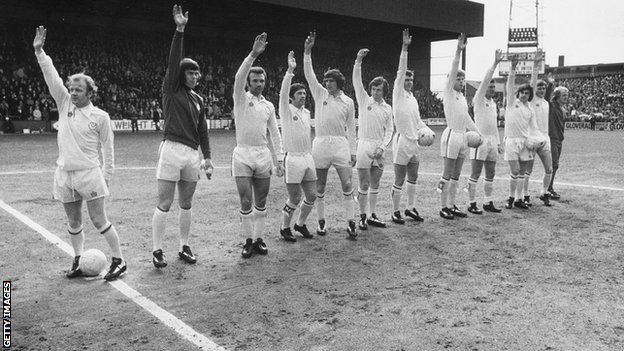
One manifestation of this is the restoration of a pre-match ritual that many, including myself, remember very fondly.  When I first started going to watch Leeds, you knew what to expect before kick-off at Elland Road.  The other lot would shamble out, they’d head to their allotted territory at the Elland Road end of the stadium and then kick a ball or two around between them sheepishly, aware that they had to face the Leeds United side and just about the most hostile and partisan crowd anywhere.  Then the Kop and the other United parts of the ground would start the chant “Bring on the Champions!”, before the warriors finally entered the arena.

Out they would file, United, purposeful and focused, clad all in white, muscular and determined. With not a glance to the cowering opposition, scattered in their preparatory warm-up, the Leeds United team stayed together as they arrived in the centre-circle. Here they would line up, raise their right arms in unison to salute the faithful, staying in disciplined line as each man, arm still aloft, turned to greet every section of the support to roars of approbation.

It used to make the hairs stand up on the back of my neck, this telling statement of intent, this confident, almost arrogant, affirmation of superiority.  It pre-dated the “We Are Leeds” terrace chant, but that message still came across, loud and clear.  It was unique, special. It was Leeds, Leeds, Leeds alone – and there was no other team like us.

But then, it just stopped.

It probably took me a few matches to fully appreciate the awful truth that the pre-match salute had indeed been abandoned.  I was absolutely gutted; it was a time of transition and we were not the force we had been – but this betrayal of tradition, as it seemed to me, was the ultimate acceptance that the Glory Days of Mighty Leeds – Super Leeds – were finally gone.  Gone for good, as far as I knew.  Fans had much less of a voice back then; there might have been some protests, but nothing was done.

But now we have Brian McDermott.  Softly-spoken but dedicated and committed Brian, fiercely determined and one with the fans Brian.  Brian who wasted no time in distancing himself from his lifelong ambition to manage the Republic of Ireland, declaring instead that he has a job to do at Leeds United, a job he’s proud and thrilled to have and one where he’s single-minded in his resolve to succeed.

Now this new idol of the Leeds support, long-suffering and battered as we’ve been over the past disastrous decade, is giving us back some of the glorious pieces of our past we’d thought lost forever.  And he’s started with the Leeds salute as practiced by King Billy & Co all those years ago.  As a symbol of not only a new era, but a new era that is intended to re-awaken past glories and return us to the top of the game, this could hardly be more potent or evocative.  Not for the first time in his short career at Leeds, Brian has hit the nail unerringly on the head.

What can you say about a man like that, who’s come into the club as a stranger and so completely fastened on to the Leeds United legend that he knows, instinctively what we all want, what Leeds United needs.  How can you express what it means to us all?  He knows what’s needed and he acts upon it.

Results-wise, achievement-wise, we’re at the beginning of a very long journey.  There will be pitfalls on the road ahead, set-backs in our progress, times when we all doubt where we’re heading.  Money is so integral to success now and Brian McDermott will rely on his board for support as he bids to succeed.  But steps like this – just the simple restoration of an iconic tradition – speak volumes for the man and his ability to feel what it is to be Leeds.  He loved that old salute, he says.  He loved seeing them walk out like soldiers, he remembers it being “a bit scary”.  McDermott knows what makes a club tick, he’s in tune with this club’s legends.

Brian McDermott is already well on the way to becoming a Leeds United Legend himself.