Tag Archives: Juventus

Bradford Fire Disaster 30th Anniversary – by Rob Atkinson

Image

Horrific scenes as the Bradford main stand burns fiercely

30 years ago today, I went to watch Leeds United play at St Andrews, Birmingham City‘s ground, in order to support the United lads, who still had a faint mathematical chance of promotion. These were the bad old days, when football violence was still highly fashionable, and it was predictable that things would get out of hand given the slightest excuse. Well, Leeds went one down, it was a crap game, and get out of hand things certainly did. There was a mass riot, invasions of the pitch from both sets of supporters, police horses tried to get between the warring groups and general mayhem ensued for quite a time. Inside the ground, a 12 foot wall collapsed and a young lad was crushed to death. It was a tragedy of the times, crowd disturbances were commonplace and only 18 days later, trouble at the Heysel Stadium in Belgium would cost the lives of 39 Italian fans as the European Cup Final between Liverpool and Juventus was fatally marred by ugly scenes of violence.

As the Leeds fans emerged from Birmingham’s ground though, we were totally unaware that an event had been unfolding back home in Yorkshire that would cost 56 more lives, leave hundreds injured and traumatised and form another catastrophic part of that dreadful month of May 1985. At Valley Parade, the antiquated home of Bradford City, a fire had broken out in the main stand, a ramshackle construction of timber with an oft commented-on build-up of litter beneath the wooden seats – a calamity waiting to happen. On that Saturday afternoon, as spectators packed the old stand to greet their promotion-winning Third Division Champions, the calamity did happen, and with unbelievable speed and ferocity.

At about 3:40 pm, ITV commentator John Helm noted that there appeared to be a small outbreak of fire in the main stand. Within four minutes, on a dry and windy day, the fire had engulfed the whole of the stand, trapping many in their seats. People dashing to the back of the stand for fire extinguishers found none – they had amazingly been removed for fear of vandalism – and the fleeing crowds were forced to break down locked exits in order to escape. Others escaped forward onto the pitch, and within the burning stand there were acts of outstanding heroism as some people tried to assist those less able, without regard for their own safety. The design and build of the ancient stand conspired in its swift destruction; the roof was of wood covered with tarpaulin and sealed with asphalt and bitumen. The whole structure was, in effect, one big incendiary bomb which had been waiting to go off for years.  Now, a single lighted match or cigarette, dropped under the seats onto the accumulated litter below, had started a conflagration that raged out of control before anyone could summon help. It was a miracle, aided by the selfless bravery of many of the spectators who rescued their neighbours, that more weren’t killed.

As it was, 56 deaths and hundreds injured left its mark on the game, and rightly so. The Popplewell Inquiry led to the introduction of new legislation to improve safety at sports grounds, and construction of new stands from wood was banned at all UK sports venues. Thankfully, the death toll had been somewhat limited by the absence of perimeter fencing around the pitch, a lethal factor in the 96 deaths at the Hillsborough disaster 4 years later. Bradford City’s ground now is unrecognisable from the ramshackle stadium I remember as a student in the city in 1981, when I attended a League Cup tie against Ipswich and marvelled from the open Kop at the sheer age and dilapidation of the wooden stand to my right. A magnificent state-of-the-art main stand now crowns the development which has taken place on all four sides of the arena – a credit to the City, to the Football Club and to the memory of those fans who died – 54 from Bradford City and 2 from their opponents that day, Lincoln City.

Later that year, in July, I attended a Bradford City memorial game at Elland Road when the majority of the 1966 World Cup Final teams, England and West Germany, turned out for a rematch. England won again, 6-4 with Geoff Hurst scoring another hat-trick, Uwe Seeler scoring a quite magnificent goal at the Kop End, and the late Alan Ball notching for England too, as did Martin Peters – the other Three Lions scorer in ’66. England were captained by the late, great Bobby Moore, and our own Jack Charlton appeared with lesser-known brother Bobby. It was a wonderful occasion and a fitting tribute to the dead and injured of the Valley Parade fire, raising many thousands towards an eventual total of £3.5 million for the Bradford Disaster Appeal Fund.

On this pleasant late spring day, when the memories of that awful summer of 1985 are receding further and further into the past, let us pause and remember those who died this day 30 years ago, as well as the victims of the Heysel Tragedy – and not forgetting young Ian Hambridge who died when that wall collapsed at St Andrews while football fans unknowingly rioted all around. Ian would be 45 now; he and 56 others at Bradford were robbed of their lives by the events of the day. Rest in peace, all of them – and let’s be thankful that we’ve seemingly moved on from that dark period in football and stadium history.

Forget George Best: King John Charles Was the Greatest British Player Ever – by Rob Atkinson

John Charles - the Greatest

John Charles – the Greatest

Ask any football fan to tell you who in their opinion was the greatest British footballer ever, and you’ll get a variety of answers. Danny Blanchflower, Tom Finney, George Best, Duncan Edwards, Dave Mackay, Billy Bremner, Kenny Dalglish, Paul Gascoigne – and many, many more, some with reasonable claims for recognition, others less so.  Probably most will go for Best, partly because of the hype that surrounds the self-proclaimed Greatest Club in the World and partly because Best himself wasn’t shy about telling everyone he was the best ever, anywhere, which must have given World Cup Winners Zidane and Maradona slight cases of mirth-induced hiccups.

The claims of Best tend to be perpetuated by the media, who have their own agenda when proclaiming superlatives about the game, especially these days when markets are so important and merchandise-buying fans must be kept happy.  So we hear that Man U are the biggest/greatest, that Old Trafford, the Theatre of Hollow Myths itself, is the finest ground this side of Betelgeuse, that the Busby Babes were going to be the greatest team in all four dimensions for ever and ever – and that Best was, well, the Best. It’s a self-perpetuating myth that glosses lightly over George’s many faults: his predilection for taking the field in important semi-finals tired and emotional as a newt, or not-so-fresh from some young strumpet’s bed; his dislike of discipline and inconveniences such as training; his waste of a massive natural talent upon early retirement and then a succession of ever more embarrassing comebacks.  This was the greatest player ever?  Really??  What does the word “great” mean, exactly?

If you ask a Juventus fan of a certain age, he’d probably have a pretty unanswerable argument to put for the unparalleled greatness of William John Charles (1931 – 2004). Proud Welshman Charles shone for several seasons in the top two leagues of the English game with Leeds United before a then British record fee of £65,000 was enough to take him to Italy.  There he scored on his debut for Juventus and never really looked back, performing with such masterly grace, skill, power and sportsmanship that the Juve fans took him to heart forever, dubbing him il Gigante Buono – The Gentle Giant.

In 1997, Charles was voted by fans of the Italian game as “best-ever foreign import” – this over and above the likes of Platini, Maradona, Law, Rush, Sivori, Gullit and Zidane (who had been at Juventus a year when the vote was taken). For a player to be deemed the best ever in that sort of company, and well over 30 years after he had left Italy into the bargain, argues for a truly special, unique performer, someone who possessed very great gifts indeed.

Those tifosi know their football, after all – and in Charles they knew they had a world-class centre-half and a world-class centre-forward, all wrapped up in one modest and loveable package.  Who else embodied skill, strength, temperament, courage better than the Gentle Giant, a man described by the Juve club doctor after his transfer medical as “quite the most perfect human machine I have ever seen”?

John Charles was all that, and so much more besides.  He has been described as being simultaneously the best defender and best attacker in the world, blessed with heading power to surpass many a player’s shooting ability, a rocket shot in either foot, an incredible physique and amazing skill on the floor, especially for such a big and powerful man.

In the whole of his career, encompassing all those seasons in the physical battleground of Serie A, he was never once sent off, nor even cautioned.  That is perhaps even his greatest achievement, considering the attention paid to trying to mark him out of his attacking contribution – and yet Charles’ spell with Juventus was so honour-laden that he carried home many tangible rewards also.

His spell at Juventus must count as the John Charles heyday, although he had enjoyed considerable success in a mediocre team at Leeds United.  Several goal-scoring records fell to the giant Welshman during his first and most productive spell at Elland Road, and yet he’d had a long spell as a central defender, another position in which he was a truly daunting opponent.  Leeds were sometimes nicknamed “John Charles United” at this period of their history and none who saw him play doubted that here was the finest footballer in the world.

It was the versatility of Charles, his ability to excel in two such different positions, stopping attacks and scoring goals with equally deadly proficiency, that made him such a valuable asset to any team he played for.  In 1958, Wales came as close as they ever would to World Cup glory, falling only to Brazil in a match for which Charles was injured – the deciding goal in a 1-0 defeat being scored by a young lad known simply as Pelé.  To this day, Welsh supporters wonder what might have been had John Charles been available for that game. The phenomenal Welshman was a potential match-winner against any opposition.

John Charles died in 2004 after a prolonged spell of ill health.  My dad remains one of his biggest fans and due to this I got to meet him a few times – a more likeable, self-deprecating and gentle man it would be hard to imagine.  For him to declare himself the Greatest is impossible to imagine.  That sort of thing is for someone who’s indisputably the best around and a showman too – the likes of Muhammed Ali.  And examples of flawed genius like Georgie Best, that doomed Belfast boy, they might come out with such immodesty as well – but that sort of blarney can’t hide the truth about genuine, five-star greatness.

I went to Elland Road to see John’s funeral cortège complete one solemn, dignified circuit of the pitch as thousands stood in silent tribute to the King.  He had his greatest years on foreign soil and became a world star, but he always came back to Leeds, his adopted home, where he was loved and revered in equal measure.

Greatness isn’t just snake-hipped skill, it isn’t just about wonderful goals and flashes of brilliance that might make you forget for a while the drink and the women and the missed training sessions – the wasted years.  That is the tragedy of Georgie Best. Greatness belongs to a different magnitude of star, one who rises literally and metaphorically above all others, encompassing skill, power, dedication, athleticism modesty, respect for opponent and team-mate alike. That was the greatness of John Charles CBE, hero of Leeds United, Juventus and Wales.

The sadness is that, in these glitzy, Murdoch-funded, money-obsessed days, you rarely hear the name of Charles mentioned when the greats are discussed – maybe just a passing reference here and there.  Some of his contemporaries still get the plaudits – Jimmy Greaves, Nat Lofthouse, the tragic Duncan Edwards, who may well have developed into a player the equal of Charles.  Perhaps John himself is tainted, in the eyes of the chattering classes, by association with what they will always see as “The Damned United” – and doomed therefore along with Don Revie and all of his greats to be left out of the reckoning when hypocrites gather to compare memories.  That is indeed regrettable, but it’s a part of the modern condition that, just as the media need heroes to shove down our eager, consuming throats, so they need a pantomime villain – and just as the former will always be Man U, the latter is always going to be Leeds, whatever those of us who know better might argue.

So let them have their skewed discussions, their little lists of greats, their exclusive club of what they deem acceptable in the history of the game.  It’s a fools’ paradise they inhabit, and just as we Leeds fans can nod wisely and tell them all exactly which was the finest English club side of all time, so we can identify the greatest British player.  John Charles, il Gigante Buono, King John. Simply the best.

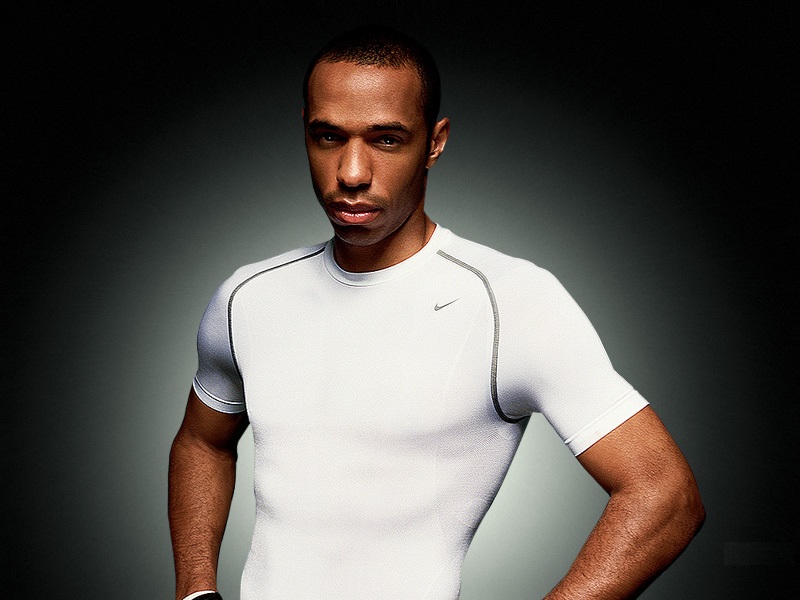
Thierry Henry to Fire Leeds United to Promotion? – by Rob Atkinson

Image

Thierry Henry – short term deal with Leeds?

Twitter didn’t exactly go into meltdown last night but, on the basis of one optimistic tweet from Phil Hay, the respected local journalist with his finger on the pulse of Leeds United, it did start to get decidedly warm.  The gist of it was that good things were being heard about the imminent takeover of Leeds United and that good times might just be about to roll.  A couple more juicily-tantalising snippets were added into what became a heady mix, with David Haigh tweeting that he couldn’t wait to be at the Barnsley match next weekend as Elland Road would be “rocking”.  We heard also that Haigh is over in Austria, a country linked strongly to Red Bull who have in turn been linked strongly with Leeds United.

Now, it would be all too easy to take these morsels of information and add them up to make something totally unrealistic.  Then again, the elements do seem to combine of themselves into the oft-talked about “Dare to Dream” scenario.  One particularly exotic rumour that arises out of such an optimistic outlook is the possibility that one of Red Bull’s most marketable assets, Thierry Henry, might be on the point of jumping on board at Leeds United to provide the sort of boost that even a pair of Red Bull wings could hardly hope to emulate.  Even at the age of 36, the French superstar could inflict massive damage in this league, even if mainly from the bench.  Could there be anything in it?

On the face of it – why not?  The team is in good shape at the moment; there are a couple of obvious areas where improvement is needed and all Leeds fans will be hoping to see those addressed in January.  But with the current doubt over the fitness and commitment of El-Hadji Diouf, there may well be a vacancy in the squad for someone who can do something special, someone who can add a touch of class and elevate the profile of the club at the same time.

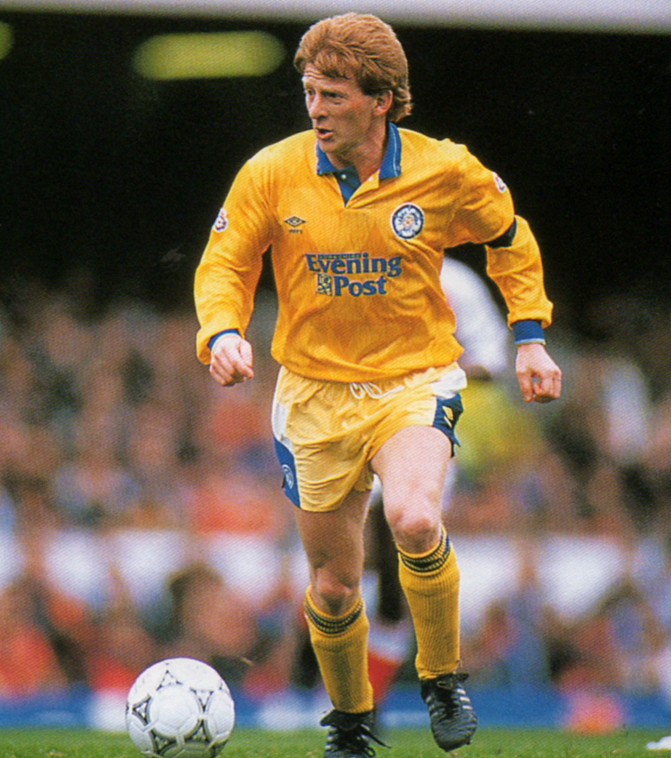
The combination of Diouf and Warnock was an unlikely one – but it happened.  Let’s not forget either that Dioufy was something of a star with World Cup heroics behind him and a global profile.  Thierry Henry is all this, and more – and at this stage of his career, what could be more of a challenge to him than the task of reviving a sleeping giant, a club where he would catch the imagination of the fans and raise the atmosphere that extra notch or two, giving the whole place a lift and the team new impetus?  That’s a scenario well known to Leeds fans with long enough memories as the “Gordon Strachan factor”.

This week promises to be very interesting indeed.  If those tweets from Hay and Haigh carry what I believe they do in between their lines, then it’s fair to say we might expect some significant news before the Barnsley game.  Just how significant that news might be is anyone’s guess – but my guess is that an announcement is distinctly possible  of further takeover details making that “Dare to Dream” scenario burst into reality.  And what was on David Haigh’s mind when he was talking about “Elland Road rocking” on the pre-Christmas weekend when football crowds are notoriously thinned out by last-minute shopping?  It does make you wonder.

Thierry Henry in a Leeds shirt?  Bizarre.  But how wonderful it would be, what an incredible boost.  It seems too good to be true, of course – but if you’re going to dare to dream, then why not be extravagant about it?  A legend like Henry in the famous white shirt – that’d be a hell of a good dream as far as I’m concerned, but could it actually happen?  You just never know – it possibly could.

Leeds Legend King John Charles is Jimmy Greaves’ No. 1 – by Rob Atkinson

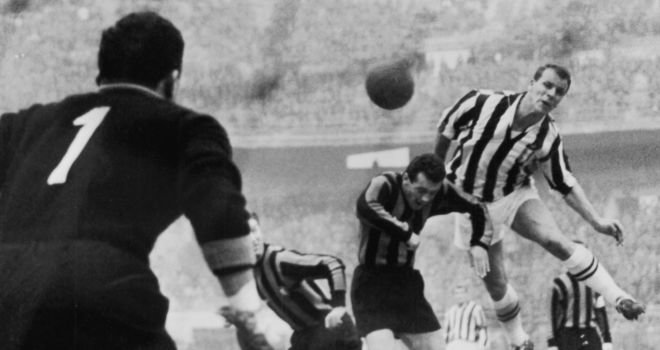
King John of Leeds United & Juventus

King John of Leeds United & Juventus

We all know what normally happens when any former footballer, once-famous manager or similar faded glory is asked the burning question: who was your greatest player of all time?  The form is that you scratch your head to make it look as if you’re thinking, nod sagely and then say “Why, it was Georgie Best, of course”, before holding your hand out for the cheque and heading straight for a refreshing cappuccino – or for the nearest bar if you’re NOT Jimmy Greaves.

Ex-Tottenham, Chelsea and AC Milan striker Greaves though – who also starred for Barnet FC and West Ham once his top-level playing days were done – had no doubts about his choice.  John Charles, he explained, was not only one but two great players.  At centre-forward just as much as when he was deployed in a defensive role at centre-half, King John had no peers.  During his spell in Serie A with Juve, an environment Greaves knows well from his brief stint with the Rossoneri of Milan, John would often start a game up front and then, having scored the goal to gain his team a precious lead, would be pulled back to centre-half to ensure that they didn’t lose it.

I’ve written a recent article myself about the great Charles, and how he should be regarded as the Best of British despite the populist claims of Georgie Best.  I expected to find broad agreement among Leeds fans – certainly the ones who had been lucky enough to see John play whilst he was in his pomp – but I also expected that fans of other clubs would have been firmly aboard the Best bandwagon – particularly as this was a vehicle driven quite hard by George himself, who never had any qualms about expressing his view that he was the finest player of all time.  With an ego like that, his spiritual home surely was the Theatre of Hollow Myths – but the fact remains that his professionalism and dedication were of a much lower order than is needed for true greatness to be accorded. That was very much my view anyway, and one that I hope can be seen as unbiased.  But a little corroboration from among the ranks of ex-pros can’t do any harm.

Interestingly, Greaves is not alone in dismissing the claims of Best.  George’s team-mate at Man U, Denis Law, also felt that Best fell short of true greatness because of the flaws of character and discipline that accompanied his undoubted genius.  By contrast, John Charles had an attitude and professionalism to match his incredible ability and the tremendous physique that enabled him to dominate two vastly different playing positions.  Furthermore, in the highly defensive, cynical and violent Italian league, John was never booked or sent off – as indeed he never was throughout his career – a notable achievement for any player. For a man often used as a defender in Serie A, it was little short of miraculous.

John Charles was voted Italian football’s top “foreign import”, thus coming ahead of Platini, Maradona, Brady and even Luther Blissett.  To this day, the fans of Juventus will greet a fellow football fan wearing Leeds United colours and talk eagerly of “il Gigante Buono”, the player that served both clubs so well, the man who has entered legend as King John.

Jimmy Greaves – you were a top player, and you’ve proved yourself at last to be a man of judgement and discretion.  I salute you.