Tag Archives: Premier League

As West Ham Say Goodbye to Upton Park, Memories of a Leeds Fan – by Rob Atkinson

wright hammer

Two Wrongs Don’t Make a Happy Wright

Tonight we bid a sad farewell to Upton Park, or the Boleyn Ground, long-time home of Olympic Stadium-bound West Ham United. The ‘Ammers, as they’re known locally, have usually been obliging victims for Leeds United teams of most eras, and were particularly notable as lenders of a helping hand towards the end of our title run-in of 1992, when they defeated Man U in a game that turned Alex Ferguson the deepest shade of exasperated purple I’ve ever seen. So it’s fitting, as another proper London football ground bites the dust, that I should write a little about the ‘Appy ‘Ammers; some of my fondest memories are of victories there, particularly this MayDay romp in 1999.

It was an encounter, played out in front of a packed Boleyn Ground crowd of 25997, that found Leeds United in a rich run of form; ten games unbeaten since an early February reverse to Newcastle at Elland Road, after which they had reeled off seven consecutive league victories followed by three draws on the trot. The Whites’ determination to get back to winning ways after those six dropped points was exemplified by the fastest possible start.  A mere twenty seconds had ticked by when the ball nestled in the West Ham net, put there emphatically by the ebullient Jimmy Floyd Hasselbaink who ran at a retreating Neil Ruddock before finishing neatly with a left-foot shot past Shaka Hislop. And then the game went ever so slightly mad.

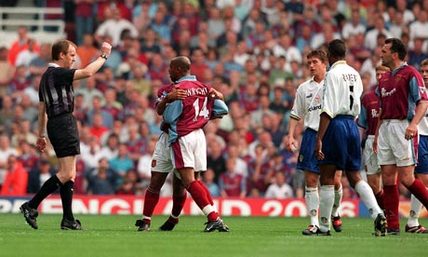
Jimmy’s goal apart, the first quarter of an hour had seen both sides engaging in tackles which tended on the thuggish side of enthusiastic. West Ham’s Eyal Berkovic was a victim early on, and Lee Bowyer was on the end of a clattering as the home side sought revenge. Then Ian Wright, no stranger to controversy and the disciplinary attentions of referees, led with his elbow when challenging for a high ball, and copped for a yellow card that looked a lot more justified than the second yellow he got after only 15 minutes, following an altercation with Ian Harte, Harte, Harte. So Wright was on his way back to the stand after a mere quarter of an hour, loudly protesting the injustice of the case and hell-bent, as it turned out, on venting his frustrations on the décor in the ref’s room. 

For the next half-hour, leading up to the interval, Leeds proceeded to make a one man advantage look anything but as West Ham pressed them back, causing panic in the away defence as the promptings of Berkovic and Paolo di Canio created some decent chances to possibly level the game. Leeds had managed to be distinctly the poorer side in that opening 45 minutes, and yet – as if to prove once again what a daft game football can be – they hit West Ham with a sucker punch in first half stoppage time. David Batty appeared to have committed a foul in midfield which might well have justified a booking had the ref not totally ignored it and waved for play to continue. Harry Kewell duly obliged, picking the ball up wide on the left and mesmerising the overstretched Hammers defence before cutting the ball back from the by-line for Alan Smith to convert gleefully.

2-0 then at half time and – for once – it had pretty much all gone Leeds’ way. We had been outplayed for most of the game so far, but were somehow two goals and one man to the good; courtesy, it has to be said, of some not exactly even-handed refereeing.

The second half began much as most of the first had been spent, with Leeds on the back foot and defending precariously. Straight away, the dangerous Berkovic bamboozled Jonathan Woodgate, turning him inside out before supplying di Canio with the perfect chance to pull a goal back. 2-1 to the visitors then, but the balance of the play had been with West Ham, and maybe now the momentum was theirs too. None of us could feel over-confident despite a man and a goal advantage, because all of us could recall Leeds blowing such enviable positions many times in the past.

This time, though – for once – we were not to be let down. A rare defensive slip just after the hour from the otherwise excellent Marc-Vivien Foé saw Hasselbaink sprint clear to round Hislop, who then brought him down. Penalty to Leeds and, despite the presence of defensive cover, Hislop was sent off. It was a slightly unfortunate second red card for West Ham, who felt compelled to replace Berkovic with reserve keeper Craig Forrest as the calamities mounted for the home team. Forrest’s first act was to pick Harte’s penalty out of the back of the net, and Leeds were 3-1 up and cruising against 9 men. Foé, we will remember, sadly died four years later at the tragically young age of 28, from an unsuspected heart condition whilst representing his country in the FIFA Confederations Cup.

Now at last Leeds started to dominate as a two-man advantage would suggest they should. The best goal of the game arrived on 78 minutes, Bowyer hitting an unstoppable right-footed shot from twenty-five yards, which curved slightly as it found the corner of Forrest’s net.  Just a minute later, Alf-Inge Haaland sprinted on to a Hasselbaink pass into a massive amount of space on the right hand side. Unchallenged, he was able to advance into the penalty area and beat Forrest with an accurate shot just inside the far post.

The eight outfield players in claret and blue were clearly finding the pace too hot, and suddenly there was room aplenty all over the pitch for Leeds to exploit, and exploit it they did.  Aided by the fact that the Hammers – to their eternal credit – were still trying to attack Leeds in spite of their depleted resources, Leeds were granted the licence to ping the ball about, always able to find a man or two in space, making the tired home players work overtime to chase possession as the Upton Park faithful bayed their hate at the referee. Truth to tell, we could easily empathise with the ‘Arrassed ‘Ammers; far too many times down the years we’d been in their shoes, watching impotently enraged as some git of a ref casually destroyed our afternoon. It was somewhat bizarre to watch the situation unfold in reverse – but what the hell. We made hay while the sun was shining, and happily the team was doing the same.

The game had long been over as a contest and, at 5-1 up with no credible opposition to deal with, Leeds seemed intent solely on playing out time. Smith still managed to miss a passable chance to make it 6-1 and Clyde Wijnhard contrived to get himself booked, eliciting maliciously ironic chants of “Who’s the bastard in the black” from the jubilant Leeds fans, who displayed an ironic gallows humour not altogether appreciated by the home supporters. Finally, hothead Irons defender Steve Lomas allowed his mounting frustration to get the better of him, launching an agricultural challenge in the direction of Harte and duly collecting his marching orders to reduce the hapless, helpless Hammers to eight at the death.

It had been a strange game, a romp for the Whites on the face of it – judging by the lop-sided score line anyway. But it had never been quite like that; not that our awareness of having been outplayed for long stretches diluted our joy one tiny bit. It’s a sad fact that 5-1 away wins do not come along very often, and we enjoyed this one to the full. We enjoyed it for the whole of the slightly perilous walk back to the tube station, and we were still enjoying it when we beheld the distinctly pissed-off figure of Leslie Grantham heading down the stairway to the platform where we were celebrating noisily. Leslie Grantham, soap-opera legend as Eastenders arch-villain Dirty Den; Leslie Grantham who had done serious time for killing a German taxi-driver; Leslie Grantham, Hammers fanatic, who – despite being accompanied by his two young boys – bore a grim aspect which looked rather as if he wouldn’t mind adding a couple of Leeds fans to that record.

Tactful and understanding to the last of private grief, we wisely kept our distance and refrained from seeking autographs. It had been a memorably bizarre day for Leeds United and an equally happy summer evening awaited us in the sinful fleshpots of London, crap, watery cockney beer and semi-hostile natives notwithstanding.

Dirty Den 1, Dirty Leeds 5.

Leicester City, the Example That Puts Cellino’s Leeds Utd to Shame   –   by Rob Atkinson

Today or tomorrow, this week or next week, sometime soon, anyway – Leicester City will become Champions of England. Premier League Title winners and Champions League top seeds. Read, mark and inwardly digest. It could have been, perhaps should have been Leeds United.

Leicester’s fantastic achievement is the explosion of the theory of an “Elite Cartel”. They’ve simply ripped up the rule book and imposed themselves irresistibly on a League that regarded them merely as cannon fodder. What the Foxes are doing self-evidently could be done by any club of reasonable size and support, properly run and adequately funded. There is no better proof that something can be done, than going out there and doing it.

All of which begs the question: why have Leeds United so shamefully under-achieved in the six years since escaping League One? The Whites’ track record in that time pales in comparison, not only to champions-elect Leicester, but also Southampton and Swansea City (who, as I write, are taking Liverpool to the cleaners). This trinity of clubs, reborn and reinfused with competitive vigour, are all considerably smaller than Leeds and lack anything like a comparable tradition or pedigree. All of them were fellow strugglers along with us in our third-tier lowest ebb. All are living proof of United’s utter and culpable failure since 2010. 

That’s the significant year, really. Prior to that, we’d been almost a decade in intensive care, a chronically ill football club doing its best to regain some sort of health. That was achieved, despite the dodgiest of ownerships – and the FA Cup victory over Man U, together with a scrambled promotion back to the second level, could and should have created a platform from which to build a bright future. That it didn’t is our tragedy, but there are no excuses. Again, look at where three smaller clubs are now, clubs that shared our League One doldrums with us. Their example puts Leeds United to shame.

Whatever the Cellino apologists might say – and they’re as stubborn a bunch as I’ve ever come across outside of a field of donkeys – it’s very difficult, surely, for them to argue he’s been any sort of success when you see what’s been achievable elsewhere, and at clubs with far less potential. Perhaps – just perhaps – making and breaking promises, serially hiring and firing managers, interfering in team affairs, insulting the support base, treating staff abominably with sexist attitudes and a desire to humiliate professional football people by making them clean up around the place – perhaps all of this isn’t the way to carry on after all? It’s just a thought.

Maybe this is at the root of why we’re where we currently are while our former League One rivals are comfortably established in the Premier League – with one of them poised to become Champions. It could so easily have been us – and that’s not just glib wishful thinking. Hard work, a professional setup, enlightened ownership – all that old-fashioned stuff – they’re why Leicester are now on the edge of a miracle of historic proportions. Instead of which, the day after we lost at home to a team already relegated from the Championship, we have to look upwards and crane our necks to see the success of others.

Good luck to Leicester City, I’m genuinely pleased for them. I have my memories of 24 years ago, and I know – as so many of us will – exactly how those Foxes fans will be feeling right now. But I just can’t help wishing that it was us again; with the frustration kicking in hard when it’s so clear that it could – and perhaps should – have been.

Spurs as Champions? It Would Have Seemed Silly   –   by Rob Atkinson

Spuds

Spurs – still no Title pedigree

If Tottenham Hotspur finish this season in a Champions League qualification place and – more importantly, in the eyes of many of their fans – above loathed North London rivals Arsenal, then this season will be deemed by the vast majority of those fans to have been a resounding success. This, despite the fact that they will have failed to have taken their most realistic chance in over half a century to finish as Champions of England. This is why Spurs, despite their superficial glamour and appeal, cannot be regarded as a big club.
 
This might sound strange coming from a fan of 21st Century also-rans Leeds United. But, for all their recent woes and the chaos that characterises life at Elland Road under Bates, GFH and Cellino, Leeds remain a big club. The expectations are still there, the voracious hunger and imperious demand to be up there with the best. At some point, those demands will be met – because the expectations and desire of the fans are what, ultimately, define the size and potential of a football club. Leeds have all that – Tottenham simply don’t. A cursory scan of their Twitter feed, since Spurs capitulated against West Brom on Monday, is ample illustration of this. 

I was really expecting to find anger, dismay and deep, deep hurt among the Spurs Twitteratti, at the careless throwing away of a once in a lifetime chance. It wasn’t there. I thought too – equally erroneously – that there would be angst and an abiding sense of betrayal. I based this on an empathetic knowledge of how I or most other Leeds supporters would feel – how it would leave us bereft and fuming to see such a rare opportunity passed up. But then – we’re Leeds, and these people were merely Spurs. There’s a big difference.

Last time Leeds joined the big time, back in 1990 – and the time before that, in 1964 – the Whites wasted no time merely admiring their surroundings or being overawed by their new peers. They took a brief, almost scornful look around, allowed themselves the barest of minimum settling-in periods, won their opening fixture back at this new, rarefied level – and proceeded to dominate proceedings thenceforth. Don Revie‘s wonders went within a whisker of the double first time out, and were the best team in Europe within five years. Sergeant Wilko‘s Warriors were Champions inside twenty months. This is the mettle and appetite of a big club. There is no fear and mighty little respect in the staff and players. There is an abounding self-belief and naked ambition among the fans. So it was with Leeds United. So it will be again. 

There is none of this with Spurs. Despite the excellence of their squad, they lack the inner conviction and the aspirations of Champions. At its heart, the club is effete and decadent, content to play pretty football while perceived lesser mortals – the Leicester Citys of this world – scrap and fight, working hard, giving no quarter, exerting every fibre of their being in the pursuit of victory. In a game of fine margins, it is this muck and bullets approach that can close the quality gap and make the difference when the prizes are handed out. 

On the evidence of social media reaction since West Brom killed off their hopes, the Spurs fans are as much to blame as the soft centre of their club. It’ll be nice to finish second, they trill. We’d have snatched your hands off for the chance of finishing higher than Arsenal. We’ll be favourites next year, they croon, hopefully. But next year never comes – not when the real big boys, the Citys, the Arsenals, the Chelseas and the Liverpools, will be waking up from their one season slumber. 

Thinking back to the early nineties, when Leeds were the hungry new kids on the block – we hoped and craved for a chance to be the best again. Whether we really expected it to come along so soon is a moot point. But we were raucously demanding of it. And when that chance presented itself – especially at the expense of our most hated foes – there was no suggestion of “well, it’d be nice, but second wouldn’t be too bad either”. We’d have been gutted to the depths of our very souls, if our heroes in White hadn’t seized the day. It would have been impossible to express the wretchedness we would have felt. The Spurs fans this week, with their mealy-mouthed acceptance of failure and honeyed words of congratulations to conquerors Leicester, have betrayed their club and shown themselves, as well as Tottenham Hotspur, unworthy of being regarded as champion material. 

In the end, any league gets the champions it deserves and, barring last-gasp miracles or calamity, it’ll be no different this year. Spurs will have shown why they haven’t been The Best since 1961, when JFK was president, the Beatles were playing beery dives in Hamburg and I was only just seeing the light of day. Leicester, with their indomitable self-belief and determination to make the most of every opportunity under the brilliant guidance of one-time “Tinkerman” Claudio Ranieri, will thoroughly have deserved their Premier League Title. They will be Champions every bit as deserving, and more, than the Leeds United tyros of 1992. 

Leicester City, Champions of England. It has a ring of authenticity to it that’s been hard fought for and deeply merited. Whereas “Champions Spurs” – well, it just doesn’t sound right. It sounds instead like cheap fiction; and, as long as the club and the fans retain their current losers’ mindset, that’s just how it will remain. 

How Will Cellino Try to Justify the Sacking of Steve Evans?   –   by Rob Atkinson

cellino-crotch

Cellino’s chopper seems to be ready to swing again

As our promised “beautiful season” drags its weary way to a mid-table close, amid a welter of unexpectedly good results, the burning issue now at hand is what we will be told when loco owner Massimo Cellino scratches that itch and sacks yet another manager.

The revolving door at Elland Road will surely also need replacing soon. It must be on its last legs after the unprecedented number of staff arrivals and departures over the last few years, as Cellino continues to feed his voracious ego. The only truly secure position at Leeds United appears to be that of Il Duce himself – and that’s only by the grace of the unusually tolerant football authorities. They have Cellino taped for what he is and yet, unaccountably, they fail to act. By his own admission, Cellino has been a dire failure at Leeds. Get rid of me if we’re not back in the Premier League by 2016, he trumpeted on arrival. There was also some stuff about repurchasing Elland Road. None of it has happened, of course – yet still Cellino is here, hiring and firing like there’s no tomorrow.

That process seems certain to continue in the near future; Steve Evans has been doing a miraculous job in circumstances that would be unbearable for less determined and self-assured men. But nevertheless, he is likely to go soon; the writing has been on the wall for a while now. Cellino’s modus operandi is a wearily familiar one: undermine and publicly rebuke your victim-in-waiting, tell him to keep quiet while you hog the headlines yourself, aim to stir up the negative feelings and prejudices of the gutter end of the United support. This campaign is in full swing against Evans, but there’s one niggling problem. The dratted man has done better in post than any of his predecessors since promotion-winner Simon Grayson. How inconvenient for Cellino is that?

How, indeed, will Cellino set about justifying the imminent betrayal of yet another solid football pro? It’s undeniable that Evans has made something of a silk purse out of what was definitely a sow’s ear when he arrived. Yes, he’s vocal at times, and has a tendency to proclaim his successes and his favoured managerial techniques. But are these really bad things? With the axe hovering above our heads as it has been for Evans, wouldn’t any of us point out as often as possible that we’re actually doing a decent job? Lifelong Celtic fan Steve Evans could, it is said, stroll into Celtic Park and occupy the manager’s chair if he so desired. But he wants to stay at Leeds. Shouldn’t we admire and relate to that?

What’s more, shouldn’t Cellino display some passing regard for a man who has overseen what looks like being our best finish for a good long time? But that would be out of character for someone who is far more at home sniping and griping at those who are trying to do their jobs under his crazy stewardship. Even Cellino, though, probably recognises that this sacking will be even harder to explain away than the others. The results have been OK, some of the displays haven’t been too bad – and we cannot now finish lower than our recently-favoured final position of fifteenth or so. Still, it’s likely that Evans will be gone, a Scot fired because Cellino says he can’t get on with English managers. That’s Massimo logic for you.

What have we to look forward to, then? Cellino appears to have put his money where his mouth is with a “season ticket part refund” undertaking if and when we fail to make at least the play-offs next season. That’s a big gamble, and there have to be concerns about the financial state of the club going into season 2017/18 if season-ticket holders have to be refunded up to half the cost of next year’s outlay. Still, that’s a promise conveniently far away. And it’s not as if Cellino has felt bound by his word in the past – is it?

And so the lunatic merry-go-round carries on apace. The next few weeks should be very interesting, though probably not in a good way, as we wait to see which direction Cellino’s grasshopper mind will jump next. The only thing that seems certain, based on the Italian’s record so far, is that stability – a commodity badly needed at Elland Road – will be as elusive as ever when il Duce once again clears the decks on the foundering ship that is Leeds United.

Leeds Utd Needs More Than Just Major Investment for Success – by Rob Atkinson

doing a leeds

As Leeds United head for Birmingham tonight, for what we all hope and trust is another meaningless game in our “beautiful” Championship season, the thoughts of many will be directed towards what is needed in order to avoid a repeat next season of what has been, in reality, another pallid and frustrating bore-fest for Whites fans. Most will rightly focus on player recruitment, and that will certainly be a challenge that Leeds must meet head-on. But it’s also fair to say that there’s much more to put right before we can realistically hope for on-field success.

With relegation to League One now increasingly unlikely and the play-offs a distant dream, it’s probably time for the seasonal post-mortem to begin. Any assessment of what went wrong must surely encompass yet another early-season sacking for the “head coach”, throwing away any strategic plan which may have emerged from the vital pre-season training period. So, yet again, there was a new man in charge before the campaign had even begun to take shape; a new coach, unfamiliar with his charges – who were not, in any event, his own choices. On top of the unwisely optimistic close season predictions about how much we were all going to enjoy 2015-16, such early disruption cannot have been helpful to the playing and coaching staff as they set about competing with better-prepared clubs.

The problem now is that there is most likely going to be further such disruption in the near future. Rumours of Steve Evans‘ imminent dismissal refuse to go away – and, sad to say, many Leeds fans are champing at the bit for this to happen. The United fans can be a funny lot. They can frequently be heard moaning about a manager who is deemed to have failed in the short term, and too many of these fans – especially the vociferous Twitter lot – seem to have bought into an increasingly crazy hire-and-fire policy. Yet the perceived wisdom relating to football management emphasises the acute need for continuity and stability at a club hoping to be successful. And, the more you think about this, the more it makes sense.

Any club that establishes itself as favouring a managerial revolving-door policy is, historically, a lot less likely to succeed than one which is prepared to be patient. The patient club will have players who know what they’re working with and who will, therefore, be more likely to knuckle down and accept the training and tactical regimen they’re presented with. But a club like Leeds, where managers frequently last for a shorter period than a sunny spell in Manchester, really has to expect a different frame of mind among its playing staff. The players will be thinking, or perhaps subconsciously feeling, “This guy won’t last any longer than the others. Why bust our balls for him? Let’s just tick over and pick up the salary cheques“. It doesn’t take too much of this kind of attitude, in a game where the margins between success and failure are tighter than ever, to effectively hamstring the whole operation. Lo and behold, you have an under-achieving club. This is the Leeds United we have been following for the past several years.

At some point, under some or other ownership, Leeds are going to have to identify their man, and then stick with him unless truly dire circumstances dictate otherwise. And the players are going to have to be left in no doubt that this is the case, in order to encourage a more professional approach in a more stable and secure atmosphere. Fans’ criticism of the manager should not be heeded if at all possible. As fans, we are simply not well enough informed, not knowledgeable enough about the goings-on behind the scenes, to call it correctly in the matter of whether or not a manager’s course is run. We’ve had so many managers in the past few seasons. Are they really all failures? Look at the job Neil Warnock is doing now at Rotherham. And, apparently, Evans himself is in demand among rival Championship clubs, in the event of him being kicked out of Leeds. Are his suitors wrong? How much longer can we at Leeds continue with such a very volatile policy? The definition of insanity is “To keep doing the same thing and expect different results“.

Our club will certainly not be able to mount a promotion challenge on a shoestring budget. One of the things that United are going to have to embrace is the need to speculate, in order to accumulate. This will be particularly applicable next season when, besides the challenge presented by the usual suspects in this league, we’re going to have to compete with (in all likelihood) Newcastle and Sunderland as well as the already doomed Aston Villa. These are all massive, well-resourced and well-supported clubs, with an enormous advantage afforded to them by Premier League parachute payments. Add in the likes of Sheffield Wednesday, Derby County and even Nottingham Forest – and next season’s dog-eat dog-fight will be even more rabidly competitive than usual. The prize, though, is truly massive. Whoever goes up this season or next will be transported into a whole different class of financial support. The Sky, quite literally, will be the limit – and clubs like Leeds are equipped to derive the maximum benefit.

Leeds United, after so long in the doldrums, must at the very least be competitive next season. We have to be involved, and at the right end of the league. Fan apathy and in-fighting are already dominant features of a once fiercely United support; these are symptoms of terminal decay. No matter how big the football giant, no matter how glorious the golden history, no club can survive as a force in the game with the sort of inertia Leeds have settled for over the past few seasons. So it’s imperative that United make the kind of policy decision they took under Leslie Silver‘s stewardship 27 years ago in the summer of 1989. Manager Howard Wilkinson laid it on the line as to what was needed – and the board under Silver, to their eternal credit, drew a deep collective breath and went for it, in a big way. But they were also prepared to put their trust in their manager, and stick with him, deferring to the professional football man in matters relating to football and footballers. The rewards Leeds reaped from this enlightened and far-sighted policy are now a matter of history and of treasured memories for so many of us who go back that far.

Life, Leeds United, the Universe & Everything calls upon Leeds United to make the necessary investment (net investment, not merely the partial reinvestment of proceeds accruing from the sale of youth policy diamonds). That will provide the tools to at least tackle the job. But, before a penny is spent, the club has to commit itself to a division of responsibility between football and company matters; they have to appoint and stick with a skillful CEO to lessen the damaging public impact of more maverick forces within the club; above all they have to commit to a manager, or head coach, or whatever label you might wish to stick on the guy – and they have to trust and put their faith in him. He must not be sniped at, he must not be publicly undermined, he must not have his hands tied in matters of player recruitment, team selection or any other area that is properly the province of a football manager in this country.

It will also be vital for the infrastructure of the club to be overhauled and restored to a “fit for purpose” status. Horror stories are emerging from the Industrial Tribunal currently proceeding, which is looking into the circumstances surrounding the departure from the club of Lucy Ward. Wherever your sympathies might reside in that matter, some of the details emerging must be seen as deeply, deeply worrying. Sickness among junior players and staff following the sacking of club cleaners. The training complex consequently shut down for deep cleaning, sundry other staff including security staff dismissed, their functions shared out among other employees whose own responsibilities already fully occupied them. If even half of this is true, it all points to the need for a broken club to be mended, and pronto.

There’s so little time and opportunity in the world of professional football to do anything other than try like crazy to keep going, keep fighting, keep your head above the water. Leeds United has been failing in these respects for far too long, and it’s been tragic to behold for anyone who has the club at heart – anyone who truly loves everything about Elland Road and those white shirts. It’s heartbreaking, really – and the pain is compounded by the amount of wrangling among people of different views regarding some aspects of the club – though they all love Leeds United. That in-fighting in itself is a bad sign, a symptom of the sickness at the heart of the club. And it’s for the club now to sort itself out, to put itself in a position where it can once more be proud and competitive. And this has to be done now, while there is still time.

Because, however much and deeply thousands upon thousands of people undoubtedly care about United – another season or two like this one, and there may not be much left to care about.

Leicester City Are on the Brink of Doing a Leeds… In a Good Way   –   by Rob Atkinson


The Last Champions


The Premier League season, which has been simmering away for the past eight months or so, is now coming nicely to the boil – and it looks set fair to produce quite the most appetising and satisfying feast of the Murdoch era so far. Not for over twenty years have we seen such unlikely and thrilling Title winners as Leicester City would be. Back in 1995, Blackburn narrowly won the crown of Champions, just pipping Manchester United. But they did it by out-spending the big spenders – and it was their third year back in the big time. Leicester are threatening to be top dogs on a budget – and in only their second season at the top table.

Many pundits are going back years before Blackburn’s success in an effort to find a precedent for what the Foxes seem likely to achieve in this momentous campaign. As far back as 1978, the Nottingham Forest of Clough and Taylor won the old Division One title in their first season after promotion. Forest took the league by storm, with a thrilling brand of football based on neat passing, hard work, collective responsibility and a pulsating team ethic. The parallels with this Leicester side are easily drawn – but again the timescale was different for Forest, as was the whole vista of English football compared to the moneybags Premier League of today.

The closest resemblance to the scenario now panning out for Leicester was the very last Football League Championship campaign in 1991/92, when Leeds United took the title in their second season after promotion, precisely the situation that Claudio Ranieri’s men are now attempting to bring to fruition. Leeds had gained promotion in 1990, and had finished a respectable 4th in their first elite season. Leicester, on the other hand, struggled badly first season up, and were bottom of the Premier League exactly a year ago. But they performed spectacularly to avoid the drop, and they have carried that form over into what appears more and more likely to be their debut season as English Champions.

The similarities between Leeds of 1992 and the modern day Leicester are persuasive. Leeds relied on a fast-paced approach, closing down the opposition to win the ball back quickly, creating mayhem with a strong and talented midfield and reaping the rewards of some lethal strikers up front. Most of Leeds’ strength 24 years ago was in their midfield, where Strachan, MacAllister, Batty and Speed were a potent engine room. In Leicester’s case, Vardy up front has been a revelation, and not only for his goals. This is a player who has shone in Leicester’s hard-working team plan, running the channels tirelessly, never giving defenders any peace, always pulling them around and disrupting many a rearguard for the benefit of his team-mates – and to show off his own clinical finishing.

Both Leeds and Leicester were unfancied for title success (Leicester were 5000-1 against at the start of this season) – both faced main rivals of historical pedigree who had yet failed to win the top prize for far too long. In Leicester’s case, they are looking to deny Spurs, a club with no titles to its name since 1961, the same year Don Revie began his masterful process of creating a Super Leeds machine. Spurs have won a few cups since then, but have never threatened to top the poll. Now, just as they seem better equipped than for decades past to do just that, they could be fated to fail again, as a nerveless Leicester side simply keep on grinding out the results that are inching them towards the ultimate success. Leeds performed similarly in 1992, appearing destined to lose out to a Man U side looking for their first title in 25 years. But Leeds hung in there, waited for the weaknesses of their rivals to show – and then mercilessly exploited the situation to emerge winners by four clear points.

As a Leeds United fan with vivid memories of that last old-style title campaign, I can easily understand the feelings of all connected to Leicester City right now. I remember turning up for games towards the sharp end of that season with nerves stretched taut, utterly unable to enjoy myself until the points were won. And I remember being glued to the radio, waiting and hoping for news of a slip-up for the boys in red. It was exhausting, exhilarating, devastating and miserable by turns; for every upturn on that roller-coaster of a run-in, there was a downturn that had you tearing your hair out. When I watch the Leicester games now, all of them under the microscopic gaze of the Sky cameras, I see the close up shots of fans suffering those same agonies and exulting just as we did when things go well. The animated faces are the faces I remember from almost a quarter of a century ago; the despair is the same, as is the delight.

Whether the outcome will be the same remains in the lap of the Gods – or, at least, the Spurs. But I wish Leicester well, as they try to finish off the job I can so well remember my heroes in White doing all those years back. It would be wonderful for the game if Leicester could do it – just as I understandably feel it was brilliant for English football that Leeds United were the last old-style champions. Not many agreed with me back then; we celebrated riotously, but in a vacuum of indifference and resentment. Then again, Leeds never were everybody’s cup of tea. And that’s one major difference with Leicester. The whole country outside of North London is rooting for them to secure the first League title in their 132-year history.

Doing a Leeds” has negative connotations, more to do with a precipitous fall from grace and financial collapse than any sporting success. So, if Leicester can close out this season as Champions, perhaps we can rightly say that they’ve “done a Leeds” in a good way – as no club has really managed since those dear, daft days of the early nineties. If anything, Leicester’s achievement would be even greater, a marvellous, unprecedented thumbing of a poor man’s nose at all the sleek moneybags types they’ve left struggling in their wake.

All the very best to the Foxes, who could conceivably find themselves a whopping ten points clear with only 5 games to play after this weekend. We’ll look forward to raising a celebratory glass to you, when you can finally call yourselves Champions.

Should Leeds Gamble on Allowing Young Talent to Leave?

LUFC
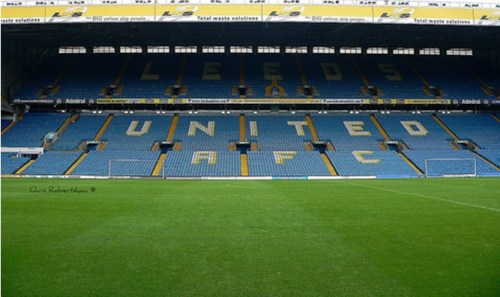
Leeds United” (CC BY 2.0) by  Chris Robertshaw 

Leeds United appear to be set for another season in the Championship following a familiar, tumultuous campaign at Elland Road.

The club parted company with Uwe Rosler at the start of the campaign after we won just two of the opening 12 fixtures.

Steve Evans was brought in to replace the German and has moved Leeds into the relative safety of mid-table, although his future beyond the end of the season remains uncertain.

The team are 15 points adrift of the playoffs with nine games remaining in the season but stranger things have happened in the second tier and it could be worth an outside bet on reaching the top six at odds of 150/1 at the time of writing with 32Red for UK gamers.

Unless Evans and his side are able to reach the playoffs and make an unlikely surge for the Premier League, the club will have decisions to make regarding their squad for next term.

Leeds have always been consistent producers of successful young talent and now another series of young players have caught the eye of Premier League sides due to their exploits in the Championship.

Alex Mowatt, Lewis Cook and Charlie Taylor have all enjoyed impressive campaigns and have been linked with moves to the top flight.

Massimo Cellino has insisted that the players will not be sold this summer, although he might be tempted if the offer proves to be substantial.

Transfer business can be a difficult business for all football teams as you never know how successful you will be.

Bournemouth discovered with the signing of Benik Afobe that buying from the Championship can pay dividends, despite their heavy outlay on securing his signature from Wolves.

When a transfer deal is done correctly, the move can have benefits for both parties. For example, a team in Leeds’ situation would be able to use the funds to address needs elsewhere.

The example of Southampton may entice Cellino to opt to cash in on his young talent following their mass exodus in 2014 when Adam Lallana, Dejan Lovren, Luke Shaw and Calum Chambers departed for other clubs.

Liverpool spent big money to acquire Lallana and Lovren, while Nathaniel Clyne followed in their footsteps last summer. However, the Saints used the cash received wisely and they are now within striking distance of the Champions League, although oddsmakers 32Red and Unibet have them at 50/1 for the top four.

Leeds have already allowed Sam Byram to leave the club during the campaign and have not felt the effects of his departure. This means they could well do the same with Cook or Mowatt in the future.

Success in front of the net has been the Leeds’ issue this term, with Mirco Antenucci leading the way with nine strikes while Chris Wood has notched eight goals.

Allowing Cook or Mowatt to depart for a fee in the region of £10m would not be bad business by Leeds, and may let the club target a striker next season to boost their goal tally to fire them into candidates for promotion.

What Is Moneybags Football Doing to Save Gazza? – by Rob Atkinson

Gazza in his heyday

Sometimes in your football-supporting life, you see a player in the opposition ranks who is simply different gravy. Partisanship or no, you just have to acknowledge genius when you see it and, if you’ve any appreciation at all for the Beautiful Game, you simply applaud talent and ability the like of which we see all too rarely.

As a Leeds United fan, I’ve had this bittersweet experience uncomfortably often. Bitter, because – let’s face it – you’re there above all to see the white shirts prevail, and some pesky genius in the other camp can be a big problem. But sweet, because we all know, deep down, that this is what football is all about; a talent that eclipses more mundane performers and makes your soul sing for what this game can be.

I’ve seen a few of these over the years at Elland Road. Johan Cruyff, so recently taken from us, lit up my first evening match at Elland Road in 1975, albeit in a losing cause. Sadly, I never saw George Best play (and he spent most games against Leeds in Paul Reaney‘s back pocket anyway) – but I did see a man who could match him for talent and for that mystical ability to take a game away from you. Sadly, he also matches the late George for the tendency to self destruct. And, if the current situation isn’t checked sooner rather than later, we shall tragically see Paul Gascoigne – Gazza of blessed daft-as-a-brush memory – follow Georgie Best into a needlessly early grave.

Troubled Gazza now – road to disaster?

There isn’t much doubt that Gazza’s potentially fatal weakness for the booze makes him the lead author of his own misfortune. It’s also true to say that anyone in that downward spiral of addictive behaviour really needs to find, if possible, the willpower to break out of the prison they’re building for themselves. But that’s frequently easier said than done, and some of the brightest stars, the most transcendent genius performers, are eggshell personalities, lacking the intrinsic strength and resilience to fight the demons inside their own skulls. In that situation, outside care and intervention is needed; somebody needs to help. So who can, or should, help Gazza?

The former star is not without support. He has friends in the game, people who stay in touch with him and worry about him. But I can’t help feeling that the wider entity of football in this country could be seen to be doing more, for Gazza, and for less illustrious but comparable cases. The tragedy of Best is still clear in the memory, but there have been others who used to bask in the sunshine of fame and worship from the terraces who, once their star fell, found the world a bleak and friendless place they simply wanted to quit. Hughie Gallacher, like Gazza a former Newcastle star, was another who felt lonely and hopeless enough to walk, in a boozy stupor, in front of a train in 1957, rather than face what his life had become after football.

The thing about Gazza is that the current, wealth-laden state of the game he entered as a chubby lad in the early eighties owes much to the way he lit up the Italia ’90 World Cup. That tournament, with Gascoigne’s flashes of genius and iconic tears, did much to redeem the game of football from what had been a decade of disaster in the 1980s. Football, ably assisted by the Geordie genius, recovered from virtual social unacceptability to become once more the game everyone was talking about. Everyone wanted a piece of soccer, and its stars. And no star shone brighter in the football firmament than Paul “Gazza” Gascoigne.

Such was the new appeal and cachet of football that it was judged ripe for rebranding in this country. It became A Whole New Ball Game as Murdoch and Sky bought the TV rights to a massive chunk of it and, 25 years on, the money is still rolling in unabated. A lot of that is down to that period of Gazzamania in the early 90s, and that – as much as anything beyond common humanity – is the reason why football, and the likes of Tottenham Hotspur, Newcastle United, Rangers and Everton in particular, must be seen to be doing more to help.

So money-stuffed is the game that was once a working-class opera, that ticket prices have become almost incidental to club income at the top level. And yet still, the matchgoing public pays through the nose. They, too, have a right to see some of their money devoted to former stars fallen on hard times or, indeed, in danger of complete dissolution. Surely any Spurs or Newcastle fan would feel it appropriate for their club, served so well back in the day by a man now in crisis, to step in and provide real help, a safe environment and a solid support network for somebody in such imminent danger of sinking out of sight.

Everyone knows that there’s only so much you can do for a person seemingly plummeting towards self-destruction. But the duty to try as hard as possible, to do as much as possible, remains, whatever the chances of success. Especially for someone like Gazza, who gave so much pleasure in his heyday, who made so many smile or laugh with his hare-brained nuttiness, who helped so much to enable the rude health of the game today by the display of his peerless genius for clubs and country.

It’s not too late to save Gazza, surely. But it may well soon be. Over to you, football.

Newcastle Might “Do a Leeds”? Don’t Make Me Laugh – by Rob Atkinson

doing a leeds

“Doing a Leeds”. It’s become a 21st Century football cliché or, more accurately, a refrain increasingly tiresome to the ears of Leeds United sympathisers. It’s hackneyed, it’s boring, it’s irritating. Moreover, almost invariably – when applied to other clubs – it’s nowhere near the truth.

What is “doing a Leeds”, after all? Well, it’s no mere common or garden tumble from grace, we can be sure of that. Most teams at some point will happen upon hard times and experience bad days after the bright sunshine of relatively heady heights. It’s a part of the charm of the game, without which things could get pretty boring. Central to the English condition is a love of seeing some smug, sleek success, happy on its pedestal, firstly wobble and falter, and then come tumbling amusingly down. There’s an inner satisfaction in beholding such a humbling of a complacent success story.

So, it’s a common experience, and even enjoyable – to the onlooker. The distinction between your ordinary, everyday descents into misfortune, though, and the phenomenon of “doing a Leeds”, is the height of the pedestal from which the tumble occurs. To “do a Leeds”, you must not just fall, you must fall precipitately, from a great, dizzying height, scattering riches from your pockets as you plunge headlong into the depths of misery, ignominy and despair. You must have experienced the sweetest of success, the heights of popular fame – and you must then be found grovelling, penniless and distraught in the filthiest of gutters, with barely a rag to your back and the authorities hunting you down for a debtors’ cell with beggary to follow. That’s doing a Leeds.

Following Newcastle United‘s latest piteous showing, as they lost 1-3 to Bournemouth to deepen their peril at the foot of the Premier League, some so-called pundits are expressing fears that the Geordies might be in danger of doing a Leeds if they were to tumble through the top-flight trapdoor come May. To such a suggestion, I can only respond thus: what utter, footling rubbish. Balderdash. Piffle. Crap. Newcastle will be miles off doing a Leeds until and unless they’re struggling in the basement of League Two and looking fearfully down the barrel of the Conference. They simply have not risen high enough to be associated with “doing a Leeds”, merely by a Parachute Payment-cushioned relegation to the Championship – not even if they were somehow to drop right through that division into League One.

Leeds United’s plummet from glory to grief was looked at – and, let’s be honest, gloated over – in the light of their historical success within living memory. The triumphs and disasters of the Don Revie years are the stuff of legends; though the Whites never won as much as they could and should have done, nevertheless they became true giants of the game. Widely regarded as one of the very finest club sides ever to grace these islands, Don’s lads were peerless on their day and set the benchmark for all future incarnations of Yorkshire’s Number One club.

Even after a post-Revie decline, which saw relegation and a measure of despair, Leeds were boldly revived and hit the top of the game again under Howard Wilkinson, powered by a classical midfield four of Batty, McAllister, Strachan and Speed. Three years or so after Wilko found Leeds towards the bottom of Division Two, and only one full season after promotion to Division One, Leeds were English Champions again – the Last Champions of the old-style Football League. Yet more immortality for the Whites of Elland Road, and that pedestal of popular fame (or notoriety) was as towering as ever.

The early 21st Century nosedive was all the steeper for the giddy heights from which Leeds were crashing. Financial disaster, gross mismanagement, a spell in the third tier, the reckless squandering of diamonds produced by the ever-fertile Youth Academy – all of this, viewed in the context of the club’s glorious and honour-laden history, made such a sickening decline almost unique in the annals of football history. “Doing a Leeds” therefore entered the sporting lexicon as an unprecedented extreme; it could be used only as a cautionary example, as there are no comparable instances. Smaller clubs have fallen further; comparable clubs have had bad times. But no club has crashed and burned quite as spectacularly as Leeds.

Newcastle United are a big club with a loyal and fervent following. They, too, have had a measure of bad management, and it looks as though their current failings could well lead to demotion this year. They are not so much flirting with relegation as spreadeagled on their backs, begging the Championship to have its way with them. But to suggest they might “do a Leeds” is laughable. Newcastle have been conspicuous over the last half century for their failure to make a mark on the game’s honours roll. Apart from one solitary Fairs Cup in the late sixties, the Toon Army have not troubled the scorers. Their last Championship was back in 1927, the same year Lindbergh conquered the Atlantic in his Spirit of St. Louis; the same year Dixie Dean scored 60 league goals for Everton. It’s a very long time ago. The FA Cup brought more success for the Tynesiders in the fifties – but in the modern era, they’ve been just another club, winning some, losing some, relegated, promoted; but mostly just watching the football world pass them by.

For the sake of Newcastle’s terrific fans, it’s to be hoped that their club never can be fairly said to have “done a Leeds”. A decline of that magnitude from their current status would realistically see them playing in a municipal parks league on Sunday mornings. The trouble facing the Geordies right now are severe enough, without exaggerating the nature of the perils that might lie ahead.

After this disastrous century so far, we at Leeds don’t have a lot left to us, apart from that glorious history and a mass of vivid memories. It’s a lot more than many other clubs have, but we need to keep special to us those things that mark us out as a club that’s just a bit different. The chilling uniqueness of “doing a Leeds” is one of those things that currently define our beloved United, along with the Revie legacy, the Last Champions and the glow of sitting at the top of the League as the Millennium clock ticked over from 1999 to 2000. Let’s not cheapen or demean any of these things by taking their names in vain, or using them inappropriately.

As for Newcastle United FC? Beware, bonny lads. You’re in danger of doing a Wolves.

Ref Anthony Taylor Reaps Rewards of Incompetent Leeds TV Display   –   by Rob Atkinson

img_3357

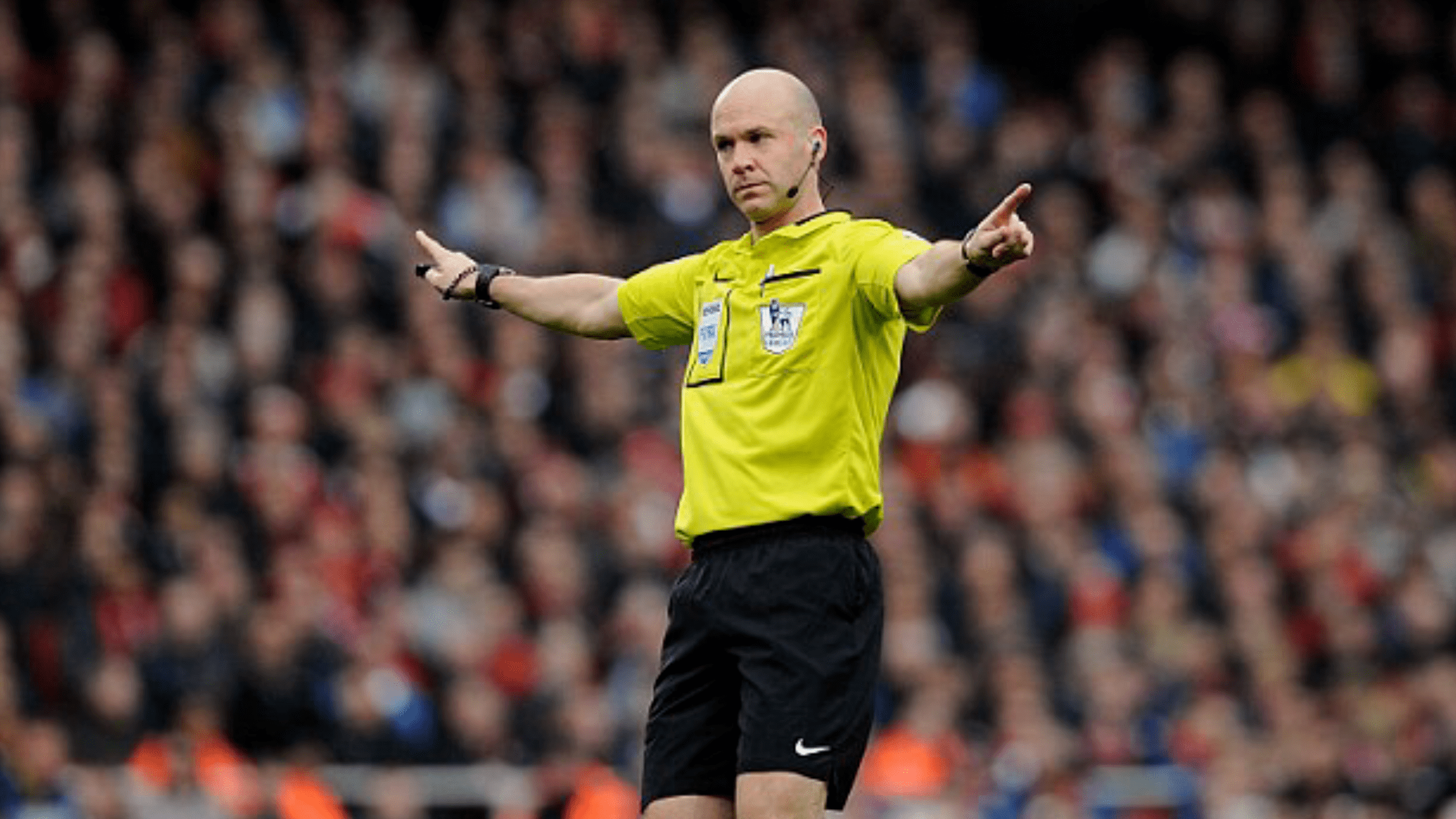
Anthony Taylor, TV Star

Since a performance of appalling ineptitude in the televised Sheffield Wednesday v Leeds United clash last month in the Championship, referee Anthony Taylor has become a bit of a TV star. The fact that Taylor’s most embarrassing mess-up at Hillsborough was to the detriment of the Whites may not be totally unrelated to his subsequent prolonged spell in the limelight.

United manager Steve Evans was understandably incandescent with rage after Taylor contrived to allow a set piece to proceed while Wednesday’s Fernando Forestieri was making his snail-paced way off the pitch, having been substituted. Leeds, two down at the time, scored a perfectly good goal which was initially awarded and then sheepishly chalked off by Taylor. Evans described the bumbling official as fit only for an Under-9s league and it was easy to understand his frustration. It was a case of extremely inept match management that arguably denied Leeds a deserved route back into a fixture they were actually dominating – albeit from a losing position. 

Since then, it seems that Taylor has been on our screens more often than the ubiquitous and even more annoying Katie Hopkins. And this after the kind of cock-up that might have been expected to see him relegated to League Two fixtures on the  rainiest, bleakest midweek evenings. Could it be that such discomfiture heaped on Leeds United, never exactly the establishment’s favourite club, caused more chortling than concern in the corridors of power? Might it perhaps have amused certain Leeds-hating gentlemen in grey suits and influential positions, to the point where they felt it appropriate to rub some salt into an open wound?

It’s easy if not exactly appetising to imagine the violent shade of puce which must disfigure Steve Evans’ face every time he sees Taylor on his TV set. As manager of Leeds United, though, he can expect to have his blood pressure raised by instances of callous disregard and blatant micky-taking by the game’s rulers. It goes with the territory. 

Still, it’s odd in the extreme that Taylor should have become quite such a small-screen idol after such a very humiliating faux pas. In other circumstances, he would surely have experienced the wrath of his superiors. But, it was Leeds – did that make the difference?

Taylor’s latest centre-stage appearance was in yesterday’s Tale of Two Cities clash between Manchester‘s finest and surprise package Leicester at the Etihad. A plum fixture, to be sure – one that any referee would covet, let alone a man so recently exposed as a bumbling incompetent. During proceedings, we were told by the commentators that Taylor had taken a brief break from his busy TV schedule to attend a UEFA course. It seems that our favourite ref will be seeing much more action in Champions League matches next season. The mind boggles. Let’s hope he’s learned the rudiments of match control by then. 

Call me paranoid if you wish. But remember – there’s nothing like people getting at you, or your favourite team, for 50 years or so, to engender a feeling that the world’s against you. Anthony Taylor’s unlikely late season stint in the spotlight is persuasive evidence that, for Leeds United, this is still very much the case.