Tag Archives: Premier League

Will West Ham “Pull It Off” at Southampton – Or Will the Clean-cut, Virtuous Saints Prevail? – by Rob Atkinson

Image

In a rare look at the no-hopers’ stratum of the Premier League, “Life, Leeds United, the Universe and Everything” will focus today on that most archetypal of mid-table fixtures, tomorrow’s clash of mediocrities at St Mary’s, as The Saints face sinners West Ham.

What? Sinners?? I hear you ask, probably with a bemused look on your face as you think of the ‘Appy ‘Ammers’ “World Cup Winners” and of course the Most Holy Sir Trevor Brooking Himself.  Well, I mean no real criticism of the traditional playing habits of The Academy of Football (Finishing Third Or Lower Since Formation).  Give or take Julian Dicks and Paolo di Canio, they’ve generally been one of the less offensive clubs around, and certainly my own beloved Leeds United have usually found West Ham to be a pleasantly soft touch down the years.  No, it’s the somewhat less savoury figureheads at the top of the club who tend to give the lie to any perception of the Irons as a tasteful family outfit.  The embarrassing fact of a pair of former soft-porn barons as co-chairmen rather shatters any such cosy image.  It’s perhaps ironic that these two share the Chairman title whilst the formerly scrumptious Karren Brady has to put up with being Vice Chairman.  It’s an incongruous contradiction that will not be lost on anyone who used to drool over the non-textual output of the Daily Sport.

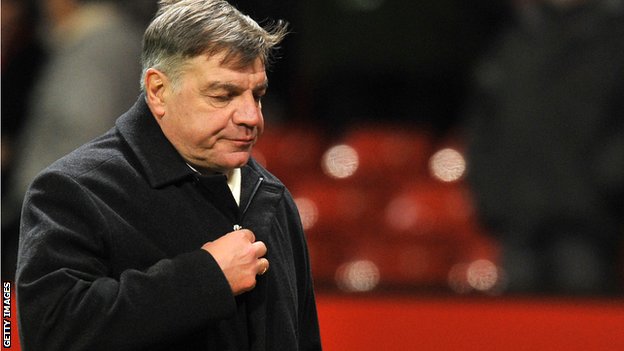
In any event, misty-eyed memories of the likes of Brooking, Alan Devonshire, the Hurst/Peters/Moore triumvirate, Patsy Holland (Patsy??  Yes, Patsy, for crying out loud) and even more recent alumni such as Frank Lampard Jr. and Rio Ferdinand, have tended to disappear under the more muscular style favoured by one-time Fergie lapdog Sam Allardyce.  Fat Sam, as he is fondly known, is a realist.  He went for the most direct route out of the Championship, gaining a promotion that, while it offended the eyes of the old-timer Upton Park purists, nevertheless elevated them to the level of top-flight strugglers, the usual high-water mark of their less than spectacular history.  Fat Sam knows that, in this company, survival is all that can reasonably be expected of him, and he has accordingly taken the pragmatic approach to recruitment and tactics.  The abandonment of the old “Academy” tradition is mourned by many, but it’s all about money these days and the ‘Ammers need to cling on to their Premier League nose-bleed status for as long as possible.  Historically, this has tended to mean a few years of struggle among the game’s big boys before inevitable relegation and the start of a struggle to get back.  Such has been the pedigree, for want of a better word, of West Ham United.

Fat Sam’s current problems seem to revolve around the perennial injury problems of striker Andy Carroll, who is hors de combat yet again and therefore unable to provide the fulcrum needed for the Allardyce game plan to stand any real chance of success against all but the more inept of the Premier League roster.  The Saints’ own old-fashioned centre-forward, Ricky Lambert has looked a much better bet recently, thriving in international company for England where he has snapped up a couple of goal chances and shown a happy knack of threading an accurate pass through for runners into the box.  This key advantage, as well as a slightly healthier state of affairs surrounding the home side, leads me to conclude that the ‘Ammers chances of returning to Albert Square with anything other than a chastening defeat are quite slim.  My prediction is a comfortable enough 2-0 victory for Southampton, and the jellied eels to taste sour and as nauseating as they look in the Rose and Crahn tomorrow evening.

The ‘Ammers’ prospects for the season ahead would seem to be rather up in the air.  Fat Sam will stick to his script and he’ll hope that his more effective players can steer clear of injury for enough of the campaign to secure another year at the Top Table.  That’s a pretty encouraging prognosis for London’s paupers, who will be looking ahead at their move to the Olympic facility as a chance to elevate their status.  If West Ham can make that move still in possession of their hard-won Premier League status – well that’s enough to give even an aging porn baron’s libido a jolt and maybe even provide a suitable climax to what has been a less-than-palatable career.

Super Leeds: The Last Champions – by Rob Atkinson

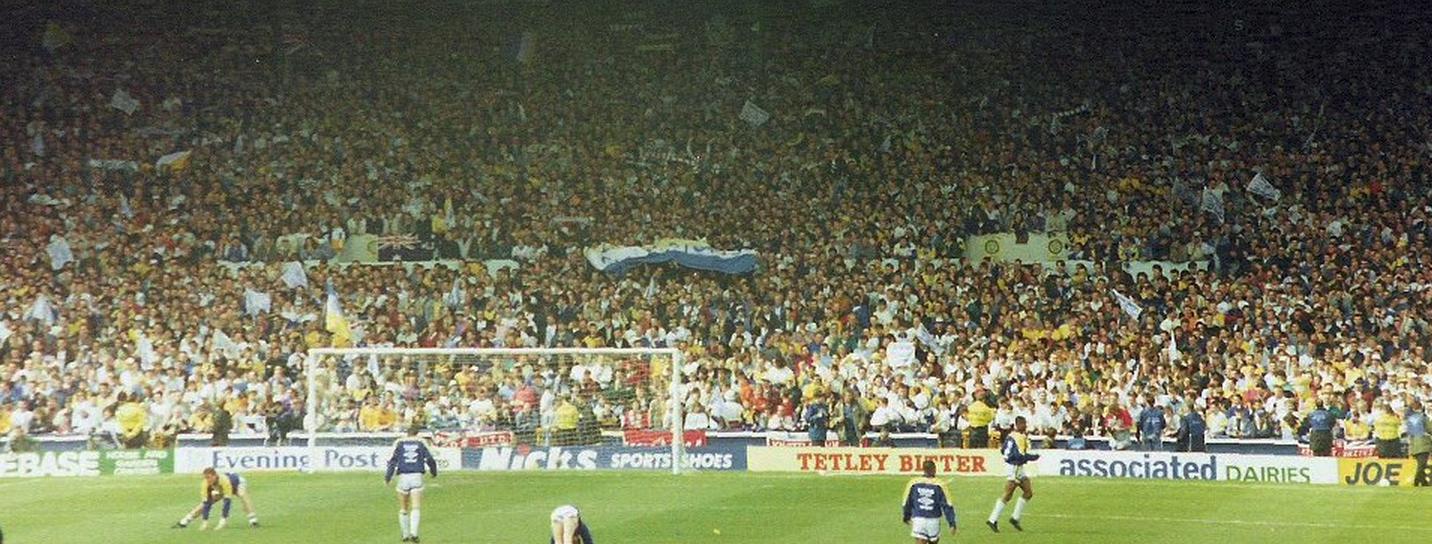
Stand Up For The Last Champions

Stand Up For The Last Champions

If you should happen to be a football fan – as I am, and have been these many years, since days of yore with short shorts, middling ability and long sideburns – then you may well be in the habit of switching on the TV occasionally to watch the glitzy offerings of the munificently funded Premier League.  With its incomparable array of prima donnas and fabulously wealthy superstars, prancing athletically around a pristine and manicured football pitch in the very latest state-of-the-art stadium (constructed courtesy of Meccano Inc.) – it’s a far cry from the heyday of The Football League, Divisions One to Four.

Back then, men were men, refs were nervous and physios routinely cured ruptured cruciates or shattered thighs with a damp sponge and hoarse exhortations to “gerron with it” – or so it seemed.   Full-backs with legs of the type more usually to be found on billiard tables would careen through the mud at Elland Road or Anfield, some flash, quivering, overpaid at £200 a week winger in their merciless sights, destined to be afflicted with acute gravel-rash.  Centre-backs with foreheads like sheer cliffs would head muddy balls clear to the halfway line, get up out of the mire, groggily shake their mighty heads, and then do it all over again – for the full 90 minutes, Brian, giving it 110%.  The good old days, without a doubt.

There is little that the modern game has in common with those far-off, non-High Definition times when some top-flight games weren’t even covered by a local TV camera for a brief clip on regional news.  Now, every kick of ball or opponent is available in super slow-mo for in-depth analysis by a battery of “experts”, from a dozen different angles.  The game today is under the microscope seven days a week, where then it was viewed only from afar, limited to highlights from a select few stadia every Saturday evening and Sunday afternoon.  Even now, the smell of hot ironing and roast beef with Yorkshire Pud will take me back to Sabbath afternoons sat contentedly before “Sunday Soccer” as Billy Bremner and Co dismantled the hapless opposition.

Leeds United was the team, back then.  On their day, the lads would toy with their rivals as a particularly cruel cat might do with a half-dead mouse.  Many will recall the spectacle of a mortally-wounded Southampton side – already seven goals to nil down near the end of the game – trying all they knew to get a touch of the ball as their tormentors in white passed it effortlessly between themselves, brazenly flaunting their catalogue of flicks, reverse balls and sublime long passing.  The game was long since won and all Leeds’ energies were palpably focused on a very public humiliation of their exasperated victims.  Some thought it was in poor taste, a shoddy way to treat fellow professionals.  Leeds fans remember it 40 years on as the ultimate statement of an undeniably top team, proclaiming to the nation “Look at us.  We are the best.”

This was 1972, when Leeds might well have won pretty much everything, but had to settle in the end for their solitary FA Cup triumph, missing out on the Title right at the death in typically controversial circumstances.  Leeds won far less than they should have done; a combination of official intransigence, their own inherent self-doubt, Don Revie’s crippling caution and superstitions – together it must be said with some shockingly bad luck – limited their trophy haul to a mere trickle when it should have been a flood.  But those flickering images of arrogant dominance and untouchable skill revealed also an unbreakable brotherhood and grisly determination that spoke of a very special team indeed.  The resonance even today of that oft-repeated tag “Super Leeds” says far more about the status of Revie’s side than any mundane tally of trophies possibly could.

In those days, of course, the gulf in ability between Leeds United and Southampton, described by Match of the Day commentator Barry Davies as “an almighty chasm”, was just that.  The gap in class was achieved on merit.  It wasn’t backed up by any such gulf in the relative earnings of the men in white and the demoralised Saints, or players of any other club.  The playing field back then was very much more level than it is now, when the top few clubs – in an apt metaphor for society at large – cream off the bulk of the income, leaving the rest to feed on scraps.  The pool of possible Champions was consequently greater – Derby County won it that year of Southampton’s ritual humiliation, as Leeds faltered when required to play their last League game a mere two days after a gruelling Cup Final.  Imagine the outcry if one of the major teams had to do that today!  And ask yourself if a Derby County or a Nottingham Forest are likely to be Champions again in the near future, blocked off as they are from that status by the oligarchy at the Premier League’s top table.

There aren’t many more hackneyed phrases than “The Good Old Days” – but for those who like their sporting competition to have a wide and varied base, with the possibility of a good proportion of the participants actually having a chance to win in any given season – then the 60’s, 70’s and 80’s take some beating.  Leeds United fans like to refer to their team of 1992 as “The Last Champions”, and a convincing case can be made for this, looking at the transformation which took place shortly thereafter, the explosion in finances for the chosen few, and the small number of clubs – invariably backed by mega-millions – who have been Champions since.  Even the once-mighty Liverpool FC has been affected.  Despite Leeds United’s current problems, they have been Champions more recently than the Anfield Reds.

It’s perhaps fitting that Leeds have a claim to the title of The Last Champions.  As Super Leeds, they dominated English Football for a decade, without ever winning their due.  Now that we can look back with misty eyes to a turning point for the game 21 years ago when the Premier League broke away, and the cash registers started to make more noise than disillusioned fans, we can possibly consider those 1992 Champions, nod to ourselves, and say yes; they were the last of the old guard, the final Champions of the Good Old Days.

As epitaphs go, it’s not a bad one.

Leeds United Glory Game – No 2: West Ham 1, Leeds 5 – May 1st, 1999

The 'Ome of the 'Appy 'Ammers, Innit

The ‘Ome of the ‘Appy ‘Ammers, Innit

The second in the “Glory Game” series features loveable, chirpy cockneys West Ham United, usually obliging victims for Leeds teams of most eras, and notable as lenders of a helping hand towards the end of the title run-in of 1992 when they defeated Man U in a game that turned Alex Ferguson the deepest shade of exasperated purple I’ve ever seen.  It’s fitting that I should write a little about the ‘Appy ‘Ammers; at least one irritatingly chirpy blog which claims to support them spends most of its time obsessing over our own beloved United, so perhaps here I can redress the balance a little.

This Mayday fixture in front of a packed Boleyn Ground crowd of 25997 found Leeds United in a rich run of form, ten games unbeaten since an early February reverse to Newcastle at Elland Road, after which they had reeled off seven consecutive league victories followed by three draws on the trot.  The Whites’ determination to get back to winning ways after those six dropped points was exemplified by the fastest possible start.  A mere twenty seconds had ticked by when the ball nestled in the West Ham net, put there emphatically by the ebullient Jimmy Floyd Hasselbaink who ran at a retreating Neil Ruddock before finishing neatly with a left-foot shot past Shaka Hislop.  And then the game went ever so slightly mad.

Jimmy’s goal apart, the first 15 minutes had seen both sides engaging in tackles which verged on the thuggish side of enthusiastic.  West Ham’s Eyal Berkovic was a victim early on, and Lee Bowyer was on the end of a clattering as the home side sought revenge.  Then Ian Wright, no stranger to controversy and the disciplinary attentions of referees, led with his elbow when challenging for a high ball, and copped for a yellow card that looked a lot more justified than the second yellow he got after only 15 minutes, following an altercation with Ian Harte, Harte, Harte.  So Wright was on his way back to the stand after a mere quarter of an hour, loudly protesting the injustice of the case and hell-bent, as it turned out, on venting his frustrations on the décor of the ref’s room.

For the next half-hour, leading up to the interval, Leeds proceeded to make a one man advantage look anything but as West Ham pressed them back, causing panic in the away defence as the promptings of Berkovic and Paolo di Canio created some decent chances to possibly level the game.  Leeds had managed to be distinctly the poorer side in that first half, and yet – as if to prove once again what a daft game football can be – they hit West Ham with a sucker punch in first half stoppage time.  David Batty appeared to have committed a foul in midfield which might well have justified a booking had the ref not totally ignored it and waved for play to continue.  Harry Kewell obliged, picking the ball up wide on the left and mesmerising the overstretched Hammers defence before cutting the ball back from the by-line for Alan Smith to convert gleefully.  2-0 at half time and – for once – it had pretty much all gone Leeds way.  They had been outplayed for most of the first forty-five minutes, but were somehow two goals and one man to the good; courtesy, it has to be said, of some not exactly even-handed refereeing.

The second half began much as most of the first had been spent, with Leeds on the back foot and defending precariously.  Straight away, the dangerous Berkovic bamboozled Jonathan Woodgate, turning him inside out before supplying di Canio with the perfect chance to pull a goal back.  2-1 to the visitors then, but the balance of the play had been with West Ham, and maybe now the momentum was theirs too.  None of us could feel over-confident despite a man and a goal advantage, because all of us could recall Leeds blowing such enviable positions many times in the past.  This time, for once, we were not to be let down.  A rare defensive slip just after the hour from the otherwise excellent Marc-Vivien Foé saw Hasselbaink sprint clear to round Hislop, who then brought him down.  Penalty to Leeds and, despite the presence of defensive cover, Hislop was sent off. It was a slightly unfortunate second red card for West Ham, who felt compelled to replace Berkovic with reserve keeper Craig Forrest as the calamities mounted for the home team.  Forrest’s first act was to pick Harte’s penalty out of the back of the net, and Leeds were 3-1 up and cruising against 9 men.  Foé, we will remember, sadly died four years later at the tragically young age of 28, from an unsuspected heart condition whilst representing his country in the FIFA Confederations Cup.

Now at last Leeds started to dominate as a two-man advantage would suggest they should.  The best goal of the game arrived on 78 minutes, Bowyer hitting an unstoppable right-footed shot from twenty-five yards, which curved slightly as it found the corner of Forrest’s net.  Just a minute later, Alf-Inge Haaland sprinted on to a Hasselbaink pass into a massive amount of space on the right hand side.  Unchallenged, he was able to advance into the penalty area and beat Forrest with an accurate shot just inside the far post.

The eight outfield players in claret and blue were clearly finding the pace too hot, and suddenly there was room aplenty all over the pitch for Leeds to exploit, and exploit it they did.  Aided by the fact that the Hammers – to their eternal credit – were still trying to attack Leeds in spite of their depleted resources, Leeds were granted the licence to ping the ball about, always able to find a man or two in space, making the tired home players work overtime to chase possession as the Upton Park faithful bayed their hate at the referee.  Truth to tell, we could easily empathise with the ‘Arrassed ‘Ammers; far too many times down the years had we been in their shoes, watching impotently enraged as some git of a ref casually destroyed our afternoon.  It was somewhat bizarre to watch the situation unfold in reverse – but what the hell.  We made hay while the sun was shining, and happily the team was doing the same.

The game had long been over as a contest and, at 5-1 up with no credible opposition to deal with, Leeds seemed intent solely on playing out time.  Smith still managed to miss a passable chance to make it 6-1 and Clyde Wijnhard contrived to get himself booked, eliciting gleefully ironic chants of “Who’s the bastard in the black” from the jubilant Leeds fans, displaying a gallows humour not altogether appreciated by the home supporters.  Finally, hothead Irons defender Steve Lomas allowed his mounting frustration to get the better of him, launching an agricultural challenge in the direction of Harte and duly collecting his marching orders to reduce the hapless, helpless Hammers to eight at the death.

Image

Dirty Den 1, Dirty Leeds 5

It had been a strange game, a romp for the Whites on the face of it – judging by the lop-sided score line anyway.  But it had never been quite like that; not that our awareness of having been outplayed for long stretches diluted our joy one tiny bit.  5-1 away wins do not come along every day, and we enjoyed this one to the full.  We enjoyed it for the whole of the slightly perilous walk back to the tube station, and we were still enjoying it when we beheld the distinctly pissed-off figure of Leslie Grantham heading down the stairway to the platform where we were celebrating noisily.  Leslie Grantham, soap-opera legend as Eastenders’ Dirty Den, Leslie Grantham who had done time for killing a German taxi-driver, Leslie Grantham, Hammers fanatic, who – despite being accompanied by his two young boys – bore a grim aspect which looked rather as if he wouldn’t mind adding a couple of Leeds fans to that record. 

Tactful and understanding to the last of private grief, we wisely kept our distance and refrained from seeking autographs.  It had been a memorably bizarre day for Leeds United and an equally happy summer evening awaited us in the sinful fleshpots of London, crap cockney beer and semi-hostile natives notwithstanding.

Dirty Den 1, Dirty Leeds 5. 

Liverpool Edge Out Man Utd to Pay Fitting Bill Shankly Centenary Tribute

Bill Shankly - Legend

Bill Shankly – Legend

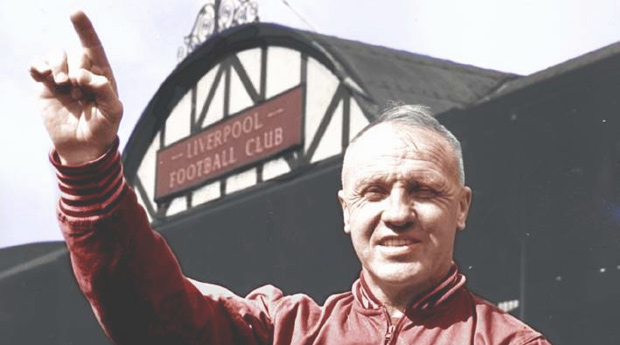
Monday 2nd September 2013 marks the centenary of the birth of Bill Shankly OBE, Liverpool’s legendary gravel-voiced Scottish manager, the man who took a moribund club and transformed it into a European power in a manner rivaled only by his great friend and contemporary rival, Don Revie at Leeds United.  It was fitting, therefore, that Liverpool should choose their last fixture before this notable anniversary to deliver a resounding “We are back” message to the rest of the top division, deservedly beating a Man U side that was never allowed to play their own game, and succumbed to an early goal of devastating simplicity.

Liverpool had entered the game on a high – two previous league games had yielded six precious points via steady 1-0 wins for a 100% record as Brendan Rodgers finally looks like putting his own stamp on this famous old club.  The Reds started in a fluent and cohesive style and within four minutes they were ahead.  A corner from the right was swung in and Daniel Agger showed great movement in the area to completely fox Rio Ferdinand, losing the defender to nip in front and get a firm header in on goal.  As the ball arrowed towards the net, two Man U defenders looked able to deal with it, but there was Daniel Sturridge, celebrating his 24th birthday by sneaking between them to apply a decisive touch and send the ball into the net. Mayhem ensued around the ground, apart from the glum band of away supporters who were doubtless contemplating a long and possibly empty-handed trip back down south.

After that, it was a question of plenty of possession for the away side, comfortably dealt with on the whole by Liverpool, who were content to blot out the Manchester attacks and wait for their chances to break away.  Wayne Rooney was missing for Man U, and Robin van Persie was uncharacteristically subdued, his sole chance of note coming late on when he was in space on the right of the Liverpool area but put his shot well wide.

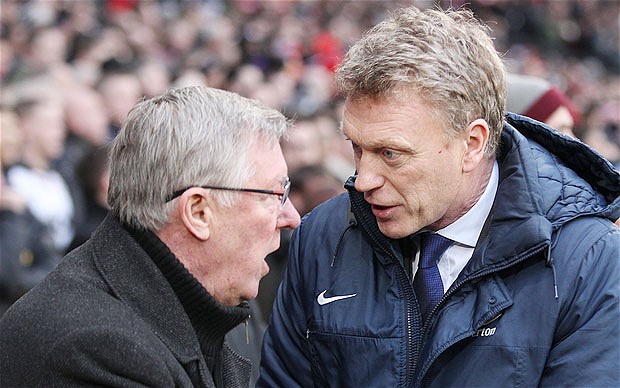
New Man U boss David Moyes must have been hoping for a change of luck after 12 fruitless managerial appearances at Anfield, all as manager of Everton.  His debut as Old Trafford manager turned out to be unlucky 13, but in reality luck didn’t have much to do with this result.  To Liverpool’s credit, they seized their chance to take an early lead, and were thereafter little troubled despite surrendering the majority of the possession.

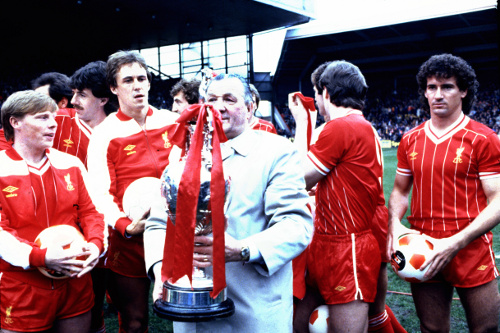
It was a result to savour for all Liverpool fans, as any win over their bitter rivals must be – but to triumph over former Everton boss Moyes, on the eve of the 100th anniversary of the late great Shankly’s birth – this was a script it would have been hard to write.  Shanks would be proud to see Liverpool sitting proudly at the top of the league with maximum points – it was the kind of thing he demanded.  Whether Liverpool can maintain the early pace is another question, but on this evidence they will be hard to topple.

Why Liverpool Are Still the Greatest Champions

Liverpool: Champions of Champions

Liverpool: Champions of Champions

Liverpool entertain Man U at Anfield tomorrow (Sunday) in the latest meeting between clubs who, to say the least, aren’t exactly fond of each other.  Rivalry of that depth and bitterness tends to polarise opinion – there aren’t many fence-sitters when one of these fixtures crops up.  OK, so I’m a Leeds United fan – so what has this got to do with me?

Well, I’d have to start by declaring an interest – as a die-hard supporter of the One True United from the right (Yorkshire) side of the Pennines, I’m not exactly enamoured of Man U.  I never had much time for them, even before that awful, whisky-nosed Govan Git came down to pour his choleric bile all over what had, until then, been a relatively civilised (give or take Brian Clough and nearly all the fans) English football scene.  There was always an air of spurious arrogance about them, as well as this “you’ve got to love us because of the Busby Babes” thing – which all the media seemed to lap up so eagerly, much to the disgust of real fans everywhere.  So clearly, I don’t like them – never did.  That’s in my Leeds United DNA.  But I’m not just a Leeds fan, I’m a fan of football in its widest sense – and I mourn the game we once knew which seems to be gone forever, swept away by a grotty tide of filthy lucre

Time was when Man U were grudgingly respected, other than by determined haters like me and my fellow Whites.  Since Sir Alex Taggart landed at the Theatre of Hollow Myths though, they’ve gone from “quite easy to dislike” to “impossible to stand the sight of” faster than you could say “Envious of Liverpool”.  The Purple-Conked One made it clear from the off that he was determined to “knock Liverpool off their perch”.  What we didn’t realise when he started his vendetta in 1988, showing no immediate sign of being any more successful than any of the other post-Busby failures, was that the whole face of football would have to change to realise Ferguson’s warped dream.

In 1967, Man U won their last ever proper League Title, making seven in total – quite respectable.  Then – nothing, for 26 years.  Since 1993, when a greedy Aussie bought the game and gift-wrapped it for a curmudgeonly Scot, the title “race” has been more of a procession.  The honour has ceased to be about virtuosity on the field; now it’s mainly about money and markets, and Man U have had much more of both during the whole Murdoch era.  Result: thirteen plastic titles.

Football is now a tacky, merchandise-driven, unseemly drive for profit over pride, and the dominance by Man U of such a grubby era is undeniably apt.  But we are still close enough in time to the pre-greed days for those of us of a certain age to remember when the game was about glory, not greed; when the aim was winning, not wonga, when the important people were supporters, not shareholders.  In those days, the distribution of wealth was far more even, and the field of possible title-winners was far wider; the competition (over a grueling 42 match course, with un-manicured pitches and un-pampered pros) was far more fierce.  And yet, even in this environment of white-hot combat and intense rivalry, Liverpool reigned supreme, not for months, not years, but for literally two decades.  By 1992, they had compiled an honours list that seemed likely to see them at the top of the game for many years to come – unless someone sneaked in and moved the goalposts.  Cue Uncle Rupert.

Man U fans can crow all they want about 20 titles.  The evidence to confound them is there for all to see, like some geological stratum separating the dinosaurs from the mammoths.  That schism dividing the game up to ’92, from the showbiz shenanigans of ’93 onwards, stands out like a Tory at a Foodbank, exposing Man U as the wealth-backed, monopolising opportunists that they are.  And it has all been done with such bad grace, another indictment of this new and joyless age we’re plodding through.  No gentle wisdom of the Bob Paisley variety – instead we had the sour bile of Ferguson and now seemingly a Fergie-Lite clone in the newly growly and grouchy David Moyes.  No loveable old-style hard-man Desperate Dan type like Tommy Smith – we just had the manufactured machismo of Roy Keane, a supposed tough-guy with an assumed snarl and trademark glower, whose typical party trick was to sneak up behind wee Jason McAteer and fell that not-exactly-scary individual with a sly elbow.

The comparisons could go on all day, but the bottom line is that Liverpool at their peak – and it was a hell of a peak – typified all the values of football that some of us remember from a pre-Sky, pre-glitz, pre-greed age when it really was all about a ball.  Now, it’s all about money, and contracts, and egos, and snide bitching to the media if you don’t get all your own way – and lo, we have the champions we deserve.  In the home game against Chelsea towards the end of last season, they displayed a lack of respect for the Premier League competition, and discourtesy to other clubs who stood to gain or lose depending on whether Chelsea  won or lost, by fielding a much changed and weakened side, going down to a meek defeat and imperiling the Champions League prospects of Spurs and Arsenal.  Such is the measure of their attitude to the game where their own immediate interests are not affected.

To apply a conversion rate which sums up all the anger and disgust I feel for the way our game has been degraded – I’d say each Premier League (or Premiership, or whatever else it’s been marketed as) is worth maybe half – at the very most – of each proper Football League Championship from the days when the game still belonged to us and the world was a happier and more carefree place.

At that rate, Man U are still a good long distance behind Liverpool, which – judging by the paucity of spirit and sportsmanship they displayed against Chelsea – is precisely where they belong.  On the eve of the latest meeting between these two long-standing Lancashire rivals, it should be emphasised once and for all – Liverpool are still The Greatest.

Is Nice-Guy Moyes Starting to “Fergify” Himself?

Image

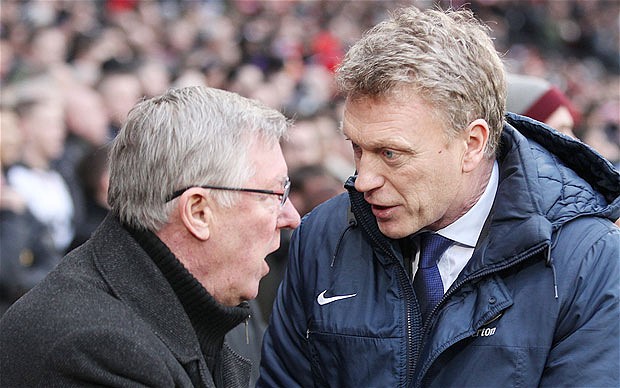
Many good judges are predicting that, with the Alex Ferguson era over at Man U, the club will now struggle to continue with their run of success.  By common consent, Fergie was not the greatest coach or tactician out there – his major contribution to the success down Salford way was more to do with his choleric temperament and his habitual intimidation of referees, reporters, players, other managers – just anyone who got in his way, really.  The terrifying effect of “The Fergie Factor” made the big difference in a game of fine margins, as a legion of cowed and downtrodden individuals would confirm, if they thought it was safe. But now we have ex-Everton boss David Moyes, and his track record suggests nothing of the talent Fergie had for using tantrums and hairdryer-like bollockings to get his own way. But could it be that the new gaffer is now setting out on the process of reinventing himself? Are we about to see the Fergification of David Moyes?

It wouldn’t be the first time that a youngish football manager, with illustrious predecessors inconveniently prominent in fans’ memories, has appeared as a sheep trying to don the clothing of a wolf.  Allan Clarke, after an apprenticeship at Barnsley, returned to Elland Road as manager, and immediately started trying to come over all Brian Clough.  “I’m a winner!” he would bark whenever a microphone was pointed his way.   As a player he certainly was just that, and he’d made a decent start in management too.  But as the new boss of Leeds United, following hard on the heels of the hapless Jimmy Adamson in 1979, he was suddenly operating in a goldfish-bowl environment, all eyes trained on him, all ears hanging on his every pronouncement.  His “I’m a winner” mantra swiftly made him a laughing-stock among local football writers, and he managed to fritter away the goodwill that had been built up between the club and the reporters by previous managers Don Revie and Jimmy Armfield.  Few tears were shed among the denizens of the local Fourth Estate when “the winner” turned into a loser and took Leeds down.  The moral would appear to be: Don’t reinvent yourself – just BE yourself.  Clarkey had some limited managerial success later on, so maybe he’d learned his lesson.

The early signs of similar folly are there with the Man U new boy Moyes.  Either off his own bat, or in response to a Govan Growl of advice, he’s setting forth to sound like an echo of Fergie – the accent is there to start with, but the incipient paranoia sounds familiar too. Take his comments about the Man U opening fixtures.  If you read them without knowing it’s a Moyes quote, you’d be looking for a name at the bottom and expecting to see that it was one A. Ferguson.  In a delayed response to the fact that Man U have to face Chelsea, Man City and Liverpool in the first five games, Moyes opined: “I find it hard to believe that’s the way the balls came out of the bag, that’s for sure.  I think it’s the hardest start for 20 years that Man U have had.  I hope it’s not because Man U won the league quite comfortably last year [that] the fixtures have been made much more difficult.”

It’s to be hoped that Moyes doesn’t feel he’s under any obligation to reprise his immediate predecessor’s policies of intimidation, or the tiresome “Mind Games” so beloved of a media in thrall to the grizzled and grizzling Glaswegian.  One of the many benefits of a Fergie-less football scene – apart from the very real prospect of Man U collapsing amid internal strife and external expectations – should be the chance of a rest from all of the nonsense that went with Ferguson and the way in which all and sundry used to defer to a man who really needed nothing more than a lesson or two in manners and deportment.  It seems highly unlikely that the relatively diffident Moyes could carry this tribute act off in the longer term, so surely he’d be better off setting out to stand or fall as his own man – not as some watered-down version of the tyrant he’s replaced.

The jokes have been going around along the lines of – oh dear, a nice Man U manager, how very unusual and depressing.  But in reality, Man U are in sore need of a bit of niceness at the top level of the club – they’ve had 27 years of the other thing, and have seen their image growing steadily grubbier in the process.  Good luck to Moyes – if that’s who he decides to be.  He could be instrumental in reinventing a once-great football club.  But if he chooses merely to ape Fergie in his pronouncements and his modus operandi – as suggested by his sulky comments over the opening fixtures – then he’ll deserve all he gets, which would probably amount to a needlessly sullied reputation – and a premature P45.

Man City Will Bounce Back

Mancini: Sacked

Mancini: Sacked

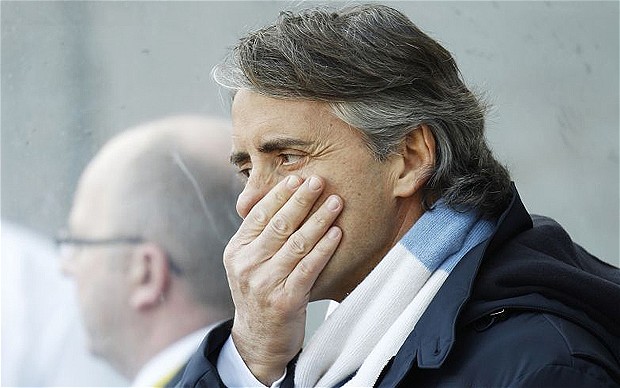
Events at Manchester City this last day or so were flagged up well in advance – the media screamed “Mancini Out!” from every outlet – and despite scornful denials by the man himself, and messages of support from the fans, you felt it would turn out to be a case of “no smoke without fire.”

Even so, the news when it arrived, poignantly on the very anniversary of that last-gasp Title triumph, was a shock of sorts.  The club moved swiftly to justify their action – Mancini had “failed to meet football targets”, it was said.  Criticism was made too of his inability or reluctance to communicate, of an aloof and arrogant attitude, of his lack of interest in club matters below first-team level; specifically an apathy where bringing youngsters through was concerned.  Clearly all was not sweetness and light on the good ship City, and the mystery of their rudderless run-in for the league campaign, and how they sank without trace in the second half of the FA Cup Final may not be such a mystery after all.

In the odd spare moment I’ve had this season to glance upwards towards the Premier League summit, and away from Leeds United’s mid-table Championship toilings, City have puzzled and frustrated me.  At the outset, they seemed well-equipped to mount a reasonable defence of their title.  There were clearly two sides to this equation.  On the one hand, the squad at The Etihad was, in my view, the best in the Premier League – rivalled only by that at Stamford Bridge.  On the other – Man U are notoriously capable at employing a siege complex in order to use resentment to fuel their fightback.  They are also, undeniably, helped in large measure by the number of weird decisions that seem to go in their favour.  The away game at Chelsea was a good example of this, when Torres was sent off for being fouled by a Man U defender already on a yellow, and then the Salford side scored a late and clearly offside winner. This sort of thing tends to pepper Man U’s most successful seasons, and it’s not an attractive facet of the Premier League.

I’ve never subscribed to this “van Persie made the difference” nonsense.  I’m sure he made A difference – but not that much.  It’s been a stroll for Man U in a league in which they should – by all considerations of relative quality – have struggled to finish third.  Chelsea have had their own problems.  The phrase “Interim Coach” needs nothing added to it for an explanation of their failure.  But Man City was a conundrum, and it is only now, in the wake of Mancini’s sacking, that we are perhaps gaining a more complete picture of what things were like behind the scenes.

Now a tell-tale tweet from former kit man Stephen Aziz may have shed some light on just how negative the atmosphere has been at Man City.  The phrase “arrogant, vain and self-centred” appeared briefly before the tweet was removed. And there was more: “no manners ignorant just some of the daily traits really made going into work a daily grind!! #karma”.  That’s all pretty damning stuff, and quite frankly at top professional level, it doesn’t take one tenth of that apparent level of unhappiness and discontent to derail a club’s bid for honours completely.  This, more than the failure to pick up a trophy, may well be what lies behind Mancini’s abrupt departure on the first anniversary of his finest hour.

Man City fans feel an understandable affection and loyalty to the man who has given them their finest moments in over thirty years.  I too recall the expression on his face as City hammered Man U 6-1 at The Theatre of Hollow Myths, and I remember thinking that here was a man who would end up as loved as Malcolm Allison in his late-sixties incarnation, or Colin Bell, or any one of City’s heroes you may care to name.  He had the opportunity to instill himself into the DNA of the club, but – inexplicably – it looks more and more as though he’s been too arrogant to see the need to treat people as they need to be treated, and has therefore lost his fledgling Legend status.  The City fans will always remember him, of course.  He delivered, albeit at the last gasp, and put an end to an aching void where they’d won nothing as their despised neighbours cleaned up.  Of course he will always have a place in the collective City heart.

The next appointment is vital, however.  If City get it right, the quality of this squad can carry all before them next season.  Man U have a rookie at the highest level, and must expect a bedding-in period.  This year has been bizarrely tilted away from the finest talent in the league.  Next year may well be very different.

Moyes? A Strangely Unambitious Choice

"Eh - by the waaaaay, Ah'll no' be leavin' ma whisky, wee Moyesy"

“Eh – by the waaaaay, Ah’ll no’ be leavin’ ma whisky, wee Moyesy”

David Moyes swiftly emerged yesterday as a heavily odds-on favourite to replace Alex Ferguson as boss at the Theatre of Hollow Myths.  On the face of it, there’s an obviousness about this solution; Moyes has performed solidly for over a decade in the top flight at Goodison Park on a budget that, if not exactly shoestring, certainly lacked the munificence of the chests of bullion in other parts of the North West.  He has failed to win a trophy in that time but that is not in itself a criticism of any coach in an era when the silverware tends to go to the highest bidder.  The best coach around, M. Wenger, has been potless since 2007, after all.  Moyes has the appearance of a “safe pair of hands” option – someone who will come in and instigate evolution rather than revolution, a guy who can be relied upon not to depart too suddenly or drastically from the blueprint laid down by the man whose brooding presence upstairs will be a palpable influence on any new boy, whoever he might be.

This acceptance by Man U that Fergie will still be kicking about the place is tinged with danger; the lesson of history taught by the hanging-on post retirement of Matt Busby seems not to have been heeded.  The legacy of Fergie is more akin to a poisoned chalice than an inspirational example; the new coach on the block will have to set off on his hoped-for marathon at 400 metre pace.  There will be little chance or latitude afforded for any cosy bedding-in period at a club with a constitutional, almost Freudian need to be the biggest and the best.  A large proportion of their support has been conceived, weaned and nurtured on this propaganda and the last thing that any of them will want to feel is the chill blast of reality as the likes of City, Chelsea and Arsenal walk off with next season’s honours.  So Moyes (most likely) or whoever else it might be will simply have to hit the ground running, compete effectively at the highest level, placate a squad of big egos who are used to a very particular type of regime and solve the immediate Rooney wantaway (or wantanewcontract) problem.  All of this under the basilisk glare of elder statesman Fergie, glowering from a handy balcony over his former empire, hairdryer silenced but still handy.

The immediately noticeable thing about Moyes is his relative lack of European experience, and Man U is a club that sees itself as a European force despite the threadbare achievements on the continent under Fergie.  The other burning question that has to be asked then is: what would other European “giants” have done after losing a quarter-century institution as Man U have just done? Would they have plumped for Joe Bloggs from down the road, or would they instead have scoured the continent and beyond for a stellar personage of massive achievement elsewhere, someone whose CV is festooned with honours and who would breeze in expecting to maintain the winning habit?

It’s irresistible to feel that the latter would be the preferred option for your Barcas and your Real Madrids, your Bayern Munichs and – yes – your Chelseas, too.  In the immediate aftermath of the announcement that Fergie would be chewing his gum in the directors’ box next term, hopeful noises were emanating from the Man U-friendly press that The Purple-Nosed One might possibly be succeeded by The Special One, maybe even with one C. Ronaldo in tow.  It may yet be that Christiano brings his balletic skills with double-pike and twist back to Man U, but any prospect of Jose heading to Salford appears remote in the extreme – he is far more likely to be strolling down the Kings Road this summer.  Other ideally-qualified coaches have scrambled over each other in their haste not to queue up for the Man U job.  The poisoned chalice image appears to have lodged within the minds of Europe’s coaching elite.

So it is likely to be Moyes – not for his own sweet self, but more for the lack of any realistic alternatives.  It is this paucity of choice for a club like Man U – who were supposedly aware of Fergie’s retirement decision as far back as February – that is rather baffling.  Perhaps they expected Fergie would soldier on for a few years yet.  Perhaps also they weren’t expecting the grumpy Govanite to give up so easily on his ambition to overhaul Liverpool’s European Cup record.  But the emergence of crack teams from Germany as well as the still-formidable forces from Spain and elsewhere in England appear to have been a reality check for “S’ralex”, who must in his more coherent moments have realised that climbing the European summit again in the foreseeable future is a dimly remote prospect. It may well be that a “safe” appointment such as Moyes will serve to dilute expectations just enough to cure these fanciful notions that Man U could possibly break into the Continental elite.  Perhaps an FA Cup run and top four in the Premier League will suffice next season, and save Moyes from the fate of Wilf McGuinness back in the day.  But I frankly doubt it.

The King is dead.  Long live the King – but who, and for just how long?

Alex Ferguson – A Tribute

Purty, Ain't He?

Purty, Ain’t He?

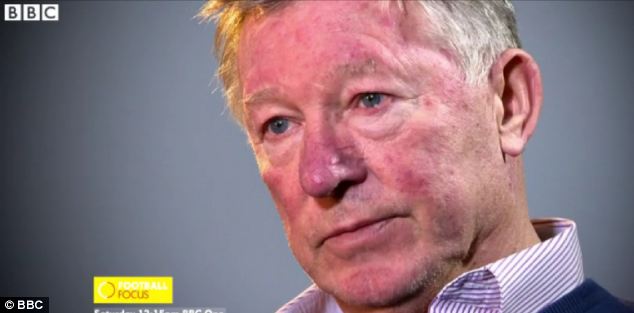
The football-related media is in a frenzy of mourning today after the announcement that Sir Alex Taggart has decided to step down as Supreme Dictator of the FA Premier League.  Who will follow him, they ask, tearing their hair and wringing their hands in distress.  Chelsea fans may be surprised to hear that Bridge-bound Jose Mourinho is being mentioned as inheritor of the poisoned chalice that is the hot-seat at the Theatre of Hollow Myths.  But Jose is surely too fly and savvy  to “do a McGuinness” as the task of following a long-serving Man U manager is known in the game.  Everton fans too may be wondering whether David Moyes will be offered the chance to step into the role of “Premier League’s Token Grumpy Scotch Git.”  Whoever ends up in Mr Ferguson’s gout-adapted tartan slippers has a job on his hands alright, and will need urgently to review the manual on “How To Bully and Intimidate For Personal and Professional Gain”.

The loss for the media will be acute.  Hacks as a breed dearly love the cosy familiarity of a tyrant at the top of the game, someone who is an outlet for all of their natural tendency to fawning sycophancy, a figurehead over whom they can compete to praise in the most glowing terms whilst neatly overlooking the glaring flaws of a man who has been a study in coarseness and choleric wrath when things even threaten to go other than as he would like.  The newspaper journos will miss “S’ralex” – he represented continuity for them, an opportunity to trot out well-worn cliches and perpetuate comfortable myths.  Now they may even have to think before starting another Man U piece – it will be a shock to be so brutally jolted out of a 26 year comfort zone.

Ferguson has his place in the history of the game.  He will serve as the biggest negative example of how to ruin the previously positive image of a historically-respected football club, making of them a byword for arrogance and the tendency to ride roughshod over the rules and conventions of the game.  He is there as a useful comparator for the true greats of football and how they went about their business, with humour, humility and a sense of their own fallibility.  The likes of Busby, Shankly, Revie, Stein, Nicholson et al are all part of the rich fabric of the game, all lost to us now, but all clearly capable of favourable assessment in the light of the Ferguson legacy; none will suffer in comparison with the man from Govan.

People will point to his record of success – and sycophants and revisionists will hastily gloss over his difficult early years at Man U when the home crowd called for his head and despaired of ever being able to aspire to the levels of Liverpool and Everton, great clubs run properly.  The re-organisation of the game and its finances when the Premier League came in was highly opportune for Ferguson, and he certainly made hay while the sun shone; it shone for him for the bulk of the remaining 20 years of his career.  Ferguson suddenly found himself in charge of a racehorse competing in a donkey derby, the interests of consumers suddenly paramount, the need to sell satellite dishes and replica shirts in hotbeds of Man U support like Devon and Milton Keynes emphasising the commercial importance of a successful Man U team.

All of a sudden, the top players wanted to go to Salford, all of a sudden the statistics of the game tilted heavily in Ferguson’s favour.  Penalties against them had never been plentiful, now they were as rare as a rosebush in the desert.  Ferguson’s natural personality came to the fore; his tendency to bully and to rant began to produce real results in terms of the attitude of the media and of the game’s officials, both on the field in the shape of cowed and terrified referees, and off it with the administrators unwilling to court commercial unpopularity by waving the rule book under that purple nose.  The most familiar sound-bite emanating from Lancaster Gate was suddenly “The FA can confirm that Alex Ferguson will face no disciplinary action for (insert example of blatant disregard for the rules here.)”
Referees became aware of the fact that those of their number who made a decision not to the liking of Ferguson tended to wait a very long time before selection for another fixture involving Man U.  These are high profile games, and referees increasingly had to look to their own career prospects as their role assumed more of a professional profile.  So they tended to knuckle under, perhaps only subconsciously, but the effect over many years has been enough bizarrely ridiculous decisions in favour of Man U to spoil the digestion of many a football fan who remembers fairer days pre-Murdoch, pre-Man U dominance.

Given this decided slope of the playing field in Man U’s favour, the wonder of it all is that they haven’t won more.  There have been years when the Title has gone elsewhere; remarkable this, in a game of fine margins where one study exposed as fact that 88% of all 50-50 decisions went the way of the Salford Franchise.  This is the measure of Ferguson’s failure; a manager who was also a good coach would surely have cleaned up in such a very favourable environment.

So what now for Man U?  To be honest, I can see their domination continuing.  It’s likely that the public image of the club will be enhanced under a manager who does not represent quite so many of the negative personality traits exhibited by Ferguson.    It will certainly be interesting to see if a world-renowned coach – if appointed – can improve on their patchy record in Europe, where Ferguson’s habit of intimidating refs has not been such a marked advantage to them.  Two somewhat lucky Champions League wins is a poor return for twenty years of almost unlimited opportunity, and a better man in charge might perhaps improve on this and finally give Man U more justification for their laughable claims that they have “knocked Liverpool (Five European Cups) off their perch.”

The question will be asked next season “Who’s the greatest manager in football now?”  The answer will be the same as this season: choose any one from Mourinho, Wenger and Hitzfeld.  All the propaganda in the world cannot make a silk purse out of a sow’s ear.

Parachute Payments – Are They Really All That?

Saunders - Not Good Enough

Saunders – Not Good Enough

Every year, you hear the same thing about next season’s Championship division: “God, it’ll be tough to go up, look at the clubs coming down, all that money from Parachute Payments.”  Yeah, well.  Look at last year’s lot, Wolves, Blackburn and Bolton.  All dropped out of the top-flight and landed in the Championship with an almighty thump, weighed down by all that fools’ gold in their pockets.

In Wolves’ case, the fall was so heavy they’ve still not stopped, crashing through the floor of the Championship into the dank and unpleasant dungeon of League One.  This has been aided, it’s true, by spectacularly incompetent management right from the top.  The decision to get rid of Big Mick McCarthy – as a knee-jerk reaction to a derby-day thrashing by West Brom – is still haunting the Wanderers.  Terry Connor floundered in the deep end and sank without trace.  Dean Saunders has appeared to be clueless, his attempts at bluster unconvincing, even his saner moments lacking in any content or coherence.  McCarthy, meanwhile, prospers at Ipswich – a deeply impressive man and a highly competent manager at this level.

Blackburn, with management troubles and boardroom incompetence of their own, have been only a little better, but at least escaped a second successive relegation which appeared likely at one point.  Early in the season they spent £8 million on Jordan Rhodes, but then started messing about with the management structure and suffered accordingly.  Their failure has been at a price way beyond what the likes of Leeds could afford, and they will be looking ahead with some nervousness as Rhodes wonders whether his move was a wise one for a fledgling Scottish international.

Bolton too have flattered to deceive, failing to capitalise on a reasonable start, and pulling up no trees in a division with hardly a truly outstanding team, despite the seeming ease of Cardiff’s promotion.  The Trotters were still in with a chance of making the play-offs on the final day, but blew it by only drawing at home to Blackpool and thus letting in Crystal Palace at the last gasp – and the Bolton Premier League exile will last at least another year.

So what should we have to fear from next year’s lot?  QPR will need a radical overhaul after failing to recover from the cack-handed management of Mark Hughes, a man with one big fan he can see any time he likes in any handy mirror.  Reading could be a force, but they suffer from ownership who seem to feel that they have some football knowledge; usually a fatal ingredient.  There are rumours that some of Brian McDermott’s promotion-winning Class of ’12 would not be averse to a reunion with their old boss at Elland Road.

It remains to be seen who joins these two in the death-spiral downwards; the most likely is Wigan, who really do baffle me.  They are capable of wonderful football and will grace a Cup Final against Manchester City whatever the outcome of that occasion.  If the Latics could hang on to Roberto Martinez, they’d have to be regarded as challengers at the top end of next year’s Championship – assuming they do end up coming down.  Newcastle, Sunderland and Norwich will be nervously waiting to see if Wigan can pull off yet another last-ditch escape, as seems to be their perennial habit.

Obviously any relegated club will have the much-vaunted splodge of parachute wonga to cushion their fall, but they’d do well to look at the fate of last year’s Premier League jettison, and not assume that the ill-gotten gains will automatically ease their path back. Relegation can be habit-forming.  Just ask Wolves about that.