Tag Archives: Prime Minister

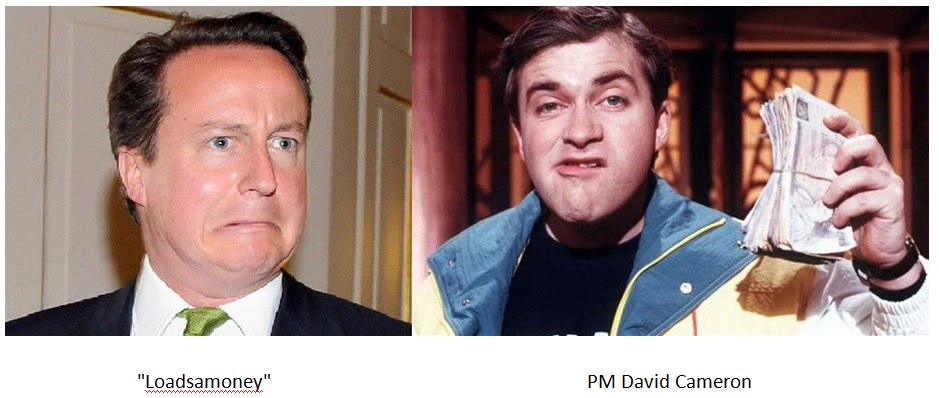
“Loadsamoney” Cameron in “Tasteless and Ignorant Flash Git” Row

ImagePrime Minister David Cameron has had his judgement called into question yet again after a “date-night” meal out with his wife on Friday at a pizza restaurant in Soho.  Having enjoyed a simple repast of pizza and lasagne, accompanied by dough balls and a bottle of red – amounting to a bill of around £45 – the Premier stunned onlookers by airily leaving his delighted waiter a tip of £50.  One diner, struggling to find a reason for this munificent largesse, later wondered in a baffled tweet whether Mr Cameron was perhaps feeling flush after saving some money on his order by using a discount coupon.  Others have speculated that a tendency to be a heavy tipper could be compensatory behaviour given his history as a former member of the notorious Bullingdon Club, an exclusive society at Oxford University noted for its habit of smashing up restaurants and paying up on the spot for damage caused.  But Cameron has not always been so generous, once failing to leave a tip at all for a waitress who, not recognising the PM, said she was too busy to carry his coffee order to his table.

Whatever Mr Cameron’s motivation – and let’s not forget there’s a very happy waiter at the centre of this story – such extravagant actions are always open to criticism for a man so very much in the glare of public scrutiny.  Given that, and allowing also for his government’s implacable stance on its much-criticised austerity programme, it may be felt in some quarters that a £50 tip on a bill of rather less than that sends out all the wrong messages.  It’s an action, some may well carp, that can easily be related to the archetypal “flash git” yuppie of the eighties, so memorably portrayed by Harry Enfield as his “Loadsamoney” character, who would flaunt his wealth ostentatiously, waving wads of cash and lighting cigars with twenty pound notes.  This was of course satire, which is at the very cutting-edge of good comedy, and rightly so.  But all the best satire has that kernel of truth which validates its message, and the “Loadsamoney” image had many parallels in real life.  In casually handing over £50 to an incredulous waiter, Mr Cameron surely risks criticism from those who will say this shows the extent to which he is out of touch with millions nationwide to whom £50 would represent a weekly family shopping budget.

It’s not so long ago that Cameron’s blundering Work and Pensions Secretary, Iain Duncan-Smith, unwisely raised his head above the parapet with a claim that he’d be able to live on £53 a week, only to have to duck it down again hastily when a massively-supported public petition called on him to do just that.  The Coalition government seem a little damage-prone in terms of such tactical own-goals, and whatever message they are trying to get across about the need for everyone to tighten the belt, grin bravely and get on with it, is continually undermined by examples of individual ministers piteously whining that their lot is not a happy one.

The Tory MP for Mid Derbyshire, Pauline Latham, recently described how she was “left in tears” after clashing with officials from the Independent Parliamentary Standards Authority (Ipsa) over the matter of her security enhancements and just who is expected to pay the £9000 bill.  That’s a story which many will find less than heart-rending when so many pensioners face the “heat or eat” dilemma.  MP’s of all parties have agitated for a while now for salary increases of up to 32% at a time when public pay is frozen.  Failed bankers and incompetent Chief Executives are still routinely walking away from the disasters they have created with severance packages well into seven figures, whilst the poorest of the poor face a struggle to find the weekly bedroom tax bill, a struggle that has in several tragic cases terminated in suicide.

It is doubtful whether Cameron, replete with pizza, dough balls, wine and relaxed, chilled-out bonhomie, will have had any of this to the forefront of his mind when he grandly tipped his waiter before heading off back to work at the G8 Summit in Northern Ireland, where all his food and hospitality will be funded by grateful taxpayers.  The point is though, surely, that he should be aware of all of these issues, all of the time, and that this awareness should advise his every move.  To expose himself and by extension his government, to such ridicule and criticism over what was quite probably a sincere enough gesture (assuming that the tip really was from the PM’s own back pocket), shows a want of understanding and a failure to appreciate just how such public generosity, on a scale out of the reach of 98% of the population, will resonate with those who are struggling to make ends meet.  The lack of political awareness in a man elevated to Cameron’s high office is more than a little worrying.  If the tip had to be given, could it – should it – have been made in a less public way?  At least then, even if the story had come out, the effect would have been diluted by relative subtlety instead of appearing so crass and opportunistic.

The sad fact is that many in the Tory party, or even in the coalition government as a whole, will tend to dismiss an item of news like this as “pointless and frivolous” or a “storm in a teacup”.  But they would miss the point in so doing.  Because the incident is in the public arena, it has to be viewed in the context of the times, and that is very much a picture of so many people suffering and struggling due to our rulers’ insistence – against the better judgement of such bodies as the International Monetary Fund – on cutting, cutting and cutting again, cutting to the bone at the lower end of society where any further cuts are likely to lead to collapse.  And while this is going on, the PM is out on the town, taking in a show, heading off to a politicians’ junket with the finest of freebie food and drink, and casually, arrogantly chucking 50 quid at a waiter as if to say, “There you go, my good man.  It’s nothing to me.”

Mr Cameron, really.  It is time to give your head a shake, re-awaken whatever political awareness you ever had, and start to think about what you say and do.  Some of us out here would just love to have a chat with you about Real Life.

Our Greatest Prime Minister

Today, Wednesday 17 April, as the late Margaret Thatcher is finally laid to rest; let us take a minute to observe a respectful silence and remember the life and achievements of undeniably the greatest peacetime Prime Minister of the last century (and some argue with justification the greatest British Premier ever). Radical and reforming, taking on the reins of power after a period of national crisis when, at times, all seemed lost, the beneficial impact of this pioneering administration on UK politics, and on the country as a whole, remained undiminished 30 years on. This was a Prime Minister with a vision, and the courage and determination to see it come to fruition, something we all have cause to be thankful for even now.

What is more, this was a Prime Minister who can quite fairly be said to have saved this country in hard times when all was chaos and confusion, from enemies without and within; a pivotal and inspirational figure when conflict raged, and an outstanding leader and innovator in times of peace; someone who dared against all precedent to think outside of hidebound tradition and vested interests, and who managed to find a gloriously better way.

Ladies and gentlemen, fellow Britons all, the toast is to our Greatest Prime Minister, with all the thanks and deep, abiding respect due to a national hero. I give you:-

Clement Richard Attlee,
1st Earl Attlee
(3 Jan 1883 – 8 Oct 1967)

Oh and – bye, Thatch.

20130417-010123.jpg

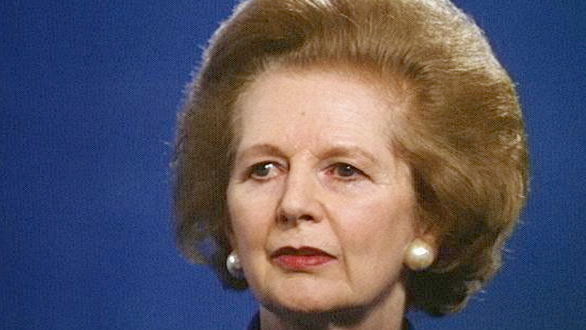
After Thatcher – What Does Her Death and Her Legacy Mean To Us Now?

Image

Thatcher: 1925 – 2013

I’ve left it nearly a week after the death of the former Leaderene to chip in with my two penn’orth on her demise, and on the legacy she’s left behind. In that time, I’ve read many and varied accounts of what Margaret Hilda Thatcher’s death means to us, here and now – given that her term of office ended nearly 23 years ago. Those accounts have encompassed widely varying points of view, and have ranged from vitriolic hatred with a joyous celebration of the fact that she’s gone, to real grief arising out of sheer adulation and an evident belief that she was some sort of Messiah for our country.

My own position lies at neither extreme, but somewhere in between – though I will freely admit that I lean significantly towards that end of the scale where people do not have much positive to say about the late former Prime Minister. For what it’s worth, I feel that she was a divisive and damaging influence on the country; indeed such a massive effect did she have on the political and economic landscape, that we simply no longer have the options – in terms of achieving increased fairness in society – that we potentially had before she entered Number 10. She greatly reduced – in fact almost destroyed – the manufacturing industry in this country, advancing the cause of financial services and speculative banking to take its place as the main means of wealth creation. She sold off a large proportion of the social housing stock and failed to invest in construction to replenish it, thus creating a shortage of homes for the less well-off at reasonable rent levels, and forcing a greater reliance on private landlords, with rent levels being set by the market. The long term consequence of THAT was an exponential growth in the Housing Benefits bill, which has led in turn (in these times of austerity) to the perceived need for the Government’s unpopular “Bedroom Tax”. Even though it’s nearly 23 years since Thatcher left Number 10 for the last time as PM, tear-stained but defiant, her legacy affects us to this day, regardless of what they might say who would defend her with the specious “Well, it was all a long time ago.”

Those who still idolise her seem to do so for reasons which would appear not unadjacent to self-interest. Former footballer Paul Parker has blogged:

“Personally, I don’t see why football shouldn’t pay respect to Thatcher. She should be given a minute’s silence at football grounds because without Margaret Thatcher my mum and dad would have never been able to buy a house.”

Presumably, Parker is including in his rationale thousands of others besides his mum and dad, who were also given the opportunity to buy their council houses, many at hefty discounts. But the theme of “well, she was wonderful because, hey – look what she did for me” is a recurrent one among those who remember her most fondly. Parker goes on to say:

“At the end of the day, she was the Primer (sic) Minister of Great Britain so there should be a minute’s silence as far as I’m concerned.”

He doesn’t elaborate on his views as to whether or not Heath, Wilson or Callaghan should have been so honoured (they weren’t) – but I suspect his devotion is to The Lady alone – and good defender though he might have been, Parker is clearly not a cerebral heavyweight.

The other end of the scale is represented (at its extreme) by people who felt moved to dance in the streets in celebration, and contribute to a surge up the music charts for “Ding Dong, The Witch is Dead” by Judy Garland. Yes, I bought it too. Sue me. Rather than simply bemoaning human nature for these displays of jubilation at the death of a bewildered old woman, it would perhaps serve us better to re-examine some other factors lying behind such hatred.

Quite apart from the policies I’ve referred to above, it’s also possible to find fault in what might be termed Thatcher’s unfortunate personal style. Early in her long stint as leader of the Tories, she was taking elocution lessons to modulate her slightly shrill voice, but the effect was of suburban faux gentility, with a teeth-grindingly patronising edge, rather than anything persuasive or statesmanlike. She was ironically at her most effective when she became strident, as she often did when faced with anything other than unquestioning agreement and obedience; then, she simply blew everything but the most determined opposition clear out of the water, terrifying male colleagues with smaller, less hairy balls than hers, and encouraging cowed Soviets to dub her the “Iron Lady”. She was also referred to as “The Iron Chicken” and “Attila the Hen”.

Still others who remember her less than fondly will recall that she was in very real danger of becoming just another one-term PM, and the least popular ever at that, when an opportune military conflict with Argentina cropped up in 1982. The summer of ’81 had seen a wave of riots as her policies saw unemployment rise sharply, seemingly a price her government was willing to pay for the economic direction it was so rigidly set on. Thatcher was in trouble at this point, trailing massively in the polls, but as a result of the “Falklands Factor” she won a landslide in 1983. Then the miners were unwise enough to take her on in the middle of the decade, pronouncing themselves determined to bring her government down. But Thatcher was wise to them; she had learned from Edward Heath’s mistakes in the early 70’s and had stockpiled enough coal to, in effect, starve the pit-men back to work – albeit with much human suffering and collateral damage, not least on the picket-lines at Orgreave and elsewhere. It was a humiliating defeat for miners’ leader Arthur Scargill, but – whatever you may think about him – his prediction that the Tories were out to kill the mining industry, along with its close-knit and long-standing communities, proved to be spot-on. Relatively fresh from subduing Scargill and his followers, Thatcher won again in 1987, and would eventually occupy the office of PM for over eleven years. In the end, it took her own colleagues to remove her in a coup that she ever after thought of as the basest treachery. But the fact remains that she clung on to power despite profound levels of unpopularity, aided in her latter two election victories by what many still see as naked opportunism and the survival instincts of a mongoose.

Some would seek to defend her place in history as the first – and to date only – female Prime Minister. Even I might be tempted to support a historical achievement such as that – if she had done more for women whilst in power. But she didn’t. Her Cabinet composition remained predominantly male, and you can search throughout her record for anything of note to ameliorate the lot of women in society, but you will search in vain. Glenda Jackson, speaking in the so-called “Tribute Debate” two days after Thatcher’s death, conceded the fact that Thatcher was Britain’s first female Premier but added: ‘A woman? Not on my terms.’

When push comes to shove, I would argue that Thatcher’s legacy is an almost wholly negative one; her Premiership saw a massive rise in unemployment, the decimation of manufacturing industry, a bizarre promotion of greed and acquisitiveness as hideously acceptable virtues, a decrease in growth relative to the previous thirty-four years since Clement Attlee became Prime Minister in 1945, a widening of the gap between richest and poorest where that gap had been narrowing somewhat and of course the selling-off of “the family jewels” in the shape of any nationalised industry she could lay her hands on, without sufficient regard to what would happen come the next rainy day. And there have been many rainy days since, but none rainier than the one we’re living through right now, and nothing to fall back on.

Against that, we have the perceived rise in the stock of the UK in the eyes of the rest of the world; she “made Britain great again” – some say. This presumably refers to her determination in recovering a few large pebbles in the South Atlantic at the cost of many young lives, including those of conscript Argentinians who drowned when the General Belgrano was torpedoed as it sailed away from the combat zone. “Gotcha!” crowed the Sun, while mothers of sons on both sides wept. I have to say, I don’t value an enhanced international reputation or the approval of jingoistic nations like the USA – not at that price.

And now we have to pay the cost of her funeral, having already shelled out many thousands in expenses for a one-off recall of Parliament only five days before a new session was due to start anyway. Funeral cost estimates vary between £8m and £14m depending on who you listen to, and how much her successful arms-dealer son Mark is prepared to stump up. He should really be generous – she helped him a hell of a lot. All this furore over money, at a time also when we hear her £6m London town house will not incur any inheritance duty as its actual ownership appears to be vested in an offshore company. Companies, of course, don’t die – and so don’t pay inheritance tax. These are murky waters, and it becomes ever easier to see exactly why so many regard her, and the goings-on around her in life and afterwards, with feelings of antipathy amounting to loathing.

For myself, I’ll be glad when her funeral is over and paid for, and we can all move on – and refocus on the urgent need to get rid of the current shoddy lot. Thatcher is dead; but we’re still living with a society that, in a lot of its negative characteristics can be traced back to the sea-changes she ushered in post-1979. It’s no defence against vilification to say that she left office in 1990, and can’t be blamed for what’s happened since. She created the conditions whereby what has happened since could happen, and she took away a lot of the more benign possibilities that a more sympathetic and caring attitude to investment, social care and collective responsibility in society might have realised. For that, I blame her and her alone.

Ding dong.