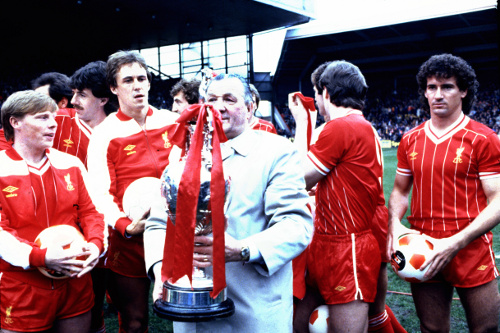
Liverpool: Champions of Champions
Liverpool entertain Man U at Anfield tomorrow (Sunday) in the latest meeting between clubs who, to say the least, aren’t exactly fond of each other. Rivalry of that depth and bitterness tends to polarise opinion – there aren’t many fence-sitters when one of these fixtures crops up. OK, so I’m a Leeds United fan – so what has this got to do with me?
Well, I’d have to start by declaring an interest – as a die-hard supporter of the One True United from the right (Yorkshire) side of the Pennines, I’m not exactly enamoured of Man U. I never had much time for them, even before that awful, whisky-nosed Govan Git came down to pour his choleric bile all over what had, until then, been a relatively civilised (give or take Brian Clough and nearly all the fans) English football scene. There was always an air of spurious arrogance about them, as well as this “you’ve got to love us because of the Busby Babes” thing – which all the media seemed to lap up so eagerly, much to the disgust of real fans everywhere. So clearly, I don’t like them – never did. That’s in my Leeds United DNA. But I’m not just a Leeds fan, I’m a fan of football in its widest sense – and I mourn the game we once knew which seems to be gone forever, swept away by a grotty tide of filthy lucre
Time was when Man U were grudgingly respected, other than by determined haters like me and my fellow Whites. Since Sir Alex Taggart landed at the Theatre of Hollow Myths though, they’ve gone from “quite easy to dislike” to “impossible to stand the sight of” faster than you could say “Envious of Liverpool”. The Purple-Conked One made it clear from the off that he was determined to “knock Liverpool off their perch”. What we didn’t realise when he started his vendetta in 1988, showing no immediate sign of being any more successful than any of the other post-Busby failures, was that the whole face of football would have to change to realise Ferguson’s warped dream.
In 1967, Man U won their last ever proper League Title, making seven in total – quite respectable. Then – nothing, for 26 years. Since 1993, when a greedy Aussie bought the game and gift-wrapped it for a curmudgeonly Scot, the title “race” has been more of a procession. The honour has ceased to be about virtuosity on the field; now it’s mainly about money and markets, and Man U have had much more of both during the whole Murdoch era. Result: thirteen plastic titles.
Football is now a tacky, merchandise-driven, unseemly drive for profit over pride, and the dominance by Man U of such a grubby era is undeniably apt. But we are still close enough in time to the pre-greed days for those of us of a certain age to remember when the game was about glory, not greed; when the aim was winning, not wonga, when the important people were supporters, not shareholders. In those days, the distribution of wealth was far more even, and the field of possible title-winners was far wider; the competition (over a grueling 42 match course, with un-manicured pitches and un-pampered pros) was far more fierce. And yet, even in this environment of white-hot combat and intense rivalry, Liverpool reigned supreme, not for months, not years, but for literally two decades. By 1992, they had compiled an honours list that seemed likely to see them at the top of the game for many years to come – unless someone sneaked in and moved the goalposts. Cue Uncle Rupert.
Man U fans can crow all they want about 20 titles. The evidence to confound them is there for all to see, like some geological stratum separating the dinosaurs from the mammoths. That schism dividing the game up to ’92, from the showbiz shenanigans of ’93 onwards, stands out like a Tory at a Foodbank, exposing Man U as the wealth-backed, monopolising opportunists that they are. And it has all been done with such bad grace, another indictment of this new and joyless age we’re plodding through. No gentle wisdom of the Bob Paisley variety – instead we had the sour bile of Ferguson and now seemingly a Fergie-Lite clone in the newly growly and grouchy David Moyes. No loveable old-style hard-man Desperate Dan type like Tommy Smith – we just had the manufactured machismo of Roy Keane, a supposed tough-guy with an assumed snarl and trademark glower, whose typical party trick was to sneak up behind wee Jason McAteer and fell that not-exactly-scary individual with a sly elbow.
The comparisons could go on all day, but the bottom line is that Liverpool at their peak – and it was a hell of a peak – typified all the values of football that some of us remember from a pre-Sky, pre-glitz, pre-greed age when it really was all about a ball. Now, it’s all about money, and contracts, and egos, and snide bitching to the media if you don’t get all your own way – and lo, we have the champions we deserve. In the home game against Chelsea towards the end of last season, they displayed a lack of respect for the Premier League competition, and discourtesy to other clubs who stood to gain or lose depending on whether Chelsea won or lost, by fielding a much changed and weakened side, going down to a meek defeat and imperiling the Champions League prospects of Spurs and Arsenal. Such is the measure of their attitude to the game where their own immediate interests are not affected.
To apply a conversion rate which sums up all the anger and disgust I feel for the way our game has been degraded – I’d say each Premier League (or Premiership, or whatever else it’s been marketed as) is worth maybe half – at the very most – of each proper Football League Championship from the days when the game still belonged to us and the world was a happier and more carefree place.
At that rate, Man U are still a good long distance behind Liverpool, which – judging by the paucity of spirit and sportsmanship they displayed against Chelsea – is precisely where they belong. On the eve of the latest meeting between these two long-standing Lancashire rivals, it should be emphasised once and for all – Liverpool are still The Greatest.











 Life, Leeds United, the Universe & Everything