Tag Archives: soccer

Lucky Sheffield Wednesday Benefit From Opponents’ and Officials’ Howlers   –   by Rob Atkinson

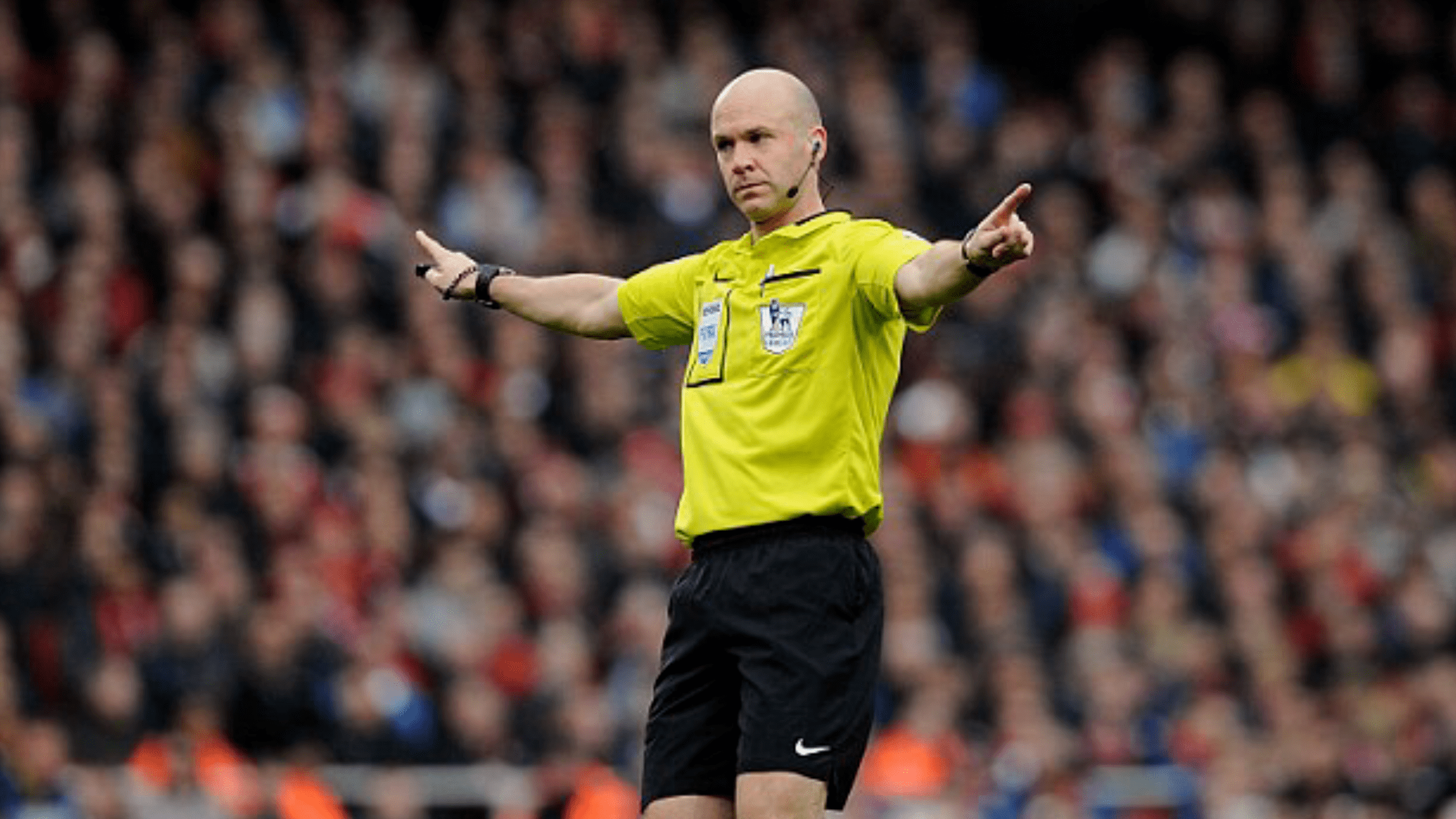
Referee Taylor: Which way is the rule-book?

Sheffield Wednesday 2, Leeds United 0

Sometimes, a simple scoreline can be so deceptive. Without making too many excuses for the myriad inadequacies of this Leeds United performance, the match between United and Sheffield Wednesday at Hillsborough was one of those occasions when the score alone tells a very misleading story.

The fact of the matter is that Leeds, having more than held their own in a first half where steadier finishing would have seen them comfortably ahead at the interval, had their own ‘keeper Marco Silvestri as well as some fathomless decision-making by replacement ref Anthony Taylor to blame for a second period capitulation. Ironically, it was the home side in the unfortunate position of having to field a third-choice goalkeeper – but any observer unaware of this fact might have guessed that the novice was in the away goal. Silvestri first gave away a needless corner from a shot heading two yards wide, resulting in a scrambled opener – and then spilled a long-range shot for the predatory Hooper to claim a second for Wednesday.

In such circumstances, you could perhaps have forgiven Leeds for concluding that it simply wasn’t their day – but to their credit, they plugged away and continued to press the home side back. It took a bizarre piece of refereeing to deny United an avenue back into the game as the clock ticked towards the final ten minutes. Leeds had already been denied by the woodwork when Wendies defender Pudil committed a foul – surely a second bookable offence – that gave Leeds what seemed like a deserved goal from Liam Cooper. The referee had checked on the progress of Wednesday’s substitution of Forestieri, had seen the player making his way slowly off – and had then whistled for the Leeds free-kick to be taken, signalling a goal when Cooper bundled the ball into the home net. Bizarrely, he then reversed his decision after consultation with the fourth official and Leeds were denied. In effect, Wednesday had benefited directly from time-wasting in the shape of Forestieri’s snail-pace trudge off the pitch. Rough justice – the kind of justice meted out to Leeds United over the past half-century – had kicked the Whites in the teeth yet again.

From the retaken free kick, insult was added to injury when Pudil – who should have seen red for the foul that led to the original award – cleared the ball off the line, and Leeds United’s last chance of recovery was gone. In truth, of course, United’s own profligate finishing and the basic errors of a goalkeeper in Silvestri whose position must now surely be in jeopardy, have ended up costing Leeds dear. But yet another unprecedented piece of shoddy refereeing leaves a nasty taste in the mouth – one that Leeds fans are all too familiar with from long and bitter experience. Plus ça change… It’s difficult to see this particular football tradition ending anytime soon.

Finally – and just to put the slings and arrows of an outrageous South Yorkshire lunchtime into perspective – it appears that a Wednesday fan lost his life to a heart attack on the Hillsborough Kop as the game was in its second half. Such a tragedy would blight any occasion, and it certainly puts petty sporting rights and wrongs firmly into their unimportant place. To the late football fan and his grieving family, Life, Leeds United, the Universe & Everything extends sincere condolences and sympathy. Rest in peace.

Yorkshire Derby Joy: Sheffield Wednesday 1, Leeds United 6 – by Rob Atkinson

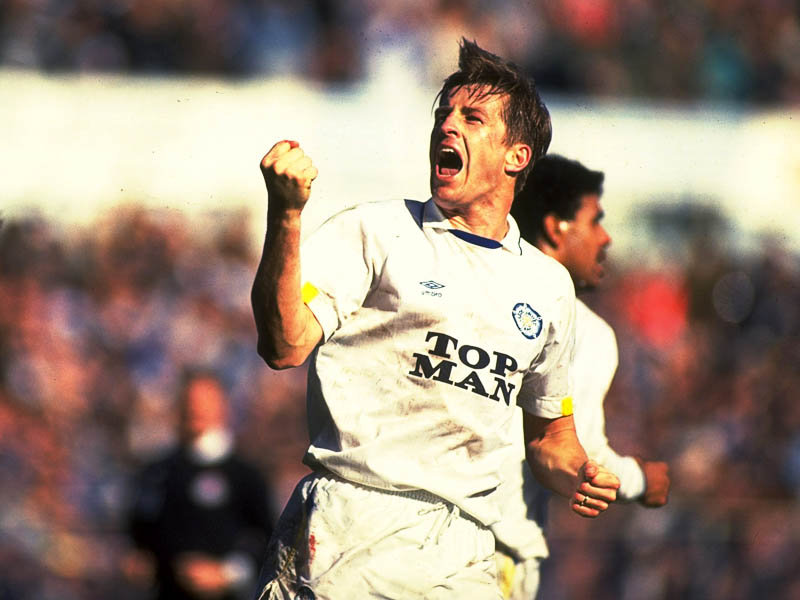
Take That, Wendies - Hat-Trick Hero Leee Celebrates

Take That, Wendies – Hat-Trick Hero Leee Celebrates

Today, we’re taking a look back to almost exactly 24 years ago to one of Leeds United’s, let’s say, more emphatic performances on their travels. Ahead of the lunchtime kick-off at Hillsborough – a fixture we can hardly anticipate with any pleasure, given current form and the sour mood surrounding Leeds United as a club – this match in January of ’92 provides some particularly happy memories.

As 1991 turned into 1992, there was plenty to look forward to for our great club.  Against many expectations, Leeds had stayed the pace in the first half of the season, to remain Man U’s main challengers for the last ever old-style Football League Championship.  We also retained an interest in both Cups, and there was no European football to muddy the waters, as we’d “only” finished fourth on our top-flight re-entry the season before (a position, it should be noted, that gains entry to the guaranteed riches of the Champions’ League these less demanding days).  So it was the League Cup and the FA Cup that promised to be the distractions from our pursuit of the Title, and guess what?  We were drawn at home in both competitions against The Pride of Devon, our main rivals for the Championship.  You couldn’t, as they say, make it up.

History shows that our beloved neighbours from “ovver t’hill” ended our involvement in both Cups, deservedly 3-1, let it be said, in the 5th Round of the League Cup (then Rumbelows Cup).  By contrast, a distinctly unlucky exit in the 3rd Round of the FA Cup followed, when a dominant Leeds performance brought only the bitter pill of a 1-0 defeat, and a worrying injury to Lee Chapman into the bargain.   Prior to the Cup games, we had played Man U in the league at Elland Road, drawing one each in the first game of what was known at the time as a “Titanic Roses Trilogy” by unimaginative sub-editors everywhere.  So honours were by no means even, but the consequences of this mighty three match series would be felt over the remainder of the season, and – some would argue – far beyond.

The immediate fall-out was that Leeds were “free to concentrate on the League”, as the cliché runs.  Man U, meanwhile, continued on to Wembley in the League Cup, enjoying a victory over Nottingham Forest, but ended up losing amusingly at home to Southampton in the FA Cup.  The fixture congestion they suffered as the season entered its final stages would be significant, if not actually decisive, in the eventual destination of the Title.

As far as the Title went, the lads from the Theatre of Hollow Myths had suffered a shock on New Year’s Day, capitulating 4-1 at home to QPR. Later that January 1st, Leeds won competently 3-1 at West Ham, and remained well in the race for the ultimate domestic honour.  The scene was adequately set, then, for Wilko’s first return to Hillsborough since he had quit Wednesday to become Leeds boss in 1988. This would also be Chapman’s last game before his season-threatening FA Cup injury. He was destined to be sidelined only temporarily, and he went out in emphatic style.

There was a crowd of 32,228 at Hillsborough, the usual vociferous contingent of travelling Leeds fans rivalling the home crowd for noise from the outset, and completely drowning them as the game went on. Leeds United were weakened – so it seemed – by the absence of the injured Gordon Strachan and suspended David Batty, half of their legendary midfield Fantastic Four. Any side, surely, would miss performers of such calibre. Leeds, however, seemed determined to make light of the problem, and tore into the shocked Wendies from the start.  Full-back Tony Dorigo made an early, darting run, cutting in from the left and making good progress down the centre of the pitch, before unleashing a right-foot thunderbolt that home ‘keeper Chris Woods had to tip over.  From the resulting Gary MacAllister corner, Chris Fairclough rose to head downwards, and found Chapman in splendid isolation 4 yards out; his finish was sure and deadly.

For a local derby, the contest had been decidedly one-way traffic – Chapman was to send two towering headers just wide before Carl Shutt had a scuffed shot smothered by Woods in the home goal. Then, a true champagne moment as Mel Sterland fed the ball to Chapman on the right. In a completely untypical burst of pace and control, Chappy surged between two hapless Wednesday defenders, raced into the area, and unleashed a shot that beat Woods completely, just clipping the frame of the goal to rapturous applause from the Leeds fans at the Leppings Lane End. I remember thinking at the time that anything was possible now, if Lee Chapman could do something so utterly out of character. And so it proved as, from a free kick awarded just right of centre some ten yards outside the box, Dorigo stepped up to absolutely hammer the ball past a helpless ‘keeper. Cue raucous jubilation from the White Army behind the goal, celebrating as clean a strike as you could ever see, hurtling into the far corner with precision and power.

At 2-0 down, the home side were making increasingly desperate attempts to gain some sort of foothold in the match. This desperation was adequately demonstrated when, from a harmless-looking ball into the Leeds area, Wednesday striker Gordon Watson ran in front of Chris Whyte, continued on for another step or two, and then hurled himself into the air, landing in agonised paroxysms of simulation between a bemused Whyte and Leeds ‘keeper John Lukic. Such obvious fraud and villainy could have only one outcome, and the stadium held its collective breath for sentence to be passed on the miscreant. Instead – amazingly – referee Philip Don pointed to the spot as Whyte snarled his outraged disbelief.  Whether none of the officials had seen the extent of Watson’s ham-acting, or whether they were perhaps moved by sympathy for the mauling Wednesday were taking from a rampant Leeds, it’s impossible to say.  Ex-Leeds hero John Sheridan stepped up, saw his penalty brilliantly saved as Lukic tipped it against his right-hand post, and then gleefully belted home the rebound to give Wednesday a massively unmerited lifeline.

An act of such base and scurvy treachery required nothing less than a riposte of the utmost nobility and beauty. And, happily, so it came to pass. Just minutes after the home side’s ridiculous blagging of an unfair route back into the game, Leeds effortlessly took control again with a goal sublime in both conception and execution. Lukic bowled the ball out to Dorigo on the left flank; he sent it down the line to Gary Speed, who took one touch to steady himself, before sending a beautiful flighted cross into the Wednesday area.  And there, inevitably, was Chapman, horizontal in mid-air, neck cocked to hammer the ball unanswerably past Woods, the perfect counterpunch to suck a knavish low blow.  It was a gorgeous goal, sweeping the length of the left side of the field, taking the entire home team right out of the game, and re-establishing the two goal margin which was the least Leeds United deserved at half-time.

The second half that day was simply a story of how a blood-and-thunder Yorkshire derby turned into a stroll in the park for Leeds United.  It seemed as if all the life had been sucked out of the home team – a Wednesday side, let’s not forget, who were unbeaten at home since the opening day of the season, and who would go on to finish third in the table.  So they were no mugs, but Leeds United were absolutely irresistible on the day, and would have hammered far better teams than the hapless Owls.

Possibly, Wednesday were simply embarrassed about that cringeworthy penalty, possibly they were tired, having been run rings around since the start.  Whatever the case, their heads dropped steadily further and further as the game progressed, and they offered little resistance as Leeds proceeded to throttle the life out of them.  Chapman completed his hat-trick after the hour, heading in after Speed had struck the bar from a corner.  Poor Speedo was looking the other way, bemoaning his bad luck when the ball hit the back of the net, turning his frustration to joy.  Then perennial bit-part player Mike Whitlow ventured forward, just because he could, and rose unchallenged to meet Wallace’s right-wing cross and head easily over a stranded Woods.  It was left to little Rodney Wallace to administer the coup de grâce, striding clear after a shimmering exchange of passes in midfield to dink the ball over the advancing ‘keeper, and put the suffering home side finally out of their misery.

For Leeds, it had been their biggest away win in over 60 years as they returned to the First Division summit in the best possible manner.  The message had been sent out loud and clear: United were serious about their Championship challenge, and they would surely look back after their eventual success in the League, to identify this sumptuous display as one that defined them as potentially the best team in the land.  For Wednesday it was utter humiliation, and truth to tell it was difficult to sympathise.  Better really to lose 6-0 than to be tainted as they were with such a crass and obvious example of cheating – and it hardly reflected much credit on myopic referee Don, either.

It was a massively impressively performance, a hugely significant victory, and the sweetest possible return for United’s ex-Owls contingent.  Mel Sterland always took great delight in beating the Blades, but this victory over his boyhood favourites would have only happy memories for him, as indeed for Chapman, Shutt and of course the Sergeant himself.  Leeds would march on to the Title, Man U’s quarter-of-a-century wait would extend for another 12 delightful months – and Wednesday would recover to finish impressively, despite another awful trouncing at Highbury.

But January 12th 1992 belonged entirely to Leeds United, who looked like Champions a full four months early with this five star, six of the best Masterclass display.

Four Years On, the Late, Great Gary Speed is Still So Much Missed – by Rob Atkinson

Image

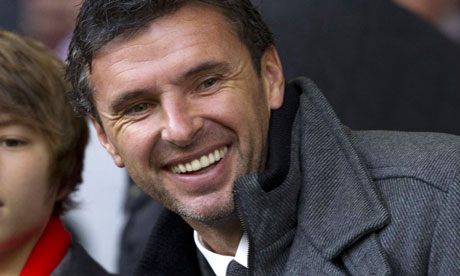
The three left behind pay tribute to the one who went before

So, here we are then. It’s been four years today since the awful day that Speedo died. Forty-eight months down the line, and where has the time gone? It seems like five minutes since, driving to my parents house after running a few errands, the bleak words came out of the car radio and fell like a hail of rocks into my unwilling mind. Gary Speed – that smiling boy, that shock of dark hair, the towering presence in attack and all over the park in the white shirt of Leeds United, our home-grown and beloved Speedo – was dead, and apparently by his own hand. It’s no exaggeration to say that this was a “JFK moment”, one where you’d forever remember where you were and what you were doing when the shocking blow fell. What about you? What were you doing when you heard that Gary Speed was dead?

We remember him in many different ways. He was an exuberant quarter of that magnificent United midfield of a quarter-century ago. It was the best around, the engine room of the early nineties United team that swaggered back into the First Division after an eight year absence, had a little look around, decided that “there were nowt to fear” – and won the League in 1992, by four clear points. Decent at the back, productive up front, that team was powered by the four guys in the middle of the park; energetic leader Gordon Strachan, robust and implacable David Batty, elegant and creative Gary MacAllister – and, of course, the late, great Gary Speed.

What can we possibly say of Speedo that will give us the remotest chance of doing his memory justice? Bursting from his own half to score that fourth, decisive, hammer-blow goal against Sheffield Utd when we were battling each other for promotion and the second division title in 1990 – “Go on, Gary lad, get one yourself, son.  And he has!” Leaping salmon-like in that favoured inside-left channel (as we old’uns used to call it) – meeting accurate long diagonal passes to head dangerously goalwards for the likes of Chappy, Shutt, Varadi, Wallace – even Cantona… Blasting home from thirty yards against Southampton at the Dell, volleying in at the South Stand against Stuttgart and Man U, powering home a header at Crystal Palace, arm raised in salute, broadly grinning as he celebrated another goal for Leeds United – and always, always doing his bit for that fabulous midfield foursome.

Ridiculously good-looking was the boy Gary, a real pin-up type with the artfully-tousled hair, the chiselled bone structure and the hundred megawatt smile – and yet the kind of down-to-earth lad you didn’t mind your girlfriend fancying, or perhaps your daughter bringing home. In fact, it gave you that warm glow of affirmation – she fancies our Speedo. None of that Giggsy rubbish. You didn’t just not mind – you were flattered, by proxy. Greater love hath no fan.

If you had told me in 1992, when we saw that great midfield play and win, going on to collect that historic last-ever Football League Championship trophy, that a mere 19 years later we’d see three of them gather again to lay a wreath for the fourth – I’d never have believed something so awful could happen. It would have seemed like a sick, horrible, unfunny joke. Back then, it was still five years before we would lose Billy Bremner, twelve before we would say goodbye to another iconic Welsh hero, Gentle Giant and fifties legend John Charles.

Three years earlier we had shed tears in isolation as Don Revie succumbed to motor neurone disease, and most of football stood by indifferently save for his glory, glory boys and a select few others. It seemed, back in 1992, that losing the Don would be enough of sorrow and grieving for a long time. The Super Leeds side were all still alive and kicking, and we had this new team of Champions to salute. They were happy days; we were all that much younger and more innocent then. It’s a good job that you can’t see what’s coming at you, just around the corner.

Gary Speed holds a place still in the hearts of football fans everywhere, but especially perhaps in his adopted West Yorkshire home. That much is evidenced by the depth and sincerity of the tributes that have been paid to him by Leeds United, the club and even more so the fans, since that tragic day four years ago. In the very next game after Gary’s death, the travelling army of Leeds fans at Nottingham Forest chanted his name from the 11th minute, for 11 minutes, for our former number 11. It was a chant broken only briefly by ear-shattering celebrations as the modern Leeds team scored the opening goal. They went on to win 4-0 with a dominant performance. It was that kind of evening; they dared do no less.

But Gary had other fans, in other clubs – he was a boyhood Evertonian and had a spell at Goodison Park from 1996. That didn’t work out too happily in the end, but he served his childhood favourites well. The reasons underlying Speed’s departure from the Toffees were never revealed. He told the Liverpool Echo: “You know why I’m leaving, but I can’t explain myself publicly because it would damage the good name of Everton Football Club and I’m not prepared to do that.” On he moved to Newcastle and found a new legion of adoring fans, appearing in two successive FA Cup Finals for the Toon. He served Bolton Wanderers with distinction as player and coach and finished up as a player and then coach at Sheffield United – almost full circle from that match-clinching goal he’d scored against the Blades in 1990.

Then of course he went on to manage Wales and, proud Welshman and distinguished international footballer that he was, he was making a fantastic success of that job, putting pride and passion back into the Red Dragon. His last game in charge was a 4-1 friendly success over a classy Norway team on 12th November 2011 – and that sadly was Gary’s final curtain. But a few weeks after his death, on 21 December 2011, the day of the final FIFA rankings of the year, Wales were awarded the title of ‘Best Movers’, having gained more ranking points than any other nation in 2011. A fitting tribute to the impact a talented young coach was having in his tragically brief spell in charge of his country’s national squad. Since then, of course, Wales have qualified for Euro ’16, their first major tournament in well over half a century. They did it by building on the solid foundations laid by Gary Speed.

Four years ago today since the tragic death of Gary Speed. Four years without one of the first of my Leeds United heroes to be younger than I was when he starred in the Whites first team. He was a novelty – I’d always looked up to men older than me in the white shirt, and worshipped them as a boy does a man. But Gary was “nobbut a lad” to me, someone I looked up to whilst realising I was beginning to get old myself. He’s a lad to me still, four years after we lost him.

We’ll never know what was in Gary Speed’s mind on that awful day in 2011. It remains shrouded in mystery, and all we can tell ourselves now is, it was so needless, so unnecessary. Someone who had helped as many people as Speedo did in the course of a long and distinguished career, must surely have known that, at need, there would have been help for him. People would have been queuing up to help him, surely. If the days of unbelieving sorrow immediately after his death showed anything – they showed that here was a man loved by his peers and by his fans in a way that very few have been, before or since. I wonder if he really knew that? We can only hope he did.

Gary Speed MBE (8 September 1969 – 27 November 2011) You remain very much still in our hearts, minds and memories, Speedo. RIP

Image

Three Top, TOP Leeds United Away Trips – by Rob Atkinson

We all have our favourite LUFC memories, and many will relate to games away from LS11.  Here, in reverse order, are my three favourite road trips following The Whites.

3. Sheffield Wednesday 1, Leeds United 6 12.1.1992

Image

Sergeant Wilko

This was Sergeant Wilko’s first return to Wednesday since he had quit Hillsborough to become Leeds boss in 1988.  It would also be Lee Chapman’s last game before his season-threatening FA Cup injury, which resulted in the drafting in of one Eric Cantona – with all the long term consequences that would entail.  But Chappy was destined to be sidelined only temporarily, and he went out in the most emphatic style.

There was a crowd of 32228 at Hillsborough, the usual vociferous contingent of travelling Leeds fans rivalling the home crowd for noise from the outset, and completely drowning them as the game went on.  Leeds United were weakened, so it seemed, by the absence of the injured Gordon Strachan and suspended David Batty, half of their legendary midfield Fantastic Four.  Any side, surely, would miss performers of such calibre.  Leeds, though, seemed determined to make light of the problem, and tore into their hosts from the start.  Full-back Tony Dorigo made an early darting run, cutting in from the left and making good progress down the centre of the pitch, before unleashing a right-foot thunderbolt that Wednesday ‘keeper Chris Woods had to tip over.  From the resulting Gary MacAllister corner, Chris Fairclough rose to head downwards, and found Chapman in splendid isolation four yards out; his finish swift and deadly for 1-0.

For a local derby, the contest had been decidedly one-way traffic – Chapman was to send two towering headers just wide before Carl Shutt had a scuffed shot smothered by Woods in the home goal.  Then, a true champagne moment as Mel Sterland fed the ball to Chapman on the right.  In a completely untypical burst of pace and control, Chappy surged between two hapless Wednesday defenders, raced into the area, and unleashed a shot that beat Woods completely, just clipping the frame of the goal to rapturous applause from the Leeds fans at the Leppings Lane End.  I remember thinking at the time that anything was possible now, if Lee Chapman could do something so utterly out of character.  And so it proved as, from a free kick awarded just right of centre some ten yards outside the box, Dorigo stepped up to absolutely hammer a left foot drive past the helpless Woods.  Cue mayhem and cavortings as the Leeds hordes behind the goal, celebrated as clean a strike as you could ever wish to see, the ball a blur as it arrowed into the far corner with deadly precision and power.

At 2-0 down, the home side were making increasingly desperate attempts to gain some sort of foothold in the match.  This desperation was adequately demonstrated when, from a harmless-looking ball into the Leeds area, Wednesday striker Gordon Watson ran in front of Chris Whyte, continued on for another step or two, and then hurled himself into the air, landing in agonised paroxysms of simulation between a bemused Whyte and Leeds ‘keeper John Lukic.  Such obvious fraud and villainy could have only one outcome, and the stadium held its collective breath for sentence to be passed on the miscreant.  Instead – amazingly – referee Philip Don pointed to the spot.  Whether none of the officials had seen the extent of Watson’s ham-acting, or whether they were moved by sympathy for the mauling Wednesday were taking from a rampant Leeds, it’s impossible to tell.  The outcome was the same either way.  Ex-Leeds hero John Sheridan stepped up, saw his penalty brilliantly saved as Lukic tipped it against his right-hand post, and then gleefully belted home the rebound to give Wednesday a massively unmerited lifeline.

This act of base and scurvy treachery required nothing less than a riposte of the utmost nobility and beauty, so we said to ourselves, though probably in more Anglo-Saxon terms.  And, happily, that’s just what came to pass.  Only six minutes after the home side’s ridiculous blagging of a comically unfair route back into the game, Leeds took effortless control again with a goal sublime in both its conception and execution.  Lukic bowled the ball out to Dorigo on the left flank; he sent it first time down the line to Gary Speed, who took one steadying touch before sending a beautiful flighted cross into the Wednesday area.  And there, inevitably, was Chapman, horizontal in mid-air, neck cocked to hammer the ball unanswerably past Woods, the perfect counterpunch to Watson’s knavish low blow.  It was a gorgeous goal, sweeping the length of the left side, taking the entire home team right out of the game, and re-establishing the two goal margin which was the least Leeds United deserved at half-time.

The second half that ensued was simply a story of how a blood-and-thunder Yorkshire derby turned into a stroll in the park for Leeds United.  It seemed as if all the life had been sucked out of the home team – a Wednesday side who, let’s not forget, were unbeaten at home since the opening day of the season, and who would go on to finish third in the table.  So they were no mugs, but Leeds United were absolutely irresistible on the day, and would have hammered far better teams than the hapless, bewildered Owls.

It’s possible that Wednesday were simply embarrassed about that cringe-worthy penalty, possibly they were dog-tired, having been run ragged since the start.  Whatever the case, their heads dropped steadily further and further as the game progressed, and they offered little resistance as Leeds proceeded to throttle the life out of them.  Chapman completed his hat-trick five minutes after the hour, heading in after Speed had struck the bar from a corner.  Poor Speedo was looking the other way, bemoaning his bad luck when the ball hit the back of the net after all, turning his frustration to joy.  Then, perennial bit-part player Mike Whitlow ventured forward, just because he could, and rose unchallenged to meet Rod Wallace’s right-wing cross and head easily over a stranded Woods.  It was left to little Wallace to administer the coup de grâce, striding clear after a shimmering exchange of passes in midfield to dink the ball over the advancing ‘keeper, and put the suffering home side finally out of their misery.  A highly satisfactory awayday slaughter of the Wendies.

2. AC Milan 1, Leeds United 1 8.11.2000
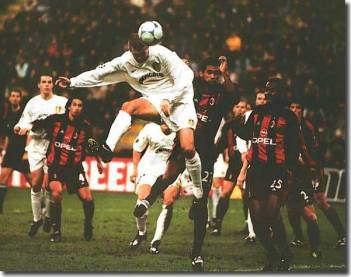
Dom Matteo....Scored A Very Good Goal....In The San Siro...

Dom Matteo….Scored A Very Good Goal….In The San Siro…

This match is so famous that I barely need to recount the action kick by kick.  The Leeds fans at one end of the San Siro were in fully, throaty voice for most of the proceedings, drawing incredulous glances from the attendant Carabinieri who were in full-on riot gear but friendly enough, muttering to each other about lunatic English tifosi (hooligans.)  The first half was a decent contest – Milan were through already, but not disposed to give Leeds an easy ride – especially after paranoid noises emanating from Barcelona, who – nervous about their own prospects – had done their best to warn Milan off taking it easy against Leeds.  So Milan pressed in front of a crowd of 52289, and their winger Serginho was causing Gary Kelly plenty of problems.  In the 26th minute, a slightly soft penalty was awarded to Milan at our end of the stadium, and 6000 Leeds fans held their collective breath as Andriy Shevchenko took careful aim only to rap Robinson’s right-hand post, the ball bouncing away to safety as the masses behind our goal celebrated as if we’d actually scored.  And then, miraculously, as the first half ebbed away, we did score.  A Lee Bowyer corner from the right found Matteo rising majestically at the near post to meet the ball with a punchy header which soared high into the net.  Cue utter pandemonium at the Leeds end as all the tension, passion and belief exploded in one almighty roar which almost lifted the hi-tec roof off the famous stadium.

The party went on throughout half-time and into the second half, drawing more bemused glances from the Italian police; there was only a brief hiatus in the 67th minute when the superb Serginho deservedly equalised, but then it was mounting fan fever again all the way to the final whistle and beyond as Leeds held out to qualify for an equally difficult second phase of the competition.  The scenes after the game are at least as famous as the events of the ninety minutes; the team coming back out onto the pitch in response to the demands of the faithful who were held back in the interests of crowd safety.  What followed was described by respected football commentators (as well as Alan Green) as the best example of team/fan bonding they’d ever seen.  Fans and players – even a certain Chairman – swapped chants and songs in a spontaneous celebration of a joyous night.  Even the uncertain musical efforts of Lee Bowyer were greeted by a blast of friendly derision.  It was a unique experience, and the Latin cops were clearly by now utterly convinced that these English people were absolutely barking mad.  As football nights go, you’d have to travel a long way to find one more worthy of memory – only a trophy could have improved it, but the spectacle of the game and its aftermath is one I have seen imitated but never repeated.

1. Sheffield United 2, Leeds United 3 – 26.4.1992

Jon Newsome, Superstar

Jon Newsome, Superstar

If you’re a Leeds supporter, you’ll have seen the goals from this game hundreds, thousands of time.  It plays through now, all these years later, in the Football Highlights studio of my mind; joy for the home side as Alan Cork, gleaming of bald pate, pokes the ball home to give Sheffield the lead.  Then, a midfield tussle in the swirling wind, as Leeds try valiantly to come back.  A late first-half free kick, which Gordon Strachan races to take before the home defence can set themselves, he finds Rod Wallace in the area who tips the ball past home keeper Mel Rees’s attempt to save, defenders scramble to clear, only to hit Gary Speed who bounces the ball back to ricochet off Wallace – into the net.  Pandemonium in the away end.   Level at half time, we’re breathless with drama and the hurly-burly of it all, raucous with United anthems, nervous of what’s yet to come.

The crazy game continues crazily.  A dangerous ball across the Leeds box is retrieved by home defender and future Leeds man John Pemberton, who turns it back towards the goal-line where Lee Chapman sticks out a leg for an own-goal greeted with horrified stupefaction by the Leeds fans behind the goal and we’re level again.  Then enfant terrible Eric Cantona enters the fray, and within a few minutes he is chasing a loose ball into the Sheffield half, with Rod Wallace scampering alongside and home defender Brian Gayle lumbering back in a desperate attempt to clear the danger.  And it’s Gayle, former Man City man, who finally slays Man United.  From my vantage point at the opposite end of the ground I see him get his head to the ball, and the action is suddenly slow motion.  Gayle has headed the ball, poor Mel Rees is stranded far out of his goal, the ball goes over his head in a slow, slow loop, and bounces tantalisingly towards the unguarded net…

Then I’m watching at full speed from the far end as Cantona and Wallace raise their arms in triumph, wheeling away in delight, and even as I wonder what they’re up to I realise that the ball has nestled in the Sheffield United net.  A red mist descends, and I am utterly outside of my skull and beside myself in delirious joy and fevered madness, looking around me, roaring like a demented bull, face congested with blood, eyes bulging; I grab a helpless wee St John’s Ambulance man by his lapels and scream beer and spittle into his terrified face “Get me some oxygeeeennnn!!!  I’m going to have a heart attaaaack!!!”  The mad moment passes, I drop the ashen medic and some measure of sanity returns, but we’re still cavorting and diving all over each other, a seething, sweating mass of Leeds, because we know it’s over, we know that Sheffield are beaten, and we know that Man U don’t have an earthly at Anfield, not a prayer.  We were going to be Champions; on that windiest and gustiest of days, a Gayle from Manchester City has blown the Scum away and decided in an instant the fate of all three Uniteds from Manchester, Sheffield and Leeds.

And so, of course, it panned out.  Later I watched mesmerised on TV as Liverpool beat a demoralised Man U, Denis Law and Ian St John trying to put a brave face on it, Elton Welsby’s foot bobbing away in thwarted anger as the script turned out just as none of them wanted.  Ian Rush scored his first ever goal against Them, and it was settled late on as Man U concede a second.  “And now the title goes to Leeds without any doubt at all” intoned Brian Moore in the ITV commentary as I sat there with tears of joy streaming down my unashamed face.  Gary Lineker had called into the studio earlier to complain that Rod Wallace’s goal had been offside (it was).  St John and Moore bemoaned that Man U had had no luck at all, and Welsby ground his teeth in the studio as the Man U fans outside hurled abuse at him, heedless of the fact that he shared their bitter disappointment.  All was frustration in the media and the rest of football and Leeds fans everywhere utterly failed to give a toss.  My finest hour as a Leeds fan, and my greatest ever awayday.

-oO0Oo-

Two from the same season, and one abroad that was “only” a draw – but each had a special appeal for me among the many away games I’ve seen.  I could have chosen so many others, going right back to my first ever away game, a 3-1 League Cup win at Bolton in 1977.  Still in the League Cup, there was that 6-0 win over Leicester City at Filbert Street, on a night when Robbie Savage never gave up, but proved that he was even worse than we thought.  How could we have known that he’d be worse yet as a pundit?

The golden memories are so many, I could possibly have managed a top ten quite easily.  I’d love to hear which away games others rank as their best memories.
Byram Is a Realisable Asset, NOT a Leeds United Necessity – by Rob Atkinson

Boy Wonder Byram

Boy Wonder Byram

Everywhere you look within the Leeds United blogosphere at the moment, people are gnashing their teeth, tearing their hair, rending their clothes and exhibiting other biblical signs of anguish and angst – and all over one slip of a lad. Sam Byram was an unknown to 99% of the support three short years ago. Then he had a dream pre-season, started off the Championship campaign in the first team – and stayed there, producing displays of a maturity and confidence far in excess of his tender years.

Naturally, being Leeds, this seeming success story is a double-edged sword. The presence of a boy wonder in the first team (otherwise known in LS11 as “the shop window”) more usually produces feelings of rampant insecurity among the Leeds faithful, rather than the warm glow that should accompany the sight of a youthful prodigy in the famous white shirt. We know our place in today’s scheme of things, and it is very much that of “feeder club”. Each successive hero has played his way into our hearts, prospered briefly in front of our adoring eyes and then departed for pastures greener, or more likely Canary yellow, with no sign of any adequate replacement.

It’s happened with Beckford, Howson, Snoddy, Becchio and Uncle Tom Cobleigh and all.  Local hero status is no protection from the Lure of Elsewhere. Howson supposedly had Leeds tattooed on his heart, but it seems to have been erased easily enough, and our last sight of him was as he wheeled away after scoring a winner against us. Byram could so easliy have followed the well-trodden path out of Elland Road a year ago; Southampton, awash with Liverpudlian money from their fire sale of last summer, were rebuffed after an offer of £4.5 million or so for Byram – but there are now rumours that more serious suitors might be willing almost to double that sum.

Sam is quite possibly the jewel in the crown of the Leeds Academy production line. Despite an injury-affected and form-blighted last year or so, he really is that good. It’s natural then that worries over his short-term future should be particularly unwelcome at a time when a maverick owner and the latest in a long and dismal line of “head coaches” are supposed to be building for the club’s eventual re-admission to the Promised Land of the Premier League. But really – should we be worrying at all?

We need to take a long, hard look at what is necessary to get us out of this division in the desired, upwards, direction. That list will include strikers who know where the goal is (Chris Wood?) and are proficient at sticking the ball therein; midfielders and wingers – all very much according to the prescription of our former gaffer Dr. McDermott, who had seen this treatment work wonders at Reading. We also need tough, all-action ball winners who are preferably not in the superannuated class (Tom Adeyemi??), and a solid defence who will be mean enough at the back to make sure that increased productivity up front results in a net force taking us a lot higher up the league.  What we probably don’t actually need, and won’t until it’s time to start plotting our approach to the top flight, is a potentially world-class performer on the right flank. It’s superfluous to our current requirements; we’re casting pearls before swine.

It would be OK, of course, if Sam did stick around.  It might even be better for the lad himself – too many fledgling superstars have gone up a level and struggled to stay afloat, look how Fabian Delph initially struggled at Villa.  He’s only now beginning to look the player that seemed likely to be evolving under the guidance of Gary McAllister – and he may be about to disappear into the black hole that is the fringes of City’s 1st team squad.  Byram might well benefit from another season at least of learning his trade at Leeds, or so the conventional wisdom goes. 

Looking at things realistically though – if there WAS an offer of £8 million for the youthful and richly promising Sam, and if that £8 million were to be made (don’t laugh, now) available for the construction of a team that would challenge strongly this season – might not that be a good option for Leeds? It’s the kind of money that, as was said about the fortune we mugged Fulham out of for McCormack, could easily fund the four or five quality additions that we realistically need to propel us into the very top echelons of the Championship. Whether such investment would actually be made is, of course, another matter entirely – but that still doesn’t make the case for hanging onto a valuable, possibly wantaway player. Once promoted, it’s a different ball game, but in the here and now the priority is actually getting there, and a lavishly-gifted Byram in a team consisting otherwise largely of uninspiring plodders doesn’t look like being enough to realise the dream.

A lot will depend on the attitude of the lad himself, and historically no sentimental feelings of attachment to the club that has nurtured their talent have persuaded previous uncut diamonds to hang around and be polished at Elland Road. So if Sam wanted to go to a Premier League club, would we, could we, should we, stand in his way?  My view is that you don’t sacrifice a lad’s ambition and desire to mix it with the best, on the altar of narrow club interests – such a policy is liable to blow up in your face, leaving you with a disaffected and depreciating asset on your hands. No, if Byram does want out – especially as his current deal is fast running down – we’re better off gritting our teeth, securing the very best deal for Leeds United – don’t forget that sell-on clause, Massimo! – and getting on with reinvesting the loot in a team that will do the job at this level. We can leave worries about how we cope in the Premier League for such time as it becomes a live issue, rather than the distant prospect it is right now.

We need to cast off that “Feeder club” image as the mortally humiliating insult it is. We Are Leeds, after all. But in order for that to happen, we may need to embrace the unwelcome label in the shorter term, and speculate to accumulate. And at least these days we seem of a mind to drive a very hard bargain, unlike previous years when the attitude has been disgustingly meek and humble as we accepted pittances for valued assets. If the departure of Sam were to provide the funds to finish the job, then that sad loss will turn out to have been a worthy sacrifice.

The ugly truth of the matter is that a stubborn desire to keep a luxury we can’t afford, and frankly don’t really need in our current situation, could turn out to be the ultimate example of short-termism, to the detriment of our longer-term prospects of life at the top.

Man Utd Fans – a Scientific Study From a Leeds United Perspective – by Rob Atkinson

Image

From Amphibian to Armchair

Statement:

Having previously published an article which sought to convey certain very pertinent truths to the Football community at large, I have noticed a backlash of distress and resentment from some lower forms of life who can broadly be classified as “ManU fans“. These creatures are not normally capable of communication as civilised people understand it, but since the Why Liverpool are Still the Greatest Champions article saw light of day, various undercurrents of discomfort have been perceived, as if a species lacking in any sentient capabilities has been attempting, en masse, some form of primitive self-expression. In order to understand what is being conveyed, we should perhaps seek a greater understanding of the species as it exists in the wild.

The most common breed of “Man U fan” is Scummus Australis Gloria-venator (southern scum glory-hunter), to give the full name of the genus in its most prolific form. This is a manifestation whereby parasitic colonies are to be found almost everywhere outside of the Mancunian conurbation. The more hardy rival species Urbis Rex Urbus (City, King of the City) tends to keep down the Scummus numbers in this one isolated location, but elsewhere they are prolific and they thrive particularly in the south, with unusually nasty infestations in Devon, Cornwall, the Home Counties and Milton Keynes – not to mention Singapore where their steadily growing numbers appear to correlate directly to an increase in reported cases of Dhobi Itch.

The genus is vaguely humanoid in form, even in this most lowly class, and some authorities believe it may actually be a sub-classification of Homo sapiens itself, being the result of selective in-breeding between males of the long-extinct “Newton Heath Man” and lower human females of a less discriminating nature. This theory has gained some currency after isolated and hotly disputed “demonstrations” of a reported ability in certain Man U fans to count up to twenty; to recall events from as long ago as 1993 (but in most cases no further) and, in some cases, even to grunt simple sentences.

Whether they are really capable of original thought has been the subject of hot debate, but there appears to be very little empirical evidence to support the arguments of those who say that this is indeed so. (Citations needed)  Examples have certainly been given of individuals being able to make grunting noises approximating to actual speech, and some observers have claimed to detect genuine phrases such as “Biggest in the world”, “Liverpool granny-stabbers” and, most notably of all, “We all hate Leeds scum“.

It has even been suggested in certain circles that this latter manifestation may give a hint as to the existence of a rudimentary sense of irony, but this has been dismissed as fanciful by most competent authorities, who tend towards the opinion that any noises recorded when a pack of ManU fans gathers are mainly for mutual reassurance, low-level male bonding and to attract the attention of higher species in Leeds, Liverpool and North & West London.

Another area of dispute has been the way in which evolution is working where this species is concerned and, indeed, in which direction? It’s well-known and universally accepted that nearly all species, particularly the higher primates, follow a linear evolution whereby the organism tends to advance in both body and mind over an extended period. There is, however, evidence to suggest that some strains of the ManU fan have actually been formed by a process of degradation as illustrated at the head of this article; a higher species has in effect decayed to form an inferior strain; fish has become armchair.

This runs contrary to the vast body of accepted knowledge in the anthropological sphere, but there is some hard evidence that some individuals of the ManU fan species have superior, albeit decayed, genetic material in their recent ancestry. It is not known how such a relatively swift and drastic deterioration may have taken place, though some theories postulate that the injection of a malign bacterium from the Govan area of Scotland may have corrupted some previously sound stock around the late 1980’s resulting in mutations in gene pools wherever this highly volatile and destructive bacterium was detected.

What seems certain is that, despite an almost complete lack of intelligence or conscious thought on an individual level, this species is able to communicate certain simple emotions when acting together, much as is the acknowledged case with lower creatures such as ants or even bees. The possibility of a “colony intelligence” should not lightly be dismissed and it may well be that ManU fans are able to co-operate in this manner, and that one day – maybe not for a long time – they may succeed in achieving some sort of primitive interaction, perhaps as a result of some species-wide distress or sense of grievance.  For the moment, it is true, the effect is merely that of incoherent noise in a very basic and simple pattern, repeated ad nauseam without any apparent higher motive and utterly unworthy of publication or retention. The possibility of some limited increase in coherence and content cannot, however, be dismissed out of hand.

This being the case, I have undertaken to publish, on an experimental basis, more material investigating the hierarchy that operates within Football, and the extent to which this has been perverted by the advent of the “Murdoch Syndrome” in 1992. Such material will be scrupulously researched and the findings presented in such a manner as to render them scientifically impeccable, as has ever been my intention. But, given the feedback received after the Liverpool piece – diffuse and muted though it was for lack of clarity and intellectual content – efforts will also be made to monitor any increase in activity among lower orders generally and the sub-species “ManU fan” in particular. Naturally, I intend to remain accountable at every stage of this process, so I will as ever welcome comments and constructive contributions via the usual channels, though manifestations of incoherent noise and repetitive gibberish will continue to be deleted, except insofar as they may provide useful data in the context of these investigations.

Statement ends.

Sunderland v Newcastle Rivalry Not in Same League as Leeds Against Man U – by Rob Atkinson

Hate Man Utd - We Only Hate Man Utd

Hate Man Utd – We Only Hate Man Utd

Football rivalry – the antipathy between fans of rival clubs with a keen edge of hatred in extreme cases – has been going on for as long as two teams of eleven players have gathered together to dispute possession of an inflated bladder over a green sward. And I will proudly say here and now: Leeds United is an extreme case. We are top four material when it comes to despising our foes. But we like to think we’re quite picky about it. None of this “regional rivalry” nonsense for us.

Let’s face it, hating another team and its supporters for mere reasons of geographical proximity is pretty silly. I can understand it to a certain extent where two clubs share a very small area, like a town or adjacent districts of a city. There’s a territorial thing going on there that recalls the days when a team’s support was derived largely from its immediate locality, though that’s not really the case any more now with the mega clubs who have fans all over the world. After all, why would a Man U glory-hunter in Singapore or Seattle really care if Man City are based only a few miles away from “his” club? He’s more bothered as to whether or not his favourites can buy more trophies than anyone else, City, Chelsea, Arsenal, anyone.

At Leeds, hatred tends to be reserved for those who have earned it, and who are – by independently verifiable standards – intrinsically despicable. Man U pass both tests with flying colours, and it’s certainly woven into my DNA to detest them. Call me a blinkered bigot (guilty, m’Lud) but I can never really understand why Sunderland and Newcastle, who meet in derby-day combat this afternoon, share such mutual loathing when quite frankly both would be better off directing their energies towards hating someone who deserves it.

Many at Leeds have the time and energy to revile other clubs, Chelsea prominent among them. The Ken Bates era at Leeds was an uncomfortable time for these types in particular – they hated Bates for his Chelsea connections (I hate him too, but mainly for his own not-so-sweet self.) Bates never seemed keen on Leeds either, not since – during his reign at Stamford Bridge – a group of freelance demolition contractors from Yorkshire travelled down to SW6 and saw off his scoreboard. But for me, Chelsea (and Man City, Arsenal, Liverpool and the rest) are only relevant insofar as they have teams that can beat Man U for much of the time, and as long as they do that, they’re just fine and dandy as far as I’m concerned.

In Yorkshire the situation may best be summed-up as follows. All other Yorkshire clubs hate Leeds United, and Leeds United regard all other Yorkshire clubs as beneath our notice – except on those annoying occasions when temporarily reduced league status means we have to soil our boots by playing them. This attitude does nothing, of course, to endear Leeds to the likes of Bratfud, Barnsleh, Uddersfailed and the Sheffield dee-dahs – but really, who cares?

I have more respect for fans of clubs like Birmingham or Everton or – yes, even Man U, who hate Leeds for reasons other than just sharing a county with us. That fits better with my world view. Ask a Newcastle fan why he hates the Mackems, and he might blither incomprehensibly for a while (well, they just talk like that up there) – but no rational reply will emerge. I could talk your ears off about why I hate the scum, and I know many Man U fans who can do the same when invited to say why they hate Leeds, which is more than many other Leeds haters can say.

The fact is – whatever the pious purists and holier-than-thou types might say – there’s nothing wrong with football hatred, properly expressed and stopping comfortably this side of actual violence – as I’ve previously written here. It adds some passion to a crowd and to a football occasion, and football would die a lingering death in the sort of sterile atmosphere some of these self-righteous hypocrites seem to want. All I’d say is: if you must hate, then hate for a good reason.

Read my other articles, and you’ll find my reasons for hating Man U – the reasons why I firmly believe anyone might reasonably hate them – are a regular feature in the occasional rants to which I’m prone. They’re nothing to do with why Southampton hate Pompey, or why Forest hate Derby (although I CAN see the Clough factor in the latter case.) Pure regional tribalism is at work there, and I suppose there’s a place for it. But that sort of thing is slightly irrational to me, while hatred based on facts and history is not. Hatred is a genuine human emotion, and the football variety is a safety valve which is useful in diffusing a lot of the negative emotions in society at large. It’s a therapy of sorts. So chew on that, you pious, pseudo-intellectual gits who preach at rabid football fans and utterly fail to understand what’s going on.

I’m happy to admit that I have a healthy hatred for the scum, and I’m equally happy that it’s so lustily reciprocated – with any luck the depth of these feelings will see the game of football, still so dependent on the atmosphere generated by its match-going followers, survive for a good long time to come.

Becchio: Could Love be Sweeter the Second Time Around? – by Rob Atkinson

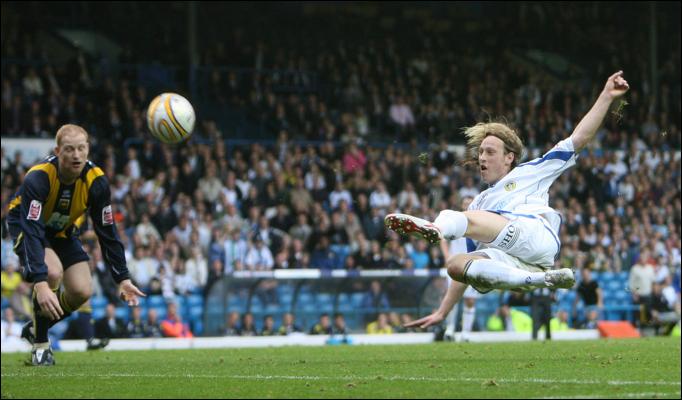
The Luciano we Remember

The Luciano we Remember

As speculation mounts over just who the man could be that will revive the flagging fortunes of Leeds United in front of goal, one name simply refuses to go away.  Luciano Becchio of blessed memory, our very own Argentinian hit-man, a hard-working and committed striker with a Barça “B” notch on his CV – yet currently a flop at Norwich City, the deal that took him there having gone sour for both clubs.

Leeds emerged from that transaction with Steve Morison and some money. Then Morison went to purgatory in the shape of Millwall and has barely emerged since, despite a return to Elland Road – although he has lately shown some commitment and promise in a lone striker role. The Becchio money has of course long since disappeared on United’s running costs or Ross McContract’s wages – and poor Luca has spent the interim period sliding ungracefully down the pecking order of Norwich’s lengthening roster of strikers.  In his rare league appearances in the not-so-famous canary yellow, he has scored the grand total of zero goals. The form that prompted the Carrow Road lot to go after him was much more prolific as his Leeds career came to an end, but he did not take that form with him to East Anglia.

It is common knowledge that Luciano would be open to a return to Elland Road and, indeed, that he wasn’t all that keen on leaving in the first place. Dark rumours are being whispered abroad that he was forced out; that his availability was hyped-up by the men then in charge, and that poor Luca was but a pawn in the high-stakes finance game being played out in the wake of the GFH takeover. Perhaps it’s true.  So would Becchio be welcomed back to LS11?

Opinions, as ever, are divided.  Some would crawl over broken glass all the way to the wilds of Norfolk and then give the lad a piggy-back ride all the way up to Thorp Arch and pay for the privilege.  Others regard anyone who leaves as several grades down from Judas Iscariot, and would rather kiss a Man U badge than see such a traitor back in the fold.  The truth is out there somewhere, and more than likely it’s in between those two extremes.  There is always a worry about a returning hero; the late, great John Charles failed to relive the magic when he returned, and there have been other second-time flops since.  Isn’t it, perhaps, better to go for a new man, with no ex-Leeds baggage, one who will arrive with a clean slate and an eagerness to win new friends? You’d have thought so, and Signor Cellino prefers to shop elsewhere – but all of his prospects are turning up their noses at Leeds and heading off elsewhere.

Becchio’s failure to hack it in the Premier League during Norwich’s doomed survival fight (some would say that’s a harsh call given his relative lack of opportunities) will not have surprised many.  His game was always about drive and endeavour more than silky skills and fancy flicks or turns.  He would work so hard on his best days, he would go in where angels fear to tread, he would stick his head in where many might shrink from risking a boot.  On his off-days, by contrast, he could be awfully anonymous – subtract effort and commitment from his game and there was not, it seemed, a hell of a lot left.  And yet every now and then he’d produce a sublime finish, as depicted in the image above, that belonged at a much higher level.  His habit of picking on Middlesbrough endeared him to many, and the fact that the Smoggies coveted him as well as McCormack would be reason enough for many to get him back on the payroll.

As things stand, all we really have is a very persistent rumour that the Whites are looking for additional firepower, and soon at that, with the window slamming shut Monday night. Whoever we might get, I hope they’d come with a winger included, so that the whole thing might stand a better chance of working – although the club seem to be banking on Mowatt and Byram to do the wide boy stuff.

If Becchio does appear again in a Leeds United shirt over the next few days, he’ll be doing it because he’s wanted by the boss – Redders has come out and said as much, but was abruptly contradicted by the since-departed il Presidente. On the basis that the pro in the equation wants the lad, I’d cautiously welcome him back, and wish him all the very best as he seeks to resume a United career he should probably never have interrupted.

We Hate Man United, We Hate Tottenham Too – by Rob Atkinson

Unrivalled support

Stand up, if you hate the scum….

I’ve taken a bit of stick lately, through the “Comments” facility of Life, Leeds United, the Universe & Everything, for appearing to nurse a degree of hatred towards certain other football clubs – and their supporters.  It’s a serious accusation, so I should make my position clear straight away.

I’m guilty as charged.  Guilty as hell.  Guilty as a weasel in the hen-house.  I do indeed hate, among others, Man U (the scum), Tottenham Hotspur and Galatasaray (Galascum).  It should be emphasised that this is not an exhaustive list.

My reasons are varied, according to the club involved – but those reasons are entirely valid, as far as I’m concerned.  They’re also entirely personal to me.  I don’t invite anyone to correct me over this and I wouldn’t dream of infringing on anyone else’s hatred territory. And, most importantly of all, though I have entered above a plea of guilty, I don’t feel guilty.  Not a bit of it.

Before I go on, let me state this as a guiding principle: there is a place in football for hate

Now, that might seem a rather provocative, not to say controversial statement, in these happy-clappy days when going to the match is supposed to be all about families, and fun.  When oompah bands high up in the stands, are strategically placed so that the newly-gentrified population in the 36 quid seats should not have to hear anything raucous or profane. 

But it’s true, nevertheless.  Football is tribal, football is cathartic, football is where you get to let off some steam after gritting your teeth all week. 

And, for all of that, you need someone to hate.

Hate is a much misunderstood, wrongly demonised word nowadays.  It’s not really to be found in the lexicon of the politically correct.  It sends out the wrong message, don’t you know, and speaks of the extreme edges of emotion and feeling, where those of pallid personalities do not wish to be seen. 

But hate is a real human emotion, and you can’t simply wish, or indeed legislate it away.  Properly expressed, it’s just about the best catalyst for atmosphere at a good old traditional sporting fixture.

The professionals should stay out of it, and get on with the game – it’s not really within their remit to get caught up in the atmosphere a bit of hate generates (although it’s frequently more entertaining than the football when teams DO let the passion affect them).  However, the real arena is in the stands, or on the terraces, as we used to say in happier times. 

Here is where the mutual dislike, felt in extreme measure in some cases, can safely be vented.  Two sets of supporters, bound by a common loathing, hurl insults of glorious vulgarity back and forth, each seeking to outdo the other in a contest outside of the on-field engagement.  The feeling is atavistic, and there’s no actual need for it to spill over into physical confrontation for honour to be satisfied.  The occasion as a whole is enhanced by these pieces of human theatre.

The modern tendency towards crowd interaction being drowned out by super-powerful P.A. systems, pumping out crap music, has detracted from this phenomenon, as have the silly drums and trumpets they call “bands”.  My own beloved Leeds United made an ill-advised decision, quite a few years back now, to promote a “band” – but the masses behind the goal did not approve.  The occasional toot and drumbeat were heard, only to be swiftly squashed by a throaty “Stand uuuup, if you hate the band”, and the experiment died an early and unlamented death.  Rightly so, too.  Bands at football stadia prosper only where the indigenous support lacks the moral fibre to resist such contrived attempts at a “nice” atmosphere.  Sheffield Wednesday is the obvious example.

Sadly, it appears that the good old days of free expression, where a cadre of like-minded fanatics could express their hatred of “that lot from ovver t’hill”, are soon to be behind us for good.  Yet there are still football clubs and fixtures which can conjure up some of the old atmosphere, so deeply do feelings run. 

I’m glad to say that dear old Leeds United is one such club, so pathologically hated by so many other sets of fans, and so willingly disposed to return that sentiment with interest, that our matches against a select group of old enemies roll back the years, and set the blood pumping with an almost-forgotten vigour.  Long may that remain the case – these are the real football clubs, with the real fans, and it’s this unreconstructed minority which is striving to hold back the tide of plastic, family-orientated, artificial bonhomie that so threatens to dull the palate as the 21st century progresses.

It’s not politically correct. It’s frowned upon by the self-appointed guardians of “The Good Of The Game”.  And admittedly, it too often spills over into taboo references, or actual violence, which is never something to be condoned.  But come the day when they finally kill the last wisp of hate-fuelled atmosphere, at the last old dinosaur of a non-modern non-Meccano stadium, they’ll be well on the way to finally reading the last rites over the corpse of the game as we used to know it.

And then – why, I’ll throw in the towel, say my goodbyes to Elland Road, and sulk off to watch Frickley Athletic play those twats from FC Scum of Manchester – confident that there will be enough curmudgeonly old reprobates on both sides who will be happy to spit venom at each other for 90 minutes – just for old times’ sake.

Nine Years Ago Today: Leeds Storm Back to Bury Saints – by Rob Atkinson

Image

Leeds set about imposing their class

When the going gets tough, the tough get going – or so they say. It’s arguable that, given the frenetic nature and relentless pace of English professional football, the going is always tough. League games are fought out with bitter intent, and there are few easy results – that’s what makes the best of our game such compulsive viewing. But there’s tough and then there’s really tough. What do you do, for instance, when you’re three down with less than a quarter of the game to go, hundreds of miles from home and with an atrocious first-half performance nagging away guiltily at you? That’s when the going is really tough. If you have the necessary character, you “Keep Fighting”, reviving the spirit of the Don Revie days when that maxim was prominent on the dressing-room wall at Elland Road; when every man knew that giving up was simply not an option. And that is precisely what a Leeds United team of a much lesser vintage did, nine years ago today. Seemingly dead and buried at St Mary’s Stadium Southampton, they somehow jolted back to life, hauled themselves out from six feet under and bounced back emphatically to leave Harry Redknapp’s Saints battered and bewildered.

It can’t have been of any comfort at all to the shattered Southampton team that their erstwhile coach Simon Clifford, sacked only the week before this game, had marked his departure by labelling his former charges “unfit” – as well as prone to “letting games slip in the last five to 10 minutes”.  If they had set out to prove him right, this late capitulation to a Leeds side they seemed to have had beaten out of sight would certainly have done the trick.  Shocked Saints manager Redknapp was at a loss for a reaction immediately afterwards. “Unbelievable, I don’t know what to say. One of the worst results of my career,” he mumbled. You got the feeling he will have expressed himself rather more vividly to his defeated and deflated troops.

It had all started out so promisingly for the home side.  The first half was strictly no contest, a flood tide of red and white stripes threatening to sink Leeds’ away colours without trace.  Traditionally strong at home, Southampton boasted the likes of jet-heeled Theo Walcott in their ranks as well as tricky Latvian Marian Pahars, not to mention future Leeds manager Dennis Wise, who was subbed at half time and therefore escapes the blame for what eventually happened.  After 27 minutes, a corner from the right was headed goalwards by Svensson and there was Pahars at the far post to head past Leeds’ Neil Sullivan from point-blank range.  Then it was a pre-Arsenal vintage Theo Walcott, hurtling down the right with a breathless Matt Kilgallon left hopelessly beaten in his slipstream, cutting a neat ball back to the edge of the area where Nigel Quashie was waiting to plant a first time shot into the United net.  2-0 after 35 minutes, and Leeds were playing for half-time and trying to avoid further concessions.  Vain hope.  A cross ball from the left found Matt Oakley in space on the right of the area and he headed into the box where the ball struck Dan Harding’s upraised arms.  The penalty was just about fair and Quashie dispatched it to end the half in a manner reflecting the utter dominance of the home side.

The second period began with the travelling army of Leeds fans in boisterous and seemingly clairvoyant form.  “We’re gonna win 4-3”, they bellowed, not a man jack of them actually believing it.  Southern ale just isn’t that strong.  But at least Leeds were contriving to limit the damage now, playing for pride alone as they thought they were – they hadn’t let their heads go down.  Sullivan’s point-blank save from Brett Ormerod maintained United’s fingernail hold on the game and then, with twenty minutes to go, Leeds manager Kevin Blackwell had one of his all too few inspired moments, bringing on David Healy to push a third man into attack.  Redknapp, on the other hand, had used all his subs by half-time, though he denied suggestions that he was resting players with the game apparently won as “disrespectful”.

Whatever the motivations of the managers, the introduction of Healy worked. Only a minute later, Gary Kelly’s corner from the right found skipper Paul Butler rising majestically from left of the penalty spot to head home with great power and accuracy into the top right hand corner.  The mood of the match changed; Southampton were still playing the better football and forcing plenty of corners, but Leeds had made a mark now, and some nerves were exposed in the home ranks. After 77 minutes, a poor headed clearance found its way to Healy outside the area on the right and he fed the ball low and firmly into the six yard box where Robbie Blake was on hand to deliver a first-time finish inside the near post of Anti Niemi’s goal.  And incredibly, with six minutes to go, United were level when it was their turn to benefit from a penalty award.  This time it was Saints defender Danny Higginbotham who was guilty of handball and David Healy seized the chance to score the equaliser, blasting his spot kick into the roof of the Saints net.

The match had now turned into the classic “game of two halves”, with neutral observers looking narrowly at the St Mary’s pitch for any sign of a marked right-to-left slope.  The momentum was solidly with Leeds after their unlikely recovery, and the Saints defensive clearances began to smack of desperation and lost belief.  For Leeds, the tough had got well and truly going and they were in the mood to finish their hosts off.  The man who would administer the coup de grâce was a Man U loanee who had been anonymous for much of the game, but cometh the hour, cometh Liam Miller.  When the ball deflected into his path from a Rob Hulse cut-back, Miller swung his left boot, connected and – as if it had been pre-ordained – the ball found its way into the Southampton goal for the winner.  The United fans packed behind the goal exploded with joy and disbelieving wonder that their raucous predictions of 45 minutes earlier could have come so wonderfully true.  Any goal is enhanced by a passionate, celebrating section of support to appreciate it, and all four Leeds goals that day were scored right in front of those inspiring, fantastic supporters – four peaks of jubilation punctuating the half to form a piece of pure football theatre.

Peter Drury’s commentary in the lead-up to that decisive goal has become a minor classic: “They wouldn’t dare win it would they, Leeds, they wouldn’t dare win it….here is Rob Hulse for Leeds United – and Hulse plays it in – and Miller’s hit it! It’s staggering!  They HAVE won it!!”  Spine-tingling, gooseflesh-raising stuff if you’re Leeds – and I can certainly never tire of hearing that clip.  Thanks Peter. And thanks to the players who fought back that day eight years ago to provide one of the brighter moments in the long dark era since we dropped out of the top flight. It’s times like this that restore the faith – that remind you what it feels like when the lads knuckle down and do it for the shirts and for the fans. The essence of Leeds, encapsulated in one twenty minute spell of dreamland fantasy football, nine years ago today – pure magic.