Yearly Archives: 2013

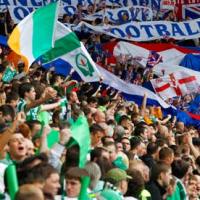
Hillsborough Disaster Police Sold Their Souls for £14.53

Hillsborough Disaster (Lies Inset)

Hillsborough Disaster (Lies Inset)

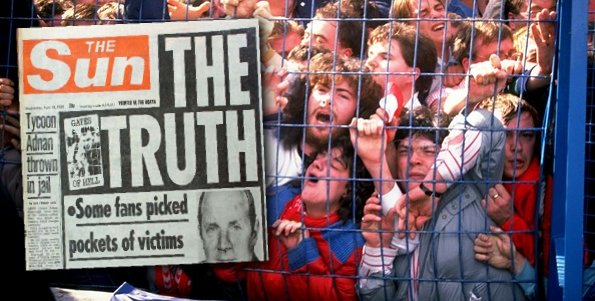
It has emerged in a report carried by the i newspaper that the police force charged with ensuring public safety on the occasion of the Hillsborough Disaster kept money found among the dead and dying, choosing to pay the amount found into the police bank account after they’d held it for a period of three years, rather than donating the sum to the disaster fund which had been set up to help victims and the bereaved.  The sum?  £14.53.

It’s perhaps because of the paltry amount involved, rather than in spite of it, that this is such a shocking story.  A full three years passed before the casual decision was made – without objection or reservation – to pay the money into the police account.  The cash was made up of loose change gathered from among the bodies of the dead and dying in the immediate aftermath of the tragedy, and it appeared as part of an inventory detailed in a memorandum dated January 1992, which also recorded the decision to bank the money.

In the midst of all the other negative findings about the conduct of the police at several levels that day, and in the light of the fact that they appeared complicit in the lies that were spread in the days and weeks after Hillsborough – notably by the Sun newspaper – the amount of £14.53 seems trifling enough.  And yet, understandably, the impact felt by the families of the victims at this unsavoury incident is likely to be out of all proportion to the actual size of the cash amount involved.

Only last month, it was reported that South Yorkshire Police attempted to apply to the disaster fund for a sum running into thousands, earmarked for the provision of microwaves, gym equipment and a holiday home for police use.  In conjunction with this new revelation about the fate of loose change picked up from among the dead, it really does beg the question of exactly what motivates those who make decisions like this, and what level of awareness they have of public opinion in such sensitive matters relating to a disaster that continues to reverberate almost a quarter of a century on.

If there is anybody in a position of authority in the police organisation with the slightest trace of decency, honour and plain good taste, then they will take a look at this latest disgrace, take careful note of the sum of £14.53, multiply it by one thousand – and donate that amount into the Hillsborough Disaster Fund.  That may still be a case of too little, too late – but better late than never and surely – surely – some gesture now needs to be made in the face of what has been nothing more or less than a 24 year public relations disaster for the South Yorkshire Police. 

RIP The 96.

Snouts In The Trough – But It’s Time Those Living High On The Hog Picked Up The Tab

The Three-Party System

The Three-Party System

The thing about politicians is – if they’re not talking, or furiously thinking of a way out of their latest web of deceit, or maybe sleeping (a swift forty winks on the backbenches, the ultimate power nap), then they’re most likely at some or other official function, stuffing their faces with the finest of freebie food and drink.

Now, I’m not making a party political point here. I said “politicians”, and I meant the whole unsavoury crew of them, be they high-powered cabinet members, lobby fodder rank-and-file MP’s, or even your humble Joe Bloggs, Mavis Dogood or Tarquin FitzHerbert-Smythe in the local Council chambers. They all have the same basic bodily need for nourishment as us mere mortals. The difference is, they will quite often fill up to the Plimsoll line at the taxpayer’s expense. Is this fair or appropriate in these straitened times?

At a veritable crisis point of global financial meltdown, when our national debt is so high that even Wayne Rooney would need to ask for an extra week or two to pay it off, I find myself wondering: what’s the accumulated value of all the state and civic banquets, dinners, receptions, working lunches and other freebie jamborees that take place every day, all over the country? It must come to a good few bob. We’re not, after all, talking a few limp ham sandwiches, curling up at the edges and accompanied by motley shreds of anaemic lettuce. No, Sir. These people do not skimp; they do themselves well, very well indeed. There’s proper, grown-up, posh food on heavily-laden and groaning tables – and it must be highly debatable how much productive thinking is left in those bloated plutocrats, after the desserts have been and gone, and the port, nuts and cigars are passed around.

Of course, piling into the snap at the highest levels of power is nothing new. It’s been pretty much de rigueur ever since Henry I wolfed down half-a-dozen too many eels, and expired before he could gasp “surfeit of lampreys”. Kings, Queens, and assorted courtiers and other hangers-on have always been notable for their over-indulgence on rich food and fine wine. It sort of went with the territory in those far-off times, but it strikes a more discordant note these days when essential services – the culmination of the whole process of civilisation and enlightenment since before Henry I – are being cut left, right and centre. And yet still the state and political chomping goes on apace.

It’s only a matter of a few weeks since MP’s of all parties were calling for a 32% pay rise, despite their broad consensus that the rest of us should be grinning bravely and tightening our belts. Just what sort of message does that send out, when so much of their weekly calorific intake is provided and paid for, as part of their remit as legislators of our country? And the same applies at least in some degree to our business leaders – no subsidised canteen serving scrummy beans on toast with a poached egg on top for them – it’s Marco-Pierre White catering at the very least – and waiter, send that bill to Accounts, there’s a good chap.

What if – bear with me here – what if MP’s, ponderous boardroom types, and indeed power-brokers everywhere were to embrace a novel concept, and actually pay for some of the scrumptious fare that comes their way so often, and gratis at that? If this were the general principle, multiplied across all the many thousands of vastly expensive official meals and banquets that take place in this over-stretched nation every week, what would be the saving to the national purse? I’m struggling to work that out on my fingers and in my head, but it’s a big, big number, make no mistake. It’s not as if the people we’re talking about are exactly impoverished – are they now? And what do the rest of us do when it’s time for lunch at work? Not everyone has even the subsidised canteen; many of us are away down to the high street for a cheese roll, which we’re – quite reasonably – expected to fund out of our own pockets.

It’s about time we all woke up to the fact that – on a grand scale – we’re being made right mugs out of, you and me. Every time there’s a new cost-cutting measure, or another idea for a wage freeze, you can bet your life it’s been hatched over the smoked-salmon canapés and the pâté de foie gras. And what’s more, we’re the simple souls paying for it. Could that money not be used much more productively, elsewhere?

Just think about that, the next time you’re counting the pennies at the end of the month, and wondering whether you can delay the big shop till after the weekend. Then again, it might even act as an appetite suppressant. Just thinking of all those banquets, all that luxury food, and above all, where the bill’s heading – might just actually make you sick.

New Life in Madrid for Bale as Spurs Face Old Realities Nearer Home

Bale Bails Out

Bale Bails Out

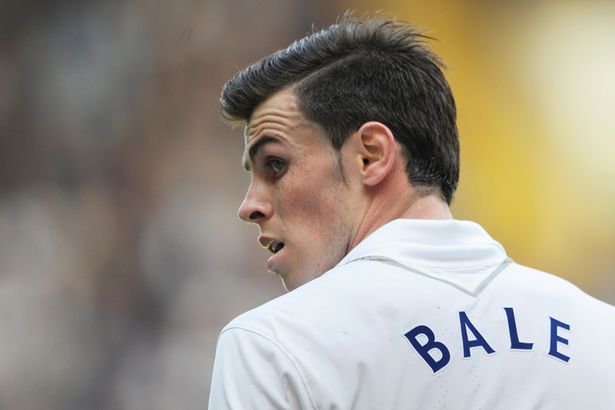
The least surprising transfer of the summer has finally been completed as Gareth Bale secured his longed-for move to the Bernebeu to become Real Madrid’s latest galáctico and thus deprive Spurs of roughly 50% of last year’s total team effectiveness.  The price varies according to which source you read, but it’s an eye-watering figure which Spurs have already spent on half a dozen or so players in the hope that quantity may in some measure replace quality.  It remains to be seen how Bale will fare at a big club, but his is a spectacular talent which arguably deserves a much bigger stage.

Spurs meanwhile, having resigned themselves some time ago to the loss of their talisman, turned out at The Emirates yesterday with their friends in the media explaining to anyone who would listen that – despite their Bale-less attacking threat – they were now much better placed than opponents Arsenal to achieve success this season.  The new definition of success in these commercialised Murdoch days is, of course, a top four finish: gone are the days when fans might argue about who will win what trophy.  Now it’s all about whether your favourite club can qualify for the Champions League, and how many millions that will net.  That those millions will for the most part disappear into the bank accounts of their overpaid heroes is a point that apparently does not faze today’s Premier League fan.

The media as an entity appears to have a problem with Arsenal, and they seem disposed to address this by making more of a fuss of Tottenham than such a pallid power really merit.  The BBC in particular sound almost plaintive when they reflect on the fact that Arsenal’s recent Champions League qualifications have been at the expense of Spurs and their assertions that things might now be different – with a new-look Tottenham transcending tired old Arsenal – tend to be accompanied by a collective stamp of the foot and sullen pout. But all the media posturing in the world will not change a thing on the field, and it was on the immaculate turf of the magnificent home of Arsenal that Spurs yesterday received a lesson in how little things have changed where the balance of power in North London is concerned.

After an adrenalin-fueled bright opening, Spurs were never really at the races in this latest derby.  Once Arsenal had ridden out that initial flurry their own game took effortless control – helped by the fact that they had taken the lead while the tide was still slightly against them.  A gorgeous move from centre midfield across to the right found Tomas Rosicky in acres of space and he used it to full effect with a penetrating low cross into the box.  And there was Olivier Giroud darting towards the near post to beat Hugo Lloris with a sweet finish from the outside of his left foot, finding the tiniest gap between the hapless ‘keeper and the upright to give Arsenal the lead.

For the rest of the first half, Arsenal threatened to increase their advantage against a Spurs side knocked out of their early, optimistic stride.  After the interval, the away side began to make their presence more effectively felt, pressing Arsenal back in search of a point at least.  But although there were alarms, and despite quite intense late pressure as the the home team defended in depth, the breakthrough failed to appear.

Tottenham could have no real complaints about the result, and may reflect by way of consolation that at least they didn’t ship five this time, as on the last two visits to The Emirates.  Arsenal have an altogether more positive world view today; three derby points in the bag, ahead of Spurs in the table as they finished last season, and today they appear to have made a transfer statement as well, with the pending capture of Mesut Ozil from Real Madrid – a transfer that may, ironically, have been made possible by Tottenham’s failure to hang on to Bale.

Players come and players go as millions upon millions change hands in the transfer market.  But a happy Arsene Wenger may well reflect today that some things are less susceptible to change, Arsenal’s dominance of North London being one among them.  Ozil will add considerably to the Gunners’ ammunition and firing power, just as the loss of Bale will inevitably weaken Spurs.  It’s been a good weekend after all for the Gooners.

Liverpool Edge Out Man Utd to Pay Fitting Bill Shankly Centenary Tribute

Bill Shankly - Legend

Bill Shankly – Legend

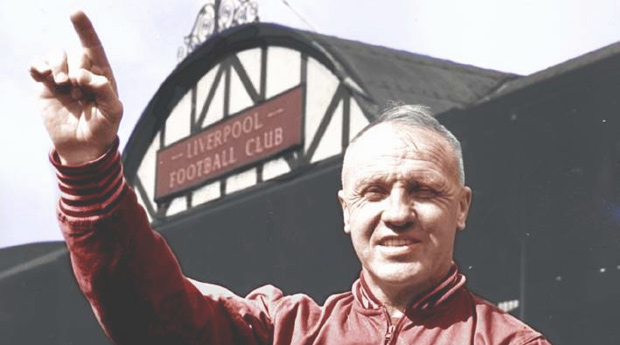
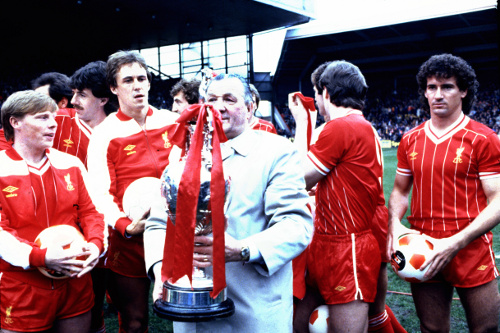
Monday 2nd September 2013 marks the centenary of the birth of Bill Shankly OBE, Liverpool’s legendary gravel-voiced Scottish manager, the man who took a moribund club and transformed it into a European power in a manner rivaled only by his great friend and contemporary rival, Don Revie at Leeds United.  It was fitting, therefore, that Liverpool should choose their last fixture before this notable anniversary to deliver a resounding “We are back” message to the rest of the top division, deservedly beating a Man U side that was never allowed to play their own game, and succumbed to an early goal of devastating simplicity.

Liverpool had entered the game on a high – two previous league games had yielded six precious points via steady 1-0 wins for a 100% record as Brendan Rodgers finally looks like putting his own stamp on this famous old club.  The Reds started in a fluent and cohesive style and within four minutes they were ahead.  A corner from the right was swung in and Daniel Agger showed great movement in the area to completely fox Rio Ferdinand, losing the defender to nip in front and get a firm header in on goal.  As the ball arrowed towards the net, two Man U defenders looked able to deal with it, but there was Daniel Sturridge, celebrating his 24th birthday by sneaking between them to apply a decisive touch and send the ball into the net. Mayhem ensued around the ground, apart from the glum band of away supporters who were doubtless contemplating a long and possibly empty-handed trip back down south.

After that, it was a question of plenty of possession for the away side, comfortably dealt with on the whole by Liverpool, who were content to blot out the Manchester attacks and wait for their chances to break away.  Wayne Rooney was missing for Man U, and Robin van Persie was uncharacteristically subdued, his sole chance of note coming late on when he was in space on the right of the Liverpool area but put his shot well wide.

New Man U boss David Moyes must have been hoping for a change of luck after 12 fruitless managerial appearances at Anfield, all as manager of Everton.  His debut as Old Trafford manager turned out to be unlucky 13, but in reality luck didn’t have much to do with this result.  To Liverpool’s credit, they seized their chance to take an early lead, and were thereafter little troubled despite surrendering the majority of the possession.

It was a result to savour for all Liverpool fans, as any win over their bitter rivals must be – but to triumph over former Everton boss Moyes, on the eve of the 100th anniversary of the late great Shankly’s birth – this was a script it would have been hard to write.  Shanks would be proud to see Liverpool sitting proudly at the top of the league with maximum points – it was the kind of thing he demanded.  Whether Liverpool can maintain the early pace is another question, but on this evidence they will be hard to topple.

Leeds’ First Defeat a Timely Reminder for Owners GFH Capital

Image

The first defeat of any season is always a bitter pill to swallow, and when that defeat ends a decent unbeaten run which had created a bit of a feelgood factor and some useful confidence, then the taste is all the sourer still. There can be little doubt that QPR deservedly edged the game at Elland Road – they came north with a game plan as they had done to Bolton’s Reebok Stadium, and they went away having done the job. Rangers had been rather unlucky to see Joey Barton’s first half goal disallowed for a clearly inappropriate offside flag, just as in the end they enjoyed some good luck when Rudy Austin’s fulminating howitzer hit the angle and bounced to safety. It was a game of fine margins, as reflected by the scoreline.

As depressing as a home defeat is, however, there can be long-term benefit if the lessons of that defeat are learned and acted upon. This match was under the Sky TV microscope, but it is an open secret that the Leeds United squad is defined more by the gaps in it than by the several excellent players it boasts for this level of football. Another striker is still needed, at least one winger is still needed. At the moment, there is a lot right with any team that Brian McDermott puts out, but the vital missing ingredients are making it very difficult for that team to be as effective as it needs to be in the attacking third of the field. Impotence in attack has its consequences further back; there is more pressure on ball retention in midfield because the options up front are not what they should be.

Brian McDermott is a downy bird, and he knows what is needed. It is the growing urgency of that need which, with the end of the transfer window looming ever closer, is giving cause for concern if not alarm. From the outside, we just have to take it on trust that work is going on behind the scenes to secure the additional players which are clearly needed in order to give Leeds a chance of sustaining some sort of competitiveness this season. If not, then it could just be a long and depressing struggle, despite the best efforts of a manager who has said all the right things and has also done so much that is right since coming to the club – as indeed have the new owners GFH-C.

Monday could be a very significant day in this season for Leeds United, and maybe even in their history as a whole. Getting the ingredients right is that important when you’re looking for the recipe for success. The QPR game has demonstrated very clearly for us just where the areas of need are – if we don’t secure some decent wide options, then surely we’ll be placing too much reliance on the likes of Diouf, who showed in his cameo performance that he’s currently far and away the best we have where quality service from the wing is concerned. After Diouf we have Ryan Hall, who still seems to be struggling to make a real impression at this level.

As is often said in too many American TV shows of a dubious standard: “OK. You got 48 hours”. That’s about the size of it for Leeds United right now, and the clock is running down. Tick tock.

Why Liverpool Are Still the Greatest Champions

Liverpool: Champions of Champions

Liverpool: Champions of Champions

Liverpool entertain Man U at Anfield tomorrow (Sunday) in the latest meeting between clubs who, to say the least, aren’t exactly fond of each other.  Rivalry of that depth and bitterness tends to polarise opinion – there aren’t many fence-sitters when one of these fixtures crops up.  OK, so I’m a Leeds United fan – so what has this got to do with me?

Well, I’d have to start by declaring an interest – as a die-hard supporter of the One True United from the right (Yorkshire) side of the Pennines, I’m not exactly enamoured of Man U.  I never had much time for them, even before that awful, whisky-nosed Govan Git came down to pour his choleric bile all over what had, until then, been a relatively civilised (give or take Brian Clough and nearly all the fans) English football scene.  There was always an air of spurious arrogance about them, as well as this “you’ve got to love us because of the Busby Babes” thing – which all the media seemed to lap up so eagerly, much to the disgust of real fans everywhere.  So clearly, I don’t like them – never did.  That’s in my Leeds United DNA.  But I’m not just a Leeds fan, I’m a fan of football in its widest sense – and I mourn the game we once knew which seems to be gone forever, swept away by a grotty tide of filthy lucre

Time was when Man U were grudgingly respected, other than by determined haters like me and my fellow Whites.  Since Sir Alex Taggart landed at the Theatre of Hollow Myths though, they’ve gone from “quite easy to dislike” to “impossible to stand the sight of” faster than you could say “Envious of Liverpool”.  The Purple-Conked One made it clear from the off that he was determined to “knock Liverpool off their perch”.  What we didn’t realise when he started his vendetta in 1988, showing no immediate sign of being any more successful than any of the other post-Busby failures, was that the whole face of football would have to change to realise Ferguson’s warped dream.

In 1967, Man U won their last ever proper League Title, making seven in total – quite respectable.  Then – nothing, for 26 years.  Since 1993, when a greedy Aussie bought the game and gift-wrapped it for a curmudgeonly Scot, the title “race” has been more of a procession.  The honour has ceased to be about virtuosity on the field; now it’s mainly about money and markets, and Man U have had much more of both during the whole Murdoch era.  Result: thirteen plastic titles.

Football is now a tacky, merchandise-driven, unseemly drive for profit over pride, and the dominance by Man U of such a grubby era is undeniably apt.  But we are still close enough in time to the pre-greed days for those of us of a certain age to remember when the game was about glory, not greed; when the aim was winning, not wonga, when the important people were supporters, not shareholders.  In those days, the distribution of wealth was far more even, and the field of possible title-winners was far wider; the competition (over a grueling 42 match course, with un-manicured pitches and un-pampered pros) was far more fierce.  And yet, even in this environment of white-hot combat and intense rivalry, Liverpool reigned supreme, not for months, not years, but for literally two decades.  By 1992, they had compiled an honours list that seemed likely to see them at the top of the game for many years to come – unless someone sneaked in and moved the goalposts.  Cue Uncle Rupert.

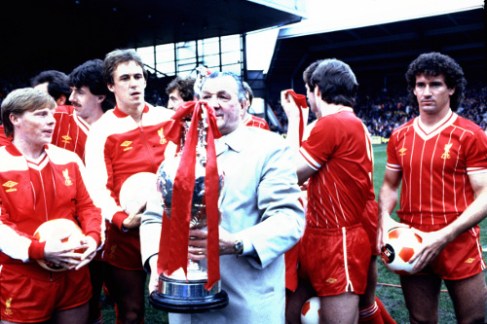
Man U fans can crow all they want about 20 titles.  The evidence to confound them is there for all to see, like some geological stratum separating the dinosaurs from the mammoths.  That schism dividing the game up to ’92, from the showbiz shenanigans of ’93 onwards, stands out like a Tory at a Foodbank, exposing Man U as the wealth-backed, monopolising opportunists that they are.  And it has all been done with such bad grace, another indictment of this new and joyless age we’re plodding through.  No gentle wisdom of the Bob Paisley variety – instead we had the sour bile of Ferguson and now seemingly a Fergie-Lite clone in the newly growly and grouchy David Moyes.  No loveable old-style hard-man Desperate Dan type like Tommy Smith – we just had the manufactured machismo of Roy Keane, a supposed tough-guy with an assumed snarl and trademark glower, whose typical party trick was to sneak up behind wee Jason McAteer and fell that not-exactly-scary individual with a sly elbow.

The comparisons could go on all day, but the bottom line is that Liverpool at their peak – and it was a hell of a peak – typified all the values of football that some of us remember from a pre-Sky, pre-glitz, pre-greed age when it really was all about a ball.  Now, it’s all about money, and contracts, and egos, and snide bitching to the media if you don’t get all your own way – and lo, we have the champions we deserve.  In the home game against Chelsea towards the end of last season, they displayed a lack of respect for the Premier League competition, and discourtesy to other clubs who stood to gain or lose depending on whether Chelsea  won or lost, by fielding a much changed and weakened side, going down to a meek defeat and imperiling the Champions League prospects of Spurs and Arsenal.  Such is the measure of their attitude to the game where their own immediate interests are not affected.

To apply a conversion rate which sums up all the anger and disgust I feel for the way our game has been degraded – I’d say each Premier League (or Premiership, or whatever else it’s been marketed as) is worth maybe half – at the very most – of each proper Football League Championship from the days when the game still belonged to us and the world was a happier and more carefree place.

At that rate, Man U are still a good long distance behind Liverpool, which – judging by the paucity of spirit and sportsmanship they displayed against Chelsea – is precisely where they belong.  On the eve of the latest meeting between these two long-standing Lancashire rivals, it should be emphasised once and for all – Liverpool are still The Greatest.
Masterblaster Yeboah’s Best Goal for Leeds United

Yeboah Almighty

Yeboah Almighty

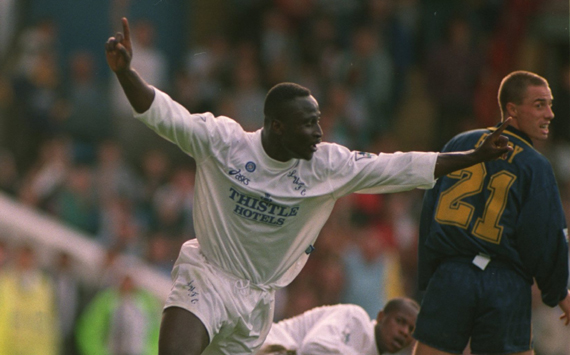
Mention the name Tony Yeboah to any Leeds fan – in fact to any football fan with a memory long enough to stretch way back to the mid-nineties, and you can bet that a faraway look will come into their eyes, and they’ll say “Ah, yes – that incredible goal against Liverpool.  Goal of the season, that.”  It’d be difficult to find anyone to argue the point.  But as a fanatical Leeds United fan who has a very special place in his Hero File for Anthony Yeboah, I’m going to try.

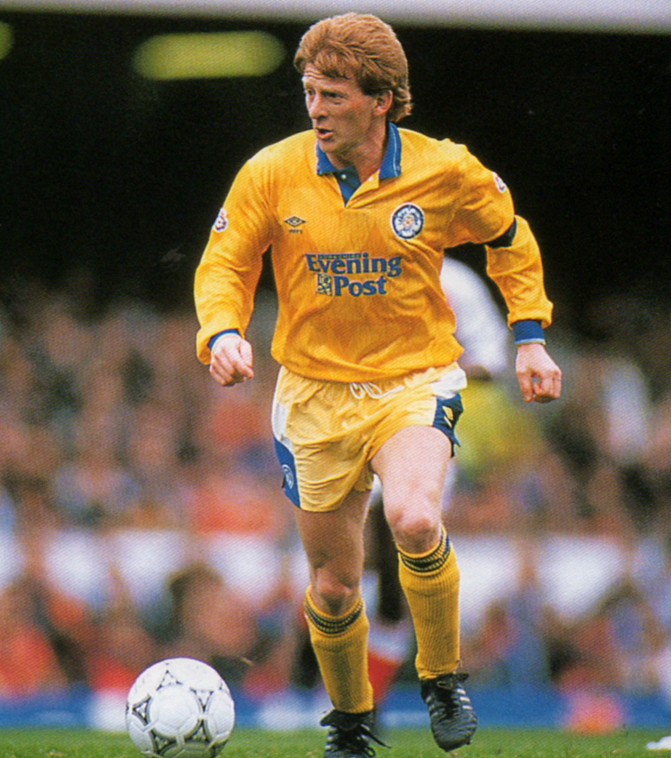
The Liverpool goal certainly was a brilliant technical piece of finishing; volleys from outside the box against a class goalkeeper invariably have to be.  At Leeds over the years, we’ve been lucky enough to see a fair few of these bazookas, and Yeboah’s late effort against the Anfield men stands comparison with any of them.  The fact of the goal being at the Kop End of Elland road was of some assistance to the spectacle, but any way you look at it, this was a hell of a strike.  It wasn’t the first goal of this type in front of the Leeds Kop and against the Reds though.  A few years before, Gary MacAllister, a future Anfield hero, scored another fizzer, the ball being played to him in mid air from the left; he let it go across his body before wrapping his right foot round it to thunderous effect, the ball scorching into the net before the ‘keeper (the same David James beaten by Yeboah) could even move.

Yeboah’s strike though was probably marginally better, it came from a headed knock-down forcing the Ghanaian to adjust his body shape slightly as the ball descended towards him, and he caught it so sweetly and with such velocity that James was probably slightly lucky he didn’t get a hand to it; broken wrists have been known in similar situations.  It was a violent, arcing shot, the ball dipping slightly in its trajectory and just clipping the underside of the crossbar before bouncing down to rest, relieved, in the back of the net.  David James can perhaps count himself unlucky to have been beaten by two of the finest volleys I’ve ever seen at Elland Road, then again he might reflect they’d probably have beaten any two keepers on Earth.

The thing is though – tie me up and burn me for a heretic, but I don’t think Yeboah’s howitzer against Liverpool that balmy August night was his best goal for Leeds.  In my humble opinion, that came a few weeks later at Selhurst Park, temporary home of Wimbledon FC.  I am supported in this by Guardian writer Dominic Fifield who, writing in 2011, saw this as his favourite Premier League goal.  He described it thus:

“Watching the ball cannon up from a series of scrappy headers and attempted clearances clearly tested the Ghanaian’s patience. Yeboah snapped on to the loose ball, controlled it on his chest then instep, exploded away from an opponent and lashed a glorious half-volley in off the underside of the bar from distance. It is the ferocity which is most impressive; a blistering effort.”

Sadly, I only saw this goal on television, though I’d planned to attend the match at Selhurst as I was due to be in London that weekend.  Four days previously though, I’d seen a pallid performance against Notts County in a 0-0 League Cup draw – and I just thought, well sod it, I’m not wasting my London time and money watching that sort of crap.  So I was exploring the delights of Selfridges when Yeboah broke Sky TV’s velocity-measuring equipment, and serve me right for a lapse of faith.  At least my wife found it funny, but I was understandably not amused.  Leeds won 4-2 as well, with Yeboah completing a hat-trick, and Carlton Palmer scoring a goal that might well have been Goal of the Month most of the time, but paled into insignificance next to the awesome might of Yeboah.

There are several YouTube videos devoted to paying tribute to Tony’s goals in his too-brief stay at Elland Road, and I’d heartily recommend a search, they’re well worth watching over and over.  I’d be interested to know what others think – I suspect that most will feel his effort against Liverpool was the best; it was a late winner after all, and scored in front of a packed Kop.  I should think this really, because I was actually there, stood right behind the line of the shot as it ripped past the startled James.  But I just can’t help harking back to what I think was an even greater goal, albeit in humbler surroundings.  How I wish that I’d been there for that one.  Tony Yeboah: thanks for the memories.

McCormack Boosts Leeds by Signing New Four Year Deal

McCormack Commits to Leeds United

McCormack Commits to Leeds United

The news that all Leeds fans have been waiting for – with just that slight worry that it may never come – has finally been confirmed.  Ross McCormack is staying at Leeds, having put pen to paper on a new four-year deal to end speculation that his future might be elsewhere, possibly further north and shrouded in perpetual smog.

Whatever the disappointment fans of Middlesbrough FC might be feeling at these joyful tidings, the chief emotion among the Leeds faithful will be relief.  The conviction in certain sections of the press that we were about to lose our most potent striker had amounted to an almost evangelical belief, or at least to a fevered plane of wishful thinking.  There may be excuses for certain ill-written and obsessive fan-sites of other clubs getting over-excited about the prospect of more misery for Leeds fans, but the gentlemen of the Fourth Estate do themselves no favours when they, too, sink to the levels of various anti-Leeds factions around the country.  But then again, hating Leeds in print is a standby pastime for newspaper lads and lasses since time immemorial, and it least it proves that our chant of “We’re not famous anymore” is a living hymn to irony.

The news that McCormack is staying will not exactly echo around the various leagues, ringing with significance, in the way that Gareth Bale’s forthcoming departure from Spurs will.  And yet one fan-site editor of a West Ham persuasion had pinned his colours so firmly to the mast of “GFH will sell McCormack” that you wonder if he might now perform the literary equivalent of clapping a gun to his mouth and calling in the decorators.  It’s amazing how the varying fortunes of Leeds United can still provoke such extremes of emotion, even after a prolonged period of obscurity, and even among fans of clubs we have never considered worthy of even a mild dislike.

Make no mistake though – leaving aside all the negative connotations of those who will greet the McCormack news with dismay – this sends out yet another massively positive message, albeit somewhat delayed, as to the direction the new owners of the club are taking.  Onwards and upwards is the theme – forget the past, the future is bright and White.  McCormack would have had no shortage of suitors had he wished to leave LS11, and if the club had wished to sell, they could surely have realised a large fee in exchange for his services.  Something is going unusually right at Elland Road and the longer the season goes on, the better things seem to get.  This will remain the case even when the odd, inevitable reverse occurs – as long as the principles seemingly being applied by the owners at the moment continue to guide their actions.

IF – and it remains a significant if – Leeds can now move to plug the few gaps in their squad before this transfer window closes, then a competitive season at the right end of the table surely beckons, maybe along with a juicy cup run or two.  The wind of change has been blowing down Beeston way, and it’s putting some colour into Leeds fans’ cheeks as well as a spring into their steps.

It’s been a long, long journey from what we can now assume is the rock-bottom nadir of our great club’s proud history.  But there are undeniable signs that a renaissance is underway, and maybe – just maybe – that United are back.

The Greatest Goal I Ever Saw – Scored Against Leeds United

For any football fan asked to nominate a favourite goal, the prospect opens of a pleasurable half an hour recalling all those wonderful strikes down the years, mentally compiling a short-list, and then proudly revealing to the questioner that golden shot, header, volley or back-heel, possibly prefaced by the two runners-up in time-honoured reverse order. Bliss.

The challenge of naming the best goal ever scored against your favourites, however, is obviously not quite so enjoyable. Most of us like to think of ourselves as football purists, at least in a neutral sense, so that we can appreciate the beauty of a goal scored in a game not involving our club, even one by a despised rival. But a goal in your own team’s net is never completely free of attendant pain, and however wonderfully executed it might have been, you can’t actually enjoy it. You wince as it goes in, you home in on a possible offside flag, or any infraction of the rules that might lead to it being chalked off. When it counts, your mood sinks. You’re in no state to acknowledge the brilliance of it all. You just want your lot to set about redressing the balance.

But the fact remains; you will have seen many terrific goals scored against your own beloved side. You may possibly find that one amongst them tops even the best goal you can ever recall your lot scoring, though you will not, of course, admit that. As a Leeds United fan, I’d certainly never concede I’ve seen better opposition goals than Yeboah’s howitzers against Liverpool and Wimbledon, Strachan’s belter against Leicester, Currie’s banana shot against the Saints, Eddie Gray’s pleasure ride through the Burnley defence or any half-dozen you might care to name from Lorimer’s ferocious back catalogue.

Looked at without the partisan blinkers, though, my mind’s eye recalls some very memorable goals scored against Leeds, particularly at my end of Elland Road; the Gelderd End, or Kop. Jeremy Goss blasted home a fulminating volley for Norwich in 1993 that drew gasps of admiration. The crisply-struck blockbusters do tend to stick in the memory, and I’ve often complained that we seem to cop for more than our fair share of goal-of-the-season contenders that fly into our top corner, when they might so easily have zipped into the back row of the stand.

The one opposition goal that I’ll truly never forget, though, was in a category all of its own. In the early part of the 1990-91 season, Leeds had made a decent start to their first year back in the top flight since relegation in 1982. Consolidation of higher status was the name of the game, but United appeared to be capable of more, and would, in fact, achieve a top four finish as a prelude to actually winning the Title the following season. In these early days back in the big time, though, it was wonderful just to be there and holding our own. A visit from Queens Park Rangers wasn’t expected to present any real problems, and there was a relaxed and content air around Elland Road when Leeds moved into an early two goal lead.

Twinkle-Toes Wegerle

Twinkle-Toes Wegerle

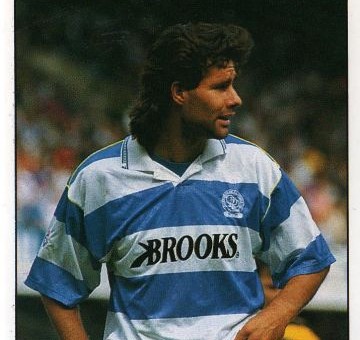
Then, it happened, as it’s frankly happened too often in my time watching Leeds. We managed to salvage, from the jaws of victory, an unlikely 2-3 defeat. But one of those goals was scored by Roy Wegerle, South African-born U.S. international, now a golf pro, but then Leeds United’s latest nemesis. He picked the ball up wide on the right about halfway inside the Leeds half, executed a ridiculously mazy run on a by-no-means direct route to the edge of the area, during which he went past five Leeds players as if they just weren’t there, before shifting the ball finally onto his right foot and dispatching it past a flailing John Lukic. It was one of those moments when, despite your love of your own team, you just stopped for an instant, transfixed in wonder, before exclaiming “I say, what an absolute corker of a goal that was!”, or words to that effect.

It was a beautiful goal, a wondrous, marvellous gem of a goal. I’ll certainly never forget it, and seemingly new generations of QPR fans are always finding out about it, and wishing they could have seen it live. Well, I did see it, and although I may not have appreciated it at the time, it certainly gets my nomination for “best ever against Leeds”. I’m not alone in that, either – one other thing I recall from that day is the loud and generous applause Wegerle’s effort elicited from the notoriously parochial Leeds support.

It takes a very special goal indeed to get that reaction at Elland Road, and this was definitely as special as it gets – worthy of Maradona, perhaps … or even Eddie Gray.

Take a bow, son. But with Leeds United once again hosting QPR at the weekend – let’s hope it’s Ross McCormack weaving the magic this time around.

Whites Legend – Lee “Leee” Chapman

Leee Chapman, Whites Legend and Last Champion “Leee” Chapman, Whites Legend and Last Champion[/caption]

It all started with a slightly bizarre Yorkshire Evening Post back page headline.  “Chapman Wings In”, it screamed – signaling Leeds United’s signing of the tall striker for the 1989/90 run-in.  A winger he most certainly was not, but many Leeds fans didn’t really fancy him to be all that much of a centre-forward either and it’s fair to say that the bulk of the support weren’t exactly overwhelmed by Sergeant Wilko’s latest transfer swoop.  But Lee Chapman was to win our hearts as he trod a goal-laden path to the top with Leeds, and any slight technical shortcomings were more than outweighed by his willingness to get in there where it hurts, to put his head in where many would hesitate to risk a boot.  Whites fans do love a recklessly brave warrior who’s worthy of the badge.

I well remember seeing one example of this bravery at close quarters when I attended a 0-0 draw at Tottenham shortly after we were promoted.  Challenged aerially as he went for a ball near the touchline, Chappy hurtled off the field of play to land senseless in an ungainly heap, face-first on the perimeter smack in front of where I was sitting.  Thus I was an unwilling witness to the worst case of gravel-rash imaginable when Leee (as he was fondly known by The Square Ball fanzine) tottered to his feet, his classic profile seemingly having been scraped off to a large degree by the unforgiving Spurs running track.  Such a mess of grimy blood and snot had to be seen to be believed, and I honestly wondered if he wouldn’t be out until the end of the season; but Leee – true to courageous form – was back in double-quick time to finish the campaign with thirty goals.

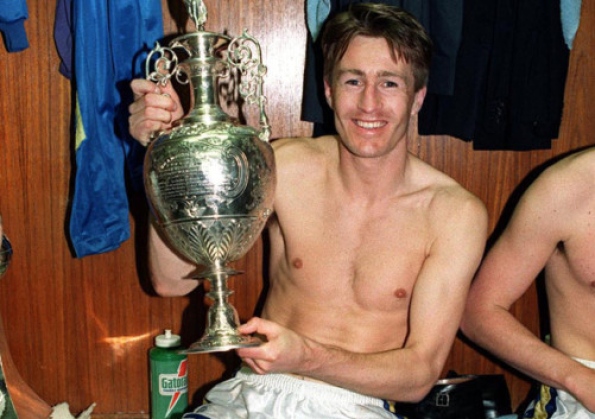
The following season he managed to break a wrist in trying to save a cup-tie at Elland Road, and during his absence we took the fateful decision to recruit enfant terrible Eric Cantona.  But again Chappy came back, and played a far greater part in that season’s title success than the mercurial Frenchman.  Brave he certainly was, and an unerring gatherer of goals too, sometimes clumsy in his execution of the finish, but still lethally effective.  The highlights were many – a hat-trick at home to Liverpool in an epic 4-5 defeat when he had a goal wrongly disallowed to deny Leeds a deserved draw.  Chappy had this wonderful knack of hurtling like some blond Exocet missile to connect with quality deliveries from either flank; goals at Aston Villa from a Mel Sterland cross, and at Sheffield Wednesday, courtesy of Gary Speed, stand out in the memory of those who were lucky enough to be there.  And in that Hillsborough match there was a rare glimpse of Lee’s unsuspected streak of genius as he picked up possession on the right, burst between two floundering defenders into the area, and pinged a shot against the Wednesday crossbar.  It was the gilt-edged stuff of absolute fantasy.

Lee Chapman was not a player of extravagant talent, nor did he play pretty football embellished with flicks and tricks – not usually , anyway.  But he was a devastatingly effective spearhead for Leeds over a period of several seasons, his time at the club coinciding with the second-greatest period in our history, his goals securing many a valuable win and draw, home and away.  He is fondly remembered as an archetypal Leeds player – fully committed and willing to risk injury for the sake of the shirt.  Memorably, he returned for a brief loan spell in the mid-nineties, welcomed back into the fold by rapturous Elland Road applause, only to be sent off for a stray elbow as he challenged for yet another high ball.

Leeds have had many great centre-forwards in their history – from the peerless John Charles downwards through Mick Jones, Joe Jordan, to the more modern heroes like Tony Yeboah and maybe even Jermaine Beckford.  All those names have notable achievements on their Elland Road CV, and Lee Chapman deserves his place in such a Hall of Fame; as tribute to his attitude, his bravery and of course his goals.  For a Leeds United centre-forward, there can be no higher praise than that.