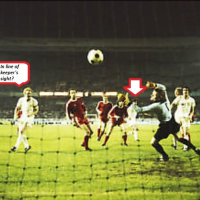
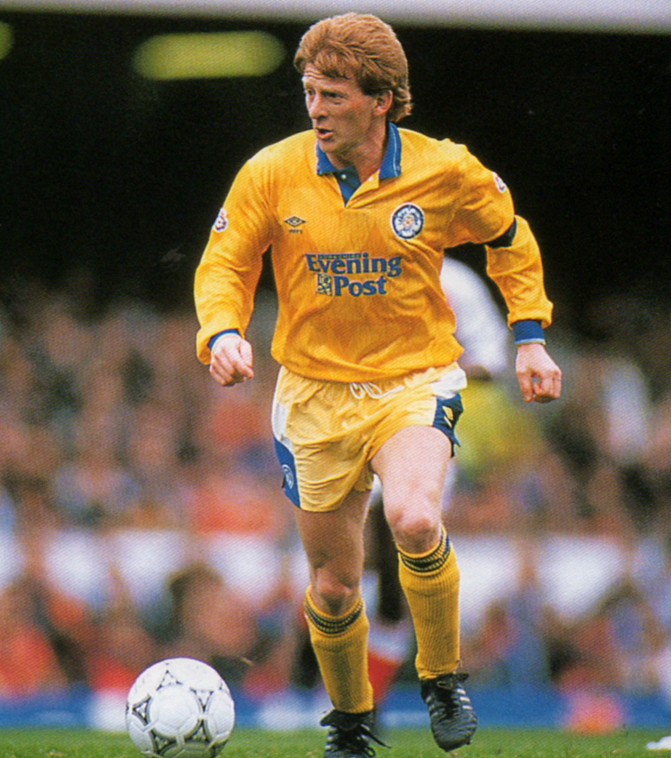
Yearly Archives: 2013

Fox In The Running?

Q: When is a Fox not a fox?

A: When it’s a sacrificial lamb.

Image

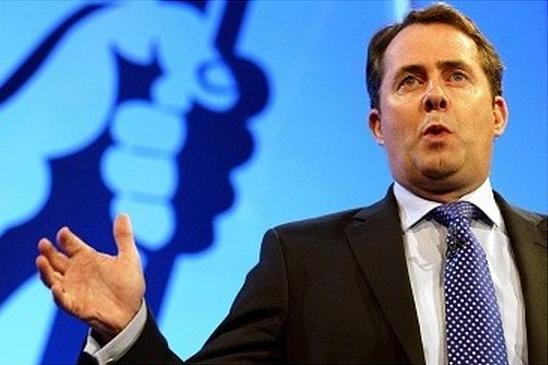
Liam Fox

The Fox in question – Liam of that ilk – is due to make a speech containing radical proposals exceeding in scope and intent anything the Coalition Government has so far contemplated. His true motives for this are unclear. He may just possibly be unaware of his potential status as patsy-in-waiting for the Tory Party’s increasingly Machiavellian convolutions, as it attempts to portray itself as a party of government beyond the next election. Then again, perhaps the cunning Fox genuinely feels that he really can rally the Conservative right wing with a view to becoming the anointed leader if and when David Cameron falls on his sword, or is stabbed in the back by the Men in Grey Suits, depending on how the last scene of the Coalition melodrama plays out.

Whatever the case, the scenario of an increasingly unpopular political party showing determination to plough its chosen furrow – despite a radical call-to-arms from the loony fringes – is hardly new. Labour gave us a glimpse of a few left-wing skeletons in their briefly-opened closet of horrors in the early eighties, and some feel that this paved the way for that party’s subsequent re-branding of itself as New Labour and the eventual Blair-Brown axis. Liam Fox might of course be entirely serious about making an early move to be seen as prospective leader material – if the reaction of the Tories, post coalition break-up, were to be a lurch to the Right. But it’s also tiresomely probable that he’s simply providing the necessary scare story, which can then be shot down by the incumbent PM, so that Cameron’s rigid position on his chosen course of austerity might be seen as more palatable relative to What Might Have Been.

Fox has in fact found it necessary to push back the boundaries of what is really credible, in his attempts to find depths of draconian savagery which even the Tory party might not plumb. Against a background of the demonisation of a whole sector of society – encompassing the poor, low-paid workers and the disabled – with swingeing cuts to the disposable income of all these people justified by portraying them as society-sapping freeloaders, it’s not easy to contemplate even more vindictive measures. Add to that the fact that tax changes in April will see a group of previously impoverished millionaires benefiting from tax reductions of £100,000 a year, and one can easily understand how difficult it is these days to appear truly loony in the context of all things Conservative. But Liam, bless him, appears to have managed it.

In point of fact, Mr Fox’s speech to the Institute of Economic Affairs next Monday is likely to break new ground right in the heart of right wing Tory dreamland “Rob the Poor to Feed the Rich” territory. Voicing what other extreme Conservatives hardly dare think – save only in their most secret and grandiose fantasies – Fox is tipped to call for a five year freeze on public spending, with no protective ring-fencing for schools, foreign aid or the NHS. That’s the poor robbed, but on an even more lavish scale than the current government are managing. And Fox will, according to the Times, also propose that there should be a thorough rethink of earnings and savings taxation, including a Capital Gains Tax holiday “to breathe life into the ailing economy”. The Times also reports that the former Defence secretary will say:

“I believe that in leaving money in people’s pockets, economic activity will follow. People will buy houses, invest for their future or just go shopping.

“Whichever is the case, it’s creating a society that is sustainable for the future in the way that our current – welfare-dependent and debt-ridden – economy is not.

“We should gradually move towards the reduction – or even abolition – of the taxes where the state not only taxes the same money on multiple occasions but discourages the very behaviour that would lead to a more responsible society.”

So that’s the rich fed, and there is likely to be much salivating in the Tory Shires at the prospect – however unlikely it is to actually materialise – of such a juicy package. It is of course a fact that, in order to leave money in people’s pockets, that money has to be there in the first place. But the poor are incidental to this speech, whether it’s a serious attempt to influence policy, or just a scare tactic to deflect criticism of the current programme. The poor are unlikely to vote Tory (although it’s increasingly probable they might vote UKIP), and they are perceived, as a body, to be more of an unwanted expense than any potential source of economic growth. It is the already rich to whom Liam Fox is seeking to appeal; those on the right of the parliamentary party and of the Conservative movement nationally. It is there that he will find his natural support if any ambitions of leadership are ever to come to fruition.

Whatever the thinking behind Fox’s forthcoming speech, he is not the only predatory scavenger circling the beleaguered Prime Minister. MP Sarah Wollaston has warned the Premier, in a series of tweets, about the need to tackle problems with his inner circle of immediate colleagues, consisting as it does of the “posh, male & white”. Wollaston is a known Cameron acolyte, but her words will be encouraging to Home Secretary Theresa May, who has recently broken cover with her own finely-drafted proposals covering a number of governmental departments, and – again – tailored to appeal to the Tory right.

Most worrying of all perhaps, is a vote of confidence from Baroness Warsi, who stated that Cameron has the support of “large parts” of his party, and that “he is doing a very difficult job in very difficult circumstances.” Such a very qualified endorsement is likely to be cold comfort to the Prime Minister as he studies the minute details of the Liam Fox speech, and Cameron may well reflect on the experience of football managers since time immemorial; that the vote of confidence is frequently a precursor to a frogmarch up the scaffold steps and the ceremonial fall of the axe. Unless, of course, friend Liam does the merciful thing, and slides the knife into his ribs before any organised coup.

Et tu, Foxy.

Ferkin-Scheidt Speaks Out On “Dining Room Tax”

In the wake of revelations that Local Authorities will be allowed to classify dining rooms as “bedrooms” for the purposes of the so-called “Bedroom Tax”, the Coalition has moved to clarify the position still further.

A Government spokesman who wished to remain anonymous, but who is in fact Iain Ferkin-Scheidt (pictured below) was quoted today as saying:

Image

Iain Ferkin-Scheidt yesterday

“Social housing tenants need to be clear about this. Any room that can be deemed superfluous to the requirements of a Housing Benefit claimant should be counted as a “bedroom” for these purposes – for example a dining-room, conservatory and so forth. I believe that some of you people still have what they used to call “parlours” – and yes, they can be defined as bedrooms too. This will be a matter for Local Authorities’ discretion, but they will need to justify their decisions to High Command.” Going a little purple around the jowls, Mr Ferkin-Scheidt went on: “We have to be very, very careful about terminology here. This is not a “bedroom tax”, it is a Spare Room Subsidy. The Prime Minister himself, long may he reign, has stated this. We want to make it quite clear that this is a measure aimed at shirkers, not workers. Lame excuses such as disability – if you’ll pardon the pun – simply will not wash; much as is the case with most of the frightful common types we’re aiming at here.”

When asked about the fact that many Housing Benefit claimants are actually workers in low-paid employment, Mr Ferkin-Scheidt remained bullish in his defence of policy. “It’s quite simple,” he explained kindly. “Those people on Housing Benefit cannot expect the rest of us to subsidise luxuries for them such as spare bedrooms and parlours and dining rooms or what-have-you, out of our taxes – particularly as many of us will actually be paying up to £100,000 a year less tax from April. As you can see from that figure alone, the country simply cannot sustain extravagance on this scale.

“Those who have failed to provide for themselves and their families, by obtaining only part-time or low-paid employment will have to accept that they are not deserving of the same privileges as good, honest, hard-working, tax-evading, Tory-voting people who bought their own Council Houses in the 80’s when St Margaret was Queen. We shall be taking further measures to ensure that this distinction is recognised, and to remove the burden of financial responsibility from the over-stretched rich. The fact is that the poor, the disabled and the long-term sick have had it easy for far, far too long now. I am currently studying proposals for what some are already calling a “Hot Tap Tax”, although it is in fact a heated water subsidy. Some of us feel – in all compassion and sincerity – that it is an unconscionable luxury for the Shirking Classes to have hot water on tap, and it may well be that Housing Benefit claimants who live in homes with hot running water, showers, flush toilets and so on and so forth, will at some point in the future be subjected to a further cut of 30% in their Benefit, unless they take up the option of moving to a smaller property, with a stand-pipe, and outdoor privy and a well. We are determined to bring the good old days back to this great country.”

Pressed further on the matter of future proposals along these lines, Mr Ferkin-Scheidt refused to reveal any more concrete details, but promised a fuller statement after the second reading of the new “Workhouses & Treadmills Bill” currently proceeding through the House of Lords.

“This Government is pledged to firm, decisive action,” he confirmed. “Did your great-great-great grandmother have hot running water? No, of course she didn’t, and neither did mine – although she did have staff to carry heated water up eight flights of stairs for her – but that’s to become tied up in detail. There’s fridges, too, and all those nasty wide-screen TV’s. Did Sir Winston’s mother have a fridge? Or a 42” LCD TV? And, look – let’s be totally honest here. Ice can be chipped from a frozen well, and allowed to melt. Cold water can then be heated for all the simpler needs of the sub-strata of society, and a short walk down the street to a shared privy never killed anybody, except a few disease-ridden ne’er-do-wells who were never going to become economically productive units anyway. Hot water and indoor flush toilets are privileges, not rights – and we are determined that the Party of Privilege shall live up to its traditions and ensure that people are once again well aware of their place in life.”

Mr. Ferkin-Scheidt is 104.

Mini-rant #2 – Why “Execution-style Killings” Are Anything But

“Execution-style Killing”. It’s one of those chilling news-story phrases that are fairly frequently-used, lazily, thoughtlessly and as a knee-jerk response it would seem, by habit-driven journos or unmotivated sub-editors. But this one is deeply, deeply inappropriate, offensive and misleading.

The fact is that the killings thus referred to are almost invariably visited upon one or more unfortunate individuals who have transgressed the code of some or other criminal organisation. These common gangs evidently consider that they have the right to make their own rules and enforce their own penalties, without regard for law. justice or the sanctity of life, and devil take the hindmost.

That “sanctity of life” thing is important. Law is a creation of Humankind, as to a lesser extent are the concepts of justice and ethics. But life being sacred, that’s just a fact, an absolute given, arising out of the sheer rarity of sentient existence. We’re all brief sparks of being in the awful immensity of time and space. For all we know, each of us has waited billions of years for our one chance at life, and when our infinitesimal span is done, then there’ll be innumerable further billions of years during which we shall not exist. Life is an unbelievably rare and precious gift, and to take it from someone – anyone – is the ultimate crime.

For me, this crime of killing encompasses all taking of human life, even what the various authorities down the centuries have been pleased to call “judicial killing”, or execution; the death penalty. That’s a subject for another day, but you catch my drift – I’m not in favour. The best that can be said of judicial execution is that, however flawed and misguided – even barbaric – the legal process might be, it is at least there, in some shape or form.

ImageThis cannot be said of the criminal act of summary murder, and it is grievously deceptive to use quasi-legal terms in referring to it. “Execution” in the judicial context refers not to the miscreant at the end of the rope, but to the legal warrant issued in consequence of their conviction for some awful crime. So the fact that someone has been tied up and shot in the back of the head, or beheaded live on some middle-eastern TV channel, or however they might be dispatched, does not lend itself to the description “execution-style”. No legal process is involved, no judicial warrant is issued and there is no conformity to the ideals of justice as developed over thousands of years. What we have instead is a tawdry, common murder.

This is not just an exercise in semantics. The common practice of referring to common killing in this way involves a danger of lending a spurious air of legitimacy to what is just a sordid crime. A lot of these self-styled armies, movements and groups desire nothing more than the appearance of justification for their actions. To aid and abet this desire, in any way at all, is inimical to justice, civilisation and the interests of those who are in danger of winding up victims of murder, dressed up in whatever disguise of necessity or expediency.

Murder is murder. Killing is killing. Let’s call them exactly what they are, and dispense with any false trappings of acceptability. If we are to lend the killers, the common, criminal killers, any vestige of respectability then we must, at least in some measure, share in the blame for the atrocities that – thus encouraged – they will continue to perpetrate.

Mini-rant #1- An Act of Faithlessness.

This is the first in a series of mini-rants, being bite-sized portions of my large supply of bile and spleen concerning matters that piss me off.  These handy snacks of vitriol shall be served occasionally by way of appetisers for the more verbose offerings I share as main courses.  The dessert menu is a work in progress, but you’re welcome to ask for the Whine List.

Apparently an Everton fan of 36 years support left today’s FA Cup tie against Wigan before half time with his team 0-3 down. He’d already booked a hotel room for what he’d obviously assumed was a nailed-on semi-final appearance at Wembley for the Toffees.

Well now – where to begin?  Honestly, doesn’t that make this outraged supporter, on two counts, the kind of “fan” you need like you need a sharp attack of dysentery. First the arrogance, assuming quarter-final success like that. Any football fan, deluded scummers* apart, will tell you that’s just begging for fate to kick you in the teeth. Idiot.

And walking out before 45 minutes is up. What a spineless, spoiled, selfish thing to do, showing a lack of faith, courage and moral fibre. Look at Arsenal, 0-4 down at Reading this season, and won 7-5. They had fans desert them too, and boy did those of little faith look stupid.

So well done that soft, limp Toffee.  Double idiot, and a wimp to boot.  He should take his support elsewhere if you ask me – and I think I know just the place.  He sounds absolutely ideal for the plastic, whinging, glory-hunting congregation at Old Toilet, home of the “Greatest Football Club In The World™” – he’d fit right in there, though he’d probably need to adopt a home counties accent.

What is the game, and the support, coming to these days??  Yours, Disgusted of Leeds.

*Scummers: a term of endearment employed by Leeds United fans to denote followers of The Mighty Manchester United.

Man United – Why Always Them?

Former Manchester City maverick Mario Balotelli will be remembered in the English game for many things, but prominent among those various goals, skills and misdemeanours will be his famous celebration after scoring against Manchester United at Old Trafford last season in City’s 6-1 eclipsing of their local rivals.  Balotelli slotted the ball home calmly at the Stretford End, turned away with no sign of emotion on his face, and lifted his City shirt to reveal a t-shirt on which was printed the heartfelt plea “Why Always Me?”.  The message, after a series of incidents culminating in a row with the emergency services when he set off a firework in his bathroom at home, clearly indicated a feeling that he was being scapegoated to a certain extent.  To add insult to his perceived injury, he was booked for the t-shirt display.

Recent events, on top of a long history of prominent stories figuring the controversy and fuss that attend one football club above all others, might lead us to ask a somewhat wider version of the same question.

Why is it always Manchester United?

The furore surrounding their Champions League exit on the 5th March is fairly typical of the controversy the Champions-elect seem to attract, like flies to a bad piece of meat, on such a regular basis that you tend to wonder whether it’s just coincidence or a Machiavellian form of press-management.  So “enraged” was manager Alex Ferguson after their defeat, which turned on the dismissal of Nani for what might charitably be termed a high tackle; that he refused to appear before the assembled press after the game.  He was “too distraught” apparently, to fulfil his mandatory duties in that regard.  To the media of course, a story about a no-show from Ferguson is a much bigger scoop than anything most managers might say in adhering to their agreed obligations.  But Manchester United and controversy have gone together like port and nuts for a long, long time now.

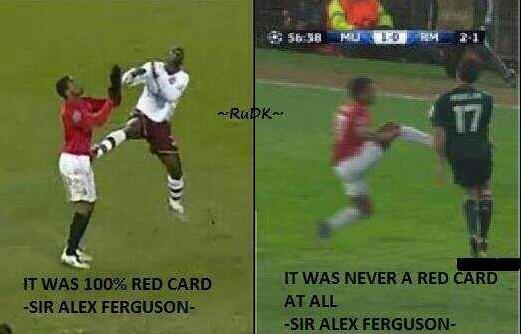
ImageCloser examination of the incident in focus this time reveals a worrying lack of consistency in Ferguson’s emotional reactions over remarkably comparable incidents.  Nani’s liver-high tackle was described dogmatically as “definitely not a red card”, paving the way for Man Utd claims of ill-treatment and bias.  A virtually identical tackle some time before, by Arsenal’s Eboue on Ferguson’s own player Evra, was also punished by a red card, but that one drew praise from the choleric Scot, who stated that the decision was “100% correct”.  This apparent self-contradiction is nothing new in the world of Alex Ferguson, or indeed in the wider manifestations of the club who like to brand themselves “The Greatest in the World”.

At the end of the Real Madrid match, enraged home defender Rio Ferdinand saw fit to get up close and personal with the referee who had dared dismiss Nani, sarcastically applauding him at point-blank range.   This is a widely-recognised form of dissent, and would normally merit a yellow card.  The referee did nothing, and UEFA have since confirmed that no action will be taken against Ferdinand.  It would be tempting to ask what sort of message this sends out to aspiring young players, if the answer were not so glaringly obvious.  That message is, as ever:  Man Utd can basically do just as they like, the game’s ruling authorities being so much in thrall to the club’s global profile – and the markets dependent upon its prosperity – that they will often turn a Nelsonian blind eye to such flouting of the rules, in the fond hope that nobody will notice when other clubs are dealt with more severely for like offences.

It has been said, with some justification, that one of the more hackneyed clichés in today’s game is the regular statement from the Football Association along the lines of “We have looked into (insert name of misdemeanour perpetrated by the Man Utd club or employee here), and can confirm that no further action will be taken.”

This sort of thing has been going on for many years, and while most clubs might shy away from such regular media attention of a not entirely positive nature, Man Utd as an entity appear to subscribe to the old maxim that there’s simply no such thing as bad publicity.  They have displayed a talent for remaining newsworthy, certainly on the back pages and not infrequently on the front as well, more or less continually, and dating back to well before their current era of success.  The incidents are many, and mostly quite unsavoury – Rooney elbowing a Wigan player and getting off scot-free, dodgy penalties too many to number, the legendary difficulty of seeing a penalty awarded against them and so on and so forth – and yet the default press position remains that the club are pre-eminent in the game for reasons of skill, charisma and courage, an apparent myth lapped up eagerly by the global fan-base, most of whom have never seen the team play in the flesh.

We hear far too much also of Ferguson’s so-called “mind-games”, a phenomenon particularly beloved of the media in this country, but one which appears to consist largely of an elderly gentleman having great difficulty sticking to the path of veracity at those press-conferences he deigns to attend.  Madrid manager Jose Mourinho is one who prospers in these psychological duels – in Ferguson’s petulant absence after the game last Tuesday, he stated that “the better team lost”, and walked off, content at having fanned the flames of the Man Utd manager’s fury.

It seems though that UEFA are after all to look into Ferguson’s failure to turn up for the press after this latest controversial occasion.  Presumably they will investigate fully, and a technical charge of “Sulking” might just possibly ensue.  But it would be unwise to place too much money on such an outcome; it may well be that we’ll yet again hear those old, familiar words “no further action will be taken”.

Guest blogspot: Close-mindedness by Kate Atkinson

KateKate Atkinson was born in July 1993 in Wakefield, and now lives in York where she is studying Primary Teaching at York St Johns University.  She attended St Wilfrids Catholic High School and 6th Form College, graduating in 2011 with outstanding academic results.  Since leaving St Wilfrids, Kate has spent part of a gap year working as an au pair in Dublin, gaining valuable experience of living independently  abroad.  Closer to home, she gained employment in her home town of Pontefract in a digital processing outlet, before commencing her University course last September.

The article below was originally published on Kate’s own blog, which can be found here. I reblog it now because of its undiminished relevance and unerring accuracy.

I have a very hard time understanding close-mindedness.

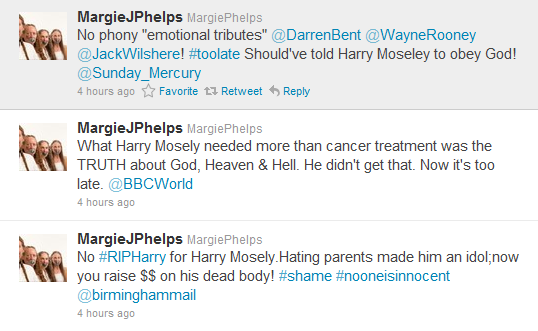
In the very early hours of this morning, I was scrolling through my Twitter timeline and was heartbroken to read that Harry Moseley, the 11 year old boy with an inoperable brain tumour, who has campaigned tirelessly to raise over £500,000 for Cancer Research UK’s brain tumour research, has died.

As the world woke up to the news of the loss of this brave little boy, I saw hundreds upon hundreds of kind messages to Harry’s family – complete strangers reaching out to his parents, to support them through their grief. This outpouring of affection for one little boy was to be expected; Harry is widely known for his bravery and selflessness, and his campaign, Help Harry Help Others.

What I didn’t expect, though, was to see something like this.

Image

Once again, I encounter with absolute horror and disbelief, the twisted opinions of the Westboro Baptist Church.
A few years ago, being somewhat naive about the type of people that exist in this world, I found the website “God Hates Fags“, and honestly thought it was a joke. I was well aware of homophobia, but I didn’t honestly think that communities such as the WBC, with their persistent use of offensive vernacular, actually existed. I was wrong. This is prejudice at the absolute extreme, and I physically cannot stand it.
My discovery of the Westboro Baptist Church opened my eyes to just how extreme close-mindedness can be – but even after realising this, I would never, ever have expected these people to use the death of a little boy to once again force their opinions on the rest of the world.
I could steam on and on for a lifetime about how furious the WBC makes me, and get all worked up, and start swearing and insulting them and cursing them to the hell in which they think the rest of the world belongs. Because I honestly can’t comprehend this kind of cruelty. But a part of me thinks that an angry response is just what they’re looking for.
So instead I respond calmly. Instead of spending my time like the WBC choose to, screaming hatred at everyone they meet, I’d rather have a laugh with my friends. Read an old favourite book. Sit down to Christmas dinner with my family. Wear one of Harry Moseley’s bracelets with pride. Take pleasure from all the things in life that the WBC will never understand: kindness, love, compassion. My life is about my family and friends; I want to be with them and I want for all of us to be happy, and that’s what matters most to me.
I feel sorry for the WBC, because they spend their lives pushing the rest of the world away and building their lives on hate.
Harry Moseley was a bright, kind and determined little boy, who fought the dark with the light and filled people with hope. WBC fight blindly in the dark. There’s the difference. Make your choice.
Image
 Harry Moseley
2000 – 2011
Rest In Peace

Memory Match No. 3: Leeds United 3, Man U 1. 24.12.1995

1995-96 was the last full season of Sergeant Wilko’s eventful reign at Elland Road. His influence over the club was crumbling amid rumours of money problems, takeovers and dressing-room discontent, a tale that would doubtless strike a chord with Messrs. Grayson and Warnock of more recent vintage. This was a season that had started off with a flurry of Tony Yeboah thunderbolts and some impressive results and performances which appeared to promise much. Sadly though, it would peter out in a shocking late-season run following a League Cup Final humiliation at Wembley, courtesy of Aston Villa. Howard Wilkinson was a dead man walking from that time on.

Worrying signs of defensive frailty and general ineptitude had been all too obvious just the previous week at Hillsborough. United had succumbed spinelessly to a 6-2 defeat at the hands of an unremarkable Sheffield Wednesday side and – all bravado aside – there wasn’t much optimism in the hearts of the faithful as this fixture against the arch-enemy loomed.

It was certainly a different Christmas Eve for me. I hadn’t exactly led a sheltered life up to that point, but this was the first time – and the last, to date – I’d ever risen the day before Christmas to bacon sandwiches at 6 am, closely followed by numerous Budweisers with the Sunday papers in a fan-friendly pub, as we waited for our “Scum Match Special” mini-bus. The queasy feeling before any match against “Them” was therefore multiplied by unaccustomed early-morning grease and alcohol, and I was feeling several shades of not-too-good as we set off for Elland Road. It was an 11:30 kick-off, live on Sky, and it promised either to make or break the whole of Christmas for us fans, and for our hopeful families.

The situation between the Uniteds of Leeds and Salford is one of a legendary mutual animosity, even at the best of times. Let’s not mince words here, the two sets of fans hate loathe and detest each other, and open warfare is the norm. Revisionist football pundits would have us believe that this is strictly a one-way affair, but you only have to tune into one of Sky’s glitzy live TV love-ins for a Man U match, and whoever they are playing, our Home-Counties friends are in full voice with their “We all hate Leeds scum”. Even Alex Ferguson, the Red Devils’ not-altogether-likeable manager, makes no bones about it; some of his more coherent sound bites feature his opinion that Elland Road is “the most intimidating arena in Europe”. He’s also stated that going to Liverpool is nowhere near as bad as going to Leeds; clearly, he’s never been for a late-night pint in Old Swan or Dodge City.

So, Yuletide or not, the usual poisonous atmosphere was in evidence as the two teams walked out before a 39801 crowd that overcast morning. Just as Leeds were smarting from their Hillsborough debacle, so Man U were struggling to emerge from a poor run, winless for a month and dispatched by Liverpool the previous week. This seasonal fixture was a chance of redemption for both sides.

Image

Macca slots the penalty home

By kick-off time, I was starting to feel properly ill, and in dire need of a pick-me-up. This arrived in a most unlikely form after a mere five minutes, when a Leeds corner swung over from the right. Richard Jobson rose on the edge of the area to head towards goal, where David Wetherall, lethal against Man U in the past, was challenging for a decisive touch. But that touch came instead from the upraised, red-sleeved arm of Nicky Butt – and referee Dermot Gallagher’s whistle sounded for a penalty.

Peering from the Kop at the other end of the ground, through an alcoholic fug, I could hardly believe my eyes. Leeds just didn’t get penalties against “Them”. It would happen the other way around alright, too often, and even from three yards outside the area but this was unprecedented, since our Title-winning year anyway. Steve Bruce evidently thought it was just too much to bear, and screamed his violent protests into Gallagher’s face, having to be restrained by Gary MacAllister, who appeared to be trying to explain the rules to the furious defender. The guilty look on Butt’s face, though, spoke volumes. MacAllister placed the ball on the spot, and sent it sweetly into the top right corner for 1-0, giving Peter Schmeichel not even the ghost of a chance. The celebrations were raucous and deafening as the Elland Road cauldron exploded with joy – and inside my skull, the trip-hammer of a beer-fuelled headache pounded away anew, utterly failing though to banish my smile of delight.

Leeds had the bit between their teeth now, and Brian Deane was suddenly clear for an instant outside the right corner of the Man U penalty area, played in by a cute pass from Carlton Palmer. Schmeichel was out swiftly to smother the chance, but Deane managed to dink the ball over him, only for it to clip the crossbar and bounce away to safety. A two-goal lead at that stage would have felt unlikely yet deserved, as Leeds United had been on the front foot right from the off. Soon, though, a lesson was to be delivered about what happens when you miss chances against this lot.

The unlikely culprit as Leeds were pegged back was Gary Speed. Receiving the ball in the left-back position, he tried to beat Butt instead of clearing long, and was robbed of possession. Butt looked up, and placed a neat pass inside to Andy Cole, whose efficient first-time finish levelled the match. Suddenly, my headache was even worse, and I was starting to wonder about the fate of my breakfast too. Time for another reviving injection of optimism as Leeds surged forward, and Speed so nearly made up for his defensive error, playing a one-two with Tomas Brolin which gave him space to put in a right-foot shot that went narrowly wide.

Image

Yeboah beats Schmeichel for the second goal

The game had settled down by this time, and both sides were showing enough ambition to feel that they were in with a chance of victory. Leeds though had thrown off their Sheffield blues, and attacked with verve and purpose. Now, a defensive position was coolly handled by Gary Kelly, finding the time and space to launch a long clearance forward, where Brolin headed on. The ball was loose, and surely meat and drink for Man U’s international defender Paul Parker – but he inexplicably let it bounce over his foot. Yeboah pounced on it like a hound on a rat, and he was away, surging towards goal with ex-Leeds defender Denis Irwin backing off. Yeboah in this mood was usually irresistible, and sure enough none of Irwin’s careful jockeying could prevent him from finding that vital half-yard of space. The gap appeared, Schmeichel came out to block, and Yeboah clipped the ball sumptuously just out of the Danish ‘keeper’s reach, up and over to nestle in the far corner of the South Stand net.

Again, that explosion of noise and joy, again my fragile system was assailed by the rough-and-tumble of riotous celebration. 2-1 up against the team we loved to hate; the cockneys at the far end were suddenly silent and morose. “You’re not singing anymore!” we blasted at them, and indeed, little would be heard from the away fans for the rest of the game.

Image

Brian Deane makes it 3

The second half was another tale of give and take, both sides able to cause trouble up front, but both seemingly capable of dealing with all that was thrown at them. The onus was on Man U to retrieve a losing situation, but Leeds were rarely in great trouble, and as the game entered its final quarter there was unprecedented optimism that we could close this one out, and enter Christmas on a real high. Leeds weren’t simply sitting back and absorbing pressure – and the maxim of attack being the best form of defence was to serve them well. On 73 minutes, Jobson made a foray down the left, and was fouled by Cole chasing back. The resulting free-kick was played to MacAllister in space in the middle of the park, and he swiftly moved it out to the right wing. Brolin picked up possession, and then slipped the ball to the overlapping Palmer, who surged into the box, and then turned past Irwin to set up Brolin again on the edge of the area. The much-maligned Swede, making the contribution I best remember him for, chipped the ball sweetly first-time, standing it up just around the penalty spot, where Deane’s exemplary movement had won him the space to rise and plant a firm header past a helpless Schmeichel into the net. 3-1 and finis.

After the game, and before the Yuletide celebrations could begin in earnest, other traditions had to be observed. Ferguson, naturally, had to moan about the penalty. “It was a very surprising decision, given in circumstances that were beyond me.” whinged the Purple-nosed One, in evident ignorance of the deliberate handball provisions – but perhaps aiming to justify Bruce’s undignified and almost psychotic protest at the time. And the massed ranks of the Kop Choir had to regale the departing Man U fans with victory taunts as they sulked away, silent and crestfallen, headed for all points south.

I can’t remember the journey home, or even how spectacularly ill I was when I got there, although I’m told I was the picture of ecstatic yet grossly hung-over ebullience. I just know it was my happiest Christmas Eve ever, ensuring a deliriously festive spirit for the whole holiday, much to the delight of my long-suffering wife and two-year-old daughter.

Merry Christmas, everybody! And God bless us, every one. Except Them, from There.

Next: Memory Match No. 4: Leeds United 4, Derby County 3. 1997-98 included a purple patch for Leeds United, and a series of “comeback wins”. Perhaps the best was this recovery from 3-0 down at Elland Road against the Rams.

Why A Little of What Might Kill You, Does You Good

Image converted using ifftoanyMy wife Tracy’s great-Uncle George died last week. He was 91. A few days beforehand, he’d been up a two storey ladder, clearing out the gutters at his bowls club. He walked home a mile or so, spruced himself up, and then back to the club for a dinner dance – but he didn’t feel very well, so he nipped off home after the meal. Thinking he had a virus, he left things a while, as blokes tend to do, and when he eventually saw a doctor – still feeling under the weather – he was told he had pancreatitis, and that any potential treatment would only finish off his one remaining kidney. George nodded, sorted his affairs out over the next few days, and then he calmly checked out of life. To my mind, he was a winner – active right up to the end of a long span, and then shuffling off this mortal coil at short notice, uncomplaining and with all loose ends neatly tied up.

Now some people might tut and say, dearie me, what was an old chap like that doing up a ladder, no wonder he’s not with us anymore. I really think that is to miss the point. As a relative spring chicken of only just past fifty, I’m already getting intimations of how a time will come when I’d no longer throw my hands up in horror if some kindly but helpless young person in a doctor’s coat told me I’m not long for this world. I can tell even now that the fear of death itself is likely to be a diminishing factor, as I get older. It’s fear of life burdened with infirmity that I’m more worried about, or being cheated by illness out of my 60’s and 70’s.

The more it’s possible to keep going, and keep on doing the things in life that keep you going, the better it has to be for the outlook of anyone with a lot of years on their back. So while I wouldn’t expect many doctors to advise an old reprobate like George to go shinnying up and down ladders at 91, I still think it’s massively positive that he remained so determined to do what he could do, for as long as he could do it.

My wife’s other elderly uncle, Harry, will be 90 soon. He’s a bit deaf, a bit stooped, and he’s lived his life on one lung these many years. I heard him talking to my beloved on the phone today, and he was holding forth about how he intended to account for most of his dear wife’s birthday chocolates, and making jokes in dubious taste about furry paint rollers. There’s not a lot wrong there, either, I’d say. Yes, maybe the chocolate isn’t the ideal thing for a prospective nonagenarian’s diet – but why not enjoy the good things of life while you’re still here?

If I might be permitted to wax philosophical for a few lines: we often hear about people “losing their lives”, or “a great loss of life”, and other such gloomy phrases, all concerning themselves with life as a commodity that one has, and either keeps or has wrested away. But our lives aren’t really ours to lose – because nobody gets out of life alive anyway. The valuable commodity we should be talking about is time. That’s what we lose if we die early – the time that we might otherwise have been granted on earth, to use as best we might. And that’s why – in my opinion – the idea of death becomes progressively less tragic, the greater the age of the dearly-departed concerned. We hear of people being “tragically young” when they die, and that is spot on. Time is what we have, and time is what we need to keep accumulating. Time is the potential we lose if we die too young. Our lives are only on loan for whatever duration.

Ironically though, the more time we hang around on this Earth, the more likely it is that there will be restrictions placed on our activities by well-meaning relatives and professionals, all acting in our assumed best interests, naturally. But is this the right way to go on? My old Nana Cawthorne, of whom I’ve written elsewhere, was finally prevented from smoking late in her life, when she had to spend some time in a residential home (which she bitterly hated). A few weeks later she was dead, having thrived on her daily cigs for God knows how many years beforehand. I think it was the shock of stopping that killed her, but it could just as easily have been resentment at her life’s pleasure being so curtailed. Sometimes, a well-meaning action, with the healthiest of intent, can be fatally discouraging for the person it most intimately affects.

I’d like to think that, if I’m lucky enough to exceed the age of 80, with all my marbles and my more important faculties all present and correct, I’ll be cut some slack in the matter of my more treasured bad habits. I’ll feel that, having survived so long indulging my relatively few vices, I might as well head for the exit in a like manner. Surely, once you’ve lasted your allotted span and a few bonus years, it’s more about quality of life, and not so much the mindless grabbing of a few more years, just for the sake of it? Alright, too much chocolate might be really bad for Uncle Harry – but he’s nearly 90. A drop or two of red wine might end up seeing me off if I’m still imbibing in my 80’s – but so what? Life is for living, and enjoying, especially when you’ve done all anyone can expect, and attained a grand old number of years. Thus I shall argue, anyway – if I’m able.

We’re off to Uncle George’s funeral next week. He’s specified – to the outrage and horror of at least one sister – that he doesn’t want anyone wearing black. I actually hadn’t seen him for many years myself – well, he was a southerner (from Barnsley) – but having heard of the manner of his passing, and of his instructions regarding funeral garb, I regret not having spent more time with him. He lived his life as he wanted to, right up to the end. He’d been a widower since about 1990, and he’d looked after his disabled wife for many years before that. He was still driving and, as we’ve heard, still walking to and from his bowls club whenever he pleased, doing his bit to help about the place, and nobody saying him nay. And now he’s making sure from beyond the grave that things will be done his way as we all say farewell.

Good on you, George. I shall don my tan jeans and my Pink Floyd t-shirt next week, and I shall raise a glass or two of wine in your honour.

Will the New ‘Personal Independence Payment’ Actually Deprive Disabled People of Their Independence?

As a former Welfare Rights Worker with C.A.B. in Pontefract and Wakefield in West Yorkshire, I’ve retained an interest in social policy developments in general, and Welfare Benefits legislation in particular. You may take the boy out of advice work, but you can never quite take advice work out of the boy – and the Citizens Advice Bureau ethos of aiming to ensure that people are not disadvantaged for a lack of help and representation still means a lot to me.

This is particularly so now, at a time when a lot of vulnerable and helpless people are being targeted by a government apparently determined to make budget savings at the sharp and painful end of life. With the intention of keeping myself up-to-date, I do plenty of reading – and this includes a lot of anecdotal experiences. The feeling out there right now appears to be one of near panic, and a hideous insecurity over what plans are being drawn up to dump the chronically sick and disabled on the scrapheap of dependence upon others, in the name, ostensibly, of prudent public spending.

One of the major worries is the forthcoming replacement of Disability Living Allowance by the new “Personal Independence Payment” (PIP). It’s a snazzy new name for a misleading product, conjuring up, as it does, an image of a newly-liberated individual, spreading metaphorical wings and savouring the new-found freedom liberally bestowed by a benevolent government. Sadly, the reality is likely to be somewhat different, as Linda Cox explains in an article – quoted in full below – which was originally posted on the Facebook page “The People Vs The Government, DWP and Atos“. Linda is a carer, and she sets out in graphic terms some likely consequences of these benefit changes, which will be taking effect in a phased introduction from April of this year:

The musings of a pissed off madwoman/wife-of-a-wheelchair-user

Say someone applying for PIP has a made to measure, lightweight wheelchair, which they paid for out of their DLA, so they can self propel, as opposed to the wheelchair clinic issue, which is a really heavy, cumbersome, monstrosity of a wheelchair, which has to be pushed by a carer.

If you can propel your lightweight wheelchair 20 metres, you fail to qualify for PIP.

So, you will need to use this chair as your only transport, as you have no benefit for a travel budget. Your chair gets used over all kinds of terrain (gravel and cobbles are the most fun), for miles as in losing your PIP, you can’t pay for your car and it is taken away. Wait… you can’t self propel as far as the local shop (and it’s uphill), let alone for over a mile into town. But as long as you can propel for 20 metres (the length of two buses)… the world is your oyster… apparently.

How do you pay for the maintenance of said wheelchair? £200 for a replacement seat, £100 for a new set of front wheels, £40 for new tyres…. all needing more frequent replacement, because of the extra usage. Where does this money come from?

I guess you could always use the hospital issue chair.. then you would need a carer to push all the time, but wait… your carer has lost their allowance, because you lost your PIP… in fact, your carer is on workfare now…. or if lucky enough, in full time employment.

Damn… this is getting complicated.

So, a wheelchair accessible cab is rare and has to be booked well in advance in order to get one…after all… there are so many wheelchair users no longer qualifying for PIP, so lots of competition for cabs now. A return trip for town is £15, that’s a lot of money to find out of well… nothing.

Let’s grab a bus… yes; buses have ramps and wheelchair spaces now! Great. Except the wheelchair spaces are all full of pushchairs. Damn… wait for the next bus. Oh dear, the next bus isn’t accessible. No point in going home in between because just getting to the bus stop has knackered you out… it’s further than 20m away and you had to keep stopping and resting on the way.

It’s pouring down with rain… not unusual in the UK… you can’t self propel in heavy rain as your tyres get slippery. Damn. Stranded. Just sit here and get soaked then and hope it stops… which it doesn’t sometimes.

Sod it. Just stay in. Who needs to see a doctor or a dentist or go to a hospital appointment… or shop for food (you can’t carry much in a wheelchair anyway – it makes it too heavy to self propel on the back and it slides off your lap…. especially on cobbles… I mentioned cobbles already, didn’t I?)

Can anyone explain to me, how when you have kept your independence, because you had DLA, the assessment for Personal Independence Payments penalises that very independence and you end up penniless and housebound?

Don’t tell me this is unintentional.

Thank you for reading.
~ Linda ~

That accusation of a new benefit, actually containing the word “Independence” in its title, yet having such a devastating effect on the hard-won independence of disabled people, who have hitherto managed alright for themselves due to their current DLA entitlement – that is deeply ironic. It’s also scandalously wrong, and potentially tragic – but sadly it remains a fact that people will believe what they are told, if they are told it often enough, no matter how outrageous the deception – as I’ve mentioned before, it’s The Big Lie in action.

These changes will happen; the determination of Cameron’s Coalition to follow their chosen course has seen to that. But this doesn’t absolve us as citizens from our responsibility for those unfortunates who will be most severely affected.

Should the disabled pay the highest price? I really don’t think so.

Surely, it’s time to stand up and be counted.

Guest blogspot: Memories of Old Church in Pontefract 1929 – 39 by Ken Atkinson

The formative years of my early childhood were spent at No.39 Bondgate, Pontefract, which was one of a block of four small two-up, two-down houses situated immediately adjacent to the front entrance of Wilkinson’s Liquorice Works. Our house was about three steps up from the pavement and enjoyed the luxury of a narrow strip of garden, possibly three yards deep. However, we had quite a long back garden which extended up to a brick wall forming the boundary of the gardens belonging to the houses at the top of Bond Street. We children were allowed a free run of the back garden as Dad was never much of a gardener; consequently the word ‘garden’ was a rather optimistic name for our playground.

I have hardly any recollections of the first two years of my life when we lived in a tiny cottage situated on what was known as Little Hill, which is now a grassed area at the bottom of the Booths. My parents’ families lived a little further down the road near All Saints’, Mum’s house being at 95 North Baileygate, while Dad lived at 8 Fox Terrace, a row of terraced houses which stretched from North Baileygate up to the Grange Field.

Dad took us for a walk and we came home to find we had a sister!

I was almost two years old when we moved from the Little Hill to No.39 Bondgate and it was probably a day that Mum never forgot, as my sister decided to be born within hours of the family moving into our new home. My brother, who would be almost four and a half years at this time, remembers Dad taking us for a walk to Box Lane and coming back to No.39 to find we had a sister!

If it can be said that most people can remember things and events from around the age of two or three, then it would probably be around 1930 when we and our neighbours still had to use toilet facilities which were primitive monstrosities known as ‘middens’, situated at the top of our gardens. The least said about middens, the better; suffice to say that they enjoyed none of the benefits of modern plumbing. Fortunately for all of us, it must have been quite soon after our move to Bondgate that our landlord, in his generosity, decided to remove the appalling middens and provided, lower down the garden, a block of new flush toilets, which to us were sheer luxury even in the depths of a hard winter.

Life must have been very hard in the thirties for our parents, as Dad’s small wage as a coke ovens worker, had to go a long way. Nevertheless, somehow or other, Mum always made sure we were well-clothed and fed, as well as managing to keep the house looking clean and tidy. Of course, in those pre-war days, only a few houses were blessed with electricity, and most families in Bondgate relied on gas for lighting and coal for heating and cooking.

Mum and Dad paid for our gas by means of a penny slot meter, which meant you were tempting fate if you didn’t have a penny or two around the house. I remember very well that if the gaslight started flickering, the cry would go out, “Mum (or Dad), have you got a penny, t’gas is begging!” Bondgate itself had gas lamps and Mum had an uncle who worked at the gasworks, part of his job being to walk around Old Church every night, lighting lamps with a long pole, reversing the process at dawn.

The ground floor at No.39 consisted of a stone-flagged living room, a kitchen at the back, and in-between was the staircase under which we kept the coal. The focal point of the living room was the Yorkshire range which shone with weekly applications of ‘blacklead’ and provided both heat from its coal fire and an oven, from which Mum provided mouth watering Yorkshire puddings, the equal of any in Old Church, not to mention her tasty stews and delicious rhubarb pies.

The only equipment in the kitchen was a sink with a cold tap and a ‘copper’ or ‘set-pot’ in the corner which provided hot water by means of a coal fire underneath. Bath-time at No.39 was a weekly ritual which entailed filling the copper to the brim and then ladling the hot water into a galvanised bath, probably one bath full for all of us!

We had two bedrooms and while the front bedroom was a reasonable size, the back one was very small, so much so that if you sat at the bottom of the bed, you would almost bump your head on the ceiling. The sash window looked out onto the back yard and it was quite easy, even for us children, to climb out of the window and drop down to the yard below.

Of course, in the thirties, there was no such thing as television so people relied upon the radio for entertainment (or wireless as it was called), or a wind-up gramophone, such as we had. It was an ancient HMV with an enormous horn, and being Dad’s pride and joy our early musical education consisted of a daily mixture of classical overtures, Gilbert and Sullivan and military marches.

In the hard times of the thirties, we young Old Churchers were taught to appreciate the value of money and always looked forward to each weekend when, if funds would allow, we each received our Saturday penny, which after due deliberation we would usually spend in Hudson’s shop which was just across the road from our house. You could buy all sorts of sweets or chocolate for a penny, but often as not we would splurge the whole penny on a lucky bag which would contain lots of different things – toys as well as sweets. We kids thought they were a bargain for a penny, and as well as enjoying the element of surprise in a lucky bag, you could often, if you were very careful, make the contents last right through until Monday or later.

It was occasionally possible to supplement our weekly penny by earning a copper through running errands for neighbours. The one that sticks in my mind was George, a giant of a man who lived on his own in the end house, next to Wilkinson’s. You hardly ever saw George without his cap on, which almost seemed to be a permanent extension of his head, and he had two facial characteristics which fascinated me.

One was the cigarette which was always attached to his bottom lip, apparently defying the force of gravity and never seeming to hinder the endless flow of George’s rhetoric which he would inflict upon anyone who had time to listen. The other was the dew-drop which usually dangled precariously from the end of his nose, probably a by-product of his large consumption of cigarettes and the dusty atmosphere of his kitchen, in which he plied his spare time trade as a cobbler. The interior of George’s kitchen seemed like an Aladdin’s cave to us kids, being a glorious hotch-potch of cooking utensils, cobbler’s tools and having a brick floor which was littered with fragments of leather and footwear, awaiting George’s attention. Quite often, much of the small floor space would be occupied by the somnolent form of George’s faithful companion, a large black Labrador whose own special smell mingled with those of cooking, leather and Woodbines. George never seemed to have time to buy his own cigarettes, so we were able to earn many an extra halfpenny or so by popping across to Hudson’s to keep George well supplied.

Spooky connotations of the ancient ruins of the Priory of St John.

There were plenty of places in Old Church where we children could play more or less safely. The Grange field, across from Box Lane with the adjoining Wash Beck provided endless scope for our games, though some of us were rather wary of playing there after dark because of the spooky connotations of the ancient ruins of the Priory of St. John. Another favourite place for us was the culvert which carried Wash Beck through the railway embankment, starting behind the Scout Hut and emerging just east of the railway bridge which spanned Knottingley Road. We gave this dank, dark and no doubt rat-infested tunnel the name of Big Ben and even though it was hard to see when we were halfway through, because of a bend in the middle, we would spend many happy hours paddling through its cool water during the seemingly endless hot summers of our childhood. We children were quite oblivious to the dangers of slippery stones and broken glass and it was therefore inevitable that one day I had to hop the 200 yards back to No.39 with blood streaming from a deep cut in my foot, from which I bear the scar to this day.

Another special place for us boys and our friends in Bondgate was Bubwith House Farm on Knottingley Road which was worked by branches of our family for many years. In the early thirties it was farmed by my great-grandparents, and my grandparents’ golden wedding invitation in 1948 shows that my grandfather lived and worked at Bubwith House at the time of his wedding in 1898. Although I don’t remember my great-grandfather, I have clear memories of my great-grandmother standing outside the front door of No.39, ladling out our milk from the two large churns which she had carried about half a mile from the farm. She was a marvellous old lady who held strong opinions on life in general and the bringing up of children in particular. I can see her now, delivering the daily milk along Bondgate, clad impeccably in a long dress, bonnet and black lace-up boots.

Bubwith House was a fascinating place for us to play and we spent many happy hours there, watching the daily routine of the farm and helping out with little jobs, such as feeding the ducks and hens and collecting the daily yield of eggs. One of our favourite places was the hay-loft where we used to swing around on convenient ropes, each of us claiming to be Tarzan of the Apes. Eventually we would emerge, hot, dusty and thoroughly exhausted and if we were lucky we would be invited into the cool stone-flagged kitchen where we might be given refreshing drinks of home-made lemonade, by the apple-cheeked lady I remember as Aunt Minnie.

On our way home from our visits to the farm we occasionally indulged in pastimes which held the double attraction of satisfying our hunger pangs and also being a little daring, not to mention illegal. We had the choice of two settings for these escapades; we could either go ‘scrumping’ into the orchard (which was situated between the railway and Depledge’s field) or we could raid the liquorice field on the other side of the road, next to Wilkinson’s. At that time, liquorice was quite widely grown in Pontefract, as this was the only area that had the necessary depth of soil needed to cultivate the liquorice plant, whose roots could reach a length of six or seven feet and needed the same number of years to mature. All this was of little consequence to us young villains as we crept into the field, pulled up a few young roots and stole away with our spoils. In those days, most of the local production of liquorice roots was absorbed by the handful of sweet factories which, next to the colliery, was one of the main industries in Pontefract. The long brown roots were processed into a black glutinous extract which was the basis for the manufacture of sweets such as the famous Pontefract Cakes. These sweets and other liquorice novelties were known to us as ‘spanish’, the possible derivation being the import of liquorice extract from Spain. All we had to do to make our stolen roots edible was to knock off most of the soil, clean off the rest with a little spit and then chew away happily at the delicious roots which you could make last for hours. The fresh liquorice had a totally different taste from the Spanish we bought from Hudson’s and of course it had the added attraction that it cost us nowt. You could buy the dried liquorice roots, cut up into small pieces, but it was rock hard and didn’t taste as nice as the fresh roots.

As we become older, we tend more than ever to rely upon our senses to revive evocative memories of our childhood and Old Church certainly gave us plenty of scope in that direction. No Old Churchers could ever forget the wonderful smell and unique taste of fish and chips, as sold by Gledhill’s shop at the corner of Mill Dam for well over half a century. You could buy ‘one of each’ then for 1½d; a penny for the fish and a ha’penny for the chips. It goes without saying that the only way to eat them was with your fingers straight from the newspaper with lashings of salt and vinegar, whilst walking slowly home. Somehow they never tasted quite so good when served on a plate with civilised knives and forks.

Our daily walk to school, initially to the tiny All Saints’ Infants and then up to Northgate Juniors, brought us into contact with many interesting sights and contrasting smells.

No-one who lived in Old Church during the first half of the twentieth century could ever forget the disgusting smell that emanated weekly from the CWS Fellmongering Dept. known locally as t’skinyard. It was situated, probably to the great annoyance of local churchgoers, just across from All Saints’ and it must have been a great relief to all residents of Old Church when it was demolished, probably in the sixties.

Another branch of CWS was in complete contrast to the notorious skinyard. On the other side of the road between Tanner’s Row and the school was the Co-op grocery shop, which I believe was managed in those days by Mr Walker, who provided the Old Churchers with a service which cannot be matched by today’s impersonal supermarkets. There was very little pre-packaging in the grocery trade then, and most things were supplied in the exact amount required by the customer, from sugar in neat blue bags, to butter and lard in greaseproof paper.

A mixed perfume of Mansion Polish and paraffin.

On Tanner’s Row itself, behind the pub at the bottom of the Booths, was a blacksmith’s which I think occupied the site of the original tannery. This was a fascinating place for us to dawdle and watch horse-shoeing and other aspects of the blacksmith’s trade as we made our way home from school. Depending upon whether or not we had any coppers to spare, our journeys home could often be further interrupted by visits to the sweet shops, either the one opposite the Hope and Anchor pub, or Woodward’s at the bottom of Box Lane. Near the bottom of the Booths and adjoining Pease’s shop was Garlick’s general hardware store, within whose cool interior you could buy anything from a dolly blue to a galvanised bath, and which gave out a mixed perfume of Mansion Polish and paraffin. At the bottom of Beech Hill, facing Mill Dam, was Hemmant’s grocery shop, from which came the same sort of smells as those issued from the Co-op just round the corner.

A short way down Mill Dam from Gledhill’s was the factory of Hey Brothers whose main products before the war were various pickles and a good selection of mineral waters. After the war the firm expanded rapidly to become one of the largest suppliers of mineral waters, beers, wines and spirits in the country. The factories of Hey Brothers and Wilkinson’s provided, between them, one of the main sources of employment for the young ladies of Old Church, the choice being either a ‘caker’ at Wilkinson’s or a ‘pickler’ at Hey Brothers.

Certain events of the thirties in Old Church remain more firmly fixed in the memory than others. No-one who lived in Bondgate at that time could ever forget the amazing floods around 1932 when a very heavy thunderstorm transformed Southgate, Bondgate and Knottingley Road into a raging torrent. We were very fortunate at No.39 being a few steps up from the main road, but no doubt the houses opposite, in Amer Place and Bar House Terrace would have had severe problems, as would the little wooden fish and chip shop which occupied a site near the present petrol station.

In the summer of 1939, after years on the waiting list, Mum and Dad were informed that we had finally been allocated a house in Willow Park so our ten years in Old Church began to draw to a close. We ‘flitted’ from our little two-up, two-down in the last week of August, a few days before our country declared war upon Nazi Germany on the first Sunday in September. I remember all of us huddled round our wireless at 11am that morning, listening to Neville Chamberlain reading the declaration of war which was also a tacit admission that his ‘peace mission’ to meet Adolf Hitler in Munich in 1938 had been an abject failure. Chamberlain was replaced as Prime Minister by Winston Churchill after the disaster of Dunkirk, and died, within the year, a broken man.

To us children the war ahead seemed an exciting prospect, although most people seemed to think that it would be ‘all over by Christmas’, with our country victorious over the hated Nazis. Little did we know that it would be six long years before the bells of peace rang out and the impact of a hard war, combined with our move to Willow Park ensured that for our family and many others, life would never be quite the same again.

Even after a lapse of some 74 years, I only have to think back to our childhood at 39, Bondgate, and I am transported to our small front room, listening to ‘In Town Tonight’ which might have been interrupted by the strident clamour of a hand-bell outside, preceding the cry of “Any hot peas?” a favourite Saturday night treat.

On Sunday mornings we were often entertained by the Salvation Army, inviting us to “save our souls”, probably being followed by the bells of All Saints’, calling the faithful of Old Church to prayer.

When I dwell upon these and many other memories, I see again the places where we children played, breathe in the smells of Old Church (good or bad), and taste the juicy sweetness of our scrumped liquorice root, and the years roll back as if it were only yesterday.

Happy days! Childhood days!
Image

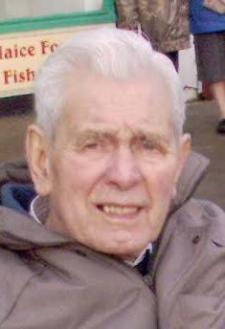
Ken Atkinson

Ken Atkinson was born in Pontefract in 1927, and has lived there all his life. His career encompassed several distinct phases; Bank teller, National Serviceman (Served in the Middle-East, Palestine, Suez etc), Teacher and – labour of love, this – gardener in the exquisite back garden at No.49.

Ken met Lesley, my mother, in the fifties and they were immediately happy together and deeply in love. Then they got married, and have fought like cat and dog for the 54 years since (only kidding!)

Lesley and Ken had a family of three boys, getting it right first time but still adding two spares, and they have also added various cats over the years.

Dad is the man I blame for infecting me with my love of Leeds United, but he was also a dab hand at wine-making, milk jelly, chocolate-covered coconut (better than a Bounty Bar), DIY including bespoke teenage bedroom furniture, Christmas trifles and many other such indispensable talents, so the balance is to his credit. Just.

I would like to thank my Dad for his contribution to my humble blog, and also take this opportunity to apologise most sincerely for that time I got home pissed and was sick down the wall below my bedroom window.

Sorry, Dad.