
Category Archives: Family

Duncan-Smith Appeals Politely To Finer Instincts of “Rich Pensioners”

Duncan-Smith:  "Polite"

Duncan-Smith: “Polite”

Iain Duncan-Smith, having pandered for so long to the Daily Mail-reading citizens of leafy suburbia, gladdening their hearts with his continual broadsides aimed at “shirkers” or those allegedly living the high life on munificent benefits may just have made a tactical error, thereby rousing the ire of the comfortably-off grey vote. Perhaps encouraged by the willing acceptance by the rich elderly of the picture he has so assiduously painted of a benefits dependency culture, IDS has finally dared to think the unthinkable, hinted at just possibly touching the untouchable – even if, as it turns out, this would be consensual touching.

The suggestion of the beleaguered Work and Pensions Secretary seems, on the face of it, quite mild – especially when compared to his scathing rhetoric directed with such concentrated fire at the unemployed, the disabled and other “benefit dependents” (especially if they dare to have – horror of unjustifiable horrors – a spare bedroom!) He has only said, in a really quite wheedling, come-on-now-you-chaps sort of tone, that the “wealthy elderly” might like to do their bit and return some of the universal freebies currently available on grounds of age alone – and regardless of what might be piled up in the bank. He would, he offered, “encourage” people who do not need this type of financial help to “hand it back.” Not exactly, on the face of it, a draconian move – but it seems likely that certain Disgusted of Cheltenham types will feel betrayed by the Minister, despite his carefully-couched and indeed almost pleading remarks.

The coalition government have, up to now, been fastidiously careful not to rattle the cage of a section of society well-known for its mainly Conservative leanings. It seems likely that any dent in this traditional groundswell of support could have disastrous consequences for the Tory Party’s chances of remaining on the political map come 2015 and election time. Even now, with this hesitant suggestion of self-sacrifice for the old and rich, IDS has been quick to provide reassurance that there are no plans to introduce a means-test to exclude wealthier pensioners. What Duncan-Smith is appealing to is the theoretically noble spirit of the rich: come on, guys, let’s play our part and show those nasty little oiks down at the bottom of the pile just what the Dunkirk Spirit is all about. The thing is, he may have misjudged the mood.

I only heard one caller to a late-night BBC Five Live chat show debating this story. That was largely because this one chap was so irate, so indignant, that it proved extremely difficult to shut him up long enough to cut him off without appearing terribly rude to a nice old man. The level of animosity generated by this single outraged pensioner was a marvel to behold – it was only radio, but you could almost hear the veins in his temple throb. I was quite worried for his health, and the presenter seemed loath to provoke him further, lest he should bring on apoplexy. If that caller was in any way representative of his wealthy co-recipients of government largesse, then it could turn out that IDS has had another Bad Idea. It may be an old and fairly wizened tiger he has by the tail, but the teeth and the claws would appear to be in full working order and ready to turn on the hand that’s been feeding them.

The worrying thing (as far as this citizen is concerned) is the marked contrast in tone and approach, depending on whether IDS is imposing swingeing cuts on people whose incomes are already stretched to snapping point, or making sweetly suggestive noises about how noble it would be to forego the £300 winter fuel allowance when you have £150k in the bank. And really, the contrast could hardly be more marked, and therefore it could hardly be more repellently disgusting. The clear implication behind such radically different ways of dealing with different sectors of society is that the government view of those disparate groups is polarised to such an extent that one might almost doubt we are talking about members of the same species. The rich are to retain a choice over whether their income should remain at a level far in excess of their needs – even if a proportion of that income comes from an over-stretched welfare budget that is already pushing people – working people – into reliance on food banks. The poor have no such choice. Stringent measures are being taken, and the Untermensch at the bottom of Society’s league table can like it or lump it. There is a nasty assumption going on in Tory heads that they can trust “our sort of people”, but that the peasants have to be kept in line; give them an inch and they’ll take a bally mile, old boy.

This attitude pervades our current national mindset; even to the extent of sparing the rich the visitations of Justice when they’ve been naughty – if they happen to be well enough placed to make reparations. If two people are caught out in the same level of benefit fraud – for instance – and one can afford to repay the whole amount they’ve diddled out of the state, but the other can’t; guess what happens. It is open for the decision makers to spare the person who can repay any actual prosecution and probable criminal record. The one who can’t repay within the time limit stipulated – it’s off to court with you, and a blot on your record that will dog you for years – and you still have to pay the money back, out of whatever pittance you have left. And yet the crime is identical. That’s the only definition you’ll ever need of unfair, unjust and a travesty of the equity of treatment that should be any government’s minimum aim. It’s happened under successive administrations of whatever persuasion, and it’s a blot on our notion of fairness.

It may well be that IDS has committed a gaffe here, but equally it’s possible that, on sober reflection, the elderly rich will decide that they aren’t after all being threatened with imminent penury. And unwilling as I am to give much credit to a Minister with such an appalling record on his treatment of those who can’t fight back, I actually think this is something of a tiny step in the right direction. It is time the wealthy did more to show that they share the responsibility we all have to get out of this mess. I just wish that there wasn’t so much carrot on the one hand, and so much stick on the other.


Demand a Public Enquiry Into 1300 Deaths After Atos Medicals: Petition, Please Sign and Share

Image

Iain Duncan-Smith: Arrogant, contemptuous and out of touch

The petition calling upon Iain Duncan-Smith to instigate a Public Enquiry into the conduct of Atos, with particular reference to the appalling figure of 1300 deaths after Atos “medicals”, has so far attracted 4,346 signatures.  That’s not a bad start, but much more is needed.  YOUR support, and YOUR willingness to help network this petition could be vital; if a Public Enquiry could be brought about, Atos would be well and truly under the spotlight and it’s possible they may be forced to change their way of working.  It’s not over-stating the case to say that this could save lives.  YOUR signature, YOUR support could actually SAVE LIVES.  It’s that vital.

An Enquiry would seem appropriate in any case, for an organisation which has been branded “Not fit for purpose” by the British Medical Association, and which has itself recently issued a wheedling apology to the people it has wrongly found fit for work. The apology is aimed at the survivors of the Atos experience, you understand. Sadly, it is too late to apologise to the 1300 who have died.

The petition I’m asking you to sign can be accessed here. Please click the link, sign the petition, and share it as widely as possible. Share this article too, and follow this blog. It’s all about networking and it all helps  Just maybe, if things go well, we can make a difference. A lot of people are out there, counting on your support to start some sort of change for the better. Help them, in memory of the 1300 who have paid the ultimate price for official incompetence and callous disregard for how human beings are being treated.

Iain Duncan-Smith treated a previous petition started by Dom Aversano, calling on him to do as he said he could and live on £53 a week, with the utmost arrogance and contempt, dubbing it “a stunt”. This is the measure of the man’s utter disregard of public opinion, or indeed anything that doesn’t help advance his own malicious agenda.

Don’t let him get away with it again.  Become pro-active.  Make this man see that the voice of the people will not be ignored.  Sign and share, and make a difference today.

Please.  Share If You Care.

Demand a Public Enquiry Into 1300 Deaths After Atos Medicals: Petition, Please Sign and Share

Image

Iain Duncan-Smith

The petition calling upon Iain Duncan-Smith to instigate a Public Enquiry into the conduct of Atos, with particular record to this appalling fatality rate has so far attracted 4,346 signatures.  That’s not a bad start, but much more is needed.  YOUR support, and YOUR willingness to help network this petition could be vital; if a Public Enquiry could be brought about, Atos would be well and truly under the spotlight and it’s possible they may be forced to change their way of working.  It’s not over-stating the case to say that this could save lives.  YOUR signature, YOUR support could actually SAVE LIVES.  It’s that vital.

An Enquiry would seem appropriate in any case, for an organisation which has been branded “Not fit for purpose” by the British Medical Association, and which has itself recently issued a wheedling apology to the people it has wrongly found fit for work. The apology is aimed at the survivors of the Atos experience, you understand. Sadly, it is too late to apologise to the 1300 who have died.

The petition I’m asking you to sign can be accessed here. Please click the link, sign the petition, and share it as widely as possible. Share this article too. It all helps, and maybe if things go well, we can make a difference. A lot of people are out there, counting on your support to start some sort of change for the better. Help them, in memory of the 1300 who have paid the ultimate price for official incompetence and callous disregard for how human beings are being treated.

Iain Duncan-Smith treated a previous petition, calling on him to do as he said he could and live on £53 a week, with the utmost arrogance and contempt, dubbing it “a stunt”.  This is the measure of the man’s utter disregard of public opinion, or indeed anything that doesn’t help advance his own malicious agenda.

Don’t let him get away with it again.  Become pro-active.  Make this man see that the voice of the people will not be ignored.  Sign and share, and make a difference today.

Please.  Share If You Care.

Ingenious Suggestions Invited

ImageSo, I’m writing this book.

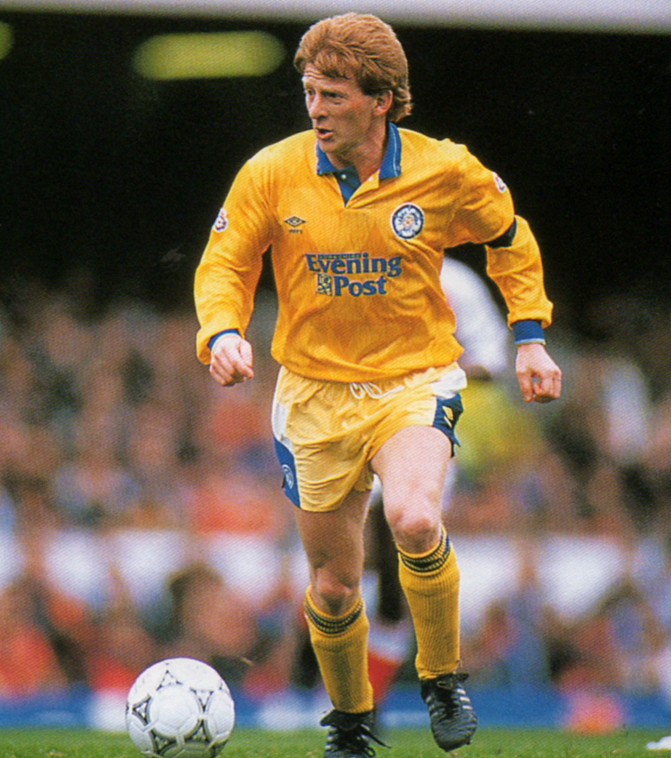
It’s going to be about my team, Leeds United, and how the club have accompanied me on the highs and lows of my life, giving me misery when I’ve been at my happiest, and more misery when I’ve been down. It’s been done before, but every fan’s story stands alone and is unique in its way. Football affects us all differently, and we all react in an individual way to the slings and arrows of outrageous misfortune that the game visits upon us. I started relatively late watching Leeds, and it was all my dad’s fault when I finally got round to it. Thanks, Dad. I think.

Really, I wasted the first 13 years of my life farting about watching old films and reading Biggles and Billy Bunter books, when I could have been watching Revie’s heroes stomping all the opposition into submission, and winning the occasional pot along the way. Instead of seeing us win our solitary FA Cup, I was reading a poem out loud at a Music Festival in Ponte, finishing runner-up in true Leeds United style. Instead of watching us take two league titles, I was being a bookworm and dreaming of a career as an astronaut. Talk about a misspent youth.

I finally started watching Leeds in April 1975. Revie had gone to his ill-fated stint as England boss. Big Jack had gone. The great days had gone too, although that wasn’t apparent at the time. Leeds were on their way to the European Cup Final, and my first game was a 0-2 defeat to Liverpool four days before I saw us beat Barcelona 2-1 in the European Cup Semi, First Leg, Cruyff, Neeskens and all. So, fittingly it was Billy Bremner who gave me my first Leeds goal, rocketing a shot into the top left corner in front of the South Stand as I watched stood precariously on my milk crate in that weird shelfy bit halfway up the Lowfields Stand. I still have the commentary of that goal as a ringtone on my iPhone. Fantastic.

And the rest is history; my history and the downs and ups of Leeds United FC over the subsequent 38 years to date. I hope you’ll buy the book, when it appears, and read more of my memories, interspersed with various rants here and there about how the game was, is and (I’m afraid) will be.

The thing is – I really need a title. I’m a bit stuck there, call it sub-editors’ block. The actual book is coming along nicely, and I think a lot of Leeds fans will empathise with what’s contained between the dust-covers – but I’m damned if I can think of a title for the front. Hang on – “The Damned United”?? Hmmmm, ideal – but I have the feeling it’s been done.

I would really appreciate some suggestions. If I end up using one of them, I will happily credit the owner of the idea on the inside front cover, as you do with proper books. And I’ll furnish a complimentary copy also, so you don’t have to wait for it to appear in the bargain bins for 99p. Can’t say fairer than that.

Honestly, I’m fresh out of original, snappy titles. Please help. As Brian McDermott says, we need to sing Marching On Together, and really mean it, suiting actions to words – so your support and inspired suggestions would be right in line with that Leeds United MOT spirit.

I look forward to some brilliant ideas, thanks in advance.

Capital Punishment – It’s Not Quite As Simple As It Seems

ImageIn the wake of recent atrocities abroad, and our own tragedies here in the UK, we can sadly reflect that the gap in between these appalling stories seems to grow ever shorter, as we look ahead gloomily and wonder: whatever next? That the proliferation of different types of news media is quite probably giving a skewed picture of how common these calamities are, is pretty cold comfort. Bad things are happening out there, all the time it would seem, and the world doesn’t feel a particularly safe place to be.

Another effect of rolling 24-hour news stations and the exponential growth of social media is that, as fast as the information comes out to the public, so we – the recipients of all the bad news – are able to give our own instant reactions. All too often this will take the shape of lurid demands for death to be answered with death; the calls for a return of capital punishment grow more vociferous with every awful case that hits the headlines. Facebook pages will see a rash of images, prominently featuring the symbolic noose and demanding support for the view that the latest culprit should face the ultimate penalty. Feelings run high; the anti-hangers are just as passionately convinced as those who shout “Bring back the rope”, and the debate waxes hot and emotive.

Perhaps the most emotive argument put by the pro-hanging brigade runs as follows: If it were your son or daughter who was the victim of the latest murder or rape – wouldn’t you want the culprit to pay with his or her life? My answer to that tends to be an honest “yes”. If my daughter were to become a tragic statistic, I’d certainly want to kill the perpetrator myself; I believe this to be a normal human reaction. But it is also the reason why the relatives of victims don’t sit in judgement of those accused, and aren’t responsible for deciding the penalty that the law shall hand down. Justice requires dispassionate and impartial appraisal of the facts and circumstances, something that would surely be beyond the ken of anybody personally involved or actually bereaved.

I’ve tried, when defending my anti-capital punishment stance, to explain this distinction, but I’m usually accused of fudging the issue. But what if we were to put the opposite or reciprocal situation? Imagine this. Your son or daughter is accused of a murder, and the evidence against them is incontrovertible. You see them convicted, you watch in horror from the courtroom as the judge dons the black cap and pronounces sentence of death upon your flesh and blood. You, a lifelong proponent of capital punishment, a vociferous campaigner for the retention of the rope, see your offspring led, terrified and weeping, down to the cells to embark upon the wait that will end with a walk to the gallows.

Time goes by. Legal avenues of appeal are exhausted; pleas for clemency are entered, to no avail. Justice must take its course. You’re on record as enthusiastically backing the death penalty; you’ve written strongly-worded letters in the past to the quality press, emphasising the folly of removing this ultimate sanction, this absolute deterrent. Now your own child’s options have run out, and they will be put to death early tomorrow.

At home, you’re up at seven after no sleep. You can’t eat anything. You can’t meet the eyes of your family; they know your views from a lifetime of theoretical but heated discussion. Now that the reality you never foresaw is here, there is no appetite to go over those old arguments again. The clock draws closer to eight o’clock. There is a priest in the cell with your child, trying as best he can to ease these final moments, to give the comfort that you’re barred from providing. As the clock strikes eight, you know that there is a sudden burst of activity, your offspring ordered to bolt down a measure of rum, then arms and legs pinioned, a hood jerked over their head and assisted, blindly stumbling, into the neighbouring execution chamber. Within seconds, the trap has opened; your precious son or daughter has plummeted downwards to a sickening jerk as their life is snuffed out at the behest of the law. Your child is dead.

In your silent living room, you join together with your grief-stricken, heartbroken family, seeking such comfort as you can give each other as the awful reality sinks in. You look at each other, and you see the real victims of capital punishment, of so-called judicial execution. You have just embarked on a life-sentence of mourning one of your own family; killed by the state in the name of justice, condemning you and the rest of your kin, who have done nothing wrong, to years of misery and bitterness. You will live with the effects of this sentence, your miscreant son or daughter is beyond all that, and right now their body is being recovered by the functionaries who saw sentence of death carried out.

Anybody who supports the return of capital punishment should do themselves a favour; think about it in these terms. It’s beyond unlikely that you might ever be called upon to deliver a vigilante-type summary justice to someone who has harmed your son or daughter. But in a country regressive enough to have a law to enable the state to kill, it would always be possible that the alternative scenario could become a shocking reality for you and yours. If you really think you could accept it, as the price of a principle you hold sincerely – then go ahead and campaign away, post those images of a noose on Facebook, demand death for someone you’ll never know. You have more resolve than I could muster.

But I honestly beg leave to doubt it. I frankly defy anyone to say that they could accept becoming a collateral victim of capital punishment, bereaved by the law, forced to live out their own guiltless life in the knowledge that their country killed their child.

Capital punishment is no easy answer. It is a barbaric, horrific and out-dated relic, tainted by the nightmare grisly ceremony of the whole process, something incongruous to a modern society and rightly consigned to the dustbin of history. It must never return.

After Thatcher – What Does Her Death and Her Legacy Mean To Us Now?

Image

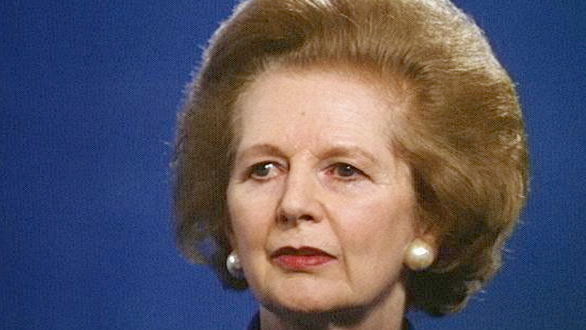
Thatcher: 1925 – 2013

I’ve left it nearly a week after the death of the former Leaderene to chip in with my two penn’orth on her demise, and on the legacy she’s left behind. In that time, I’ve read many and varied accounts of what Margaret Hilda Thatcher’s death means to us, here and now – given that her term of office ended nearly 23 years ago. Those accounts have encompassed widely varying points of view, and have ranged from vitriolic hatred with a joyous celebration of the fact that she’s gone, to real grief arising out of sheer adulation and an evident belief that she was some sort of Messiah for our country.

My own position lies at neither extreme, but somewhere in between – though I will freely admit that I lean significantly towards that end of the scale where people do not have much positive to say about the late former Prime Minister. For what it’s worth, I feel that she was a divisive and damaging influence on the country; indeed such a massive effect did she have on the political and economic landscape, that we simply no longer have the options – in terms of achieving increased fairness in society – that we potentially had before she entered Number 10. She greatly reduced – in fact almost destroyed – the manufacturing industry in this country, advancing the cause of financial services and speculative banking to take its place as the main means of wealth creation. She sold off a large proportion of the social housing stock and failed to invest in construction to replenish it, thus creating a shortage of homes for the less well-off at reasonable rent levels, and forcing a greater reliance on private landlords, with rent levels being set by the market. The long term consequence of THAT was an exponential growth in the Housing Benefits bill, which has led in turn (in these times of austerity) to the perceived need for the Government’s unpopular “Bedroom Tax”. Even though it’s nearly 23 years since Thatcher left Number 10 for the last time as PM, tear-stained but defiant, her legacy affects us to this day, regardless of what they might say who would defend her with the specious “Well, it was all a long time ago.”

Those who still idolise her seem to do so for reasons which would appear not unadjacent to self-interest. Former footballer Paul Parker has blogged:

“Personally, I don’t see why football shouldn’t pay respect to Thatcher. She should be given a minute’s silence at football grounds because without Margaret Thatcher my mum and dad would have never been able to buy a house.”

Presumably, Parker is including in his rationale thousands of others besides his mum and dad, who were also given the opportunity to buy their council houses, many at hefty discounts. But the theme of “well, she was wonderful because, hey – look what she did for me” is a recurrent one among those who remember her most fondly. Parker goes on to say:

“At the end of the day, she was the Primer (sic) Minister of Great Britain so there should be a minute’s silence as far as I’m concerned.”

He doesn’t elaborate on his views as to whether or not Heath, Wilson or Callaghan should have been so honoured (they weren’t) – but I suspect his devotion is to The Lady alone – and good defender though he might have been, Parker is clearly not a cerebral heavyweight.

The other end of the scale is represented (at its extreme) by people who felt moved to dance in the streets in celebration, and contribute to a surge up the music charts for “Ding Dong, The Witch is Dead” by Judy Garland. Yes, I bought it too. Sue me. Rather than simply bemoaning human nature for these displays of jubilation at the death of a bewildered old woman, it would perhaps serve us better to re-examine some other factors lying behind such hatred.

Quite apart from the policies I’ve referred to above, it’s also possible to find fault in what might be termed Thatcher’s unfortunate personal style. Early in her long stint as leader of the Tories, she was taking elocution lessons to modulate her slightly shrill voice, but the effect was of suburban faux gentility, with a teeth-grindingly patronising edge, rather than anything persuasive or statesmanlike. She was ironically at her most effective when she became strident, as she often did when faced with anything other than unquestioning agreement and obedience; then, she simply blew everything but the most determined opposition clear out of the water, terrifying male colleagues with smaller, less hairy balls than hers, and encouraging cowed Soviets to dub her the “Iron Lady”. She was also referred to as “The Iron Chicken” and “Attila the Hen”.

Still others who remember her less than fondly will recall that she was in very real danger of becoming just another one-term PM, and the least popular ever at that, when an opportune military conflict with Argentina cropped up in 1982. The summer of ’81 had seen a wave of riots as her policies saw unemployment rise sharply, seemingly a price her government was willing to pay for the economic direction it was so rigidly set on. Thatcher was in trouble at this point, trailing massively in the polls, but as a result of the “Falklands Factor” she won a landslide in 1983. Then the miners were unwise enough to take her on in the middle of the decade, pronouncing themselves determined to bring her government down. But Thatcher was wise to them; she had learned from Edward Heath’s mistakes in the early 70’s and had stockpiled enough coal to, in effect, starve the pit-men back to work – albeit with much human suffering and collateral damage, not least on the picket-lines at Orgreave and elsewhere. It was a humiliating defeat for miners’ leader Arthur Scargill, but – whatever you may think about him – his prediction that the Tories were out to kill the mining industry, along with its close-knit and long-standing communities, proved to be spot-on. Relatively fresh from subduing Scargill and his followers, Thatcher won again in 1987, and would eventually occupy the office of PM for over eleven years. In the end, it took her own colleagues to remove her in a coup that she ever after thought of as the basest treachery. But the fact remains that she clung on to power despite profound levels of unpopularity, aided in her latter two election victories by what many still see as naked opportunism and the survival instincts of a mongoose.

Some would seek to defend her place in history as the first – and to date only – female Prime Minister. Even I might be tempted to support a historical achievement such as that – if she had done more for women whilst in power. But she didn’t. Her Cabinet composition remained predominantly male, and you can search throughout her record for anything of note to ameliorate the lot of women in society, but you will search in vain. Glenda Jackson, speaking in the so-called “Tribute Debate” two days after Thatcher’s death, conceded the fact that Thatcher was Britain’s first female Premier but added: ‘A woman? Not on my terms.’

When push comes to shove, I would argue that Thatcher’s legacy is an almost wholly negative one; her Premiership saw a massive rise in unemployment, the decimation of manufacturing industry, a bizarre promotion of greed and acquisitiveness as hideously acceptable virtues, a decrease in growth relative to the previous thirty-four years since Clement Attlee became Prime Minister in 1945, a widening of the gap between richest and poorest where that gap had been narrowing somewhat and of course the selling-off of “the family jewels” in the shape of any nationalised industry she could lay her hands on, without sufficient regard to what would happen come the next rainy day. And there have been many rainy days since, but none rainier than the one we’re living through right now, and nothing to fall back on.

Against that, we have the perceived rise in the stock of the UK in the eyes of the rest of the world; she “made Britain great again” – some say. This presumably refers to her determination in recovering a few large pebbles in the South Atlantic at the cost of many young lives, including those of conscript Argentinians who drowned when the General Belgrano was torpedoed as it sailed away from the combat zone. “Gotcha!” crowed the Sun, while mothers of sons on both sides wept. I have to say, I don’t value an enhanced international reputation or the approval of jingoistic nations like the USA – not at that price.

And now we have to pay the cost of her funeral, having already shelled out many thousands in expenses for a one-off recall of Parliament only five days before a new session was due to start anyway. Funeral cost estimates vary between £8m and £14m depending on who you listen to, and how much her successful arms-dealer son Mark is prepared to stump up. He should really be generous – she helped him a hell of a lot. All this furore over money, at a time also when we hear her £6m London town house will not incur any inheritance duty as its actual ownership appears to be vested in an offshore company. Companies, of course, don’t die – and so don’t pay inheritance tax. These are murky waters, and it becomes ever easier to see exactly why so many regard her, and the goings-on around her in life and afterwards, with feelings of antipathy amounting to loathing.

For myself, I’ll be glad when her funeral is over and paid for, and we can all move on – and refocus on the urgent need to get rid of the current shoddy lot. Thatcher is dead; but we’re still living with a society that, in a lot of its negative characteristics can be traced back to the sea-changes she ushered in post-1979. It’s no defence against vilification to say that she left office in 1990, and can’t be blamed for what’s happened since. She created the conditions whereby what has happened since could happen, and she took away a lot of the more benign possibilities that a more sympathetic and caring attitude to investment, social care and collective responsibility in society might have realised. For that, I blame her and her alone.

Ding dong.

Widespread Disgust as the Coalition and Press Lurch Further Down the Path of Herr Doktor Goebbels

Image

The not-so-good Doktor

For some time now a lot of us out here in Leftie-Land have been worrying out loud, and in print, at the direction this Coalition Government are taking. We have concerns over their policies and the way they’re being presented; we have concerns over their rhetoric, directed invariably at sections of society against whom they wish to justify savage cuts; we have concerns about the very language they use, language calculated to stir up hatred in the less intellectually-acute of their supporters, terms such as “shirkers”, “malingerers” and “something-for-nothing culture”. I’ve written myself about the transparent desire on the part of Cameron, Gideon Osborne and their colleagues to divide and rule, and the way in which they’ve spread malicious falsehoods about the targets of their policies, lies that have been eagerly taken up and spread far and wide by the right wing coterie in the Press. I compared the phenomenon of their wilful deceit to the “Big Lie” technique employed by Josef Goebbels for the embryonic Nazi party in the late 20’s and early 30’s. Basically, if you repeat a lie often enough – and the bigger the lie, the better – it will seep into the public consciousness and be accepted. I feel that the Government’s endorsement of this tactic is the fair and obvious conclusion to draw from the way they have relentlessly sought to paint the poor and helpless as a malign, self-seeking and parasitical section of society.

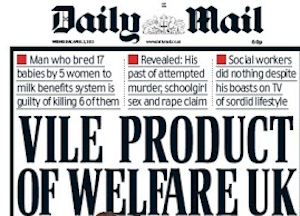
The turn of events this week, though, has taken even the most cynical and suspicious of us by surprise. In a shocking and rather sinister plunge towards the gutter-end of their ideology, the Government and certain sections of the press have decided to use a criminal case which concerns the unlawful killing of six young children as material for a further attack on their hated and hapless targets at the bottom of the economic pile. In the wake of the conviction of Mick Philpott and his accomplices for the manslaughter of six out of seventeen children, the lamentable Mail has – without allowing a decent interval to elapse, indeed hardly pausing to draw breath – launched a bitter front-page broadside against a welfare state which, it astonishingly contended, was at the root of the whole Philpott tragedy. This blatant tarring of all benefit claimants with the brush of a sociopath/psychopath like Philpott predictably and quite rightly brought vilification from proper newspapers and media outlets alike. Scandalous, opportunistic, tasteless, vile, they screamed, accusing a bang-to-rights Mail of making cheap political capital out of the deaths of innocents. Quite so.

Image

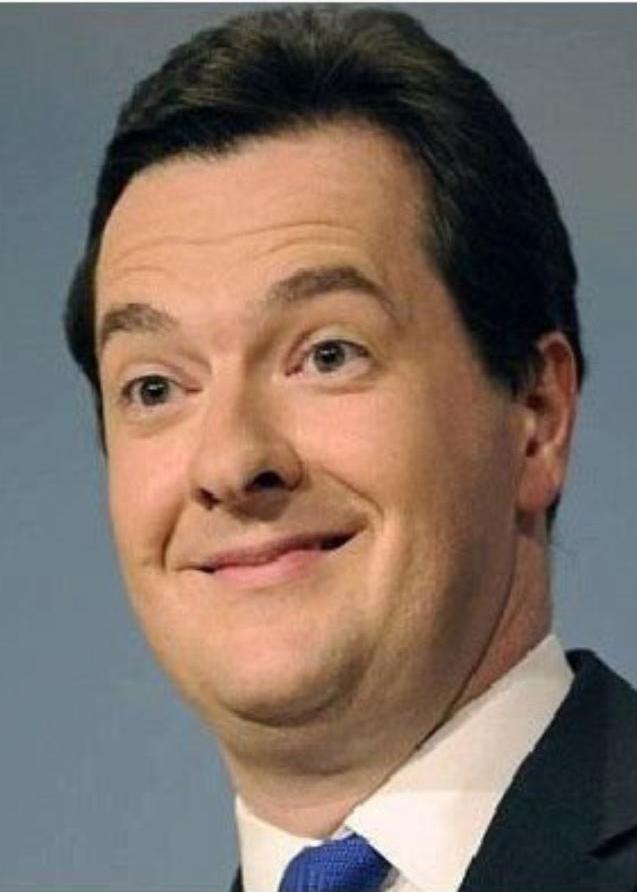
Silly Gideon

But then, whose trotters did we hear, galloping over the horizon as he raced to dump his porcine carcass on this timely bandwagon? None other than Gideon Osborne; failed Chancellor, shameless blagger of disabled parking spaces and determined first-class rail traveller (albeit with only a standard-class ticket.) Such is the measure of this vapid man; his brainless arrogance leads him to believe that what he wishes will naturally come to pass, that ordinary conventions are for ordinary people and not for such bright shining stars as Gideon. Now he could hardly wait to endorse the Mail’s bile-ridden outburst in his haste to appeal to little Hitlers everywhere and further perpetuate – indeed enlarge – The Big Lie. He was swiftly backed by his boss, Cameron, a beleaguered PM whose eggs are now clearly all in one basket. Shocked and horrified, the rest of us were left gaping at the sheer, malevolent viciousness of it; the appalling timing, the unwarranted slur on people who wouldn’t dream of harming a fly, the public-school adolescent nastiness of it. What to do?

Well, some thought they might try a little satire laced with logic, a standard procedure for putting in their place those of arrogant stupidity. By your own arguments, it was forcibly and eruditely pointed out to the Gruesome Twosome, the crimes of Peter Sutcliffe could be laid at the door of the Road Haulage Association; those of Harold Shipman at the feet of the NHS and provincial medical practices everywhere; while the evil-doings of Fred West are to be blamed on private enterprise and aspirational construction workers throughout the land. The effect of all this admirable logic? Negligible at best. Those who are currently on the attack and have the poor, disabled and vulnerable in their sights are in talk mode, with a view to draconian action. They are not for listening. And readers of the Sun and the Mail are likely to listen, sadly enough, only to other such readers – or perhaps to like-minded know-it-alls down the pub.

Image

The Offensive Daily Fail

In the absence of many other practical options, I’ve made my views known to the Press Complaints Commission. I’m not exactly holding my breath for a positive response though, as high-ups at the Mail are also influential in the PCC, so it’s a little bit like complaining to your mother-in-law about your wife’s nagging. But something clearly has to be done; this is not the kind of “politics” that can be taken lying down. The utter, untimely viciousness of it, as well as the blatant opportunism, leaves a rancid taste in the mouth. It’s easy to forget in these alarming times that this is a coalition we have in charge, with – supposedly – a restraining, moderating influence ready built-in as it were. The shocking lack of balls displayed by the Liberals in matters like this and many others will — if there’s any justice* — contribute to their deserved annihilation at the next election. But that’s not going to come soon enough to protect this country from a Tory Party that seems to be diseased at the very top, intoxicated with the sickness of megalomania and determined to visit their own brand of evil on their own chosen targets.

The spirit of Josef Goebbels is alive and well in the corridors of Tory High Command as well as in the editorial offices of our less salubrious newspapers. Those of us with opposing views – those who are resolved to speak out for the helpless and vulnerable – had better make sure we speak loudly and constructively enough to be heard over the brazenly unashamed rhetoric pouring like so much liquid sewage from the lips of Osborne and Cameron. If we don’t, we’ll simply be begging for more of the same, and worse.

*There isn’t; so don’t hold your breath there, either.

I Blame The Parents : Thoughts Arising Out of the Philpott Tragedy

Image

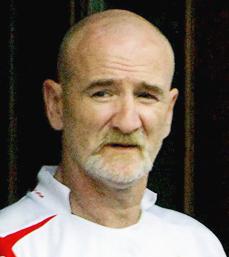
Life sentence: Philpott

I find myself wondering today, in light of the fact that a waste of DNA like prison-bound Mick Philpott is biologically capable of fathering 17 children – and evil enough, aided by his accomplices, to hatch a money-making plan that took the lives of six of them – whether it is now time to reappraise the adoption regulations.  These strange little bits of judicial nonsense currently deny – quite arbitrarily – the chance to adopt for various categories of people who are unable to have their own children.  I’m talking here about the people who are adjudged to be unable to bring up prospective adoptees in the “right” cultural environment, people deemed too old or too compromised in official eyes by relatively mild mental health conditions, even people reckoned to be suffering emotionally from their inability to conceive naturally – and so on.

There seems to be an awful lot of good parenting skills out there being needlessly wasted, while all the time utterly unsuitable people are producing positive litters of children without the first clue of how to bring them up, look after them or contribute in any positive way to their well-being and social/emotional development.   All of this, just because of the accident of being physically capable of reproduction.  We simply can’t afford to waste good parenting skills – they’re all too rare and precious, as even the most cursory glance around us will reveal.

What is the cost of this evident anomaly down the line, in terms of the kind of society members – quite apart from the tragedy of children who don’t survive – that such a crazily-weighted lottery is producing? And meanwhile, let’s not forget, good people with much to give of both love and the example they’d set in bringing up children, are left on the sidelines, wringing their hands as a whole generation of clueless “parents” brings up a succeeding generation in their own repugnant image.

I can honestly foresee a time when parenting will be by licence only; not that I would advocate this as “A Good Thing”.  It would smell uncomfortably like social engineering to me, and I’d want to know a great deal about the machinery involved in any such process.  But can we really carry on as we are?  Talk to any teacher, and you’ll hear a tale of despair when the conversation turns to the contribution of many parents to their children’s disciplinary standards, and to their education as a whole.  Teachers appear currently to be struggling to accomplish the virtually impossible: turn out well-rounded, educated individuals who are fit to take a place in society, with hardly any support or input from the people most intimately connected to those children concerned.  That’s not just a big ask, it’s a massively unfair burden on professionals who can influence only a portion of each day their students experience, for a relatively small slice of that child’s life.

I have a friend who is a teacher; from everything I know of her she’s a very good teacher.  I know she despairs of the role that some parents play in the development of some of her students, and I can quite see why.  How hard is it for her to take, then, when her cousin and his wife are turned down as adoptive parents because – among other bafflingly specious reasons – “We don’t think you’ll get over not being able to have your own.”  Doesn’t that rather rule out anybody who can’t have their own kids?  Who actually “gets over” a blow like that?  And can we speculate on why people who can have their own kids would want or need to adopt?  It all seems extremely illogical, and it’s a perpetuation by default of the damage being done, every day, every week, every month and year by the people who – as a matter of biological happenstance – end up with the job of raising the next generation.

Maybe, ultimately, we’ll be able to put right a few of society’s ills, and perhaps more attention and resources devoted to the education and support of people contemplating parenthood will assist that process.  I really think it would help, and let’s praise to the skies the first government that sees this as a priority and does something about it.  If you think it through clearly, you could hardly imagine a better investment, a safer investment, than money devoted to training and support with a view to producing better parents.  The savings arising out of the consequent reduction in crime, mental health issues, anti-social behaviour and the disintegration of communities would be incalculable.  Good parents are the ideal people for the job of parenting – goes without saying, or it should do.  God speed that happy day when this is recognised and acted upon.

But meanwhile, let’s not waste the resources freely available to us now in the shape of a massive pool of potentially excellent parents – who currently see their urgent desire to love and care for children they’d bring up in an exemplary fashion being frustrated.  Thwarted by officialdom with its petty rules and guidelines, and its limitless miles of red tape.  There’s far too much subjective judgement going on in this whole process, too many petty prejudices being reinforced by intransigent regulations and ill-advised, ill-informed officials.

My friend’s cousin and his wife now happily have their own child – but it’s another, unknown child – unwittingly losing out on a wonderfully loving home – who has suffered by the bizarre decision they were faced with when they applied to adopt.  There was even some suggestion that the woman’s Polish nationality figured in the “rationale” employed by the decision-maker.  That’s absolutely scandalous when we’re talking about a stable, affluent couple who were looking at adoption rather than IVF because of their view that there were so many unloved kids already out there.
Ask yourself, honestly: what better motive than that could any pair of prospective parents have?  Let’s embrace what people like this have to offer, and maybe help save future kids from future Philpotts.  The biggest lesson of this tragic case is that the complex and difficult adoption dilemma is an issue that we absolutely can’t afford to ignore any longer.

How to Wage a War Upon the Poor

This is taken from a “Guardian” comments page – I reproduce it here without comment, as I believe it speaks for itself and needs to be shared as widely as possible – particularly after Gideon Osborne’s attempted snow-job yesterday, and Anne Widdecombe’s appalling hypocrisy and opportunism in her linking of the foul deeds of Mick Philpott to the Welfare State – so please try to get it out there:

Probably the most disgusting thing about this coalition has been their propaganda war against the most disadvantaged people in society. By the deliberate spreading of lies, they have facilitated a systematic assault upon the poor, the sick and the disabled. And they have knowingly misled the public for one simple reason, to enable them to totally dismantle the welfare state.
There are lies, damned lies, and then there are lying Tory bastards.
The welfare state has led to a ‘something for nothing’ culture?
It may be utterly repugnant to hear millionaire politicians who have never worked a day in their life telling us that they are ending the ‘something for nothing culture’, but it’s also utter bollocks. Only 2.5% of the total welfare budget of £200 billion actually goes on unemployment, whilst the vast majority of unemployed claimants have worked, and paid taxes, for years and are now on benefits due to redundancy, sickness, disability or having to care for someone. Millions more are receiving benefits due to poverty wages. The Welfare state is actually a massive state subsidy to business which enables it to pay poverty wages and charge exorbitant rents.
Living on benefits is a lifestyle choice?
Only 0.1% of benefit claimants who have claimed for 10 years or more are actually unemployed. Less than 5,000 people, out of over 9 million 16-64 year olds who don’t work, have been on Job Seekers Allowance for more than 5 years. Less than 0.1% of the 20 million working age households have 2 generations that have never had a permanent job. Despite strenuous efforts, researchers have been unable to find any families where three generations have never worked.
People won’t work because benefits are too high?
In 1971, JSA equalled 20.9% of the average wage. Today, it is worth 10.9%. These people are living in poverty. There are 8.5 million people receiving benefits in this country. There are more people IN WORK who get benefits than not working. The majority of all housing benefit claimants are IN WORK. 6.1 million people classed as living in poverty are from households IN WORK.
People on housing benefit live in mansions?
Our newspapers continuously bombard us with these stories. There are around five million claimants of Housing Benefit; of which there were five families who received over £100,000 per year, all living in central London. The average award of Housing Benefit is approximately £85 a week. Only 3% of families received more than £10,000 a year support, and 0.04% received more than £30,000 a year. And no-one ever mentions that housing benefit goes straight to the Landlord and not the claimant.
And those large families screwing the taxpayer? There are around 130 families with 10 children and only 10 families with 12 children IN THE WHOLE COUNTRY who are on benefits.
Benefit cheats are bankrupting the country?
Benefit fraud amounts to about £1.5 billion a year, less than 1% of the entire budget. To put this in perspective, the bank bailout equalled 1,000 years of benefit fraud. Meanwhile, £1.3 billion gets underpaid each year and a further £16 billion goes UNCLAIMED every year.
We can no longer afford the welfare state?
So who is really bankrupting the country? Well, the richest 1,000 people now possess £414 billion between them, a sum more than three times the size of the entire UK budget deficit. The richest 1% of the population are estimated to possess wealth of about £1 trillion. The richest 10% control wealth of about £4 trillion. The Quantitative Easing programme has increased the personal wealth of the UK’s richest 20% by enough to pay for Job Seeker’s Allowance for the next 100 years.
The people of this country are being shafted, but instead of the blame being directed at the real culprits, the rich, it is being aimed at the most vulnerable, the poor, with our own Government shamelessly leading the way.
And every one who believes their bullshit should hang their heads in shame.”

There’s a storm coming…

Rich Hammond 01/04/13

Guest blogspot: BELT! Why a Black Eye Reveals More About Those That View You – by Hilary Robinson

(This article first appeared in The Huffington Post on 5th February 2013.  Hilary’s Huffington Post archive can be found here.)

In that great grand slam of life you could say I’ve achieved something Andy Murray hasn’t.

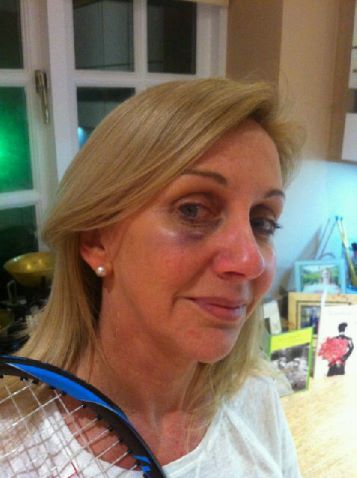
It wasn’t a particularly vicious assault, but last week I accidently, and forcefully, whacked my cheekbone with my own tennis racquet and, as a consequence, turned my blue eye black.

Image

Ace: Hilary’s shiner

Interestingly had I bruised any other part of my body the injury would probably have been deemed socially acceptable. But facing up to dinner party guests, mourners at a memorial service, the supermarket cashier as well as staff and children at a school visit in the week following the injury has enlightened me to a broad spectrum of colourful reactions.

So here, for those, forced to looking at strangers and friends through a “periorbital hematoma” or “shiner”, is the BELT – the Black Eye Litmus Test.

Black:

To some a black eye smacks of domestic abuse. It’s that dark, murky badge that screams out “victim!” It is the ultimate symbol of repression. It is the last taboo. Needing a new kettle my daughter wryly advised me to go to the local neglected town because “You’ll fit in well there mum.”

Sadly, a pupil with whom I had been working on an author workshop just days after my fate said “My mum gets them.”

Red

“I hope you hit him as hard as he hit you.” joked the supermarket cashier as he helped me bag up the frozen peas. Once again I explained how lunging for the same ball as my backhanded partner meant that if I hadn’t hit myself he might have hit me and then he would have been deemed the abuser.

Then the cashier turns it all into a joke and tells me I should be buying “black eyed peas” and “if you’d hit your nose you wouldn’t have to buy a red nose for Comic Relief.” Really funny that. Worth tweeting.

Yellow

“What have you been doing?” said a knowledgeable friend who, as an ardent squash player, frequently suffers the same fate. This is the sensible, enlightened response. It comes from those that have a broad appreciation for the range of accidents that can lead to the black eye and, in doing so, adopts an objective, enquiring, sincere approach.

Green

“Mine was worse than that.” No matter how bad your black eye you will always see the green eyed monster who claims to have suffered a worse fate, whose eye completely closed up for a month like when they “headbutted the dog by accident”, who “feared for their sight” and then suffered “recurring migraines” and has “been on the sick ever since.”

White

Like the colour of lillies this is the sympathetic, protective male keen to make amends for his primal kind effectively yelling out “We’re not all like that!” In my case this turned out to be a Greek waiter, who made an extra special effort by topping up my drink, “free of charge” or the lovely gentleman who told me to “hold on right there” when my satnav sent me into the gutter, disappeared for ten minutes, only to return with a photocopied map.

Opaque Rose/Pink

These are the people who talk to you while trying to pretend they can’t see anything is amiss. They tend to look at the white eye politely, occasionally glancing across to the black eye, then make an extra special effort to put a positive spin on anything that’s said, even the economy or Andy Murray’s loss.

But the best reaction and final word has to go to my dear Nigerian friend, Nick, who joked… “the colour just don’t suit you Hilary, leave the black eyes to me.”

Oh, and just a footnote; while everyone in my dark eyed moments seems to have felt sorry for me – I’ve felt sorry for tennis balls ever since.

Oh, and another footnote, just for the official social services record, my husband was at work the day it happened – but I did use his lethal tennis racquet. Zemblanity.

Hilary Robinson

Hilary Robinson was born in Devon and brought up in Nigeria and England. She is the author of over forty books for young children of which her latest, The Copper Tree is the first in a series of accessible picturebooks that tackle challenging social issues as they affect children such as bereavement, prejudice and adoption. She is also a freelance network and regional radio producer for the BBC having produced Aled Jones with Good Morning Sunday for Radio 2 as well as specialist documentaries for the network. Hilary is also a regular feature writer for regional and national publications. 

You can find out more about Hilary here