Category Archives: Football

Mirror, Mirror on the Wall, Who’s the Most Hypocritical “Leeds Fan” of Them All? – by Rob Atkinson

Image

Mark “Ker-CHING” Byford: one-time Leeds fan, perennial grasping hypocrite.

Whichever club you follow, you like to think that your fellow fans are, on the whole, jolly fine fellows – lads and lasses all. Equally, you hold dear the notion that the fans of “that other lot from ovver t’hill” (Man U, for any Leeds fan worth his salt) are a ridiculous bunch, amusing and repellent all in one, fodder for those of us who revel in laughing at the Pride of Devon.  This mind-set prompted me to write about Man U’s Top Ten Embarrassing Celebrity Fans, an article which was, I’m pleased to say, widely read and well-received. I’ve a Spurs version in the pipeline; I do like to pander occasionally to my own petty prejudices.

Every now and then, though, you come across such a repellent example of loathsome slitheriness among the ranks of your own beloved club’s supporters, that you just have to hold your hands up and say: “It’s a fair cop.  We’ve got a right one here.”  It’s happened to me, today.  I’m not talking about the vile Savile (indeed, I have a picture of him in a Liverpool FC shirt).  I’m talking about someone alive, kicking and doing very nicely for himself indeed, thank you.  Ladies and gentlemen, I give you Mark Byford: former Deputy Director of the BBC, new author, Leeds United fan, expenses claimant extraordinaire and enthusiastic proponent of what can best be described as the “Byford Brand” with a view to the ongoing feathering of his own already plush nest.

Mark Byford featured on BBC Radio Five Live just this morning, eager and ready to be interviewed about his first book which was inspired, so we’re told more than once, by a shaft of sunlight shining on the name of a soldier, Larry Byford, on a war memorial in America.  The coincidence of names led Mark Byford to research and write a book about the American Byford, fallen in conflict in Vietnam, along with the wartime experiences of his own father Lawry Byford.  A neat idea and doubtless quite moving.

The wisdom of Byford in sticking his head above the parapet at this particular time, though, might be questioned by some who feel he still has a little embarrassment to live down.  Mark Byford, after all, is the man who walked away from the loss of his job at the BBC with twice his contractual severance entitlement, so that he trousered a cool £1 million on top of his extremely generous final salary pension entitlement.  Perhaps he felt that this sensitive issue would be overlooked in the eagerness of the interviewer to help him promote his book.  Big mistake.

Victoria Derbyshire is one of those interviewers whose sweet and demure exterior belies her underlying instinct to harry her prey; at times like these she is more polecat than tabby.  In the past she has upset the likes of Jamie Oliver with her remorseless style, and when she interviewed her own Five Live boss about why he wasn’t moving to MediaCityUK in Salford when the station moved in Autumn ’11, The Guardian said: “Derbyshire’s grilling of the station’s controller Adrian Van Klaveren made Jeremy Paxman’s infamous interview with (BBC Director General) Mark Thompson look like a vicar’s tea party.”  Now, she sank her teeth into Mark Byford’s pale and exposed hide – and she simply refused to let go.  The basis of her line of questioning was simple: “Do you think you deserved your £1m pay-off?”

Try as Byford might, he was unable to shake Derbyshire from this persistent snap, snap, snap onslaught which in the end left him bloodied and bewildered as she watched narrowly from a neutral corner, fangs still bared, ready to renew her attack at any time. His quandary was clear: he didn’t want to be seen to claim he deserved the money, but he didn’t want to admit that it was undeserved, unjustifiable and contextually grotesque. The word “context”, ironically, was one coping strategy he brandished again and again, though with an amateurish petulance that defeated any attempt at calm or cool.  He was simply out-thought and out-fought, run to ground, his desired cosy “book-plug” interview metamorphosed before his horrified eyes into a pitiless exposé of his self-seeking greed and arrogance.

It was with mixed feelings that I listened to this interview.  At first, I didn’t identify the author being invited to promote his book with the grasping executive walking off into Austerity Britain with his £1 million wad.  I wasn’t even sure why I was taking against him so – perhaps it was the unctuous tone with which he spoke of heroism and duty, whilst all the time emphasising the hooks and links a writer likes to employ to make his work more readable.  Only when Ms Derbyshire switched from plug facilitator into attack mode, did I make the connection – and then I just had to marvel at Byford’s willful resistance to the notion of “moral wrongdoing”, subtly advanced with all the finesse of a battering-ram by the merciless Victoria – as opposed to strict legal and contractual rights and wrongs.  And, blindly, blunderingly, he kept on using this word “context”.  Millions out there must have been wondering – if context is the thing, then in the context of austerity, painfully slow national recovery and widespread suffering, especially at the unregarded bottom of the pile – how on earth can such an obscene level of severance pay, on top of a sleekly fat pension, possibly be justified?

Which is what, time and again, from every direction, try as Byford might to avoid it, he was being asked – and refusing to answer.  Because there is no answer that amounts to justification.  And it turns out that there is much more for Byford to justify, if he possibly could.  A litter of extravagant expenses claims drifts in his wake, going back years – the man has a sleaze quotient an MP might envy.  His new book uses the loss of an American soldier in a long-ago conflict as its prime mover.  I wonder if the soldier’s family will benefit from its sales?  I do hope so.  The e-book edition – which is, after all, just a stream of bits and bytes flowing smoothly from the ether, production overheads negligible – is ambitiously priced at an eye-watering £17.72.  Clearly, somewhere along the line, Byford is still feeling the pinch – or maybe he feels that the Byford Brand commands a unit price of that order, for a first book too, simply because, well, it’s the Byford Brand.

When Lord Birt, outgoing Director General, favoured Byford as his successor, the Governors in their wisdom chose Greg Dyke instead.  Our hero put a brave face on it, and joked away the pain, claiming still to be friends with the man who pipped him.  “He supports Man U and I support Leeds United, and that’s the biggest problem we will have – he supports the worst team in British football and I support the best.”  All good knockabout stuff, and a laddish tone calculated to appeal to the LUFC fan in the street. But for once, I think the BBC got it absolutely right to prefer the Man U fan to the man who claimed as far back as Leeds University days to follow Leeds United – though acquaintances detected no passion for the club in him and suspected that it was a front for his research into criminality among football fans.  As with so much of his subsequent life and career, it would seem that – even back then – Mark Byford was mainly concerned with what was best for Mark Byford and his nascent Brand.

He’s frankly not the sort of bloke I care to have associated with my beloved Leeds United AFC – and nor is he the sort whose pockets I’d wish further to line by purchasing any book he writes.  I happen to think that the singularly undeserving and opportunistic Mark Byford has done quite well enough for himself already.

13 Years Ago Today, Leeds United Edge Out Liverpool With “The Duke” At His Best – by Rob Atkinson

Image

The bare facts hardly do credit to a stunning afternoon at Elland Road on November 4th 2000.  An injury-hit Leeds United faced old enemies Liverpool in Premier League game which saw Liverpool take a two-goal lead, get pegged back at 2-2, take the lead again – and then finally succumb 4-3 in the archetypal see-saw football match.  Leeds had won, and Australian centre-forward Mark Viduka had gone one better than the traditional striker’s dream of a hat-trick in a high profile victory.  Viduka – the Duke – had scored all four, single-handedly breaking the hearts of the Reds whose manager Gerard Houllier was left speechless with shock and disappointment.

In truth, Liverpool were well-set for victory as they cruised to an early two goal lead through Hyypia and Ziege, taking advantage of slapdash Leeds defending.  The home team were weakened by the absence of regulars like Nigel Martyn, Lucas Radebe, Harry Kewell, Danny Mills, Michael Duberry and Michael Bridges.  Bit-part player Jacob Burns started and Danny Hay would come on as one of only four fit subs – this was very much a patched-up United side.  After such a start heads might have gone down in the Leeds ranks, but Alan Smith was still up for the battle, chasing every cause and closing down in his unique combative style.  It was a typically aggressive piece of Smithy harrying that saw Leeds back in the game after 25 minutes, as he blocked a Ziege clearance and saw the ball bounce right into the path of an onside Viduka in the Liverpool area.  No further invitation was needed; the burly Aussie executed the most delicate of chips to beat Reds keeper Sander Westerveld all ends up.  The teams went in at the interval with Liverpool ahead 2-1 – but some of the momentum was back with Leeds.

Shortly after the start of the second half, United were level – and this was a goal to remember.  Gary Kelly broke swiftly down the right, looked up and delivered a pinpoint cross which Viduka met with a towering near-post header, sending the ball arrowing high into the net for a fantastic equaliser.  The effervescent Smith then missed a clear chance to put Leeds ahead, and that looked a costly error when Liverpool surged back in front just after the hour.  Berger crossed from the left to find Vladimir Smicer who cleverly worked himself the space to slide his shot past a despairing Paul Robinson and into the net.  A bitter blow for a makeshift Leeds side that had hauled itself, against long odds, back into the game.

Many indeed would have expected Leeds to crumble at this point, but to their eternal credit they stayed competitive and kept fighting.  The next goal was always going to be crucial; a fourth for Liverpool would certainly have finished Leeds off.  However, the game’s sixth and best goal saw Mark Viduka complete his hat-trick with a finish of amazing artistry for such a big man. Former Evertonian Olivier Dacourt saw a powerful shot blocked by Ziege, but managed to feed the rebound first time through to Viduka at the right edge of the penalty area.  Most strikers would have tried to get a shot off, but Viduka, spinning unpredictably through 360 degrees, threw off the attentions of the Liverpool defence and finished sublimely into the far corner.

At this stage, the overjoyed Leeds support would probably have settled for a draw that had, at one point, looked like being more than they could dream of.  But Viduka was not finished yet.  Only three minutes later, he finally ended Liverpool’s chances with a fourth goal which, it must be said, owed as much to a generous linesman as it did to the Duke’s skill and lethal finishing.  The Leeds striker was surely offside as the ball reached him yet again in a threatening position inside the Liverpool area – but he didn’t hang around to see if a flag went up or a whistle blew.

In the event, neither happened and Mark Viduka produced yet another delicately-crafted finish, the ball arcing beautifully over a committed Westerveld and dropping into Liverpool’s net.  4-3 now and pandemonium as Leeds led for the first time, as unlikely a scenario as you could possibly have imagined after only 20 minutes of this incredible game.  Liverpool fought to the last, but so did Leeds to hang on grimly to their hard-won advantage.  Dacourt finished the game barely able to move, the Liverpool players finished it hardly able to believe what had happened to them.  The contrasting body language of the jubilant United manager O’Leary and his crestfallen Liverpool counterpart told the story of this result and of a game that will always be a part of the folklore surrounding this long-standing rivalry.

Liverpool had fought gallantly and lost.  Leeds had defied the odds and their injury toll to win.  But the undoubted hero of the hour, thirteen years ago today, was beyond any shadow of a doubt the United centre-forward Mark Viduka.  The Duke – Leeds United legend with his own permanent place in Elland Road history.

If Leeds United Don’t Go Up, Let’s Hope Norwich City Go Down – by Rob Atkinson

Image

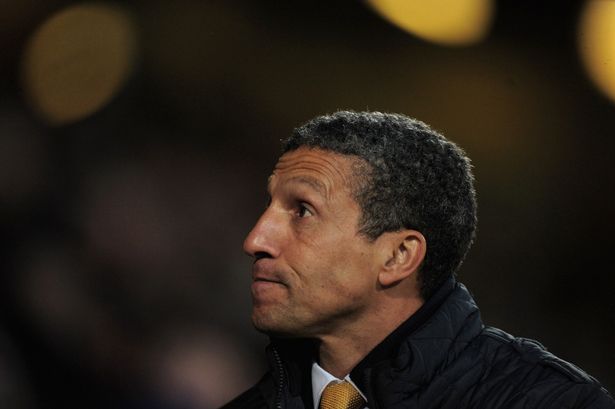
Hughton – that sinking feeling

Over the last few seasons of Leeds United frustration and mediocrity, one thing at least has become clear.  The quality of the scavengers circling to take advantage of our misery has declined since the start of our fall in 2003.  A decade ago, it was the likes of Tottenham queuing up to take stars and starlets off our hands at a price cut to reflect the desperation of our position.  Latterly though, it’s been little Norwich, a club that shared a common lift-off platform with us as we ascended out of the League One murk.

Norwich started that season with a sobering 7-1 home defeat to Colchester United. They promptly sacked the clueless Bryan Gunn, nicked Colchester’s managerial prodigy Paul Lambert and never looked back.  In the reverse fixture, Norwich won at a canter, went on to win the league and, accompanied by second-placed Leeds, prepared for Championship football.

There, the paths of Leeds and Norwich diverged.  Leeds went the austerity route under not-so-cuddly chairman Ken Bates, failing to invest in the squad and selling off their crown jewels to confirm their status as perennial under-achievers since 2010.  Norwich, on the other hand, seized the second tier by its short and curlies and breezed their way to a second successive promotion, gaining the promised land and munificent riches of the Premier League, unknown to them since the time of Delia’s tired and emotional exhortation to their fans for some sort of atmosphere.  And soon, the plundering of LS11 would start.

After a reasonably comfortable passage in their first season back at top level, Norwich set about planning a consolidation of their elevated status. Strangely, to some eyes, they appeared eager to accomplish this by recruiting – over time – the League One midfield of the club that finished runners-up to them at that level in 2010, Leeds United.  The first import was Bradley Johnson in July of 2011.  This created few ripples at Elland Road, but the next two similar transfers out were bombshells of seismic effect.  First home-grown hero Johnny Howson made the trip to East Anglia, in January 2012.  Howson’s local boy credentials, his untiring efforts in midfield and  his knack of popping up with a vital goal – notably at Carlisle in a play-off semi-final and at home to Bristol Rovers when his equaliser restarted the promotion express – were warmly appreciated by the Elland Road crowd.  Howson was Leeds through and through, and his loss was keenly felt.

Then, in July it got worse still.  Robert Snodgrass was no local boy – but he was the latest in a traditional line of Scottish talent to make a name at Elland Road, following in the illustrious footsteps of Bremner, the Grays, Lorimer, Jordan, Strachan and, erm, George McCluskey.  Snoddy was a real talent – he even left us with fond memories of a League Cup defeat to Liverpool when his treatment of a hapless Reds defender was so disrespectfully contemptuous that the lad had to be taken off with twisted blood.  His goals were regular and spectacular – Snoddy was a 24-carat Leeds hero.

Norwich City fans were catching on by this time to the regular humiliations their club were visiting upon once-mighty Leeds – and they were revelling in it, weren’t they just? Now, any given transfer window brought a barrage of tweets from Canaries fans, with the hashtag LUFC and a mickey-taking 140 characters wondering who the next import from Elland Road would be.  They were making hay while the sun shone and loving it.  Little Norwich in a position to humble former European giants!  It was unprecedented, the stuff of bumpkin wet dreams.  Norwich had hit on a rich seam of transfer success as they picked over the twitching corpse of each successive failed Leeds campaign.  They had become carrion Canaries, feeders off a bigger but seemingly moribund football club.

By last season, things appeared to have reached the stage where Norwich would take a player from Leeds, not because they needed him, but just because they could.  They swooped again in the January window for the disaffected Luciano Becchio, our top scorer, fobbing us off with the ineffectual Steve Morison and an insultingly small cash adjustment. Becchio went on to sink almost without trace at Carrow Road, Morison was a disappointment at Leeds and the whole deal was a failure, of benefit to neither party.  But the Norwich fans crowed anew.

Now we have the crazy and repellent situation where, every time a promising lad emerges at Elland Road, the gallows humorists dive out of the woodwork with increasingly weak jokes about him being destined for Norwich City, or more likely Norwich City reserves. These jokes are feeble and unwelcome – but they have the additional barb of that worrying potential to become “bad taste jokes” – by turning out to be true.  How Leeds fans have wished for a turning of the tables, to get rid of this monkey on our backs.  How we would love, even more, the chance to meet Norwich on equal terms again, our own problems sorted out, and to be able to bring these irritating yokel upstarts to account.

Yesterday, Norwich City – shorn of the injured Snoddy of blessed memory – went to Manchester City, and the Canaries got well and truly stuffed without so much as a tweet of resistance.  7-0 they lost.  It was the kind of score the vidi-printer used to choke on and then confirm in capital letters rather than numbers, for fear its accuracy might otherwise be doubted.  SEVEN NIL.  Some wantonly malicious blogs might even emphasise it in bold. SEVEN NIL.  The Norwich defending would have shamed a primary school eleven, they were hopeless in midfield and utterly punchless up front.  Could there have been a Leeds fan anywhere who saw that result and didn’t experience a frisson of delighted satisfaction?  Not this Leeds fan, that’s for certain.  This Leeds fan and this blog were cock a hoop with mean-spirited glee.

The Germans have a word for it – and as usual it’s a long and clunky one. Schadenfreude. It means delighting in the suffering of others and it’s not something, gentle reader, to which I’m usually prone – you’ll be relieved to hear.  But football is the modern take on the gladiatorial arena, in which you are able to see those you despise suffer, and can relish the fact of it without losing your essential humanity.  Or so I tell myself.  The unvarnished truth is that I want to see Norwich City have a shocking season, culminating in relegation.  I’d love to see us displace them in the top flight, but at a push, meeting them again in the Championship would do – ideally with Snods and maybe Johnny Howson back in white shirts as is only right and decent.  If what goes around really does come around, maybe that might happen.  On yesterday’s evidence of their slaughter at the Etihad, it’s not impossible.

How sweet, how very sweet, that would be.

Can Man U Finish Above Everton & Spurs and Make the Top Six? – by Rob Atkinson

City beat scum

Man U – also rans?

The longer this Premier League season goes on, the clearer it is that there is a mini-league, right at the top, of teams who are frankly in a different class to the rest.  The question is – how big is this league within a league?  The thoroughbreds appear obvious – Arsenal, Chelsea, Manchester City and Liverpool.  But coming up on the rails, we seem to have decent stayers in Everton and Spurs.  These latter two appear destined to create a buffer-zone – a sort of No-Man’s Land – between the Champions League qualifiers above them and the rest below.

It’s been the kind of weekend to reinforce such impressions.  Arsenal were below their fluent best and reduced to ten men, but won competently at Palace 2-0.  Chelsea and Manchester City served up a gourmet’s delight of a match that looked likely to be a top-drawer draw until Joe Hart’s late cock-up presented Torres with a winner.  Liverpool with Suarez irresistible and Sturridge’s sublime finish look as if they are intent on returning to the top table.  Spurs and Everton won as well, without the shimmering class of the top four, but hanging in there.

But what of Man U?  What indeed.  The media are still liable to get into a heck of a froth about them, given the least encouragement.  One TV commentator yesterday was screaming “Never write them off!” as they came from behind to beat ….. Stoke.  At home. Ring-a-ding ding.  The gulf between the formerly dominant Pride of Devon and the cream at the top of the pail, though, is currently a yawning chasm.  On today’s form, Man City and Chelsea, engaged in a titanic struggle at Stamford Bridge, would have had no trouble sweeping aside the fragmented resistance and feeble assaults that were in evidence at the Theatre of Hollow Myths.

If I were a Man U fan, I’d be worried.  Actually, if I were a Man U fan, I’d be utterly disgusted with myself and would probably curl up and die of self-loathing, but you take my meaning.  Man U fans should be worried.  Their edifice is built on perpetual Champions League qualification, and that must be in severe doubt as things stand.  If they don’t qualify for Europe’s premier competition, and all the oodles of millions that go with it, how will the Glazers’ balance sheet look then?  “More than a bit sick” is a very educated guess.

Indeed, far from trying to figure out which of that likely top four they might hope to displace, the money men at Man U should be scratching their heads and wondering whether they can realistically hope to out-perform Spurs and Everton – because if they can’t, then a finish outside the top six beckons, with no European competition at all. Then that Glazer-inspired leveraged buyout, with all the debt it has accrued, starts to look seriously scary.  But, as you’d currently expect either Everton or Spurs to beat Man U, this is a real prospect – the ailing champs have no divine right to a European berth (although I’d bet good money they’d get a wild card through winning the Fair-Play League, or the Refs’ Best Mates League, or something).  The bottom line is, though – the immediate prospects for Man U look as bleak as they have for a while.

You don’t have to look far for the reason behind this.  The tyrant is no longer on his dictatorial throne – Fergie is gone.  Instead, you have a middling sort of chap in Moyes, about whom the current joke runs that he’s wanted to get Everton above Man U for ten years, and has only now managed to achieve it.  With Fergie went Man U’s edge – the fear of the wattled Glaswegian’s wrath which was the best motivation tool of all.  Try though the media might – driven by their concerns over markets and reading/viewing figures – you cannot, as they say, polish a turd.  Trying to talk up Man U’s chances of league success this season is a futile attempt to do precisely that.

So, the Kings are dead – long live the Kings.  But which Kings?  Who will be ascending the throne?  It’s difficult to say, because the clutch of class at the top of the Premier League is closely-matched indeed, and all the more thrilling and entertaining for that. My heart says Arsenal, because I love their football – but sadly the virtuoso moments like Wilshere’s finish, on the end of a quicksilver three-man dance through Norwich’s defence, sometimes lack for the requisite steel to back them up, as Dortmund demonstrated last week.  But Arsenal will be up there.

Liverpool will be there too.  But I fancy Arsenal and Liverpool to be third and fourth at the end of the campaign.  Chelsea and City should fight it out, and out of those two, it’s just a case of “may the best team win”.  With my arm twisted up my back, I might just go for City – if they can cut out those suicidal mistakes.

And it might just be worth a punt on Man U to finish behind Everton and Spurs at seventh or below.  You’ll probably get good odds – try BetFred, if he’s not already paying out on bets for the Pride of Devon to win the league.  For some, the New Order will take a bit of getting used to…

Disappointment at Huddersfield – Can Marius Zaliukas Steady the Ship for Leeds? – by Rob Atkinson

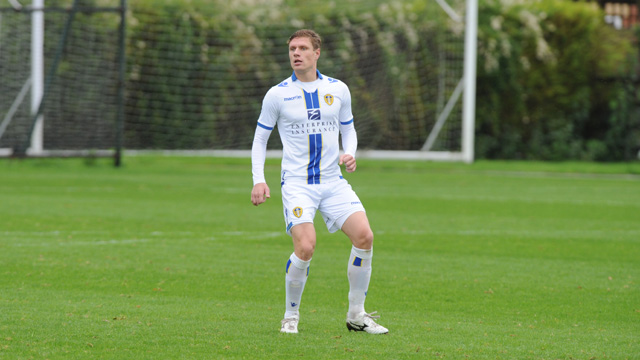
New Boy Marius Zaliukas

New Boy Marius Zaliukas

Another derby day defeat, another three goals conceded, this time against a team shorn of their top scorer due to suspension.  There were some crumbs of comfort: Matt Smith scored again, and could prove to be a handful for Championship defences as the season goes on.  Dexter Blackstock came on from the bench for his United debut, and he scored too, which is a great way to start with a new club.  We probably should have had a penalty, we scored one of their goals for them – and last but not least, we’ve signed an international central defender who captained Hearts to a Scottish Cup win.

Marius Zaliukas has been without a club since the summer, but played for his country only last week.  He was wanted by ‘Arry at QPR and nobody has had anything worse to say about the lad than that he’s got a bit of a temper on him.  At 29, he’s in his prime as a defender, and we’ve got him initially till the end of the season.  Yay.

It’s looking likely that Marius will have an active role to play at Elland Road sooner rather than later.  Our defence didn’t look exactly comfortable at times in the second half against Birmingham, even though we recorded a clean sheet in a 4-0 win.  Three at the back, if that’s how we’re to continue, will demand a decent pool of centre backs to allow for inconveniences such as suspensions and injuries.  It seems that Messrs Pearce and Lees were culpable in at least two of the three we let in from our chip-on-the-shoulder bearing neighbours down the road, so maybe an injection of international know-how and experience is just what the doctor ordered.

From all accounts, the boy might be a tiny bit aggressive, but again that’s more virtue than vice down Elland Road way.  Since the days of Norman the Great – in fact tracing our illustrious club’s history back as far as Wilf Copping – we’ve always appreciated a lad who understands the tactical subtleties of “getting stuck in” and “getting rid”. Marius Zaliukas sounds like he might be just our cup of Yorkshire Tea and it goes without saying that we wish him well.

If we can get the defence sorted out, and if we can convert a few more of the chances that we again created in reasonably great number today, maybe things can still look up in time for this season to mean something.  Well, anyway, that’s the positive spin on another disappointing day for Leeds United Football Club and its devoted army of fans.

It’s Yeovil next, and they beat Forest today.  Bring it on.

Loyalty Is a One-Way Street in Alex Ferguson’s World – by Rob Atkinson

Taggart:  Why I Was Always Right, by the waaaaaaaayy.

Taggart: Why I Was Always Right, by the waaaaaaaayy

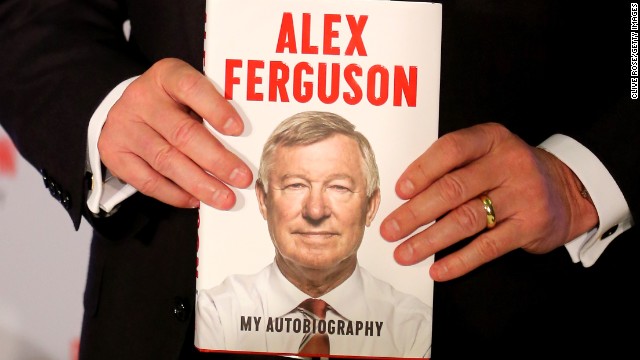
After nearly half a season of relative silence from their much-missed guru, hero, source of inspiration and occasional bête-noire, the media breathed a collective sigh of relief last week. The Ego Had Landed. Fergie was back, at least in print, and those fangs were still bared and ready. The latest autobiography of Alex Ferguson has shown the old curmudgeon has lost none of his ability to dispense vitriol, none of his elephantine memory for anyone who has ever annoyed him – and certainly none of his oddly unilateral approach to the issue of loyalty.

Apparently, during Fergie’s tenure, loyalty was a word much bandied-about behind the scenes at the Theatre of Hollow Myths. That it was evidently used to specify the absolute need for a slavish adherence to the Govan Guv’nor’s every wish goes almost without saying. This requirement extended beyond the confines of Man U. Should a rival manager ever have the brass neck and utter nerve to question or criticise the great man, a familiar growl would issue from his lair along the lines of “After all I’ve done fae him…”

Fergie was not a man to be crossed, not by subordinates, not by rivals, not even by his nominal superiors. Criticism was not to be tolerated. Resistance was futile. His was as near to an absolute rule as existed at any football club anywhere, certainly in the 21st century. Fergie’s Man U was the last autocracy in the professional game – a factor upon which, extending as it did to terrified administrators and wary match officials, was founded their unprecedented success.

The latest in a series of literary self-portraits has, in the august opinion of respected sportswriter Patrick Barclay, little new to offer in terms of revelation – the longed-for “blowing the lid off” the game, or portions thereof. What we do get is a series of little packages of poison as Alexander the Great reviews the vast canvas of his career and delivers his venom to those he believes were found wanting. The loyalty so prized by SAF in his managerial career is evidently a currency he does not feel it necessary to repay. This will come as no surprise to the likes of Brian Kidd, now the Manchester City assistant boss, or Gordon Strachan, now manager of Scotland. Each of them have had both barrels between the shoulder blades in the past, and to their credit they’ve largely maintained a dignified silence. But Fergie was in his Man U job then, and there were certain perceived perils associated with biting back at a figure who had managed to create for himself a tyrannical position whereby he held sway over most of football. Will he benefit from such forbearance after this latest raft of assassinations?

In this latest addition to the former manager’s stable of autobiographies (the whole possibly to be known as “Why I Was Always Right, Vols. 1-5”), the less-than-likeable Alex has turned his baleful gaze on, among others: David Beckham (the football boot in the eye incident, marrying a pop star and wanting to move to a bigger club); Arsene Wenger (Pizzagate and being offensively intelligent); Roberto Mancini (failing to sell Tevez when Fergie thought he should and then going on to win the Title with malice aforethought and a 6-1 tonking of Man U on their own manor); Rafa Benitez (for having the sheer bad taste to tell it like it was and also, with no evident irony, for being a “control freak”); then, last but not least here, the Rio Ferdinand drug-testers whose fault it apparently was that the former defender “forgot” to provide a sample when required. It’s an impressive list, but not exhaustive.

At least one other target, casually denigrated in the course of this epic litany of nasties, wants to have a word in Fergie’s ear. Ex-goalkeeper Marc Bosnich, described as a “terrible professional” by the man who nevertheless signed him twice, is putting a fairly stoical face on it, but appears not to be best-pleased and has hinted that he’d appreciate a frank discussion face to face.

The over-riding impression, delivered with all the subtlety of a Royston Keane tackle, is that anyone in his club who fancied himself bigger than the boss would have to either learn the error of his ways and that right swiftly – or get out. Keane himself is one who was moved on, in some haste, after “disagreements” with Ferguson. Keane it is now who remarks that his ex-manager, for all his preaching about loyalty, doesn’t know the meaning of the word, a sentiment which will be echoed by many of the men who served Ferguson well and have now been left bullet-riddled by the former chief’s paranoid rhetoric. The latest proof of this anomaly runs to many thousands of words, is available from this week, imaginatively titled “My Autobiography” and will cost you a decidedly prettier penny if you want your copy signed by lifelong socialist and latter day profiteer Sir Fergie himself.

It seems likely that the Ferguson Factor is what is missing from this season’s pallid Man U; the fear that gave them that edge seemingly gone with the wind. But on this most recent evidence of the choleric and treacherous nature of the man, who – other than the many millions of Man U fans from Torquay to Jakarta and back again, plus a few sensation-staved tabloid hacks – just who will really miss him now he’s gone?

World Football Must “Do a Leeds” – and Banish the Evil of Racism – by Rob Atkinson

Image

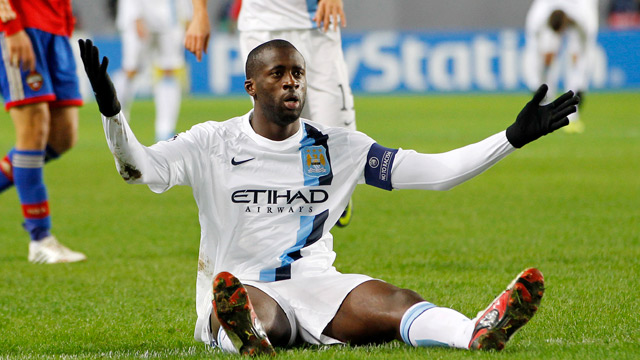
Yaya Toure – racially abused

Eyebrows tend to be raised, lips are apt to be pursed and there is a general air of bemused surprise when any Leeds United fan (this blogger, for instance) condemns racism.  Those who will throw their hands up in horror – rightly so – whenever they encounter a racial stereotype, seem rather less scrupulous about imposing stereotypes of their own when their cosy perceptions about United fans are challenged.  Hang on a minute, they demur – Leeds supporters are about the most racist around, aren’t they?  Well, perhaps they were, once upon a time.  But times change and the Leeds United fan culture of today is a vastly different thing to the bleak days of the early eighties.  More of which later.

The events of last week have brought the whole foul problem back into sharp focus. During Manchester City’s away Champion’s League tie against CSKA Moscow, midfielder Yaya Toure was subjected to monkey chants from the grinning morons among the home support. It’s a real problem in many parts of Europe and the one thing that’s tolerably certain is that it’s not going to go away on its own.  What’s normally needed to remedy such matters is supporter organisation into a strong anti-racism movement – which was, not incidentally, the Leeds United experience – or tough sanctions from some higher authority with something approximating to a backbone.

Toure may not have been alone in suffering this awful, unjustifiable and humiliating abuse – some sources report that team-mate Fernandinho may also have been targeted. Toure was understandably disgusted and has demanded action.  He has even gone so far as to suggest that the 2018 World Cup, scheduled to be hosted by Russia, could be hit by a black players’ boycott.  I only hope that he’s serious about that, and that he can count on the support of other black players, as this would be a shattering blow to the tournament – much, much greater today than it would have been in the eighties.  A far higher proportion of the world’s best players are black today than back then, such has been the explosive development of the game in Africa, a continent where many nations are emerging as serious football powers.  A black players’ boycott of the tournament, then, could be a way to apply irresistible pressure to fans and ruling bodies alike.  A World Cup without many of its most mesmerising stars would be unthinkable; even if it went ahead it would be so devalued as to be hardly worth winning.

Jose Mourinho has a view on the issue of a possible boycott, as he does on so many issues.  He expressed “sympathy” for Toure, but said he did not support the City player’s comments afterwards.

“I respect his opinion, but I disagree,” said Mourinho. “I disagree because the history of football was made equally by many races, and the black players have fantastic contribution to what football is.

“Who is more important: the billions of people in love with the game around the world, or a few thousand that go to football stadia and have a disgraceful behaviour in relation to the black players?

“If I was a black player, I would say the other billions are much more important. Let’s fight the thousands but give to the billions what they want: the best football. Football without black players is not the best football.”

As a football man on football matters, Mourinho’s is a voice to be respected – but in the last nine words of that quote, he basically makes the case for, not against, a boycott by black players of Russia 2018.  Just imagine if you will a tournament blighted by the kind of sickening filth Toure and possibly Fernandinho had to suffer last Wednesday night. It’s too horrible to contemplate – and what message would it send out to the billions worldwide that Jose is seeking to protect from a World Cup bereft of black talent? Endemic racism is OK as long as we’re being entertained by the football? That’s not the way to go and it’s not the example to set to the world’s children.

Mourinho then is surely wrong to suggest that those billions would rather witness a tournament dragged down to gutter level by cretins whose idea of fun is to abuse a world star by making crude monkey noises.  The best thing an organised movement of black players could possibly do is to show FIFA that the situation is intolerable by refusing to have anything to do with such a toxic affair.  Perhaps then even FIFA – a body which inspires little confidence, led by a man in Sepp Blatter who is little better than a bad joke – might consider its options, faced as they would be with a sanction of such potentially seismic effect.  They certainly should consider those options, which are practically limitless.

It’s certainly pointless to wait around hoping that UEFA might put their own house in order, something they’ve proved themselves singularly incapable of doing.  Instead, FIFA should act, and act decisively.  They should advise Russia that, unless this problem can be addressed and eliminated by 2015, an alternative host nation will be found for the 2018 World Cup – it’s that serious.  They should monitor the situation, act as advised and they should then stick to their guns.  They won’t, of course, because they are truly spineless and complacent – which is why the likes of Yaya Toure and the others like him who are subjected to this evil baiting, really have no choice but to rally together and organise themselves to take their own action.  Good luck to them if that’s the path they take.

In the early eighties the experience of being a match-going, non-racist Leeds United fan was lonely and disgusting.  The atmosphere was rancid with bigotry, skin-headed, bone-headed racists sold “The Flag”, a right-wing snot-rag, outside the ground.  It was done openly, brazenly.  Dissenting voices, when raised, brought upon their owners the risk of violence.  The club was inert and complacent.  The police sat by and watched.  It was depressingly, shamefully awful.  And then, things started to change.

Civilised, intelligent Leeds United supporters, unable and unwilling to accept the evil being dispensed in the name of their beloved club, organised themselves into Leeds United Fans Against Racism & Fascism.  Fanzines were sold expounding the voice of reason against the bigoted filth being peddled by the racists.  More decent supporters woke up to what had been going on, joined the anti-racist movement, bought the fanzines, started to raise the voice of protest against the ignorance and malice of the terrace chants against visiting black players.

Even the slumbering Leeds United itself reacted positively to the changes afoot.  Black players were signed, the first since the brief but bright Leeds career of Terry Connor. Noel Blake, affectionately nicknamed “Bruno”, loved by the Kop.  Vince Hilaire, quicksilver winger reviving memories of Albert Johanneson in the sixties, the first black player to play in the Cup Final and a Leeds hero when the Revie revolution was still new.  It was a painfully long, slow job – but Leeds United finally managed to rid itself of one of the most degradingly awful reputations for racism and bigotry, and they largely did it as an institution, by the efforts of enlightened fans supplemented by the club’s more enlightened transfer policy at a time when there was still an unofficial bar observed by the likes of Everton FC.

I’m extremely proud of the way my club tackled its problems.  The Leeds United of today bears no resemblance at all to the sick club being brought to its knees 30 years ago, dying of the cancer of racism.  The whole world has moved on, though pockets of the disease still exist at home, yet far more significantly abroad.  We now live in a time when these manifestations of hate and ignorance are a palpable shock to the system – and that in itself is a massive change for the better.  Such inhuman behaviour has never ever been acceptable, but now it’s seen to be completely unacceptable, and FIFA above all must face up to the reality of this.

FIFA simply have to act, and they have to act now.  Despite CSKA Moscow’s revolting stance whereby they’re claiming this simply didn’t take place – the club’s deputy media manager, Michael Sanadze, told Sky Sports News that “nothing special happened” – they have been charged by UEFA with “racist behaviour”. UEFA though are an organisation clearly lacking in the backbone to apply sanctions and see them through, Lazio having been punished for comparable transgressions in the past, the stadium closure subsequently being reduced to a mere slap on the wrist.

The message from FIFA has to be clear and unequivocal.  Stop the racist abuse – or lose the World Cup in 2018.  Failing that, Yaya Toure and his black colleagues – and how good it would be to think that non-black players might also support such a move – should carry with them the good wishes and backing of every decent-minded person as they seek to reduce the tournament in Russia to the well-merited status of farce.  It would be no more than FIFA deserve for what would amount to tacit support of the racist minority whose venom threatens to poison the whole football world.

How Paint It White came to Malton

I saw “Paint It White” at the WY Playhouse during a very successful run there, and I thoroughly enjoyed it – full of humour, some quite gritty, but there were spine-tingling moments too, moments on the stage where you realised that the actors and the writer had captured the essence of what it means to be a White. Fantastic stuff – and many times more relevant and accurate – more entertaining too – than that fantasy/low comedy big screen offering “The Damned United”.

Congratulations, author Gary Edwards, a man I had the honour of sitting next seat but one to over many years on the Kop at Elland Road.  He was most usually in the bar, but always worth a laugh when he did make it to his seat, and he gave my wife many a cuddle in the wake of a Leeds United goal – which saved me a job!

This blog, telling of how the acclaimed stage play made it to Malton, is well worth a read.

lesrowley1's avatarAll4Malton

If you are breathing the air of misgivings about the future for Malton then let me tell you a story of how the team behind the proposed new foodstore and petrol forecourt for the town came to be the same people who effectively brought Paint It White to the Milton Rooms.

Image

Professional touring theatre companies only survive on accruing income streams. Every penny helps since not one single channel of revenue is sufficient to pay for everything. Wages of actors, technical staff, lights, vans, accommodation, scenery…it soon amounts up. So in the case of the Leeds United themed play, which came Malton in November 2011, it survived on ticket sales, programme sales, a cut of the drinks bill and sponsorship from Tetley. It’s a model that works but difficult to put in place because the producer (me) has to get this just right if he isn’t to fall out…

View original post 513 more words

21 Years On, Ferguson is Still Bitter About The Last Champions – by Rob Atkinson

The Last Champions

The Last Champions

The 1991-92 Football League Championship title was an historic accolade, marking the end of a very long era.  From the next season, a breakaway elite would compete for “the FA Premier League”, with a Sky TV deal bankrolling the game at top level, new rules ensuring that income and wealth would trickle upwards to feather the nests of the better-off instead of down to nourish the grassroots of the game.  The increased pool of money would lure foreign players to dive into it, in hitherto unprecedented numbers.  Wealth and commercial interests, foreign syndication and new markets, these were the factors that would influence the game from now on.  The traditional purity of competition on a level playing field would henceforth be a thing of the past.  The winners of the 1992 League Title would be, in a very real sense, the Last Champions.

How inevitable it was, then, that we would hear more and more of the usual suspects throughout TV land and the media as a whole, ruminating on the place in history up for grabs, donning their red-tinted spectacles, taking out an onion and dreaming, wistful and misty-eyed of how “fitting” it would be if the mighty Man U could take the prize.  There was even talk of the title coming “home” to the Theatre of Hollow Myths – home, mark you, to a club that had never won the Championship in the era of colour television, whose finest hours were recorded on grainy monochrome fuzzycam as the Pride of Devon were overtaken by thoroughbreds such as Liverpool, Leeds United, Arsenal and Nottingham Forest.  Against all sense and logic, the feeble of mind, the hacks, the sentimental hypocrites all ached for the last real title to go to Man U.  How bitterly disappointed they all were when Leeds United callously, magnificently pooped their party.

Bitterness is not an emotion to show in public in the first few stinging moments of disappointment in defeat.  So it was that Alex Ferguson, freshly beaten at Anfield to confirm Leeds as Champions by an eventual 4 points, gritted his teeth and declared that Leeds were indeed worthy victors.  Suffering as he was from the nightmare combination of losing to Liverpool and thereby surrendering the Title to Leeds – a scenario dredged from the very bowels of the average Man U fan’s own private hell – such a seemingly magnanimous verdict was reckoned to Ferguson’s credit.  This magnanimity, though, did not last long.  In a book published that summer, Ferguson backtracked: “Leeds didn’t win the title, we threw it away.”  This was the real Fergie starkly exposed, glisteningly visceral, a man who would always look for some hidden, unfair reason why his team would lose; one who could never credit the opposition for winning fair and square.  An early layer of the notorious Ferguson paranoia and bile-ridden self-righteousness was laid that summer of ’92.

mini fergie

Small Man, Small Book

Now, freshly retired and free of even the minor constraints that kept him relatively quiet – give or take the odd casual back-stabbing – when he was Man U manager, Ferguson feels able and willing to dish the dirt on all those horrible people who annoyed him during his rant-laden and tyrannical career.  One such target is Leeds United; he has neither forgotten nor forgiven those last champions of the game as we knew it.  In his latest autobiography – one would never be enough for a serial egomaniac like Ferguson – he labels the Leeds United team of 1992 as “one of the most average teams to win the title”.  It is not clear whether he counts the Man U team of last year, champions by default as all of their rivals self-destructed, among that “average” number, but then it wouldn’t be in his nature to make any such concession.

The fact of the matter is that the Leeds United champion team of the early nineties found the game changing around them at precisely the wrong time.  The new back-pass law unsettled a previously effective defence, the expensive arrival of David Rocastle was surplus to the best midfield four in the land and the loss of the marauding Sterland deprived them of much quality overlapping service from the right, fatally damaging their chances of mounting a defence of their title.  But the victorious 1991-92 campaign saw that group at their best, putting on sparkling displays at Villa Park (4-1 winners) and Hillsborough (6-1 winners against a Sheffield Wednesday side that finished third).

Much is made of Man U’s disastrous run-in, as if this had never happened to challengers before.  But again, Leeds had their own late-season wobble, losing at Oldham, Man City and QPR as well as dropping valuable home points to Villa and West Ham.  Just as it could have panned out closer than the eventual four point gap between Leeds and the runners-up – so that gap could easily have been much greater.  The proof of the pudding was in the final league table which saw Leeds with most wins, fewest defeats and a decisive four point margin.  That legendary chestnut “the league table doesn’t lie” carried much more weight in those egalitarian days than it does now when the Premier League table usually resembles more of a financial assets sheet.

The inescapable conclusion to all this is that the outcome of the 1991-92 Title race – that historic, landmark Championship struggle – still rankles bitterly with the elderly Glaswegian, and every now and then he feels the overpowering need to spit out that sour, ashen taste of defeat.  It was the title he obviously wanted to win above all others – the iconic Football League Championship, unattainable to Man U for a quarter of a century.  Instead, he had to settle for a succession of more plastic baubles, won on a skewed playing field with ever-present controversies over offside goals, penalties dived for, opposition penalties not given, opposition goals disallowed from a  foot over the line.  Ferguson was denied the real thing, and the ones he won are tainted by the feeling that Man U were media darlings with refs in their pockets and a plastic army of glory-hunting fans in armchairs everywhere.  No wonder the poor old man is bitter.

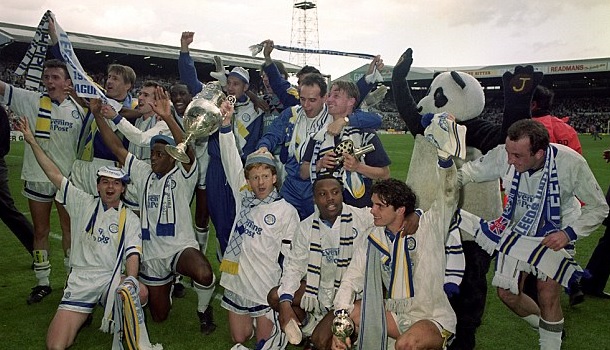
With all due respect to Ferguson – which quite frankly isn’t very much – his latest “tell-all” book has to be taken with an almighty pinch of salt.  It’s a litany of whinges about the people he feels have slighted him, personal attacks on those from whom he demanded loyalty but refused to repay in the same coin, wild swipes at figures respected by everyone in the game except the increasingly empurpled Fergie himself.  It’s a mish-mash of hatred, resentment, revisionism, self-justification and bitterness.  And like his laughable, transparently bitter and envious attack on the Last Champions – it’s something more to be pitied than, for instance, derided as a load of old bollocks – so there I shall leave it.  History, meanwhile, will always remember Wilko’s Warriors as worthy winners of the historic, final Championship of the old-style, much-loved and missed Football League.

No Winger Needed for Leeds if 3-5-2 Does the Trick – by Rob Atkinson

Image

It seems clear in the wake of the Birmingham victory that, while Leeds don’t possess an out-and-out winger (especially since Ryan Hall seems to have tweeted himself right into the ordure), what we don’t lack is the potential for width – given the right team selection and formation.

All of a sudden on Sunday, the team looked to have clicked – doubtless the result of some hard work and hard talking during a fortnight away from the domestic routine while England took care of business at Wembley.  Birmingham were dire in the first half, but even in the second when the opposition improved, Leeds coped well, created chances and scored a lovely fourth goal.

The width came from more advanced positions for the likes of Byram and Warnock, either side of three central defenders.  Suddenly, we could start to think of the players NOT in the team, who might also have contributions to make to such a system, some of them from the bench, perhaps.  Diouf, Hunt, Varney. Possibly Dexter Blackstock if strong rumours of his imminent arrival on loan are true.

While the Forest player’s name sounds like that of a kids’ cartoon private eye, Blackstock has some pedigree and, if Brian McDermott feels he could add value to the squad, that’s a call worth backing.  It’s interesting to remember that Brian has said in the past he’d be looking for loans with a view to permanent signings in January – watch this space indeed.

Another likely arrival is that of former Hearts captain and central defender Marius Zaliukas, available on a free since his release by the Edinburgh strugglers.  Again, a central defender didn’t seem high on the shopping list a few days back, but if 3-5-2 is the way to go, we will need more numbers in central defence to cover injury and suspensions. It seems nobody has heard much about Zaliukas that isn’t good, save perhaps a slight tendency towards overdoing it on the “getting stuck in” front.  But those kind of players have always been well-loved at Elland Road.

It may well be that discussions during the international break resulted in a decision to give width from wing-backs an extended try – and that this is behind the sudden cooling of interest in wingers.  I still feel that Chris Burke from Birmingham would have been a sound acquisition, but if Plan A has changed to Plan B then our limited resources may be better used elsewhere.

It will be very interesting to see the personnel and shape on display at Huddersfield next weekend, and also whatever may have transpired in terms of recruitment in the meantime.  Another display and result to compare with the Birmingham game, and the atmosphere around LS11 could really start to perk up again.