Category Archives: Politics

Osborne’s big plan: falsify unemployment figures under the Workfare banner

A cutting insight into the fundamental dishonesty and blatant opportunism of a Tory party blind to everything but enhancing their prospects of election as a majority government in 2015.

Mike Sivier's avatarMike Sivier's blog

So Gideon wants the long-term unemployed to go on Workfare indefinitely, does he?

Forgive me if I’m mistaken, but doesn’t this mean the Chancellor of the Exchequer’s big announcement – at this year’s Conservative Party Conference – is a tawdry plan to massage the unemployment figures?

I’m indebted to The Void blog for the following information, which I recalled while reading reports of Osborne’s drone to the swivel-eyed masses. An article from May stated that the Department for Work and Pensions (DWP) had been forced to admit a rise in unemployment was down to a fall in the number of people on Workfare.

“According to the Department, the number of people in work fell by over 47,000 over the last three months – which they say ‘reflects’ amongst other things a drop of 16,000 in the numbers on Government employment schemes,” the article states. As far as I know, this…

View original post 642 more words

Istanbul “Front Runner” for Euro 2020 Semis and Final – are UEFA Stark, Staring Mad? – by Rob Atkinson

Turkish Fans "Demonstrating Their Cultural Uniqueness"

Turkish Fans “Demonstrating Their Cultural Uniqueness”

As if eager to demonstrate once and for all that they are out-of-touch, irresponsible, lacking in judgement and foolhardy to the point of actual insanity – it would appear that UEFA are genuinely considering Istanbul as a host city for the semi-finals and final of the Euro 2020 Championships.  Our beloved FA, itself a body which has frequently demonstrated its own lack of fitness to run a piss-up in a brewery, stated today that it believes Istanbul is the “front runner” and main rival to Wembley’s own bid.  Istanbul lost out to Tokyo in its bid to host the 2020 Olympic Games, after all.  FA General Secretary Alex Horne said: “We’ve taken some soundings, there’s a sympathy for Turkey and it does feel like they are the front-runners.  We get the politics around Istanbul, having not got the Olympics.”

Demir

Demir

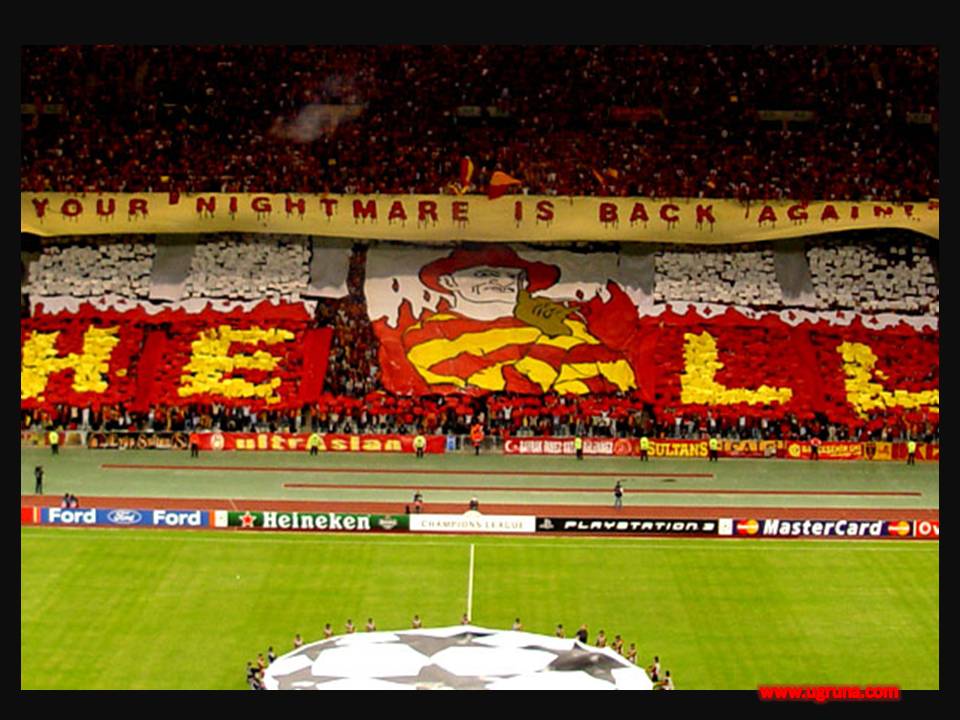
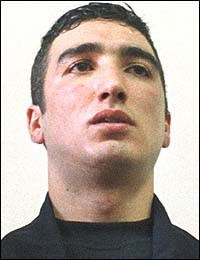
Well, forgive me, but I don’t “get” this at all.  Turkey has just about the most horrific history of football violence it’s possible to imagine.  Istanbul in particular is home to Galatasaray, whose fans’ party piece is to raise banners when “welcoming” visiting teams to the airport or to their bear-pit of a stadium, the banners bearing the warm and comforting message of “Welcome to Hell”.  Other touching signs of friendship and bonhomie include mimed throat-slitting actions performed en masse.  Sadly, these ugly manifestations of Turkish culture have been shown to be no mere gestures.  In the spring of 2000, two Leeds United fans – Chris Loftus and Kevin Speight – were brutally attacked and murdered in Istanbul’s Taksim Square. Ali Umit Demir and three other men were arrested for the killings, and Demir was jailed but released for retrial after a successful appeal.  When the four men first appeared in court, they were cheered by members of the public, Demir being described as a “patriot” by residents of Istanbul.

More than 13 years on, it is still unclear whether Demir will ever face an appropriate penalty for his admitted crime of stabbing Mr Loftus and Mr Speight.  Over the time since these tragic killings, fans of Turkish clubs have continued to disgrace themselves on numerous occasions with acts of violence and displays of hostility which UEFA have consistently failed to address, despite the alacrity with which they deal with lesser offences elsewhere.  It has been reported that certain UEFA officials regard knife-carrying and its concomitant perils as “part of the culture” in Turkey, and this may partly explain their casual attitude towards what goes on there – but it certainly does not excuse it.

No Leeds United fan and, for that matter, no Manchester United fan needs any instruction about the atmosphere and the dangers of following football in Istanbul. Personal experiences of fans from both clubs leave little room for doubt that it’s a place to visit and roam around in only with extreme reticence and caution.  The idea of masses of fans from different nations adding their high-spirits and nationalistic fervour to the cocktail of hatred and overt hostility which is so much a part of the fabric of Istanbul – it’s just too horrible to contemplate.  You’d have thought that even a pea-brained UEFA pen-pusher could have accumulated enough evidence, both anecdotal and empirical, to realise this.  But no.  Self-satisfaction and pompous idiocy rules in the corridors of UEFA, and they will seemingly be willing to compound their laxity of recent years in failing to deal with what has happened there, by a whole new level of crass stupidity in contemplating taking a major Championships to a murderous pit.

It is to be hoped that wiser counsel – if any should exist in the game’s higher authorities – will prevail, and some safer place will be found.  The idea of awarding the final stages of a prestigious tournament to Istanbul is a bit like inviting an arsonists’ self-help group to organise a bonfire in a petrol dump – only more so.  If the madmen of UEFA have their way in this, the consequences could be dire; you only have to ask the Man United fans ill-treated by the local police, or the Leeds fans who, heart-sick at their bereavement of the night before, turned their backs at the start of the match against Galatasaray, because that club had failed, along with UEFA, to postpone the game, or even to order that black armbands should be worn.

It may be that one day Istanbul will be a fit place for civilised football fans to visit, and maybe even for a tournament to be held. But that day is not yet, it won’t be here by 2020 and it won’t be for many more years after that.  Most sensible football fans would confirm that.  Now we just have to find a way to persuade the fools in UEFA, and in our own FA, what their own eyes and ears should have told them long ago.

Snouts In The Trough – But It’s Time Those Living High On The Hog Picked Up The Tab

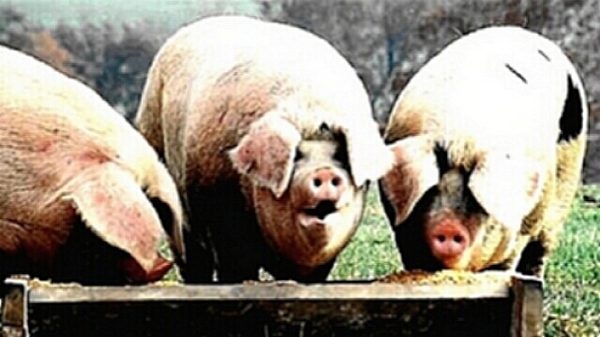
The Three-Party System

The Three-Party System

The thing about politicians is – if they’re not talking, or furiously thinking of a way out of their latest web of deceit, or maybe sleeping (a swift forty winks on the backbenches, the ultimate power nap), then they’re most likely at some or other official function, stuffing their faces with the finest of freebie food and drink.

Now, I’m not making a party political point here. I said “politicians”, and I meant the whole unsavoury crew of them, be they high-powered cabinet members, lobby fodder rank-and-file MP’s, or even your humble Joe Bloggs, Mavis Dogood or Tarquin FitzHerbert-Smythe in the local Council chambers. They all have the same basic bodily need for nourishment as us mere mortals. The difference is, they will quite often fill up to the Plimsoll line at the taxpayer’s expense. Is this fair or appropriate in these straitened times?

At a veritable crisis point of global financial meltdown, when our national debt is so high that even Wayne Rooney would need to ask for an extra week or two to pay it off, I find myself wondering: what’s the accumulated value of all the state and civic banquets, dinners, receptions, working lunches and other freebie jamborees that take place every day, all over the country? It must come to a good few bob. We’re not, after all, talking a few limp ham sandwiches, curling up at the edges and accompanied by motley shreds of anaemic lettuce. No, Sir. These people do not skimp; they do themselves well, very well indeed. There’s proper, grown-up, posh food on heavily-laden and groaning tables – and it must be highly debatable how much productive thinking is left in those bloated plutocrats, after the desserts have been and gone, and the port, nuts and cigars are passed around.

Of course, piling into the snap at the highest levels of power is nothing new. It’s been pretty much de rigueur ever since Henry I wolfed down half-a-dozen too many eels, and expired before he could gasp “surfeit of lampreys”. Kings, Queens, and assorted courtiers and other hangers-on have always been notable for their over-indulgence on rich food and fine wine. It sort of went with the territory in those far-off times, but it strikes a more discordant note these days when essential services – the culmination of the whole process of civilisation and enlightenment since before Henry I – are being cut left, right and centre. And yet still the state and political chomping goes on apace.

It’s only a matter of a few weeks since MP’s of all parties were calling for a 32% pay rise, despite their broad consensus that the rest of us should be grinning bravely and tightening our belts. Just what sort of message does that send out, when so much of their weekly calorific intake is provided and paid for, as part of their remit as legislators of our country? And the same applies at least in some degree to our business leaders – no subsidised canteen serving scrummy beans on toast with a poached egg on top for them – it’s Marco-Pierre White catering at the very least – and waiter, send that bill to Accounts, there’s a good chap.

What if – bear with me here – what if MP’s, ponderous boardroom types, and indeed power-brokers everywhere were to embrace a novel concept, and actually pay for some of the scrumptious fare that comes their way so often, and gratis at that? If this were the general principle, multiplied across all the many thousands of vastly expensive official meals and banquets that take place in this over-stretched nation every week, what would be the saving to the national purse? I’m struggling to work that out on my fingers and in my head, but it’s a big, big number, make no mistake. It’s not as if the people we’re talking about are exactly impoverished – are they now? And what do the rest of us do when it’s time for lunch at work? Not everyone has even the subsidised canteen; many of us are away down to the high street for a cheese roll, which we’re – quite reasonably – expected to fund out of our own pockets.

It’s about time we all woke up to the fact that – on a grand scale – we’re being made right mugs out of, you and me. Every time there’s a new cost-cutting measure, or another idea for a wage freeze, you can bet your life it’s been hatched over the smoked-salmon canapés and the pâté de foie gras. And what’s more, we’re the simple souls paying for it. Could that money not be used much more productively, elsewhere?

Just think about that, the next time you’re counting the pennies at the end of the month, and wondering whether you can delay the big shop till after the weekend. Then again, it might even act as an appetite suppressant. Just thinking of all those banquets, all that luxury food, and above all, where the bill’s heading – might just actually make you sick.

Right-Wing Lie-Blog the “Daily Bale” reports: “Pub Owners ban British Soldiers” (It’s just Lies, Lies, Lies, folks)

Right-Wing Lie-Blog the “Daily Bale” reports: “Pub Owners ban British Soldiers” (It’s just Lies, Lies, Lies, folks)

The article reblogged here first appeared on the right-wing “Daily Bale” blog, with the clear intention of stirring up hatred and resentment towards ethnic minority populations. The Daily Bale in its “about us” section promises “through self-relief and determination” (?) to fight what it calls “left-wing evil”. In practice, this clearly means making up scurrilous stories – as in the article reluctantly reproduced here – in an effort to seduce people to their narrow-minded and bigoted way of thinking.

If you need proof that this story is faked, have a glance at an article from a real news outlet, the Knutsford Guardian, which uses the identical picture that the lying Daily Bale have used to illustrate their fabricated story.

As ever, the liars on the right will resort to any level of deceit, no matter how low, in order to pursue their own sick agenda. This “Daily Bale” is a typical sewer-outlet for this bile, full of lies and misleading information, their conclusions based on nothing, their intent to create hate and hostility towards British citizens who have committed the ultimate sin in the eyes of these fascists – they have a different colour skin.

Disgusting.

Thatcher Day? No Thanks – Let’s Have a “Heroes Day” Late August Bank Holiday We Can ALL Support

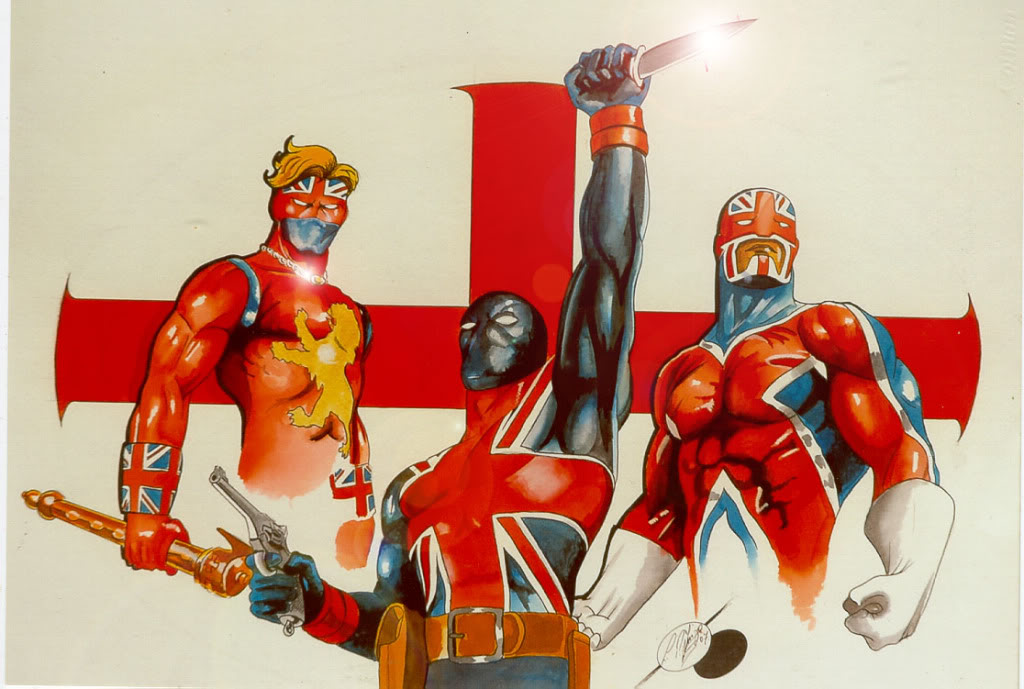
British Heroes Day

British Heroes Day

Britain woke up on Wimbledon Men’s Semi-Final day to one of the dafter ideas of the year – the proposed re-naming of the late August bank holiday as “Margaret Thatcher Day” – shook its collective head incredulously and gaped in frank disbelief that anyone could suggest anything quite so stupidly divisive. Then it sighed with relief as it realised this was just another attention-seeking ploy by one Peter Bone – simply another of those tiresome so-called politicians who define their function by just how best they can publicise their tragically unremarkable careers – and fell instead to wondering whether to have toast or cornflakes for breakfast.

There was never anything to get really upset about, or to take too seriously.  Peter Bone MP has form for this sort of thing, after all.  His record reads a bit like a litany of gibbering lunacy and reactionary stances on issues such as abortion, gay marriage, the death penalty and conscription. He clearly subscribes to the maxim of “there’s no such thing as bad publicity”, and sallies forth on a regular basis, seemingly with one solitary thought in his head: how best to get Peter Bone MP in the news. He’s regularly one of the most enthusiastic expenses claimants, pays his wife top dollar for “secretarial duties” (so he’s big on nepotism too) and has a string of failed businesses and other ventures to his name. He also boasts a consistent record of losing supposedly safe seats in elections, sometimes bucking a national swing to the Tories by actually reducing their vote in the constituency he’s fighting.  All in all – not the sharpest or most useful tool in the box.

So those of us who do not inhabit the lunatic hinterland of the Tory Right can dispose of the latest Bone rant with a derisive sneer and a muffled chortle, and leave the Daily Heil readers to linger lovingly over what is a dead-in-the-water idea right from the start. But it does perhaps raise a legitimate question of the potential dedication of that anonymous late August holiday – many other countries use such occasions to pay tribute to their notable figures, so is it such a bad idea in principle?  Maybe not – so long as we manage to disregard the blithering of Bone and his ilk, and consider instead ideas from the saner end of the spectrum. The fact is that, whoever one might select as a deserving recipient of an honour such as becoming an eponymous bank holiday, the tribute is likely to be divisive to a greater or lesser degree. If you put forward the seemingly obvious name of Winston Churchill, you will hear voices raised by those with an awareness of his role in the General Strike in 1926. Those who espouse a free-market philosophy and howl in horror at the full-employment strategy that underpinned British politics until 1979 will not take kindly to any suggestion that Clement Attlee should be honoured by such a dedication. We’re a nation of many threads – and you can’t please all the people, all the time.

Why not then have a day when people of diverse views and differing affiliations can define their own tributes and make their own dedications – either singly or in smaller or larger groups?  It could be called “Heroes Day” and it would be an occasion for everyone to think of the person who means most to them personally, and commemorate that life and its achievements in the way they consider most fitting. Those who can gather like-minded people together could perhaps organise groups in tribute to a favourite hero or heroine. One group might have their Florence Nightingale Day, another might wish to raise a flag for Arthur Scargill.  Any or all of them could use their hero or heroine to create a local event, or maybe even something on a wider geographical scale.  They could raise funds for an allied cause, and generally do a lot of good.

Heroes Day.  It has a certain ring to it; the inclusive context tends towards the subjective nature of hero-worship, yet there is a patriotic flavour to it as well.  There might of course be a down-side: there will always be individuals or groups who will seek to ignite strife by seeking to glorify the names of those who most would feel are unfit to be remembered or revered.  That could be a knotty problem; the whole concept of a Heroes Day would be for self-expression to have its head and for people to be able to pay tribute as they see fit, and the introduction of any form of censorship would strike a jarringly flat note in that symphony of personal freedom.  It almost brings us back to the ridiculous idea which prompted this article.  Clearly, some careful thought would be needed.

On the whole, though, the idea of a Heroes Day has much to recommend it, and is no more open to abuse than any other such suggestion might be.  To a certain degree, you just have to accept that grown-up people have to be given the latitude to express their views and celebrate their beliefs as they see fit, and the existing laws and by-laws are after all in place already to deal with any extreme manifestations which might crop up.  On the positive side, there could be great benefits which might arise out of the events which could be organised nationwide to celebrate a Heroes Day.  Fund-raising and education spring to mind, cultural events and perhaps even job-creation could be possibilities.  And in these times of gloom, with austerity piling up all about us and threatening to drown us all under it’s murky incoming tide, don’t we need something positive to focus our attention and creativity?  A national holiday, with thousands of individual events dedicated to the whole panoply of heroes, both past and present, a source of pride perhaps comparable to last year’s Olympics and Paralympics, a surge of national well-being in the recognition of who we are and who we have been.  Heroes Day.  I really do think it’s worth considering.  Who would your August Bank Holiday hero or heroine be?

Royalty: Isn’t it About Time For a Change at the Top?

Image

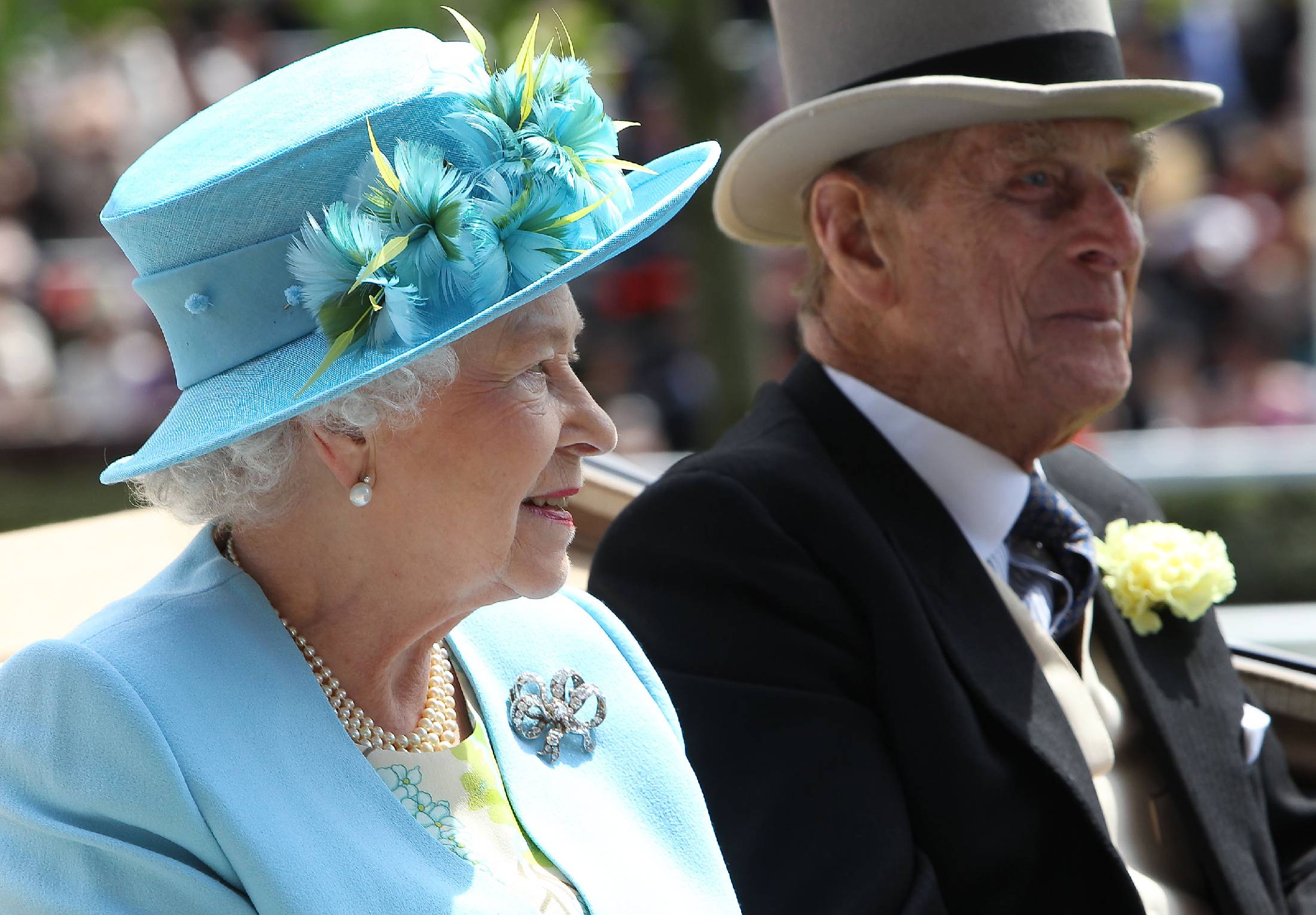
One of the many oddities in the life of our Queen, Elizabeth II, is the fact that she has two birthdays each year – as if one wasn’t enough when you already have rather too many years on your shoulders, weighing you down along with all those cares of state. That’s twice the messing about anyone else has, and there’s Christmas too, although happily there are flunkies by the dozen to lend a hand. But let’s face it, Brenda – as Private Eye magazine almost affectionately refers to her – is now in her 88th year even when you don’t count “Official” birthdays. Most ladies of her considerable wealth would expect to have had their feet up relaxing with the Dorgies for at least the last 27 years, rather than still be loaded with all these ceremonial duties. Is it not time, perhaps, for her to consider genteel retirement, or at least a more consultative and less active role?

Adding to the whole age question is the fact that her likely – though not inevitable – successor, son Charles, will himself reach state retirement age in November this year, and therefore stands the very real chance of becoming entitled to his pension before his pre-destined career has even got off the ground. The poor bloke finds himself in a dilemma uncannily similar to that which faced his illustrious forebear King Edward VII, known to his more intimate acquaintances (prior to his eventual accession) as Bertie the Bounder, due to his notorious predilection for the wilder pleasures of life. Bertie of course did realise his lifelong destiny, and became rather a successful King – entering history as “Edward the Peacemaker” due to his diplomatic efforts on the Continent. Sadly, all these admirable endeavours merely delayed a worldwide conflagration, and a scant four years after his death we were landed with the Great War. But Bertie the Bounder certainly Did His Bit while he was above ground and able to; Charles, who some might think has been a bit of a bounder himself on occasion, must be wondering if his own chance to serve will ever come.

The world nowadays is a very different place to the one which Queen Victoria left in early 1901. At that time, the Monarchy was simply a given – a fact of life along with the Empire over which it presided. The Monarchy and all the trappings thereof seemed in tune with the times, whereas now a lot of that ermine and jewellery has an almost defiant air of anachronism about it, as if the whole institution is saying to us, “Look – we know the Empire is long gone, and that we’re a tad outdated, but it’s just how we are – have you got a better idea?” The transition from a monarch who has been there forever, or so it seems, to a new King on the block (sorry, Charlie, if that’s a phrase which unhappily conjures up the headless spectre of the first King Charles) may well be much harder to manage today than it was when Bertie came to the throne 112 years ago. It may even be that there is a case for the new lad to be eased in to his unaccustomed role by an older and possibly wiser head. This is the argument for the Queen to step down now so that her guidance and counsel should be available to King Charles III, or even to King William V if that’s the way the Royal cookie crumbles.

Of course any suggestion like this, threatening as it does to advocate a departure from The Way Things Have Always Been Done, is likely to be met with a pretty frosty response from the patrician mandarins of the Establishment. They will tend to gaze snootily down a long collective nose and wonder out loud just who on earth this frightful oik IS, mooting such radical and frankly dangerous possibilities. But just because something has always been done a certain way is no reason to continue down that path. Small boys used to be shoved up chimneys to clean them, and they used to drag heavy loads in narrow seams underground in the mines as well. These are old traditions which nobody outside The Cabinet Office much misses. And we used to effect changes in the line of Succession to the Throne by the simple expedient of lopping the incumbent’s head off, or by defeating them in battle – a manifestation of the now unfashionable “Might is Right” syndrome. One such defeated King (Richard III) has only recently been dug out of a Leicester car park having wound up there over five centuries ago in the least dignified manner imaginable, mute testimony to the fact that lèse-majesté is not a new idea. And in any event, it’s not my intention to advocate abolition of the Monarchy – well, not in this article anyway – I just have the feeling that a few fresh ideas wouldn’t go amiss in the corridors of regal power.

One of the other oddities of the Queen’s life – so it has been suggested by various irreverent comedians – is that she thinks the world smells of fresh paint, as wherever she goes there is some industrious decorator a few steps ahead, adroitly wielding his brush and roller lest Her Maj should see a mucky mark and shame be piled on the heads of her civic or diplomatic hosts. Many a true word is spoken in jest – and she really has lived her whole long life, certainly since her maverick Uncle David gave up his Edward VIII crown for an American divorcée, with people trying to make things as brand-spanking glossy and new as possible for her. It’s a cosseted, artificial sort of existence, surrounded by eager sycophants, and let’s face it – you only live once. Shouldn’t our venerable Queen have the chance to savour a bit of real life before her time is up?

Isn’t it finally time for the job to be passed on to a new chap?

“Loadsamoney” Cameron in “Tasteless and Ignorant Flash Git” Row

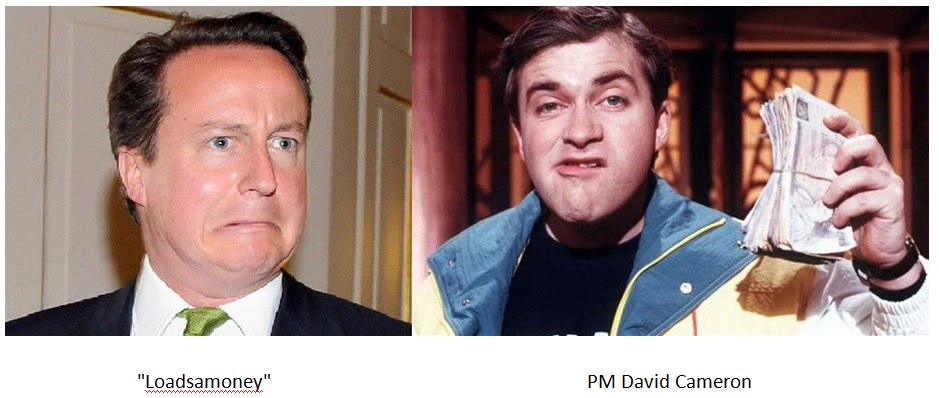
ImagePrime Minister David Cameron has had his judgement called into question yet again after a “date-night” meal out with his wife on Friday at a pizza restaurant in Soho.  Having enjoyed a simple repast of pizza and lasagne, accompanied by dough balls and a bottle of red – amounting to a bill of around £45 – the Premier stunned onlookers by airily leaving his delighted waiter a tip of £50.  One diner, struggling to find a reason for this munificent largesse, later wondered in a baffled tweet whether Mr Cameron was perhaps feeling flush after saving some money on his order by using a discount coupon.  Others have speculated that a tendency to be a heavy tipper could be compensatory behaviour given his history as a former member of the notorious Bullingdon Club, an exclusive society at Oxford University noted for its habit of smashing up restaurants and paying up on the spot for damage caused.  But Cameron has not always been so generous, once failing to leave a tip at all for a waitress who, not recognising the PM, said she was too busy to carry his coffee order to his table.

Whatever Mr Cameron’s motivation – and let’s not forget there’s a very happy waiter at the centre of this story – such extravagant actions are always open to criticism for a man so very much in the glare of public scrutiny.  Given that, and allowing also for his government’s implacable stance on its much-criticised austerity programme, it may be felt in some quarters that a £50 tip on a bill of rather less than that sends out all the wrong messages.  It’s an action, some may well carp, that can easily be related to the archetypal “flash git” yuppie of the eighties, so memorably portrayed by Harry Enfield as his “Loadsamoney” character, who would flaunt his wealth ostentatiously, waving wads of cash and lighting cigars with twenty pound notes.  This was of course satire, which is at the very cutting-edge of good comedy, and rightly so.  But all the best satire has that kernel of truth which validates its message, and the “Loadsamoney” image had many parallels in real life.  In casually handing over £50 to an incredulous waiter, Mr Cameron surely risks criticism from those who will say this shows the extent to which he is out of touch with millions nationwide to whom £50 would represent a weekly family shopping budget.

It’s not so long ago that Cameron’s blundering Work and Pensions Secretary, Iain Duncan-Smith, unwisely raised his head above the parapet with a claim that he’d be able to live on £53 a week, only to have to duck it down again hastily when a massively-supported public petition called on him to do just that.  The Coalition government seem a little damage-prone in terms of such tactical own-goals, and whatever message they are trying to get across about the need for everyone to tighten the belt, grin bravely and get on with it, is continually undermined by examples of individual ministers piteously whining that their lot is not a happy one.

The Tory MP for Mid Derbyshire, Pauline Latham, recently described how she was “left in tears” after clashing with officials from the Independent Parliamentary Standards Authority (Ipsa) over the matter of her security enhancements and just who is expected to pay the £9000 bill.  That’s a story which many will find less than heart-rending when so many pensioners face the “heat or eat” dilemma.  MP’s of all parties have agitated for a while now for salary increases of up to 32% at a time when public pay is frozen.  Failed bankers and incompetent Chief Executives are still routinely walking away from the disasters they have created with severance packages well into seven figures, whilst the poorest of the poor face a struggle to find the weekly bedroom tax bill, a struggle that has in several tragic cases terminated in suicide.

It is doubtful whether Cameron, replete with pizza, dough balls, wine and relaxed, chilled-out bonhomie, will have had any of this to the forefront of his mind when he grandly tipped his waiter before heading off back to work at the G8 Summit in Northern Ireland, where all his food and hospitality will be funded by grateful taxpayers.  The point is though, surely, that he should be aware of all of these issues, all of the time, and that this awareness should advise his every move.  To expose himself and by extension his government, to such ridicule and criticism over what was quite probably a sincere enough gesture (assuming that the tip really was from the PM’s own back pocket), shows a want of understanding and a failure to appreciate just how such public generosity, on a scale out of the reach of 98% of the population, will resonate with those who are struggling to make ends meet.  The lack of political awareness in a man elevated to Cameron’s high office is more than a little worrying.  If the tip had to be given, could it – should it – have been made in a less public way?  At least then, even if the story had come out, the effect would have been diluted by relative subtlety instead of appearing so crass and opportunistic.

The sad fact is that many in the Tory party, or even in the coalition government as a whole, will tend to dismiss an item of news like this as “pointless and frivolous” or a “storm in a teacup”.  But they would miss the point in so doing.  Because the incident is in the public arena, it has to be viewed in the context of the times, and that is very much a picture of so many people suffering and struggling due to our rulers’ insistence – against the better judgement of such bodies as the International Monetary Fund – on cutting, cutting and cutting again, cutting to the bone at the lower end of society where any further cuts are likely to lead to collapse.  And while this is going on, the PM is out on the town, taking in a show, heading off to a politicians’ junket with the finest of freebie food and drink, and casually, arrogantly chucking 50 quid at a waiter as if to say, “There you go, my good man.  It’s nothing to me.”

Mr Cameron, really.  It is time to give your head a shake, re-awaken whatever political awareness you ever had, and start to think about what you say and do.  Some of us out here would just love to have a chat with you about Real Life.

Murdoch to Hammer Another Nail Into Football’s Coffin?

Uncle Rupert

Uncle Rupert

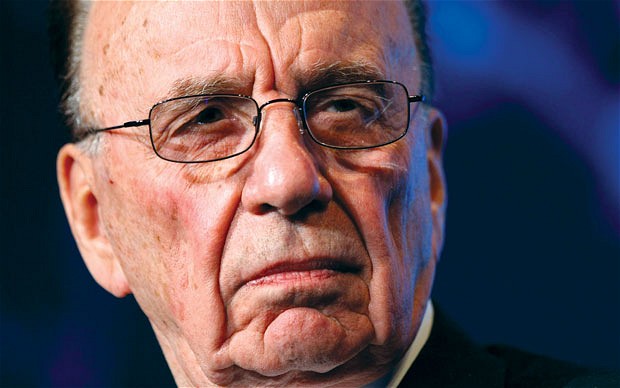
News is emerging that Rupert Murdoch may be about to unveil a “Summer Super League” plan for football, whereby 16 “elite” clubs would compete in a league-type competition throughout the traditional European close season.  Matches would be played in cities around the world in a transparent move to open up new markets and further popularise the Sky/Murdoch brand before an international audience possibly running to billions.

The drawbacks to such a plan spring readily to mind.  There is an obvious issue around the physical and mental demands upon players who might now be called upon to perform without a break in the whole calendar year.  That is, assuming that the players involved would be the senior players of the “elite” clubs envisaged as making up this league; but that does seem a fair assumption.  It is hardly likely that a project like this would have the necessary appeal and marketability if the competing teams were to field development squads – stars would be a pre-requisite for success.

What, then would be the impact on existing competitions?  It would be easy to imagine that the effect on, say, domestic cups could be quite shattering.  We’ve already had the precedent of Man U withdrawing from the FA Cup one season for some money-making prestige junket to South America where they competed for a version of the World Club Championship, and predictably sank without trace.  If the likes of Man U, Man City, Chelsea and Arsenal were to be invited (as they most certainly would be) to compete in Murdoch’s latest commercial fandango, then we could quite probably predict that – at the very least – the FA Cup, and certainly the League Cup would slide yet further down the priority list for these in-demand clubs.  Already we see shadow squads competing for the League Cup, it wouldn’t be a surprise to see withdrawals from that competition, and the treatment of the FA Cup as a proving ground for promising younger players.  It would be the eager crowds in the Far East, Australia, the USA and the Middle East who would have the pleasure of seeing the Premier League’s major talents performing in the flesh.

The question also arises: what of the World Cup, and the slightly lesser competitions held on individual continents?  Would FIFA be prepared to take on Murdoch and his increasingly omnipresent empire?  The days when domestic cup competitions caused a thrill of excitement and a sense of occasion are already receding into golden memory.  Will the same happen to the four-yearly cycle of the greatest international tournament of them all?  It’s not impossible; and if it were to happen, we’d know what to blame – the three M’s.  Murdoch, Money and Markets.

The time is fast approaching when Football as we know it will be in sore need of rescue by seemingly the only people left who actually care enough to want to preserve its proud history and tradition: the fans.  Obviously, I mean those of us who are old enough to remember the game’s great days, before Murdoch got his talons on it; when you stood on a packed terrace and sampled an incomparable atmosphere as you cheered on your favourites for under a pound and moaned mightily when that went up to £1.50.  When the only games shown live on the box were really big ones, Cup Finals, major International games, European nights and maybe the odd smattering of League games here and there.  Those were the days when you would have laughed out loud at any suggestion that one day you might be asked to fork out £60 a month for “entertainment” which might include Norwich v Wigan on a Monday evening.

That’s the reality we have now, and it’s scary to look ahead and see how much more our game might change now that Uncle Rupert has had this spiffy new idea.  He’ll want to make sure his audiences have their entertainment in a way that doesn’t put undue strain on their attention-spans, and allows enough time to sell, sell, sell in those commercial breaks.  Didn’t someone once have a great idea about playing four quarters instead of two halves?  What about time-outs?  Why bother with boring draws, can’t we have an exciting shoot-out?

If you doubt things might actually go down that road – just cast your mind back 25 years, and see if you could have imagined then the kind of game we have to watch today, and ask yourself: couldn’t it maybe happen?  Aren’t we in real danger of losing the last vestiges of the game we used to know and love?  And isn’t it maybe time to think just what the hell we can do about it?

Shaker Aamer: Prisoner 239 and the Ongoing Scandal of Guantánamo Bay

Shaker Aamer's children in 2009

Shaker Aamer’s children in 2009

On 14th February 2002 Shaker Aamer became a father for the fourth time, his British wife Zin Siddique bearing him a son, Faris. On the same day, Aamer was incarcerated in Guantánamo Bay detention camp, where he has remained ever since. He has never met his youngest son, now aged 11. There has been no trial. He has never been convicted of, nor even charged with, any crime.

Shaker Aamer had been working for an Islamic charity in Afghanistan in 2001 when he was captured in Jalalabad and handed over to US officials. He was interrogated and then transported to Guantánamo Bay. Based on the evidence of a fellow detainee, Aamer was believed to have been working as a “recruiter, financier, and facilitator” for al-Qaeda. He has consistently denied all such allegations, and it was argued on his behalf by Clive Stafford Smith of Reprieve that the evidence against him was unsafe, being inherently incredible and the product of false promises and even torture.

The Bush administration acknowledged that it had no evidence against Aamer and cleared him for release in 2007. The Obama administration cleared him for release in 2009. Four years on and Shaker Aamer continues to languish in the detention camp at Guantánamo Bay, no charges preferred against him, no apparent bar to his release, his physical and mental health declining as he maintains a hunger strike – a glaring example of the most scandalous abuse of natural justice it is possible to imagine.

It has been speculated that Aamer “knows too much” about the goings-on inside the detention camp; allegations of torture have been made over the years, and Aamer himself has referred to instances where he has had his head beaten against a wall, and on one occasion waking from a severe beating to find a pistol on the table in his cell. It may be felt by some that it is the potential embarrassment to the authorities, consequent upon Aamer being free to speak out, that is the reason behind his continuing imprisonment – not any outstanding issue of national security.

Aamer is a charismatic and eloquent man, sometimes described as the “unofficial spokesman of the detainees”, so it may well be that there is something for some people to fear in what he might have to say when he is fully at liberty to speak. Clive Stafford Smith again: “I have known Shaker for some time; because he is so eloquent and outspoken about the injustices of Guantánamo he is very definitely viewed as a threat by the US. Not in the sense of being an extremist but in the sense of being someone who can rather eloquently criticise the nightmare that happened there.” Whatever the reason, there can be no excuse. The governments of the UK and the US agree that Aamer should be released: there is no charge against him; there is no evidence against him. And yet there he remains having already served longer, and in the harshest of prison regimes, than many a convicted murderer.

The US stands accused in the light of this scandalous situation of behaviour it would roundly condemn if perpetrated by a regime in a third-world country. The UK in its ineffectual stance over efforts to release Aamer, stands complicit in such a charge. Neither country emerges with any credit intact over such a blatant injustice, maintained over such a long period of time. The situation demeans both nations, and casts into a dubious light their mantra of “freedom over fundamentalism, democracy over dictatorship”. In allowing the incarceration of Shaker Aamer to continue, along with that of his fellow detainees who are also imprisoned without charge or trial, the leading lights of the western world are in danger of having their credibility shredded by their failure to act where the dictates of justice and the principles of democracy clearly indicate that urgent action is required.

The viewpoint of some of the public in this country, hearing of Shaker Aamed’s plight on national radio, is perhaps predictable in the climate since 9/11 and particularly this past week since the Woolwich atrocity. But it is nevertheless cause for head-shaking despair at the ease with which people are hoodwinked into ignorant bigotry. “Why are you running this item?” demanded one irate texter. “I am white, British and proud.” Others cited pearls of wisdom such as: “no smoke without fire”, or “well he’s not even a British citizen.” Yet this is a human being, acknowledged by successive political leaders of the nation that has deprived him of liberty and family life for eleven years as “clear to be freed”. That has been his status for the last five years. And yet still he rots away in his prison cell, subjected to daily humiliation and ill-treatment, missing his family growing up. It’s difficult to imagine a more appalling Human Rights abuse, and yet this is being condoned and allowed to continue by the self-styled “Leader of the Free World”. And there are people who applaud this, and recoil in apparent disgust at attempts to stand up for the rights of those detained without trial. It’s almost too depressing for words.

It’s not just the US either. Up to 90 Afghans are held without charge at Camp Bastion by UK forces, allegedly “for their own safety”. This has been described as a “mini Guantánamo Bay” – and when the name of a detention camp is used as a byword for all that is wrong with the legal process and principles behind such imprisonment, you know that there is something fundamentally wrong. Guantánamo Bay may not have the genocidally evil resonance of Auschwitz, Dachau or Belsen, but the metaphorical application is not a million miles away.

Shaker Aamer’s family now live in Battersea in South London. His wife has been ill since he was incarcerated eleven years ago; she has suffered from depression and other episodes of mental health disorder. Aamer himself is worried about how things will be when he finally is released, a prospect he views with touching confidence that it will actually happen; yet with some trepidation too. “I may find it difficult to respond to being called Dad,” he says. “Maybe my kids will have to call me Prisoner 239”. In January 2010, his 12-year-old daughter Johina wrote a letter to then UK Premier Gordon Brown asking for his release. This was three years after President Bush cleared him for freedom and one year after Obama did the same thing. In 2011, Aamer’s father-in-law Saeed Siddique commented, “When he was captured, Shaker offered to let my daughter divorce him, but she said, ‘No, I will wait for you.’ She is still waiting.”

True Cost of Thatcher’s 1983 Election Win to be Revealed??

Image

Later today, figures on the number of suicides since the early eighties among British armed forces personnel who served in the Falklands Conflict are due to be revealed.  The headline figure on casualties of the fighting is clear cut: 649 on the Argentine side, 255 British and 3 Falkland Islanders for a total of 907 human souls lost over a rocky outcrop or two thousands of miles from the supposed “mother country” UK.  Arguments may well wax and wane over the correctness of Britain’s historical claims to the Falklands, or Malvinas as they are known in Argentina.  A rhetorical question often asked goes along the lines of: how would the British national psyche take it if Jersey or Guernsey, for instance, were to be claimed as sovereign territory by, say, Peru?  It’s a hypothesis that perhaps doesn’t get us far, other than maybe to provide an insight into the sensitivity of feeling over the Falklands/Malvinas issue for the citizens of Argentina.
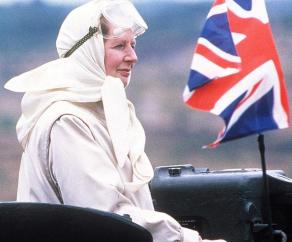
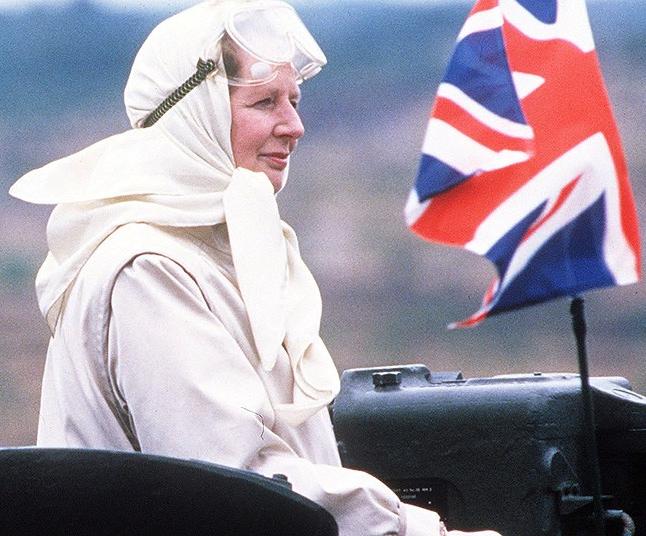
Thatcher: In Command

Thatcher: In Command

Whatever the true cost in lives of the Falklands conflict, what seems indisputable is that the military operation and its success in terms of objective achieved certainly boosted a Tory administration that had seemed in terminal decline at the time of the Argentine invasion.  It has been alleged that the British Government had prior intelligence of a pending military operation  planned by General Leopoldo Galtieri‘s ruling junta, the implication being that Thatcher’s cabinet saw the political potential of a decision to war-war rather than jaw-jaw, and so elected not to nip the situation in the bud.  The extent of the mess that this government found itself in is difficult to over-state; had they successfully deflected any threat of invasion, or had they launched a diplomatic initiative in the wake of the Argentine occupation, it is doubtful whether the impact on the subsequent general election would have been as great.  Pragmatically, “war” (even an undeclared war) was a better option than “jaw” – or so the conspiracy theory goes.

On the Argentinean side too, there appeared to be significant political advantage to be gained from a successful re-acquisition of Las Malvinas.  The Argentine economy was in an even bigger hole than that of the UK, and the effect of the invasion was a major boost to patriotic sentiment and the consequent short-term popularity – or at least acceptance – of the previously despised junta.  The historical precedent of a convenient war, to arouse jingoistic feelings and a surge in national pride, is there for all to see.  Both sides will have been well aware of the stakes, and a certain amount of brinkmanship may well have been at play.  This was probably more the case on the Argentine side, where it seems likely their military operation was calculated on the basis that the British would have neither the will not the logistical capability to mount a response in kind over such a long distance with all the problems of cost, supply lines and communications.  In the UK, the swiftness with which that response actually materialised was a tell-tale sign that Thatcher’s government were not only willing, but eager to launch the most emphatic counter-strike possible, and the fervour with which the public hailed the departing task force was a massive encouragement to the hastily-assembled War Cabinet.
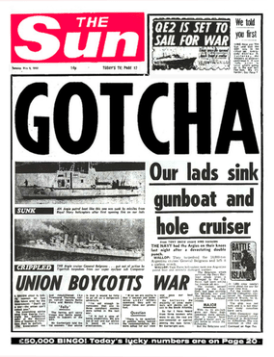
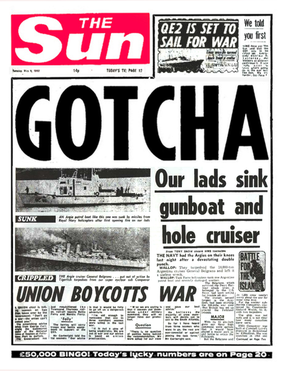
The Sun's Perspective

The Sun’s Perspective

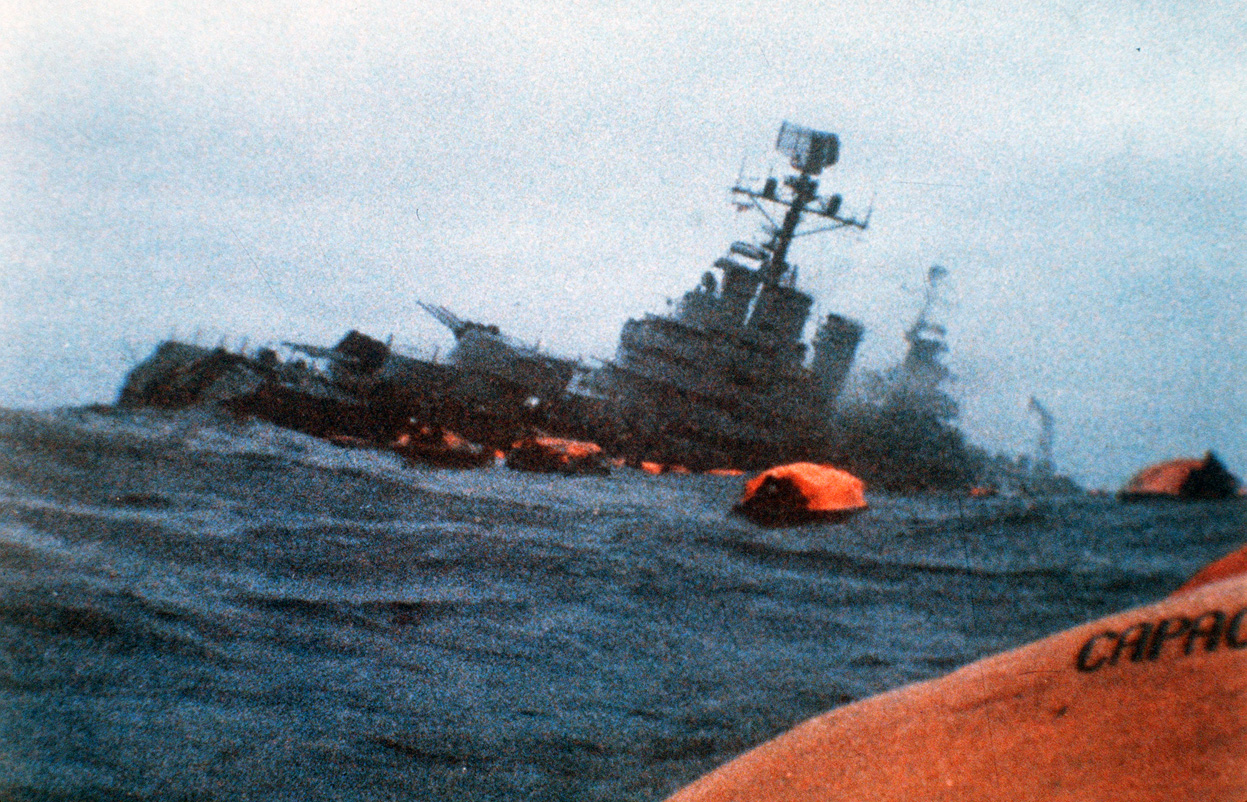
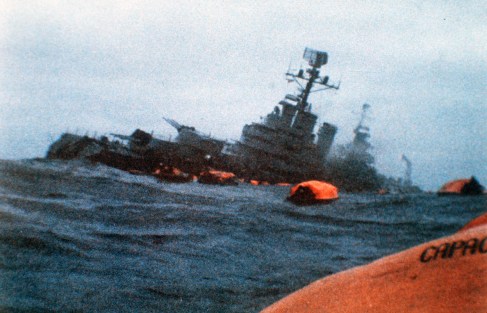
The attitude on the part of the British forces seems throughout to have been one of belligerent determination and ruthlessness.  Despite the problems of distance (mitigated to a large extent by the availability of the strategically-located Ascension Island as a stopping-off point), the task force had the inestimable advantage of its professional make-up; the troops were regulars, hardened pros, and many feared for the fate of the Argentinean rag-bag of conscripts should they ever meet in direct combat.  In the event, the Argentine forces fought bravely and effectively, leading to unexpectedly bloody and costly land engagements such as the Battle of Goose Green.  The conflict as a whole was more a series of sharp engagements on land, at sea and in the air, than any drawn-out and attritional process.  British naval losses were significant – the attack on HMS Sheffield following hard on the heels of the notorious action to sink the ARA General Belgrano.  Both sides were being hard-pressed to hold their political nerve in the face of dramatic losses such as these.

In the end, of course, there could only be one winner and the likelihood all along was that the British forces, superior in training and equipment even though stretched logistically over such a vast distance, would succeed in re-taking the islands.  So it proved, but at a tragic cost on both sides in terms of lives lost.  The die had been cast right from the start in that the losing side would almost inevitably see political change in the wake of the conflict and many now view this, from the perspective of over thirty years, as a calculated risk on the part of both governments concerned.  The determination to press ahead with military action and the relative marginalisation of the United Nations in the matter speaks of a strong political resolve on either side, and the results are clear to see; Galtieri was removed from power in January 1983, whereas Thatcher received an immense boost in the polls, and this “Falklands Factor” saw her sweep to victory with a landslide later that same year.  The monetarist Tory government was not, after all, destined to be a one-term experiment as had seemed so likely prior to 1982.  The course was well and truly set and the old-style of government, with full employment at the root of all its thinking, was consigned to history.  Thatcher may have been the economic disciple of Keith Joseph, but she showed the survival instincts of a polecat to go with her determination to make Monetarism work and banish old-style Socialism.  From that perspective, the loss of a few hundred lives in the South Atlantic may well have been considered expedient against the probability of electoral defeat and a return to what she will have thought of as the economics of disaster.

Thatcher was the big winner in the Falklands conflict.  It has been posited since that a great saving, in terms of money and human lives, could have been effected by ceding the territory to Argentina and providing each islander with a bounty of £1 million and a villa in the South of France.  This is, of course, a simplistic hypothesis, but the numbers certainly add up.  The British government of the day could not contemplate what they would have seen as a craven climb-down, with a devastating effect on how the UK was seen in the eyes of the world.  To this day, pro-Thatcher apologists refer to the way she “made Britain great again” or similarly extravagant claims.

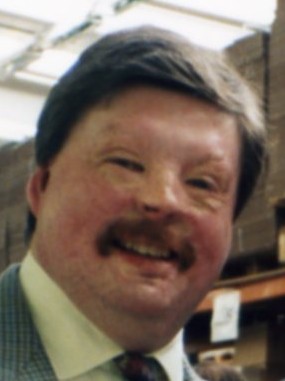
Simon Weston OBE

Simon Weston OBE

It is notable in this context that one of the most fulsome tributes paid to the late PM, after her death in April this year, was from Welsh Guards veteran Simon Weston OBE who famously suffered extensive burn injuries during the Falklands campaign in the attack on RMS Sir Galahad. Weston is now seen as an inspirational figure for his recovery from his injuries and his charity work, and his endorsement of Thatcher’s premiership was seen as a powerful vindication of her policies, particularly where the Falklands issue was concerned.

What appears absolutely certain is that Thatcher gained herself an extra seven years she would not otherwise have had, to advance her own agenda, and change the face of Britain forever.  Whether you regard the number of lives lost as a price worth paying for that will depend, naturally, on your own political convictions.  But it may be worth noting, later today, just how high that price was when those official Falklands-related suicide figures are finally released.  At a time when our government today is starting to pile up the body count as people take a drastically simple way out of the world being foisted on them, we may reflect on this depressing tendency of governments to view individuals as mere political pawns or economic units, rather than people imbued with a spark of life and the right to an existence outside of macro political considerations.  Life should be seen as far too precious to end up as a statistic of the battle to stay in power.