Category Archives: Television

True Cost of Thatcher’s 1983 Election Win to be Revealed??

Image

Later today, figures on the number of suicides since the early eighties among British armed forces personnel who served in the Falklands Conflict are due to be revealed.  The headline figure on casualties of the fighting is clear cut: 649 on the Argentine side, 255 British and 3 Falkland Islanders for a total of 907 human souls lost over a rocky outcrop or two thousands of miles from the supposed “mother country” UK.  Arguments may well wax and wane over the correctness of Britain’s historical claims to the Falklands, or Malvinas as they are known in Argentina.  A rhetorical question often asked goes along the lines of: how would the British national psyche take it if Jersey or Guernsey, for instance, were to be claimed as sovereign territory by, say, Peru?  It’s a hypothesis that perhaps doesn’t get us far, other than maybe to provide an insight into the sensitivity of feeling over the Falklands/Malvinas issue for the citizens of Argentina.
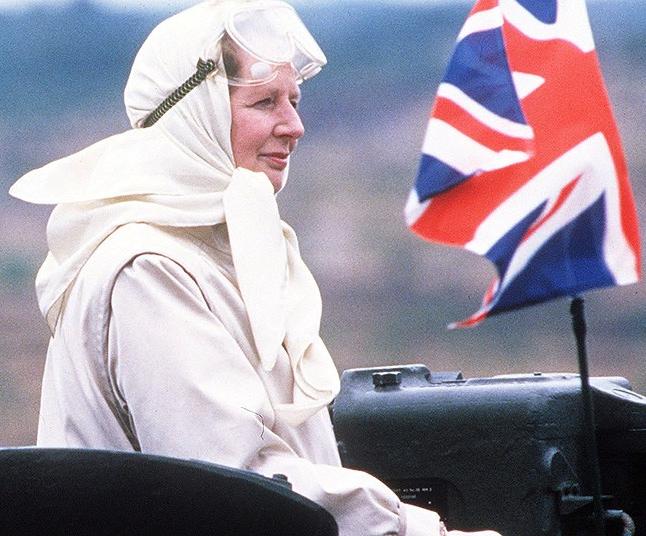
Thatcher: In Command

Thatcher: In Command

Whatever the true cost in lives of the Falklands conflict, what seems indisputable is that the military operation and its success in terms of objective achieved certainly boosted a Tory administration that had seemed in terminal decline at the time of the Argentine invasion.  It has been alleged that the British Government had prior intelligence of a pending military operation  planned by General Leopoldo Galtieri‘s ruling junta, the implication being that Thatcher’s cabinet saw the political potential of a decision to war-war rather than jaw-jaw, and so elected not to nip the situation in the bud.  The extent of the mess that this government found itself in is difficult to over-state; had they successfully deflected any threat of invasion, or had they launched a diplomatic initiative in the wake of the Argentine occupation, it is doubtful whether the impact on the subsequent general election would have been as great.  Pragmatically, “war” (even an undeclared war) was a better option than “jaw” – or so the conspiracy theory goes.

On the Argentinean side too, there appeared to be significant political advantage to be gained from a successful re-acquisition of Las Malvinas.  The Argentine economy was in an even bigger hole than that of the UK, and the effect of the invasion was a major boost to patriotic sentiment and the consequent short-term popularity – or at least acceptance – of the previously despised junta.  The historical precedent of a convenient war, to arouse jingoistic feelings and a surge in national pride, is there for all to see.  Both sides will have been well aware of the stakes, and a certain amount of brinkmanship may well have been at play.  This was probably more the case on the Argentine side, where it seems likely their military operation was calculated on the basis that the British would have neither the will not the logistical capability to mount a response in kind over such a long distance with all the problems of cost, supply lines and communications.  In the UK, the swiftness with which that response actually materialised was a tell-tale sign that Thatcher’s government were not only willing, but eager to launch the most emphatic counter-strike possible, and the fervour with which the public hailed the departing task force was a massive encouragement to the hastily-assembled War Cabinet.
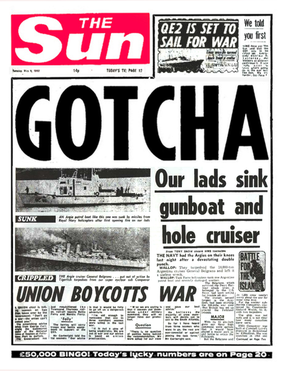
The Sun's Perspective

The Sun’s Perspective

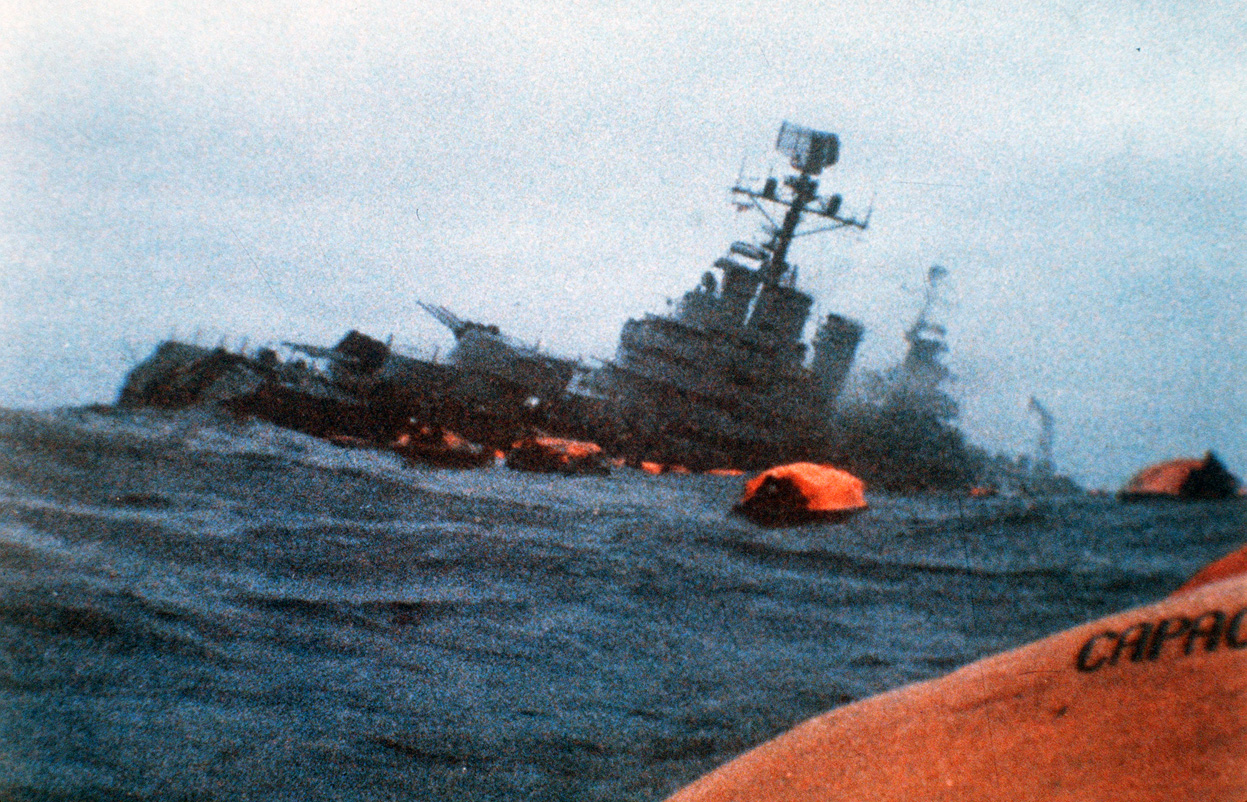
The attitude on the part of the British forces seems throughout to have been one of belligerent determination and ruthlessness.  Despite the problems of distance (mitigated to a large extent by the availability of the strategically-located Ascension Island as a stopping-off point), the task force had the inestimable advantage of its professional make-up; the troops were regulars, hardened pros, and many feared for the fate of the Argentinean rag-bag of conscripts should they ever meet in direct combat.  In the event, the Argentine forces fought bravely and effectively, leading to unexpectedly bloody and costly land engagements such as the Battle of Goose Green.  The conflict as a whole was more a series of sharp engagements on land, at sea and in the air, than any drawn-out and attritional process.  British naval losses were significant – the attack on HMS Sheffield following hard on the heels of the notorious action to sink the ARA General Belgrano.  Both sides were being hard-pressed to hold their political nerve in the face of dramatic losses such as these.

In the end, of course, there could only be one winner and the likelihood all along was that the British forces, superior in training and equipment even though stretched logistically over such a vast distance, would succeed in re-taking the islands.  So it proved, but at a tragic cost on both sides in terms of lives lost.  The die had been cast right from the start in that the losing side would almost inevitably see political change in the wake of the conflict and many now view this, from the perspective of over thirty years, as a calculated risk on the part of both governments concerned.  The determination to press ahead with military action and the relative marginalisation of the United Nations in the matter speaks of a strong political resolve on either side, and the results are clear to see; Galtieri was removed from power in January 1983, whereas Thatcher received an immense boost in the polls, and this “Falklands Factor” saw her sweep to victory with a landslide later that same year.  The monetarist Tory government was not, after all, destined to be a one-term experiment as had seemed so likely prior to 1982.  The course was well and truly set and the old-style of government, with full employment at the root of all its thinking, was consigned to history.  Thatcher may have been the economic disciple of Keith Joseph, but she showed the survival instincts of a polecat to go with her determination to make Monetarism work and banish old-style Socialism.  From that perspective, the loss of a few hundred lives in the South Atlantic may well have been considered expedient against the probability of electoral defeat and a return to what she will have thought of as the economics of disaster.

Thatcher was the big winner in the Falklands conflict.  It has been posited since that a great saving, in terms of money and human lives, could have been effected by ceding the territory to Argentina and providing each islander with a bounty of £1 million and a villa in the South of France.  This is, of course, a simplistic hypothesis, but the numbers certainly add up.  The British government of the day could not contemplate what they would have seen as a craven climb-down, with a devastating effect on how the UK was seen in the eyes of the world.  To this day, pro-Thatcher apologists refer to the way she “made Britain great again” or similarly extravagant claims.
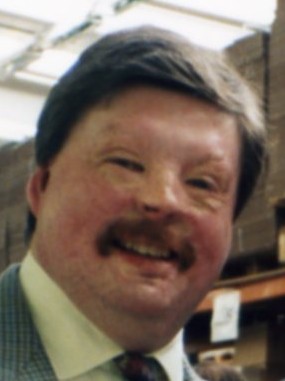
Simon Weston OBE

Simon Weston OBE

It is notable in this context that one of the most fulsome tributes paid to the late PM, after her death in April this year, was from Welsh Guards veteran Simon Weston OBE who famously suffered extensive burn injuries during the Falklands campaign in the attack on RMS Sir Galahad. Weston is now seen as an inspirational figure for his recovery from his injuries and his charity work, and his endorsement of Thatcher’s premiership was seen as a powerful vindication of her policies, particularly where the Falklands issue was concerned.

What appears absolutely certain is that Thatcher gained herself an extra seven years she would not otherwise have had, to advance her own agenda, and change the face of Britain forever.  Whether you regard the number of lives lost as a price worth paying for that will depend, naturally, on your own political convictions.  But it may be worth noting, later today, just how high that price was when those official Falklands-related suicide figures are finally released.  At a time when our government today is starting to pile up the body count as people take a drastically simple way out of the world being foisted on them, we may reflect on this depressing tendency of governments to view individuals as mere political pawns or economic units, rather than people imbued with a spark of life and the right to an existence outside of macro political considerations.  Life should be seen as far too precious to end up as a statistic of the battle to stay in power.

Play-Off Karma Drama as Watford Sink Leicester to Book Wembley Berth

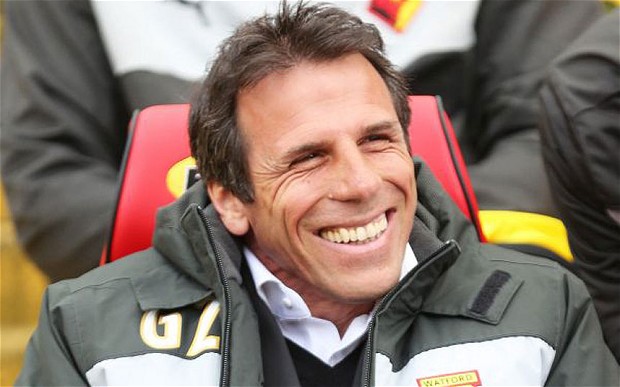
Happy Gianfranco Zola

Happy Gianfranco Zola

Given the incredible outcome of this game, it would be tempting to dismiss the first 94 of the 97 minutes as irrelevant. That would of course be the greatest injustice to a fine game which had already yielded three wonderful goals; first a brilliant finish from Matej Vydra as the ball dropped from behind him over his left shoulder for a terrific left-foot volley past the helpless Schmeichel. Then the reliable Nugent found space at the far post to rise and guide a great header just out of Almunia’s reach to level the match and put Leicester back ahead, 2-1 on aggregate. Half time, and it was “as you were” with City retaining the lead they’d gained in the first leg at the King Power Stadium.

As the second half progressed, Watford were hammering away and Leicester – although pressed back constantly – seemed to be coping relatively well. Home manager Gianfranco Zola knew he had to change things, and he acted to replace Lloyd Doyley with Fernando Forestieri. Within a matter of minutes, Watford produced a quite excellent team goal, Vydra playing an immaculate one-two with Troy Deeney to score his second from just inside the area. So, we were all square again, and the nearer the match edged to full-time, the more it looked as if an extra 30 minutes were inevitable.

The full ninety had already ticked by and the match was well into six minutes injury time when Anthony Knockaert made his fateful move down the Watford left flank. Showing trickery and strength, he shrugged off a foul challenge outside the box, but then as he progressed into the area, a much lighter touch felled him. As if in slow motion, referee Michael Oliver assessed the situation, failed to call it for the dive it was and pointed to the spot. Watford players were anguished and amazed, Zola on the touchline was clearly stunned, showing with every line of his being that he could see a whole season’s work going up in smoke right at the death. Knockaert placed the ball on the spot as Leicester’s travelling hordes prepared to celebrate Wembley, the penalty was hit low and down the middle but not with great force – and there was Almunia’s trailing foot to stop the ball. Still, Knockaert was closing in on the rebound, surely poised to hammer the ball into the net and finish the matter, but Almunia did it again, rising to his knees to flail an arm at the loose ball, deflecting it to a defender who gratefully belted it out of the area.

And now Lady Luck performed one of those graceful pirouettes for which she is rightly famed. As the Leicester players were still coming to terms with their failure to seal the tie, Watford showed no such distraction, playing the ball out to the right and flooding support into Leicester’s own penalty area. The ultimate end-to-end finale was playing out now, as the ball was crossed from near the right hand corner flag, beyond the far post where sub Jonathan Hogg beat Schmeichel in the air to head down precisely for the onrushing Deeney, who slammed the ball gleefully, unanswerably, into the Leicester net. 3-1 on the day, when it could so easily have been 2-2. 3-2 to Watford on aggregate, when that score had looked like being reversed in City’s favour. The Leicester players stood waiting for the restart as the pitch was cleared of jubilant Hornets fans, transfixed and disbelieving at the turn of events which had seen certain victory turn to catastrophic defeat. A few more seconds, and it was over.

Ironically, of course, if Knockaert had stayed honest and stayed on his feet instead of going down so easily, the game would probably have gone into extra time, and who knows what might then have happened. On such twists of fate are whole seasons decided, and karma had come to Knockaert in its cruellest form, landing the most clinical of knockout blows. He ended up in tears, wandering around the pitch after the whistle, uncomprehending as his desolate team-mates tried in vain to comfort him. Over the two games of this tie, it’s fair to say that Watford deserved to progress, so for once justice was done, and seen by millions to be done in the most dramatic and entertaining manner. But spare a thought for the hapless Anthony Knockaert, hero (albeit with feet of clay) to villain in the space of a few seconds as his world turned upside down. That’s life – and Leicester will continue their life in the Championship next season. Watford, meanwhile, march on con brio – full of confidence. They will now be optimistic of completing their Italian Job and winning promotion at Wembley.
Where’s That Sick-bag?

A Sickeningly Solemn Moment

A Sickeningly Solemn Moment

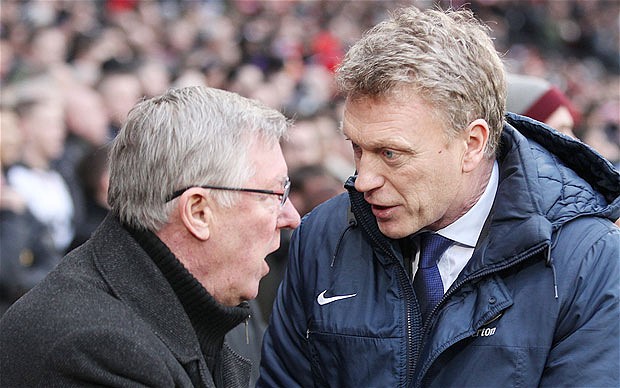
Ladies and gentlemen, if you have sick-bags to fill, prepare to fill them now.  If sugary treacle and soft-sawder syrup is your thing, get ready to drown in the stuff.  “Sir” Alex Ferguson is departing the stage, and there won’t be a dry seat in the house.  Sky TV are preparing for an extended weepathon as their hero who hated them, their idol who despised them, climbs down unsteadily from his throne of purchased glory and totters off upstairs to chew gum and glower balefully down at his hapless successor David Moyes.

This afternoon’s live TV offering has a delicately-scripted path to follow.  There will be a soft-focus montage of many of the Purple-Nosed One’s finest moments – Steve Bruce’s 98th minute winner against Sheffield Wednesday to a background of Martin Tyler’s shrieking climax as Man U all but clinched their first plastic Title.  Giggsy-Wiggsy’s finest FA Cup goal of all time as the Arsenal defence parted like the Red Sea and we were treated to an unsolicited view of the Husband of the Year’s chest-rug.  A selection of van Persie’s catalogue of sublime finishes from the Dutchman’s “One Man Title-Winning Season” collection.  It is doubtful however that Eric Cantona’s exposition of martial-arts skills from his South London Show of 1995 will make the cut.

After the moonlight and roses video softener has set the correct ambiance, and armchairs all over Devon and Cornwall are already bedewed with manly tears, we may have an actual interview with the dearly-lamented Departing One.  Subtitles will be provided for this section of proceedings, and yet it won’t so much be what He says, but more the way He says it.  As an example, if you hear a glottal noise along the lines of “Thiznaequayshtyunabootthaaaaat” it means that S’ralex is saying something he wishes you to accept as undisputed fact.  This happens a lot.  But those craggy and broken-veined features of pasty pink splotched with purple may at some point break into a grimace not unadjacent to a smile, and this will be the cue for the suits in the Sky Studio to howl with unrestrained emotion as the tears flow anew.  It’s going to be a harrowing afternoon, and we’re nowhere near kick-off yet.

At some point we will have testimony from a group of the usual suspects as to the essential saintliness and unmatchable achievements of the man.  Lou Macari, Paddy Crerand, Peter Schmeichel, Steve Bruce, Bryan Robson and other such neutral witnesses will speak their lines to camera with all the sincerity and conviction of a tailor’s dummy. Ron Atkinson and Tommy Docherty may even appear if time permits, and attempt to mask their burning resentment at being consigned to the dustbin of history with a few clamp-jawed soundbites of faux admiration, before shambling off, clutching Mr Murdoch’s fat cheque.

And then, the game.  It has been thoughtfully arranged that the final day opponents at the Theatre of Hollow Myths should be a footballing side of attacking ambitions.  The script will call for them to make pretty patterns in midfield whilst offering no great threat to Man U’s rocky defence, where Phil Jones will be frantically gurning in an attempt to frighten off any Swansea attacker who dares venture too close.  At regular intervals, an uncharacteristically misplaced pass from the away team bit-part players will gift possession to Man U, who will then – according to the stage directions – “swoop to score another magnificent goal for the Champions.”  Ecstasy will ensue in the stands and the commentary box, and flowers will be thrown at the feet of the gum-chewing Govan Guv’nor as he performs that annoying little staggery old man’s dance from under the dug-out canopy, champing away in a Wrigley’s rictus of triumph.  It is an image that will be burned on the retinas of a whole football-supporting generation.

After the match – whatever time that might be depending upon how long it takes Man U to score The Winner – we shall have post-game interviews, more video footage to the accompaniment of weeping strings and synth, rambling reminiscence from the assembled sycophants – and maybe a final word from the abdicating Emperor himself, who will remind us, via an interpreter, that there’s “aye anither game tae go yet, by the waaaaay.”  And the crowds will sigh and depart for all points south, the lights will go out at the Theatre of Hollow Myths and the scene will gradually darken as a rainy Salford day fades into the night, as we all must sooner or later.  All that has been missing is the trademark Lone Piper, but he is reserved for even more solemn occasions, and his time is not yet.

And so it will be over.  It will be time for the Sky suits to heave a gigantic, shuddering sigh signifying end-of-an-era grief and regret, and then they must reluctantly move on.  A new hero awaits, and he’s sadly lacking as yet in the trappings of success and the aura that the commercially-aware would wish for him.  A project is to hand now that S’ralex has faded into the sunset, and that project is the reinvention of an Honest Pro into a Demigod, the Greatest Manager Of All, for such is the requirement of the twinned Hyperbole Departments of Sky and Man U for the unsuspecting Mr Moyes.  It’s a work in progress even now, but the momentum will gather as the new season approaches and the threat of upstarts such as Chelsea. Arsenal, Man City and even Liverpool, which has to be repelled for another year.  It will need to be business as usual, even without the Blessed Fergie. Life goes on, and today was merely the schmaltzy climax to the long-running soap-opera which was Man U under S’ralex.  It’s time to dry the tears and count the money.

Now where IS that sick-bag?

Moyes? A Strangely Unambitious Choice

"Eh - by the waaaaay, Ah'll no' be leavin' ma whisky, wee Moyesy"

“Eh – by the waaaaay, Ah’ll no’ be leavin’ ma whisky, wee Moyesy”

David Moyes swiftly emerged yesterday as a heavily odds-on favourite to replace Alex Ferguson as boss at the Theatre of Hollow Myths.  On the face of it, there’s an obviousness about this solution; Moyes has performed solidly for over a decade in the top flight at Goodison Park on a budget that, if not exactly shoestring, certainly lacked the munificence of the chests of bullion in other parts of the North West.  He has failed to win a trophy in that time but that is not in itself a criticism of any coach in an era when the silverware tends to go to the highest bidder.  The best coach around, M. Wenger, has been potless since 2007, after all.  Moyes has the appearance of a “safe pair of hands” option – someone who will come in and instigate evolution rather than revolution, a guy who can be relied upon not to depart too suddenly or drastically from the blueprint laid down by the man whose brooding presence upstairs will be a palpable influence on any new boy, whoever he might be.

This acceptance by Man U that Fergie will still be kicking about the place is tinged with danger; the lesson of history taught by the hanging-on post retirement of Matt Busby seems not to have been heeded.  The legacy of Fergie is more akin to a poisoned chalice than an inspirational example; the new coach on the block will have to set off on his hoped-for marathon at 400 metre pace.  There will be little chance or latitude afforded for any cosy bedding-in period at a club with a constitutional, almost Freudian need to be the biggest and the best.  A large proportion of their support has been conceived, weaned and nurtured on this propaganda and the last thing that any of them will want to feel is the chill blast of reality as the likes of City, Chelsea and Arsenal walk off with next season’s honours.  So Moyes (most likely) or whoever else it might be will simply have to hit the ground running, compete effectively at the highest level, placate a squad of big egos who are used to a very particular type of regime and solve the immediate Rooney wantaway (or wantanewcontract) problem.  All of this under the basilisk glare of elder statesman Fergie, glowering from a handy balcony over his former empire, hairdryer silenced but still handy.

The immediately noticeable thing about Moyes is his relative lack of European experience, and Man U is a club that sees itself as a European force despite the threadbare achievements on the continent under Fergie.  The other burning question that has to be asked then is: what would other European “giants” have done after losing a quarter-century institution as Man U have just done? Would they have plumped for Joe Bloggs from down the road, or would they instead have scoured the continent and beyond for a stellar personage of massive achievement elsewhere, someone whose CV is festooned with honours and who would breeze in expecting to maintain the winning habit?

It’s irresistible to feel that the latter would be the preferred option for your Barcas and your Real Madrids, your Bayern Munichs and – yes – your Chelseas, too.  In the immediate aftermath of the announcement that Fergie would be chewing his gum in the directors’ box next term, hopeful noises were emanating from the Man U-friendly press that The Purple-Nosed One might possibly be succeeded by The Special One, maybe even with one C. Ronaldo in tow.  It may yet be that Christiano brings his balletic skills with double-pike and twist back to Man U, but any prospect of Jose heading to Salford appears remote in the extreme – he is far more likely to be strolling down the Kings Road this summer.  Other ideally-qualified coaches have scrambled over each other in their haste not to queue up for the Man U job.  The poisoned chalice image appears to have lodged within the minds of Europe’s coaching elite.

So it is likely to be Moyes – not for his own sweet self, but more for the lack of any realistic alternatives.  It is this paucity of choice for a club like Man U – who were supposedly aware of Fergie’s retirement decision as far back as February – that is rather baffling.  Perhaps they expected Fergie would soldier on for a few years yet.  Perhaps also they weren’t expecting the grumpy Govanite to give up so easily on his ambition to overhaul Liverpool’s European Cup record.  But the emergence of crack teams from Germany as well as the still-formidable forces from Spain and elsewhere in England appear to have been a reality check for “S’ralex”, who must in his more coherent moments have realised that climbing the European summit again in the foreseeable future is a dimly remote prospect. It may well be that a “safe” appointment such as Moyes will serve to dilute expectations just enough to cure these fanciful notions that Man U could possibly break into the Continental elite.  Perhaps an FA Cup run and top four in the Premier League will suffice next season, and save Moyes from the fate of Wilf McGuinness back in the day.  But I frankly doubt it.

The King is dead.  Long live the King – but who, and for just how long?

Thatcher & Fergie – Unlikely Bedfellows

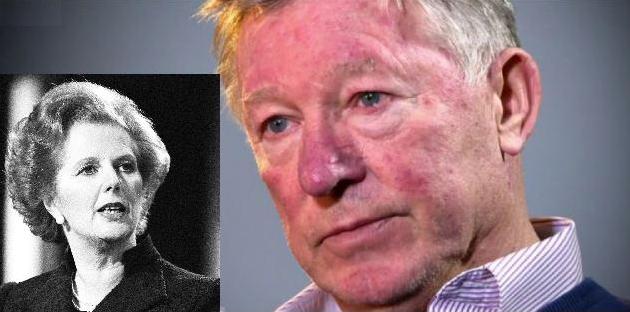
Two Media Darlings

Two Media Darlings

It’s been an awkwardly stomach-churning day for any self-respecting Man U-hater with anything but the most robust of digestive systems.  The output of Sky TV and BBC Radio Five Live in the wake of the Govan Guv’nor’s resignation as Supremo at the Theatre of Hollow Myths has been wall-to-wall, sickly sweet revisionist nonsense.  It was perhaps predictable – Man U seem to attract this kind of attention quite regularly.  They hypocritically call Liverpool the “City of Pity” and “Shrine Worshipers”, and yet there was the cloying sentimentality of the Lone Piper at Old Trafford when Busby died, and of course there is the nauseatingly poorly-written “Flowers of Manchester” doggerel recycled every February 6th when the Man U Marketing Machine gears itself up for the annual “Let’s Make More Money Out of Munich” event.  The treatment of Man U in the media has a lot in common with the ingestion of a copious draught of heavily-salted water.  Both are pretty much guaranteed to make you sick.

For some of us, it’s only been a couple of short weeks recovery time since the last bilious attack brought on by an onslaught of gushing praise for a much-hated public figure.  To listen to the BBC’s output in the wake of Maggie Thatcher’s death, you’d think she was universally acknowledged as a saint who personally saved our country from the hordes of infidel savagery, instead of a humourless and uncaring woman who presided over the decimation of manufacturing industry and created an underclass of unemployed dole fodder.

Ironically, that assessment of Thatcher – the realistic one, not the BBC’s rose-tinted, soft-focus blarney – would almost certainly strike a chord with Ferguson, a man who has always made much of his Socialist roots.  And yet the fulsomely worshipful bilge poured all over her death and funeral has been rivalled today both in flavour and quantity as various media outlets have sought to paint a picture of “Fergie the Greatest”, conveniently ignoring the essential character of the man, which is that of a coarse bully and a ruthlessly competitive control-freak who would brook no opposition and practiced suppression of dissenting voices on a grand scale as well as nepotism, intimidation and other deeply unattractive tactics.  Ferguson and Thatcher operated in vastly different spheres, and pursued their objectives in vastly different ways, although the objectionable single-mindedness and refusal to acknowledge any other point of view was common to both.

It is arguable too that both shared a similarly dislikeable personal character and yet that both represented vested interests which have caused a complaisant media and establishment to bend over backwards in their efforts to hide these unfortunate facts.  However difficult they both were to handle at different times – Ferguson famously “banned” the BBC from his personal airspace for an extended period, claiming in a juvenile fit of petulance that the Corporation was “pro-Liverpool”, and objecting to their focus on the activities of his shady agent son Jason – the media still fall over themselves to praise both to the skies.  Powerful interests are at work here, rigid agendas are being pursued.

Ferguson will not relish any comparison with the Iron Lady, and yet such comparisons are irresistible.  Nepotism, for instance.  Thatcher was accused in many quarters of using her influence to smooth the path to riches of her not-outstandingly-bright son Mark, a man who would seem to have difficulty finding his way out of an open box.  Ferguson allegedly pushed the services of Agent Jason on young players at Man U and reacted with fury if the lad in question went elsewhere.  When his fledgling manager son Darren was sacked by his employers after his latest relegation, Fergie senior reacted by recalling two young Man U players who had been at that club on loan.  The similarities in modus operandi for Fergie and Thatch abound.

It is for the gross and over-the-top way in which both have been virtually canonised by the media in the wake of their exit from the stage that really sticks in the throat, however.  The tasteless extent of it, the gushing, nauseatingly deferential tone of the ubiquitous tributes, strike a remarkably similar tone in either instance.  In Thatcher’s case, the masses thus appeased were the blue-rinse brigade and their Colonel Blimp husbands, Tories to their last cell, and voraciously hungry for any news coverage to confirm their view that la Thatch was the greatest since Churchill, the greatest peacetime leader ever.  The claims of Clement Attlee, the authentic greatest PM ever, were callously overlooked, as was the fact that his funeral in 1967 was a quiet and dignified affair.  In the case of Ferguson, the masses are of course the legions of Man U fans all over the world and in Torquay and Milton Keynes in particular, who have been fed the myth of Man U being the greatest club in the world (Arf!) and who now wish to hear Fergie being called the greatest, against the claims of true greats like Busby, Revie, Shankly and the rest, proper managers who had to do it all on a level playing field and not the Sky-weighted Man U-centric environment we have now.

Radio Five Live are still at it, as I listen.  We go “back to Old Trafford” on a regular basis, to listen to the hushed tones of a reverential reporter, laying it on thick for the benefit of the thick.  It’s all so remarkably similar to the nonsense we all suffered in the wake of Thatcher’s passing.  Perhaps, for Ferguson, that is the unkindest cut of all.

Parachute Payments – Are They Really All That?

Saunders - Not Good Enough

Saunders – Not Good Enough

Every year, you hear the same thing about next season’s Championship division: “God, it’ll be tough to go up, look at the clubs coming down, all that money from Parachute Payments.”  Yeah, well.  Look at last year’s lot, Wolves, Blackburn and Bolton.  All dropped out of the top-flight and landed in the Championship with an almighty thump, weighed down by all that fools’ gold in their pockets.

In Wolves’ case, the fall was so heavy they’ve still not stopped, crashing through the floor of the Championship into the dank and unpleasant dungeon of League One.  This has been aided, it’s true, by spectacularly incompetent management right from the top.  The decision to get rid of Big Mick McCarthy – as a knee-jerk reaction to a derby-day thrashing by West Brom – is still haunting the Wanderers.  Terry Connor floundered in the deep end and sank without trace.  Dean Saunders has appeared to be clueless, his attempts at bluster unconvincing, even his saner moments lacking in any content or coherence.  McCarthy, meanwhile, prospers at Ipswich – a deeply impressive man and a highly competent manager at this level.

Blackburn, with management troubles and boardroom incompetence of their own, have been only a little better, but at least escaped a second successive relegation which appeared likely at one point.  Early in the season they spent £8 million on Jordan Rhodes, but then started messing about with the management structure and suffered accordingly.  Their failure has been at a price way beyond what the likes of Leeds could afford, and they will be looking ahead with some nervousness as Rhodes wonders whether his move was a wise one for a fledgling Scottish international.

Bolton too have flattered to deceive, failing to capitalise on a reasonable start, and pulling up no trees in a division with hardly a truly outstanding team, despite the seeming ease of Cardiff’s promotion.  The Trotters were still in with a chance of making the play-offs on the final day, but blew it by only drawing at home to Blackpool and thus letting in Crystal Palace at the last gasp – and the Bolton Premier League exile will last at least another year.

So what should we have to fear from next year’s lot?  QPR will need a radical overhaul after failing to recover from the cack-handed management of Mark Hughes, a man with one big fan he can see any time he likes in any handy mirror.  Reading could be a force, but they suffer from ownership who seem to feel that they have some football knowledge; usually a fatal ingredient.  There are rumours that some of Brian McDermott’s promotion-winning Class of ’12 would not be averse to a reunion with their old boss at Elland Road.

It remains to be seen who joins these two in the death-spiral downwards; the most likely is Wigan, who really do baffle me.  They are capable of wonderful football and will grace a Cup Final against Manchester City whatever the outcome of that occasion.  If the Latics could hang on to Roberto Martinez, they’d have to be regarded as challengers at the top end of next year’s Championship – assuming they do end up coming down.  Newcastle, Sunderland and Norwich will be nervously waiting to see if Wigan can pull off yet another last-ditch escape, as seems to be their perennial habit.

Obviously any relegated club will have the much-vaunted splodge of parachute wonga to cushion their fall, but they’d do well to look at the fate of last year’s Premier League jettison, and not assume that the ill-gotten gains will automatically ease their path back. Relegation can be habit-forming.  Just ask Wolves about that.

Spoilsports Leeds Sting Angry Hornets

ImageWatford 1, Leeds United 2

Leeds United, perennial party-poopers, did it again at Watford in a crazy game that sometimes bore more resemblance to an episode of Emergency Ward 10 than the blood-and-thunder Championship clash it was. Still smarting from a bizarre 1-6 defeat at Elland Road in the reverse fixture, Leeds were in no mood to stand idly by and watch their hosts stroll to the three points which – as it turned out – would have seen them gain automatic promotion. The Whites worked hard from the start, despite the early loss of injured Steve Morison, closing down space, snapping into tackles and pressing their opponents well up the field, denying them opportunities to create.

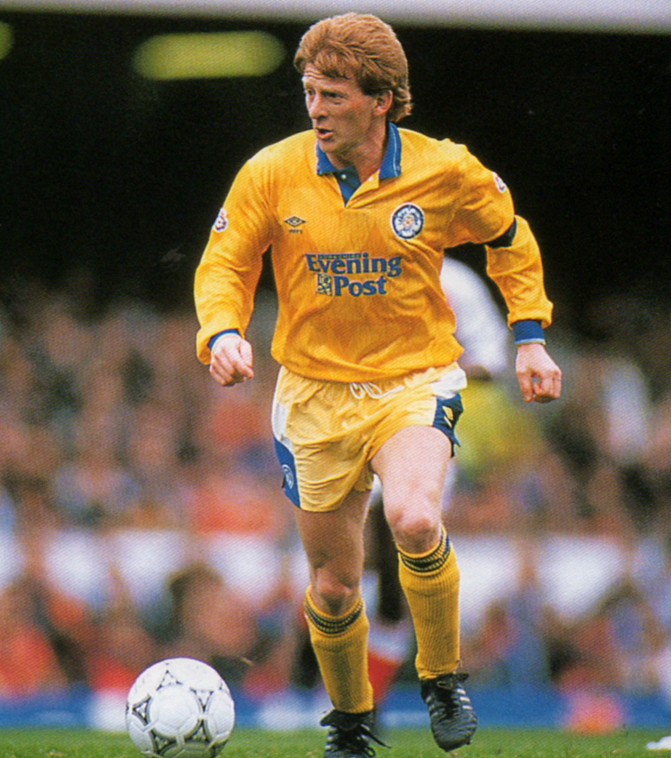
Sky co-commentator and one-time Man U flop Garry Birtles marred the viewing experience with his frequent inane interjections – his verdict on substitute Dominic Poleon’s part in the unfortunate injury to Jonathan Bond, Watford’s late replacement ‘keeper, being particularly obtuse. “He knew what he was doing alright,” spluttered the werewolf-faced ex Forest goal-hanger – apparently crediting our Dom with the skill to push a Watford defender in the back whilst running at full tilt and at precisely the correct angle to cause deliberate damage to the unlucky ‘keeper. But Birtles never was the sharpest tool in the box, and Sky would serve us all better if they provided a menu option to mute him.

Bond, only playing because of a warm-up injury to Manuel Almunia, seemed seriously hurt, but to suggest any deliberate intent to that effect was ridiculous and unjustified. After a lengthy break for treatment, the stricken ‘keeper was carried off to be replaced by a 19 year old rookie, Jack Bonham, for whom this would indeed be a baptism of fire. Shortly after entering the field Bonham was involved in a mix-up with one of his defenders as the ball headed into his penalty area. Poleon benefited from a fortuitous bounce to be able to sprint clear and tuck the ball home from an acute angle close in. Before the end of an extended first half – 16 minutes stoppage time – Watford were level with a finely constructed goal. Almen Abdi pounced on a lay-off at the edge of the Leeds area and curled a fine shot well out of Paddy Kenny’s reach into the top corner.

At this stage in the bigger picture, things were pretty much how they’d started – Hull City as Watford’s rivals for the remaining automatic promotion place were also level in their match at home to Cardiff. But then we heard Cardiff were ahead, meaning that Watford could go up with a draw. The situation would continue to change right to the end. As the delayed second half started at Vicarage Road, Hull had turned their own game around, leading 2-1. Watford now had to win whilst hoping Cardiff could draw level, and the urgency of their game was notched up accordingly. Troy Deeney, stupidly booked in the first period for kicking the ball away, now sailed into an ill-judged challenge on Michael Brown and was rightly booked again and dismissed. The expression of Gianfranco Zola’s face showed that he would possibly not be defending his striker’s actions.

The onus remained on Watford to win, just in case Hull let things slip at the KC Stadium. With ten against eleven, they pressed as hard as they could, drawing a couple of excellent saves from Paddy Kenny in the Leeds goal – and then the news came in, first that Hull had missed a penalty chance to secure their match at 3-1, next that Cardiff had gone straight down the other end and scored a penalty of their own to finish at 2-2. Now Watford were one goal from promotion, and their efforts became positively frantic as time ran out – time they only had because of the delays for injuries before half time. The Watford momentum built, waves of attack from the ten men were repulsed by a determined Leeds; something had to give. And, in time-honoured fashion, when it did give the result was a sucker punch to leave the Hornets stung and reeling. Ross McCormack seized on a clearance to advance on the young ‘keeper who was in no-man’s land off his line. McCormack tried a chip that looked just not quite good enough – but the debutant goalie could get only fingertips to the ball, which dropped over his head and behind him into an empty net. Tragedy for the young lad, sweet revenge for Leeds as they held on for three points to salve the wounds of their Elland Road battering and frustration for Zola’s fine Watford side who will now have to take their chances in the play-off lottery.

Leeds had successfully pooped another party, just as they had with Neil Warnock’s QPR two years previously – though Rangers had gone up anyway, despite that 2-1 away success for the Whites. There is some satisfaction in drenching the celebrations of others, but the onus is now on Brian McDermott and the club owners to plot a more positive outcome to next season – because whatever the buzz of Schadenfreude, the Leeds fans will not settle indefinitely for spoiling other folks’ parties. It’s high time we had one of our own.

Liverpool FC Are Still the Greatest

Image

OK, so I’m a Leeds United fan – so what has this got to do with me?  Well, I’d have to start by declaring an interest – as a diehard supporter of the One True United from the right (Yorkshire) side of the Pennines, I’m not exactly enamoured of Man U.  I never had much time for them, even before that awful, whisky-nosed Govan Git came down to pour his choleric bile all over what had, until then, been a relatively civilised (give or take Brian Clough and nearly all the fans) English football scene.  There was always an air of spurious arrogance about them, as well as this “you’ve got to love us because of the Busby Babes” thing – which all the media seemed to lap up so eagerly, much to the disgust of real fans everywhere.  So clearly, I don’t like them – never did.  That’s in my Leeds United DNA.  But I’m not just a Leeds fan, I’m a fan of football in its widest sense – and I mourn the game we once knew which seems to be gone forever, swept away by a grotty tide of filthy lucre

Time was when Man U were grudgingly respected, other than by determined haters like me and my fellow Whites.  Since Sir Alex Taggart landed at the Theatre of Hollow Myths though, they’ve gone from “quite easy to dislike” to “impossible to stand the sight of” faster than you could say “Envious of Liverpool”.  The Purple-Conked One made it clear from the off that he was determined to “knock Liverpool off their perch”.  What we didn’t realise when he started his vendetta in 1988, showing no immediate sign of being any more successful than any of the other post-Busby failures, was that the whole face of football would have to change to realise Ferguson’s warped dream.

In 1967, Man U won their last ever proper League Title, making seven in total – quite respectable.  Then – nothing, for 26 years.  Since 1993, when a greedy Aussie bought the game and gift-wrapped it for a curmudgeonly Scot, the title “race” has been more of a procession.  The honour has ceased to be about virtuosity on the field; now it’s mainly about money and markets, and Man U have had much more of both during the whole Murdoch era.  Result: thirteen plastic titles.

Football is now a tacky, merchandise-driven, unseemly drive for profit over pride, and the dominance by Man U of such a grubby era is undeniably apt.  But we are still close enough in time to the pre-greed days for those of us of a certain age to remember when the game was about glory, not greed; when the aim was winning, not wonga, when the important people were supporters, not shareholders.  In those days, the distribution of wealth was far more even, and the field of possible title-winners was far wider; the competition (over a gruelling 42 match course, with un-manicured pitches and un-pampered pros) was far more fierce.  And yet, even in this environment of white-hot combat and intense rivalry, Liverpool reigned supreme, not for months, not years, but for literally two decades.  By 1992, they had compiled an honours list that seemed likely to see them at the top of the game for many years to come – unless someone sneaked in and moved the goalposts.  Cue Uncle Rupert.

Man U fans can crow all they want about 20 titles.  The evidence to confound them is there for all to see, like some geological stratum separating the dinosaurs from the mammoths.  That schism dividing the game up to ’92, from the showbiz shenanigans of ’93 onwards, stands out like a Tory at a Foodbank, exposing Man U as the wealth-backed, monopolising opportunists that they are.  And it has all been done with such bad grace, another indictment of this new and joyless age we’re plodding through.  No gentle wisdom of the Bob Paisley variety – instead we have the sour bile of Ferguson.  No loveable old-style hard-man Desperate Dan type like Tommy Smith – just the manufactured machismo of Roy Keane, a supposed tough-guy with an assumed snarl and trademark glower, whose typical party trick was to sneak up behind wee Jason McAteer and fell that not-exactly-scary individual with a sly elbow.

The comparisons could go on all day, but the bottom line is that Liverpool at their peak – and it was a hell of a peak – typified all the values of football that some of us remember from a pre-Sky, pre-glitz, pre-greed age when it really was all about a ball.  Now, it’s all about money, and contracts, and egos, and snide bitching to the media if you don’t get all your own way – and lo, we have the champions we deserve.

To apply a conversion rate which sums up all the anger and disgust I feel for the way our game has been degraded – I’d say each Premier League (or Premiership, or whatever else it’s been marketed as) is worth maybe half – at the very most – of each proper Football League Championship from the days when the game still belonged to us and the world was a happier and more carefree place.

At that rate, Man U are still a good long distance behind Liverpool, which is precisely where they belong.

San Siro Dom the Perfect LUFC Ambassador

Memory Match No. 9: AC Milan 1, Leeds United 1   8.11.2000

Dom Matteo - Scored a Flippin' Great Goal - In The San Siro....

Dom Matteo – Scored a Flippin’ Great Goal – In The San Siro….

This week’s appointment of United legend Dom Matteo as a club ambassador inevitably brings back fond memories of a November night in Milan in the year 2000 when the defender wrote himself indelibly into Leeds folklore with one emphatic near-post finish.

However much pedants may argue about when the third millennium started – January 1, 2000, or a year later – this season 2000-01 was the first proper 21st Century season, and it was also my annus mirabilis European campaign; having never seen my beloved Leeds play abroad up to this point, I witnessed them competing at the highest level in three true cathedrals of continental football.  Incidentally, I’ve always favoured the Jan 1, 2000 date as the start of the millennium – that’s when the most spectacular fireworks kicked off, that’s when the magical sight of four numerals clicking over was seen – and most importantly that’s when Leeds United were heading the Premiership table, marking what will probably be football’s only thousand year threshold by sitting proudly at the top of the game – a position that the media had been frantically speculating might have been held by the lesser United from the wrong side of the Pennines.

More about other parts of this memorable season elsewhere, but my European experience started in a “sports bar” on Westgate in Wakefield, watching nervously on a big screen as Leeds negotiated the second leg of a tricky Champions League qualifying tie against 1860 Munich.  We were ahead 2-1 from the first leg in Leeds, and such a narrow lead was never that secure.  In the end though, Alan Smith scored the only goal in Munich to close out the tie 3-1 on aggregate.  The subsequent draw saw United pitted against giants Barcelona and Milan as well as Turkish side Besiktas in an incredibly tough first qualifying group.  I was on holiday with my wife and young daughter on a campsite in the South of France when the first game was played, in Spain.  Callously abandoning my ladies to their fate, I impulsively jumped on a train from St Raphael to Barcelona, installed myself in a hotel with a swimming pool on the roof, bought a ticket from a tout, and watched from the midst of the fanatical home support – the Boixos Nois (Crazy Boys) – as Leeds, fielding a side decimated by injuries, slid to a 4-0 defeat.

If you’d told me then that we were destined for the last four, I’d have laughed long and bitterly, but I did enjoy every moment of my first European away-day in the palatial surroundings of the Camp Nou.  I still have two souvenirs – a plastic seat cushion and a big St Georges flag with LUFC Oxford Whites printed on it, which a group of Barca fans had captured and were waving in triumph at the end.  Stupidly, I approached them, feeling that a 0-4 defeat was humiliation enough, and demanded it back (quite politely).  I was getting snarls and throat-slitting gestures, and I remember mumbling something along the lines of “Barcelona no es Galatasaray”, which they seemed to take to heart.  Some of the lads’ girlfriends were regarding me pityingly, obviously wondering if I was drunk, or mad, or both and they urged their men to show restraint.  Luckily for me, they seemed to listen – they handed the flag over, anyway – but if they’d known we were destined to eliminate them from the competition, I doubt they’d have been so conciliatory.

The group then ebbed and flowed – but most results after that first defeat went our way.  We beat Milan at home, came so, so close to beating Barca at Elland Road, denied only at the very death after a world-class display from our rookie ‘keeper Paul Robinson, and we thrashed Besiktas 6-0.  By the last round of group games, the equation was simple – if we could avoid defeat at the San Siro, we would be through to the next stage, whatever Barcelona did to Besiktas.

And so I found myself on an early-morning flight from Leeds Bradford Airport to Milan Malpensa, along with thousands of other Leeds fans intoxicated at the prospect of a famous evening in a truly magnificent stadium.  We would arrive in Milan with plenty of time to look around the place before meeting up with coaches to the stadium, and it proved an eventful day.  There had been violence the previous night, a Leeds fan had been attacked and wounded in an incident which evoked horrific memories of the awful scenes in Istanbul just a few months before.  The city of Milan had been declared “dry” for the day, so it was extremely difficult to find a bar which would serve an obvious Leeds fan.  I was contended enough though, just wandering around the amazing Cathedral Square where I met legend and Leeds fan Ralph Ineson, of “Harry Potter” movie fame, and also memorably “Finchy” in the BBC’s “The Office”.  He was happy to have a chat and a photo, and then I ambled off to have a peek at the world famous La Scala Opera House, where my wife’s great-grandfather had been a violinist, so that was my passing nod to family history.  Finally, with the afternoon stretching before me, I bumped into an old mate from home – we both exclaimed stupidly “What are you doing here?” – and we managed to find a bar that was open, and spent a couple of hours relaxing and happily anticipating the match ahead.  The bar owner was friendly – so much so that he felt able to pop out on some errand, leaving us in charge.  The fearsome reputation of some Leeds fans had evidently failed to penetrate this far into the bar culture of Milano.

The match itself is so famous that I barely need to recount the action kick by kick.  The Leeds fans at one end of the stadium were in fully, throaty voice for most of the proceedings, drawing incredulous glances from the attendant Carabinieri who were in full-on riot gear but friendly enough, muttering to each other about lunatic English tifosi (hooligans.)  The first half was a decent contest – Milan were through already, but not disposed to give Leeds an easy ride – especially after paranoid noises emanating from Barcelona, who – nervous about their own prospects – had done their best to warn Milan off taking it easy against Leeds.  So Milan pressed in front of a crowd of 52289, and their winger Serginho was causing Gary Kelly plenty of problems.  In the 26th minute, a slightly soft penalty was awarded to Milan at our end of the stadium, and 6000 Leeds fans held their collective breath as Andriy Shevchenko took careful aim only to rap Robinson’s right-hand post, the ball bouncing away to safety as the masses behind our goal celebrated as if we’d actually scored.  And then, miraculously, as the first half ebbed away, we did score.  A Lee Bowyer corner from the right found Matteo rising majestically at the near post to meet the ball with a punchy header which soared high into the net.  Cue utter pandemonium at the Leeds end as all the tension, passion and belief exploded in one almighty roar which almost lifted the hi-tec roof off the famous stadium.

The party went on throughout half-time and into the second half, drawing more bemused glances from the Italian police; there was only a brief hiatus in the 67th minute when the superb Serginho deservedly equalised, but then it was mounting fan fever again all the way to the final whistle and beyond as Leeds held out to qualify for an equally difficult second phase of the competition.  The scenes after the game are at least as famous as the events of the ninety minutes; the team coming back out onto the pitch in response to the demands of the faithful who were held back in the interests of crowd safety.  What followed was described by respected football commentators (as well as Alan Green) as the best example of team/fan bonding they’d ever seen.  Fans and players – even a certain Chairman – swapped chants and songs in a spontaneous celebration of a joyous night.  Even the uncertain musical efforts of Lee Bowyer were greeted by a blast of friendly derision.  It was a unique experience, and the Latin cops were clearly by now utterly convinced that these English people were absolutely barking mad.  As football nights go, you’d have to travel a long way to find one more worthy of memory – only a trophy could have improved it, but the spectacle of the game and its aftermath is one I have seen imitated but never repeated.

Dom Matteo was simply a likeable and committed defender before that night, clearly delighted to be Leeds; the kind of player the Kop takes to its heart.  But after that night, he was elevated to demigod status, a true Leeds legend with his own song and a place on a pedestal in the United Hall of Fame.  The choice of Dom as a club ambassador seems obvious but is actually inspired, especially in light of the fact that Ken Bates’ malign shadow will remain for up to three years yet.  Just as Ken sends out all the wrong messages, so Dom – beloved ex-player and respected press commentator, dispensing common sense when all about him has been hysteria, sends out only the most positive of vibes.  He is the sort of person we need to see closely associated with the club, and his involvement in any capacity is a move to be applauded.  Just get Lucas “The Chief” Radebe back on board now, and we’ll be cooking with gas.

Thanks, Dom.  Thanks for being a voice of sanity in the press, thanks for coming back to reassert your love of the club.  And thanks most of all for that memorable night in Milan.

Next:  Memory Match No. 10: Leeds United 2, Leicester City 1.  The last home game of the 1989-90 Promotion season, and things were on a knife edge.  Relive that tense and unforgettable afternoon at Elland Road, as a future United hero came close to derailing our return to the big time – and our archetypal diminutive red-haired midfield powerhouse, in the best traditions of King Billy Bremner, stepped up to the plate to provide the decisive moment, cementing his own status as a Leeds Legend.

Leeds United – the Top Five Injustices and the Refs Involved

Lorimer!

Lorimer!

When I heard that Brian McDermott was “optimistic” over Rudy Austin’s red card appeal this week, I had a little smile to myself and thought, “You’ve not been at Leeds long enough to know, mate.” It could be of course that a wily McDermott was doing his best to sway the appeal panel by opining the Austin incident was a “complete accident”. Whatever the case, the appeal was turned down, as most Leeds fans would have expected. We don’t really get the breaks where the football authorities are concerned. Sour grapes? Judge for yourselves.

Prompted to cast my mind back over history, I thought I’d highlight some famous instances where Leeds have signally failed to get the rub of the green. The focus is mainly on referees, and I’ve had no compunction about naming and shaming. In reverse order of spectacular bentness, the candidates for “Injustice of the 20th Century” are:

No. 5: Wolves 2, Leeds 1 – 8th May 1972 (Ref: Bill Gow)

I’ve placed this as least serious from a refereeing point of view because – in the crucial penalty incident – Mr Gow was unsighted and badly let down by his linesman J C Collins of Macclesfield, an inexperienced official who apparently “froze”. It does seem to have been a blatant handball and a definite penalty though – in a match where Leeds would win the Title and therefore the “Double” if they could avoid defeat. Tellingly, Mr Gow got home that night to be greeted by his wife saying “It looked a penalty on the telly.” My main culprits for this game are the callous officials of the FA and Football League, who insisted a tired team should play a title decider a mere two days after a gruelling FA Cup Final against Arsenal. Leeds did not even get to celebrate their Cup triumph, heading straight off to Wolverhampton with their battered and wounded bodies and their missing heroes. It was a shoddy affair that you could not envisage these days. Respected “Guardian” writer Eric Todd described the uncaring treatment of a gallant Leeds side as “scandalous”.

No. 4: Leeds United 1, West Brom 2 – 17 April 1971 (Ref: Ray Tinkler)

No doubts about the culprit here. Ray Tinkler’s face as he walked off the Elland Road pitch after this display wore a tellingly apprehensive expression; that of a man who knew he was walking out of a storm and into a typhoon. The game turned on an offside call – or more accurately, two of them. Already one down against opponents they’d been expected to beat easily, Leeds were pressing hard. A victory was vital in the race for the Title, anything less would pass the advantage to Arsenal. Then Norman Hunter gave the ball away on halfway with most of the Leeds side committed forward. The ball bounced off Tony Brown into the Leeds half where a clearly-offside Colin Suggett is loitering as the linesman flags for the free-kick. Tony Brown continues his run when Tinkler fails to blow in response to the flag, passes the ball to Astle – also in an offside position – who scores. A season’s work, in the words of Don Revie, is undone in a few mad moments. Barry Davies, commentating for the BBC, memorably remarked “…and Leeds will go mad. And they’ve every right to go mad..” Strong stuff from a sober professional. In the wake of the crowd disturbances that ensued, Leeds were forced to play their first home games of the following season away from Elland Road, a sanction that led to points being dropped, and probably contributing to their narrow failure to win the 1972 title as well. So Mr. Tinkler may well have done us for two Championship crowns. Cheers, Ray.

No. 3: Chelsea 1, Leeds United 0 – FA Cup Semi Final at Villa Park 29 April 1967 (Ref: Ken Burns)

The classic FA Cup Semi: two fine teams, not at all fond of each other – the fashionable Kings Road fancy dans of Chelsea against Don Revie’s battle-hardened stormtroopers. Or so the Press would have it. Chelsea were ahead late on, a fine goal from Tony Hately being the difference. Leeds thought they’d drawn level when Cooper scored, but the effort was chalked off for offside, despite vociferous complaints from the Leeds players who swore blind that Cooper had come from an onside position. Then, a free kick 25 yards out. The ref took some seconds organising Chelsea’s defensive wall, and then caught the eye of John Giles – a commonly-accepted signal for the free kick to be taken. Giles rolled the ball to Lorimer, who smashed it into Bonetti’s net. Leeds were joyful, Chelsea despaired – but referee Burns ruled the goal out, ordering a retake because Chelsea’s wall was not far enough back – a technical offence against Leeds. The retaken free-kick came to nothing, and Leeds were out of the Cup in the cruellest circumstances.

No. 2: Bayern Munich 2, Leeds United 0 – European Cup Final, Parc des Princes Paris May 28 1975 (Ref: Michel Kitabdjian)

38 years on, this still sticks in the collective craw of Leeds United fans. 38 years on, we still sing “We are the Champions, Champions of Europe” in ritual protest. Two blatant penalty shouts in the first half, the guilty man on both occasions was Der Kaiser, Franz Beckenbauer. First he handled blatantly in the area, and then a “scissors” tackle on Allan Clarke – you wondered how anyone could fail to give either. Leeds were completely outplaying Bayern, drawing sympathy even from the English TV commentator who was bemoaning the lack of a more even contest. Then in the second half the ball falls perfectly for Peter Lorimer just outside the Bayern penalty area. Lorimer times his volley superbly, and it flies into the net, beating Sepp Maier all ends up. Then confusion as the goal seems to be given, until Beckenbauer urgently directs the ref to speak to his linesman. More confusion, then the goal is disallowed. Bayern score twice against a demoralised Leeds near the end, and the European Cup is snatched from the hands of Revie’s old guard; the triumph that was to crown their careers torn away in the most dubious of circumstances.

No. 1: Leeds United 0, AC Milan 1 – ECWC Final, Salonika, Greece 16 May 1973 (Ref: Christos Michas)

This is the Grand-daddy of bent matches, a game almost universally acknowledged to have been as straight as a corkscrew, allegations of bribery, the referee banned by UEFA afterwards – and still the 1973 Trophy is written into the extensive honours list of AC Milan. Justice, as they say, is a gag. Peter Lorimer on the match: “It was wholly, indisputably and wretchedly bent…” Johnny Giles was out with an injured hamstring, but he’d been working for the media and had heard that the ref was “in Milan’s pocket”. His gloomy view before the game was that it was one Leeds United wouldn’t be allowed to win. Three minutes gone, and Milan are awarded a free-kick, a decision that could charitably be described as dodgy. A weak shot takes a cruel deflection on its way into the Leeds net, and it’s 1-0 early on. From then onwards, it was a story of United pressure thwarted by thuggish challenges from the Milanese, decision after decision going against the increasingly frustrated and demoralised Leeds team, two, possibly three good penalty shouts waved away by Michas, and inevitably the game finished with Milan leading by that early goal, collecting the trophy to hoots of anger and derision from the outraged Greek crowd who cheered the defeated Leeds side as they limped round on a lap of honour “after this most dishonourable of matches.”

There has been a petition to UEFA with a view to overturning the result in this wretched blot on the history of the game, awarding the trophy and medals retrospectively to Leeds. UEFA did nothing. I’ve opened another petition – since the original effort in 2009, Christos Michas has died. It seemed appropriate to try to revive the matter. That petition can be supported here.

Leeds have frequently been the victims of poor decisions and examples of prejudice against them over the years. They are still, to the best of my knowledge, the only team to concede a goal to the background of the referee punching the air in celebration – supposedly of a good advantage decision, but really? Would it happen if the victims had been Man U?

These are the 5 most blatant examples I could find of occasions when Leeds have suffered at the hands of officialdom, referees in particular. I’m sure there are many less famous instances, and I’d be interested to hear the recollections of others. It’s a well-known saying in the game that bad decisions, like bad luck, tend to even out over time so that all teams are more or less equal in the long run. I think any Leeds fan would have a wry grin at that one.