Tag Archives: business

Goodbye, Mr. Silver; the Last Great Leeds United Chairman – by Rob Atkinson

Leslie Silver of Leeds United

The late Leslie Silver of Leeds United

Still stuck in post-festive torpor and suffering with a heavy cold besides, I was watching “The Dam Busters” on Channel Five this afternoon, marvelling at the unaccustomed use of the “N-word” in reference to Guy Gibson’s dog, which rejoiced in a name even Nigel Farage would baulk at these days. Well, possibly. Much more to be marvelled at was the reckless bravery and absolute lack of fear among the aircrew charged with delivering the Barnes Wallis “bouncing bomb” against three dams in the industrial heartland of Nazi Germany, the Ruhr Valley. The mission was a significant success in terms of its objective, if not so much when judged by the number of lives lost. Over fifty men died as eight of the nineteen bombers failed to return.
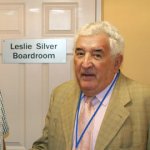
leslie-silver-june-2009_270It felt like the weirdest of coincidences, then, that the first news I heard after the last strains of Eric Coates’ “Dam Busters March” faded away was of the death of Leslie Silver OBE, former chairman of Leeds United AFC and a past hero of Bomber Command, completing over forty ops in Europe and twenty in the Far East, where he was involved in dropping supplies into the infamous Changi gaol. Silver left the RAF at the age of 22 in 1947, having served four years during which he flew the full quota of 250 operational hours with four different squadrons. In 2013, he was awarded the Bomber Command Clasp at the age of 88.

Clearly, no ordinary man was our Mr. Silver. Having served his country so auspiciously in wartime, he then set about creating the business empire that would eventually make his fortune as well as contributing in large measure to the revival of a moribund late-eighties Leeds United. As a highly successful businessman in his fifties, Silver had been awarded the OBE in 1982, a year after joining the United board and a year before becoming Chairman, a position he held until 1996.

Leslie Silver’s time as Chairman at Leeds United encompassed the second most successful period in the club’s history, overseeing a rise from poverty at the foot of Division Two, with a disastrous relegation into the lower reaches of the league beckoning, to top-flight promotion, European campaigns and, of course, the immortal title of the Last Champions. Leeds took that final honour by four clear points in 1992, just before the restructuring of English football on a “greed is good, might is right” basis before the altar of satellite TV.

It goes without saying that Silver’s wealth, his business acumen and his vision were driving forces behind the meteoric rise of Leeds in the late eighties and early nineties. The amazing surge to success was even more abrupt and stunning than that of Don Revie’s white machine a quarter of a century before. Chief Silver and his chosen NCO, Sergeant Howard Wilkinson, plotted a path from the basement of the second tier right up to the ultimate prize in just under four years; it took Revie and Alderman Percy Woodward half as long again to make a comparable journey in the sixties.

That Silver had the vision to identify and recruit his man, and then the courage and grit to back him financially, is something for which all Leeds fans should be forever grateful. He embellished our history with a second era of glory by his astute choice of manager and his unswerving loyalty and commitment to the Wilko plan. When Silver stepped down, it was the end of sustainable success for Leeds; beyond lay only “living the dream” and the subsequent nightmare we’re all too painfully aware of today.

Leslie Silver deserves to be remembered as a major, pivotal figure in the history of Leeds United, as well as, of course, one of those long-ago heroes from the dark days of global war seven decades back. In later life, he also became the first Chancellor of Leeds Metropolitan University, these days known as Leeds Beckett University – and a faculty of that institution now bears his name.

For an unassuming war hero who died with the world still riven by strife – and for the modest mastermind behind the renaissance of a sleeping football giant, who leaves us as that giant slumbers once again – the reminder of his contribution to learning in Leeds may yet be the tribute he’d have prized above all others.

Leslie Silver, 1925 – 2014. Alav HaShalom.

Fulham’s Shahid Khan “Mugged” in Broad Daylight by Shady Italian – by Rob Atkinson

Ross Scot

McCormack – business or mugging?

Concerns are being raised about safety on the streets of south-west London, after the owner of Fulham FC, Shahid Khan, was allegedly mugged in broad daylight yesterday.  The American billionaire, 490th wealthiest person in the world, claimed that he was strolling along minding his own business when suddenly, out of the blue, he was waylaid by a man he identifies only as “Big Mass”, apparently a rival of Khan’s in the world of sport and finance.  Khan alleges that he was taken by surprise as the assailant appeared suddenly in his path, demanding money.  Anxious to avoid any unpleasantness, he gave up the contents of his wallet, some 11 million pounds.

The suspect in the matter, the man known only as Big Mass, was later questioned by police, but denied any wrongdoing.  “Was business deal, my friend” he is said to have claimed, before being released without charge. Mr Khan admits that he was presented with a second-tier footballer for use in his club Fulham’s forthcoming relegation fight, but he maintains that the transaction was more robbery than business.  “£11 million is a lot of money,” he lamented. “Would I really pay that much, willingly, for an ageing forward with only one good season behind him??”

A police spokesman commented: “We can find no evidence of any criminal activity here.  Money changed hands, as did the registration of a professional footballer.  We can see as clearly as anyone that the deal is lopsidedly in favour of the selling party, but that’s not actually illegal – not unless duress can be shown.  On the face of it, Mr Khan has simply been rather naive in paying so far over the odds.  But this appears to have been a case of being made a mug of, rather than an actual mugging.”

Local safety watchdogs were not so sure that things were as innocent as the police appear to accept.  One of their number is Fulham fan and part-time actor Hugh Grant, a man with some experience of the justice system at home and abroad.  Grant felt that there had been foul play, albeit very difficult to prove – and that vulnerable southern-based football club owners would need to be wary in future.  “This Big Mass chap seems to have got away with it big-time here,” Grant said, brushing back a floppy lock of hair from his forehead and smiling wryly. “We’re all going to have to be on the look-out – and we’ll be suggesting that Mr Khan is more careful about carrying large sums of cash.  It’d be embarrassing if he were to lose another 3 or 4 million to this plausible Italian character, only for Fulham to be left with a Paddy Kenny or a David Norris on our hands.”

The footballer central to the matter is philosophical about his newly-reduced status. “Business is business,” said Ross McCormack, 29.  “These deals get done, and I go where the wages are. I’ve already been given a Fulham FC badge to kiss and, while it feels a little strange, I can get used to it.  I can get used to anything if the price is right.”

Asked about his prospects at Craven Cottage, McCormack was bullish.  “I can achieve every bit as much here as I could at Leeds, possibly more.  At Leeds there was a statue of Billy Bremner outside the ground.  I was never going to get an honour like that, not there.  But here, the local hero is a player I’ve never heard of – so look out Michael Jackson, Rossco’s aiming to have his statue up there beside you before too long!”

Shahid Khan has more money than sense.

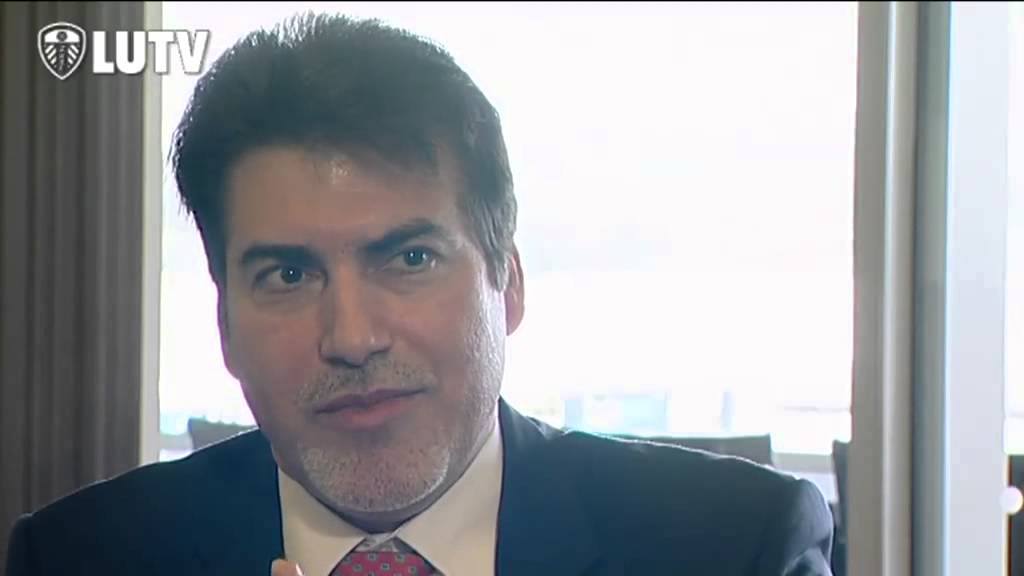
Leeds United Chairman Nooruddin Explains “The Nature of Football” – by Rob Atkinson

Image

The Chairman of Leeds United, Salah Nooruddin, is a man much occupied by weighty matters. Quite apart from his duties in the world of high finance, Mr Nooruddin now obviously has to attend to the day-to-day running of a still huge football club, though some might argue that he is approaching that task with the pragmatic aim of making of it a smaller one.

Mr Nooruddin took the time out of his busy schedule yesterday to grant an interview to the media, presumably prompted by rumblings of discontent among the supporters of a club that has consistently under-achieved in the past decade and which has seen last year’s takeover completed on a scale dwarfed by the likes of those at Manchester City or even Nottingham Forest.  Indeed, little Sheffield United down the M1 appear to have shown Leeds up by getting themselves a rich billionaire. So what’s going on at Leeds? Salah was kind enough to explain, in the simplest of terms, for the benefit of the uninitiated.

Firstly, on the manager Brian McDermott: “He’s the right man to take this club forward.” Hmmmm.  Well, we already knew that one, Salah.  Tell us something new.  The chairman then drew on his extensive knowledge of the professional game as he went on to cover the perilous ground of the club’s progress this season, explaining that we’d had a good start, but that it had turned around a little bit and that this was “the nature of football”. Again, all very illuminating – but is it the nitty-gritty we need to hear?  Those of us who have watched United for the past few decades are all too painfully aware of the nature of football as it applies to Leeds.  It may be summed up as constant depression with peaks of hope and short spells of achievement, but doomed to ultimate disappointment. There’s really no need for an investment banker lecturing us about the nature of football in order for even us bone-headed and unsophisticated fans to realise that.

Mr Nooruddin then proceeded to describe how manager and players are all still settling in and testing each other, a process that some will have noticed has been going on at clubs much higher up the league who have had the bad taste to invest heavily in players and wages.  “When we brought (Brian McDermott) in we were very happy about that. I think it’s been proven on and off the field here”, the chairman confirmed. “He’s done a good job and he’s trying to rebalance the squad. He takes account of the owners’ interests, the club’s interests and the players’ interests. So far we are very happy.” So far. Well, that’s good then.

After the defeat at Millwall, Mr Nooruddin had taken to the Twittersphere to provide a more immediate summary of his feelings as to that performance.  Stating that the club were trying to bring in a striker and a winger, he went on to aver that “the current squad should have won today”.  Again, this apparently profound knowledge of the world of professional football is not backed up by any body of evidence concerning Salah’s experience in anything but banking – but what is Twitter for if not for knee-jerk reactions to events beyond your control?

After yesterday’s interview, Mr Nooruddin may well be feeling quite content that he has acted decisively to mollify United’s notoriously touchy support.  On the other hand, there is the argument that some may find his less-than-qualified statements a little worrying. Bland and glib assertions about the “nature of football” will butter no parsnips, Mr Nooruddin should understand.  Neither will his less than forensic assessment of the current squad, leading to the slightly shaky conclusion that they should have beaten Millwall, impress those match-going fans who have seen it all before, who have heard hollow promises and lame excuses without number and who just want our manager to be provided with the tools he needs to carve himself a level playing field and have some chance of competing with the Leicesters, QPR’s and Burnleys of this world.  That doesn’t seem a lot to ask.

I’d be far more impressed with Mr Nooruddin if he avoided all attempts to speak learnedly, as one handing down knowledge from on high, about the matter of football. He should instead be reassuring the Leeds public that he and his fellow directors are listening to the football wisdom of Mr McDermott, taking on board his recommendations based on a lifetime of experience in the game – and then applying their own specialised financial knowledge and business acumen to the task of sorting out some wonga in order to realise Brian’s wishes for his squad.

Now that would be reassuring.