Tag Archives: Champions League

Mikel Arteta and Olivier Giroud post pictures from the Arsenal dressing room after beating Napoli

Fantastic display from Arsenal last night. Hats off to Monsieur Wenger for continuing to produce the best football in the top-flight, whatever the resources directed at the squad. He waited long enough to splash serious money, but when he did – oh boy what a signing Ozil is!

As a Leeds fan with a very high regard for the Kings of North London, I can see the Gooners going from strength to strength now, which in my opinion is simply good for English football. Arsenal as a club are a model for just about any other I can think of. Their net spend has always been way below most other top clubs, and class just runs through the whole institution from top to bottom.

Keep on doing what you’re doing, Gunners – a shining example of what a football club should be all about.

Manuel Pellegrini vows to go for Champions League jugular as Man City host Bayern Munich

City are as well-equipped to succeed in Europe as they have ever been, and should fear no-one, certainly not Bayern. They should be able to build on an emphatic opening to their Champions League campaign by edging this one.

The Tipster: Dark clouds continue to hang over Manchester City and Manchester United ahead of tomorrow’s Champions League jaunts

I see the point – but I feel given the result in the recent derby clash between the two Manc clubs, it’s the reds who have more to worry about than the blues.

What’s Really Wrong at Man U: the Fear Has Gone – by Rob Atkinson

The Tyrant is Gone

The Tyrant is Gone

It’s difficult not to sympathise with the current plight of Man U.  Well, apparently it is for BSkyB, anyway.  Others seem to manage OK.  Gary Lineker, introducing Match of the Day, promised action featuring “all of the top four”. Then, smiling at the camera really quite maliciously, he added “And Man U as well.”  There appears to be an insidious tendency to poke fun at the wounded Champions, and it begs the question why.  As someone myself who never feels quite so alive, never quite so full of the sheer joy of living as when Man U are having their noses well and truly rubbed in it, I have an answer to offer.  The fear has gone.  It went with Ferguson, and people now feel happy to laugh at Man U.  All very petty, you might think – but this absence of fear might have far-reaching consequences for The Pride of Devon.

Steve Clarke, West Brom’s talented young(ish) manager, made for an interesting listen in post match interviews after his team’s 2-1 victory at the Theatre of Hollow Myths. Firstly, he demanded credit for his team’s marvellous display, based on self-belief and a determination to show little respect for reputations, rather than lazily blaming the under-par display of Man U.  He went on to say that he had spent four days talking to his team about the mind-set required to play away against Man U; advice on not sitting back, seizing the day, going for the throats of the opposition, showing no fear.  And West Brom responded to their manager’s mantra, tearing into a startled Man U from the off. Unlikely as it seems, and despite a late home flurry, this could have been one humbling home defeat for Man U.  The last time they lost at home in the league to West Brom it was a 3-5 reverse in 1978.  On this occasion, a 5-2 or 6-2 victory would not have flattered the away side.

The thing is, that advice may well have been given to teams visiting Salford before, but it has rarely produced such positive gains for those teams down the years.  I remember well the performance of third-tier Leeds United in the den of the Champions in January 2010 for the FA Cup 3rd Round.  My favourites took the field as if they owned it, backed by 9000 raucous away fans and proceeded to out-play, out-fight and out-manoeuvre a team stratospherically above their humble level, winning 1-0 and rather unlucky it wasn’t 3-0. Leeds showed self-belief, faith in their own ability to dictate play and absolutely no fear or respect whatsoever.  It was the kind of display seen far too seldom by teams facing Man U, who tended over many seasons to be beaten before their boots had touched the turf at the start of the game.  And it’s this ingrained fear, this subconscious feeling of being beaten before a ball is kicked that has exaggerated the achievements of a club who, until Ferguson embarked upon his reign of terror, could only dream of Title success.

Football success, they say – or even football dominance – is cyclical.  Nobody stays at the top forever, the best of dynasties crumble and fall eventually.  This will not be a welcome concept for the bulk of the Man U support, who have long journeys from the south to justify somehow, who have only attached themselves to the embodiment of success and who will protest loudly if the run of glory ends.  But they can always seek their glory elsewhere – many of them will.  It’s in the nature of the beast.  Man U fans tend to be slightly inadequate and in Freudian need of the reassurance that identification with perceived size and success provides for them.  So off they’ll go and support Chelsea or Spurs or someone – the travel costs will be greatly reduced, anyway.  But what of those left behind?  What of the legions of armchair fans?  What of poor David Moyes, looking more and more like a latter-day Wilf McGuinness?  What, even, of the legions in the Far East who will find the whole reason for their devotion to Man U has dissipated – if they stop winning.

Then we have to look at the consequences for merchandising, the awful possibility that there might be a Champions League qualification failure, the chilling realisation that there is still all that debt.  The debt would have been even higher if Moyes hadn’t been so singularly ineffective in the transfer window.  The potential for things to get worse for Man U seems endless – and endlessly amusing.

None of this seemed remotely likely whilst Ferguson’s brooding presence was there, haunting the nightmares of referees and officials, causing ulcers in the FA Boardroom as they invented ever more specious reasons for failing to file disrepute charges, terrifying the hacks of the gutter and quality press alike with threats of cutting them off from the media circus that is Man U.  All Ferguson wanted was his own way, all the time and he set about getting it via the longest continual process of widespread intimidation the game has known.  Aided by the favourable market conditions provided when Murdoch bought the game, Man U flourished by this tyrannical dynasty – and the results are there in the trophy room where thirteen plastic replicas of Thunderbird One attest to a total domination of the Plastic Premier League.  Only Castro in modern times has out-done Ferguson as a successful tyrant and dictator.

But now Ferguson has gone – at least for the time being.  He may yet, of course, reappear on a Busby-like comeback rescue mission if Moyes is sacked as a failure – shades of the early seventies.  For now though, the tyrant is rendered impotent to assist Man U as they flounder and the whole atmosphere of the top flight has changed.  Referees feel empowered to be fair instead of giving every bloody 50-50 decision to Man U.  Opposition managers feel their charges freed from that psychological monkey on the back.  Press hacks – despite Moyes’ pallid efforts to ape the Ferguson abrasive approach – are not fooled; they know that a crabby old lion has been succeeded by a querulous pup.

All of these factors have conspired to reduce the advantages enjoyed by Man U these many years since Ferguson headed south.  It’s always been a game of fine margins, and any reduction in advantage tends to have a disproportionate effect on performance.  This is what is happening to Man U – and it’s like a breath of fresh air.  Not everyone will be happy, not everyone will want to see the dominant force of the past two decades rendered impotent.  But for many – if only it can last – this new Fergie-less era could be the very best of times, after the very worst.

Moyes Fluffing His Fergie-Lite Lines as the Mask Drops – by Rob Atkinson

Image

It sounded odd at the time. Leading up to the start of his first season at the Theatre of Hollow Myths, David Moyes chose to abandon his previous upright, downright, straightforward no-nonsense Evertonian demeanour and go for a good old-fashioned Fergie whinge with the requisite helpings of paranoia and self-righteousness. “They’re conspiring against us,” he grizzled, bitterly. “Three tough games against title contenders in the first five league outings.  It’s no’ fair.”  It was straight out of the Taggart Manual, from Chapter One: “Build a Siege Mentality”.  The thing is, however tried and trusted the lines are, you need the right kind of actor to convey them. Now that the Old Ham had gone off, could the relatively green Moyes carry on with the same old act?  Was it even such a good idea to try?

Whatever the whys and wherefores, the gambit appears to have blown up in the fledgling Man U manager’s face.  Yesterday’s humbling against Mancunian giants City was not only a salutary lesson on the field.  It also raised serious questions about the new man’s deportment off it.  On the face of it, the Moyes Whinge, as it has come to be called, looks in retrospect like a timely warning.  Of the three fixtures he was complaining about, the Pride of Devon have lost both away matches, at Liverpool and City, and gained a somewhat lucky point in a dour home struggle against Chelsea.  But the fact is that the fixtures are simply that: fixtures.  There’s a clue in the name, and while Sky may tamper slightly for TV requirements, the basic framework for the season is carved in stone.  To complain about them at the time Moyes chose to complain, and in the terms, moreover, he chose to employ in making that complaint, showed more weakness than foresight, more lack of confidence in himself and his team than lack of faith in the authorities. What message was sent out by the manager to his troops as they prepared for combat? Would they have been inspired by their leader’s belief in them?  Or would they, instead, have had a subliminal fear implanted of facing three formidable teams early in the season?  Were they, in short, afraid?

A hindsight version of the Moyes Whinge emerged this morning on the radio.  He referred again to the perceived unfairness of the fixtures arrangement.  As an exponent of psyching his team up and psyching opponents out, Fergie was tiresome, he was tedious, he was annoying and detestable in the eyes of his enemies.  But it clearly worked more often than not in the bunker that was Man U’s dressing room.  Moyes, by contrast, seemed to have waved a white flag and called for stretcher-bearers before a shot had been fired. Certain of his players, van Persie for one, are already emitting rumbles of discontent. You can imagine them asking themselves: who would we rather have as our leader as we enter the trenches?  The margins between victory and defeat are incredibly fine, one iota of backsliding by the historically dominant force, one iota of improvement in the fortunes of his enemies (the football term for “iota”, interestingly, is “Özil”) – and the tables can be well and truly turned.

It may also be that Moyes’ emergence from the comfort zone of Goodison into the fishbowl glare of the Theatre of Hollow Myths has been particularly ill-timed.  The gene-pool at the top of the Premier League appears to have expanded dramatically over the summer.  Arsenal have improved by probably more than just one Özil.  Tottenham seem to have contrived to have lost a golden nugget and replaced it with the equivalent weight in gold-dust, and to have improved in the process.  Chelsea have wound the clock back to the reign of the Special One, and you just know he will weave his magic again whilst laughing sardonically at his carping critics in the media, embittered journalists all of whose significant others are unanimous in fancying Jose.  Liverpool have looked “at it” again, despite a dip in the last two games.  Everton are unbeaten, with a new style and belief under Martinez.  The whole landscape at the top of the game has a new and, from the Man U point of view, dangerously unfamiliar look about it.

Maybe one craggy and purple-faced individual in particular foresaw this sea-change, and perhaps this explains the abruptness of his departure from the hot-seat in Salford.  There must, after all, be a significant danger that the still debt-ridden Evil Empire will finish outside of the top six this season, favourable ref decisions notwithstanding; and on that subject – what on earth happened to Howard Webb in the Derby?  He failed utterly to live up to his Man U Player of the Season form, and must now be worried about his place in the team.  Moyes has a lot on his plate, and – sallow-faced and bug-eyed compared to the smug, well-fed, puce sleekness of his tyrannical predecessor – he frankly does not look as though he has the appetite for it.

The noisy neighbours across the border in Manchester will be well aware, as they leap and cavort in celebration in the sullen faces of Manchester’s Red minority, of the problems that are stacking up for the hapless current incumbent of Salford Towers. But those happy fans will care not one jot, as is the case with thousands of other equally happy fans the country over, outside of Devon and Cornwall.  They can see golden horizons ahead, and a game reinvigorated by true competition across a well-matched group of clubs vying for the ultimate prize.  If Man U do end up outside in the cold, there will be millions who feel it’s a reckoning that’s arrived not a minute too soon.

Turks Stuffed Good and Proper as Real Madrid Cruise in Istanbul – by Rob Atkinson

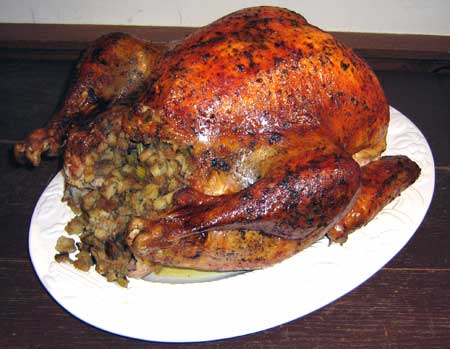
Galascum - Thoroughly Stuffed

Galascum – Thoroughly Stuffed

It’s a rare night indeed when a Leeds United fan can summon up even a passing regard for the pouting, strutting enigma that is Cristiano Ronaldo, late of the Scum, currently vying for top-dollar merchant with Gareth Bale at the Bernebeu, Madrid.  If ever there was such a night though, this is it.  Ronaldo ambled through the first hour of this match and then simply seized the home team by the scruff of the neck and tore them to pieces, scoring three times. With a brace from Benzema to add to Isco’s opener, it was the Winker’s hat-trick that inflicted the most agony on the hapless Turks, thereby giving any watching Leeds fan a rare treat.

Oddly, the various TV companies that cover the Champions League seem to have a fairly benevolent attitude towards the Istanbul club, despite the notorious nature of their fans in general and of course the tragic loss suffered by Leeds United – the club and the fans – back in the spring of the year 2000.  Since then, there have been other instances of crowd behaviour that would disgrace a bunch of neolithic savages, and there are of course the perpetual occurrences of throat-slitting gestures, “Welcome to Hell” banners and so on and so forth.  In short, this is a club that glories in its own tastelessness and lack of civilised behaviour – and yet we’re always hearing the commentators going on about the incredible atmosphere, the amazing fans, ad nauseam.  It’s enough to make your ears ache if you’re a Leeds fan, or indeed any decent-minded football fan – but there you go.

We’ll never know what the media attitude to them would have been if it had been a different United suffering on that awful night 13 years ago – but it’s hard to avoid the conclusion that it would have been somewhat different.  As it is, the tragedy of Istanbul 2000 seems to have been conveniently swept under the carpet, and the media appear to take delight in the progress of a club that deserve nothing but ill.  Still – we’re used to these double standards, and we take our comfort where we can.

Speaking of which, tonight was a delightful exhibition of Galascum getting well and truly thrashed by an awesome Madrid team.  The incredible, unprecedented feeling of actually enjoying a Ronaldo hat-trick – one particularly special strike in there, too – was a novelty that will possibly not be repeated.  Not unless Madrid dish this sort of treatment out again in the reverse fixture, anyway.

So for once I come not to bury Ronaldo, but to praise him; truly is it said that “mine enemy’s enemy is my friend”.  I still can’t stand the sight of Mr. Ronaldo, to be strictly honest.  He still has the kind of face you want to smack, still looks the sort of player that belongs with those other self-adoring prima donnas at the Theatre of Hollow Myths.  But he did Leeds United, Madrid and – whatever the mealy-mouthed hypocrites in the media might think – the whole of football a service tonight.  All those goals.  All that humiliation for a hopelessly-outclassed Galascum.  Even the late and meaningless home consolation scored to a nearly-empty stadium before Ronaldo administered the coup de grâce with the sixth.  All those glum fans who had started out so cocky and full of hope. Have it.

It was just one of those nights tonight.  For the past decade and more, I’ve winced every time I’ve seen that awful club with those disgusting fans getting anywhere, doing anything positive like winning a game, and hearing the British media fawning over them.  Tonight it was different.  Tonight, they copped for it, big time.  Tonight it was a case of “Hala Madrid” – or even “Hala Ronaldo” – just for tonight.  6-1 – SIX bloody one.  Well done, Real – and thank you, from a Leeds United fan.

New Life in Madrid for Bale as Spurs Face Old Realities Nearer Home

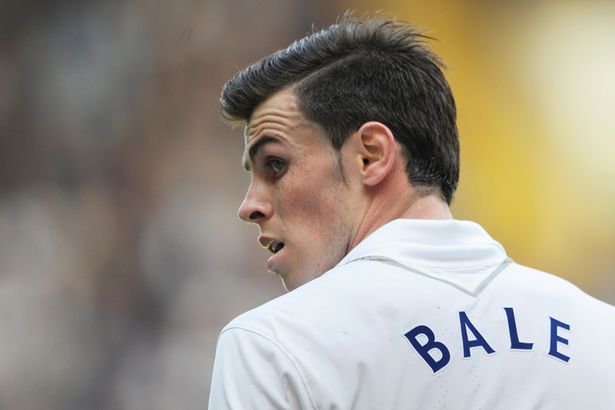
Bale Bails Out

Bale Bails Out

The least surprising transfer of the summer has finally been completed as Gareth Bale secured his longed-for move to the Bernebeu to become Real Madrid’s latest galáctico and thus deprive Spurs of roughly 50% of last year’s total team effectiveness.  The price varies according to which source you read, but it’s an eye-watering figure which Spurs have already spent on half a dozen or so players in the hope that quantity may in some measure replace quality.  It remains to be seen how Bale will fare at a big club, but his is a spectacular talent which arguably deserves a much bigger stage.

Spurs meanwhile, having resigned themselves some time ago to the loss of their talisman, turned out at The Emirates yesterday with their friends in the media explaining to anyone who would listen that – despite their Bale-less attacking threat – they were now much better placed than opponents Arsenal to achieve success this season.  The new definition of success in these commercialised Murdoch days is, of course, a top four finish: gone are the days when fans might argue about who will win what trophy.  Now it’s all about whether your favourite club can qualify for the Champions League, and how many millions that will net.  That those millions will for the most part disappear into the bank accounts of their overpaid heroes is a point that apparently does not faze today’s Premier League fan.

The media as an entity appears to have a problem with Arsenal, and they seem disposed to address this by making more of a fuss of Tottenham than such a pallid power really merit.  The BBC in particular sound almost plaintive when they reflect on the fact that Arsenal’s recent Champions League qualifications have been at the expense of Spurs and their assertions that things might now be different – with a new-look Tottenham transcending tired old Arsenal – tend to be accompanied by a collective stamp of the foot and sullen pout. But all the media posturing in the world will not change a thing on the field, and it was on the immaculate turf of the magnificent home of Arsenal that Spurs yesterday received a lesson in how little things have changed where the balance of power in North London is concerned.

After an adrenalin-fueled bright opening, Spurs were never really at the races in this latest derby.  Once Arsenal had ridden out that initial flurry their own game took effortless control – helped by the fact that they had taken the lead while the tide was still slightly against them.  A gorgeous move from centre midfield across to the right found Tomas Rosicky in acres of space and he used it to full effect with a penetrating low cross into the box.  And there was Olivier Giroud darting towards the near post to beat Hugo Lloris with a sweet finish from the outside of his left foot, finding the tiniest gap between the hapless ‘keeper and the upright to give Arsenal the lead.

For the rest of the first half, Arsenal threatened to increase their advantage against a Spurs side knocked out of their early, optimistic stride.  After the interval, the away side began to make their presence more effectively felt, pressing Arsenal back in search of a point at least.  But although there were alarms, and despite quite intense late pressure as the the home team defended in depth, the breakthrough failed to appear.

Tottenham could have no real complaints about the result, and may reflect by way of consolation that at least they didn’t ship five this time, as on the last two visits to The Emirates.  Arsenal have an altogether more positive world view today; three derby points in the bag, ahead of Spurs in the table as they finished last season, and today they appear to have made a transfer statement as well, with the pending capture of Mesut Ozil from Real Madrid – a transfer that may, ironically, have been made possible by Tottenham’s failure to hang on to Bale.

Players come and players go as millions upon millions change hands in the transfer market.  But a happy Arsene Wenger may well reflect today that some things are less susceptible to change, Arsenal’s dominance of North London being one among them.  Ozil will add considerably to the Gunners’ ammunition and firing power, just as the loss of Bale will inevitably weaken Spurs.  It’s been a good weekend after all for the Gooners.

Dortmund Über Alles

Image

The Germans are marching on Wembley with the aim of conquering Europe. It’s going to be Totally Teutonic, an island of internecine rivalry in North London. Some of the Little Englander persuasion, always ready to laugh when Germany lose in the World Cup (having recovered from England’s own earlier exit) or even when they get “keine Punkte” in the Eurovision song contest, will declare they have no interest in the result beyond a wistful longing to see them both lose. Others will aver that it’s really none of our business, and we should just play the genial hosts to a world-class event and stand ready to clap the winners on the back, whoever they might be, and say “Jolly well done, chaps”. Wrong, wrong, wrong. This result matters – well it does if you’re a Leeds United fan.

Firstly, let’s not forget that the city of Dortmund is actually twinned with Leeds, so we have those ready-made links which can be dressed up as brotherhood should the occasion require. This occasion does so require. We Leeds fans should stand four-square behind our European partners and wish them all success against Bayern Munich on Saturday evening. It’s only right and proper – after all, what are twinned cities expected to do other than support each other? But there’s another, far more compelling reason for wishing Bayern misery at Wembley. In fact, there are two.

Rewind firstly to 1999 and the culmination of the jammiest season an English club has ever had. Everything went right for Man U that year, and they walked off with a highly fortunate treble, after a series of unlikely comebacks and distinctly fluky wins in various competitions. At the death, they were one down in the Champions League final in Barcelona, having been outplayed by a massively superior Bayern side who had been thwarted by the woodwork on at least two occasions. Then – as we know – they scored twice late on, the usual jammy bounces and ricochets, and we’ve all had to live with the memory of Ferguson’s smug “Football, eh? Bloody hell” quote ever since. Bayern let us down that night, and they should not be forgiven.

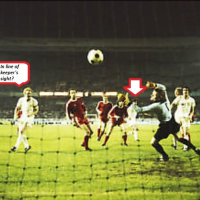
And further back even than that – all the way back to 1975 and the night Leeds United became Champions of Europe in all but name, a moral status we have defiantly hailed loud and proud ever since. That we don’t have the trophy on our sideboard is an open sore that festers still and will never heal – as great an injustice as that perpetrated in Salonika two years previously. Penalty claims, really clear-cut, but turned down flat. Beckenbauer, der Kaiser, the guilty man. Bayern totally out-played by a Leeds side pursuing their last hurrah, committed heart and soul to winning it for The Don who was watching on from the commentary box in the Parc des Princes. A goal for Leeds, struck powerfully and true by Lorimer on the volley, Maier beaten all ends up, the very least our superiority deserved. Then, der Kaiser persuades the referee – damn him for all eternity – to speak to his linesman and see if there wasn’t maybe some way this inconvenient goal could be disallowed. And of course that is what happened. Thrown, deflated, outraged, the Leeds United side were hit by two late sucker punches, and Bayern were the most undeserving Champions of Europe ever – even more so than those spawny gits of ’99.

Those two Finals – the win for Bayern and the loss for Bayern – are a thorn in the side of every Leeds fan who can bear a grudge as a Leeds fan should. If the two results had been reversed – if they’d lost (as they should have) in 1975, and won (as they should have) in 1999, then we might well now be abandoning our civic links with the good Burghers of Dortmund, and saying a sentimental prayer for Munich. We’d probably have shouted for them last year against those fancy dans from Stamford Bridge. But justice prevailed on neither occasion, and Bayern Munich is a name inscribed forever on the Leeds United wall of hate.

So come on Dortmund. Get into them and make ’em have it. Let’s hope it’s another atonement and – as with last year at the hands of Chelsea – Bayern end up with nowt to show for their showpiece appearance and crying into their beer. Fingers crossed.

San Siro Dom the Perfect LUFC Ambassador

Memory Match No. 9: AC Milan 1, Leeds United 1   8.11.2000
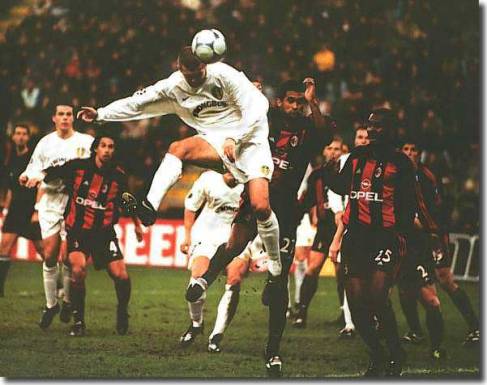
Dom Matteo - Scored a Flippin' Great Goal - In The San Siro....

Dom Matteo – Scored a Flippin’ Great Goal – In The San Siro….

This week’s appointment of United legend Dom Matteo as a club ambassador inevitably brings back fond memories of a November night in Milan in the year 2000 when the defender wrote himself indelibly into Leeds folklore with one emphatic near-post finish.

However much pedants may argue about when the third millennium started – January 1, 2000, or a year later – this season 2000-01 was the first proper 21st Century season, and it was also my annus mirabilis European campaign; having never seen my beloved Leeds play abroad up to this point, I witnessed them competing at the highest level in three true cathedrals of continental football.  Incidentally, I’ve always favoured the Jan 1, 2000 date as the start of the millennium – that’s when the most spectacular fireworks kicked off, that’s when the magical sight of four numerals clicking over was seen – and most importantly that’s when Leeds United were heading the Premiership table, marking what will probably be football’s only thousand year threshold by sitting proudly at the top of the game – a position that the media had been frantically speculating might have been held by the lesser United from the wrong side of the Pennines.

More about other parts of this memorable season elsewhere, but my European experience started in a “sports bar” on Westgate in Wakefield, watching nervously on a big screen as Leeds negotiated the second leg of a tricky Champions League qualifying tie against 1860 Munich.  We were ahead 2-1 from the first leg in Leeds, and such a narrow lead was never that secure.  In the end though, Alan Smith scored the only goal in Munich to close out the tie 3-1 on aggregate.  The subsequent draw saw United pitted against giants Barcelona and Milan as well as Turkish side Besiktas in an incredibly tough first qualifying group.  I was on holiday with my wife and young daughter on a campsite in the South of France when the first game was played, in Spain.  Callously abandoning my ladies to their fate, I impulsively jumped on a train from St Raphael to Barcelona, installed myself in a hotel with a swimming pool on the roof, bought a ticket from a tout, and watched from the midst of the fanatical home support – the Boixos Nois (Crazy Boys) – as Leeds, fielding a side decimated by injuries, slid to a 4-0 defeat.

If you’d told me then that we were destined for the last four, I’d have laughed long and bitterly, but I did enjoy every moment of my first European away-day in the palatial surroundings of the Camp Nou.  I still have two souvenirs – a plastic seat cushion and a big St Georges flag with LUFC Oxford Whites printed on it, which a group of Barca fans had captured and were waving in triumph at the end.  Stupidly, I approached them, feeling that a 0-4 defeat was humiliation enough, and demanded it back (quite politely).  I was getting snarls and throat-slitting gestures, and I remember mumbling something along the lines of “Barcelona no es Galatasaray”, which they seemed to take to heart.  Some of the lads’ girlfriends were regarding me pityingly, obviously wondering if I was drunk, or mad, or both and they urged their men to show restraint.  Luckily for me, they seemed to listen – they handed the flag over, anyway – but if they’d known we were destined to eliminate them from the competition, I doubt they’d have been so conciliatory.

The group then ebbed and flowed – but most results after that first defeat went our way.  We beat Milan at home, came so, so close to beating Barca at Elland Road, denied only at the very death after a world-class display from our rookie ‘keeper Paul Robinson, and we thrashed Besiktas 6-0.  By the last round of group games, the equation was simple – if we could avoid defeat at the San Siro, we would be through to the next stage, whatever Barcelona did to Besiktas.

And so I found myself on an early-morning flight from Leeds Bradford Airport to Milan Malpensa, along with thousands of other Leeds fans intoxicated at the prospect of a famous evening in a truly magnificent stadium.  We would arrive in Milan with plenty of time to look around the place before meeting up with coaches to the stadium, and it proved an eventful day.  There had been violence the previous night, a Leeds fan had been attacked and wounded in an incident which evoked horrific memories of the awful scenes in Istanbul just a few months before.  The city of Milan had been declared “dry” for the day, so it was extremely difficult to find a bar which would serve an obvious Leeds fan.  I was contended enough though, just wandering around the amazing Cathedral Square where I met legend and Leeds fan Ralph Ineson, of “Harry Potter” movie fame, and also memorably “Finchy” in the BBC’s “The Office”.  He was happy to have a chat and a photo, and then I ambled off to have a peek at the world famous La Scala Opera House, where my wife’s great-grandfather had been a violinist, so that was my passing nod to family history.  Finally, with the afternoon stretching before me, I bumped into an old mate from home – we both exclaimed stupidly “What are you doing here?” – and we managed to find a bar that was open, and spent a couple of hours relaxing and happily anticipating the match ahead.  The bar owner was friendly – so much so that he felt able to pop out on some errand, leaving us in charge.  The fearsome reputation of some Leeds fans had evidently failed to penetrate this far into the bar culture of Milano.

The match itself is so famous that I barely need to recount the action kick by kick.  The Leeds fans at one end of the stadium were in fully, throaty voice for most of the proceedings, drawing incredulous glances from the attendant Carabinieri who were in full-on riot gear but friendly enough, muttering to each other about lunatic English tifosi (hooligans.)  The first half was a decent contest – Milan were through already, but not disposed to give Leeds an easy ride – especially after paranoid noises emanating from Barcelona, who – nervous about their own prospects – had done their best to warn Milan off taking it easy against Leeds.  So Milan pressed in front of a crowd of 52289, and their winger Serginho was causing Gary Kelly plenty of problems.  In the 26th minute, a slightly soft penalty was awarded to Milan at our end of the stadium, and 6000 Leeds fans held their collective breath as Andriy Shevchenko took careful aim only to rap Robinson’s right-hand post, the ball bouncing away to safety as the masses behind our goal celebrated as if we’d actually scored.  And then, miraculously, as the first half ebbed away, we did score.  A Lee Bowyer corner from the right found Matteo rising majestically at the near post to meet the ball with a punchy header which soared high into the net.  Cue utter pandemonium at the Leeds end as all the tension, passion and belief exploded in one almighty roar which almost lifted the hi-tec roof off the famous stadium.

The party went on throughout half-time and into the second half, drawing more bemused glances from the Italian police; there was only a brief hiatus in the 67th minute when the superb Serginho deservedly equalised, but then it was mounting fan fever again all the way to the final whistle and beyond as Leeds held out to qualify for an equally difficult second phase of the competition.  The scenes after the game are at least as famous as the events of the ninety minutes; the team coming back out onto the pitch in response to the demands of the faithful who were held back in the interests of crowd safety.  What followed was described by respected football commentators (as well as Alan Green) as the best example of team/fan bonding they’d ever seen.  Fans and players – even a certain Chairman – swapped chants and songs in a spontaneous celebration of a joyous night.  Even the uncertain musical efforts of Lee Bowyer were greeted by a blast of friendly derision.  It was a unique experience, and the Latin cops were clearly by now utterly convinced that these English people were absolutely barking mad.  As football nights go, you’d have to travel a long way to find one more worthy of memory – only a trophy could have improved it, but the spectacle of the game and its aftermath is one I have seen imitated but never repeated.

Dom Matteo was simply a likeable and committed defender before that night, clearly delighted to be Leeds; the kind of player the Kop takes to its heart.  But after that night, he was elevated to demigod status, a true Leeds legend with his own song and a place on a pedestal in the United Hall of Fame.  The choice of Dom as a club ambassador seems obvious but is actually inspired, especially in light of the fact that Ken Bates’ malign shadow will remain for up to three years yet.  Just as Ken sends out all the wrong messages, so Dom – beloved ex-player and respected press commentator, dispensing common sense when all about him has been hysteria, sends out only the most positive of vibes.  He is the sort of person we need to see closely associated with the club, and his involvement in any capacity is a move to be applauded.  Just get Lucas “The Chief” Radebe back on board now, and we’ll be cooking with gas.

Thanks, Dom.  Thanks for being a voice of sanity in the press, thanks for coming back to reassert your love of the club.  And thanks most of all for that memorable night in Milan.

Next:  Memory Match No. 10: Leeds United 2, Leicester City 1.  The last home game of the 1989-90 Promotion season, and things were on a knife edge.  Relive that tense and unforgettable afternoon at Elland Road, as a future United hero came close to derailing our return to the big time – and our archetypal diminutive red-haired midfield powerhouse, in the best traditions of King Billy Bremner, stepped up to the plate to provide the decisive moment, cementing his own status as a Leeds Legend.
Man United – Why Always Them?

Former Manchester City maverick Mario Balotelli will be remembered in the English game for many things, but prominent among those various goals, skills and misdemeanours will be his famous celebration after scoring against Manchester United at Old Trafford last season in City’s 6-1 eclipsing of their local rivals.  Balotelli slotted the ball home calmly at the Stretford End, turned away with no sign of emotion on his face, and lifted his City shirt to reveal a t-shirt on which was printed the heartfelt plea “Why Always Me?”.  The message, after a series of incidents culminating in a row with the emergency services when he set off a firework in his bathroom at home, clearly indicated a feeling that he was being scapegoated to a certain extent.  To add insult to his perceived injury, he was booked for the t-shirt display.
Recent events, on top of a long history of prominent stories figuring the controversy and fuss that attend one football club above all others, might lead us to ask a somewhat wider version of the same question.

Why is it always Manchester United?

The furore surrounding their Champions League exit on the 5th March is fairly typical of the controversy the Champions-elect seem to attract, like flies to a bad piece of meat, on such a regular basis that you tend to wonder whether it’s just coincidence or a Machiavellian form of press-management.  So “enraged” was manager Alex Ferguson after their defeat, which turned on the dismissal of Nani for what might charitably be termed a high tackle; that he refused to appear before the assembled press after the game.  He was “too distraught” apparently, to fulfil his mandatory duties in that regard.  To the media of course, a story about a no-show from Ferguson is a much bigger scoop than anything most managers might say in adhering to their agreed obligations.  But Manchester United and controversy have gone together like port and nuts for a long, long time now.

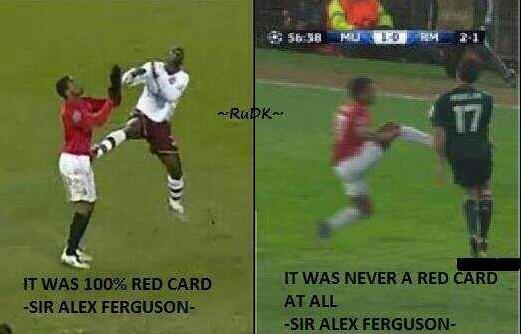
ImageCloser examination of the incident in focus this time reveals a worrying lack of consistency in Ferguson’s emotional reactions over remarkably comparable incidents.  Nani’s liver-high tackle was described dogmatically as “definitely not a red card”, paving the way for Man Utd claims of ill-treatment and bias.  A virtually identical tackle some time before, by Arsenal’s Eboue on Ferguson’s own player Evra, was also punished by a red card, but that one drew praise from the choleric Scot, who stated that the decision was “100% correct”.  This apparent self-contradiction is nothing new in the world of Alex Ferguson, or indeed in the wider manifestations of the club who like to brand themselves “The Greatest in the World”.

At the end of the Real Madrid match, enraged home defender Rio Ferdinand saw fit to get up close and personal with the referee who had dared dismiss Nani, sarcastically applauding him at point-blank range.   This is a widely-recognised form of dissent, and would normally merit a yellow card.  The referee did nothing, and UEFA have since confirmed that no action will be taken against Ferdinand.  It would be tempting to ask what sort of message this sends out to aspiring young players, if the answer were not so glaringly obvious.  That message is, as ever:  Man Utd can basically do just as they like, the game’s ruling authorities being so much in thrall to the club’s global profile – and the markets dependent upon its prosperity – that they will often turn a Nelsonian blind eye to such flouting of the rules, in the fond hope that nobody will notice when other clubs are dealt with more severely for like offences.

It has been said, with some justification, that one of the more hackneyed clichés in today’s game is the regular statement from the Football Association along the lines of “We have looked into (insert name of misdemeanour perpetrated by the Man Utd club or employee here), and can confirm that no further action will be taken.”

This sort of thing has been going on for many years, and while most clubs might shy away from such regular media attention of a not entirely positive nature, Man Utd as an entity appear to subscribe to the old maxim that there’s simply no such thing as bad publicity.  They have displayed a talent for remaining newsworthy, certainly on the back pages and not infrequently on the front as well, more or less continually, and dating back to well before their current era of success.  The incidents are many, and mostly quite unsavoury – Rooney elbowing a Wigan player and getting off scot-free, dodgy penalties too many to number, the legendary difficulty of seeing a penalty awarded against them and so on and so forth – and yet the default press position remains that the club are pre-eminent in the game for reasons of skill, charisma and courage, an apparent myth lapped up eagerly by the global fan-base, most of whom have never seen the team play in the flesh.

We hear far too much also of Ferguson’s so-called “mind-games”, a phenomenon particularly beloved of the media in this country, but one which appears to consist largely of an elderly gentleman having great difficulty sticking to the path of veracity at those press-conferences he deigns to attend.  Madrid manager Jose Mourinho is one who prospers in these psychological duels – in Ferguson’s petulant absence after the game last Tuesday, he stated that “the better team lost”, and walked off, content at having fanned the flames of the Man Utd manager’s fury.

It seems though that UEFA are after all to look into Ferguson’s failure to turn up for the press after this latest controversial occasion.  Presumably they will investigate fully, and a technical charge of “Sulking” might just possibly ensue.  But it would be unwise to place too much money on such an outcome; it may well be that we’ll yet again hear those old, familiar words “no further action will be taken”.