Tag Archives: Leeds United

Stand Up, If You Hate Man U – And Think It Might Be TV’s Fault

Hate Man U

On Saturday 8th January 2005, Manchester United played Exeter City in the 3rd round of the F.A. Cup. It was something of a mismatch on paper, but surprisingly a plucky Exeter team held out for a 0-0 draw, and took the holders to a replay. A significant achievement for the minnows, but this game was noteworthy for another reason; to date it remains the last F.A. Cup tie involving Manchester United not to have been shown live on TV.

Even on the face of it, this is a remarkable statistic. Particularly in the earlier rounds, there are many matches from which TV companies can take their pick, and traditionally the perceived likelihood of an upset is a big draw. Given the perennial dominance of Manchester United, it’s usually difficult to see much chance of a giant-killing, and the interest in games involving them, you might think, will be mainly for those occasions when they’re drawn against a Chelsea, or a Liverpool, or maybe even a Manchester City or an Arsenal.

Looking at the list of games included in this amazing run of uninterrupted TV spotlight, some of them really do make you wonder what the companies concerned hoped to achieve, with the chances of an embarrassingly one-sided contest surely outweighing by far any prospect of a surprise. It begs the question of whether broadcasters are putting too high a priority on audience over entertainment value. There may be a certain piquant charm in seeing the likes of Burton Albion gazing wide-eyed at the immensity of Old Trafford, but some of the ties televised have lacked even this saving grace. Middlesbrough or Reading at home? Hardly sets the pulse racing, does it?

Any hint of complaint about Manchester United will, naturally, bring anguished howls of protest from the direction of London and Devon, as hard-core Reds, some of whom may even have visited Old Trafford, loudly complain about this latest manifestation of “jealousy”. It’s become rather a knee-jerk reaction, but there’s really not a lot of foundation for it. Anyone truly motivated by envy (jealousy means something different, chaps, look it up) has a simple solution at hand – simply jump aboard the bandwagon. The prevalence of the Old Trafford club on our TV screens will certainly garner them increased “support” from those who just want to be identified with such a vulgar example of a club gorging on success. It is the more negative effect of blanket coverage that should be worrying, not so much for Manchester United, but for the sport itself.

For there is a danger here that the media have not only created a monster, but that they are actively encouraging that monster to eclipse all their rivals. The basis of any sport must be healthy competition, but there is disquieting evidence that the playing field has not been level for a long time now. It doesn’t take too much digging to unearth some unsettling trends. One study over a number of matches suggested that 88% of all marginal decisions went the way of Manchester United, and there was also a distinct lack of penalties awarded against them in league games at Old Trafford over a period of years. There have also been instances of referees who have displeased Alex Ferguson mysteriously disappearing for months from their fixtures. In a game of fine margins, as any game is at professional level, evidence that one club enjoys preferential treatment is a matter of concern. Such a trend, given the amount of money flowing into the game, could easily lead that one club into an unhealthy dominance, to the detriment, ultimately, of the spectacle as a whole. Fierce competition is so crucial to any healthy sport, that the importance of this principle is difficult to overstate.

Success, they say, is all about the steady accumulation of marginal gains. Manchester United as an institution appears fully to appreciate this, as any club should. But these days, the media are the game’s paymasters, particularly the TV companies – and when they start favouring one club above all others, then you have to fear for the ability of others to compete in the long term. It’s a matter of concern – and it could easily become a self-fulfilling prophecy, as more coverage (of an almost exclusively favourable nature) promotes more support ever further afield for “United” as the media love to call them. And the more support they gain, the more of a market there is which will feed on their success, so the more commercially desirable their success will become – and commercial pressure speaks volumes when knife-edge decisions are to be made.

It would be difficult to imagine that any other club should have such a long, unbroken run of live TV coverage in their F.A. Cup ties. In the 4th round of this year’s competition the other week, they figured in their 38th consecutive such event. The home game against Fulham followed its predictable, boring script – early penalty, spineless opposition, comfortable home win. Meanwhile, Brighton faced Arsenal, in what was, equally predictably, a much more exciting contest; two sides playing good football, and the prospect of a shock never far away. But this tie was not seen live. In the 5th round, Man U will face Reading at home, which will probably, let’s face it, be another Fulham-esque stroll. And, sure enough, yawn yawn, it’s live on the box again, despite the fact that there are murmurings of discontent now, from some sections of the press who evidently realise how boring it all is.

As a Leeds United supporter, I’ve had cause to bless the tendency of TV companies to cover even the games where “United” seem certain to roll over the opposition. On January 3rd 2010, Leeds, then of the third tier, triumphed at Old Trafford before a live ITV audience, sending the Champions spinning out of the Cup at the earliest possible stage. But satisfactory as this was, it’s the exception, not the rule – normally the colossus will trample the underdogs, and their millions of fans worldwide will be happy. But what about the rest of us? Are we to continue paying our satellite subscriptions, and buying our match tickets, for the privilege of watching Man U clean up as the stakes become higher, and the odds become ever more skewed in their favour?

At some point, worms will start turning and – at the risk of mixing metaphors – maybe the bubble will finally burst. Then, chill winds of reality will blast through the offices of the TV moguls. Don’t say you weren’t warned.

Aside

1. I have played Daddy Warbucks on stage twice, and shaved my head both times 2. I love Gilbert & Sullivan with a deep and abiding passion 3. I’ve been married to Tracy for the thick end of a quarter … Continue reading

The Greatest Goal I Ever Saw Against Leeds United – Roy Wegerle’s Mazy Run and Finish for QPR

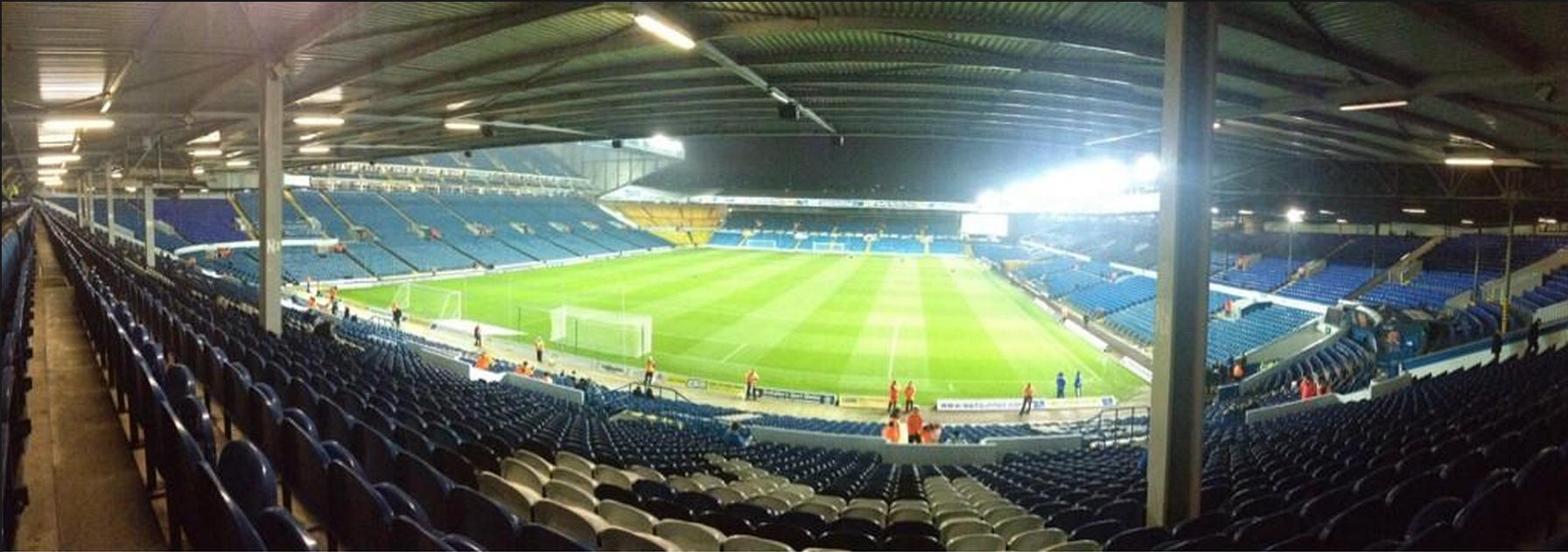
Elland Road

For any football fan asked to nominate a favourite goal, the prospect opens of a pleasurable half an hour recalling all those wonderful strikes down the years, mentally compiling a short-list, and then proudly revealing to the questioner that golden shot, header, volley or back-heel, possibly prefaced by the two runners-up in time-honoured reverse order.  Bliss.

The challenge of naming the best goal ever scored AGAINST your favourites, however, is obviously not quite so enjoyable.  Most of us like to think of ourselves as football purists, at least in a neutral sense, so that we can appreciate the beauty of a goal scored in a game not involving our club, even one by a despised rival.  But a goal in your own team’s net is never completely free of attendant pain, and however wonderfully executed it might have been, you can’t actually enjoy it.  You wince as it goes in, you home in on a possible offside flag, or any infraction of the rules that might lead to it being chalked off.  When it counts, your mood sinks.  You’re in no state to acknowledge the brilliance of it all.  You just want your lot to set about redressing the balance.

But the fact remains; you will have seen many terrific goals scored against your own beloved side.  You may possibly find that one amongst them tops even the best goal you can ever recall your lot scoring, though you will not, of course, admit that.  As a Leeds United fan, I’d certainly never concede I’ve seen better opposition goals than Yeboah’s howitzers against Liverpool and Wimbledon, Strachan’s belter against Leicester, Currie’s banana shot against the Saints, Eddie Gray’s pleasure ride through the Burnley defence or any half-dozen you might care to name from Lorimer’s ferocious back catalogue.

Looked at without the partisan blinkers, though, my mind’s eye recalls some very memorable goals scored against Leeds, particularly at my end of Elland Road; the Gelderd End, or Kop.  Jeremy Goss blasted home a fulminating volley for Norwich in 1993 that drew gasps of admiration.  The crisply-struck blockbusters do tend to stick in the memory, and I’ve often complained that we seem to cop for more than our fair share of goal-of-the-season contenders that fly into our top corner, when they might so easily have zipped into the back row of the stand.

The one opposition goal that I’ll truly never forget, though, was in a category all of its own.  In the early part of the 1990-91 season, Leeds had made a decent start to their first year back in the top flight since relegation in 1982.  Consolidation of higher status was the name of the game, but United appeared to be capable of more, and would, in fact, achieve a top four finish as a prelude to actually winning the Title the following season.  In these early days back in the big time, though, it was wonderful just to be there and holding our own.  A visit from Queens Park Rangers wasn’t expected to present any real problems, and there was a relaxed and content air around Elland Road when Leeds moved into an early two goal lead.

Then, it happened, as it’s frankly happened too often in my time watching Leeds.  We managed to salvage, from the jaws of victory, an unlikely 2-3 defeat.  But one of those goals was scored by Roy Wegerle, South African-born U.S. international, now a golf pro, but then Leeds United’s latest nemesis.  He picked the ball up wide on the right about halfway inside the Leeds half, executed a ridiculously mazy run on a by-no-means direct route to the edge of the area, during which he went past five Leeds players as if they just weren’t there, before shifting the ball finally onto his right foot and dispatching it past a flailing John Lukic.  It was one of those moments when, despite your love of your own team, you just stopped for an instant, transfixed in wonder, before exclaiming “I say, what an absolute corker of a goal that was!”, or words to that effect.

It was a beautiful goal, a wondrous, marvelous gem of a goal.  I’ll certainly never forget it, and seemingly new generations of QPR fans are always finding out about it, and wishing they could have seen it live.  Well, I did see it, and although I may not have appreciated it at the time, it certainly gets my nomination for “best ever against Leeds”.  I’m not alone in that, either – one other thing I recall from that day is the loud and generous applause Wegerle’s effort elicited from the notoriously parochial Leeds support.

It takes a very special goal indeed to get that reaction at Elland Road, and this was definitely as special as it gets – worthy of Maradona, perhaps … or even Eddie Gray.

Take a bow, son.

A Day In The Death Of Leeds United

It’s not safe to identify any one day, defeat or disappointment as the nadir of Leeds United’s fortunes just now.  At the moment, takeover and “fresh start” notwithstanding, we appear to be plummeting downhill faster than a greased pig.  Today’s news that top scorer Luciano Becchio has submitted a transfer request is another notable low point – Leeds are making an unfortunate habit of losing their top players in January transfer windows.  And yet, you somehow have that uncomfortable, chill feeling – even as a committed Whites fanatic – that, however bad things may seem, there’s plenty of scope for them to get worse.

Indeed, it’s arguable that things HAVE been worse – much worse – in the fairly recent past, than they are today.  The run-up to the 2007-08 season, the club’s first in the third tier of English football, was catastrophic.  Administration had brought about the unprecedented penalty of a 15 point deduction, leaving the beleaguered giants 5 wins short of zero points as the season started.  But that season turned into a triumph of sorts – promotion was narrowly missed, and the whole points-deduction saga seemed to galvanise the support.  On the pitch, the team delivered, particularly in the early part of the season, and a seemingly irresistible momentum was built up.  Leeds really were United at this lowest ebb in their history.

At present, in some superficial measures, things are better – but in the most fundamental ways, they appear significantly worse.  Obviously, the club now enjoys a higher status within the game – the dark days of League One football are receding into the past, at least for the time being.  There have been high spots too, famous Cup victories and the odd satisfying away performance.  At Elland Road, once a fortress notorious for intimidating opponents, form has been patchy.  And yet Premier League teams have been put to the sword, and generally speaking the team will give anyone a game on their own patch.  The underlying problem today though is more insidious than the acute emergencies immediately post-administration.  It is the creeping cancer of apathy that pervades the club now.

It’s not difficult to see the signs of this.  Read any of the fans’ forums, and a pattern swiftly emerges.  The supporters, by and large, are sick of the way the club has been run over the past few years.  Sick of paying top dollar for a distinctly second-rate product.  Sick of the club’s habitual prevarications over transfer policy, of seeing our best players form a procession out of the exit door, sick to death of seeing lesser clubs easily out-match us for wages and transfer fees, despite the fact that our turnover and potential remain at the top end.

Leeds United, a great name in English football, by any measure, appears to have been run on the cheap for a long time now.  Investment is minimal, the ability to retain promising players practically non-existent.  The supporters’ expectations, born of great days in the past, remain high – and why shouldn’t they be?  But those expectations show no sign of being met, or even approached.  Last summer’s long drawn-out agony of a takeover saga descended too often to the depths of farce, as rumour countered rumour, and we all rode an internet-driven roller-coaster of optimism and despair, over and over again.  But once concluded, that saga has not spawned a legacy of more investment and better club/fan relations.  We appear to be stuck with more of the same; the changes appear to have been purely cosmetic.

On Saturday 12th January, Leeds United played Barnsley away, a fixture that had produced humiliating three-goal thrashings in the previous two seasons.  This time around, it was only a two goal thrashing, but the manner of defeat – the abject failure to muster any real threat up front, and the spectacle of midfield players gazing skywards as the ball whistled to and fro far above them – was too much for the long-suffering band of away fans in Leeds United colours.  They complained, loudly.  They advised the manager to be on his way.  They questioned the fitness of the players to wear the famous shirt.  The supporters feel they are being taken for mugs, and they have had enough.

All this has been true for a while – but for much of the past year, change has been in the air, and it has seemed reasonable to expect that things might be about to get better.  Some of us dared to dream.  But after the final whistle at Barnsley’s Oakwell ground, it seemed all of a sudden quite clear that the options for change had been exhausted, and that the future remains as bleak as it has been at any time since top-flight status was relinquished 9 long years ago.

Some of the fans – not all, but some – feel that there is now no way back for Leeds – not to anywhere approaching the pre-eminence they once enjoyed in the game.  If that’s the case, then the question arises: what is a reasonable aim now?  To gain promotion to the Premier League, and strive to survive?  To become a yo-yo club, with promotion and relegation in successive years, never becoming established in the top-flight?  That might be enough for many clubs, but at Leeds the memories of glory are that bit too vivid for the fans to settle for any such precarious existence, scratching around in the hinterland of old rivals’ success.

It may well be that, on that cold day in Barnsley, realisation dawned that the club Leeds United once were is now dead and gone.  What is left behind may well still be worth supporting, but it is likely to be a pale shadow of what we once knew.  Yesterday, there were rumours of high profile signings – and you knew, you just KNEW, that we were being softened up for more bad news.  Today, it seems that Becchio is off, and we hear reports that recent loanees didn’t want to stay “because of the money situation up there”.  It all stinks of a club rotten to the core, and dead at the top.

Leeds United – one of the truly great names in English football.  RIP.