Tag Archives: Man United

Leeds are the Damned United, but Man U Takes Award for Sickest Fans – by Rob Atkinson

In the wake of the tragic helicopter crash at Leicester’s King Power Stadium last night, and with the sad likelihood that we shall shortly hear confirmation of lives lost, there has been much talk of the phenomenon of the “Football Family”, as fans of many clubs have rallied around to support Leicester City Football Club and its supporters at a very dark time.

All that is as it should be, and a respectful, reverent reaction has been almost universal. I say “almost”, because there are generally a few degraded exceptions, and those exceptions are almost always to be found among the usual suspects representing football’s least lovable “fans”. It will surprise few who are aware of their history that, on this occasion, it’s an identifiable group of Manchester United fans, the producers of a toilet roll of a fanzine known as Red Issue, who have plumbed the depths of poor taste as only they can.

This purulent rag has form going back years for the penning and publication of articles and “jokes” that take the breath away with their sheer, savage detestability. Emboldened by that curiously puzzling Manc sense of entitlement and by unjustified self-righteousness, they have disgraced themselves many a time, heaping shame and derision upon a club rarely short of that commodity. I well recall a photograph they published while Eric Cantona was at Leeds, of the Frenchman in the bath with his young daughter, accompanying the image with a caption designed to encourage their leering readers to conclude that Cantona was a paedophile. There was also a chant sung at Man U matches expressly accusing Arsène Wenger of the self same thing. In brief, these are awful, awful people with no redeeming qualities.

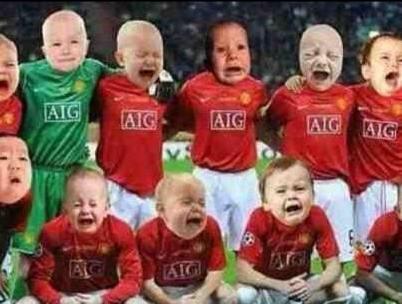
But they’ve outdone themselves this time, as can be seen from the disgusting tweets reproduced above, in the immediate aftermath of a football tragedy that has shocked the whole sporting world. It takes a person with his soul deeply rooted in the foulest slime at the bottom of the sewer to even think of such a thing, let alone share it with the world. But that’s Red Issue for you – the lowest of the low, even in the context of Man U fans.

But of course, it’s Leeds who are dubbed the Damned United, which is a sad indictment of people’s judgement for you. Luckily, although Leeds fans do not find halos sitting easily atop their heads, we’re in a different category entirely from the kind of filth they attract in Salford. Even Millwall fans have more to recommend them, having contributed generously to a fighting fund for young cancer sufferer Toby Nye. There is no such softer side to the arrogant, entitled and thoroughly disgusting fans of Manchester’s second club.

If I sound angry, it’s because I am. I’m sick of the media fawning that surrounds a club which embodies everything bad about the game. I’m sick of the way everyone panders to them because of their commercial clout, ignoring the many foul and detestable aspects of a club and set of supporters who feel they can do and say what they like. The media seeks to protect its own interests and preserve lucrative markets, which means they will always go easy on Man U.

As I write, they lead Everton courtesy of yet another blatantly unfair penalty award, reminding me that my own United have now gone 53 league games without even obvious penalties being given. That sums up the disparity of treatment, and maybe it’s an insight into why Man U fans such as the sickos behind Red Issue feel that they have the right to continue outraging any sense of decency.

This year, as every other year, Man U fans will collectively take out an onion to wallow in commercially advantageous grief over the Munich air crash sixty years ago. They will demand respect and empathy, despite the fact that – as you can see above – they have none for anybody else. But they think they’re a special case, and that they should be treated as such. Most of them will never have heard of AC Torino‘s even more tragic and devastating Superga crash, about which I’ve written before. Add “blinkered” to “disgusting”, then.

Man U fans feel that they are a breed apart. And they really are. Just not in the way they would like to think.

Yorkshire Derby Joy: Sheffield Wednesday 1, Leeds United 6 – by Rob Atkinson

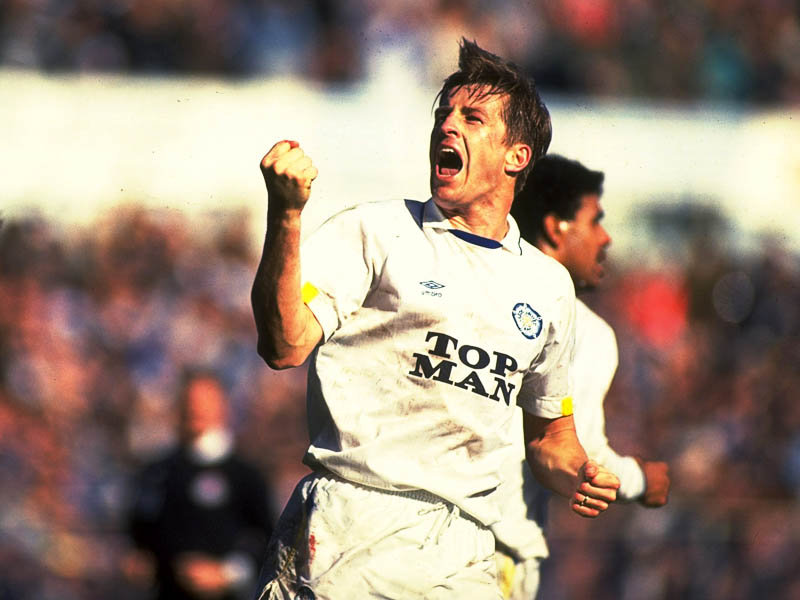
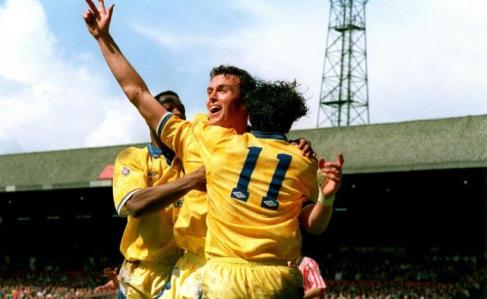
Take That, Wendies - Hat-Trick Hero Leee Celebrates

Take That, Wendies – Hat-Trick Hero Leee Celebrates

Today, we’re taking a look back to almost exactly 24 years ago to one of Leeds United’s, let’s say, more emphatic performances on their travels. Ahead of the lunchtime kick-off at Hillsborough – a fixture we can hardly anticipate with any pleasure, given current form and the sour mood surrounding Leeds United as a club – this match in January of ’92 provides some particularly happy memories.

As 1991 turned into 1992, there was plenty to look forward to for our great club.  Against many expectations, Leeds had stayed the pace in the first half of the season, to remain Man U’s main challengers for the last ever old-style Football League Championship.  We also retained an interest in both Cups, and there was no European football to muddy the waters, as we’d “only” finished fourth on our top-flight re-entry the season before (a position, it should be noted, that gains entry to the guaranteed riches of the Champions’ League these less demanding days).  So it was the League Cup and the FA Cup that promised to be the distractions from our pursuit of the Title, and guess what?  We were drawn at home in both competitions against The Pride of Devon, our main rivals for the Championship.  You couldn’t, as they say, make it up.

History shows that our beloved neighbours from “ovver t’hill” ended our involvement in both Cups, deservedly 3-1, let it be said, in the 5th Round of the League Cup (then Rumbelows Cup).  By contrast, a distinctly unlucky exit in the 3rd Round of the FA Cup followed, when a dominant Leeds performance brought only the bitter pill of a 1-0 defeat, and a worrying injury to Lee Chapman into the bargain.   Prior to the Cup games, we had played Man U in the league at Elland Road, drawing one each in the first game of what was known at the time as a “Titanic Roses Trilogy” by unimaginative sub-editors everywhere.  So honours were by no means even, but the consequences of this mighty three match series would be felt over the remainder of the season, and – some would argue – far beyond.

The immediate fall-out was that Leeds were “free to concentrate on the League”, as the cliché runs.  Man U, meanwhile, continued on to Wembley in the League Cup, enjoying a victory over Nottingham Forest, but ended up losing amusingly at home to Southampton in the FA Cup.  The fixture congestion they suffered as the season entered its final stages would be significant, if not actually decisive, in the eventual destination of the Title.

As far as the Title went, the lads from the Theatre of Hollow Myths had suffered a shock on New Year’s Day, capitulating 4-1 at home to QPR. Later that January 1st, Leeds won competently 3-1 at West Ham, and remained well in the race for the ultimate domestic honour.  The scene was adequately set, then, for Wilko’s first return to Hillsborough since he had quit Wednesday to become Leeds boss in 1988. This would also be Chapman’s last game before his season-threatening FA Cup injury. He was destined to be sidelined only temporarily, and he went out in emphatic style.

There was a crowd of 32,228 at Hillsborough, the usual vociferous contingent of travelling Leeds fans rivalling the home crowd for noise from the outset, and completely drowning them as the game went on. Leeds United were weakened – so it seemed – by the absence of the injured Gordon Strachan and suspended David Batty, half of their legendary midfield Fantastic Four. Any side, surely, would miss performers of such calibre. Leeds, however, seemed determined to make light of the problem, and tore into the shocked Wendies from the start.  Full-back Tony Dorigo made an early, darting run, cutting in from the left and making good progress down the centre of the pitch, before unleashing a right-foot thunderbolt that home ‘keeper Chris Woods had to tip over.  From the resulting Gary MacAllister corner, Chris Fairclough rose to head downwards, and found Chapman in splendid isolation 4 yards out; his finish was sure and deadly.

For a local derby, the contest had been decidedly one-way traffic – Chapman was to send two towering headers just wide before Carl Shutt had a scuffed shot smothered by Woods in the home goal. Then, a true champagne moment as Mel Sterland fed the ball to Chapman on the right. In a completely untypical burst of pace and control, Chappy surged between two hapless Wednesday defenders, raced into the area, and unleashed a shot that beat Woods completely, just clipping the frame of the goal to rapturous applause from the Leeds fans at the Leppings Lane End. I remember thinking at the time that anything was possible now, if Lee Chapman could do something so utterly out of character. And so it proved as, from a free kick awarded just right of centre some ten yards outside the box, Dorigo stepped up to absolutely hammer the ball past a helpless ‘keeper. Cue raucous jubilation from the White Army behind the goal, celebrating as clean a strike as you could ever see, hurtling into the far corner with precision and power.

At 2-0 down, the home side were making increasingly desperate attempts to gain some sort of foothold in the match. This desperation was adequately demonstrated when, from a harmless-looking ball into the Leeds area, Wednesday striker Gordon Watson ran in front of Chris Whyte, continued on for another step or two, and then hurled himself into the air, landing in agonised paroxysms of simulation between a bemused Whyte and Leeds ‘keeper John Lukic. Such obvious fraud and villainy could have only one outcome, and the stadium held its collective breath for sentence to be passed on the miscreant. Instead – amazingly – referee Philip Don pointed to the spot as Whyte snarled his outraged disbelief.  Whether none of the officials had seen the extent of Watson’s ham-acting, or whether they were perhaps moved by sympathy for the mauling Wednesday were taking from a rampant Leeds, it’s impossible to say.  Ex-Leeds hero John Sheridan stepped up, saw his penalty brilliantly saved as Lukic tipped it against his right-hand post, and then gleefully belted home the rebound to give Wednesday a massively unmerited lifeline.

An act of such base and scurvy treachery required nothing less than a riposte of the utmost nobility and beauty. And, happily, so it came to pass. Just minutes after the home side’s ridiculous blagging of an unfair route back into the game, Leeds effortlessly took control again with a goal sublime in both conception and execution. Lukic bowled the ball out to Dorigo on the left flank; he sent it down the line to Gary Speed, who took one touch to steady himself, before sending a beautiful flighted cross into the Wednesday area.  And there, inevitably, was Chapman, horizontal in mid-air, neck cocked to hammer the ball unanswerably past Woods, the perfect counterpunch to suck a knavish low blow.  It was a gorgeous goal, sweeping the length of the left side of the field, taking the entire home team right out of the game, and re-establishing the two goal margin which was the least Leeds United deserved at half-time.

The second half that day was simply a story of how a blood-and-thunder Yorkshire derby turned into a stroll in the park for Leeds United.  It seemed as if all the life had been sucked out of the home team – a Wednesday side, let’s not forget, who were unbeaten at home since the opening day of the season, and who would go on to finish third in the table.  So they were no mugs, but Leeds United were absolutely irresistible on the day, and would have hammered far better teams than the hapless Owls.

Possibly, Wednesday were simply embarrassed about that cringeworthy penalty, possibly they were tired, having been run rings around since the start.  Whatever the case, their heads dropped steadily further and further as the game progressed, and they offered little resistance as Leeds proceeded to throttle the life out of them.  Chapman completed his hat-trick after the hour, heading in after Speed had struck the bar from a corner.  Poor Speedo was looking the other way, bemoaning his bad luck when the ball hit the back of the net, turning his frustration to joy.  Then perennial bit-part player Mike Whitlow ventured forward, just because he could, and rose unchallenged to meet Wallace’s right-wing cross and head easily over a stranded Woods.  It was left to little Rodney Wallace to administer the coup de grâce, striding clear after a shimmering exchange of passes in midfield to dink the ball over the advancing ‘keeper, and put the suffering home side finally out of their misery.

For Leeds, it had been their biggest away win in over 60 years as they returned to the First Division summit in the best possible manner.  The message had been sent out loud and clear: United were serious about their Championship challenge, and they would surely look back after their eventual success in the League, to identify this sumptuous display as one that defined them as potentially the best team in the land.  For Wednesday it was utter humiliation, and truth to tell it was difficult to sympathise.  Better really to lose 6-0 than to be tainted as they were with such a crass and obvious example of cheating – and it hardly reflected much credit on myopic referee Don, either.

It was a massively impressively performance, a hugely significant victory, and the sweetest possible return for United’s ex-Owls contingent.  Mel Sterland always took great delight in beating the Blades, but this victory over his boyhood favourites would have only happy memories for him, as indeed for Chapman, Shutt and of course the Sergeant himself.  Leeds would march on to the Title, Man U’s quarter-of-a-century wait would extend for another 12 delightful months – and Wednesday would recover to finish impressively, despite another awful trouncing at Highbury.

But January 12th 1992 belonged entirely to Leeds United, who looked like Champions a full four months early with this five star, six of the best Masterclass display.

No Leeds United Welcome for UK Returnee Harry “Judas” Kewell – by Rob Atkinson

Leeds fans United in grief and dignity

Leeds fans United in grief and dignity

Alan Smith. Eric Cantona. Rio Ferdinand. Three Leeds United players who opted to transfer their allegiance to the Evil Empire over the wrong side of the Pennines. In so doing, they attracted hatred and brickbats aplenty from Leeds followers. After all, they’d gone to the club we despise above almost any other, certainly as far as anything these islands can provide. So too, much earlier, had Joe Jordan and Gordon McQueen, along with the less-well remembered examples of Arthur Graham and Peter Barnes in the relatively small collective of former Leeds players who have identified themselves with the Pride of Devon and their repellent supporters. These individuals, heroes to Leeds fans at one time or another, were held individually and as a category to be traitors to the real United, of Elland Road. Figuratively speaking, as well as almost literally, they had sold their souls to the Devil.

But really, all that “treachery” stuff, as applied to a small group of misguided men is just so much nonsense. In some cases, it’s even an injustice – Alan Smith, for example, made his move against a background of a Leeds United desperate for money (does this sound familiar?) He even waived his own cut of the deal so that his former club could derive the maximum financial benefit. If that’s treachery, then Steve McClaren is a Dutchman.

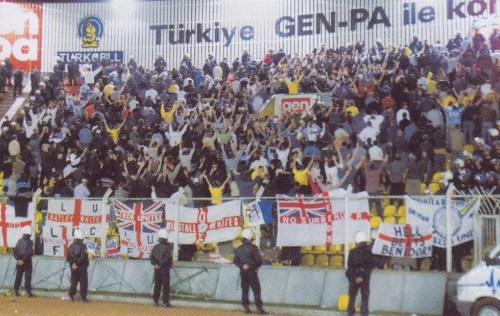
For real treachery – allied to on-going bad taste and a degree of insensitivity that makes expenses cheat Maria Miller look like Mother Teresa – let me commend you to Harry Kewell Esq, formerly of this parish. Kewell, wearing the number 10 shirt, was one of the Leeds United side that emerged into a cauldron of seething hatred as the stricken Whites were forced to play the first leg of a UEFA Cup semi-final against Galatasaray mere hours after the savage murder of two of their supporters. The home side refused to wear black armbands, demonstrating utter and callous disrespect. They would later demand that the second leg should be played at a neutral venue, should their disgusting fans be banned from an Elland Road return.

The players of Leeds United looked up to the crowd that night and saw snarling faces, disfigured by feverish hatred, fingers drawn across necks in the time-disgraced but locally admired “throat-slitting” gesture, the whole nightmare scene played out against a backdrop of “Welcome to Hell” banners as the bestial home fans taunted the United support, who simply turned their back on proceedings at kick-off in what must count as the most dignified display of protest in recent history.

Kewell cannot possibly have failed to absorb that evil miasma of hate and malice. He cannot have failed to appreciate the intentional hurt inflicted by the Galatasaray club – and especially their cowardly fans – to the feelings of everybody concerned with the Leeds United cause, especially of course the bereaved families of Chris Loftus and Kevin Speight. Kewell must, surely, have felt as threatened and disgusted by the atmosphere prior to and during the game as any other United player that night. It was a match that, in the circumstances, should not have been played. Not that night, not so soon after those lads’ life-blood had been spilled. Perhaps never. Only the buffoons of UEFA could have made such a ridiculous decision as to rule the game should go ahead. It was an infamous night in the history of football.

If, on that night, you had predicted that any United player would, at some point in the future, willingly embrace that atmosphere, happily align himself with such a notoriously uncivilised set of “supporters” – you could have offered odds of ten thousand to one, and no takers. You’d have been laughed out of court, possibly with a few bumps and bruises for your own bad taste and lack of judgement. And yet, a few short years afterwards, Harry Kewell – “Mr. Anywhere-For-A-Fat-Contract” himself – elected to join that awful club and play for those despicable fans. It was an act of calculated disrespect to the victims, their families, their friends, the wider Leeds United community and decent football fans everywhere. It was base treachery in the raw; the act of a man who cannot see beyond his own narrow interests and who, frankly, could not give a damn.

At the time, he spouted a few mealy-mouthed platitudes about wishing to reconcile two sets of fans divided by tragedy. Yeah, OK Harry. Nothing to do with money after all, then? He could not have more effectively alienated Leeds fans everywhere if he had sat down and thought about how to do so for a year. It was an act of a vain and stupid young man whose God-given talent had set him up financially for life, but whose poverty of taste, sensitivity and loyalty would make the poorest beggar in the street look rich. Any player who had ever been connected with Leeds United should have realised that such a move was the ultimate in terrible ideas. It’s not something that should have needed explaining, not even to the meanest intellect or the most self-involved and vacant young man.

Now, fifteen years after the murders in Taksim Square, and with his football career at an end, Kewell is once more involved in English football, for the first time since a dilatory and uncommitted stint at Liverpool, as a member of the Watford FC coaching staff. Leeds fans will not welcome his return; for us, his copybook is blotted beyond any hope of redemption. Kewell put himself beyond the pale by the manner of his leaving Elland Road, when he and his agent held the club to ransom (in stark contrast to the example of Alan Smith, cited above) ensuring his pockets were well-lined, to the detriment of the club that gave him his start. His subsequent betrayal of the soul and spirit of Leeds United, by signing for that tawdry outfit from Istanbul, added gross insult to what was nearly a mortal injury.

Words like “Judas”, “traitor” and “treachery” are bandied about a bit too freely, sometimes. That tends to become obvious only when you see a glaringly obscene example of the real thing – only then does it stand out that some dubious acts thus labelled are actually as water unto wine when it really comes down to it. So forget about those who have crossed the great divide between Elland Road and the Theatre of Hollow Myths – their defections mean nothing at all in the grand scheme of things. We have been amply repaid over the years anyway – luminaries such as Johnny Giles and Gordon Strachan have made the opposite journey and have found glory in all-white. At the end of the day, all of that is just about football – and beside the matter of life, death and justice, football remains very small beer indeed.

Life and death were the issues on that April night so long ago, and events panned out such that two lads, who simply wanted to follow their heroes at a football match, never came home – and have never received real justice. One of them had a son, George, who has had to grow up without his Dad, and who, once upon a time, angrily wanted to point out to a thick-headed footballer the betrayal he believed that footballer was guilty of perpetrating, by his thoughtless act of offering a Galatasaray shirt as a prize in an online competition. George Speight received no apology, no understanding, no acknowledgement from Kewell – just a casual insult and a hollow accusation of racism. There is no greater treachery than that, no baser example of ignorance and poor taste. And now the traitor is back among us once again. It’s very difficult to wish Watford anything but ill-luck and failure, just on this one account. 

Harry Kewell: one-time Leeds star, has-been footballer – and the worst example of self-seeking treachery it’s been my misfortune to witness.

One Don Revie!! Why We Were RIGHT To Sing Through the Busby Silence – by Rob Atkinson

One Don Revie! There’s only ONE Don Revie!!

Twenty-five years to the day after we lost football’s greatest-ever manager, I’m irresistibly reminded of a tribute Leeds United fans paid to The Don of Elland Road, some time after his death.  It was a tribute paid in the face of compulsory mourning for Matt Busby, a manager rightly held in great esteem by the Establishment, and indeed by football as a whole – but this prescribed mourning was shoved at us as a fait accompli – like it or lump it.

We Leeds fans, deeply conscious of the fact that our own Don Revie’s death had been disrespectfully ignored by the FA, chose in our turn to ignore the official edict. So we paid our own tribute, singing the name of Don Revie instead of standing silent and resentful before an away game at Blackburn – and in so doing, we brought upon ourselves the self-righteous and sanctimonious disdain of many, many fools and hypocrites.

But the simple fact is that what we did at Blackburn that night in 1994 was absolutely right and proper.  It was not a calculated act of disrespect to a manager in Busby who had nothing to do with us.  Rather, it was a timely and positive tribute to our own legendary but marginalised manager, placed right in the face of official sanctimony, so that the whole world would know that it had been made – and why. Clearly, not everyone agrees with this point of view, many Leeds fans among those dissenters.  But here’s why they’re wrong to dissent.

The chanting of Revie’s name that night was admittedly pretty strong meat – it was a maverick stand to take at a time when the whole country seemed to have been brainwashed into accepting that one club’s heroes should be treated with a reverence denied to all others. Some misgivings I can understand – but I’m completely sick to death of hearing from those Leeds fans who profess still to be ashamed, all these years later, of the fact that we made the protest. The fact of the matter is, that this was the moment to stand up and be counted, collectively – and collectively, we’d not have been able to hold our heads up if some sort of gesture hadn’t been made at that game.

Look at the facts. The death of Busby was predictably and nauseatingly over-hyped by the scum-loving media. The FA-prescribed national minute’s silence was just the tip of the iceberg – there was also endless eulogising all over the TV and the sickeningly mawkish spectacle of the lone bloody piper at Old Trafford, beamed into all our front rooms whether we liked it or not.

On the other hand, the FA couldn’t even be bothered to send a representative to Don’s funeral, the hypocrites. So why the hell is there such a disparity, and more to the point, why the hell are we expected to just put up with it and go along with such blatant stinking hypocrisy and double standards? Are we supposed to have no pride? Well, I’m sorry, but sod ’em. Whatever anyone says – and I include the Leeds players of the time and those from Revie’s era who condemned what happened – the chanting of Revie’s name at Blackburn was a very necessary stand against the establishment view that Busby was a saint and Don was a sinner. It was a statement of our reverence for the Don, against a background of organised and compulsory national mourning for someone who was a hero only to Scum, City and possibly Liverpool fans. And it was an assertion of the fact that we are Leeds and nobody tells us when to show respect, especially when no bugger showed any respect for the Don in life or in death.

The players from any era who were wheeled onto camera to criticise the actions of the fans at Blackburn, have one thing in common. They haven’t got a bloody clue what it’s like to be a fan. They’re players, club employees, and they come and they go, even the best and most loyal of them. Strachan – not a clue. Eddie Gray – not a clue. Not one of them knows what it is to be a fan and continually to have the media’s favourite bloody club shoved down your throat, to the exclusion of everything and everyone you care about as a Leeds supporter.

I don’t give a toss for all the apologists who sit there bleating, oh it was a terrible thing, they dragged the name of our club through the mud. Well in case you haven’t noticed, the name of Leeds United is always being dragged through the mud, and not by us, but by the FA, by the buffoons of the Football League, by nonentities who work for or support other clubs, by the Daily bloody Mirror and other gutter rags, and by Uncle Tom Cobleigh and all. So sod ’em. We did the right thing at Blackburn, just as we did in the Galatasaray ground years later, turning our backs to the field of play. We showed pride for our club, respect for our dead, and a big fat V-sign to all those who are so overtly against us.

It’s all about pride and self-respect at the end of the day – well, I was proud of us in the Ali-Sami-Yen that night in 2000, and I was no less proud of us at Blackburn. I’ll always be glad we didn’t just meekly toe the line and do as the hypocrites in the establishment wanted us to do, as every other simple-minded donkey did. I’m glad and I’m proud that we were big and angry enough to be different and stand up for our point of view.

That’s what it means to be Leeds – we are United, and we are the best.  You know what you can do with the rest.


Forget Man U “Class of ’92” – Salute the Leeds MASTERS of ’92 – by Rob Atkinson

Super Jon Newsome

Super Jon Newsome

There’s been a lot of talk this past couple of days about the “Class of ’92”, a somewhat disingenuous reference to Man U’s FA Youth Cup winners of that year, what with Giggsy Wiggsy taking over as temp. manager at the Theatre of Hollow Myths, with Scholesy Wolsey and Butty Wutty on board as well.

The media, bless ’em, love this sort of thing – and they’re seemingly eager to ignore the fact that 1992 was, actually, all about another United – Leeds United, the one and only United – as they won the last ever proper Football League Championship, four points clear of you-know-who and their rabidly frothing Scotch git of a manager.

It all happened 22 years ago today, actually – so let’s have a nostalgic look back and, while we’re at it, set the record straight about all of this “Class of ’92” crap. Because we’re not talking pupils here, we’re talking masters.

The 26th April 1992 was not just a normal Sunday morning like any other; for all fans of Leeds United it would turn out to be a date with destiny, the unlikely culmination of a footballing journey that had started in October 1988.  Howard Wilkinson’s move from First Division Sheffield Wednesday to take over as boss at Second Division strugglers Leeds United had been – perhaps unwisely – summed up by the Sheffield Wednesday chairman as “a chance we couldn’t deny Howard to better himself.”   That must have fallen like rocks on the ears of the Wednesday fans who nevertheless could not have envisaged their rivals’ subsequent meteoric rise at a time when the Wednesday star was on the wane.  Such is life.

History will show that Wilkinson breezed into Leeds United, seized the place by the scruff of its neck and shook it up good and proper.  Remnants of his legacy are still visible in the club’s world-class Academy and training complex not to mention the gigantic East Stand, but it is for the phoenix-like resurrection of The Whites that the fanatical Leeds support will best remember Sergeant Wilko.  Leeds were promoted in 1990 after Wilkinson’s first full season, trading places with Sheffield Wednesday as they dropped into the Second Division – bittersweet irony there.  A season of consolidation followed, and then the full-on assault on the Football League Championship itself, a challenge unexpectedly sustained right to the sweetest of ends.  By April 20th 1992, Leeds were still clinging on in the title race, but Man U were clear favourites with a points lead and a match in hand.  That day though was the start of the turning of the tide in Leeds’ favour.  As fans gathered on the Kop for the late afternoon visit of Coventry City, radios were clamped to anxious ears as news was awaited from Man U’s home game against Nottingham Forest.  Two explosions of joy from the swelling Elland Road crowd signalled two Forest goals and a defeat for the leaders that Leeds were to capitalise on, beating Coventry 2-0 in front of a live TV audience.

Now it was game on in earnest, and I vividly remember a nervous evening at home that midweek as West Ham played host to Man U who were finally playing their remaining game in hand.  Win, and they would be in the box seat – but, as I frantically tidied and re-tidied my bedside table drawer to save myself from chewing my nails down to my elbows, they lost, wonderfully, miraculously lost to leave Leeds in charge of their own destiny. Choleric Man U manager Alex Ferguson must have bitterly tasted the sourest of grapes as he described the already-relegated Hammers’ effort levels in beating his charges as “obscene”.  His lack of grace drew a stark contrast with the phlegmatic Wilko, who was calmly reminding the world that Leeds had secured a place in Europe, his main aim for the season, and that anything more would be “a bonus.”

But Leeds now knew that if they won their last two games – away at Sheffield United and at home to Norwich City – they would be English Champions in the last old-style Football League programme – a signal honour.  Everybody thought it would go down to the last game of the season, that Norwich would be the big game.  Yet if Leeds were to win at Bramall Lane, Man U would then face the formidable task of winning at Anfield to take the Title race to its last day.

Back to April 26th, and as I walked up the hill into Wakefield that mid-morning, I saw cars trailing the colours of Leeds United, the scarves fluttering bravely – and I felt a sense of occasion but still could not quite comprehend that this might just be The Day.  I met up with my mate Dave, and we shared a tense journey to Sheffield, not much said, both knowing that this was a Sunday that could equally easily end up being triumph or disaster.  Parked up in the scruffy environs of Bramall Lane, just about the first thing Dave did as we walked to the ground was to drag me back out of the path of a careering van as I stepped out to cross a road, oblivious of traffic, lost in thought.  We both grinned at my narrow escape and agreed: good omen.  And then we were high up in the seats of the upper tier behind the goal at the away end of Sheffield United’s quaintly ill-designed stadium.  The day was gusty, and so the football would prove to be.  It was a match of ebb and flow, the Sheffield faithful eager to deny Leeds their chance of clinching the title, Leeds fans loud and defiant with self-belief.

If you’re a Leeds supporter, you’ll have seen the goals from that game hundreds, thousands of time.  It plays through now, all these years later, in the Football Highlights studio of my mind; joy for the home side as Alan Cork, gleaming of bald pate, pokes the ball home to give Sheffield the lead.  Then, a midfield tussle in the swirling wind, as Leeds try valiantly to come back.  A late first-half free kick, which Gordon Strachan races to take before the home defence can set themselves, he finds Rod Wallace in the area who tips the ball past home keeper Mel Rees’s attempt to save, defenders scramble to clear, only to hit Gary Speed who pings the ball back to ricochet off Wallace – into the net.  Pandemonium in the away end.   Level at half time, we’re breathless with drama and the hurly-burly of it all, raucous with United anthems, nervous of what’s yet to come.

In the second half, though we don’t know it, human tragedy unfolds: Sheffield ‘keeper Mel Rees, injured in the melee leading to Leeds’ leveller, his thigh heavily strapped, can hardly move and is hampered for the second Leeds goal as Jon Newsome stoops to head in at the far post.  Mel Rees, who was due an international call-up for Wales the next day but has to pull out because of his injury.  Mel Rees, who would never play football again because he was to develop cancer and die a year later, tragically young at 26.  RIP Mel Rees.

The crazy game continues crazily.  A dangerous ball across the Leeds box is retrieved by home defender and future Leeds man John Pemberton, who turns it back towards the goal-line where Lee Chapman sticks out a leg for an own-goal greeted with horrified stupefaction by the Leeds fans behind the goal and we’re level again.  Then enfant terrible Eric Cantona enters the fray, and within a few minutes he is chasing a loose ball into the Sheffield half, with Rod Wallace scampering alongside and home defender Brian Gayle lumbering back in a desperate attempt to clear the danger.  And it’s Gayle, former Man City man, who finally slays Man United.  From my vantage point at the opposite end of the ground I see him get his head to the ball, and the action is suddenly slow motion.  Gayle has headed the ball, poor Mel Rees is stranded far out of his goal, the ball goes over his head in a slow, slow loop, and bounces tantalisingly towards the unguarded net…

Then I’m watching at full speed from the far end as Cantona and Wallace raise their arms in triumph, wheeling away in delight, and even as I wonder what they’re up to I realise that the ball has nestled in the Sheffield United net.  A red mist descends, and I am utterly outside of my skull and beside myself in delirious joy and fevered madness, looking around me, roaring like a demented bull, face congested with blood, eyes bulging; I grab a tiny and helpless St John’s Ambulance man by his lapels and scream beer and spittle into his terrified face “Get me some oxygen!!!”, I bellow. “I’m going to have a bloody heart attack!!!”  The mad moment passes, I drop the ashen medic and some measure of sanity returns, but we’re still cavorting and diving all over each other, a seething, sweating mass of Leeds, because we know it’s over, we know that Sheffield are beaten, and we know that Man U don’t have an earthly at Anfield, not a prayer.  We were going to be Champions; on that windiest and gustiest of days, a Gayle from Manchester City has blown the Scum away and decided in an instant the fate of all three Uniteds from Manchester, Sheffield and Leeds.

And so, of course, it panned out.  Later I watched mesmerised on TV as Liverpool beat a demoralised Man U, Denis Law and Ian St John trying to put a brave face on it, Elton Welsby’s foot bobbing away in thwarted anger as the script turned out just as none of them wanted.  Ian Rush scored his first ever goal against Them, and it was settled late on as Man U conceded a second.  “And now the title goes to Leeds without any doubt at all” intoned Brian Moore in the ITV commentary as I sat there with tears of joy streaming down my unashamed face.  Gary Lineker had called into the studio earlier to complain that Rod Wallace’s goal had been offside (it was).  St John and Moore bemoaned that Man U had had no luck at all, and Welsby ground his teeth in the studio as the Man U fans outside hurled abuse at him, heedless of the fact that he shared their bitter disappointment.  All was frustration in the media and the rest of football and Leeds fans everywhere utterly failed to give a toss.

Twenty-two years on from that nutty day, when Leeds reached the summit of the game, the images are all still vivid and clear for me.  I’ve worn out four video tapes and at least three DVD’s, but I don’t need them, I don’t need YouTube, I can see it all any time I choose just by relaxing and closing my eyes.  Mel Rees is no longer with us, nor is Gary Speed and Brian Moore has passed away too.  Rest in peace, all.  And my mate Dave who shared that memorable day with me, he’s gone as well, taken far too young by cancer in 1999.  I have a picture of us both, taken before the home game with Norwich a week after we’d won the league, triumphant in our freshly-purchased “Champions” t-shirts, happily blind as to what the future would bring.  RIP, Dave mate.  We celebrated hard that day as little Rod Wallace won that last game with a sublime goal, rounding off our greatest season.  We’d earned it, me and Dave, tramping around the second division grounds of the eighties as Leeds struggled to come back.  Thousands of us had earned it.  Now we were top dogs, and boy did we enjoy it while it lasted.

United were back, as Champions of England.  The Last Real Champions. One of our unique, unbeatable accolades, like being at the top of the League when the Millennium clicked its four digits over.  Something that can never be taken away from us: Immortality, pure and simple.  Happy Memories, Champs.
Only One United? Leeds United Fans Know Better – by Rob Atkinson

1 LUFC

Talk to “football fans” of a certain glory-hunting persuasion, and at some point you’re more than likely to hear “Yeah, mate, but there’s only one United”.  Whether the accent of the speaker is Cockney, Irish, Devonian, Midlands or even – may God forgive them – Yorkshire; the pitiful delusion is common to all.  They “support” Man U, and they take it as gospel that they and their cosmopolitan breed follow the one and only, divinely anointed United.  The reasons for this can largely be laid at the door of our lazy and complacent media, who certainly do love their cosy tags and nicknames.  It saves them the bother of thinking, and that makes the job a whole lot easier for those who just want to churn out popular content-free pap.  So, as far as the various “sports news” outlets are concerned, “United” means one thing, and one thing only – and the media’s favourite myth is perpetuated.

Part of the problem, of course, is that the full given name of the Trafford outfit is misleading – because they’re not actually based in the City of Manchester – and also difficult for journalists of a certain age to say.  If you listen to Five Live for any length of time (I try not to, due to the annoying noise of the lamentable Alan Green), you’ll hear from Jimmy Armfield, bless him, who always tries to give it a go and use the full name – but it comes out as a bit of a corruption: “Manshernitid”.  Not too satisfactory, and not all that accurate, but a lot better than the arrogant assumption that one of football’s most popular suffixes can be used to refer to Man U alone.  That abbreviation “Man U” is preferable, and even easier to say; but the Man U fans don’t like that for some reason, in fact the Man U fans object to it quite strenuously – so much so that to my mind it forms the single most compelling reason for calling Man U “Man U”.  And anyway, it’s a lot less insulting than my usual name for them.

The fact is of course that there are many more Uniteds than just the Pride of Devon. Some have been “United” longer than Man U have – Newcastle were United when Man U were merely Newton Heath.  Some of them have more of a right on etymological grounds – “United” after all refers to the unity of a district behind one team.  So take a bow Newcastle again, Leeds as well, even Hartlepool and Colchester.  Not to mention the club just down the road from so many “Nitid” fans – Torquay United.  Let’s face it, Manchester – being mainly Blue – isn’t united behind Man U, any more than Sheffield is behind Sheffield United (due to the prevalence of Wendies).  So shame on you both, and get your act together.

Whichever way you look at it, the journos’ and commentators’ use of “United” to refer to Man U is as inaccurate and confusing as it is improper and unjustified.  They even do it during live TV games where the opposition is another United – West Ham or Newcastle, for instance – and then you hear them clumsily picking themselves up and correcting the mistake, only to do it again two minutes later.  It’s lazy and it’s unprofessional, but regrettably it seems to have seeped into popular culture, much to the delight of the Man U fans who, in their crippling insecurity, seize on anything they feel will back up their delusion that they follow a club which is in any way unique or special and of course “big” – especially now that they don’t have it their own way any longer ON the field. Sigmund Freud would have a field day with most Man U fans, and then the electrodes would have to come out.

There is a certain element too of the media going along with Man U’s own incessant self-promotion and relentless branding.  It suits the club to snaffle the term “United” all for themselves; it suits their marketing strategy to feed the mass delusions of their global fan-base.  So they peddle the “Only One United” myth just as frantically as they do the “Biggest Club In The World” fiction, and the media obligingly fall into line behind both lies, much to the amusement in the latter case of true giants like Real Madrid, Barcelona. Arsenal and of course Leeds United.

Then again a lot of the media have considerable vested interests in the ongoing success of Man U; more papers and satellite subscriptions are sold in Devon and Milton Keynes for every gratuitous mention of “United”, and let’s face it: the bulk of their “support” have no real interest in the actual location of Old Trafford anyway; they’ve never been there and probably never will, they just wish to be associated with the media phenomenon that has been built up over the years.  Next time you watch a live TV match between any two clubs apart from Man U, listen out for a mention of their name; I guarantee you won’t have to wait for long.  And that’s a little bit more reassurance for little Tarquin in Paignton or Torquay that he chose the right club to “support” and that Daddy bought him the right shirt.

All of this fits the bill very nicely in terms of commercial gains and the ongoing success of the Premier League leviathan as it thunders on, enriching the rich and crushing the rest – an apt metaphor for society at large.  But is it good for the game in the long term?  How much more can the media afford to inflate one club above all others?  Any football club needs realistic opposition to justify its very existence in a competitive environment; how much more can the media afford to marginalise the competition?  It’s about more than the silly hi-jacking of the term “United”, the manifestations of bias and favouritism extend into every corner of the way our game is run, and the statistics make for worrying reading in a game of fine margins.  It’s not really a level playing field anymore, and the recent predominance of the media’s chosen “United” is a barometer of this sad fact.

One day, inevitably, the Premier League bubble will burst, as any over-inflated bubble eventually must, and then it will be time to look for where to place the blame.  Will Man U by then be part of a European Super League, where they really ARE the only United? That might just be the most likely model for our domestic game going forward, and the way things are now I’d take a deal of persuading that it wouldn’t be an improvement. First though, they’d obviously have to sort out the current refereeing situation on the continent; as things stand Man U don’t have it as easy over there as they do domestically, and that’d never do, would it?

Meanwhile, we can expect the Big Lie to carry on being pushed by a media that doesn’t seem to have a clue what’s good for it in the long term – and how much longer will it be before Man U drop the tiresomely geographical “Manchester” from their badge?  After all, they dropped “Football Club” a long time ago, and it’s not as if the bulk of their “support” can identify with the northern city which is home to the current Champions, just over the border from Trafford.  If it made commercial sense, they’d do it; bet your life they would.

Watch this space – nothing surprises me where Man U are concerned.

Moyes Faithfully Following Fergie Methods to Achieve Success – by Rob Atkinson

Image

One thing stood out plain and clear from today’s insipid victory for Man U over newly-promoted Crystal Palace – it’s going to be the tried and trusted route to success for Devon’s finest, especially at the Theatre of Hollow Myths.

It was the classic Man U home game against stubborn opposition bent on making things tough for the media’s darlings. Batter away, secure a dodgy penalty and if at all possible, have a complaisant ref who’s well-briefed enough to be aware of his responsibilities and who will obligingly reduce the away side to ten men, consigning the rest of the game to the status of a non-contest. It’s a reliable enough game plan, though depending heavily upon Ashley Young’s talent for ending up prone in the penalty area, regardless of where the alleged foul took place. It’s happened time and time again, prompting embarrassed “hem hems” in the commentary box, and a general air in the press of hoping that people won’t notice, no matter how often the same scenario plays itself out. It’s depressing, but modern football is modern business, and markets speak louder than words. Those shirts and the other Man U tat won’t just sell itself, don’t you know – and there’s warehouses full of the stuff all over the hotbeds of support across the South of England.

As they travel back to London after the match, fans of both teams might agree on one thing: Old Trafford isn’t quite the place it used to be. Time was it would be described as a fortress, albeit a pretty quiet one. But there’s always been that suspicion that “fortress” was not a very apt description, indeed that “bent crap table with loaded dice” would be far more accurate, the local management usually ending up happy, by hook or by crook. That reputation preceded Fergie, but certainly flourished under his tyrannical reign, his use of bluster, threats and intimidation to ensure that press and officials were all singing from the Man U song sheet.

As I’ve already mentioned elsewhere, new boss Moyes appears to have shed his former “quite nice guy” image, and reinvented himself as a Fergie Lite. Given the relative paucity of quality in his current squad, as compared to the likes of Liverpool, Chelsea, Arsenal and City, this would appear to be his best bet – take those boys on at Football, and the modern-day, post-Taggart Man U would be in danger of some humiliating batterings. Already, Moyes’ paranoid pre-season whinge about having to play three Big Clubs in their first five fixtures appears prophetic. Two home points dropped against Chelsea, defeat away to the historical masters Liverpool. Better then, surely, to rely on the admittedly shady measures that brought so much undeserved success over the past twenty years of Murdoch-sponsored domination. After all – what’s a global franchise supposed to do? It’s win or, quite possibly, bust.

Whether a continuation of the same old, same old routine down Salford way can really take a sub-standard Man U squad to their accustomed honours must be open to doubt. The transfer window was a sobering experience for die-hard Nitid devotees from Torquay to Jakarta. City have secured diamonds, Arsenal have a pearl in Ozil, Liverpool are improved beyond all recognition and Chelsea have The Special One – ’nuff said. Man U meanwhile experienced a long and ongoing tragedy of a window, a car-crash experience of humiliating failure and rejection – ending up with someone in Fellaini whose best chance of a major role at the Theatre of Hollow Myths would appear to be sticking his head down the toilet and giving that U-bend a good going-over. Even Champions League pariahs Tottenham fared much better than that, and could well be dark horses for a top-four place this time around, particularly if favourable officiating and Moyes’ pallid impersonation of Nasty Alex isn’t enough to raise Man U out of sub-top six mediocrity.

And what if Man U really do fail – as their lack of quality and surfeit of internal strife might suggest they will? What then for former nice-guy Moyes? Is he destined to be the 21st Century Wilf McGuiness? Will “Sir” Fergie be tempted back to reprise Busby’s early 70’s attempted rescue act? It all remains to be seen, but the harrassed and worried glory-hunters on their long trip back to the south can be reassured after today’s standard-issue double-whammy of penalty and red card against opposition who threatened to frustrate them, that some things at least haven’t changed.

Liverpool Edge Out Man Utd to Pay Fitting Bill Shankly Centenary Tribute

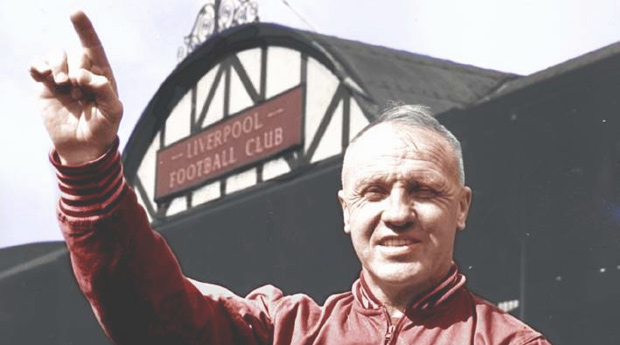
Bill Shankly - Legend

Bill Shankly – Legend

Monday 2nd September 2013 marks the centenary of the birth of Bill Shankly OBE, Liverpool’s legendary gravel-voiced Scottish manager, the man who took a moribund club and transformed it into a European power in a manner rivaled only by his great friend and contemporary rival, Don Revie at Leeds United.  It was fitting, therefore, that Liverpool should choose their last fixture before this notable anniversary to deliver a resounding “We are back” message to the rest of the top division, deservedly beating a Man U side that was never allowed to play their own game, and succumbed to an early goal of devastating simplicity.

Liverpool had entered the game on a high – two previous league games had yielded six precious points via steady 1-0 wins for a 100% record as Brendan Rodgers finally looks like putting his own stamp on this famous old club.  The Reds started in a fluent and cohesive style and within four minutes they were ahead.  A corner from the right was swung in and Daniel Agger showed great movement in the area to completely fox Rio Ferdinand, losing the defender to nip in front and get a firm header in on goal.  As the ball arrowed towards the net, two Man U defenders looked able to deal with it, but there was Daniel Sturridge, celebrating his 24th birthday by sneaking between them to apply a decisive touch and send the ball into the net. Mayhem ensued around the ground, apart from the glum band of away supporters who were doubtless contemplating a long and possibly empty-handed trip back down south.

After that, it was a question of plenty of possession for the away side, comfortably dealt with on the whole by Liverpool, who were content to blot out the Manchester attacks and wait for their chances to break away.  Wayne Rooney was missing for Man U, and Robin van Persie was uncharacteristically subdued, his sole chance of note coming late on when he was in space on the right of the Liverpool area but put his shot well wide.

New Man U boss David Moyes must have been hoping for a change of luck after 12 fruitless managerial appearances at Anfield, all as manager of Everton.  His debut as Old Trafford manager turned out to be unlucky 13, but in reality luck didn’t have much to do with this result.  To Liverpool’s credit, they seized their chance to take an early lead, and were thereafter little troubled despite surrendering the majority of the possession.

It was a result to savour for all Liverpool fans, as any win over their bitter rivals must be – but to triumph over former Everton boss Moyes, on the eve of the 100th anniversary of the late great Shankly’s birth – this was a script it would have been hard to write.  Shanks would be proud to see Liverpool sitting proudly at the top of the league with maximum points – it was the kind of thing he demanded.  Whether Liverpool can maintain the early pace is another question, but on this evidence they will be hard to topple.

Why Liverpool Are Still the Greatest Champions

Liverpool: Champions of Champions

Liverpool: Champions of Champions

Liverpool entertain Man U at Anfield tomorrow (Sunday) in the latest meeting between clubs who, to say the least, aren’t exactly fond of each other.  Rivalry of that depth and bitterness tends to polarise opinion – there aren’t many fence-sitters when one of these fixtures crops up.  OK, so I’m a Leeds United fan – so what has this got to do with me?

Well, I’d have to start by declaring an interest – as a die-hard supporter of the One True United from the right (Yorkshire) side of the Pennines, I’m not exactly enamoured of Man U.  I never had much time for them, even before that awful, whisky-nosed Govan Git came down to pour his choleric bile all over what had, until then, been a relatively civilised (give or take Brian Clough and nearly all the fans) English football scene.  There was always an air of spurious arrogance about them, as well as this “you’ve got to love us because of the Busby Babes” thing – which all the media seemed to lap up so eagerly, much to the disgust of real fans everywhere.  So clearly, I don’t like them – never did.  That’s in my Leeds United DNA.  But I’m not just a Leeds fan, I’m a fan of football in its widest sense – and I mourn the game we once knew which seems to be gone forever, swept away by a grotty tide of filthy lucre

Time was when Man U were grudgingly respected, other than by determined haters like me and my fellow Whites.  Since Sir Alex Taggart landed at the Theatre of Hollow Myths though, they’ve gone from “quite easy to dislike” to “impossible to stand the sight of” faster than you could say “Envious of Liverpool”.  The Purple-Conked One made it clear from the off that he was determined to “knock Liverpool off their perch”.  What we didn’t realise when he started his vendetta in 1988, showing no immediate sign of being any more successful than any of the other post-Busby failures, was that the whole face of football would have to change to realise Ferguson’s warped dream.

In 1967, Man U won their last ever proper League Title, making seven in total – quite respectable.  Then – nothing, for 26 years.  Since 1993, when a greedy Aussie bought the game and gift-wrapped it for a curmudgeonly Scot, the title “race” has been more of a procession.  The honour has ceased to be about virtuosity on the field; now it’s mainly about money and markets, and Man U have had much more of both during the whole Murdoch era.  Result: thirteen plastic titles.

Football is now a tacky, merchandise-driven, unseemly drive for profit over pride, and the dominance by Man U of such a grubby era is undeniably apt.  But we are still close enough in time to the pre-greed days for those of us of a certain age to remember when the game was about glory, not greed; when the aim was winning, not wonga, when the important people were supporters, not shareholders.  In those days, the distribution of wealth was far more even, and the field of possible title-winners was far wider; the competition (over a grueling 42 match course, with un-manicured pitches and un-pampered pros) was far more fierce.  And yet, even in this environment of white-hot combat and intense rivalry, Liverpool reigned supreme, not for months, not years, but for literally two decades.  By 1992, they had compiled an honours list that seemed likely to see them at the top of the game for many years to come – unless someone sneaked in and moved the goalposts.  Cue Uncle Rupert.

Man U fans can crow all they want about 20 titles.  The evidence to confound them is there for all to see, like some geological stratum separating the dinosaurs from the mammoths.  That schism dividing the game up to ’92, from the showbiz shenanigans of ’93 onwards, stands out like a Tory at a Foodbank, exposing Man U as the wealth-backed, monopolising opportunists that they are.  And it has all been done with such bad grace, another indictment of this new and joyless age we’re plodding through.  No gentle wisdom of the Bob Paisley variety – instead we had the sour bile of Ferguson and now seemingly a Fergie-Lite clone in the newly growly and grouchy David Moyes.  No loveable old-style hard-man Desperate Dan type like Tommy Smith – we just had the manufactured machismo of Roy Keane, a supposed tough-guy with an assumed snarl and trademark glower, whose typical party trick was to sneak up behind wee Jason McAteer and fell that not-exactly-scary individual with a sly elbow.

The comparisons could go on all day, but the bottom line is that Liverpool at their peak – and it was a hell of a peak – typified all the values of football that some of us remember from a pre-Sky, pre-glitz, pre-greed age when it really was all about a ball.  Now, it’s all about money, and contracts, and egos, and snide bitching to the media if you don’t get all your own way – and lo, we have the champions we deserve.  In the home game against Chelsea towards the end of last season, they displayed a lack of respect for the Premier League competition, and discourtesy to other clubs who stood to gain or lose depending on whether Chelsea  won or lost, by fielding a much changed and weakened side, going down to a meek defeat and imperiling the Champions League prospects of Spurs and Arsenal.  Such is the measure of their attitude to the game where their own immediate interests are not affected.

To apply a conversion rate which sums up all the anger and disgust I feel for the way our game has been degraded – I’d say each Premier League (or Premiership, or whatever else it’s been marketed as) is worth maybe half – at the very most – of each proper Football League Championship from the days when the game still belonged to us and the world was a happier and more carefree place.

At that rate, Man U are still a good long distance behind Liverpool, which – judging by the paucity of spirit and sportsmanship they displayed against Chelsea – is precisely where they belong.  On the eve of the latest meeting between these two long-standing Lancashire rivals, it should be emphasised once and for all – Liverpool are still The Greatest.

Scott Wootton Can Become the Latest to Leave Man United For “The Damned United” – and Find Success

Image

This week’s signing of young defender Scott Wootton has reminded us all that the transfer history between the two Uniteds of Leeds and Manchester is notable mainly for its scarcity – understandably so, considering the bitterness of the rivalry between the two clubs.  A mutual antipathy still festers among the fans on either side despite the rarity of actual meetings of the respective Reds and Whites on the field of play.  Anyone who has witnessed the poisonous atmosphere which prevails at such meetings will appreciate the difficulties which can arise for players who have sought to serve both clubs.  Accusations of betrayal are far more common than warm welcomes back when a player swaps one shirt for the other.

Revisionists who count their history from the founding of the Premier League might not appreciate that, in the comparatively few direct deals between Elland Road and Old Trafford, Leeds have come out not at all badly.  Two transfers in particular can be said to have sparked the Whites’ greatest historical successes, but the focus in more recent years has been on the move of a certain iconic Frenchman, and the kick-start that appeared to give to Man United, a club that had starved for title success for over a quarter of a century.

The fact remains, however, that Leeds can thank the management at Old Trafford for their generosity – or misjudgement – in two different eras, firstly when John Giles (pictured above) made the move to Elland Road in the sixties, sparking the Glory Years of Don Revie’s reign, a transfer later described by Revie as “robbery with violence”.  Gordon Strachan then arrived in LS11 to complete the renaissance of Leeds under Howard Wilkinson in the late 80’s and early 90’s, cementing their position as the Last Real Champions by finishing the pre-Sky era at the pinnacle of the domestic game.

Enfant terrible Eric Cantona did much to redress the balance of transfer success between the two clubs, but there are strong grounds for suspecting that Man U’s era of domination would have happened anyway, so favourable were the conditions for a global franchise in the Murdoch-funded Premier League.  Giles and Strachan, then, stand out as the two most influential transfers between the two clubs, and there are also a few memorable if slightly lesser transfers worthy of mention: Joe Jordan and Gordon McQueen left Leeds for Man U in the 70’s, but found limited success, as did Arthur Graham a few years later; while Brian Greenhoff and Danny Pugh were journeyman additions to the Leeds squad from the also-rans of the Man U gene pool.  The less said about Lee Sharpe, “Plug” Ferdinand and Alan Smith, the better.

It’s asking a lot of youngster Wootton to turn his career at Elland Road into anything like the glorious impact of a Strachan or a Giles, but there are grounds for supposing that he may have a significant contribution to make and maybe – just maybe – cause the fans of Man U to regret his departure.  Already there are wistful noises emanating from the hotbeds of support in Milton Keynes and Torquay.  One fan remarked that Wootton might have developed into “another Johnny Evans” – surely a case of being damned by faint praise. Another stated that if Wootton was to be denied his chance at Old Trafford, he might as well play for a proper club, which seems quite a generous attitude in the circumstances. Leeds fans don’t appear to hold the boy’s past against him – he seems to be regarded as a prospect rich in potential, and after all he’s made a career choice of which we can all heartily approve.

Above all, we have to respect Brian McDermott’s increasingly acute eye for a player, especially of the young, there-to-be-coached-and-improved variety.  Like it or not, Man U deal in an entirely different transfer sphere to Leeds, and it’s much more difficult for a rough diamond to be polished up for the first team there, when so many crown jewels are bought in every season.  They are bound to lose the odd star-to-be, and on this occasion we at Leeds may just be the beneficiaries of this kind of overspill.   We can certainly hope so, and hope also that this latest cross-Pennine import enjoys a long and successful career at Elland Road, returning frequently to Old Trafford to haunt those who have seen fit to let him go this week.  With our vivid memories of Gilesy and Wee Gordon, we’re certainly entitled to such a dream.