Tag Archives: Nottingham Forest

Super Leeds: The Last Champions – by Rob Atkinson

Stand Up For The Last Champions

Stand Up For The Last Champions

If you should happen to be a football fan – as I am, and have been these many years, since days of yore with short shorts, middling ability and long sideburns – then you may well be in the habit of switching on the TV occasionally to watch the glitzy offerings of the munificently funded Premier League.  With its incomparable array of prima donnas and fabulously wealthy superstars, prancing athletically around a pristine and manicured football pitch in the very latest state-of-the-art stadium (constructed courtesy of Meccano Inc.) – it’s a far cry from the heyday of The Football League, Divisions One to Four.

Back then, men were men, refs were nervous and physios routinely cured ruptured cruciates or shattered thighs with a damp sponge and hoarse exhortations to “gerron with it” – or so it seemed.   Full-backs with legs of the type more usually to be found on billiard tables would careen through the mud at Elland Road or Anfield, some flash, quivering, overpaid at £200 a week winger in their merciless sights, destined to be afflicted with acute gravel-rash.  Centre-backs with foreheads like sheer cliffs would head muddy balls clear to the halfway line, get up out of the mire, groggily shake their mighty heads, and then do it all over again – for the full 90 minutes, Brian, giving it 110%.  The good old days, without a doubt.

There is little that the modern game has in common with those far-off, non-High Definition times when some top-flight games weren’t even covered by a local TV camera for a brief clip on regional news.  Now, every kick of ball or opponent is available in super slow-mo for in-depth analysis by a battery of “experts”, from a dozen different angles.  The game today is under the microscope seven days a week, where then it was viewed only from afar, limited to highlights from a select few stadia every Saturday evening and Sunday afternoon.  Even now, the smell of hot ironing and roast beef with Yorkshire Pud will take me back to Sabbath afternoons sat contentedly before “Sunday Soccer” as Billy Bremner and Co dismantled the hapless opposition.

Leeds United was the team, back then.  On their day, the lads would toy with their rivals as a particularly cruel cat might do with a half-dead mouse.  Many will recall the spectacle of a mortally-wounded Southampton side – already seven goals to nil down near the end of the game – trying all they knew to get a touch of the ball as their tormentors in white passed it effortlessly between themselves, brazenly flaunting their catalogue of flicks, reverse balls and sublime long passing.  The game was long since won and all Leeds’ energies were palpably focused on a very public humiliation of their exasperated victims.  Some thought it was in poor taste, a shoddy way to treat fellow professionals.  Leeds fans remember it 40 years on as the ultimate statement of an undeniably top team, proclaiming to the nation “Look at us.  We are the best.”

This was 1972, when Leeds might well have won pretty much everything, but had to settle in the end for their solitary FA Cup triumph, missing out on the Title right at the death in typically controversial circumstances.  Leeds won far less than they should have done; a combination of official intransigence, their own inherent self-doubt, Don Revie’s crippling caution and superstitions – together it must be said with some shockingly bad luck – limited their trophy haul to a mere trickle when it should have been a flood.  But those flickering images of arrogant dominance and untouchable skill revealed also an unbreakable brotherhood and grisly determination that spoke of a very special team indeed.  The resonance even today of that oft-repeated tag “Super Leeds” says far more about the status of Revie’s side than any mundane tally of trophies possibly could.

In those days, of course, the gulf in ability between Leeds United and Southampton, described by Match of the Day commentator Barry Davies as “an almighty chasm”, was just that.  The gap in class was achieved on merit.  It wasn’t backed up by any such gulf in the relative earnings of the men in white and the demoralised Saints, or players of any other club.  The playing field back then was very much more level than it is now, when the top few clubs – in an apt metaphor for society at large – cream off the bulk of the income, leaving the rest to feed on scraps.  The pool of possible Champions was consequently greater – Derby County won it that year of Southampton’s ritual humiliation, as Leeds faltered when required to play their last League game a mere two days after a gruelling Cup Final.  Imagine the outcry if one of the major teams had to do that today!  And ask yourself if a Derby County or a Nottingham Forest are likely to be Champions again in the near future, blocked off as they are from that status by the oligarchy at the Premier League’s top table.

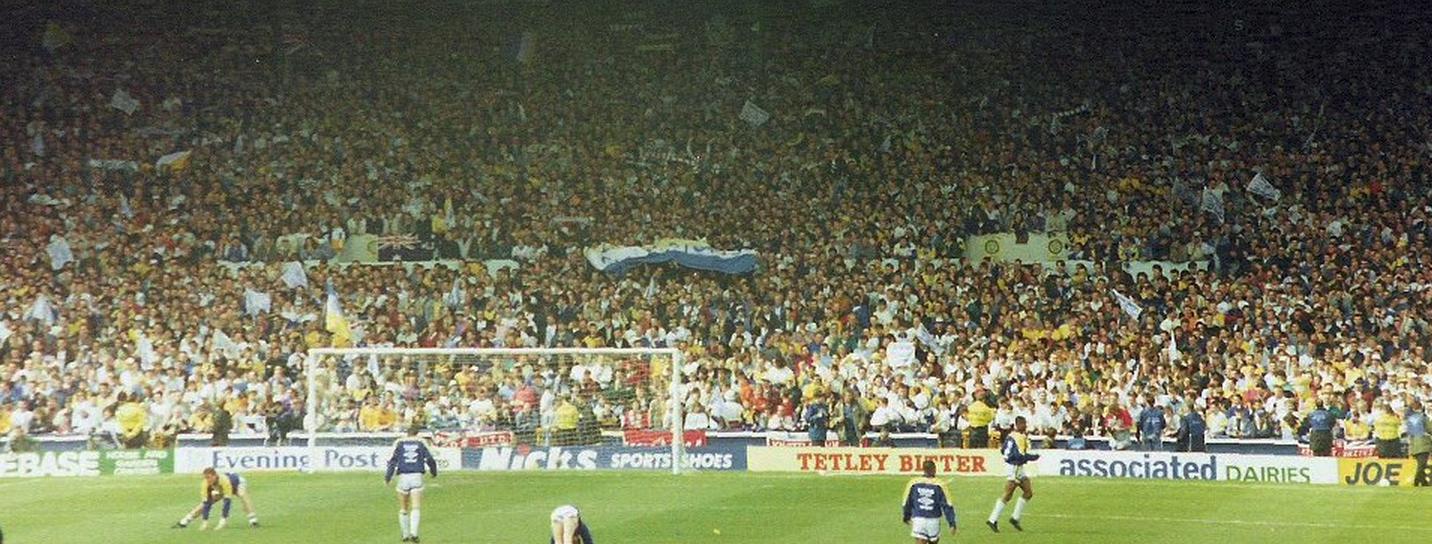
There aren’t many more hackneyed phrases than “The Good Old Days” – but for those who like their sporting competition to have a wide and varied base, with the possibility of a good proportion of the participants actually having a chance to win in any given season – then the 60’s, 70’s and 80’s take some beating.  Leeds United fans like to refer to their team of 1992 as “The Last Champions”, and a convincing case can be made for this, looking at the transformation which took place shortly thereafter, the explosion in finances for the chosen few, and the small number of clubs – invariably backed by mega-millions – who have been Champions since.  Even the once-mighty Liverpool FC has been affected.  Despite Leeds United’s current problems, they have been Champions more recently than the Anfield Reds.

It’s perhaps fitting that Leeds have a claim to the title of The Last Champions.  As Super Leeds, they dominated English Football for a decade, without ever winning their due.  Now that we can look back with misty eyes to a turning point for the game 21 years ago when the Premier League broke away, and the cash registers started to make more noise than disillusioned fans, we can possibly consider those 1992 Champions, nod to ourselves, and say yes; they were the last of the old guard, the final Champions of the Good Old Days.

As epitaphs go, it’s not a bad one.

Memory Match No. 11: Nottm Forest 0, Leeds Utd 4 29.11.2011

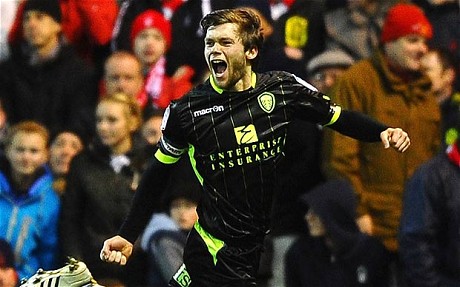
Jonny Howson celebrates at the City Ground

Jonny Howson celebrates at the City Ground

Whatever some people may think of Leeds United fans – and who cares, after all, because we all know what fine, upstanding chaps we are – they certainly know the ideal form when it comes to paying full and emotional tribute to a hero lost long before his time.

In the universe of all things Leeds, the news of Gary Speed’s tragic and untimely death came as a JFK moment: you just know that, years later, you’ll recall exactly where you were when you heard the awful, mind-numbing announcement that such a recent Legend in White was dead, and apparently by his own hand.

The images are certainly clear and sharp over a year down the line: the sea of floral tributes around the foot of Billy Bremner’s statue; the crowds that gathered in silent, respectful tribute; the sight of that fine professional Bryn Law, struggling to contain his tears as he reported from Elland Road on the death of his friend, the female anchor in the studio clearly moved to tears herself as she witnessed his distress.  It was a tragic time of shock and grief.

In retrospect, it is clear that the next opponents for Leeds United in their undistinguished Championship campaign were on an absolute hiding to nothing.  Team and fans alike, emerging from that initial shock into a reluctant acceptance, were determined to pay the finest possible tribute to a fallen hero.  Speedo was, after all, a true legend from the most recent era of real legends, a veteran of the Leeds United renaissance of the late eighties and early nineties.  We had previously mourned our dead of that earlier generation of greats; The Don was gone and so was King Billy, neither having lived to grow old.  But the death of Speed was that much more of a shock; that much more distressing for his relative youth, for his contemporary appeal to a younger breed of Leeds support who had not witnessed Revie’s greats, and for the awful circumstances which had compelled a young man with seemingly everything going for him to take his own life.

The thousands of Leeds fans who descended upon the City Ground that November night may well have been pondering the state of mind that leads to such an awfully final act.  They were certainly determined to pay characteristically raucous tribute: this would be no solemn wake, but a vibrant celebration of all that Gary Speed meant to the Barmy Army of Leeds United’s travelling support. The match itself was necessarily a footnote to the real agenda of the evening.  Forest were pitiful in their ineptitude – a team that would later travel to Elland Road and score seven had nothing to offer in the face of United’s determination to mark the first match after Gary Speed’s death with a thumping victory.  The home team seemed out of the running from the start; it was as if they knew, in the face of the emotional momentum behind the Leeds team and fans, that they had no chance at all – and they meekly accepted their fate.

Before kick-off, there had been the now traditional minute’s applause – such a preferable option to the old-style minute’s silence with its potential to be disrupted by a few shandy-slewed idiots.  In the 11th minute, a tribute to Speed’s occupation of the number 11 white shirt, the 4000-strong Leeds United army behind one goal erupted into a chant of his name, a chant that was intended to be maintained for that poignant number of 11 minutes.  The tribute was interrupted for the best of reasons as Robert Snodgrass fired United into a 20th minute lead, a left foot shot into the bottom corner very much in the style of the man himself.  On the stroke of half time, Jonny Howson doubled the lead with an even better strike, the ball sitting up for him to belt a dipping right-footed effort past a helpless Lee Camp.  2-0 at the interval, and the home side had done little to suggest that it had any intention of detracting from the tributes of Leeds fans and players alike.

In the second half the pattern continued unchanged.  Forest remained awful, the home section of support seemed to expect nothing better and Leeds strolled to two further goals towards a comprehensive victory.  First just four minutes into the second half Luciano Becchio met a left wing cross at the near post to glance a fine header across Camp into the far corner.  Then in the 66th minute, the messiest of fourth goals.  The Forest defence conspired in its own destruction, parting like the Red Sea to lay on a clear chance for Howson to score his second, only for the over-worked and under-protected Camp to first save the effort, and then scramble after the loose ball.  His heroics were to no avail however as Adam Clayton picked up on the rebound to find a yard of space and fire into the empty net.

One thing that stands out in the writing of this article is the fact that, in the relatively short time since Forest were humbled, all four of the United scorers that night have left the club.  It’s a rather depressing thought, but they were certainly all Leeds all the way that night, and delighted to be able to help the Whites fans celebrate the life of one of their heroes with their own loud and proud tributes, and with a thumping victory to boot.  Forest’s only real contribution to the evening came late on when the frustrated and already-booked Andy Reid earned himself a second yellow with an agricultural challenge on Aidy White.  “Can we play you every week?” roared the United fans, a sentiment that would not survive the return game at Elland Road – and they would be glad too that it’s not every week they have cause to mark the passing of a United great at such a tragically young age, and in such awful circumstances.

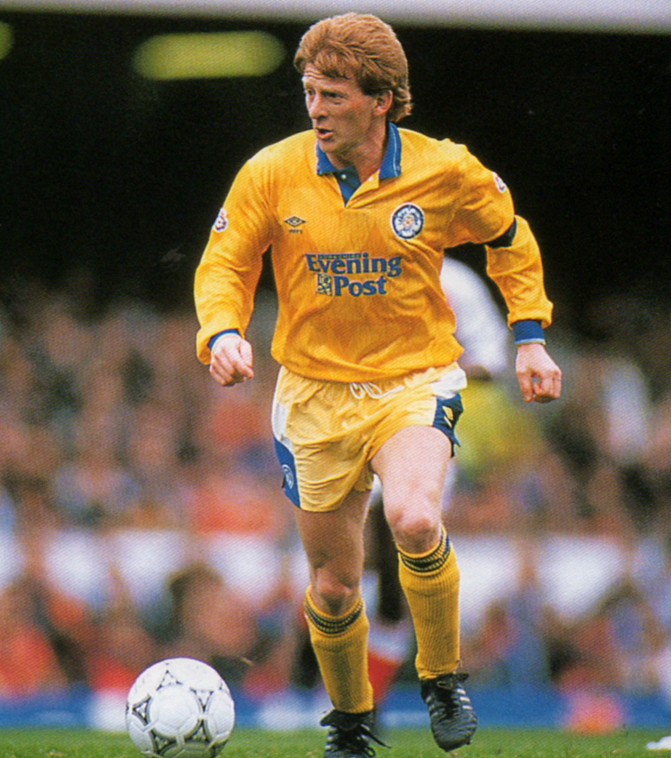
 Gary Andrew Speed MBE (8 September 1969 – 27 November 2011) Leeds United 1988 – 1996, 2nd Division Championship Winner, First Division Championship Winner, Charity Shield Winner. 

Image

RIP

 Next:  Memory Match No. 12:  Real Madrid 3, Leeds United 2.  The late, great Don Revie always longed for his legendary Leeds United side to be pitched against the biggest legends of them all, and to draw CF Real Madrid in European competition.  Sadly, it never happened in The Don’s lifetime, but when a slightly less vintage era of Leeds finally appeared in the amazing Estadio Santiago Bernebeu, they were not disgraced – indeed, I rather think that Sir Don would have been proud.

Leeds: Promising Transfer Rumours as McDermott Ponders Options

ImageSome of the suggested targets of new United manager Brian McDermott will likely have Leeds fans sitting up and taking notice – as well as licking their lips in anticipation. It has been frustrating to see lesser clubs picking up gems in the market, while our own beloved Leeds have sat by and under-achieved. Now we understand that Brian is possibly of a mind to raid his old club Reading for Adam le Fondre, a man much linked with Elland Road when he was at Rotherham. From what I’ve seen of le Fondre this season he’s done well at Premier League level in a team that has always struggled – surely the sign of a man who would prosper in our league, with his instinctive fox-in-the-box movement and awareness. And what’s more, the talk is that, despite possible interest from middle-ranked top flight clubs, Adam would relish a move to Leeds and a reunion with the manager who gave him such a big chance in the big time.

Another striker often tipped to come to Leeds in the past is Billy Sharp, and this is one I’ve always thought would eventually end up on the strength sooner or later. Sharp is currently on loan at Forest, but his parent club Southampton will probably see a big turnover in the summer, and Billy could be making a permanent move away somewhere. Why not to Elland Road? It will, of course, all depend on the finances.

A less obviously popular signing could be Ian Harte, of whom we might think we know much to put us off. Looking at Hartey’s well-known plus points – he would certainly still present a threat around the opposition penalty area with that quality hammer of a left foot. It was often said though that – for a left back – he could be exposed by pace and that defending wasn’t his strong point. I think though that, for a lot of Harte’s time in his Elland Road career, he suffered from playing behind Harry Kewell, a notoriously lazy git when it came to tracking back and one who, when the going got tough, would frequently limp off. This was particularly noticeable in his Liverpool days, and the less said about his subsequent career, the better.

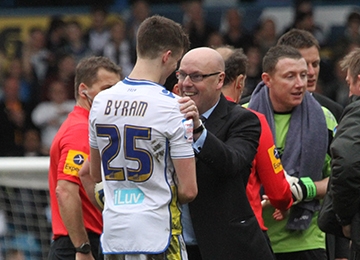
So maybe Hartey could still do a job at Leeds, operating behind a more industrious wide-left player? I’d be inclined to back McDerrmott’s judgement on that one, whatever it might be. Speaking of which, the question of who we keep is at least as important as that of who we sign. Please, Brian – let us hang onto Super Sam Byram.

There’s going to be many more names thrown up by various media as possible signings between now and the start of next season than the three mentioned above. Who we’ll end up with is anyone’s guess and there remains the worrying possibility that it could be yet another big let-down. But Brian seems to want to import some quality, and you get the feeling he’ll have made his wishes known where it counts. Let’s hope so, and let’s hope that the summer that’s a-coming in proves to be rather more exciting and inspiring than some of the fallow transfer windows of recent years.