Tag Archives: politics

Demand a Public Enquiry Into 1300 Deaths After Atos Medicals: Petition, Please Sign and Share

Image

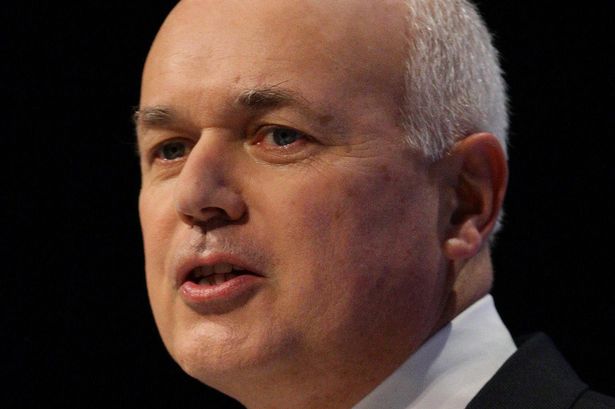
Iain Duncan-Smith

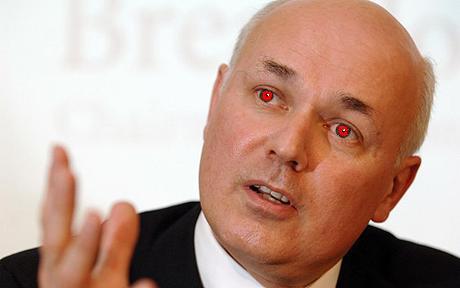
The petition calling upon Iain Duncan-Smith to instigate a Public Enquiry into the conduct of Atos, with particular record to this appalling fatality rate has so far attracted 4,346 signatures.  That’s not a bad start, but much more is needed.  YOUR support, and YOUR willingness to help network this petition could be vital; if a Public Enquiry could be brought about, Atos would be well and truly under the spotlight and it’s possible they may be forced to change their way of working.  It’s not over-stating the case to say that this could save lives.  YOUR signature, YOUR support could actually SAVE LIVES.  It’s that vital.

An Enquiry would seem appropriate in any case, for an organisation which has been branded “Not fit for purpose” by the British Medical Association, and which has itself recently issued a wheedling apology to the people it has wrongly found fit for work. The apology is aimed at the survivors of the Atos experience, you understand. Sadly, it is too late to apologise to the 1300 who have died.

The petition I’m asking you to sign can be accessed here. Please click the link, sign the petition, and share it as widely as possible. Share this article too. It all helps, and maybe if things go well, we can make a difference. A lot of people are out there, counting on your support to start some sort of change for the better. Help them, in memory of the 1300 who have paid the ultimate price for official incompetence and callous disregard for how human beings are being treated.

Iain Duncan-Smith treated a previous petition, calling on him to do as he said he could and live on £53 a week, with the utmost arrogance and contempt, dubbing it “a stunt”.  This is the measure of the man’s utter disregard of public opinion, or indeed anything that doesn’t help advance his own malicious agenda.

Don’t let him get away with it again.  Become pro-active.  Make this man see that the voice of the people will not be ignored.  Sign and share, and make a difference today.

Please.  Share If You Care.

Our Greatest Prime Minister

Today, Wednesday 17 April, as the late Margaret Thatcher is finally laid to rest; let us take a minute to observe a respectful silence and remember the life and achievements of undeniably the greatest peacetime Prime Minister of the last century (and some argue with justification the greatest British Premier ever). Radical and reforming, taking on the reins of power after a period of national crisis when, at times, all seemed lost, the beneficial impact of this pioneering administration on UK politics, and on the country as a whole, remained undiminished 30 years on. This was a Prime Minister with a vision, and the courage and determination to see it come to fruition, something we all have cause to be thankful for even now.

What is more, this was a Prime Minister who can quite fairly be said to have saved this country in hard times when all was chaos and confusion, from enemies without and within; a pivotal and inspirational figure when conflict raged, and an outstanding leader and innovator in times of peace; someone who dared against all precedent to think outside of hidebound tradition and vested interests, and who managed to find a gloriously better way.

Ladies and gentlemen, fellow Britons all, the toast is to our Greatest Prime Minister, with all the thanks and deep, abiding respect due to a national hero. I give you:-

Clement Richard Attlee,
1st Earl Attlee
(3 Jan 1883 – 8 Oct 1967)

Oh and – bye, Thatch.

20130417-010123.jpg

After Thatcher – What Does Her Death and Her Legacy Mean To Us Now?

Image

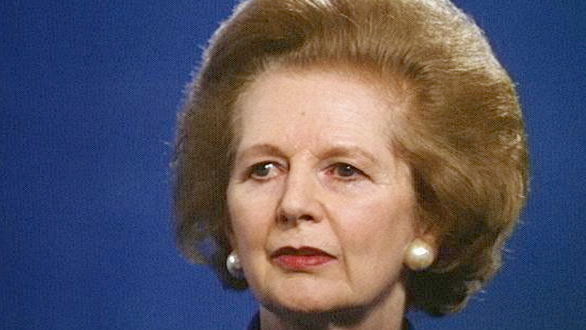
Thatcher: 1925 – 2013

I’ve left it nearly a week after the death of the former Leaderene to chip in with my two penn’orth on her demise, and on the legacy she’s left behind. In that time, I’ve read many and varied accounts of what Margaret Hilda Thatcher’s death means to us, here and now – given that her term of office ended nearly 23 years ago. Those accounts have encompassed widely varying points of view, and have ranged from vitriolic hatred with a joyous celebration of the fact that she’s gone, to real grief arising out of sheer adulation and an evident belief that she was some sort of Messiah for our country.

My own position lies at neither extreme, but somewhere in between – though I will freely admit that I lean significantly towards that end of the scale where people do not have much positive to say about the late former Prime Minister. For what it’s worth, I feel that she was a divisive and damaging influence on the country; indeed such a massive effect did she have on the political and economic landscape, that we simply no longer have the options – in terms of achieving increased fairness in society – that we potentially had before she entered Number 10. She greatly reduced – in fact almost destroyed – the manufacturing industry in this country, advancing the cause of financial services and speculative banking to take its place as the main means of wealth creation. She sold off a large proportion of the social housing stock and failed to invest in construction to replenish it, thus creating a shortage of homes for the less well-off at reasonable rent levels, and forcing a greater reliance on private landlords, with rent levels being set by the market. The long term consequence of THAT was an exponential growth in the Housing Benefits bill, which has led in turn (in these times of austerity) to the perceived need for the Government’s unpopular “Bedroom Tax”. Even though it’s nearly 23 years since Thatcher left Number 10 for the last time as PM, tear-stained but defiant, her legacy affects us to this day, regardless of what they might say who would defend her with the specious “Well, it was all a long time ago.”

Those who still idolise her seem to do so for reasons which would appear not unadjacent to self-interest. Former footballer Paul Parker has blogged:

“Personally, I don’t see why football shouldn’t pay respect to Thatcher. She should be given a minute’s silence at football grounds because without Margaret Thatcher my mum and dad would have never been able to buy a house.”

Presumably, Parker is including in his rationale thousands of others besides his mum and dad, who were also given the opportunity to buy their council houses, many at hefty discounts. But the theme of “well, she was wonderful because, hey – look what she did for me” is a recurrent one among those who remember her most fondly. Parker goes on to say:

“At the end of the day, she was the Primer (sic) Minister of Great Britain so there should be a minute’s silence as far as I’m concerned.”

He doesn’t elaborate on his views as to whether or not Heath, Wilson or Callaghan should have been so honoured (they weren’t) – but I suspect his devotion is to The Lady alone – and good defender though he might have been, Parker is clearly not a cerebral heavyweight.

The other end of the scale is represented (at its extreme) by people who felt moved to dance in the streets in celebration, and contribute to a surge up the music charts for “Ding Dong, The Witch is Dead” by Judy Garland. Yes, I bought it too. Sue me. Rather than simply bemoaning human nature for these displays of jubilation at the death of a bewildered old woman, it would perhaps serve us better to re-examine some other factors lying behind such hatred.

Quite apart from the policies I’ve referred to above, it’s also possible to find fault in what might be termed Thatcher’s unfortunate personal style. Early in her long stint as leader of the Tories, she was taking elocution lessons to modulate her slightly shrill voice, but the effect was of suburban faux gentility, with a teeth-grindingly patronising edge, rather than anything persuasive or statesmanlike. She was ironically at her most effective when she became strident, as she often did when faced with anything other than unquestioning agreement and obedience; then, she simply blew everything but the most determined opposition clear out of the water, terrifying male colleagues with smaller, less hairy balls than hers, and encouraging cowed Soviets to dub her the “Iron Lady”. She was also referred to as “The Iron Chicken” and “Attila the Hen”.

Still others who remember her less than fondly will recall that she was in very real danger of becoming just another one-term PM, and the least popular ever at that, when an opportune military conflict with Argentina cropped up in 1982. The summer of ’81 had seen a wave of riots as her policies saw unemployment rise sharply, seemingly a price her government was willing to pay for the economic direction it was so rigidly set on. Thatcher was in trouble at this point, trailing massively in the polls, but as a result of the “Falklands Factor” she won a landslide in 1983. Then the miners were unwise enough to take her on in the middle of the decade, pronouncing themselves determined to bring her government down. But Thatcher was wise to them; she had learned from Edward Heath’s mistakes in the early 70’s and had stockpiled enough coal to, in effect, starve the pit-men back to work – albeit with much human suffering and collateral damage, not least on the picket-lines at Orgreave and elsewhere. It was a humiliating defeat for miners’ leader Arthur Scargill, but – whatever you may think about him – his prediction that the Tories were out to kill the mining industry, along with its close-knit and long-standing communities, proved to be spot-on. Relatively fresh from subduing Scargill and his followers, Thatcher won again in 1987, and would eventually occupy the office of PM for over eleven years. In the end, it took her own colleagues to remove her in a coup that she ever after thought of as the basest treachery. But the fact remains that she clung on to power despite profound levels of unpopularity, aided in her latter two election victories by what many still see as naked opportunism and the survival instincts of a mongoose.

Some would seek to defend her place in history as the first – and to date only – female Prime Minister. Even I might be tempted to support a historical achievement such as that – if she had done more for women whilst in power. But she didn’t. Her Cabinet composition remained predominantly male, and you can search throughout her record for anything of note to ameliorate the lot of women in society, but you will search in vain. Glenda Jackson, speaking in the so-called “Tribute Debate” two days after Thatcher’s death, conceded the fact that Thatcher was Britain’s first female Premier but added: ‘A woman? Not on my terms.’

When push comes to shove, I would argue that Thatcher’s legacy is an almost wholly negative one; her Premiership saw a massive rise in unemployment, the decimation of manufacturing industry, a bizarre promotion of greed and acquisitiveness as hideously acceptable virtues, a decrease in growth relative to the previous thirty-four years since Clement Attlee became Prime Minister in 1945, a widening of the gap between richest and poorest where that gap had been narrowing somewhat and of course the selling-off of “the family jewels” in the shape of any nationalised industry she could lay her hands on, without sufficient regard to what would happen come the next rainy day. And there have been many rainy days since, but none rainier than the one we’re living through right now, and nothing to fall back on.

Against that, we have the perceived rise in the stock of the UK in the eyes of the rest of the world; she “made Britain great again” – some say. This presumably refers to her determination in recovering a few large pebbles in the South Atlantic at the cost of many young lives, including those of conscript Argentinians who drowned when the General Belgrano was torpedoed as it sailed away from the combat zone. “Gotcha!” crowed the Sun, while mothers of sons on both sides wept. I have to say, I don’t value an enhanced international reputation or the approval of jingoistic nations like the USA – not at that price.

And now we have to pay the cost of her funeral, having already shelled out many thousands in expenses for a one-off recall of Parliament only five days before a new session was due to start anyway. Funeral cost estimates vary between £8m and £14m depending on who you listen to, and how much her successful arms-dealer son Mark is prepared to stump up. He should really be generous – she helped him a hell of a lot. All this furore over money, at a time also when we hear her £6m London town house will not incur any inheritance duty as its actual ownership appears to be vested in an offshore company. Companies, of course, don’t die – and so don’t pay inheritance tax. These are murky waters, and it becomes ever easier to see exactly why so many regard her, and the goings-on around her in life and afterwards, with feelings of antipathy amounting to loathing.

For myself, I’ll be glad when her funeral is over and paid for, and we can all move on – and refocus on the urgent need to get rid of the current shoddy lot. Thatcher is dead; but we’re still living with a society that, in a lot of its negative characteristics can be traced back to the sea-changes she ushered in post-1979. It’s no defence against vilification to say that she left office in 1990, and can’t be blamed for what’s happened since. She created the conditions whereby what has happened since could happen, and she took away a lot of the more benign possibilities that a more sympathetic and caring attitude to investment, social care and collective responsibility in society might have realised. For that, I blame her and her alone.

Ding dong.

An Acrostic Call to Arms

Virtue, it’s said, is its own best reward
Often we’re put to that test
To fight for our rights with a pen, not a sword
Elections must bring out our best

Let us stand firm and keep fighting our end
And never be beaten or cowed
Brave to the last, though our spirits might bend
Out of hardship, we’ll still shout out loud
Under vicious oppression though we live now
Remember to stay strong and proud

Never shall we be cast down by our foes
Even though tyranny reign
Vainly they seek to cut down the red rose
Efforts that we shall disdain
Ready to fight for the causes we chose

Tyrants have never been masters for long
Out of this darkness we’ll rise up reborn
Ready and able, our rallying song
Young or old, we will find our new dawn

I Blame The Parents : Thoughts Arising Out of the Philpott Tragedy

Image

Life sentence: Philpott

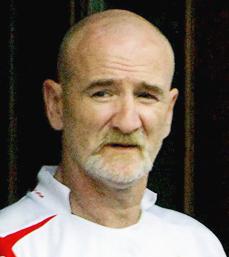
I find myself wondering today, in light of the fact that a waste of DNA like prison-bound Mick Philpott is biologically capable of fathering 17 children – and evil enough, aided by his accomplices, to hatch a money-making plan that took the lives of six of them – whether it is now time to reappraise the adoption regulations.  These strange little bits of judicial nonsense currently deny – quite arbitrarily – the chance to adopt for various categories of people who are unable to have their own children.  I’m talking here about the people who are adjudged to be unable to bring up prospective adoptees in the “right” cultural environment, people deemed too old or too compromised in official eyes by relatively mild mental health conditions, even people reckoned to be suffering emotionally from their inability to conceive naturally – and so on.

There seems to be an awful lot of good parenting skills out there being needlessly wasted, while all the time utterly unsuitable people are producing positive litters of children without the first clue of how to bring them up, look after them or contribute in any positive way to their well-being and social/emotional development.   All of this, just because of the accident of being physically capable of reproduction.  We simply can’t afford to waste good parenting skills – they’re all too rare and precious, as even the most cursory glance around us will reveal.

What is the cost of this evident anomaly down the line, in terms of the kind of society members – quite apart from the tragedy of children who don’t survive – that such a crazily-weighted lottery is producing? And meanwhile, let’s not forget, good people with much to give of both love and the example they’d set in bringing up children, are left on the sidelines, wringing their hands as a whole generation of clueless “parents” brings up a succeeding generation in their own repugnant image.

I can honestly foresee a time when parenting will be by licence only; not that I would advocate this as “A Good Thing”.  It would smell uncomfortably like social engineering to me, and I’d want to know a great deal about the machinery involved in any such process.  But can we really carry on as we are?  Talk to any teacher, and you’ll hear a tale of despair when the conversation turns to the contribution of many parents to their children’s disciplinary standards, and to their education as a whole.  Teachers appear currently to be struggling to accomplish the virtually impossible: turn out well-rounded, educated individuals who are fit to take a place in society, with hardly any support or input from the people most intimately connected to those children concerned.  That’s not just a big ask, it’s a massively unfair burden on professionals who can influence only a portion of each day their students experience, for a relatively small slice of that child’s life.

I have a friend who is a teacher; from everything I know of her she’s a very good teacher.  I know she despairs of the role that some parents play in the development of some of her students, and I can quite see why.  How hard is it for her to take, then, when her cousin and his wife are turned down as adoptive parents because – among other bafflingly specious reasons – “We don’t think you’ll get over not being able to have your own.”  Doesn’t that rather rule out anybody who can’t have their own kids?  Who actually “gets over” a blow like that?  And can we speculate on why people who can have their own kids would want or need to adopt?  It all seems extremely illogical, and it’s a perpetuation by default of the damage being done, every day, every week, every month and year by the people who – as a matter of biological happenstance – end up with the job of raising the next generation.

Maybe, ultimately, we’ll be able to put right a few of society’s ills, and perhaps more attention and resources devoted to the education and support of people contemplating parenthood will assist that process.  I really think it would help, and let’s praise to the skies the first government that sees this as a priority and does something about it.  If you think it through clearly, you could hardly imagine a better investment, a safer investment, than money devoted to training and support with a view to producing better parents.  The savings arising out of the consequent reduction in crime, mental health issues, anti-social behaviour and the disintegration of communities would be incalculable.  Good parents are the ideal people for the job of parenting – goes without saying, or it should do.  God speed that happy day when this is recognised and acted upon.

But meanwhile, let’s not waste the resources freely available to us now in the shape of a massive pool of potentially excellent parents – who currently see their urgent desire to love and care for children they’d bring up in an exemplary fashion being frustrated.  Thwarted by officialdom with its petty rules and guidelines, and its limitless miles of red tape.  There’s far too much subjective judgement going on in this whole process, too many petty prejudices being reinforced by intransigent regulations and ill-advised, ill-informed officials.

My friend’s cousin and his wife now happily have their own child – but it’s another, unknown child – unwittingly losing out on a wonderfully loving home – who has suffered by the bizarre decision they were faced with when they applied to adopt.  There was even some suggestion that the woman’s Polish nationality figured in the “rationale” employed by the decision-maker.  That’s absolutely scandalous when we’re talking about a stable, affluent couple who were looking at adoption rather than IVF because of their view that there were so many unloved kids already out there.

Ask yourself, honestly: what better motive than that could any pair of prospective parents have?  Let’s embrace what people like this have to offer, and maybe help save future kids from future Philpotts.  The biggest lesson of this tragic case is that the complex and difficult adoption dilemma is an issue that we absolutely can’t afford to ignore any longer.

How to Wage a War Upon the Poor

This is taken from a “Guardian” comments page – I reproduce it here without comment, as I believe it speaks for itself and needs to be shared as widely as possible – particularly after Gideon Osborne’s attempted snow-job yesterday, and Anne Widdecombe’s appalling hypocrisy and opportunism in her linking of the foul deeds of Mick Philpott to the Welfare State – so please try to get it out there:

Probably the most disgusting thing about this coalition has been their propaganda war against the most disadvantaged people in society. By the deliberate spreading of lies, they have facilitated a systematic assault upon the poor, the sick and the disabled. And they have knowingly misled the public for one simple reason, to enable them to totally dismantle the welfare state.
There are lies, damned lies, and then there are lying Tory bastards.
The welfare state has led to a ‘something for nothing’ culture?
It may be utterly repugnant to hear millionaire politicians who have never worked a day in their life telling us that they are ending the ‘something for nothing culture’, but it’s also utter bollocks. Only 2.5% of the total welfare budget of £200 billion actually goes on unemployment, whilst the vast majority of unemployed claimants have worked, and paid taxes, for years and are now on benefits due to redundancy, sickness, disability or having to care for someone. Millions more are receiving benefits due to poverty wages. The Welfare state is actually a massive state subsidy to business which enables it to pay poverty wages and charge exorbitant rents.
Living on benefits is a lifestyle choice?
Only 0.1% of benefit claimants who have claimed for 10 years or more are actually unemployed. Less than 5,000 people, out of over 9 million 16-64 year olds who don’t work, have been on Job Seekers Allowance for more than 5 years. Less than 0.1% of the 20 million working age households have 2 generations that have never had a permanent job. Despite strenuous efforts, researchers have been unable to find any families where three generations have never worked.
People won’t work because benefits are too high?
In 1971, JSA equalled 20.9% of the average wage. Today, it is worth 10.9%. These people are living in poverty. There are 8.5 million people receiving benefits in this country. There are more people IN WORK who get benefits than not working. The majority of all housing benefit claimants are IN WORK. 6.1 million people classed as living in poverty are from households IN WORK.
People on housing benefit live in mansions?
Our newspapers continuously bombard us with these stories. There are around five million claimants of Housing Benefit; of which there were five families who received over £100,000 per year, all living in central London. The average award of Housing Benefit is approximately £85 a week. Only 3% of families received more than £10,000 a year support, and 0.04% received more than £30,000 a year. And no-one ever mentions that housing benefit goes straight to the Landlord and not the claimant.
And those large families screwing the taxpayer? There are around 130 families with 10 children and only 10 families with 12 children IN THE WHOLE COUNTRY who are on benefits.
Benefit cheats are bankrupting the country?
Benefit fraud amounts to about £1.5 billion a year, less than 1% of the entire budget. To put this in perspective, the bank bailout equalled 1,000 years of benefit fraud. Meanwhile, £1.3 billion gets underpaid each year and a further £16 billion goes UNCLAIMED every year.
We can no longer afford the welfare state?
So who is really bankrupting the country? Well, the richest 1,000 people now possess £414 billion between them, a sum more than three times the size of the entire UK budget deficit. The richest 1% of the population are estimated to possess wealth of about £1 trillion. The richest 10% control wealth of about £4 trillion. The Quantitative Easing programme has increased the personal wealth of the UK’s richest 20% by enough to pay for Job Seeker’s Allowance for the next 100 years.
The people of this country are being shafted, but instead of the blame being directed at the real culprits, the rich, it is being aimed at the most vulnerable, the poor, with our own Government shamelessly leading the way.
And every one who believes their bullshit should hang their heads in shame.”

There’s a storm coming…

Rich Hammond 01/04/13

Iain Duncan-Smith: Anyone Can Live On £7 A Day

Image

Iain Duncan-Git

Iain Duncan-Smith could live on £53 a week I reckon, just as most of us could feel quite excited about the prospect of going on a survival course or boot camp or something similar. He’d think of it as a change, something exciting, a sort of toff’s challenge. It’d be a thing for him to do, and something he’d be able to drone on about having done at his club, or whilst having a snifter at the 19th or whatever. He could do it – say for a week or a fortnight, or even a month, and then write a book about it and we’d never hear the last of it.

So make the bastard do it for a year with no get-outs, cut him off from his well-stocked freezer and cocktail cabinet and his fat wallet and bank account, and dump him in a three-bedroomed flat on a sink estate, complete with 25% bedroom tax. See how he fancies that.

Not one little bit, is my guess.  But I’d love to see him try.

The Waste Land (A Land Laid Waste by Gideon’s “Reforms”)

The Waste Land

A paraphrased adaptation – with apologies to T S Eliot.

This variation was written to coincide with the first day of the UK Coalition Government’s so-called “Welfare Reforms” which will savagely cut into the income of the very poorest, at a time when millionaires will benefit from massive tax cuts. April 1st, the starting date of Gideon Osborne’s main assault on the most vulnerable members of society, quite aptly also marks All Fools’ Day.

The Waste Land

April is the cruellest month, raising
Bedroom tax out of the disabled, mixing
Malice and discrimination, stirring
Tory hearts with millionaires’ tax cuts.

Winter kept us cold, covering
Doormats with higher fuel bills, feeding
A few of the poor from distant food banks.
And we were frightened.

What are the roots that clutch, what branches grow
Out of this Tory rubbish? Son of man,
You cannot say, or guess, for you know only
A heap of broken promises, while the Sun bleats,
And the Coalition gives no shelter, the government no relief,
And Parliament no sound of explanation. Only
There is despair under this evil regime,
(Come and feel the despair under this evil regime),
And I will show you something different from either
Your shadow at morning striding behind you
Or your shadow at evening rising to meet you;
I will show you fear in a handful of “reforms”.

Shantih, shantih, shantih.

Please Support This Blog and Get The Truth Out There

I’d like to invite and entreat any WordPress users who feel that the current government of the United Kingdom are acting in a callous manner towards the poor and vulnerable in society to read, follow, share and otherwise support this blog.  I ask this respectfully, but in the hope of gaining your support, because I need your help – or I’m just whistling in the dark.  I believe that, from small beginnings, I can help to make a difference – but not on my own.

In among all the Leeds United and other light-hearted football rubbish within these pages, I’m trying to get a serious message out there as to what this despicable Tory-led Coalition government is doing to people who are being unjustly targeted, and are extremely ill-equipped to fight back.

I’m talking about people driven to suicide by vicious cuts to what is already poverty-level income.  People in extreme stages of ill-health being found fit for work, and dying mere days afterwards.  People who are almost blind, suffering from paralysis, multiple amputations, cancer, cardiac failure and other distressing, limiting and life-threatening conditions, being told that they’re fit for work, being accused – in effect – of shirking.

Meanwhile, the lucky ones earning in excess of £1 million a year will shortly benefit from a £100,000 a year tax-cut – an amount EXTRA for each of them every year that might otherwise fund four newly-qualified teacher posts – or more nurses, better healthcare, less child poverty.  But no, these vast amounts of money are going straight into the back pockets of those who are already fat cats, creaming off the resources so desperately needed elsewhere.

Do you think this is right?

Do you think this is fair?

Do you think this is just?

Or do you think that the truth about our government’s policies should be told, and then spread as far and wide as possible, so that people sit up and take notice of what’s actually going on?  Sharing a blog is the modern-day equivalent of shouting from the rooftops.  So – let’s shout a little.  Please.

It will be June at least before I can hope to gain endorsement by the News Now platform, and so gain a wider audience. In the meantime it would be extremely helpful if WordPress readers/users could help me to expand my readership, with a view to spreading that truth where currently we seem to see mostly lies and malicious propaganda. You may well, if you’re the type of person I’m aiming at, who hates injustice and stands up for the disadvantaged, find some stuff that you can agree with!

Please take a minute to have a read, and then share with your like-minded contacts.

Thank you in advance.

Anger and Resentment – an anti-Tory Rant

Come; let us fulminate a little against hypocrisy, callous cruelty and double standards.

Image

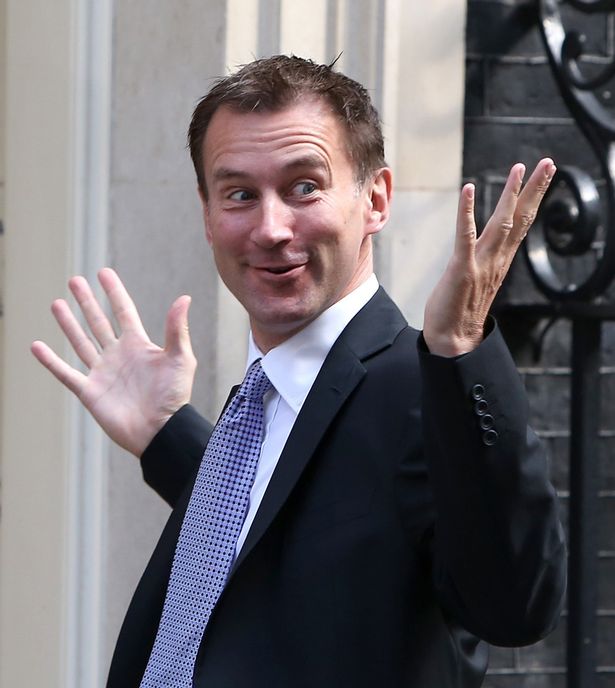
Apples & pears – stairs. Jeremy Hunt – MP

It has been announced today that Jeremy Hunt, Secretary of State for Health and Rhyming Slang, will introduce measures requiring trainee nurses who wish to be funded by the NHS, first to work for a year as a healthcare assistant or support worker. The move comes amid claims that many trainee nurses, educated to degree level, consider themselves “too posh to wash a patient”. Mr Hunt’s stated aim is “to improve compassion in the NHS”.

Other innovations to be put in place following the report into 1200 “needless deaths” at Stafford Hospital will include:

  • A new chief inspector of hospitals to oversee an inspection system modelled on Ofsted, the schools watchdog
  • A statutory ‘duty of candour’ on hospitals and GP surgeries to stop them concealing mistakes
  • A ban on gagging clauses preventing NHS whistleblowers from speaking out
  • An ‘elderly care tsar’ to protect the interests of older people in care homes
  • A new criminal offence to prevent managers fiddling figures such as waiting times and death rates

Without wishing to be critical of every element of this raft of proposals – there are actually one or two surprisingly worthy notions in there – the idea of a Tory minister introducing rules and regulations to “improve compassion” does rather take the breath away. This is especially the case at a time when the Tory-led government is acting savagely to reduce the income of many of the poorest and most vulnerable members of society, whilst aiming to protect the rights of bankers and their like to receive bonuses amounting to multiples of their already-massive yearly salaries.

There are also many voices being raised in protest at the so-called “Bedroom Tax” which, it is being claimed, will end up costing the country more in evictions and consequent re-housing than it hopes to save in Housing Benefits. The Benefits Cap too has come under heavy fire. This was introduced with the sound bite of shift workers leaving home early in the morning, and seeing drawn blinds next door behind which snore feckless benefit claimants living a life of luxury at the taxpayers’ expense. It has been pointed out, however, that many claiming benefits are in low-paid or part-time work, that being all that is available, and need state benefits to top up their miserably low wages; hardly an endorsement of the Workers and Shirkers theory. There’s really not a whole hell of a lot of compassion shining through any of these policies, so a charge of double standards is hard for Jeremy, Gideon and their incompetent friends to evade. But this government does not acknowledge or admit to misconceived ideas or mistakes. Perhaps a “statutory duty of candour” would be a good idea for ministers too, then?

It does in any event rather raise my hackles when some ex-Charterhouse Head Boy like Hunt starts lecturing nurses and other dedicated professionals about coming across as too posh to get their hands dirty. Pot, kettle, grimy-arse. And it’s not even as if Mr Hunt has always managed to keep his own well-manicured paws all that clean – but it’s the mud of scandal that’s allegedly contaminated them, rather than the results of honest hard work in a hospital sluice.

In 2009, Jeremy officially came to the notice of the Parliamentary Commissioner for Standards, after allowing his political agent to lodge in his taxpayer-funded home, and failing to reduce his claims on Additional Costs Allowance – although he was found guilty of nothing more than a “misinterpretation of the rules”. But how much confidence does that inspire in a man who tilts at high office? Jeremy did pay the money back though. Well – half of it, anyway.

In 2010, it was Jeremy’s mouth getting him into bother, now that his hands were out of the till. He suggested that football hooliganism played a part in the death of 96 football fans in the Hillsborough disaster; when in reality lack of police control and the presence of terraces and perimeter fences were established as the causes of the tragedy. This necessitated a humiliating climb-down and a grovelling apology.

Then in April 2012, hard on the heels of David Cameron’s vow not to associate himself with anyone involved in aggressive tax avoidance, Jeremy was outed by the Telegraph as having reduced his own tax bill to the tune of £100,000 by receiving dividends from Hotcourses in the form of property which was promptly leased back to the company. The dividend in specie was paid just before a 10% rise in dividend tax and Hunt was not required to pay stamp duty on the property. Naughty, naughty, Jeremy.

As usual then, or so it seems to those of us who suspect that the government’s stance on a wide range of issues is not unadjacent to hypocrisy, these latest mealy-mouthings from a Tory minister reek of double standards and bitter irony. Why is so much of their rhetoric aimed at people who are dedicated and professional, struggling against the odds and against government cutbacks to do a massively difficult job in almost impossible circumstances? Why must every official report into some awful tragedy – and the Stafford Hospital deaths were nothing less – result in a scapegoating of the people at the sharp end, doing the real work, when instead or at least also we should be looking at management and policy-makers? And just what the hell is an “unnecessary death” anyway? Or should I be asking for a definition of a necessary one? Couldn’t we talk instead about “avoidable and unavoidable deaths” and then move on from there to see who is really responsible for the avoidable ones not being avoided?

The attitude of government towards low-paid professionals in essential services has always troubled me, simply because of the fundamental difference in terminology – depending on which end of the scale is being discussed. It’s been the case for most of last century that nurses – for example – have been referred to in radically different terms as compared to bankers – for example. It’s still the case today, folks, and it goes like this:

Nursing is a vocation. People at the bottom have a vocation, you see, which means it’d be a shame to spoil something so pure and unselfish by doing anything as sordid as paying them properly. If they have this vocation, what else do they need, after all? Meanwhile, bankers – lacking anything quite so splendid as a vocation – need “incentives” to keep them here to ruin our economy, and at all costs stop them fleeing abroad (to ruin someone else’s.) It’s been seen as very important by successive governments that we get this distinction and know our place. So, remember. At the bottom: vocation (low wages). At the top: incentive (huge bonuses). It’s the Tory way.

As long as we keep accepting the sheer hypocrisy and double standards that are being routinely shoved down our all-too-receptive throats, then quite frankly we deserve the government we get, though saddling ourselves with this shower seems positively masochistic – oh, but I forgot – we didn’t actually elect them, did we? But while this sort of crap continues to be so meekly accepted, the likes of Jeremy Hunt, and his fellow born-with-a-silver-spoon-in-their-mouths cronies in the Cabinet, will continue to get away with policies and actions that seem set to drive more and more people out of their homes, off to the nearest food bank and maybe even over the brink of despair into suicide. A Scottish writer took his own life the other day, leaving a benefits decision notice in lieu of a suicide note. A Birmingham Coroner has noted that he officiated at five inquests into self-hangings in one day recently, and that the trend of suicides is way up. This is the human cost of this government’s policies, and meanwhile they’re blithely having a go at hard-working, dedicated people like nurses. “Too Posh To Wash”. Doesn’t the sheer, arrogant smugness of it just make your blood boil?

Image

Gideon Osborne

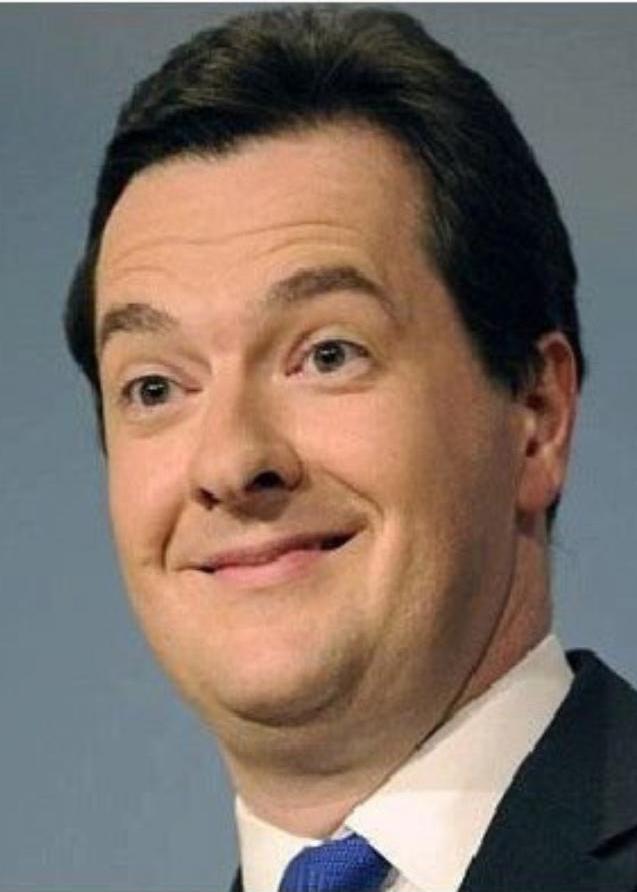
Meanwhile, Gideon Osborne (pictured) was in Europe recently, arguing against proposals to cap bankers’ bonuses at 100% of salary, or 200% if shareholders approve. Generous enough, you’d have thought. And guess who found himself in a 1 to 26 minority? Yep, it was our Gideon, bravely standing alone while everybody else saw sense – doubtless though, his heart was bleeding at the thought of impoverished City types trying to figure out which was the gas oven and which the dishwasher, prior to sticking their heads in and – down to their last measly 10 million – ending it all.

I honestly think that the Tories, heedless of the plight of their poodle partners in the coalition, those hapless, treacherous and doomed Liberals, have given up any realistic hope of re-election in 2015, and are set on accomplishing as much of their malign agenda as possible in this Parliament. Surely this is the only explanation for the tidal wave of malicious policies that flow from them, like a torrent of sewage from a long sea outfall pipe. They seem set on victimising massive, and massively vulnerable, swathes of society; the type of people that are not going to vote Tory anyway, and who therefore seem to be classified as expendable. And with the other hand, they’re equally determined to protect their natural friends and allies from the icy blast of austerity that is making this prolonged winter seem even colder and more hostile than the weather alone can manage. Don’t forget, it’s only a few more sleeps now until those in the million-a-year class get their £100,000 a year present from Gideon, an annual reduction in tax for each of them that could pay the salaries of four newly-qualified teachers. How do you like them apples, chaps? That’s what you get for being “One Of Us”, don’t you know.

And so, seemingly, it will go on, right up to the bitter end in just over two years – assuming, that is, that They don’t decide to do away with elections altogether, or maybe instigate a small but popular war somewhere – there is a precedent for saving an evil and despised government this way. How are the Argies fixed these days for a bit of a scrap, I wonder? We’ve heard the sound of sabres rattling already.

But if democracy does survive, what sort of a country will we be living in by 2015? What will be the death toll of benefit reform and austerity, whether it be from suicide, starvation or hypothermia? How will the rich have used their quarter of a million pound tax windfall? Not to create jobs, not with Workfare providing slave labour in defiance of the courts and circumventing that inconvenient minimum wage legislation. No need, old fellow.

We’ll need to take stock then at the next General Election; those of us who are still here. And we’ll need to go to the ballots in overwhelming numbers, sending out a message to those who have stomped all over us since 2010 that they’re out, and that they won’t be back until and unless they’ve learned a little humanity.

Above all, we’ll be charged with the massive responsibility for making sure that we get it right next time. We simply can’t afford another mistake like this one.