Tag Archives: Premier League

Who’ll Be the Next League One Club to Overtake Leeds United?   –   by Rob Atkinson

Time's running out for Leeds United

Time’s running out for Leeds United

Leeds United are now in danger of becoming a perennial Championship club: just a bit too well-resourced and well-supported to repeat the disaster of relegation to League One – or so we all hope and trust – but nowhere near good or competently-run enough to make the life-saving jump into the Premier League. And believe me, the clock is ticking on that jump. It’s an elevation that will become more and more of a formidable mountain to climb over the next few seasons.

The problem is, among many other Leeds United problems, that the reward for Premier League failure is about to go through the roof. Soon, clubs relegated from the élite top flight will be able to bank ‘parachute payments’ of around £100m pounds, allowing them a clear head start on their unsubsidised second tier competitors.

The clear implication of this is that we may shortly have what amounts to a closed shop, consisting of the usual permanent Premier League members, plus a small pool of hinterland dwellers, bobbing up and down between the top two divisions. The so-call Financial Fair Play rules will make it difficult for even wealthily-owned Championship clubs of long standing to break into this yo-yo fringe group, never mind the band of true aristocrats.

For the likes of Leeds United, and even Nottingham Forest, Sheffield Wednesday and a few other genuinely sizable members of the new underclass, this could represent the start of a living death of perpetual mediocrity.

So it follows that Leeds really must get its act together, and get up there in time to be the beneficiaries of parachute payments, as opposed to being marginalised by their galvanising effect on others. Sadly, there is no real sign that our heroes are remotely well-equipped enough to move on up anytime soon. It seems more likely at this stage that we will be overtaken by lesser clubs, who will happily make hay while the sun shines everywhere except, it seems, over LS11. This is not an unnecessarily gloomy or unrealistic prediction. It’s already happened too many times. 

Look at the Premier League membership right now. It makes for worrying study. You will find five of our former League One opponents there, mostly well-established top flight members now, while we remain as strugglers one step above our historical low point. Behold the success stories of clubs Leeds United should leave gasping in their wake. Swansea City, promoted from League One in our first season at that level, have added a League Cup to their mantelpiece and have generally done well. Southampton, European qualifiers now after emerging from the third tier a year after we did, and looking to consolidate and hammer on that Champions League door. Even new arrivals Bournemouth are looking reasonably well able to hold their own among the giants, as are Norwich City. And look at Leicester City, promoted from League One in our second season at that level. As I write, they are sitting proudly at the summit of English football, Premier League leaders, for the moment at least, and looking thoroughly at home in such exalted company. 

Leeds could and should have done better than any of these clubs, each of them recent denizens of League One. All of them are far smaller than the Whites, but have benefited from positive commercial and football strategies, not shying away from the speculative investment it takes to accumulate league points. They are well run for the most part and demonstrably scornful of any perceived glass ceiling. What they have accomplished should have been far easier for a club the size of Leeds. But our five years in the Championship have been a story of abject failure and serial incompetence, all underpinned by a total lack of vision and ambition. It’s no wonder we’ve been left trailing by the likes of Southampton and Leicester, and it would sadly be no surprise to see other clubs of similar size, currently below us in the pecking order, overhauling and leaving us behind in the near future.

So, which clubs currently languishing in the murk of League One might yet beat us to the sunny lower slopes of the Premier League? Two obvious candidates are Coventry City and Sheffield United, both doing reasonably well in the league below us, both tolerably well-run now after hard times – and both the kind of club that would, you suspect, see promotion to the Championship as a signal to kick on, invest, and make the most of their upward momentum. Which is just exactly what Leeds United threatened briefly to do in that momentous first season back at second tier level, before the fire sales started and the club began to lose its heart if not quite yet its soul.

For too long, Leeds United has appeared more complacent than hungrily ambitious; more disposed to “manage” its supporters’ expectations, rather than seek to fulfill them. With clubs all around us – smaller but more beadily focused clubs – avid for success, recognition and, yes, those Premier League millions too, Leeds simply can’t afford to tread water for much longer. The Premier League is a top table positively groaning under the weight of good things, even for those forced to leave the party early. With the increasing likelihood that victims of relegation will be fortified by that generous parachute for resurrection almost immediately, it’s only going to get harder and harder for the less-privileged to gatecrash the feast.  The likes of Sheffield United and Coventry will be well aware of this, as will more immediate dangers like Forest and Wednesday at our own current level. Leeds United just seems to be drifting along, more concerned with internal crises than the need to better themselves, waiting perhaps for some divine right to assert itself and convey the club back to the Promised Land.

Well, it ain’t gonna happen, guys – as any long-suffering and knowledgeable supporter would be well able to confirm. They say the spectator sees most of the game, and it’s the Leeds United fans, as opposed to those entrusted with the running of the club, who appear most acutely worried about exactly how and when we are going to find ourselves back where we assuredly belong – and able to capitalise on the undoubted potential of the club in a much more financially conducive environment. For a true giant like Leeds – by far and away the biggest club below the Premier League (and bigger than most inside it) – the opportunity is there for the taking to re-establish itself as one of the big, swaggering kids on the block.

It will take bravery, audacity, sufficient investment, nerve and some cool heads to achieve this – all currently noticeable by their absence around Elland Road. But if we don’t sort ourselves out soon – and start making some serious steps forward – we may yet get trampled in the rush by our smaller, meaner rivals – each of whom provides in effect a blueprint for the approach we should have been taking all along.

Tick tock, Leeds United. Get your act together. Time is running short.

Sam Byram Presented With Bewildering Choice of Relegation Battles – by Rob Atkinson

Byram - spoilt for choice?

Byram – spoilt for choice?

For a young man still learning his trade after graduating from one of football’s finest academy setups at Leeds United, hot prospect Sam Byram now looks to have a tempting choice in front of him; he could be fighting relegation with either Sunderland or West Ham United this coming season.

Of course it might also be that Byram will prefer to continue his development at Elland Road, where great changes are afoot with a new head coach promising fast, aggressive, attacking football. This is surely just the kind of menu to have a pacy young wing-back, effective all the way up and down the right flank, licking his lips and champing at the bit – if I may be permitted to mix my metaphors. But the lure of the Premier League has seen United shorn of many a promising young talent before; our Sam would be in illustrious company if he decided his future would be best spent elsewhere.

This blog’s opinion, for what it is worth, is that any deal for Byram should be sanctioned only if the benefits to the club are absolutely irresistible. From that point of view, the rumours suggesting that Sunderland might be prepared to offer their richly-talented forward Connor Wickham and a cash adjustment not unadjacent to £6 million would have any discerning Leeds fan urging the club to snatch the Mackems’ hands off. Life, Leeds United, the Universe & Everything has given its opinion on a couple of previous occasions that a nominal right-back (albeit with attacking ability) as sumptuously talented as Byram is a distinct luxury in the Championship. A player like Wickham and a cool six mill besides would provide a wealth of options in terms of building a team that could challenge at the top end of this league. If Sunderland are that keen to capture Byram, then it’d be extremely tempting to roll out the welcome carpet when they come a-calling – and make sure they get the worse of any bargain. This is something that Massimo Cellino notably has form for, with last season’s brutal mugging of Fulham over Ross McCormack being the obvious example of seeing coming a club with more cash than sense.

From Byram’s point of view, though, it’s hard to accept that he couldn’t do better than clubs likely to be scrapping away at the foot of the Premier League. Names of much greater pedigree than Sunderland or the Hammers have also been whispered as possible destinations – Liverpool, maybe, or even Manchester City. Again, Cellino would be expected to drive a hard bargain, if Byram were to be winkled out of our clutches – and at least we’d have the admittedly dubious satisfaction of seeing yet another Leeds old boy strutting his stuff at the top end of the top league.

It’s always difficult, contemplating the loss of a home-grown star – thankfully, there is no sign of the supply drying up, and this is likely to have to provide one of our club’s main income streams until that glorious time rolls around when we, too, dine at the top table in the swanky restaurant that is the Premier League. Things will be different then – or so we must hope. Leeds would be looking to storm the top flight for the third successive time, following promotion in the early sixties and late eighties and the subsequent swaggering domination of the game enjoyed by those two great sides.

Whether it’s feasible to expect a hat-trick of such achievements must be open to the gravest doubt, given the radically different landscape of football now as opposed to then. But it’s in the nature of Leeds to gatecrash cosy, elitist parties and make their presence felt. Those previous two promotion outfits have surely written that into the club’s DNA – and now, as then, we have the same promising knack of producing our own, sparkling talent.

Perhaps Sam Byram will be leaving this summer – or perhaps he will pen a new deal and stay. Either way, whatever happens has to be for the good of the club, and in the longer term at that – no short-sighted squinting at the immediate future should get in the way of a focus on lofty ambitions beyond the next season or two. This blog hopes that the lad will stay, but is philosophically accepting of the possibility that he might well be seduced away.

And, whatever his destination, surely Leeds fans will wish him all the best – especially if any deal done helps United lay the foundation for a brighter future. That, much more than the future of any individual player, is what matters above all to anyone with the interests of Leeds United at heart. 

Man Utd, Financial Fair Play and “The United Brand”: a Leeds United Fan Accuses – by Rob Atkinson

Manchester City - Champions for now

Manchester City – Champions for now

As a Leeds United fan first and a lover of football in the broader sense second, I do find myself watching a great deal of Premier League stuff on TV and, clearly, there’s a lot to admire. And admire it I do; I will yield to no man in my ability to appreciate the quality of the Beautiful Game, so beautifully played – usually. And yet, again with my Leeds United head on, it’s rather like being a deprived and starveling urchin, stood barefoot in rags under a rainy sky, shivering in a cold wind, with my hungry nose pressed up against a bright shop window, displaying in glitzy magnificence a cornucopia of desirable things that I can neither reach nor afford. From that point of view, the over-riding emotion is envy, with shades of desire, contempt, hatred and resentment intermingled.

Since football abandoned any pretence at being a sport, or even a working-class opera, starry-eyed idealists such as myself – ancient enough to remember the olden days and once-fashionable things like glory, passion, pride and identity – have been asking themselves one wistful question.

Will we ever have a truly level playing field again?

On the face of it, you’d have to say it’s unlikely, if not completely out of the question. Even in the olden days, it was something of a relative concept. There were rich and poor back then, just as at any time you could mention in the whole of sporting history. There were big fish and there were also small fry. But now, you’re talking whales and plankton – and we all know what whales do to plankton. The gap has widened and inequality has increased fast enough and far enough to put an ecstatic beam on the face of any bloated, plutocratic Tory. And that’s not simply a situation which applies to the extremes of the game.

Even in the Premier League, that much-vaunted bastion of mega-wealth and world-class quality – the best league in the world, according to Sky TV executives (how they must laugh into their paella over that in the strongholds of la Liga) – even there, in the sparkly EPL, there is a rigid class system. There are leagues within this elite league, glass ceilings it’s almost impossible to break through. And that’s a problem being aggravated, ironically, by a device intended, ostensibly, to promote fairness.

The provisions of the Financial Fair Play rules are too complex to lend themselves to easy summary, but – without wishing to sacrifice the integrity of a sincerely-meant blog on the altar of glib over-simplification – the effect of the measures now in force appears to be the protection of “old money” and, by implication, old power. In other words, those who feathered their nests, by whatever means, at the right time and by pretty much any means, are in an advantageous position now, due to long-established income streams. In some cases, those income streams go back a long way, are not necessarily directly connected to football and are reinforced and supported by the modern day mass-media. Let’s take a case in point. Yes, you’ve guessed it – it’s this blog’s old friends Manchester United FC.

Man U were the very epitome of “old money” when the Premier League came into being, but the differentials back then had not been great enough to permit their dominance of the game over the previous 25 years since they last won the genuine English Champions title in the black & white days of 1967. In the interim, first Leeds United and then Liverpool were the big beasts of English football, with occasional cameo appearances from the likes of Arsenal, Everton, Derby and Nottingham Forest. Liverpool’s vice-like grip on the game for almost two decades was a remarkable achievement on as level a playing field as we could possibly have had at the time. But when that field was tilted towards the already cash-rich, merchandise and marketing-savvy mob at the other end of the East Lancs road, Liverpool was one of the clubs that hurtled into the abyss. They’ve never truly recovered. The astounding fact of the matter is that Leeds United have been Champions more recently than Liverpool FC. So, indeed, have Blackburn Rovers – but that was only one of those nasty, plastic ones designed especially for Man U. If the cap fits…

For the first twenty years or so after the Murdoch putsch, the Man U-friendly environment of the Australian’s Sky League kept Fergie’s humourless and joyless troops at the top, with the rest of football gasping its trophy-winning life out under the big red jackboot. Marketing-wise, this was an extremely desirable state of affairs for the money men who now owned the game. They had a leading brand, it was an almost guaranteed winner, and this opened up still further a lucrative global market with literally millions of non-matchgoing mugs the world over, desperate for more and more Man U tat and the Sky dishes for goggleboxes on which to ogle their remote heroes. One major tool in the maintenance of this near-monopoly was the extension and mass-marketing of the “United Brand“.

The United Brand was and is the media’s slavish adoption of the old Man U “there’s only one United” myth – one of the stock lies in any Pride of Devon follower’s little cupboard of self-delusion, along with “biggest in the world”, “greatest team ever”, “most tragic disaster” etc etc. Most of these big fibs are left to the individual glory-hunters themselves to pass on, whenever a likely victim presents him or herself. Talk to a Man U adherent and you’ll see what I mean. If the topic of the Busby Babes comes up, or the Munich Disaster, the Man U fan – football’s equivalent of the pub bore – will assume a far-off, beatific expression, the eyelids drooping over glazed eyes, the voice becoming a cockney drone of indoctrination. Then we’re treated to an adoring monologue of how those doomed Babes would have dominated football, and you’d never then have heard of Leeds United; how the Munich disaster is unparalleled in the history of football tragedy (conveniently ignoring Superga which destroyed the great Torino team in 1949) – and so on and so forth. It’s even understandable, to a degree; a lot of football fans are blinkered and self-obsessed when it comes to their own team. It’s just that Man U fans, encouraged by the club and their own Dads most likely, have raised it to a sort of dreadful art-form; furthermore, they actually do believe all that crap – and they really expect you to as well. They become really quite distressingly emotional when you don’t.

The role of the media in all of this, though, is far more sinister. In pushing the agenda of the United Brand, they are deliberately seeking to marginalise, not just those other Uniteds – most of whom have a more solid claim to that suffix – but all other football clubs, by their blatant elevation of one club onto a pedestal with recognition demanded by repeated use of that one word. United. All of the media do it, and it’s not simply lazy journalism as some suggest.  It’s brand protection, the Pavlovian training of consumers everywhere to hear the word United, and think of the Pride of Devon. It’s endemic within print and broadcast industries now and for a good few years past. You still get the occasional embarrassed little cough when a commentator at Newcastle United v Man U, for instance, refers lovingly to “United” and then hastily clarifies that he means the team in the Chevrolet shirts of course, not the other lot, whoever they might be. They don’t want to be thought of as biased and unprofessional, after all – even though that’s precisely what they are.

Not everyone is taken in by all of this, of course. It’s a mass-indoctrination tool of the type big marketeers have used down the decades; the target group tending to be the bottom fifty percent of the intelligence scale. Which I know sounds invidious and possibly even condescending – but that doesn’t mean it’s untrue. But there has always been a sector of the public determined to resist such blandishments; so it quite rightly is where the United Brand is concerned. However, this subliminal campaign has been omnipresent and all-pervasive for such a long time now, and sadly the relatively small voice of protest tends to fall on deaf – probably dumb as well – ears.

The truth is, of course, that Newton Heath aren’t a true United, as for instance Newcastle are, or Leeds, or arguably West Ham – or even Oxford and Torquay. “United” in a football context refers to a club with the exclusive occupancy of its catchment area, no direct rivals sharing the same patch. Man U aren’t the only only United – that’s self-evident to anyone who can count. But here’s the thing: it isn’t just that they’re neither the only nor yet the first United. They’re not even a genuine one – because of the spoiling factor of having neighbours and rivals in the same area. So, sadly for the Pride of Devon, current Champions Manchester City ruin this particular myth for them – as they have ruined so much else lately.

Which brings us on to the current peril threatening the United Brand. The clear and present danger of being caught up and overtaken by one or more rivals. And – oops! – it’s already happened. Man City and Chelsea fight over the title, the likes of Arsenal, Spurs, Liverpool, even Southampton are scrapping to keep Man U out of the Champions League spot they regard as the very least of their divine rights. What to do?? Extend the Champions League qualification criteria again, to make sure the untouchables stay in the fold? It’s been done before. But beware of diluting the product to the point its taste becomes insipid. Hmmm, we’ll have to find some other way.

OK, how about this. If you can’t beat ’em – nobble ’em. The upstart clubs who have overtaken the Chosen Ones will have to be hamstrung, their income streams restricted and made inaccessible to them. How else to restore the accepted order and have the United Brand back at the top? And it has to be done quickly, before all of those millions of eager tat consumers lose their motivation, become discouraged, cease to be market movers and slavishly obedient commercial fodder.

And, lo and behold, we have Financial Fair Play, which decrees that what are seen as subordinate clubs may not be funded into competitiveness by a *spit* sugar daddy. They may not presume to compete with the clubs who are deemed to have accrued their riches through on-field success, global merchandising, exploiting historical tragedies, whatever. There’s a right way, for those who presume to control the game – the United Brand way – and there’s a wrong way, which encompasses pretty much anything a club which aspires to rise to the top could possibly do. The game’s rulers are pro-competition alright – but they’re not going to get all sentimental and misty-eyed over it, not to the extent that their preferred brand no longer dominates. The Old Guard – Man U, Real Madrid, Bayern Munich et al – must remain the Old Guard, the ruling cartel. Anything else is dangerous, because it diffuses attention, which imperils consumer focus. It’s just bad for business, old boy.

So, we’ll have just enough competition to keep things interesting – to keep the mugs hooked and consuming – but we’ll draw the line when a chosen Brand, deliberately created and carefully, remorselessly hyped, appears to be in danger of slipping from the pinnacle of the game.  FFP is all about maintaining the status quo and keeping inconvenient Johnny-come-latelys down where they belong. And the tragic thing is – it’ll probably work.

But what does the future hold if this does work as presumably intended? Because what we have here is an ever-inflating bubble, increasingly shiny and enormous as it catches all the lime-light, reflecting gaudy and brilliant shimmerings of iridescent glory. It’s huge and it’s pretty – the kind of thing to cause a child, or other similarly naive person, to stop in their tracks and gaze, open-mouthed and round-eyed in innocent wonderment. But any bubble must burst eventually, leaving that child in disappointed tears. The path we are currently set upon, seemingly committed to, can have only one end. Look at the most recent Sky and other media deal, look at the billions involved at a time of austerity in society at large (unless you’re rich…). Who do you think that colossal, obscene cost is going to be passed on to? What will be the consequences when gates start to dip? Nothing is forever.

In a hundred years time, when those with long, long memories look back and reflect on what they have seen in their lives, what their grandfathers have told them, too – when they wonder whatever happened to that grand old game they used to call football – they may wish to search for a guilty party to blame for the death of something that used to give such pleasure to so many. If that comes to pass – as I fear eventually it must – then there will be a few likely candidates to carry the can. One will certainly be the long dead Mr Murdoch of evil memory. Who can say what his eventual legacy will be, not just for football, but for society at large? Another might be a club in Man U that used once upon a time to be legendary, a symbol of fine football and hope for the future. But this club will more likely instead be remembered as a model of arrogance and greed; the club that started the FA Cup off on its slow decline towards death (by being the first to withdraw from it); the club that manipulated the game for twenty years at the start of the Premier League, and perverted a “whole new ball game” into a nightmare of greed, cynicism and conspicuous consumerism.

For my part, I won’t point the finger at an individual or a club. Well, maybe I would a bit – if I were still above ground to do so. But I think it’ll be artificial concepts and restrictive legislation that’ll be the death of the game in the end. And I’ll miss it – but I’ll be glad I was there at the end of the golden era, almost a quarter of a century ago now, when my club Leeds United were the Kings of English Football – just as it entered its terminal phase. And I’ll be certain in my own mind as to exactly where the guilt for that fatal process truly lies.

Financial Fair Play and “The United Brand”: j’accuse.
£104 for a Standing Season Ticket at Leeds United? Ja, Danke! – by Rob Atkinson

Uli Hoeneß in happier times

Uli Hoeneß in happier times

A stunning quote from a couple of years back drifted randomly across my desktop earlier today – and it fair brought me up sharp. It all had to do with the stark distinction between admission prices in the Premier League as compared with those charged for Bundesliga clubs in Germany. Across the board, the English clubs charged prices well towards the rip-off end of the scale, whereas their German counterparts had a much more enlightened view of match-day revenue – summed-up extremely neatly by this quote, which was not so much food for thought as a veritable banquet for a delegation of philosophers.

Before I go any further into that, I should highlight a couple of salient points. The person being quoted is Uli Hoeness, famously and unforgivably the wearer of the number 10 shirt when Bayern Munich cheated Leeds United out of the European Cup in 1975. Hoeness it was, incidentally, after that match, who described Terry Yorath’s early challenge on Björn Andersson as the “most brutal foul I think I have ever seen” – clearly, he was unaware of the thuggish prowess of one Norbert “Nobby” Peter Stiles. Andersson was so badly injured in fact, that he had to quit football and join Abba – just kidding. Anyway, I digress.

Hoeness made this quote, the one that’s belatedly struck me only today, when he was the Bayern Club President – a role he later had to relinquish on account of a conviction for tax evasion, for which he was sentenced to three and a half years in jail. However, I do not accept that either his recent criminal conviction, or his part in the swindling of Billy’s Boys in 1975, constitute any reason to dispute the fact that Uli Hoeness was responsible for the most earth-shatteringly sensible statement in the entire history of football.

So, without any further ado, let’s just look at that quote. Commenting on Bayern’s advertised price at the time for “safe standing” season tickets, Hoeness said:

‘We could charge more than £104. Let’s say we charged £300. We’d get £2m more in income but what’s £2m to us?

‘In a transfer discussion you argue about that sum for five minutes. But the difference between £104 and £300 is huge for the fan.

‘We do not think the fans are like cows, who you milk. Football has got to be for everybody.

‘That’s the biggest difference between us and England.’

Just sit back and take that in. Have you ever heard a simpler, more concise statement of good sense and unarguable logic? The man is stating that, in England, the fans are treated as cattle, to be milked for what they can give – and simply herded from pillar to post the rest of the time. He’s utterly right, indisputably and brilliantly spot-on. The fact of his links to Paris in 1975 – something the mere mention of which can still make a Leeds fan’s ears bleed – is neither here nor there. His tax-evasion and subsequent conviction and incarceration are likewise irrelevant. The guy is simply right – and it’s just as undeniably true today, as we face another football season here and in the newly-crowned leading football nation in the world, Germany.

What’s more, although the figures from the time, two years back, are a comparison between Bundesliga and Premier League, that comparison applies with almost equal impact to the English second tier, the Championship – and this is most certainly true of my beloved but obscenely pricey Leeds United. Have a gander:-

Rip-off England v Value Germany

Rip-off England v Value Germany

Remember, all of these figures are from a couple of years ago – but there are no grounds to suspect that the comparison is any less eye-watering today. The central point that Hoeness was making – that the actual benefit to clubs of higher prices is minimal, as compared to the burden it puts upon hard-pressed fans – is just as valid now as it has always been, and it’s unaffected by the sad fall from grace of the man himself.

Just think of it – what would be the effect if, for instance, Leeds United were able and willing to charge a lower rate of maybe £120 per season for a season ticket – said ticket to be for admission to one or more vast safe-standing areas? The first thing you’d get would be a years-long waiting list for those tickets – the demand would be incredible. Secondly, differentials would have to reduce in proportion, making higher-price seating tickets relatively cheaper. Again, demand would rocket; the stadium would in all likelihood be over-subscribed for every home game. A bigger stadium would become necessary. Leeds United would also be pioneers, the club that broke the mould and stopped ripping their fans off. Didn’t Big Mass himself say something along those lines just the other day?

The fact is that, with increased attendances, everything else improves – including profit margins. Incidental match expenditure would be a much bigger revenue item, as souvenirs, food, drinks, programmes – everything – sold in much higher numbers. Safe standing is, of course, a whole separate argument, with uneasy connotations for anyone who remembers Hillsborough ’89 – but it’s a case that is slowly gathering momentum as the policy is seen to work well elsewhere. The atmosphere under such conditions would improve out of all recognition. The “safe standing” areas would give back an area of the stadium to the fans who always used to generate that atmosphere: the singers, the shouters, the passionate and involved people that really got behind the team. 

Football would, at least in part, be returned to the working man and woman, from whom it has been so rudely snatched in the Sky/Murdoch era. It would be returned to the children too, the raw material for the next generation of hard-core fanatics. Football would be regaining its present and its future. The whole thing would be so incredibly better and more entertaining and inclusive, that people would be scratching their heads and wondering – why had nobody thought of this before? But somebody did, or at least they summarised the philosophy behind it. A former German international footballer, currently languishing in Landsberg Prison.

The current situation in English football is ridiculous when looked at in these terms. The seeds of disillusion for many Leeds fans – and I know this for a fact – were sown long before the club’s dramatic fall from grace from 2004 onwards. For many, the last straw came with the ending of the “East Stand Bond” arrangement, whereby bond-holders, who had contributed £500 each to the construction of the Magnificent New East Stand, had their season tickets pegged at early-nineties prices, and adjusted only for inflation. When that deal ended, those bond holders faced a dramatic rise in the cost of their season tickets because, in the real world outside of the “bond bubble”, match-day and seasonal costs had risen so dramatically. Many were sickened by the sharp elevation in their football expenses, and disappeared off the club’s radar.

The reason for the sharp rise can be divined from a glance at the bottom line on a Premier League player’s wageslip – but as Hoeness said, there’s no real logic to it. Look at that quote again – a club can get a few million quid extra with higher prices – which amounts to a haggling point in one major transfer deal, at the cost of inflicting debt and misery on their loyal supporters. Where’s the sense, or indeed the justice, in that?

As in so many things since the end of the Second World War, Germany gets it right where we get it spectacularly wrong. It just keeps happening time and time again, in industry, culture, sport in general and football in particular – on and off the field. The difference in pricing policy between the two countries’ league structures is not down to Hoeness, of course. It’s a function of logic and common sense on the one side, as opposed to greed, short-sightedness and muddled thinking on the other. It’s just that Hoeness came up with that memorable quote, that devastating logic. You’d think that even a complete fool, a purblind ass, a clueless ditherer without the first idea of how to organise inebriation in a brewery, would be made to see sense by the sheer rightness of his summary.
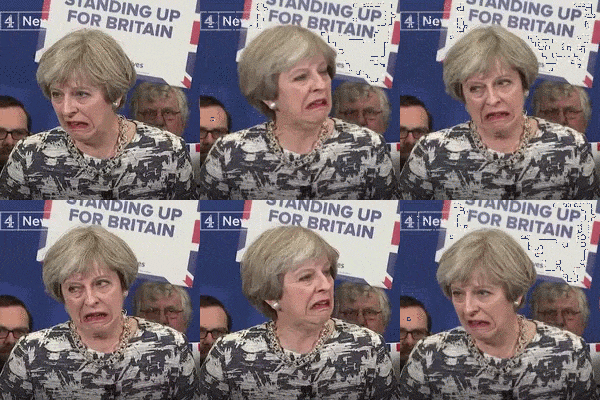
And on that note, gentlemen of the Football League, the FA and the EPL – it’s over to you.


Is New Leeds United Recruit Nicola Salerno the Real Deal-Maker? – by Rob Atkinson

Image

Salerno – wheels and deals

Hold on a minute – just one cotton-picking minute. What’s all this then? The transfer window has suddenly become vibrant, even interesting – even for Leeds United. So what’s all that about? We all know, as Leeds United fans, that transfer windows are supposed to be bleak exercises in dashed hopes and futility – but all of a sudden, things are actually happening.  Good things. To Leeds. Blimey. It doesn’t seem quite real.

Today has brought a sudden flurry of news, almost all of it good – or at least, not as disastrous as the tidings we are more used to receiving. OK, our badge-kissing, self-justification-tweeting skipper, Mr Ross McCormack has departed. Amazingly, given the fact that he was our top scorer – in fact the league’s top scorer last season – this not entirely unexpected news has been greeted in a largely positive and realistic fashion, give or take the odd hopeless case who’s always going to whinge because it’s their default setting.

Ross has gone – and whither is he heading?  Why, to just any club, of course – just the very thing he said he wouldn’t do, preferring to stick it out at Leeds and win promotion, even above “just any Premier League club”. So he’s ended up at just any Championship outfit, smaller than Leeds United in every imaginable respect but the financial one.  What, I wonder, could possibly have been his motivation??  All the best, Ross – and don’t let counting your wedge put you off those goal-scoring exploits and, of course, your Twitter outbursts.  You may well end up being the least-missed top scorer in Leeds United history.

Strange as it may seem, Leeds United’s most important capture of the close season may already have taken place with the recruitment from Massimo Cellino’s former possession Cagliari of Nicola Salerno, whose speciality is apparently the sniffing-out of players for his boss to introduce into the team, nurture and then sell on – at a profit.  In this way, stability might arise out of long-term penury and crisis, with transfer net profits being re-invested into more recruitment, and so on.  It sounds good – and it worked well enough at Cagliari to keep an unfashionable and comparatively tiny club in Serie A for extended periods, including forays into Europe, with the development of several fine players from fairly low-profile raw recruits. On the same day that McCormack exited the back door at Leeds United, two such low-profile (to us) Italian players were entering via the front.  So, it seems, the process has begun; sell high, buy low, develop the talent, rinse and repeat.

So can this model work at Leeds United?  There is a glass ceiling easily detectable if we look far enough ahead into the possible future of the club; the time would come when significant investment would be needed simply to keep the club in the Premier League after promotion is secured within Salerno’s three year – ideally two year – time frame. But in the meantime, this Cellino/Salerno plan might well be the way in which we can start to make some headway again – after far too long of, at best, treading water.

Rarely have I seen the sale of arguably our best player received with such positivity and enthusiasm – even outbreaks of common sense. Probably that has a lot to do with the frankly ludicrous fee we appear to have blagged out of Fulham – more mugs them. I suspect that McCormack will not be pulling up quite such huge trees down there as he did with Leeds last season – but we will see.  The fact remains that – given the choice of a sulky striker and serial Twitter-whinger, or 11 million lovely sponds, ripe for the reinvesting – there’s little doubt that we’re better off with the latter.

Yes, folks, I’m feeling positive.  I’m expecting more deadwood to be cut away from the club, no more high-profile departures (unless, as with Ross, it’s undeniably for the good of the club) – and quite a few more arrivals. Net result; a leaner, fitter Leeds United – a Leeds United who can start to make some serious progress.

A last thought.  McCormack has said one reason behind his move (as opposed to all of those crisp, bankable, paper reasons) is that “it’s not the Leeds United I fell in love with”.  But is that a bad thing, from our point of view?  Cast your mind back.  What was the Leeds United that McCormack fell in love with?  It was a club under the jackboot of Ken Bates, wasn’t it?  A club that the fans were almost ashamed to own up to, a club in the process of decay, as that horrible Papa Smurf had decreed back in 1984 when certain freelance Yorkshire demolition contractors sorted out his Stamford Bridge scoreboard for him. Mr McCormack might wistfully pine for those days, but forgive us if we fans don’t. Perhaps Ross might not recognise or appreciate it, but the club he fell in love with is in a much better place now.  Or so I believe.

The next couple of weeks should be exciting and eventful ones for Leeds fans. We might not be signing big names, but we can hope for young, hungry, talented players who will breathe new life into what had seemed a moribund outfit.  I’ll take that, just as happily as I’d have taken Fulham’s eleven million, had it been up to me.  For a new start and some players with the appetite for the fight and an eye on success, I’d snatch your hands off.

The future starts here.  Goodbye, Ross – you are now irrelevant. It’s onwards and upwards for Leeds, our owner, our deal-fixer and a coach who sorted us out good and proper when we came up against him at Cardiff’s Millennium Stadium in 2006. That’s a good place from which to start Marching On Together again.  On and on and on.

Getting Promoted the Leeds United Way – by Rob Atkinson

Image

Leeds United have achieved promotion to the top League of English football (Football League Division One of blessed memory) on two occasions within my lifetime – 1963/64 and 1989/90.  Both promotions followed significant lower status periods – we don’t really do “bounce-back” promotions – and here we are again, a decade away from the game’s shop window, and this time we actually plumbed the depths of the third tier for the first time in our illustrious history. So – talking about history – do those last two promotion successes have anything to teach us today?  The answer seems to be: yes, quite a bit.  But sadly, there’s not necessarily all that much encouragement to be derived from the lessons of yesteryear.

The fact appears to be that the last two Leeds United sides to have achieved promotion to the top flight both did it with quality to spare.  Both finished as Division Two Champions, and both squads included a number of players who would go on to help add to the Club’s Honours Board.  In 1990, the team that pipped Sheffield United for the Second Division title included as mainstays Gordon Strachan, Gary Speed, Lee Chapman, Chris Fairclough, Mel Sterland and David Batty.  That’s over half a team, and all of those players figured heavily in the squad that won the last Football League Championship title in 1992.  Also appearing in that “Last Real Champions” line-up were four more survivors of the 1990 promotion side: Carl Shutt, Imre Varadi, John McClelland and Mike Whitlow.  So TEN members of the promotion squad were good enough to figure in the season that brought the ultimate League honour back to Elland Road.  All but Batty and Speed were incoming transfers, some costing what was significant money for the late eighties.

In 1964, the picture was similar, though with more of a bias towards home-grown talent – unsurprisingly given the quality of the youngsters coming through from an outstanding youth policy. The names trip off the tongue:  Gary Sprake, Paul Reaney, Billy Bremner, Jack Charlton, Norman Hunter, Paul Madeley, Terry Cooper and Peter Lorimer.  The ultimate success took longer to achieve for Revie’s boys, but all eight of these players, plus the genius of Johnny Giles – purchased for a song from Man U in a transfer Revie described as “robbery with violence” – were major contributors to the side which proved itself the best-ever in 1969. The later transfers in of Mick Jones and Allan Clarke, with the emergence of Eddie Gray from that legendary youth setup, simply applied the final coat of gloss to what was a very fine side indeed. The makings of Champions were there in the 1964 promotion team, just as they were for that of 1990.

So what does all this tell us about the here and now?  Nothing very happy, to be sure.  The squad we have today might – with a few judiciously-selected additions – have some sort of chance of achieving promotion, though you’d have to say the lottery of the play-offs would be the likeliest route.  And as a club, we’re famously poor at play-offs.  But if we DID scramble promotion – what sort of foundation would there be for becoming a successful Premier League side? Hardly any, in truth.  Look through the playing staff we have, and name players who might figure in a Premier League winning side in the next few years.  Sam Byram, maybe – and probably, almost certainly – NOT in a Leeds United shirt. So we’re in danger of becoming the Leeds United side least well-equipped in living memory to go up, and stay up to do well. Much more likely though is that – with the element of quality currently so sadly lacking – we’d just bob around in mid-table in the Championship, and listen to a load of excuses every week or so.

History shows that, on both the occasions we’ve won promotion in my lifetime, there has been relatively major investment in the team to make that possible.  It was more the case in 1990 than in ’64, but the whole game was much more about money by the 90’s – and of course vastly more so today.  But even in 1964, players had been added to the squad to see us over that promotion-winning line – Alan Peacock was an England-capped forward, bought for decent money from Middlesbrough.  Bobby Collins commanded a fee even as a “veteran” when he moved to Leeds from Everton.  In the 1990 side, Strachan, Fairclough, Chapman and Sterland all cost well into the six figures, as did John Hendrie and Vinnie Jones. This was proper investment, speculating to accumulate.

There is as yet no real indication of the path that might be trodden by the Leeds of today, under the guidance of new owner Massimo Cellino.  We are given to understand that he has inherited an almighty mess from a list of previous owners, who can only be distinguished one from the other by the slightly varying degrees of their wretched crookedness.  Some will say, serves you right Massimo for foolishly dispensing with the need for due diligence – others will simply be glad that the Italian’s on board – despite the vicious attempts by the senile and dithering old fools of the Football League to block him – and looking to sort things out.

Cellino appears determined to be faithful to his own methods and philosophy – and it’s fairly clear that we won’t find out very much about on-field recruitment until he’s laid the foundations for a properly-run club.  The Head Coach appointment seems likely to be the next significant step, and from that will flow the rest of the preparations for next season.  By now, Cellino must be aware of the fans’ voracious appetite for success – a term to be defined by the Leeds United history of the past fifty years, as opposed to the yardstick of just any old club.

The fans’ expectations are extravagant but understandable, having their roots in a proud and glorious tradition, from eras past when this club did things properly.  Where expectations such as these are dashed, sooner or later there will be rebellion – even in what might still be, relatively speaking, a honeymoon period for the new owner. Whether such rebellion would come in the form of apathy over match-day attendance, or some more incendiary form whereby dissatisfaction might be expressed by marches and sit-ins, or by the owner being barricaded inside Elland Road (Massimo has had some experience of this already) – this would depend upon the depth of supporter anger or unhappiness.

Cellino’s staff would be well-advised to do plenty of rooting about in Leeds United Football Club’s history, both to see how things were managed when the people in charge knew what they were doing, and also to advise themselves of what happens with the support – and indeed the staff and management – when they feel they’re having the urine taken out of them.  That feeling has been abroad too often for comfort in the past few years, and what is needed right now is a campaign of relative harmony.  From that point of view as much as any other, there may well be advantages in the appointment of a head coach with an intimate working knowledge of the club and its traditions and character – and of the fan-base.  This is not just any club – and we need someone at a high level in the organisation, who is acutely aware of that fact.

Former skipper and manager Gary MacAllister’s name is evidently on Cellino’s very short short-list – and if anyone can pick up the reins effectively at Elland Road right now, then maybe Macca can. He should not, in my view, be judged too harshly in the light of his previous stint in charge – he was not working under the most favourable circumstances, or indeed the most favourable owner. Even so, some of his signings turned out to be legends of their time; his eye for a player, certainly an attacking player, seems reliable – as witness Becchio and Snodgrass.

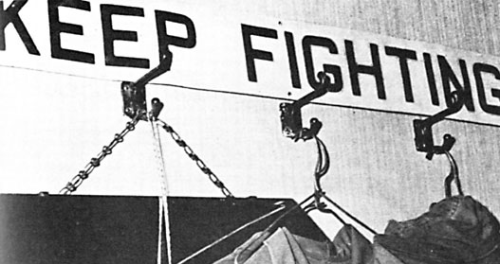
But it is Gary MacAllister’s Leeds United DNA that we probably need as much as anything else right now, when one major priority should be the re-establishment of a definite Leeds United identity, now that Bates has gone, and now that GFH have been reduced to the role of mere parasites.  The club needs to hold its collective head up high, and march on saying We Are Leeds.  That was the spirit in which those previous two promotions were earned, and it is that spirit which needs to be rekindled over this summer, so that we come out fighting – and Keep Fighting – for the season ahead.

I would say – get MacAllister in, let him surround himself with people he can work with (including, please God, a defensive coach and someone with a Plan B) – and let him put his stamp back on the club.  To me, this would also add to Cellino’s credibility. Anybody who has read McAllister’s book, or who has seen how he has conducted himself throughout his career, will know that here is a real football man.  This would not be a Massimo’s yes-man type of appointment.  That would be a very important message to send out, bearing in mind the lessons of Cardiff City under Vincent Tan. One thing we could do with is the reassurance that Cellino is not cut from that cloth.

Next week might just be the start of a positive summer for Leeds – if the right appointment is made and some sort of recruitment programme can then commence.  Let’s sincerely hope so – it’s been too long since we had any really good news at Elland Road.  A feel-good factor would be a long-forgotten but welcome visitor to the club – and who knows?  If we can achieve that, then surely anything is possible.  A promotion charge next season?  England winning the World Cup with a 30 yard volley by Leeds lad Jamie Milner?  Why not?

If we’re going to dare to dream – then let’s make it a good one.  MOT – We Are Leeds.

That unquenchable Leeds United spirit

That unquenchable Leeds United spirit

Cellino Needs to Understand the Meaning of “We Are Leeds” – by Rob Atkinson

We Are Leeds

We Are Leeds

Massimo Cellino continues to divide opinion among fans of Leeds United as he goes about assessing the nature and extent of the undoubted mess behind the scenes at Elland Road.  He appears to be a decisive sort of bloke, to say the least.  Draconian, even – just how severe and ruthless he can be we will probably see in the not too distant future.

Right now, his work has hardly begun.  But, early days though these are, it’s proper and relevant to wonder about Cellino’s long-term aims.  Part of this longer-term view has to involve the question of whether or not the King of Corn knows exactly what he’s bought into.  What would constitute success for Leeds United?  After all, the club has been out of the spotlight for well over a decade.  Surely, expectations are on a whole different level from the days when the club was at the forefront of the game?

One school of thought is that for any owner to buy into a limited view of the potential of Leeds would be a big mistake.  After all, Cellino hasn’t acquired a Leicester City here, nor even a Newcastle United a West Ham or a Sheffield Wednesday. These are all clubs whose fans will happily accept membership of the Premier League, albeit two-thirds of the way or so down the modern pecking-order.  At Elland Road, the club anthem is “Marching On Together” – but a shorter, more tribally-assertive chant is heard with even greater regularity. “We Are Leeds”, it states – quite simply and without qualification.  In those three short words, the fans sum up the identity of a club that knows it’s out on a limb – and of those fans themselves, who expect such a massively loaded chant to be taken as confirmation, were any needed, that this is not just any club.

On the last two occasions that Leeds United has motored into the top flight, it has had a brief look around, settled in – and then taken over at the top.  It actually took longer for Revie’s troops to do this than it did for Wilko’s Warriors – but the Revie dynasty compensated by lasting longer.  In both cases though, there was a distinct lack of respect and trepidation as the Whites moved on up. There was no suggestion of timid apprehension. They came, they saw and, in due course, they conquered.

The top flight is, it almost goes without saying, a very different place these days – and not necessarily in a good way.  But the tradition of supporter expectation goes back a lot further at Leeds than it does at most other clubs. Some ostensibly big clubs have given up on the idea of ever being champions, and one allegedly massive outfit in the north-east has even acknowledged that winning trophies appears nowhere near the top of its agenda.  For that one-time giant, the balance sheet and the income that goes along with Premier League status is first, last and everything.  But what sort of message does that send out to the fans?  And could you see such a state of affairs being accepted at Leeds?

Whatever the contrast between the top-level environment now, as opposed to when Leeds United last breathed that rarefied air, the assumptions of the support upon attaining that level will be that the club will then set about finding the best and most effective way to the top.  It’s in the DNA of Leeds United fans to want to compete at the summit of things – and a dim view would be taken of any lowering of standards, any reduction of objectives. That begs the question of what is possible – and what kind of player will we be looking to attract?

At the top end of the Premier League, there now seems to be an acceptance that the player is King – and that those demanding egos will settle for nothing less than ever-increasing pampering and worship from clubs and fans alike. The ridiculous Yaya Touré “birthday” story is ample confirmation of that. Is that the kind of thing that Leeds United fans really want to see happening in the name of their club?  So the supplementary question to the main one of “What do we expect once promotion is achieved?” might well be: “Hang on – do we really want promotion at all??” Of course we bloody do!! – I hear you say, indignantly. And yet it would seem quite possible that, once promoted, our legacy of extravagant expectations could well be at odds with our characteristic, cynical suspicion of the kind of “flash” behaviour exhibited by Mr Touré – as well as by sundry other pampered, overpaid, out-of-touch egomaniacs in the self-proclaimed “Best League in the World”.

As you might have gathered, this blog finds itself in somewhat of a dilemma. The question of whether Cellino is sufficiently aware of the historical expectation levels associated with this club is one that has troubled me for a while.  It is quite possible that he might be looking at turning us into Premier League survivors-and-little-more, such as Newcastle.  That would be bad enough, at least on the face of it.  But what if he did then want to go the extra mile and get us up there into that top four?  It’s an almost impossible dream anyway; the competition would be hot and ludicrously expensive. But if we did make it – how would we, as fans, relate to the kind of players and egos that would inevitably then populate our first team squad?  Would we feel any connection with them at all?  Or would we long for the days of Jermaine Beckford (for the younger ones) or Gordon Strachan, or Billy Bremner (for the lucky and really lucky ones)?

Football is a competitive sport and, over time, you have to be aspirational; you have to be aiming higher.  In the case of Leeds United – whether Massimo Cellino is aware of this or not – you have to be aiming for the very top.  But now there is that baffling conundrum: in aiming for and reaching that summit -would we be mortgaging the very soul of the club?    Look at Manchester City – how on earth can the City fans, many of whom were visiting third tier outposts of the game not so long back, possibly relate to the fact that their best midfielder appears to have the mental processes of a four-year old?

Where Leeds United are right now – stuck in the league below the top one and about to embark, we must hope, on a rebuilding of the club – is a good place and the right time to be considering what we actually want for our club in the longer term.  It’s the right time and place, because what we demand now, in this comparatively normal and down-to-earth league, might just have an effect on where we end up in the next few years, depending upon the readiness of Cellino to listen.  And what this comes down to is that old saw “Be careful what you wish for – you might get it”.

Does Cellino really know what “We Are Leeds” means, and the pride and ambition behind that raucously-assertive statement?  If he does – is he game for trying to get the club eventually back up to that old, accustomed place near the top of the game?  And if he actually manages that – in these new days of footballers with world-class talent, massive egos and wage packets, but tiny brains – would we end up thanking him for it?  Or might we instead damn him?

Just what do we want?  I feel that the answer might eventually lie in a radical restructuring of the game in this country, possibly on the German model of fan-owned clubs and a more affordable product for all – and almost certainly a FIFA-ratified wage cap that escapes the beady eye of the European pay commissars. That could take years and would certainly meet with stiff opposition from the current interested parties.  But that sounds to me much more like the kind of environment I’d like to see Leeds United promoted into. The current set-up invites along those ambitious enough to want merely to be cannon-fodder for the “big” clubs – the likes of Southampton and Leicester. Try as I might – I can’t see Leeds United, the club or the fans, wanting to settle for that as a way of life.

It’s a conundrum alright – ambition versus dissatisfaction with what we’re shooting for. I’d love to know what Massimo thinks, and what his understanding really is of the Leeds United mentality.  And I’d love to know what you think – so your views are, as ever, most appreciated.

Will Everton Make a Title Gift to Liverpool? – by Rob Atkinson

Chelsea’s immaculate win at Anfield sees them hang on in the Premier League title race but, in truth, it’s of more real use to Manchester City than it is to themselves – despite another touchline scamper of triumph from The Poorly One, Jose Mourinho.

Though City won at Palace today, they will still need to get a result at Everton, who are themselves clinging on to receding hopes of Champions League qualification. This is assuming, of course, that Liverpool can now win their last two matches of the season.

It may very well be that, if Everton can deny City at Goodison, they will have gift-wrapped a 19th top division title for their deadly local rivals. How that would go down in the Blue half of Merseyside is anyone’s guess.

I’d still back Liverpool – and I’m sure that if they do need a massive favour from the Blues – then the Reds will be suitably grateful.

Gerrard Rallies Whole Country Behind Kop Title Assault – by Rob Atkinson

Steven Gerrard inspires the troops

Steven Gerrard inspires the troops

Most football clubs have those quirky, curious “Did you realise…?” facts to relate, things that make you go “Really? Well, I never!”, or words to that effect. Leeds United, in all probability, have just as many as any other club, if not more. For instance: Did you realise… that Leeds United have been Champions more recently than mighty Liverpool, the greatest Champions of them all?  The way things are looking, this is one particular fact whose days might well be numbered.  And, although as a Leeds fan I’m rightly proud of such a pleasing statistic. it’s not before time for it to be consigned to the dustbin of history.

Liverpool were perennial champions for most of my teens and twenties, when my beloved Leeds were banished to the shadowy hinterland of the game, much as they are now.  It’s a sort of nostalgic feeling, then, to look at the top flight table and see them sat there again, on their accustomed perch, leading the way. A successful Liverpool is a reminder of happier days, when the game was not so estranged from the fans, when commercial interests still came second to battle and glory on the field.  Nowadays, the commercial tail wags the football dog quite mercilessly; everything is subordinate to the over-riding preoccupation with making more and more money – with the fans being fleeced left, right and centre.

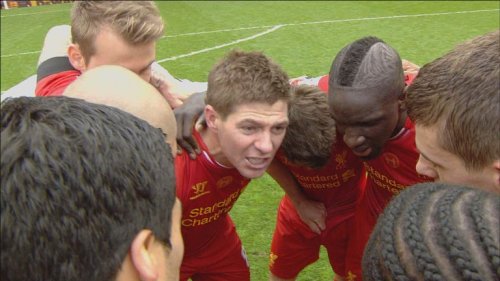
If the real Reds of Anfield do go on to clinch a first title for twenty-four years, then a large chunk of the credit must go to their long-serving skipper and midfield driving force, Steven Gerrard.  He was to the fore again last weekend as Liverpool beat Manchester City in a pulsating game of quality and character from both sides.  Gerrard played a captain’s part throughout the match and – significantly – directly after the final whistle.  As he gathered the players into a post-match huddle, you could plainly see him ramming home the message: the job is not done, we need the same performance again in the remaining games.  His face, contorted with fatigue and determination, had resolve and desire writ large in every line, his commitment radiating from every fibre of his being and into the less experienced team-mates around him.  It was a battle-cry, a rallying call. Gerrard will not permit performances to wane, nor heads to drop.  He will lead those lads to ultimate success, if he possibly can.  It was an inspirational sight to see.

There are not that many Steven Gerrards left in the game today.  Not enough warriors faithful to a cause, thinking not of the footballers’ notorious “bottom line”, but of being written into history as The Best, on behalf of a club they count it a privilege to serve.  It’s far more common to see spoiled prima donnas like Wayne Rooney, sulking on 250 grand a week until he’s mollified by a wage rise of a mere £2.6 million.  Or indeed my comparatively humble lot at Leeds United, who had the immense “stress” of wages deferral just a few weeks back, when the takeover was in flux – and found they simply could not kick a ball straight or even try a leg, most of them, because of this financial issue.  In the modern game, money is King – to a far greater extent than it ever used to be.  So, the fans can go hang, professional pride can whistle.  All that matters is making sure that money – thousands a week, even at Championship level – keeps rolling into those fat bank accounts.  When that’s sorted out, why – the players are prepared to try again, Blackpool are beaten, and what would have been a shameful, disgraceful relegation struggle is warded off.

Gerrard, in common with most footballers in the top two divisions, has more money than he will ever know what to do with.  Money – you can tell – was the very last thing on his mind as he exhorted his team-mates to a replication of their fantastic performance against City – first when Liverpool face Norwich, and then after that, in all the rest of their remaining games.  If anyone can inspire those players to the heights they hit at Anfield, then Gerrard is that man. The successful team pattern at Liverpool FC has been laid down by manager Brendan Rodgers – and he’s done a brilliant job.  But without his trusty lieutenant on the field – without that 90 minute motivator demanding effort and commitment from all around him – things might not look as rosy as they now do for the league leaders.

The midweek games were kind to them, too.  City slipped up at home to Sunderland in an unlikely lapse.  They and Chelsea remain a threat, but both have trips to Merseyside to negotiate and neither will be taking it for granted that they will now find it easy to deny Liverpool a long-awaited first Premier League crown.

As a Leeds United fan, I have no particular Premier League axe to grind.  As long as Man U don’t win it, I’m happy – and from that point of view, it looks as though I’ll be happy for a good while to come.  Arsenal are my favourites, generally speaking, from the élite end of football.  Until my own United return to the big-time, my interest in who wins what in the shake-up at the end of each season is generally limited to seeing who’s best able to deny the Pride of Devon more tarnished silverware.  But I have to say I’d love to see Liverpool win the league, and for a few reasons.  For their fans, who have suffered over the past two decades while their glory faded behind them; for the family and friends of the 96 who died at Hillsborough a quarter of a century ago, and for the 96 themselves – and for Steven Gerrard and his free-flowing, attacking team.

Liverpool as champions would be a credit to the English game.  Up front and in terms of the supply to their attackers, they have all the attributes and talent of a top-class international side.  Further back, they are merely good or very good – but in the creative and finishing part of the game, they have the stuff of greatness.  And the thing is, they’ll only get better.  So I shall look forward to the climax of this Title race with plenty of interest and in the hope that – just as things used to be when I was but a lad – Liverpool wind up on top again.  And I don’t mind in the least that I’d no longer be able to boast about my beloved Leeds being Champions more recently than the Reds.  Because it’s time for a return to the game’s real values – values that Gerrard epitomises better than perhaps any other current player.

Seriously – if there’s anybody out there who would begrudge Steve Gerrard a league title winner’s medal – I doubt that they have any real appreciation of what this game is all about.  If ever a team deserve a Title, it’s Liverpool this season.  And if ever a skipper deserved his medal – it’s Steven George Gerrard.

Looking Back – the Last Time Leeds United Won at Barnsley – by Rob Atkinson

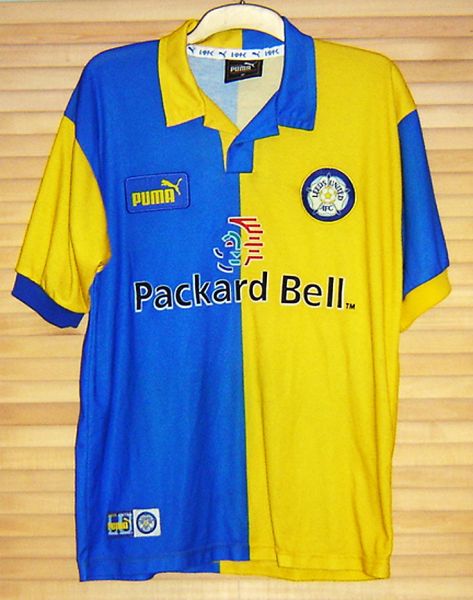
00leeds-away-football-shirt-1997-1999-s_6597_1

Classic 97-98 away shirt – the “Barnsley Special”

In the early part of season 1997/98, Leeds United under the guidance of George Graham became known for a brief but glorious three-match spell as “The Comeback Kings”.  It was a title hard-earned with victories against three fellow Premiership members after going behind – from one down against West Ham, for whom a young Frank Lampard had scored and then reprised his Dad’s 1980 semi-final jig around the corner flag at the south-east corner – and from three down at home to Derby County, a match I’ve already described elsewhere.

The third game in this sequence was away to Barnsley, destined to be one-season wonders in the Premiership, but always to be relied upon to raise their game against the hated Big Brother from up the road, Leeds United. Many was the time I had made the short journey to Oakwell during our second division spell in the eighties, only to see us perform scratchily, as if influenced by the humble surroundings, dragged down and ultimately defeated.  We had the odd success there, but overall it was a dire place to visit, both for itself and for the ashen taste of defeat that often accompanied the cobbled-street and pit-stack atmosphere.  This was in my mind as I contemplated the Premiership away game, in an Oakwell tarted up and much improved since the decade before.  But, in truth, the match turned out to be one of my most satisfying away trips ever.

Indeed, this article nearly copped for the title “My Greatest Awayday” before I decided it wasn’t quite that good.  But honestly – it was right up there with the best of them for sheer excitement and the joy of being able to throw a friend’s kindness back in his face as I crowed over a remarkable victory.  Let me set the scene.  A mate from the luvvie world, as we theatrical types like to call it, had won a local competition for which the prize was a ticket in the main stand to see Barnsley v Leeds.  This lad – let’s call him Martin, because that’s his name – is a rabid Barnsley fan who already had a season ticket, so he had no personal use for his prize.  He could have sold it, but out of the kindness of his heart, he passed it on to me.  It would be too, too cynical of me to speculate that he was hoping to rub my nose in another win for his Reds over my Whites – but in the event, how he was to regret that noble gesture.

The 29th November 1997 – coming up for seventeen years ago now (how that time has flown by) was not merely a damp and dismal affair.  It was not merely wet.  It absolutely teemed it down, threatening to dissolve proud civic buildings of centuries standing, promising to wash Barnsley away completely and return South Yorkshire to the marsh from which it should never have emerged.  It was a flood of biblical proportions, promising extinction on a scale that would have terrified Noah.  It really was a bitch of a nasty day.  And therein lies some of the satisfaction I derived from my spot of luck.  Redeveloped though Oakwell was relative to the dark days of Football League, Division Two – it was still a fairly spartan affair when compared to a proper football stadium.  The away end, especially, offered all the facilities of an open field without any of the rustic charm.  It was roofless, open to the elements – and that was a mighty elemental day.  If I had taken my place on that open terrace, I would surely have drowned.  As it was, I had the cosily malicious pleasure of watching my Leeds-supporting comrades drown, and looking forward to regaling those that survived with the comfy tale of my own toasty, warm and dry experience.  The keenly-anticipated pleasure of Schadenfreude is a dish best served cold – as I’m sure you’re always reminding yourselves.

So there I was, tucked up nice and warm in Barnsley’s version of a Main Stand, sat among the very poshest of the local yokels, thrilled to bits that I wasn’t out there in the open, dissolving away.  I had my complimentary programme and my hot Bovril plus obligatory pie – all free, an experience to warm any Yorkshireman’s cockles.  I was well happy.

Then the match started, and – at first – it was a depressing process of that happiness steadily waning and draining away.  Leeds were playing against the tide in the first half, and struggling to make much of it, despite vastly superior personnel.  Jimmy Floyd Hasselbaink – later to be rechristened Judas Floyd Piggybank after his money-motivated departure to pastures Spanish – had briefly lifted my hopes by striking the Barnsley woodwork on five minutes.  I knew that this was a bogey ground (Leeds have a few of these) – but that early strike had given me some encouragement – soon, alas, to be brutally dashed away.

After eight minutes, Barnsley – playing with a 140 mph gale at their backs – pressed into the Leeds half and scored.  One of their frankly half-decent players, Andy Liddell, had tested Nigel Martyn with a stinging shot that the Leeds keeper could only parry out. Following up, Liddell was able to make his second effort count, and Leeds were behind. At Oakwell.  Again.  Bloody hell.

As Barnsley warmed to their task and Leeds found it increasingly difficult to repel the home attacks while playing into the teeth of a gale, the Reds had chances to double that lead.  First Liddell and then Joso Bosancic tested Martyn, but failed to beat him. Barnsley were not to be denied their second goal though, and on 28 minutes it was again a matter of our Nige in the Leeds goal being unable to do much about an initial shot in those horrible conditions.  As with the first goal, the rebound was snapped up – this time by Martin Bullock – and there we were, 2-0 down and looking likely to ship more goals as our defence became ever leakier.  It should be remembered that I had just witnessed two Leeds comebacks, and maybe this should have filled me with optimism – but it was poxy bloody Barnsley, it was a horrible day and I felt my luck – and the team’s – had run out.  I expected no third miracle.

It was with an involuntary shout of delight then, that I saw us peg back the arrears ten minutes short of half-time.  It was Hasselbaink again, blasting a fierce shot towards the Barnsley goal, only to see their keeper Lars Leese turn the ball around the post.  From the resulting corner though, Alf-Inge Haaland rose to power home a header at the home fans’ “Ponte End”. Pessimistic as I had been moments before, now renewed hope gripped me. My triumphant bellow had revealed me to the Main Stand as The Enemy, and hundreds of eyes swivelled to regard me balefully – but these were posh Barnsley folk, some of whom would actually have indoor plumbing and electricity in their hovels.  I was in no danger from these relatively civilised specimens.  United saw out the remainder of the first half, and I sat nice and warm through the break, reading my programme, sneaking occasional glances at the Leeds hordes bobbing about in the deep end and fighting over the few available lifebelts – but mostly looking forward to seeing what United could do playing with the current.

In the event, the first thing we did in the second half was go perilously close to conceding a third goal that would probably have finished us off.  Liddell, that thorn in our side, went far too close for comfort and then had a shot cleared off the line by the usually useless David Robertson.  As the half wore on, it was looking more and more as though Leeds were once again going to have to slink away from Oakwell pointless.  They pressed when possible, but Barnsley were defending better in the second half than we had in the first. A mere eleven minutes from time, though, a long clearance from Big Nige found nippy Rod Wallace in space on the right.  Hot Rod had a run on goal, and once clear, he was nigh-on impossible to catch, even though he was having to wade rather than sprinting as normal. Rodney finished competently, and we were back from the dead at 2-2 – to my loud relief. More hostile stares from the indignant aboriginals.

The stage was now set for a dénouement – and it was Leeds United who struck the decisive blow to complete yet another fine turnaround.  Wallace was involved again, his run down the right culminating in a tasty cross into the Tykes’ penalty area – and there was Derek Lilley for his one and only moment of glory in a Leeds shirt a mere five minutes after entering the fray from the bench.  Fastening onto Rod’s quality wide delivery, Lilley set his sights and delivered the perfect finish to put Leeds 3-2 up, much to the delight of the thousands of drowned rats behind Lars Leese’s goal.  My own joy was flavoured with an illuminating thought: how appropriate it was, I mused while cavorting around in celebration, that – on such a very wet and sodden day, with Barnsley’s quaint little ground virtually under water – it had taken a sub to settle the matter.

I didn’t see poor old Martin after the game – I was caught up in the crowd heading back to the railway station where – just to complete a Yorkshireman’s perfect day – the throng was such that I was never asked to pay my fare and got a free ride home on top of all the other freebies I’d enjoyed that day.   I was contentedly counting my blessings; Leeds were in the top four, Barnsley had taken a decisive step towards their eventual relegation (helped along by another defeat to Leeds in the return at Elland Road) – and I’d had the immense pleasure of seeing all this, of being a part of it all – and all for nowt.  Perfect. The rain had even thoughtfully abated during my walk back to the station.  I was the only dry man on the train as the away fans sat in their puddles, soaked and steaming, but giddily happy at the events of the afternoon.

Three comeback wins on the trot – and people recall George Graham’s reign as one of austerity.  It was anything but, especially in this 97/98 season, and I have a few more happy memories from that time, so I still think quite fondly of George.  It was a shame he deserted us for Spurs though, the treacherous Scottish git.  But that was in the future, and I had a victory to celebrate – and a rehearsal to look forward to the next day when I would be able to repay Barnsley fan Martin’s kindness by taking the mick and making of his life a complete misery.

It’s a sweet and wonderful thing to be a Leeds fan sometimes, which will be something to remind ourselves of whichever way this coming weekend’s match against the Tykes ends up going.  It’s about time we had another win there, but frankly I’m not holding my breath, despite Ross McCormack’s tweeted battle-cry.  But you never know – and if we did snatch the three points, that might well seal another relegation for plucky Barnsley, a “Cup Final complex” outfit we could well do without meeting next season.  Fingers crossed.