Tag Archives: soccer

Byram: City in Pole Position?

Super Sam

Super Sam

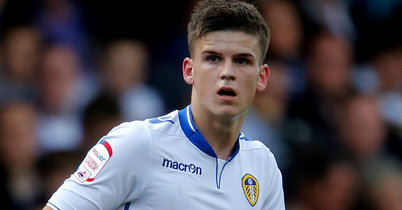
It’s a slightly worrying time for Leeds fans – otherwise known as “summertime” – the months when the “For Sale” signs start appearing above the heads of our latest prized asset.  The boy wonder in question this time is Sam Byram, and the usual loud denials and pledges of allegiance are to be heard already. Brian McDermott is “almost certain” that Byram will be at Elland Road next season.  The player himself has hinted he’d like to stay.  An ominous silence is noticeable from the direction of the owners.

I’ve written elsewhere  that it might not be the end of the world if Byram did end up following the footsteps of Delph and other richly-promising youngsters, away from LS11 to fulfill their undeniable potential elsewhere.  Historical precedent appears to favour the likelihood of this happening: we don’t have to go much further back to the loss of Aaron Lennon for a paltry million – what might he have added to the game plan of successive United bosses in the years since?
Reece Wabara

Reece Wabara

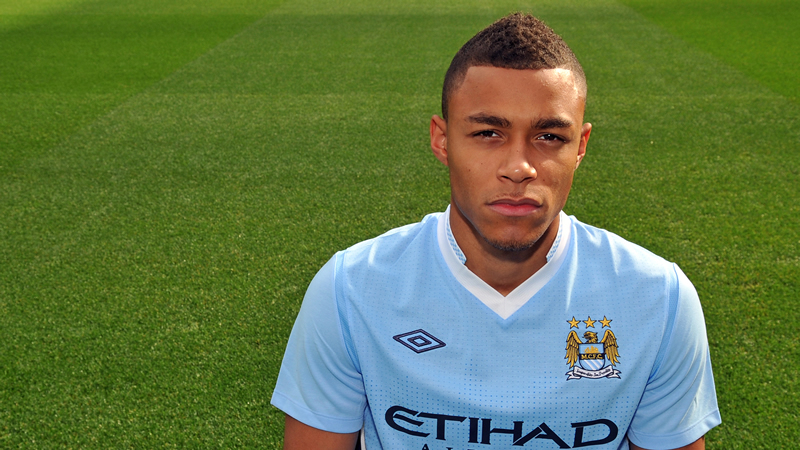
Now we hear that Reece Wabara, an extremely promising Man City starlet capable of operating in a variety of roles, is tipped for a loan move to Leeds this summer.  Quite apart from that little frisson of pleasure that goes with any link to players from such an elevated environment, this rumour should be seen in the context of Byram’s future, both over the short-term and perhaps slightly further ahead.  Are City throwing us a crumb from their bountiful table in order to pave the way for them to pick our ripest and juiciest plum?  Or are we far-sighted enough to want to add a player of Wabara’s potential and quality, in order to free up the even more sumptuous skills of Byram to operate further forward, possibly as a wide midfielder?

Whatever happens this summer, and fairly or unfairly, the ability or otherwise of United to hang on to Byram will be seen as the acid test of the still-quite-new owners’ ability to run the club along ambitious lines.  The retention of star players has never been a strong point; even during our last period of relative success in the nineties, when we had a team to compete with the very best – we couldn’t hang on to an unhappy Jimmy Floyd Hasselbaink.  So if Leeds DO manage to keep young Sam on the payroll, then we could perhaps say that sends out the right kind of optimistic message to pave the way for a real challenge for promotion next season.

It may be of course that City are playing a long game of their own.  A club with their virtually unlimited resources can buy just about anyone they like, Financial Fair Play rules permitting, naturally.  But maybe the advent of those rules are persuading the Premier League high-rollers to look at more creative ways of ensuring a flow of incoming talent.  The loan of a top-class youngster, and maybe a few million chucked our way and a loan-back option to sweeten the unpalatable pill – and City could well have secured themselves an option on a player who is likely (really highly likely) to be a major performer at the highest level and quite soon at that.

If Wabara does end up at Elland Road for next season, I’ll applaud United’s ambition, as far as it goes.  And if Byram is either sold or mortgaged, I won’t be screaming abuse from the rooftops – as long as the deal is done with the best interests of the club at heart, and especially if – in his own heart of hearts – Sam wants to ply his trade further up the food chain.  It’s going to be an interesting summer, and maybe a pivotal one in the history of our great club.  Whatever juggling act goes on, let’s hope that we don’t drop too many clangers this time.

Shameful: BBC Spit on Don Revie’s Grave

Don Revie OBE:  The Greatest

Don Revie OBE: The Greatest

History, they say, is written by the winners.  In last night’s “Match of the Day”, the BBC provided ample evidence to show that it is also rewritten by hypocritical sycophants who should know better.

The events of the afternoon had not panned out as the scriptwriters would have wished, though all looked well ten short minutes from the end of Man U’s match at West Brom, S’ralex’s last game as manager.  The Plastic Champions were 5-2 ahead, and John Motson had purred, gasped and chuckled his way through 80 minutes of exhibition football, punctuated by comical home defending, and it looked very much as though another team was going to roll over meekly for the men from Salford.

Then S’ralex brought on Paul Scholes for the Ginger Minger’s own last appearance before his latest retirement.  The cameras prepared to adjust to soft focus, Motson drew in another breath preparatory to more shudderingly orgasmic tributes as he was consumed by an ecstasy of highly marketable sentimentality.  The stage was set for the Govan Guv’nor to stump off into the sunset, his purple-blotched features lacerated by a parody of a smile.

Then it all went wrong.  West Brom struck three times in the last ten minutes, Ferguson’s smile dropped to the floor quicker than a Gareth Bale dive and the mighty Man U were holding on at the end to avoid saying goodbye in the face of a last blast from a defeated Hairdryer.  5-5 it finished, and the BBC were denied their expected valedictory stroll in the sun; the Baggies had pooped the Corporation’s party.

Maybe it was this that prompted the spite and small-minded pettiness of the montage which prefaced the Match of the Day highlights late last night.  More likely though that it was always going to be yet another calculated slap in the face to the memory of a great man, a man whose boots the assembled hacks and ex-pros on the MOTD couch are not fit to lick, a true great of the game that the Establishment seem determined to pretend was never there.  Ferguson was painted in admiring and rose-hued tones, to a background of his many achievements as compared to the other “managerial greats.”  Bob Paisley, Brian Clough, Jock Stein, Bobby Robson, Ron Greenwood, Bill Shankly, Matt Busby, Bill Nicholson; all these legends were held up as examples of managerial excellence to be rightly lauded for their achievements and the mark they left on the game.

But no mention of the greatest of them all: Donald George Revie OBE.

This was no mere oversight.  It’s been going on for years, and it’s a premeditated and vicious attempt at the excision from public memory of football’s greatest manager, a cowardly and shameful act of malice aforethought.  It reflects ill on the researchers who put these things together; aren’t they aware of their history, we in the know might wonder.  Don’t they have access to Google?  But they know all about the Don, they know he transformed a tired old joke of a football club into the most feared and respected force in Europe; they know he did it without massive financial backing and without paying obscene wages; they know how he did it all to the dubious background of an initially apathetic support, fans who had only ever known mediocrity at best, and expected nothing else.  Out of all this, Don Revie wrought a miracle – a team that respected judges of the game have described as the finest club side in English football history.
The accidental omission of Revie’s name for any TV item concerning itself with managerial greatness would be unforgivably slipshod; the act of a clueless nincompoop.  But this was much, much worse than that.  It was an exposition of hypocrisy underpinned by malice and the bile of fifty years’ accumulated resentment.  It was a crass attempt at revisionism, a blunderingly clumsy try at pretending Don Revie never existed.  It was wishful thinking in its bitterest and most destructive form, a playground insult to a giant of the game.  The BBC cowards and toadies have exposed themselves as classless fools, deserving only of contempt and ridicule.

“And Leeds will go mad.  And they’ve every right to go mad!” – as Barry Davies memorably put it back in the day, in more realistic times before the game turned plastic, when everybody knew who the heroes were and we weren’t fed a diet of pap and lies.  And Leeds should go mad again.  The city, the club, the fans – none of them should continue to lie down and accept this disgraceful treatment, this attempted erasure of an iconic figure whom we all worship as “Simply The Best.”  There should be a loud outcry, a vehement protest.  This is my small contribution, but the fans as a body have form for hitting back at media and establishment when they feel one of their own wronged.

In 1994, the FA handed down a mandate that all clubs should observe a minute’s silence in respect for the late Matt Busby.  They did this because it’s what you do when a respected figure dies – except of course they’re not consistent.  They failed to mark the death of Don Revie, a tragic and cruel end from Motor Neurone Disease.  They failed even to send a representative to his funeral, although – to his eternal credit – Alex Ferguson was there, and Denis Law, as well as most of the Leeds United greats and other proper football men.  But none of the hypocrites in suits from the game’s ruling authorities saw fit to get off their backsides and pay tribute.  Revie was dead; let them get on with pretending he never existed.  So in 1994, when they were supposed to lapse into a respectful silence, the Leeds fans at Blackburn Rovers’ ground exploded in a raucous and repeated cry of “One Don Revie!  There’s only one Don Revie!!”  The great and the good of the sport were scandalised.  People pursed their lips and shook their heads sadly.  How dare these yobboes ruin our tribute to our Chosen One?  But I’m so, so glad that it happened.  We should not knuckle under to the official view; we should never bow down before such blatant hypocrisy.

They’re getting wise to rebellion now.  There tends to be a minute’s applause these days, lest any disrespectful mob should see fit to assert their unwanted point of view the next time some officially-beloved figure keels over.  But the fans will be heard, believe me.  And if the media – typified by these contemptible fools in charge of the increasingly poodle-like Match of the Day – continue so determinedly to ignore and try to obliterate the legacy of The Don, then I hope that defiant cry will be heard again, loud and proud.  While ever Leeds United fans are prepared to stand up and be counted, happy to raise their arms and voices and be heard – then Don Revie will never be forgotten, whatever the wishes of the pompous suits and deluded TV types.

Don Revie, “The Don” (1927 – 1989)  A true legend and a great of the game.  Whatever you might think of him – and God knows, I’m no fan – just ask S’ralex.

The Pride of “The Damned United”

Image

Was ever another phrase so obviously coined with one intention, only to be taken up and brandished with pride to the completely opposite effect? Author David Peace – a Huddersfield Town fan – has described his book “The Damned United” as “an occult history of Leeds United.” The word “history” in this connection is somewhat optimistic – the book is decidedly fictionalised, and the point of view is the imagined perspective of Brian Clough as he struggled through his 44 days in what could fairly be described as enemy territory. The book was a success, met by a measure of critical acclaim. The film it spawned was of more dubious quality, famous for the lengthy list of goofs on its Internet Movie Database page, and widely regarded as particularly one-eyed in its depiction of personalities and events, none of which bears much resemblance to actuality.

It is the tag though – that Damned United tag – which seems set fair to achieve iconic status, and not with the intended pejorative effect. With a typical sense of gallows humour, devotees of the Elland Road club have taken the label and made of it a badge of honour, waving it under the nose of the millions who despise Leeds United as a symbol of inverted defiance. We Are The Damned United, they say – do your worst. The tiresome recycling of allegations about Don Revie, the endless litany of “Dirty Leeds” myths and the omnipresent attitude that the West Yorkshire club exemplify all that is shady about football, all of this is held up to ridicule as those who love the club glory in the new name. Sod the lot of you. We are Dirty Leeds, The Damned United, and we are proud. It’s a unifying message, the foundations of a siege complex that can rally support behind any popularly-hated institution. It’s an assertion of individuality, of a refusal to conform to the cosy standards beloved of media and Establishment. It takes gritty character to be a Leeds fan in the face of such universal hatred, and those of sufficient character know they’re part of something unique and special. We Are The Damned United.

It’s also had the welcome effect of reclaiming a measure of ownership and identification with that word “United”. It’s highly doubtful that Town fan Peace could have foreseen or desired that effect, but there it undoubtedly is. For decades, the press, the football establishment in the UK and elsewhere – and of course Man U themselves – have been unrelenting in their efforts to corner the term “United” exclusively for the Salford-based franchise. It’s been an important marketing tool, a vital part of the attempt to sell the myth of The Biggest Club In The World™ (Copyright © The Gutter Press since the late 50’s) to children of all ages from Devon to Singapore. It’s seeped into the public consciousness like the subliminally insidious selling technique it is, and of course the tat-consuming, replica-shirt-buying, Sky-subscribing suckers have fallen for it in their millions. But now there is The Damned United, inextricably linked with Dirty Leeds, and suddenly that formerly football-related suffix isn’t quite so exclusively Man U any more.

Dirty Leeds The Damned United

The contrasting psyches of the Leeds United and Man U support is an apt illustration of how the two sets of fans have embraced such polar-opposites in terms of club and image. The Man U fans desperately want that monopoly of terminology, they need to believe the press-powered fairy-tale that there’s “only one United”. The motivation for being identified with what they are always being told is the “biggest and best” has a Freudian compulsion at the back of it, a sense that there is an inadequacy which yearns to be compensated for, an insecurity which needs bolstering. There are people like that everywhere, victims of society, and so you find Man U fans all over the place, as common and undiscriminating as flies. Leeds fans, on the other hand, tend to support their team – where the connection isn’t simply local and tribal – for reasons of perverse pride. It’s a manifestation of defiance and a refusal to be categorised as a commercial target group. The pride is palpable, and the negative image of the club feeds this. Sod you lot. We Are The Damned United. The emergence of such a potentially iconic label was not good news for Man U-inclined inhabitants of armchairs everywhere, and again, this is not an effect the author would have counted as one of his aims in producing his work.

Thanks, Mr Peace. You could hardly have aided our cause any more effectively, and Dirty Leeds have gained from the exposure in popular culture. The book may have been an attempted exposition of Clough’s state of mind as that complex character negotiated his time in purgatory; the film may have been an amusing romp through the mythical hinterland that borders but rarely intrudes on the territory of actual fact. But the label will probably out-live the pair of them, and will flutter bravely and proudly in the vanguard of the Leeds United juggernaut as it – eventually – thunders its way back to The Top.

Beckham To Retire At Last

Beckham: Hanging Up Boots

Beckham: Hanging Up Boots

So, the day has arrived at last.  An icon is to depart the game.  England’s “Goldenballs”, the man with the most famous metatarsal the world has ever seen, he of the sculpted facial furniture with chiseled jaw and cheekbones to die for, David Robert Joseph Beckham OBE is finally to quit the game he has – more or less – adorned since 1995.  Everybody is sitting up and taking notice at what is the end of an era.  Leyton Orient have felt it necessary to remind the world in a timely tweet that the Coiffed One is to make his last appearance against French side Lorient – NOT the English League One denizens L.Orient.  Thanks for clearing that up, lads.

 My first memory of David Beckham is necessarily hazy – I was quite intoxicated, and stood high up in the away end at The Theatre of Hollow Myths as Leeds United’s all-conquering youth side trampled the budding superstars of Man U into the turf on their way to an eventual 4-1 aggregate FA Youth Cup win.  That was in 1993, and it was some small measure of compensation for the transition from our status of Last Real Champions to that of Man U as first holders of the Premier League Plastic Trophy.  As the new era dawned, an epic career was off to an inglorious start, but it was destined to contrast starkly with the doomed efforts of that night’s winners.

Since then, even so jaundiced an observer as I must admit that Beckham has scaled Olympian Heights, and on one foot, too.  No less a footballing authority than the late, grating George Best described him in less than glowing terms: “He cannot kick with his left foot, he cannot head a ball, he cannot tackle and he doesn’t score many goals. Apart from that he’s all right.”  Not that he was bitter or anything – but maybe the fact that Beckham’s earnings in any given calendar month eclipsed the entire career earnings of the self-styled “Greatest Ever” had touched a raw nerve or two.  Whatever Bestie might have thought of the shortcomings of Becks talent-wise, the London boy could surely have taught him a thing or two about application, dedication and – crucially – not being caught with his pants down before important semi-final matches.

That ability to dedicate himself and make it big, on the back of a less-than-completely full box of tricks, certainly redounds to Beckham’s credit.  His habit of creating the most spectacular results with one swing of that cultured right foot did him no harm either.  On loan at Preston as a youngster, he created a stir by scoring direct from a corner, and not too long afterwards, establishing himself in the Man U first team, he looked up from just inside his own half at Selhurst Park, and lobbed the ball mightily over the back-pedaling ‘keeper Neil Sullivan to score an outrageously long-range goal against long-ball merchants Wimbledon.  The most famous exponent of this type of effort up to that time had been a chap called Pele, who tried it in the World Cup; but Pele had missed.

The path to World Superstardom was not, however, always strewn with rose petals.  Attitude problems surfaced, petulance would be a problem throughout most of his career (not an uncommon problem among graduates of the Man U finishing school), there were run-ins with his irascible mentor Ferguson, and he could be impulsive too.  He saw a young lass on a pop video, and he decided on the spot to marry her.  His judgement on that occasion at least was reasonably sound, or so it seems; the marriage is still going strong and from tacky beginnings with a wedding that would have figured large in any style guru’s nightmares, the couple have built a family with their weirdly-named brood and two large fortunes securing a stable future for all concerned.

So how will Beckham best be remembered?  Some will say as the archetypal Man U fan – he was born and raised in London after all, which is a headline qualification for that status.  Others will remember his flirtation with the extreme edges of fashion – his famous experiment with girly clothing as he sported a sarong, for instance.  But whatever he did, whatever style he either aped or created, there were millions queuing up to follow his every footstep.  He had the knack of capturing the hearts of a whole generation with the totality of the Beckham package – the talent, the looks, the style, the pop-star wife.  Some of it was grossly kitsch, Beckingham Palace was the venue for many sins against the Manual of Good Taste.  Some of it took your breath away with the sheer, daring nerve of it – the revelation that his son Brooklyn was named after the site of his conception had people offering up prayers of thanks that the tender moment hadn’t taken place in Peckham.  Subsequent male children were named Romeo and Cruz and then a girl arrived to be lumbered with the curiously android-like Harper Seven.  There is, after all, no accounting for taste.

Some will remember the iconic free-kicks for England, the most famous of which secured his country’s automatic World Cup 2002 qualification.  What people forget is that, had we been doomed to the play-offs, we might have taken Germany’s easier route to the Final – but who ever knows what fate might hold?  In the end, England and Beckham, together with his famously bust metatarsal, appeared in the global tournament, but for once Beckham wasn’t really up to it, and it was his half-hearted, half-baked, half-fit attempt at a tackle which let Brazil in for the equaliser at the quarter-final stage, the Samba Stars going on to eliminate England 2-1.

But whatever you might think of Beckham, my fondest memories of him will be in that England shirt – not for his flashes of temper, leading to notorious dismissals, but for the massively evident pride with which he wore the Three Lions over his heart, the utter commitment and dedication with which he put himself about the pitch in the England cause, be it merely as a star player, or eventually as captain of his country.  Nobody set a better example of leadership than David Beckham when he had that international shirt on, and nobody could ever doubt on those occasions that everything else – the endorsements, the mansions, the publicity stunts, the lurid tales of his off-field life – all of that was secondary to his intense, burning patriotism.  If that alone had been enough, England may well have had three winners’ stars to embroider above the Three Lions on the Shirt, instead of that solitary one.

So it’s farewell, Goldenballs.  He was a player of his times, a man who would be a superstar  among superstars, someone who would attract fan fervour and inspire adulation and hero-worship out of all proportion to his essentially modest character – and some would say disproportionately to his talent too.  Be that as it may, it’s unlikely we will see such a phenomenon again, unless the ingredients are coming together even as we speak, and yet another cockney Man U fan is bubbling under up Salford way.  You just never know.

Man City Will Bounce Back

Mancini: Sacked

Mancini: Sacked

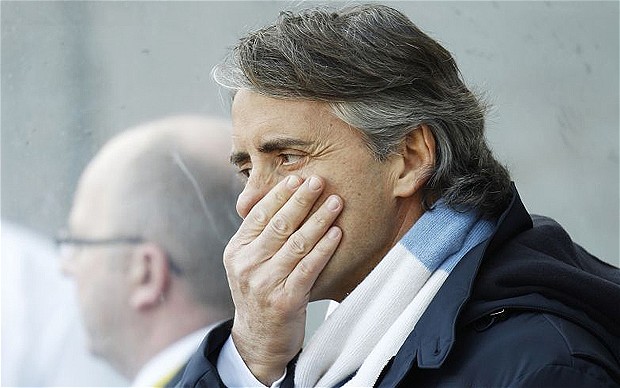
Events at Manchester City this last day or so were flagged up well in advance – the media screamed “Mancini Out!” from every outlet – and despite scornful denials by the man himself, and messages of support from the fans, you felt it would turn out to be a case of “no smoke without fire.”

Even so, the news when it arrived, poignantly on the very anniversary of that last-gasp Title triumph, was a shock of sorts.  The club moved swiftly to justify their action – Mancini had “failed to meet football targets”, it was said.  Criticism was made too of his inability or reluctance to communicate, of an aloof and arrogant attitude, of his lack of interest in club matters below first-team level; specifically an apathy where bringing youngsters through was concerned.  Clearly all was not sweetness and light on the good ship City, and the mystery of their rudderless run-in for the league campaign, and how they sank without trace in the second half of the FA Cup Final may not be such a mystery after all.

In the odd spare moment I’ve had this season to glance upwards towards the Premier League summit, and away from Leeds United’s mid-table Championship toilings, City have puzzled and frustrated me.  At the outset, they seemed well-equipped to mount a reasonable defence of their title.  There were clearly two sides to this equation.  On the one hand, the squad at The Etihad was, in my view, the best in the Premier League – rivalled only by that at Stamford Bridge.  On the other – Man U are notoriously capable at employing a siege complex in order to use resentment to fuel their fightback.  They are also, undeniably, helped in large measure by the number of weird decisions that seem to go in their favour.  The away game at Chelsea was a good example of this, when Torres was sent off for being fouled by a Man U defender already on a yellow, and then the Salford side scored a late and clearly offside winner. This sort of thing tends to pepper Man U’s most successful seasons, and it’s not an attractive facet of the Premier League.

I’ve never subscribed to this “van Persie made the difference” nonsense.  I’m sure he made A difference – but not that much.  It’s been a stroll for Man U in a league in which they should – by all considerations of relative quality – have struggled to finish third.  Chelsea have had their own problems.  The phrase “Interim Coach” needs nothing added to it for an explanation of their failure.  But Man City was a conundrum, and it is only now, in the wake of Mancini’s sacking, that we are perhaps gaining a more complete picture of what things were like behind the scenes.

Now a tell-tale tweet from former kit man Stephen Aziz may have shed some light on just how negative the atmosphere has been at Man City.  The phrase “arrogant, vain and self-centred” appeared briefly before the tweet was removed. And there was more: “no manners ignorant just some of the daily traits really made going into work a daily grind!! #karma”.  That’s all pretty damning stuff, and quite frankly at top professional level, it doesn’t take one tenth of that apparent level of unhappiness and discontent to derail a club’s bid for honours completely.  This, more than the failure to pick up a trophy, may well be what lies behind Mancini’s abrupt departure on the first anniversary of his finest hour.

Man City fans feel an understandable affection and loyalty to the man who has given them their finest moments in over thirty years.  I too recall the expression on his face as City hammered Man U 6-1 at The Theatre of Hollow Myths, and I remember thinking that here was a man who would end up as loved as Malcolm Allison in his late-sixties incarnation, or Colin Bell, or any one of City’s heroes you may care to name.  He had the opportunity to instill himself into the DNA of the club, but – inexplicably – it looks more and more as though he’s been too arrogant to see the need to treat people as they need to be treated, and has therefore lost his fledgling Legend status.  The City fans will always remember him, of course.  He delivered, albeit at the last gasp, and put an end to an aching void where they’d won nothing as their despised neighbours cleaned up.  Of course he will always have a place in the collective City heart.

The next appointment is vital, however.  If City get it right, the quality of this squad can carry all before them next season.  Man U have a rookie at the highest level, and must expect a bedding-in period.  This year has been bizarrely tilted away from the finest talent in the league.  Next year may well be very different.

Matt Mills £1m Leeds Target?

Mills:  Leeds-bound?

Mills: Leeds-bound?

The Swindon-born former Reading and Leicester defender has not been an outstanding success at Bolton Wanderers, his last start for them being against Huddersfield on December 8, when he injured a thigh and has managed only one substitute appearance since.  His time at Leicester City was hardly wonderful either, and Mills was a loan target for former United boss Neil Warnock early in his Elland Road tenure.  That failed to happen, and a rumoured £2m fee saw the defender link up with Bolton – but it seems likely his time there is now up, with an offer in the region of £1m being thought sufficient to secure his services.

The player himself – according to the familiar “sources close to…” – is keen on the chance to renew his working relationship with his old Reading boss Brian McDermott.  Central defence is on the list of positions needing to be strengthened at Elland Road, and it may just be that the Old Pals’ Act could secure a reliable performer for United. This optimistic assessment is certainly not based on recent form, but there have been many instances down the years of players in the doldrums being reinvigorated by a reunion with a former mentor.  McDermott’s success at the Madejski throws up a few names, some still at Reading, some that have since moved on – that could be identified as players who would relish another crack of the whip under an old boss at a club like Leeds – enough of a pull in its own right.

Mills has certainly waxed lyrical about his past service under McDermott and assistant Nigel Gibbs. “My first few months at Reading didn’t pan out as the move I expected and wanted, but that all changed when Brian got the job and Gibbo became assistant manager.” the ex-Royal has been quoted as saying. “They gave me a new lease of life, and the opportunity and coaching they gave me has honestly made me the player I am now.”  As fulsome tributes go, this is very much in “come and get me plea” territory, and it has been suggested that Mills is willing to reject overtures from elsewhere in favour of a switch to LS11.

My own view is that, at only 26, Mills has many miles left on the clock, and the class he has undoubtedly displayed in the past will not have deserted him permanently.  A happy player is more likely to be a top-performing player, and the fruitful coaching relationship between Brian, Gibbo and Matt at their former club seems to suggest that its a scenario which could unfold again, to the satisfaction of all parties.

Whether the powers that be are prepared to stump up £1million is of course another matter, and wages are always an issue as well.  But there is some pedigree here, and the chance to build on some good history too.  So I feel there may just be some legs in this rumour, and it’s a move I would love to see happen.  “Lees and Mills” could well be the central defensive partnership on everybody’s lips in the Championship next season.

Play-Off Karma Drama as Watford Sink Leicester to Book Wembley Berth

Happy Gianfranco Zola

Happy Gianfranco Zola

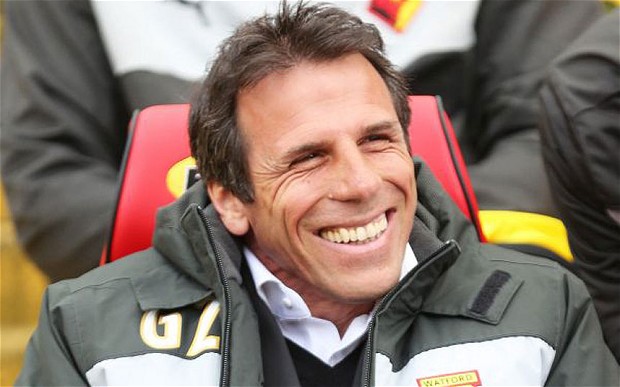
Given the incredible outcome of this game, it would be tempting to dismiss the first 94 of the 97 minutes as irrelevant. That would of course be the greatest injustice to a fine game which had already yielded three wonderful goals; first a brilliant finish from Matej Vydra as the ball dropped from behind him over his left shoulder for a terrific left-foot volley past the helpless Schmeichel. Then the reliable Nugent found space at the far post to rise and guide a great header just out of Almunia’s reach to level the match and put Leicester back ahead, 2-1 on aggregate. Half time, and it was “as you were” with City retaining the lead they’d gained in the first leg at the King Power Stadium.

As the second half progressed, Watford were hammering away and Leicester – although pressed back constantly – seemed to be coping relatively well. Home manager Gianfranco Zola knew he had to change things, and he acted to replace Lloyd Doyley with Fernando Forestieri. Within a matter of minutes, Watford produced a quite excellent team goal, Vydra playing an immaculate one-two with Troy Deeney to score his second from just inside the area. So, we were all square again, and the nearer the match edged to full-time, the more it looked as if an extra 30 minutes were inevitable.

The full ninety had already ticked by and the match was well into six minutes injury time when Anthony Knockaert made his fateful move down the Watford left flank. Showing trickery and strength, he shrugged off a foul challenge outside the box, but then as he progressed into the area, a much lighter touch felled him. As if in slow motion, referee Michael Oliver assessed the situation, failed to call it for the dive it was and pointed to the spot. Watford players were anguished and amazed, Zola on the touchline was clearly stunned, showing with every line of his being that he could see a whole season’s work going up in smoke right at the death. Knockaert placed the ball on the spot as Leicester’s travelling hordes prepared to celebrate Wembley, the penalty was hit low and down the middle but not with great force – and there was Almunia’s trailing foot to stop the ball. Still, Knockaert was closing in on the rebound, surely poised to hammer the ball into the net and finish the matter, but Almunia did it again, rising to his knees to flail an arm at the loose ball, deflecting it to a defender who gratefully belted it out of the area.

And now Lady Luck performed one of those graceful pirouettes for which she is rightly famed. As the Leicester players were still coming to terms with their failure to seal the tie, Watford showed no such distraction, playing the ball out to the right and flooding support into Leicester’s own penalty area. The ultimate end-to-end finale was playing out now, as the ball was crossed from near the right hand corner flag, beyond the far post where sub Jonathan Hogg beat Schmeichel in the air to head down precisely for the onrushing Deeney, who slammed the ball gleefully, unanswerably, into the Leicester net. 3-1 on the day, when it could so easily have been 2-2. 3-2 to Watford on aggregate, when that score had looked like being reversed in City’s favour. The Leicester players stood waiting for the restart as the pitch was cleared of jubilant Hornets fans, transfixed and disbelieving at the turn of events which had seen certain victory turn to catastrophic defeat. A few more seconds, and it was over.

Ironically, of course, if Knockaert had stayed honest and stayed on his feet instead of going down so easily, the game would probably have gone into extra time, and who knows what might then have happened. On such twists of fate are whole seasons decided, and karma had come to Knockaert in its cruellest form, landing the most clinical of knockout blows. He ended up in tears, wandering around the pitch after the whistle, uncomprehending as his desolate team-mates tried in vain to comfort him. Over the two games of this tie, it’s fair to say that Watford deserved to progress, so for once justice was done, and seen by millions to be done in the most dramatic and entertaining manner. But spare a thought for the hapless Anthony Knockaert, hero (albeit with feet of clay) to villain in the space of a few seconds as his world turned upside down. That’s life – and Leicester will continue their life in the Championship next season. Watford, meanwhile, march on con brio – full of confidence. They will now be optimistic of completing their Italian Job and winning promotion at Wembley.

Where’s That Sick-bag?

A Sickeningly Solemn Moment

A Sickeningly Solemn Moment

Ladies and gentlemen, if you have sick-bags to fill, prepare to fill them now.  If sugary treacle and soft-sawder syrup is your thing, get ready to drown in the stuff.  “Sir” Alex Ferguson is departing the stage, and there won’t be a dry seat in the house.  Sky TV are preparing for an extended weepathon as their hero who hated them, their idol who despised them, climbs down unsteadily from his throne of purchased glory and totters off upstairs to chew gum and glower balefully down at his hapless successor David Moyes.

This afternoon’s live TV offering has a delicately-scripted path to follow.  There will be a soft-focus montage of many of the Purple-Nosed One’s finest moments – Steve Bruce’s 98th minute winner against Sheffield Wednesday to a background of Martin Tyler’s shrieking climax as Man U all but clinched their first plastic Title.  Giggsy-Wiggsy’s finest FA Cup goal of all time as the Arsenal defence parted like the Red Sea and we were treated to an unsolicited view of the Husband of the Year’s chest-rug.  A selection of van Persie’s catalogue of sublime finishes from the Dutchman’s “One Man Title-Winning Season” collection.  It is doubtful however that Eric Cantona’s exposition of martial-arts skills from his South London Show of 1995 will make the cut.

After the moonlight and roses video softener has set the correct ambiance, and armchairs all over Devon and Cornwall are already bedewed with manly tears, we may have an actual interview with the dearly-lamented Departing One.  Subtitles will be provided for this section of proceedings, and yet it won’t so much be what He says, but more the way He says it.  As an example, if you hear a glottal noise along the lines of “Thiznaequayshtyunabootthaaaaat” it means that S’ralex is saying something he wishes you to accept as undisputed fact.  This happens a lot.  But those craggy and broken-veined features of pasty pink splotched with purple may at some point break into a grimace not unadjacent to a smile, and this will be the cue for the suits in the Sky Studio to howl with unrestrained emotion as the tears flow anew.  It’s going to be a harrowing afternoon, and we’re nowhere near kick-off yet.

At some point we will have testimony from a group of the usual suspects as to the essential saintliness and unmatchable achievements of the man.  Lou Macari, Paddy Crerand, Peter Schmeichel, Steve Bruce, Bryan Robson and other such neutral witnesses will speak their lines to camera with all the sincerity and conviction of a tailor’s dummy. Ron Atkinson and Tommy Docherty may even appear if time permits, and attempt to mask their burning resentment at being consigned to the dustbin of history with a few clamp-jawed soundbites of faux admiration, before shambling off, clutching Mr Murdoch’s fat cheque.

And then, the game.  It has been thoughtfully arranged that the final day opponents at the Theatre of Hollow Myths should be a footballing side of attacking ambitions.  The script will call for them to make pretty patterns in midfield whilst offering no great threat to Man U’s rocky defence, where Phil Jones will be frantically gurning in an attempt to frighten off any Swansea attacker who dares venture too close.  At regular intervals, an uncharacteristically misplaced pass from the away team bit-part players will gift possession to Man U, who will then – according to the stage directions – “swoop to score another magnificent goal for the Champions.”  Ecstasy will ensue in the stands and the commentary box, and flowers will be thrown at the feet of the gum-chewing Govan Guv’nor as he performs that annoying little staggery old man’s dance from under the dug-out canopy, champing away in a Wrigley’s rictus of triumph.  It is an image that will be burned on the retinas of a whole football-supporting generation.

After the match – whatever time that might be depending upon how long it takes Man U to score The Winner – we shall have post-game interviews, more video footage to the accompaniment of weeping strings and synth, rambling reminiscence from the assembled sycophants – and maybe a final word from the abdicating Emperor himself, who will remind us, via an interpreter, that there’s “aye anither game tae go yet, by the waaaaay.”  And the crowds will sigh and depart for all points south, the lights will go out at the Theatre of Hollow Myths and the scene will gradually darken as a rainy Salford day fades into the night, as we all must sooner or later.  All that has been missing is the trademark Lone Piper, but he is reserved for even more solemn occasions, and his time is not yet.

And so it will be over.  It will be time for the Sky suits to heave a gigantic, shuddering sigh signifying end-of-an-era grief and regret, and then they must reluctantly move on.  A new hero awaits, and he’s sadly lacking as yet in the trappings of success and the aura that the commercially-aware would wish for him.  A project is to hand now that S’ralex has faded into the sunset, and that project is the reinvention of an Honest Pro into a Demigod, the Greatest Manager Of All, for such is the requirement of the twinned Hyperbole Departments of Sky and Man U for the unsuspecting Mr Moyes.  It’s a work in progress even now, but the momentum will gather as the new season approaches and the threat of upstarts such as Chelsea. Arsenal, Man City and even Liverpool, which has to be repelled for another year.  It will need to be business as usual, even without the Blessed Fergie. Life goes on, and today was merely the schmaltzy climax to the long-running soap-opera which was Man U under S’ralex.  It’s time to dry the tears and count the money.

Now where IS that sick-bag?

Moyes? A Strangely Unambitious Choice

"Eh - by the waaaaay, Ah'll no' be leavin' ma whisky, wee Moyesy"

“Eh – by the waaaaay, Ah’ll no’ be leavin’ ma whisky, wee Moyesy”

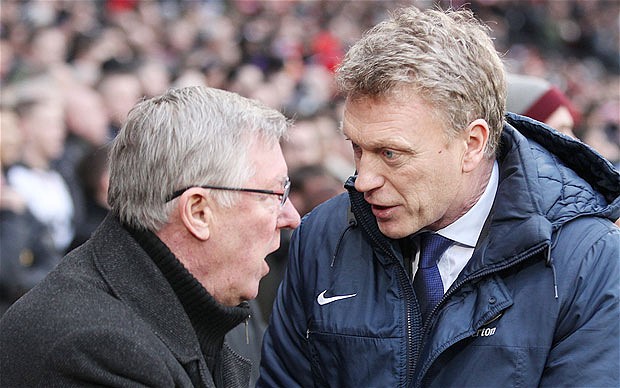
David Moyes swiftly emerged yesterday as a heavily odds-on favourite to replace Alex Ferguson as boss at the Theatre of Hollow Myths.  On the face of it, there’s an obviousness about this solution; Moyes has performed solidly for over a decade in the top flight at Goodison Park on a budget that, if not exactly shoestring, certainly lacked the munificence of the chests of bullion in other parts of the North West.  He has failed to win a trophy in that time but that is not in itself a criticism of any coach in an era when the silverware tends to go to the highest bidder.  The best coach around, M. Wenger, has been potless since 2007, after all.  Moyes has the appearance of a “safe pair of hands” option – someone who will come in and instigate evolution rather than revolution, a guy who can be relied upon not to depart too suddenly or drastically from the blueprint laid down by the man whose brooding presence upstairs will be a palpable influence on any new boy, whoever he might be.

This acceptance by Man U that Fergie will still be kicking about the place is tinged with danger; the lesson of history taught by the hanging-on post retirement of Matt Busby seems not to have been heeded.  The legacy of Fergie is more akin to a poisoned chalice than an inspirational example; the new coach on the block will have to set off on his hoped-for marathon at 400 metre pace.  There will be little chance or latitude afforded for any cosy bedding-in period at a club with a constitutional, almost Freudian need to be the biggest and the best.  A large proportion of their support has been conceived, weaned and nurtured on this propaganda and the last thing that any of them will want to feel is the chill blast of reality as the likes of City, Chelsea and Arsenal walk off with next season’s honours.  So Moyes (most likely) or whoever else it might be will simply have to hit the ground running, compete effectively at the highest level, placate a squad of big egos who are used to a very particular type of regime and solve the immediate Rooney wantaway (or wantanewcontract) problem.  All of this under the basilisk glare of elder statesman Fergie, glowering from a handy balcony over his former empire, hairdryer silenced but still handy.

The immediately noticeable thing about Moyes is his relative lack of European experience, and Man U is a club that sees itself as a European force despite the threadbare achievements on the continent under Fergie.  The other burning question that has to be asked then is: what would other European “giants” have done after losing a quarter-century institution as Man U have just done? Would they have plumped for Joe Bloggs from down the road, or would they instead have scoured the continent and beyond for a stellar personage of massive achievement elsewhere, someone whose CV is festooned with honours and who would breeze in expecting to maintain the winning habit?

It’s irresistible to feel that the latter would be the preferred option for your Barcas and your Real Madrids, your Bayern Munichs and – yes – your Chelseas, too.  In the immediate aftermath of the announcement that Fergie would be chewing his gum in the directors’ box next term, hopeful noises were emanating from the Man U-friendly press that The Purple-Nosed One might possibly be succeeded by The Special One, maybe even with one C. Ronaldo in tow.  It may yet be that Christiano brings his balletic skills with double-pike and twist back to Man U, but any prospect of Jose heading to Salford appears remote in the extreme – he is far more likely to be strolling down the Kings Road this summer.  Other ideally-qualified coaches have scrambled over each other in their haste not to queue up for the Man U job.  The poisoned chalice image appears to have lodged within the minds of Europe’s coaching elite.

So it is likely to be Moyes – not for his own sweet self, but more for the lack of any realistic alternatives.  It is this paucity of choice for a club like Man U – who were supposedly aware of Fergie’s retirement decision as far back as February – that is rather baffling.  Perhaps they expected Fergie would soldier on for a few years yet.  Perhaps also they weren’t expecting the grumpy Govanite to give up so easily on his ambition to overhaul Liverpool’s European Cup record.  But the emergence of crack teams from Germany as well as the still-formidable forces from Spain and elsewhere in England appear to have been a reality check for “S’ralex”, who must in his more coherent moments have realised that climbing the European summit again in the foreseeable future is a dimly remote prospect. It may well be that a “safe” appointment such as Moyes will serve to dilute expectations just enough to cure these fanciful notions that Man U could possibly break into the Continental elite.  Perhaps an FA Cup run and top four in the Premier League will suffice next season, and save Moyes from the fate of Wilf McGuinness back in the day.  But I frankly doubt it.

The King is dead.  Long live the King – but who, and for just how long?

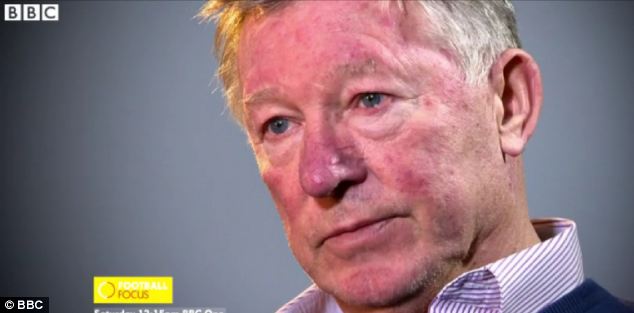
Alex Ferguson – A Tribute

Purty, Ain't He?

Purty, Ain’t He?

The football-related media is in a frenzy of mourning today after the announcement that Sir Alex Taggart has decided to step down as Supreme Dictator of the FA Premier League.  Who will follow him, they ask, tearing their hair and wringing their hands in distress.  Chelsea fans may be surprised to hear that Bridge-bound Jose Mourinho is being mentioned as inheritor of the poisoned chalice that is the hot-seat at the Theatre of Hollow Myths.  But Jose is surely too fly and savvy  to “do a McGuinness” as the task of following a long-serving Man U manager is known in the game.  Everton fans too may be wondering whether David Moyes will be offered the chance to step into the role of “Premier League’s Token Grumpy Scotch Git.”  Whoever ends up in Mr Ferguson’s gout-adapted tartan slippers has a job on his hands alright, and will need urgently to review the manual on “How To Bully and Intimidate For Personal and Professional Gain”.

The loss for the media will be acute.  Hacks as a breed dearly love the cosy familiarity of a tyrant at the top of the game, someone who is an outlet for all of their natural tendency to fawning sycophancy, a figurehead over whom they can compete to praise in the most glowing terms whilst neatly overlooking the glaring flaws of a man who has been a study in coarseness and choleric wrath when things even threaten to go other than as he would like.  The newspaper journos will miss “S’ralex” – he represented continuity for them, an opportunity to trot out well-worn cliches and perpetuate comfortable myths.  Now they may even have to think before starting another Man U piece – it will be a shock to be so brutally jolted out of a 26 year comfort zone.

Ferguson has his place in the history of the game.  He will serve as the biggest negative example of how to ruin the previously positive image of a historically-respected football club, making of them a byword for arrogance and the tendency to ride roughshod over the rules and conventions of the game.  He is there as a useful comparator for the true greats of football and how they went about their business, with humour, humility and a sense of their own fallibility.  The likes of Busby, Shankly, Revie, Stein, Nicholson et al are all part of the rich fabric of the game, all lost to us now, but all clearly capable of favourable assessment in the light of the Ferguson legacy; none will suffer in comparison with the man from Govan.

People will point to his record of success – and sycophants and revisionists will hastily gloss over his difficult early years at Man U when the home crowd called for his head and despaired of ever being able to aspire to the levels of Liverpool and Everton, great clubs run properly.  The re-organisation of the game and its finances when the Premier League came in was highly opportune for Ferguson, and he certainly made hay while the sun shone; it shone for him for the bulk of the remaining 20 years of his career.  Ferguson suddenly found himself in charge of a racehorse competing in a donkey derby, the interests of consumers suddenly paramount, the need to sell satellite dishes and replica shirts in hotbeds of Man U support like Devon and Milton Keynes emphasising the commercial importance of a successful Man U team.

All of a sudden, the top players wanted to go to Salford, all of a sudden the statistics of the game tilted heavily in Ferguson’s favour.  Penalties against them had never been plentiful, now they were as rare as a rosebush in the desert.  Ferguson’s natural personality came to the fore; his tendency to bully and to rant began to produce real results in terms of the attitude of the media and of the game’s officials, both on the field in the shape of cowed and terrified referees, and off it with the administrators unwilling to court commercial unpopularity by waving the rule book under that purple nose.  The most familiar sound-bite emanating from Lancaster Gate was suddenly “The FA can confirm that Alex Ferguson will face no disciplinary action for (insert example of blatant disregard for the rules here.)”

Referees became aware of the fact that those of their number who made a decision not to the liking of Ferguson tended to wait a very long time before selection for another fixture involving Man U.  These are high profile games, and referees increasingly had to look to their own career prospects as their role assumed more of a professional profile.  So they tended to knuckle under, perhaps only subconsciously, but the effect over many years has been enough bizarrely ridiculous decisions in favour of Man U to spoil the digestion of many a football fan who remembers fairer days pre-Murdoch, pre-Man U dominance.

Given this decided slope of the playing field in Man U’s favour, the wonder of it all is that they haven’t won more.  There have been years when the Title has gone elsewhere; remarkable this, in a game of fine margins where one study exposed as fact that 88% of all 50-50 decisions went the way of the Salford Franchise.  This is the measure of Ferguson’s failure; a manager who was also a good coach would surely have cleaned up in such a very favourable environment.

So what now for Man U?  To be honest, I can see their domination continuing.  It’s likely that the public image of the club will be enhanced under a manager who does not represent quite so many of the negative personality traits exhibited by Ferguson.    It will certainly be interesting to see if a world-renowned coach – if appointed – can improve on their patchy record in Europe, where Ferguson’s habit of intimidating refs has not been such a marked advantage to them.  Two somewhat lucky Champions League wins is a poor return for twenty years of almost unlimited opportunity, and a better man in charge might perhaps improve on this and finally give Man U more justification for their laughable claims that they have “knocked Liverpool (Five European Cups) off their perch.”

The question will be asked next season “Who’s the greatest manager in football now?”  The answer will be the same as this season: choose any one from Mourinho, Wenger and Hitzfeld.  All the propaganda in the world cannot make a silk purse out of a sow’s ear.