Category Archives: Humour

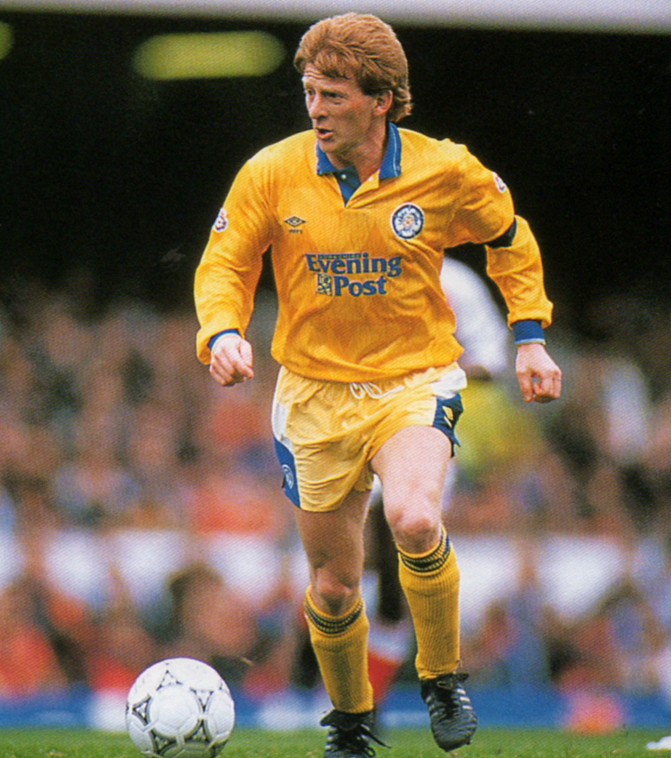
Memory Match No. 3: Leeds United 3, Man U 1. 24.12.1995

1995-96 was the last full season of Sergeant Wilko’s eventful reign at Elland Road. His influence over the club was crumbling amid rumours of money problems, takeovers and dressing-room discontent, a tale that would doubtless strike a chord with Messrs. Grayson and Warnock of more recent vintage. This was a season that had started off with a flurry of Tony Yeboah thunderbolts and some impressive results and performances which appeared to promise much. Sadly though, it would peter out in a shocking late-season run following a League Cup Final humiliation at Wembley, courtesy of Aston Villa. Howard Wilkinson was a dead man walking from that time on.

Worrying signs of defensive frailty and general ineptitude had been all too obvious just the previous week at Hillsborough. United had succumbed spinelessly to a 6-2 defeat at the hands of an unremarkable Sheffield Wednesday side and – all bravado aside – there wasn’t much optimism in the hearts of the faithful as this fixture against the arch-enemy loomed.

It was certainly a different Christmas Eve for me. I hadn’t exactly led a sheltered life up to that point, but this was the first time – and the last, to date – I’d ever risen the day before Christmas to bacon sandwiches at 6 am, closely followed by numerous Budweisers with the Sunday papers in a fan-friendly pub, as we waited for our “Scum Match Special” mini-bus. The queasy feeling before any match against “Them” was therefore multiplied by unaccustomed early-morning grease and alcohol, and I was feeling several shades of not-too-good as we set off for Elland Road. It was an 11:30 kick-off, live on Sky, and it promised either to make or break the whole of Christmas for us fans, and for our hopeful families.

The situation between the Uniteds of Leeds and Salford is one of a legendary mutual animosity, even at the best of times. Let’s not mince words here, the two sets of fans hate loathe and detest each other, and open warfare is the norm. Revisionist football pundits would have us believe that this is strictly a one-way affair, but you only have to tune into one of Sky’s glitzy live TV love-ins for a Man U match, and whoever they are playing, our Home-Counties friends are in full voice with their “We all hate Leeds scum”. Even Alex Ferguson, the Red Devils’ not-altogether-likeable manager, makes no bones about it; some of his more coherent sound bites feature his opinion that Elland Road is “the most intimidating arena in Europe”. He’s also stated that going to Liverpool is nowhere near as bad as going to Leeds; clearly, he’s never been for a late-night pint in Old Swan or Dodge City.

So, Yuletide or not, the usual poisonous atmosphere was in evidence as the two teams walked out before a 39801 crowd that overcast morning. Just as Leeds were smarting from their Hillsborough debacle, so Man U were struggling to emerge from a poor run, winless for a month and dispatched by Liverpool the previous week. This seasonal fixture was a chance of redemption for both sides.

Image

Macca slots the penalty home

By kick-off time, I was starting to feel properly ill, and in dire need of a pick-me-up. This arrived in a most unlikely form after a mere five minutes, when a Leeds corner swung over from the right. Richard Jobson rose on the edge of the area to head towards goal, where David Wetherall, lethal against Man U in the past, was challenging for a decisive touch. But that touch came instead from the upraised, red-sleeved arm of Nicky Butt – and referee Dermot Gallagher’s whistle sounded for a penalty.

Peering from the Kop at the other end of the ground, through an alcoholic fug, I could hardly believe my eyes. Leeds just didn’t get penalties against “Them”. It would happen the other way around alright, too often, and even from three yards outside the area but this was unprecedented, since our Title-winning year anyway. Steve Bruce evidently thought it was just too much to bear, and screamed his violent protests into Gallagher’s face, having to be restrained by Gary MacAllister, who appeared to be trying to explain the rules to the furious defender. The guilty look on Butt’s face, though, spoke volumes. MacAllister placed the ball on the spot, and sent it sweetly into the top right corner for 1-0, giving Peter Schmeichel not even the ghost of a chance. The celebrations were raucous and deafening as the Elland Road cauldron exploded with joy – and inside my skull, the trip-hammer of a beer-fuelled headache pounded away anew, utterly failing though to banish my smile of delight.

Leeds had the bit between their teeth now, and Brian Deane was suddenly clear for an instant outside the right corner of the Man U penalty area, played in by a cute pass from Carlton Palmer. Schmeichel was out swiftly to smother the chance, but Deane managed to dink the ball over him, only for it to clip the crossbar and bounce away to safety. A two-goal lead at that stage would have felt unlikely yet deserved, as Leeds United had been on the front foot right from the off. Soon, though, a lesson was to be delivered about what happens when you miss chances against this lot.

The unlikely culprit as Leeds were pegged back was Gary Speed. Receiving the ball in the left-back position, he tried to beat Butt instead of clearing long, and was robbed of possession. Butt looked up, and placed a neat pass inside to Andy Cole, whose efficient first-time finish levelled the match. Suddenly, my headache was even worse, and I was starting to wonder about the fate of my breakfast too. Time for another reviving injection of optimism as Leeds surged forward, and Speed so nearly made up for his defensive error, playing a one-two with Tomas Brolin which gave him space to put in a right-foot shot that went narrowly wide.

Image

Yeboah beats Schmeichel for the second goal

The game had settled down by this time, and both sides were showing enough ambition to feel that they were in with a chance of victory. Leeds though had thrown off their Sheffield blues, and attacked with verve and purpose. Now, a defensive position was coolly handled by Gary Kelly, finding the time and space to launch a long clearance forward, where Brolin headed on. The ball was loose, and surely meat and drink for Man U’s international defender Paul Parker – but he inexplicably let it bounce over his foot. Yeboah pounced on it like a hound on a rat, and he was away, surging towards goal with ex-Leeds defender Denis Irwin backing off. Yeboah in this mood was usually irresistible, and sure enough none of Irwin’s careful jockeying could prevent him from finding that vital half-yard of space. The gap appeared, Schmeichel came out to block, and Yeboah clipped the ball sumptuously just out of the Danish ‘keeper’s reach, up and over to nestle in the far corner of the South Stand net.

Again, that explosion of noise and joy, again my fragile system was assailed by the rough-and-tumble of riotous celebration. 2-1 up against the team we loved to hate; the cockneys at the far end were suddenly silent and morose. “You’re not singing anymore!” we blasted at them, and indeed, little would be heard from the away fans for the rest of the game.

Image

Brian Deane makes it 3

The second half was another tale of give and take, both sides able to cause trouble up front, but both seemingly capable of dealing with all that was thrown at them. The onus was on Man U to retrieve a losing situation, but Leeds were rarely in great trouble, and as the game entered its final quarter there was unprecedented optimism that we could close this one out, and enter Christmas on a real high. Leeds weren’t simply sitting back and absorbing pressure – and the maxim of attack being the best form of defence was to serve them well. On 73 minutes, Jobson made a foray down the left, and was fouled by Cole chasing back. The resulting free-kick was played to MacAllister in space in the middle of the park, and he swiftly moved it out to the right wing. Brolin picked up possession, and then slipped the ball to the overlapping Palmer, who surged into the box, and then turned past Irwin to set up Brolin again on the edge of the area. The much-maligned Swede, making the contribution I best remember him for, chipped the ball sweetly first-time, standing it up just around the penalty spot, where Deane’s exemplary movement had won him the space to rise and plant a firm header past a helpless Schmeichel into the net. 3-1 and finis.

After the game, and before the Yuletide celebrations could begin in earnest, other traditions had to be observed. Ferguson, naturally, had to moan about the penalty. “It was a very surprising decision, given in circumstances that were beyond me.” whinged the Purple-nosed One, in evident ignorance of the deliberate handball provisions – but perhaps aiming to justify Bruce’s undignified and almost psychotic protest at the time. And the massed ranks of the Kop Choir had to regale the departing Man U fans with victory taunts as they sulked away, silent and crestfallen, headed for all points south.

I can’t remember the journey home, or even how spectacularly ill I was when I got there, although I’m told I was the picture of ecstatic yet grossly hung-over ebullience. I just know it was my happiest Christmas Eve ever, ensuring a deliriously festive spirit for the whole holiday, much to the delight of my long-suffering wife and two-year-old daughter.

Merry Christmas, everybody! And God bless us, every one. Except Them, from There.

Next: Memory Match No. 4: Leeds United 4, Derby County 3. 1997-98 included a purple patch for Leeds United, and a series of “comeback wins”. Perhaps the best was this recovery from 3-0 down at Elland Road against the Rams.

Why A Little of What Might Kill You, Does You Good

Image converted using ifftoanyMy wife Tracy’s great-Uncle George died last week. He was 91. A few days beforehand, he’d been up a two storey ladder, clearing out the gutters at his bowls club. He walked home a mile or so, spruced himself up, and then back to the club for a dinner dance – but he didn’t feel very well, so he nipped off home after the meal. Thinking he had a virus, he left things a while, as blokes tend to do, and when he eventually saw a doctor – still feeling under the weather – he was told he had pancreatitis, and that any potential treatment would only finish off his one remaining kidney. George nodded, sorted his affairs out over the next few days, and then he calmly checked out of life. To my mind, he was a winner – active right up to the end of a long span, and then shuffling off this mortal coil at short notice, uncomplaining and with all loose ends neatly tied up.

Now some people might tut and say, dearie me, what was an old chap like that doing up a ladder, no wonder he’s not with us anymore. I really think that is to miss the point. As a relative spring chicken of only just past fifty, I’m already getting intimations of how a time will come when I’d no longer throw my hands up in horror if some kindly but helpless young person in a doctor’s coat told me I’m not long for this world. I can tell even now that the fear of death itself is likely to be a diminishing factor, as I get older. It’s fear of life burdened with infirmity that I’m more worried about, or being cheated by illness out of my 60’s and 70’s.

The more it’s possible to keep going, and keep on doing the things in life that keep you going, the better it has to be for the outlook of anyone with a lot of years on their back. So while I wouldn’t expect many doctors to advise an old reprobate like George to go shinnying up and down ladders at 91, I still think it’s massively positive that he remained so determined to do what he could do, for as long as he could do it.

My wife’s other elderly uncle, Harry, will be 90 soon. He’s a bit deaf, a bit stooped, and he’s lived his life on one lung these many years. I heard him talking to my beloved on the phone today, and he was holding forth about how he intended to account for most of his dear wife’s birthday chocolates, and making jokes in dubious taste about furry paint rollers. There’s not a lot wrong there, either, I’d say. Yes, maybe the chocolate isn’t the ideal thing for a prospective nonagenarian’s diet – but why not enjoy the good things of life while you’re still here?

If I might be permitted to wax philosophical for a few lines: we often hear about people “losing their lives”, or “a great loss of life”, and other such gloomy phrases, all concerning themselves with life as a commodity that one has, and either keeps or has wrested away. But our lives aren’t really ours to lose – because nobody gets out of life alive anyway. The valuable commodity we should be talking about is time. That’s what we lose if we die early – the time that we might otherwise have been granted on earth, to use as best we might. And that’s why – in my opinion – the idea of death becomes progressively less tragic, the greater the age of the dearly-departed concerned. We hear of people being “tragically young” when they die, and that is spot on. Time is what we have, and time is what we need to keep accumulating. Time is the potential we lose if we die too young. Our lives are only on loan for whatever duration.

Ironically though, the more time we hang around on this Earth, the more likely it is that there will be restrictions placed on our activities by well-meaning relatives and professionals, all acting in our assumed best interests, naturally. But is this the right way to go on? My old Nana Cawthorne, of whom I’ve written elsewhere, was finally prevented from smoking late in her life, when she had to spend some time in a residential home (which she bitterly hated). A few weeks later she was dead, having thrived on her daily cigs for God knows how many years beforehand. I think it was the shock of stopping that killed her, but it could just as easily have been resentment at her life’s pleasure being so curtailed. Sometimes, a well-meaning action, with the healthiest of intent, can be fatally discouraging for the person it most intimately affects.

I’d like to think that, if I’m lucky enough to exceed the age of 80, with all my marbles and my more important faculties all present and correct, I’ll be cut some slack in the matter of my more treasured bad habits. I’ll feel that, having survived so long indulging my relatively few vices, I might as well head for the exit in a like manner. Surely, once you’ve lasted your allotted span and a few bonus years, it’s more about quality of life, and not so much the mindless grabbing of a few more years, just for the sake of it? Alright, too much chocolate might be really bad for Uncle Harry – but he’s nearly 90. A drop or two of red wine might end up seeing me off if I’m still imbibing in my 80’s – but so what? Life is for living, and enjoying, especially when you’ve done all anyone can expect, and attained a grand old number of years. Thus I shall argue, anyway – if I’m able.

We’re off to Uncle George’s funeral next week. He’s specified – to the outrage and horror of at least one sister – that he doesn’t want anyone wearing black. I actually hadn’t seen him for many years myself – well, he was a southerner (from Barnsley) – but having heard of the manner of his passing, and of his instructions regarding funeral garb, I regret not having spent more time with him. He lived his life as he wanted to, right up to the end. He’d been a widower since about 1990, and he’d looked after his disabled wife for many years before that. He was still driving and, as we’ve heard, still walking to and from his bowls club whenever he pleased, doing his bit to help about the place, and nobody saying him nay. And now he’s making sure from beyond the grave that things will be done his way as we all say farewell.

Good on you, George. I shall don my tan jeans and my Pink Floyd t-shirt next week, and I shall raise a glass or two of wine in your honour.

Guest blogspot: Memories of Old Church in Pontefract 1929 – 39 by Ken Atkinson

The formative years of my early childhood were spent at No.39 Bondgate, Pontefract, which was one of a block of four small two-up, two-down houses situated immediately adjacent to the front entrance of Wilkinson’s Liquorice Works. Our house was about three steps up from the pavement and enjoyed the luxury of a narrow strip of garden, possibly three yards deep. However, we had quite a long back garden which extended up to a brick wall forming the boundary of the gardens belonging to the houses at the top of Bond Street. We children were allowed a free run of the back garden as Dad was never much of a gardener; consequently the word ‘garden’ was a rather optimistic name for our playground.

I have hardly any recollections of the first two years of my life when we lived in a tiny cottage situated on what was known as Little Hill, which is now a grassed area at the bottom of the Booths. My parents’ families lived a little further down the road near All Saints’, Mum’s house being at 95 North Baileygate, while Dad lived at 8 Fox Terrace, a row of terraced houses which stretched from North Baileygate up to the Grange Field.

Dad took us for a walk and we came home to find we had a sister!

I was almost two years old when we moved from the Little Hill to No.39 Bondgate and it was probably a day that Mum never forgot, as my sister decided to be born within hours of the family moving into our new home. My brother, who would be almost four and a half years at this time, remembers Dad taking us for a walk to Box Lane and coming back to No.39 to find we had a sister!

If it can be said that most people can remember things and events from around the age of two or three, then it would probably be around 1930 when we and our neighbours still had to use toilet facilities which were primitive monstrosities known as ‘middens’, situated at the top of our gardens. The least said about middens, the better; suffice to say that they enjoyed none of the benefits of modern plumbing. Fortunately for all of us, it must have been quite soon after our move to Bondgate that our landlord, in his generosity, decided to remove the appalling middens and provided, lower down the garden, a block of new flush toilets, which to us were sheer luxury even in the depths of a hard winter.

Life must have been very hard in the thirties for our parents, as Dad’s small wage as a coke ovens worker, had to go a long way. Nevertheless, somehow or other, Mum always made sure we were well-clothed and fed, as well as managing to keep the house looking clean and tidy. Of course, in those pre-war days, only a few houses were blessed with electricity, and most families in Bondgate relied on gas for lighting and coal for heating and cooking.

Mum and Dad paid for our gas by means of a penny slot meter, which meant you were tempting fate if you didn’t have a penny or two around the house. I remember very well that if the gaslight started flickering, the cry would go out, “Mum (or Dad), have you got a penny, t’gas is begging!” Bondgate itself had gas lamps and Mum had an uncle who worked at the gasworks, part of his job being to walk around Old Church every night, lighting lamps with a long pole, reversing the process at dawn.

The ground floor at No.39 consisted of a stone-flagged living room, a kitchen at the back, and in-between was the staircase under which we kept the coal. The focal point of the living room was the Yorkshire range which shone with weekly applications of ‘blacklead’ and provided both heat from its coal fire and an oven, from which Mum provided mouth watering Yorkshire puddings, the equal of any in Old Church, not to mention her tasty stews and delicious rhubarb pies.

The only equipment in the kitchen was a sink with a cold tap and a ‘copper’ or ‘set-pot’ in the corner which provided hot water by means of a coal fire underneath. Bath-time at No.39 was a weekly ritual which entailed filling the copper to the brim and then ladling the hot water into a galvanised bath, probably one bath full for all of us!

We had two bedrooms and while the front bedroom was a reasonable size, the back one was very small, so much so that if you sat at the bottom of the bed, you would almost bump your head on the ceiling. The sash window looked out onto the back yard and it was quite easy, even for us children, to climb out of the window and drop down to the yard below.

Of course, in the thirties, there was no such thing as television so people relied upon the radio for entertainment (or wireless as it was called), or a wind-up gramophone, such as we had. It was an ancient HMV with an enormous horn, and being Dad’s pride and joy our early musical education consisted of a daily mixture of classical overtures, Gilbert and Sullivan and military marches.

In the hard times of the thirties, we young Old Churchers were taught to appreciate the value of money and always looked forward to each weekend when, if funds would allow, we each received our Saturday penny, which after due deliberation we would usually spend in Hudson’s shop which was just across the road from our house. You could buy all sorts of sweets or chocolate for a penny, but often as not we would splurge the whole penny on a lucky bag which would contain lots of different things – toys as well as sweets. We kids thought they were a bargain for a penny, and as well as enjoying the element of surprise in a lucky bag, you could often, if you were very careful, make the contents last right through until Monday or later.

It was occasionally possible to supplement our weekly penny by earning a copper through running errands for neighbours. The one that sticks in my mind was George, a giant of a man who lived on his own in the end house, next to Wilkinson’s. You hardly ever saw George without his cap on, which almost seemed to be a permanent extension of his head, and he had two facial characteristics which fascinated me.

One was the cigarette which was always attached to his bottom lip, apparently defying the force of gravity and never seeming to hinder the endless flow of George’s rhetoric which he would inflict upon anyone who had time to listen. The other was the dew-drop which usually dangled precariously from the end of his nose, probably a by-product of his large consumption of cigarettes and the dusty atmosphere of his kitchen, in which he plied his spare time trade as a cobbler. The interior of George’s kitchen seemed like an Aladdin’s cave to us kids, being a glorious hotch-potch of cooking utensils, cobbler’s tools and having a brick floor which was littered with fragments of leather and footwear, awaiting George’s attention. Quite often, much of the small floor space would be occupied by the somnolent form of George’s faithful companion, a large black Labrador whose own special smell mingled with those of cooking, leather and Woodbines. George never seemed to have time to buy his own cigarettes, so we were able to earn many an extra halfpenny or so by popping across to Hudson’s to keep George well supplied.

Spooky connotations of the ancient ruins of the Priory of St John.

There were plenty of places in Old Church where we children could play more or less safely. The Grange field, across from Box Lane with the adjoining Wash Beck provided endless scope for our games, though some of us were rather wary of playing there after dark because of the spooky connotations of the ancient ruins of the Priory of St. John. Another favourite place for us was the culvert which carried Wash Beck through the railway embankment, starting behind the Scout Hut and emerging just east of the railway bridge which spanned Knottingley Road. We gave this dank, dark and no doubt rat-infested tunnel the name of Big Ben and even though it was hard to see when we were halfway through, because of a bend in the middle, we would spend many happy hours paddling through its cool water during the seemingly endless hot summers of our childhood. We children were quite oblivious to the dangers of slippery stones and broken glass and it was therefore inevitable that one day I had to hop the 200 yards back to No.39 with blood streaming from a deep cut in my foot, from which I bear the scar to this day.

Another special place for us boys and our friends in Bondgate was Bubwith House Farm on Knottingley Road which was worked by branches of our family for many years. In the early thirties it was farmed by my great-grandparents, and my grandparents’ golden wedding invitation in 1948 shows that my grandfather lived and worked at Bubwith House at the time of his wedding in 1898. Although I don’t remember my great-grandfather, I have clear memories of my great-grandmother standing outside the front door of No.39, ladling out our milk from the two large churns which she had carried about half a mile from the farm. She was a marvellous old lady who held strong opinions on life in general and the bringing up of children in particular. I can see her now, delivering the daily milk along Bondgate, clad impeccably in a long dress, bonnet and black lace-up boots.

Bubwith House was a fascinating place for us to play and we spent many happy hours there, watching the daily routine of the farm and helping out with little jobs, such as feeding the ducks and hens and collecting the daily yield of eggs. One of our favourite places was the hay-loft where we used to swing around on convenient ropes, each of us claiming to be Tarzan of the Apes. Eventually we would emerge, hot, dusty and thoroughly exhausted and if we were lucky we would be invited into the cool stone-flagged kitchen where we might be given refreshing drinks of home-made lemonade, by the apple-cheeked lady I remember as Aunt Minnie.

On our way home from our visits to the farm we occasionally indulged in pastimes which held the double attraction of satisfying our hunger pangs and also being a little daring, not to mention illegal. We had the choice of two settings for these escapades; we could either go ‘scrumping’ into the orchard (which was situated between the railway and Depledge’s field) or we could raid the liquorice field on the other side of the road, next to Wilkinson’s. At that time, liquorice was quite widely grown in Pontefract, as this was the only area that had the necessary depth of soil needed to cultivate the liquorice plant, whose roots could reach a length of six or seven feet and needed the same number of years to mature. All this was of little consequence to us young villains as we crept into the field, pulled up a few young roots and stole away with our spoils. In those days, most of the local production of liquorice roots was absorbed by the handful of sweet factories which, next to the colliery, was one of the main industries in Pontefract. The long brown roots were processed into a black glutinous extract which was the basis for the manufacture of sweets such as the famous Pontefract Cakes. These sweets and other liquorice novelties were known to us as ‘spanish’, the possible derivation being the import of liquorice extract from Spain. All we had to do to make our stolen roots edible was to knock off most of the soil, clean off the rest with a little spit and then chew away happily at the delicious roots which you could make last for hours. The fresh liquorice had a totally different taste from the Spanish we bought from Hudson’s and of course it had the added attraction that it cost us nowt. You could buy the dried liquorice roots, cut up into small pieces, but it was rock hard and didn’t taste as nice as the fresh roots.

As we become older, we tend more than ever to rely upon our senses to revive evocative memories of our childhood and Old Church certainly gave us plenty of scope in that direction. No Old Churchers could ever forget the wonderful smell and unique taste of fish and chips, as sold by Gledhill’s shop at the corner of Mill Dam for well over half a century. You could buy ‘one of each’ then for 1½d; a penny for the fish and a ha’penny for the chips. It goes without saying that the only way to eat them was with your fingers straight from the newspaper with lashings of salt and vinegar, whilst walking slowly home. Somehow they never tasted quite so good when served on a plate with civilised knives and forks.

Our daily walk to school, initially to the tiny All Saints’ Infants and then up to Northgate Juniors, brought us into contact with many interesting sights and contrasting smells.

No-one who lived in Old Church during the first half of the twentieth century could ever forget the disgusting smell that emanated weekly from the CWS Fellmongering Dept. known locally as t’skinyard. It was situated, probably to the great annoyance of local churchgoers, just across from All Saints’ and it must have been a great relief to all residents of Old Church when it was demolished, probably in the sixties.

Another branch of CWS was in complete contrast to the notorious skinyard. On the other side of the road between Tanner’s Row and the school was the Co-op grocery shop, which I believe was managed in those days by Mr Walker, who provided the Old Churchers with a service which cannot be matched by today’s impersonal supermarkets. There was very little pre-packaging in the grocery trade then, and most things were supplied in the exact amount required by the customer, from sugar in neat blue bags, to butter and lard in greaseproof paper.

A mixed perfume of Mansion Polish and paraffin.

On Tanner’s Row itself, behind the pub at the bottom of the Booths, was a blacksmith’s which I think occupied the site of the original tannery. This was a fascinating place for us to dawdle and watch horse-shoeing and other aspects of the blacksmith’s trade as we made our way home from school. Depending upon whether or not we had any coppers to spare, our journeys home could often be further interrupted by visits to the sweet shops, either the one opposite the Hope and Anchor pub, or Woodward’s at the bottom of Box Lane. Near the bottom of the Booths and adjoining Pease’s shop was Garlick’s general hardware store, within whose cool interior you could buy anything from a dolly blue to a galvanised bath, and which gave out a mixed perfume of Mansion Polish and paraffin. At the bottom of Beech Hill, facing Mill Dam, was Hemmant’s grocery shop, from which came the same sort of smells as those issued from the Co-op just round the corner.

A short way down Mill Dam from Gledhill’s was the factory of Hey Brothers whose main products before the war were various pickles and a good selection of mineral waters. After the war the firm expanded rapidly to become one of the largest suppliers of mineral waters, beers, wines and spirits in the country. The factories of Hey Brothers and Wilkinson’s provided, between them, one of the main sources of employment for the young ladies of Old Church, the choice being either a ‘caker’ at Wilkinson’s or a ‘pickler’ at Hey Brothers.

Certain events of the thirties in Old Church remain more firmly fixed in the memory than others. No-one who lived in Bondgate at that time could ever forget the amazing floods around 1932 when a very heavy thunderstorm transformed Southgate, Bondgate and Knottingley Road into a raging torrent. We were very fortunate at No.39 being a few steps up from the main road, but no doubt the houses opposite, in Amer Place and Bar House Terrace would have had severe problems, as would the little wooden fish and chip shop which occupied a site near the present petrol station.

In the summer of 1939, after years on the waiting list, Mum and Dad were informed that we had finally been allocated a house in Willow Park so our ten years in Old Church began to draw to a close. We ‘flitted’ from our little two-up, two-down in the last week of August, a few days before our country declared war upon Nazi Germany on the first Sunday in September. I remember all of us huddled round our wireless at 11am that morning, listening to Neville Chamberlain reading the declaration of war which was also a tacit admission that his ‘peace mission’ to meet Adolf Hitler in Munich in 1938 had been an abject failure. Chamberlain was replaced as Prime Minister by Winston Churchill after the disaster of Dunkirk, and died, within the year, a broken man.

To us children the war ahead seemed an exciting prospect, although most people seemed to think that it would be ‘all over by Christmas’, with our country victorious over the hated Nazis. Little did we know that it would be six long years before the bells of peace rang out and the impact of a hard war, combined with our move to Willow Park ensured that for our family and many others, life would never be quite the same again.

Even after a lapse of some 74 years, I only have to think back to our childhood at 39, Bondgate, and I am transported to our small front room, listening to ‘In Town Tonight’ which might have been interrupted by the strident clamour of a hand-bell outside, preceding the cry of “Any hot peas?” a favourite Saturday night treat.

On Sunday mornings we were often entertained by the Salvation Army, inviting us to “save our souls”, probably being followed by the bells of All Saints’, calling the faithful of Old Church to prayer.

When I dwell upon these and many other memories, I see again the places where we children played, breathe in the smells of Old Church (good or bad), and taste the juicy sweetness of our scrumped liquorice root, and the years roll back as if it were only yesterday.

Happy days! Childhood days!

Image

Ken Atkinson

Ken Atkinson was born in Pontefract in 1927, and has lived there all his life. His career encompassed several distinct phases; Bank teller, National Serviceman (Served in the Middle-East, Palestine, Suez etc), Teacher and – labour of love, this – gardener in the exquisite back garden at No.49.

Ken met Lesley, my mother, in the fifties and they were immediately happy together and deeply in love. Then they got married, and have fought like cat and dog for the 54 years since (only kidding!)

Lesley and Ken had a family of three boys, getting it right first time but still adding two spares, and they have also added various cats over the years.

Dad is the man I blame for infecting me with my love of Leeds United, but he was also a dab hand at wine-making, milk jelly, chocolate-covered coconut (better than a Bounty Bar), DIY including bespoke teenage bedroom furniture, Christmas trifles and many other such indispensable talents, so the balance is to his credit. Just.

I would like to thank my Dad for his contribution to my humble blog, and also take this opportunity to apologise most sincerely for that time I got home pissed and was sick down the wall below my bedroom window.

Sorry, Dad.

Guest blogspot: “Matron’s Cat” A short story by Lesley Atkinson

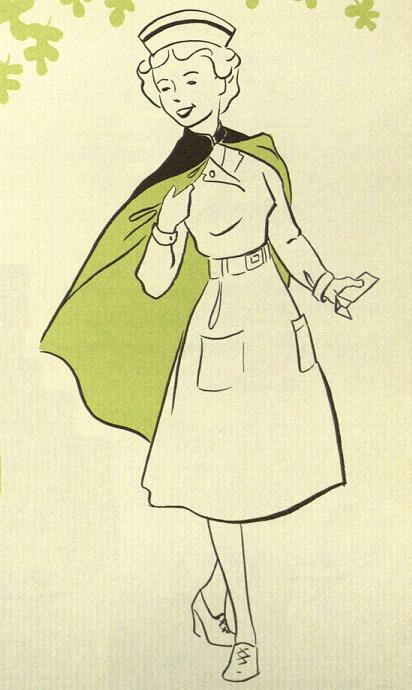
Nurse

Nurse Connolly

I first met Matron Pomfrey, in February, 1956. I had been nursing at a local village hospital in a mining area of Yorkshire when the Senior Sister, who was in charge of the small cottage hospital, suggested that I should make an appointment with the Matron of the main hospital in a nearby town and ask for an interview, with a view to training as a State Registered Nurse.

I hadn’t the heart to tell Sister Clarke that I had recently failed a nursing entrance exam in the City of Leeds. She smiled at me as she said, “You are working very well Nurse Connolly, and I shall be sorry to see you go, but I’m sure you will be much better off in every way if you enter the February Preliminary Training School (PTS) in Harrogate. You may use the telephone in my office, Nurse. Do it now, before I change my mind.”

I made the appointment, and re-lit Florence’s Lamp. I didn’t have time to worry about the interview because Matron agreed to see me the next day at 10 am. The following morning, I cadged a lift on the medical supply van. There were bottles of saline solution, and all kinds of pessaries and suppositories to study, and as the van driver seemed to be the strong silent type I contented myself by rehearsing the speech that I hoped would convince Matron I’d prove a worthy enough candidate for her to risk her shirt on me in the February PTS intake.

It was a short journey and when the van screeched to a halt, I emerged from the welter of surgical appliances and was helped out by a man who had quite forgotten that he was carrying a passenger. His voice was gruff as he said “Sorry Nurse, I clean forgot you were in’t back”. He stared at my legs, “D’you know that you’ve got a wicked ladder in yer stocking?”

I groaned. It had been a tiny ladder, which I thought I had stopped with some clear nail varnish before I’d set out. I looked over my shoulder at the back of my right leg. It was a very wicked ladder now and, unless I was prepared to stand in such a way that to onlookers I would have appeared deformed, there was nothing I could do – short of going into town to buy a new pair. I decided to say, if asked, that I had caught my stocking on a sharp edge in the supply van. I walked to the large main doors of the hospital thinking of various excuses for the ladder. “I’m most awfully sorry Matron, but it wasn’t really my fault…” No, too much like crawling…Take a firmer stand and pass the blame… “Matron…you really must do something about the interior of the medical supply van…look at the state of my best stockings!” Hopeless! Nurses are not allowed to take lifts in hospital vehicles unless they’re accompanying a patient. No, best to pretend that I hadn’t noticed it; after all, if the van driver had not pointed it out to me, I could have walked on in blissful ignorance.

There was a large woman standing at the Enquiries Desk and a younger woman, wearing jam-jar spectacles, was trying to deal with her as she remonstrated in a loud voice and refused to give details about her child. Her voice rose to a yell. “Bloody ‘ell lass, what’s ‘is date o’ birth got to do wi’ ’im bumping ‘is ‘ead? Eeh, poor little bugger could be dying! Ne’er mind abaht ‘is address, where’s bloody medical staff?”

The “poor little bugger” was tucking into a Mars Bar; he had a large head, but there was no visible sign of injury. His face was streaked with dry tear-stains and his mouth ringed with chocolate. I hoped that I would be there long enough to hear the outcome of the row, but a Staff Nurse walked over to the desk and asked if a Nurse Connolly had arrived. The large woman snapped at the Staff Nurse “Wait yer turn, my kid’s an emergency, I was ‘ere first!” The Staff Nurse looked loftily down her nose at the large woman. I volunteered my name, and she ushered me down a dark, winding passage. As we galloped discreetly along, she asked me in a whisper if I knew that I had a large ladder in my right stocking? I replied, also in a whisper, that I had laddered it on the way over. Her voice was almost oily, “Oh dear, you surely know Nurse that you shouldn’t take lifts in hospital vans?” She smiled, but the smile didn’t reach her eyes. She sighed. “It’s such a pity, you see Nurse. Matron and the Assistant Matron both set great store on neatness in uniform or mufti” (clothes other than uniform).

Mentally, I blew out Florence’s Lamp and resigned myself to life in the village hospital. Staff gave me another frosty smile and went on whispering about how strict the rules were and how high the standards of the hospital entrance exam. By this time we had arrived at a large office door with an enter sign, which was unlit. “I’ll let Miss Pomfrey know that you are here, Nurse.” She knocked gently on the door and went into the room, closing the door behind her.

1045294-Royalty-Free-RF-Clip-Art-Illustration-Of-A-Cartoon-Really-Fat-Cat

Tangles, the Matron’s cat

I was seriously considering running away, when a huge rag-bag of a cat ambled round the chair legs. It yawned, showing a ferocious set of fangs, stretched its claws which were magnificently curved offensive weapons then, narrowing a pair of wicked amber eyes, it leapt up onto my lap where it turned round two or three times before settling down to pummel my thighs. Absentmindedly, I began to stroke its back and it set up a noise between a snore and a buzz-saw. As it wallowed in luxury, opening and closing its claws, I felt another run begin in my other stocking. “Well, thank You, God. You really know whose side You’re on today, don’t You? Cheers!” The door opened, and the Staff Nurse informed me that Matron would see me now. Her jaw dropped when she saw the cat on my knee. “Did Tangles get on your lap, or did you lift him up?” Her tone was surprisingly hostile. Before I could reply, the enter sign on the door lit up, telling me to go in. I tried to launch Tangles on to the floor, but he shot out a crafty paw and hooked himself to my shoulder. I shrugged and grinned at the Staff Nurse, “I think he loves me”. She glared at me, and walked swiftly away.

I turned the door knob and entered the office, the cat draped over my arm like a fox fur. Matron was attending to some paper work so she did not look up straight away. Tangles’ loud purring reverberated round the small room; it grew to a trill as I absentmindedly stroked his matted fur. Matron lifted her head and beamed, at me or at Tangles, I couldn’t be sure.

“Do sit down, Nurse Connolly; I see that you have met Tangles.” She clucked lovingly at the cat, who dug his claws ever more firmly into my arm, and narrowed his eyes affectionately at her. I seated myself carefully, and Tangles slid obligingly down on to my lap.

Matron smiled as she said, “Now my dear, I see from Sister Clarke’s letter that you recently failed an entrance exam in Leeds Would you like to tell me why you think that happened? Take your time.”

I could feel the blood rising in my face. So, Sister Clarke had known all the time! I felt shocked and betrayed. I played for time by fondling Tangles’ fur, he made himself ready for some serious petting by rolling onto his back and inviting me to tickle his tummy. Matron looked a little alarmed. “Oh do be careful Nurse, you touch his bits and bobs at your peril! He’s a sensitive creature and won’t hesitate to draw blood.” The cat’s fur was so thick and tangled that I couldn’t see any bits and bobs, but I slowed my petting and moved away from the danger zone. Smiling fatuously at Tangles, Matron handed me a paper. “Do you think you could cope with the mathematics paper, Nurse?” I skimmed through the form; thank You, God! There were fractions and decimals, but no logarithms. I was sure that I could manage the paper, if I could do some swift revision. It was my turn to beam. “I’m confident that I can tackle that, Matron.” The cat, sensing my happiness, wriggled joyfully and I saw a large flea leap from his neck to his ear. Matron pretended that she hadn’t seen it.

“Jolly good, Nurse! The English paper shouldn’t present you with any problems. I’ll write to Sister Clarke and let her know when you should attend here for the entrance exam. Good luck Nurse, I’m sure the test will be a mere formality. In the meantime, you may as well go and see Mrs Beavers in the sewing room, to get measured for your student uniform.” She rose to her feet and took Tangles from me. “Tangles approves of you Nurse, and he is seldom wrong.” I smiled reverently at Tangles’ rump, and as I reached the door Matron got a good view of my self destruct stockings. “Oh, and Nurse Connolly; please call at the Enquiry Desk, and ask Anne Fisher to reimburse you for a new pair of stockings.”

I left her crooning to Tangles, telling him he was a naughty, naughty darling, for laddering poor Nurse’s stockings. I floated on air all the way to the Enquiry Desk, where Anne Fisher turned out to be the girl in the jam-jar glasses. She gave me some money and also directions to the sewing room. The fat woman was still apparent, tucking into a Mars Bar and holding forth to all the other patients. She pointed to her little boy, who was busy trying to undo the wheel nuts on an invalid chair.

“’E’s ‘ad a hexray, I telled ‘em there were nowt broke, but yer know what they’re like, they allus know best, wasted an ‘ole morning fartin’ abaht wi’ doctors an’ nurses, they aren’t real doctors yer know, they’re learning on us, experimenting, that’s what!”

A Senior Sister detached herself from a group of colleagues and came over and asked the woman to please lower her voice. The large woman looked the sister in the eye, then, hands on hips, she retorted, “Shut yer rattle, you. I didn’t ask fer yer opinion, you might be Miss bloody Clever-clogs round ‘ere but I know yer aunt, they call her Lamplight Lil, down our end, an’ yer grandma were no better, every tally man fer miles around beat a path to ‘er door, yer cheeky sod!”

The Senior Sister retired wounded, and the triumphant fat woman stared delightedly round the Casualty Department. She grabbed her son, spat on her handkerchief and scrubbed his face; then, dragging him howling behind her, she sailed out of the main door. The fun was over, so I scampered off to the sewing room. On the way I almost collided with the whispering Staff Nurse, who gave me another glacial smile. I made a mental note to avoid her for the entire training period – always assuming that I passed the entrance exam!

THE END

Mum

Lesley K. Atkinson

Lesley Atkinson was born in Owlsmoor, Berkshire in November 1936. The second daughter of an Army family – her Dad was a Regimental Sergeant-Major – she grew up with her elder sister Pat and younger brother Terry in a variety of scattered locations across the South of England, Wales, Germany, and eventually, Yorkshire. Here she married Kenneth, and settled down to raise a family of three fine lads (the eldest being a particularly outstanding young man), and to pursue successive careers in nursing and teaching. Her mother, Winifred, was my favourite grandparent, a grand old lady who smoked like a chimney and told me amazing stories of her days in service.  “When Winifred Died”, to be found elsewhere on this blog, tells the story of the day Nan passed away.

Thanks to my wonderful Mum for being the first guest writer on my humble blog, and of course for so very much more than that. I really hope you’ll be back at the keyboard very soon xxx

Scrounging Graduate In “I Expect To Get Paid For Working” Scandal

Daily Fail” Leader Column

In what is being seen by wishy-washy commie pinko do-gooders as a landmark ruling, senior judges have ruled that a university graduate was correct to claim government back to work schemes were “legally flawed”. As part of an appalling betrayal of their fellow members of the ruling elite, the three bewigged buffoons have quashed regulations entitling the government to force benefit claimants to work for nothing. The decision, handed down by the Court of Appeal but still subject to further legal avenues, will be seen as a dark day for those who view a return to slavery as the only way of maximising the economic potential of the poor.

Nit-picking

Government sources were today taking comfort in the fact that the panel of judges were not critical of back-to-work schemes as such, but were merely nit-picking over the irritating principle that ”Proles expect to be paid”. Cate Reilly (24), the university graduate who brought the original case, had been required to work for multi-million pound High Street tat retailers Poundland, instead of pursuing her voluntary work in a museum. Ms Reilly was shockingly frank in her remarks after the decision was made public: “I don’t think I am above working in shops like Poundland”, she stated. “I now work part-time in a supermarket. It is just that I expect to get paid for working.”

Mercenary

It is the impact of those last seven words that will be worrying ministers today. It would seem that, on the back of the troublesome minimum wage legislation passed by the previous government, even benefit claimants will now expect to be paid actual money for their job experience opportunities. This is seen as deeply disturbing by the government. A stricken and tear-stained DWP junior minister, who did not want to be named, quavered: “These nasty, ungrateful peasants should be grateful for the chances we’re giving them. But oh, no – they want to be paid. This is the sort of mercenary attitude that we see all too often, even in these hard times when we should all be pulling together. Companies like Poundland create a lot of wealth, and that helps drive the economy and pay bankers’ bonuses. How are they supposed to fulfil their obligations to shareholders if they’re going to have to start paying people?”

Bullish

Employment Minister Mark Hoban was in a more bullish mood, stating, “Ultimately, the judgment confirms that it is right that we expect people to take getting into work seriously if they want to claim benefits”. The government’s position, then – thankfully – is likely to remain that claimants should prioritise obtaining work over more frivolous considerations like being paid for it. We should, perhaps, be grateful for small mercies.

Unwashed

The TUC, on the other hand, was taking a predictably wild and woolly line, claiming that mandatory back-to-work schemes “need to be looked at again”. This will be seen by worried Cabinet members as a direct challenge to the official line that poor, largely unwashed benefit scroungers should be marginalised, exploited for every penny possible. This type of economic resource is vital as the country fights its way back to a position where MP’s can ask for a 32% rise in pay without causing outrage in grim northern provincial centres of Marxism where no self-respecting Tory would be seen dead.

Dangerous

Anybody who fails to take this worrying development seriously should be warned as to possible consequences by the words of a partner at leading law firm, Manches. Tom Walker, the employment law partner, stated that “This judgment upholds what is perhaps the key tenet of employment, namely the ‘work wage bargain’. If someone gives their labour to a company, they should be paid for it. However well intentioned a workplace scheme may be, it is very dangerous to introduce compulsory unpaid labour into the UK employment market.”

Treason

It is precisely this kind of dangerously retrogressive, sentimental and frankly treasonous thinking that is liable to drag our country back to the dark days before the average pay of a Chief Executive Officer reached levels 400 times that of the average employee. There is a real danger that, without the Government’s forward-thinking and courageous plans to create a sector of society who will expect to work for no financial reward, we could return to a time when the top people were getting by on perhaps no more than ten times the salary of the man in the street.

Now if that doesn’t worry you, then all of Mr. Cameron’s good work so far has been a waste. We have to stand firm – it is no less than our God-given duty. We must remember who we are, where we’re from and get back to exploiting those untapped resources at the bottom of the pile. That’s the Tory way, and that, says the “Daily Fail“, is what we are all bound to protect.

America’s Credit Rating

From: International Arms Inc.

To: America, Washington DC, America

Dear America

We were concerned to hear of the recent downgrading of your credit status. We would remind you that your outstanding unpaid account with us currently stands at $3.86 trillion and 46 cents. As most of the goods and services purchased with your credit facility are of a non-redeemable, and indeed fissionable nature, we feel that our position regarding the extent of your credit has become untenable, and we therefore require you to redress the situation forthwith.

Please settle this account within 7 working days. Failure to do so may result in a personal call at your home, and the removal of goods, statuary and minor geographical features. We feel that you would prefer for this situation to be avoided, particularly under the gaze of your neighbours Canada and Mexico (to say nothing of Cuba). You may also of course find it harder to obtain credit in the future.

Please do not ignore this letter. You can discuss your situation with our trained and friendly advisers, who will be happy to assist in any way they can, short of showing any compassion, understanding or reasonableness regarding concessions or longer term arrangements etc.

Payment can be made at your local Post Office using the counterfoil at the foot of this letter, or by remittance in the enclosed envelope. Please do not forget to affix a stamp.

Many thanks for your co-operation in this matter.

Yours etc
IA Inc.