Tag Archives: Alex Ferguson

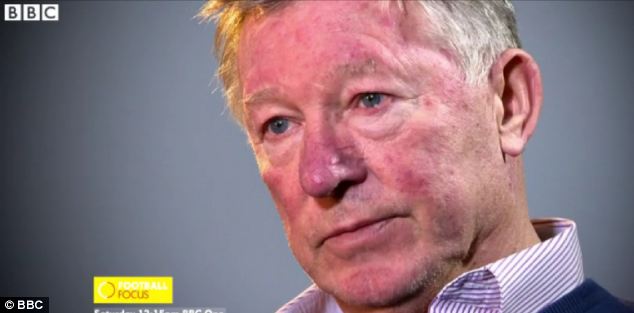
21 Years On, Ferguson is Still Bitter About The Last Champions – by Rob Atkinson

The Last Champions

The Last Champions

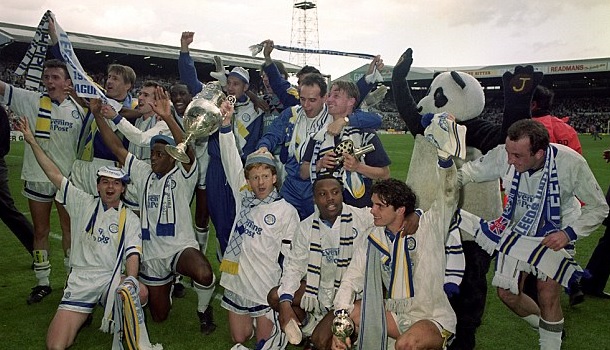
The 1991-92 Football League Championship title was an historic accolade, marking the end of a very long era.  From the next season, a breakaway elite would compete for “the FA Premier League”, with a Sky TV deal bankrolling the game at top level, new rules ensuring that income and wealth would trickle upwards to feather the nests of the better-off instead of down to nourish the grassroots of the game.  The increased pool of money would lure foreign players to dive into it, in hitherto unprecedented numbers.  Wealth and commercial interests, foreign syndication and new markets, these were the factors that would influence the game from now on.  The traditional purity of competition on a level playing field would henceforth be a thing of the past.  The winners of the 1992 League Title would be, in a very real sense, the Last Champions.

How inevitable it was, then, that we would hear more and more of the usual suspects throughout TV land and the media as a whole, ruminating on the place in history up for grabs, donning their red-tinted spectacles, taking out an onion and dreaming, wistful and misty-eyed of how “fitting” it would be if the mighty Man U could take the prize.  There was even talk of the title coming “home” to the Theatre of Hollow Myths – home, mark you, to a club that had never won the Championship in the era of colour television, whose finest hours were recorded on grainy monochrome fuzzycam as the Pride of Devon were overtaken by thoroughbreds such as Liverpool, Leeds United, Arsenal and Nottingham Forest.  Against all sense and logic, the feeble of mind, the hacks, the sentimental hypocrites all ached for the last real title to go to Man U.  How bitterly disappointed they all were when Leeds United callously, magnificently pooped their party.

Bitterness is not an emotion to show in public in the first few stinging moments of disappointment in defeat.  So it was that Alex Ferguson, freshly beaten at Anfield to confirm Leeds as Champions by an eventual 4 points, gritted his teeth and declared that Leeds were indeed worthy victors.  Suffering as he was from the nightmare combination of losing to Liverpool and thereby surrendering the Title to Leeds – a scenario dredged from the very bowels of the average Man U fan’s own private hell – such a seemingly magnanimous verdict was reckoned to Ferguson’s credit.  This magnanimity, though, did not last long.  In a book published that summer, Ferguson backtracked: “Leeds didn’t win the title, we threw it away.”  This was the real Fergie starkly exposed, glisteningly visceral, a man who would always look for some hidden, unfair reason why his team would lose; one who could never credit the opposition for winning fair and square.  An early layer of the notorious Ferguson paranoia and bile-ridden self-righteousness was laid that summer of ’92.

mini fergie

Small Man, Small Book

Now, freshly retired and free of even the minor constraints that kept him relatively quiet – give or take the odd casual back-stabbing – when he was Man U manager, Ferguson feels able and willing to dish the dirt on all those horrible people who annoyed him during his rant-laden and tyrannical career.  One such target is Leeds United; he has neither forgotten nor forgiven those last champions of the game as we knew it.  In his latest autobiography – one would never be enough for a serial egomaniac like Ferguson – he labels the Leeds United team of 1992 as “one of the most average teams to win the title”.  It is not clear whether he counts the Man U team of last year, champions by default as all of their rivals self-destructed, among that “average” number, but then it wouldn’t be in his nature to make any such concession.

The fact of the matter is that the Leeds United champion team of the early nineties found the game changing around them at precisely the wrong time.  The new back-pass law unsettled a previously effective defence, the expensive arrival of David Rocastle was surplus to the best midfield four in the land and the loss of the marauding Sterland deprived them of much quality overlapping service from the right, fatally damaging their chances of mounting a defence of their title.  But the victorious 1991-92 campaign saw that group at their best, putting on sparkling displays at Villa Park (4-1 winners) and Hillsborough (6-1 winners against a Sheffield Wednesday side that finished third).

Much is made of Man U’s disastrous run-in, as if this had never happened to challengers before.  But again, Leeds had their own late-season wobble, losing at Oldham, Man City and QPR as well as dropping valuable home points to Villa and West Ham.  Just as it could have panned out closer than the eventual four point gap between Leeds and the runners-up – so that gap could easily have been much greater.  The proof of the pudding was in the final league table which saw Leeds with most wins, fewest defeats and a decisive four point margin.  That legendary chestnut “the league table doesn’t lie” carried much more weight in those egalitarian days than it does now when the Premier League table usually resembles more of a financial assets sheet.

The inescapable conclusion to all this is that the outcome of the 1991-92 Title race – that historic, landmark Championship struggle – still rankles bitterly with the elderly Glaswegian, and every now and then he feels the overpowering need to spit out that sour, ashen taste of defeat.  It was the title he obviously wanted to win above all others – the iconic Football League Championship, unattainable to Man U for a quarter of a century.  Instead, he had to settle for a succession of more plastic baubles, won on a skewed playing field with ever-present controversies over offside goals, penalties dived for, opposition penalties not given, opposition goals disallowed from a  foot over the line.  Ferguson was denied the real thing, and the ones he won are tainted by the feeling that Man U were media darlings with refs in their pockets and a plastic army of glory-hunting fans in armchairs everywhere.  No wonder the poor old man is bitter.

With all due respect to Ferguson – which quite frankly isn’t very much – his latest “tell-all” book has to be taken with an almighty pinch of salt.  It’s a litany of whinges about the people he feels have slighted him, personal attacks on those from whom he demanded loyalty but refused to repay in the same coin, wild swipes at figures respected by everyone in the game except the increasingly empurpled Fergie himself.  It’s a mish-mash of hatred, resentment, revisionism, self-justification and bitterness.  And like his laughable, transparently bitter and envious attack on the Last Champions – it’s something more to be pitied than, for instance, derided as a load of old bollocks – so there I shall leave it.  History, meanwhile, will always remember Wilko’s Warriors as worthy winners of the historic, final Championship of the old-style, much-loved and missed Football League.

Millwall Cowards Tarnish Football Yet Again – by Rob Atkinson

The second "accident"

The second “accident”

It seems that not a Millwall match can go by without their simian fans perpetrating another disgrace and further confirming their club’s long-standing reputation as a pimple on the backside of the game.

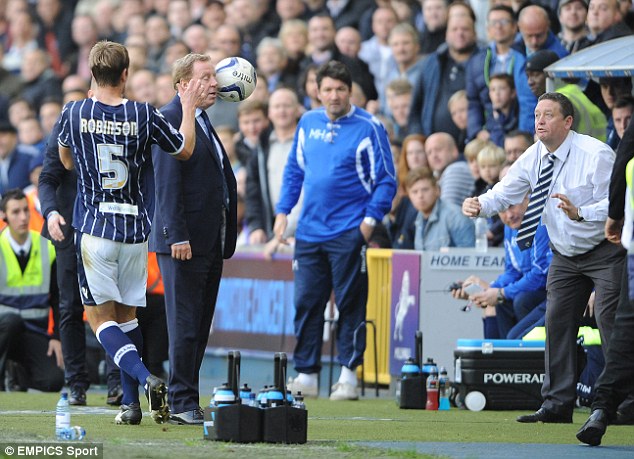
This time, the assaults took the form of footballs hurled at QPR’s managerial duo Joe Jordan and Harry Redknapp. Jordan was hit first, the ball reportedly jamming the frame of his glasses into his face, smashing the lenses and drawing blood. Then Redknapp, who had arrived at the New Den on crutches following recent corrective knee surgery, suffered an almost identical experience, the accuracy of the throw for the ball to hit him on the side of the face doubtless thrilling the coward responsible.

Alex Ferguson’s ridiculous attempt last season to dress up the incident where van Persie was struck by the football as attempted murder was characteristically over the top and wide of the mark. Despite the bizarre claims of the slightly bewildered and out of touch former Man U dictator, a football is not of itself a deadly weapon. Jordan and Redknapp were not in danger as such, but it must be intensely annoying to be targeted by morons behind the dugouts while trying to direct the efforts of your team. That Millwall scored a second equaliser while Redknapp was still remonstrating with the classless ape concerned added grievous insult to what turned out fortunately as only a minor injury.

It’s the principle of the thing, of course – football men should be able to go about their work without being annoyed by over-excited cretins in the stand. The proportion of boneheads in the Millwall support makes this sort of thing a semi-regular occurrence at their matches, and sadly at the New Den not all the cowards are in the stands. Home manager Steve Lomas chose to try and dismiss the twin football salvo as “two accidents”. The employees of Millwall Football Club must surely at some point become sick and tired of having to make excuses for the pond-life support that shames the club so often and so deeply.

On this occasion, with Jordan’s glasses shattered, the craven apologists who spend so much time excusing the actions of what appear to be semi-feral savages must be relieved that no sliver of glass found it’s way into the old warrior’s eyes. Relieved for Jordan, yes, but more so because there must come a time when the comatose idiots at the Football League wake up to the fact that it’s only a matter of time before someone gets seriously hurt at Millwall.  The officials at that club must live in a state of constant readiness for severe sanctions following some or other exhibition of crass violence from their hard-of-thinking crowd.

A cowardly attack by throwing a football into people’s faces at short range is one thing – and a man on crutches plus another wearing glasses are about par for the course for today’s breed of snivelling Millwall thug. But how long before some bright lad turns up with a pool ball or a set of darts in case there’s no football handy? How long, with irresponsible idiots like Lomas blithering on about “two accidents”, before someone loses their sight, or worse?

Alex Ferguson was comically wrong to try and call a football an instrument of murder. But once opposing football staff at the New Den realise they’re likely to be pelted in the course of their work, and that their genial hosts will clumsily try to excuse this, then they would do well to worry about exactly what will be thrown at them next time. It may well become de rigueur for body armour and perhaps safety helmets to be worn in the away dugout at the New Den – because nothing, it seems, is beyond the pale at Millwall.

What’s Really Wrong at Man U: the Fear Has Gone – by Rob Atkinson

The Tyrant is Gone

The Tyrant is Gone

It’s difficult not to sympathise with the current plight of Man U.  Well, apparently it is for BSkyB, anyway.  Others seem to manage OK.  Gary Lineker, introducing Match of the Day, promised action featuring “all of the top four”. Then, smiling at the camera really quite maliciously, he added “And Man U as well.”  There appears to be an insidious tendency to poke fun at the wounded Champions, and it begs the question why.  As someone myself who never feels quite so alive, never quite so full of the sheer joy of living as when Man U are having their noses well and truly rubbed in it, I have an answer to offer.  The fear has gone.  It went with Ferguson, and people now feel happy to laugh at Man U.  All very petty, you might think – but this absence of fear might have far-reaching consequences for The Pride of Devon.

Steve Clarke, West Brom’s talented young(ish) manager, made for an interesting listen in post match interviews after his team’s 2-1 victory at the Theatre of Hollow Myths. Firstly, he demanded credit for his team’s marvellous display, based on self-belief and a determination to show little respect for reputations, rather than lazily blaming the under-par display of Man U.  He went on to say that he had spent four days talking to his team about the mind-set required to play away against Man U; advice on not sitting back, seizing the day, going for the throats of the opposition, showing no fear.  And West Brom responded to their manager’s mantra, tearing into a startled Man U from the off. Unlikely as it seems, and despite a late home flurry, this could have been one humbling home defeat for Man U.  The last time they lost at home in the league to West Brom it was a 3-5 reverse in 1978.  On this occasion, a 5-2 or 6-2 victory would not have flattered the away side.

The thing is, that advice may well have been given to teams visiting Salford before, but it has rarely produced such positive gains for those teams down the years.  I remember well the performance of third-tier Leeds United in the den of the Champions in January 2010 for the FA Cup 3rd Round.  My favourites took the field as if they owned it, backed by 9000 raucous away fans and proceeded to out-play, out-fight and out-manoeuvre a team stratospherically above their humble level, winning 1-0 and rather unlucky it wasn’t 3-0. Leeds showed self-belief, faith in their own ability to dictate play and absolutely no fear or respect whatsoever.  It was the kind of display seen far too seldom by teams facing Man U, who tended over many seasons to be beaten before their boots had touched the turf at the start of the game.  And it’s this ingrained fear, this subconscious feeling of being beaten before a ball is kicked that has exaggerated the achievements of a club who, until Ferguson embarked upon his reign of terror, could only dream of Title success.

Football success, they say – or even football dominance – is cyclical.  Nobody stays at the top forever, the best of dynasties crumble and fall eventually.  This will not be a welcome concept for the bulk of the Man U support, who have long journeys from the south to justify somehow, who have only attached themselves to the embodiment of success and who will protest loudly if the run of glory ends.  But they can always seek their glory elsewhere – many of them will.  It’s in the nature of the beast.  Man U fans tend to be slightly inadequate and in Freudian need of the reassurance that identification with perceived size and success provides for them.  So off they’ll go and support Chelsea or Spurs or someone – the travel costs will be greatly reduced, anyway.  But what of those left behind?  What of the legions of armchair fans?  What of poor David Moyes, looking more and more like a latter-day Wilf McGuinness?  What, even, of the legions in the Far East who will find the whole reason for their devotion to Man U has dissipated – if they stop winning.

Then we have to look at the consequences for merchandising, the awful possibility that there might be a Champions League qualification failure, the chilling realisation that there is still all that debt.  The debt would have been even higher if Moyes hadn’t been so singularly ineffective in the transfer window.  The potential for things to get worse for Man U seems endless – and endlessly amusing.

None of this seemed remotely likely whilst Ferguson’s brooding presence was there, haunting the nightmares of referees and officials, causing ulcers in the FA Boardroom as they invented ever more specious reasons for failing to file disrepute charges, terrifying the hacks of the gutter and quality press alike with threats of cutting them off from the media circus that is Man U.  All Ferguson wanted was his own way, all the time and he set about getting it via the longest continual process of widespread intimidation the game has known.  Aided by the favourable market conditions provided when Murdoch bought the game, Man U flourished by this tyrannical dynasty – and the results are there in the trophy room where thirteen plastic replicas of Thunderbird One attest to a total domination of the Plastic Premier League.  Only Castro in modern times has out-done Ferguson as a successful tyrant and dictator.

But now Ferguson has gone – at least for the time being.  He may yet, of course, reappear on a Busby-like comeback rescue mission if Moyes is sacked as a failure – shades of the early seventies.  For now though, the tyrant is rendered impotent to assist Man U as they flounder and the whole atmosphere of the top flight has changed.  Referees feel empowered to be fair instead of giving every bloody 50-50 decision to Man U.  Opposition managers feel their charges freed from that psychological monkey on the back.  Press hacks – despite Moyes’ pallid efforts to ape the Ferguson abrasive approach – are not fooled; they know that a crabby old lion has been succeeded by a querulous pup.

All of these factors have conspired to reduce the advantages enjoyed by Man U these many years since Ferguson headed south.  It’s always been a game of fine margins, and any reduction in advantage tends to have a disproportionate effect on performance.  This is what is happening to Man U – and it’s like a breath of fresh air.  Not everyone will be happy, not everyone will want to see the dominant force of the past two decades rendered impotent.  But for many – if only it can last – this new Fergie-less era could be the very best of times, after the very worst.

Moyes to Continue his Impersonation of “Sir” Fergie – But is he REALLY Nasty Enough? – by Rob Atkinson

Fergie Teaching Moyes How To Be A Complete Bastard

Fergie Teaching Moyes How To Be A Complete Bastard

It still looks as though rookie Man U manager David Moyes is determined to continue with his attempts to appear as a “Fergie Lite”, a watered-down version of his tyrannical predecessor.  There may well be those who will speculate that Moyes is receiving the benefit of some tips in “How To Lose Friends And Intimidate People” from past master “Sir” Alex Ferguson.  Lesson One was evidently “How to whinge”, and resulted in an ill-advised bleat about facing Liverpool, City and Chelsea in the first five Man U league games.  This was swiftly followed by “Arrogance for Beginners”, manifesting itself in a nasty little dig at former club Everton for “holding back the careers” of their players Leighton Baines and  Maroune Fellaini.  In this context, “holding back careers” evidently meant refusing to let Man U buy them at a cut price.  Moyes claimed that, if he were still the boss at Everton, he would of course not stand in the players’ way, letting them follow their hearts’ desire which is naturally to play for Man U.  Everton fans are, understandably, less than impressed by this bold assertion and have been busily engaged in slaughtering Moyes in the Twittersphere.  Fellaini eventually made the move to The Dark Side for a less than bargain £27 million or so.

The suggestion that Moyes as Everton manager had a less than robust attitude to protecting his own club’s interests in the transfer market was hinted at previously when Moyes was telling of how he was approached to take over at the Evil Empire.  It would seem that he received a call from The Great Man himself, the one and only Alex Taggart, large as life and twice as purple.  Moyes confesses that he had no idea it was about the Man U job, and assumed that Fergie was calling him to “let me know he was taking one of my players”.  Again, this is a soundbite calculated to enrage any proud Toffeeman, and it doesn’t go down too well with fans of other clubs outside the Theatre of Hollow Myths either, the clear inference being that all Man U have to do to sign the player of their choice is to casually let that player’s current club know that a deal will be done.  If that really was the extent of the Trafford-based club’s influence over the game as a whole, then frankly they have grossly under-achieved in not winning every cup, every year, ever since Uncle Rupert bought the game for them.

Whatever the case, Moyes now finds himself on the business end of this power gradient, and he clearly seems determined to make hay while the sun shines.  If this means re-inventing himself as a sort of less puce Alex, then – seemingly – so be it.  Those of us who have spent a productive lifetime hating Man U and everything connected to them, may just have had some worries about a “nice guy” like Moyes making our task of despising them that bit harder.  It would seem that, after all, we had nothing to be concerned about, and that Man U under Moyes appear likely to continue to be as intrinsically despicable, arrogant and annoying to proper football fans as they have ever been.

This will naturally please those lost souls in Devon, Milton Keynes and Singapore who still count themselves as hardcore Man U fans (since 1993), but for the rest of us who had hoped that football would be a nicer and more wholesome place without Sir Taggart, the sad truth is that it’s probably going to be business as usual – though hopefully without all that ill-gained silverware.  Because Moyes may talk the talk, but he’s done nothing as yet to suggest that he’ll be able to walk the walk.

Happy Days Are Here Again – Bring On the New Season!

Good Riddance, Taggart

Good Riddance, Taggart

The best football season since the mid-eighties (apart from 1991-92, obviously) is almost upon us.  Despite the recession, austerity, bankers bonuses and the scandalous price of a pint, I’ve rarely felt so positive and optimistic about the immediate future.  Even the fact that Leeds United are crap, and will almost certainly remain crap despite the best efforts of poor old Brian McDermott, my outlook is one of sunny anticipation and excitement for the feast of football that awaits my tired and cynical old eyes.  And why?  I’ll tell you why. It’s because Fergie’s gone, that’s why.  Say it again and say it with relish.  Fergie.  Is. GONE.

Don’t get me wrong.  It wasn’t his annoying habit of winning things for the Mighty Man U that bothered me.  It wasn’t his oft-paraded bloody stop-watch held up as a mute instruction to the ref regarding time-keeping.  It wasn’t even his arrogance over whether he chose to adhere to various rules which bound other managers, things like press interviews, his notorious BBC ban, stuff like that.  The fact that he clearly considered himself above mere rules was irritating, but not on its own the reason why I loathed him so much.  It was none of these things in isolation.  And after all, when he lost it was such a pleasure.  Thank you Leeds in ’92, Blackburn in ’95, City in ’12 and a few others.  But it didn’t happen often enough, and really, he was almost as horrific in defeat as he was in – shudder – triumph.

The real problem with Fergie was the sheer, all-round, ever-present, all-pervading unpleasantness of the man.  His particular brand of arrogant Glaswegian gittery and the way in which he held sway over the entire game and media too – the whole Fergie package – that’s what got my goat.  Whoever we support, we’ll have had managers who crossed the line in this or that respect, and made you see why fans of other clubs regarded them as less than nice.  But Ferguson exceeded all these limits, most of the time – and not in a good way.  Comical defeats apart, I really can’t think of a solitary redeeming feature.  If I absolutely HAD to put my finger on one thing that annoyed me above all else – it was the demeanour of the man when he was happy, when he’d just won or when Man U had scored a goal.  Sadly, these events happened all too often, and the results were always utterly repellent.  When the Mighty Reds scored, there he’d be, emerging from his dug-out in that annoying daft old man shuffle, fists clenched and waving in uncoordinated celebration, casting a glance of odious triumphalism at the sullen members of the opposition coaching staff, champing away happily on his ever-present wad of gum while his nose throbbed an ugly shade of victorious purple.  A most unpleasant sight.

Happily though, it is one we shall behold no more.  Fergie has retired upstairs, where his baleful presence need be of concern only to the inheritor of the poisoned chalice, David Moyes Esq.  Moyes may wish to cast his mind back 43 years to the effect a newly-retired but still-powerful-in-the-background Busby had on HIS successor.  But that is his problem.  All we need wish is that an early and unceremonious exit for Moyes – should he fail – isn’t a signal for the caretaker return of the Govan Guv’nor, just when we all thought that nightmare was over.  Perish the thought.

So I’m really looking forward to a Fergie-less season, and even to the slight bewilderment of the assembled media, who will be wondering where to brown-nose, who to target for their obsequious flattery.  Again, their bereft sadness is not my problem.  I’m just going to enjoy the football scene as it will appear to me – bright and shiny, replete with promise and optimism after the removal of that horrible, nasty man.  Man U will be that bit more difficult to hate, with the really-quite-likeable Moyes in charge, however long that lasts. But I’ll manage, it’s in my DNA as a fan of the One True United after all.  And Mourinho is back, and Wenger is still there – men you can’t help but respect and admire.  It’s going to be a good season in the Premier League, something I can really enjoy for once, whatever my beloved Leeds United do to screw things up one division lower.

And it’s all thanks to That Man finally being gone. Hallelujah!!

Moyes? A Strangely Unambitious Choice

"Eh - by the waaaaay, Ah'll no' be leavin' ma whisky, wee Moyesy"

“Eh – by the waaaaay, Ah’ll no’ be leavin’ ma whisky, wee Moyesy”

David Moyes swiftly emerged yesterday as a heavily odds-on favourite to replace Alex Ferguson as boss at the Theatre of Hollow Myths.  On the face of it, there’s an obviousness about this solution; Moyes has performed solidly for over a decade in the top flight at Goodison Park on a budget that, if not exactly shoestring, certainly lacked the munificence of the chests of bullion in other parts of the North West.  He has failed to win a trophy in that time but that is not in itself a criticism of any coach in an era when the silverware tends to go to the highest bidder.  The best coach around, M. Wenger, has been potless since 2007, after all.  Moyes has the appearance of a “safe pair of hands” option – someone who will come in and instigate evolution rather than revolution, a guy who can be relied upon not to depart too suddenly or drastically from the blueprint laid down by the man whose brooding presence upstairs will be a palpable influence on any new boy, whoever he might be.

This acceptance by Man U that Fergie will still be kicking about the place is tinged with danger; the lesson of history taught by the hanging-on post retirement of Matt Busby seems not to have been heeded.  The legacy of Fergie is more akin to a poisoned chalice than an inspirational example; the new coach on the block will have to set off on his hoped-for marathon at 400 metre pace.  There will be little chance or latitude afforded for any cosy bedding-in period at a club with a constitutional, almost Freudian need to be the biggest and the best.  A large proportion of their support has been conceived, weaned and nurtured on this propaganda and the last thing that any of them will want to feel is the chill blast of reality as the likes of City, Chelsea and Arsenal walk off with next season’s honours.  So Moyes (most likely) or whoever else it might be will simply have to hit the ground running, compete effectively at the highest level, placate a squad of big egos who are used to a very particular type of regime and solve the immediate Rooney wantaway (or wantanewcontract) problem.  All of this under the basilisk glare of elder statesman Fergie, glowering from a handy balcony over his former empire, hairdryer silenced but still handy.

The immediately noticeable thing about Moyes is his relative lack of European experience, and Man U is a club that sees itself as a European force despite the threadbare achievements on the continent under Fergie.  The other burning question that has to be asked then is: what would other European “giants” have done after losing a quarter-century institution as Man U have just done? Would they have plumped for Joe Bloggs from down the road, or would they instead have scoured the continent and beyond for a stellar personage of massive achievement elsewhere, someone whose CV is festooned with honours and who would breeze in expecting to maintain the winning habit?

It’s irresistible to feel that the latter would be the preferred option for your Barcas and your Real Madrids, your Bayern Munichs and – yes – your Chelseas, too.  In the immediate aftermath of the announcement that Fergie would be chewing his gum in the directors’ box next term, hopeful noises were emanating from the Man U-friendly press that The Purple-Nosed One might possibly be succeeded by The Special One, maybe even with one C. Ronaldo in tow.  It may yet be that Christiano brings his balletic skills with double-pike and twist back to Man U, but any prospect of Jose heading to Salford appears remote in the extreme – he is far more likely to be strolling down the Kings Road this summer.  Other ideally-qualified coaches have scrambled over each other in their haste not to queue up for the Man U job.  The poisoned chalice image appears to have lodged within the minds of Europe’s coaching elite.

So it is likely to be Moyes – not for his own sweet self, but more for the lack of any realistic alternatives.  It is this paucity of choice for a club like Man U – who were supposedly aware of Fergie’s retirement decision as far back as February – that is rather baffling.  Perhaps they expected Fergie would soldier on for a few years yet.  Perhaps also they weren’t expecting the grumpy Govanite to give up so easily on his ambition to overhaul Liverpool’s European Cup record.  But the emergence of crack teams from Germany as well as the still-formidable forces from Spain and elsewhere in England appear to have been a reality check for “S’ralex”, who must in his more coherent moments have realised that climbing the European summit again in the foreseeable future is a dimly remote prospect. It may well be that a “safe” appointment such as Moyes will serve to dilute expectations just enough to cure these fanciful notions that Man U could possibly break into the Continental elite.  Perhaps an FA Cup run and top four in the Premier League will suffice next season, and save Moyes from the fate of Wilf McGuinness back in the day.  But I frankly doubt it.

The King is dead.  Long live the King – but who, and for just how long?

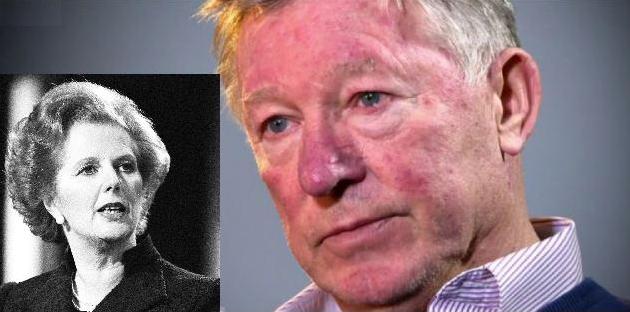
Thatcher & Fergie – Unlikely Bedfellows

Two Media Darlings

Two Media Darlings

It’s been an awkwardly stomach-churning day for any self-respecting Man U-hater with anything but the most robust of digestive systems.  The output of Sky TV and BBC Radio Five Live in the wake of the Govan Guv’nor’s resignation as Supremo at the Theatre of Hollow Myths has been wall-to-wall, sickly sweet revisionist nonsense.  It was perhaps predictable – Man U seem to attract this kind of attention quite regularly.  They hypocritically call Liverpool the “City of Pity” and “Shrine Worshipers”, and yet there was the cloying sentimentality of the Lone Piper at Old Trafford when Busby died, and of course there is the nauseatingly poorly-written “Flowers of Manchester” doggerel recycled every February 6th when the Man U Marketing Machine gears itself up for the annual “Let’s Make More Money Out of Munich” event.  The treatment of Man U in the media has a lot in common with the ingestion of a copious draught of heavily-salted water.  Both are pretty much guaranteed to make you sick.

For some of us, it’s only been a couple of short weeks recovery time since the last bilious attack brought on by an onslaught of gushing praise for a much-hated public figure.  To listen to the BBC’s output in the wake of Maggie Thatcher’s death, you’d think she was universally acknowledged as a saint who personally saved our country from the hordes of infidel savagery, instead of a humourless and uncaring woman who presided over the decimation of manufacturing industry and created an underclass of unemployed dole fodder.

Ironically, that assessment of Thatcher – the realistic one, not the BBC’s rose-tinted, soft-focus blarney – would almost certainly strike a chord with Ferguson, a man who has always made much of his Socialist roots.  And yet the fulsomely worshipful bilge poured all over her death and funeral has been rivalled today both in flavour and quantity as various media outlets have sought to paint a picture of “Fergie the Greatest”, conveniently ignoring the essential character of the man, which is that of a coarse bully and a ruthlessly competitive control-freak who would brook no opposition and practiced suppression of dissenting voices on a grand scale as well as nepotism, intimidation and other deeply unattractive tactics.  Ferguson and Thatcher operated in vastly different spheres, and pursued their objectives in vastly different ways, although the objectionable single-mindedness and refusal to acknowledge any other point of view was common to both.

It is arguable too that both shared a similarly dislikeable personal character and yet that both represented vested interests which have caused a complaisant media and establishment to bend over backwards in their efforts to hide these unfortunate facts.  However difficult they both were to handle at different times – Ferguson famously “banned” the BBC from his personal airspace for an extended period, claiming in a juvenile fit of petulance that the Corporation was “pro-Liverpool”, and objecting to their focus on the activities of his shady agent son Jason – the media still fall over themselves to praise both to the skies.  Powerful interests are at work here, rigid agendas are being pursued.

Ferguson will not relish any comparison with the Iron Lady, and yet such comparisons are irresistible.  Nepotism, for instance.  Thatcher was accused in many quarters of using her influence to smooth the path to riches of her not-outstandingly-bright son Mark, a man who would seem to have difficulty finding his way out of an open box.  Ferguson allegedly pushed the services of Agent Jason on young players at Man U and reacted with fury if the lad in question went elsewhere.  When his fledgling manager son Darren was sacked by his employers after his latest relegation, Fergie senior reacted by recalling two young Man U players who had been at that club on loan.  The similarities in modus operandi for Fergie and Thatch abound.

It is for the gross and over-the-top way in which both have been virtually canonised by the media in the wake of their exit from the stage that really sticks in the throat, however.  The tasteless extent of it, the gushing, nauseatingly deferential tone of the ubiquitous tributes, strike a remarkably similar tone in either instance.  In Thatcher’s case, the masses thus appeased were the blue-rinse brigade and their Colonel Blimp husbands, Tories to their last cell, and voraciously hungry for any news coverage to confirm their view that la Thatch was the greatest since Churchill, the greatest peacetime leader ever.  The claims of Clement Attlee, the authentic greatest PM ever, were callously overlooked, as was the fact that his funeral in 1967 was a quiet and dignified affair.  In the case of Ferguson, the masses are of course the legions of Man U fans all over the world and in Torquay and Milton Keynes in particular, who have been fed the myth of Man U being the greatest club in the world (Arf!) and who now wish to hear Fergie being called the greatest, against the claims of true greats like Busby, Revie, Shankly and the rest, proper managers who had to do it all on a level playing field and not the Sky-weighted Man U-centric environment we have now.

Radio Five Live are still at it, as I listen.  We go “back to Old Trafford” on a regular basis, to listen to the hushed tones of a reverential reporter, laying it on thick for the benefit of the thick.  It’s all so remarkably similar to the nonsense we all suffered in the wake of Thatcher’s passing.  Perhaps, for Ferguson, that is the unkindest cut of all.

Alex Ferguson – A Tribute

Purty, Ain't He?

Purty, Ain’t He?

The football-related media is in a frenzy of mourning today after the announcement that Sir Alex Taggart has decided to step down as Supreme Dictator of the FA Premier League.  Who will follow him, they ask, tearing their hair and wringing their hands in distress.  Chelsea fans may be surprised to hear that Bridge-bound Jose Mourinho is being mentioned as inheritor of the poisoned chalice that is the hot-seat at the Theatre of Hollow Myths.  But Jose is surely too fly and savvy  to “do a McGuinness” as the task of following a long-serving Man U manager is known in the game.  Everton fans too may be wondering whether David Moyes will be offered the chance to step into the role of “Premier League’s Token Grumpy Scotch Git.”  Whoever ends up in Mr Ferguson’s gout-adapted tartan slippers has a job on his hands alright, and will need urgently to review the manual on “How To Bully and Intimidate For Personal and Professional Gain”.
The loss for the media will be acute.  Hacks as a breed dearly love the cosy familiarity of a tyrant at the top of the game, someone who is an outlet for all of their natural tendency to fawning sycophancy, a figurehead over whom they can compete to praise in the most glowing terms whilst neatly overlooking the glaring flaws of a man who has been a study in coarseness and choleric wrath when things even threaten to go other than as he would like.  The newspaper journos will miss “S’ralex” – he represented continuity for them, an opportunity to trot out well-worn cliches and perpetuate comfortable myths.  Now they may even have to think before starting another Man U piece – it will be a shock to be so brutally jolted out of a 26 year comfort zone.

Ferguson has his place in the history of the game.  He will serve as the biggest negative example of how to ruin the previously positive image of a historically-respected football club, making of them a byword for arrogance and the tendency to ride roughshod over the rules and conventions of the game.  He is there as a useful comparator for the true greats of football and how they went about their business, with humour, humility and a sense of their own fallibility.  The likes of Busby, Shankly, Revie, Stein, Nicholson et al are all part of the rich fabric of the game, all lost to us now, but all clearly capable of favourable assessment in the light of the Ferguson legacy; none will suffer in comparison with the man from Govan.

People will point to his record of success – and sycophants and revisionists will hastily gloss over his difficult early years at Man U when the home crowd called for his head and despaired of ever being able to aspire to the levels of Liverpool and Everton, great clubs run properly.  The re-organisation of the game and its finances when the Premier League came in was highly opportune for Ferguson, and he certainly made hay while the sun shone; it shone for him for the bulk of the remaining 20 years of his career.  Ferguson suddenly found himself in charge of a racehorse competing in a donkey derby, the interests of consumers suddenly paramount, the need to sell satellite dishes and replica shirts in hotbeds of Man U support like Devon and Milton Keynes emphasising the commercial importance of a successful Man U team.

All of a sudden, the top players wanted to go to Salford, all of a sudden the statistics of the game tilted heavily in Ferguson’s favour.  Penalties against them had never been plentiful, now they were as rare as a rosebush in the desert.  Ferguson’s natural personality came to the fore; his tendency to bully and to rant began to produce real results in terms of the attitude of the media and of the game’s officials, both on the field in the shape of cowed and terrified referees, and off it with the administrators unwilling to court commercial unpopularity by waving the rule book under that purple nose.  The most familiar sound-bite emanating from Lancaster Gate was suddenly “The FA can confirm that Alex Ferguson will face no disciplinary action for (insert example of blatant disregard for the rules here.)”

Referees became aware of the fact that those of their number who made a decision not to the liking of Ferguson tended to wait a very long time before selection for another fixture involving Man U.  These are high profile games, and referees increasingly had to look to their own career prospects as their role assumed more of a professional profile.  So they tended to knuckle under, perhaps only subconsciously, but the effect over many years has been enough bizarrely ridiculous decisions in favour of Man U to spoil the digestion of many a football fan who remembers fairer days pre-Murdoch, pre-Man U dominance.

Given this decided slope of the playing field in Man U’s favour, the wonder of it all is that they haven’t won more.  There have been years when the Title has gone elsewhere; remarkable this, in a game of fine margins where one study exposed as fact that 88% of all 50-50 decisions went the way of the Salford Franchise.  This is the measure of Ferguson’s failure; a manager who was also a good coach would surely have cleaned up in such a very favourable environment.

So what now for Man U?  To be honest, I can see their domination continuing.  It’s likely that the public image of the club will be enhanced under a manager who does not represent quite so many of the negative personality traits exhibited by Ferguson.    It will certainly be interesting to see if a world-renowned coach – if appointed – can improve on their patchy record in Europe, where Ferguson’s habit of intimidating refs has not been such a marked advantage to them.  Two somewhat lucky Champions League wins is a poor return for twenty years of almost unlimited opportunity, and a better man in charge might perhaps improve on this and finally give Man U more justification for their laughable claims that they have “knocked Liverpool (Five European Cups) off their perch.”

The question will be asked next season “Who’s the greatest manager in football now?”  The answer will be the same as this season: choose any one from Mourinho, Wenger and Hitzfeld.  All the propaganda in the world cannot make a silk purse out of a sow’s ear.

Evra Out-Chomps Suarez in the Bad Taste Stakes

Stupid Boy

Stupid Boy

It was predictable, I suppose, that Man U would find time in celebrating their hollow title triumph to have a pop at the enemy down the other end of the East Lancs road. It’s in their DNA to crow instead of celebrating with dignity as truly great clubs do – and so inevitably the evening couldn’t go by without some reference to the latest glitch from Liverpool’s Luis Suarez.  Liverpool are a problem for Man U.  They oozed class to utterly out-perform all the competition back when that competition was a lot broader-based than it is today.  They’ve still got more European Cups.  For a club so obsessed with size and success, so insecure in the face of genuine rivalry, it stings the Trafford-based giants that a relatively close neighbour has been so historically successful.  Man U don’t take that sort of thing kindly, and Ferguson’s poisonous hatred of Liverpool has trickled down like escaping acid through the fabric of his club, leaving the suppurating sores of bitter envy at all levels.

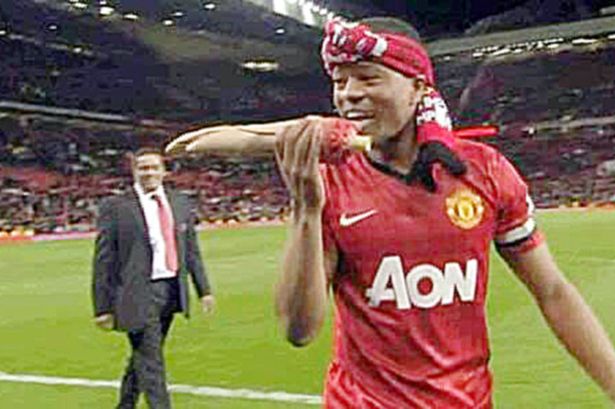
Even given this long-standing hatred of Liverpool, born of the envy and insecurity that riddles Old Trafford, the display on Monday evening of the not-exactly-admirable defender Evra was pushing hard at the far boundaries of decency and good taste.  A joke “severed limb” was thrown onto the pitch from the jubilant home fans – this is the kind of thing Man U fans are rather prone to, with a record of similar perversions of class and comportment many times in the past.  They tend to squeal loud and long though if anyone offers them like treatment; such is the one-way street of the Man U supporters’ moral code.

So there’s this silly toy on the pitch and – no doubt seeking to please and impress his adoring fans, Evra had to pick it up and mime having a bite out of it.  It’s not a particularly edifying image, but of course Evra and Suarez are not exactly bosom buddies.  Be that as it may, such a very unsubtle reference to the hot-headed and idiotic actions of the Uruguayan a couple of days previously at Anfield was – to say the least – unhelpful and unwelcome.  Suarez has stupidly offered himself as a target yet again for a press and public that has been eager to condemn him ever since his dispute with Evra, a situation in which the Frenchman shared a lot of any blame going.  But Suarez has been hunted ever since, any slip highlighted, most of the praise that his sparkling play deserves only grudgingly meted out.

The point of all this is, of course, that the actions of Suarez, stupid and needless though they may be, ARE invariably taken in the heat of the moment, when he is in the middle of some competitive vortex on the field.  Evra, on the other hand was relaxed and celebrating, high on the moment of triumph no doubt, but not caught up in the white heat of conflict.  And yet he still chose to do this tasteless thing, in cold blood, and subject us all to the spectacle of his gloating mug on the back pages, glorying in the opportunity to heap further ridicule on a fellow professional.  An unpleasant and despicable individual, as well as being not one tenth the player that Suarez undeniably is, as he’s always proving.

It always seems to be Man U that are highlighted indulging in unpleasant schoolboy skits like this.  They used to have a reputation for class and impeccable conduct, even under the slightly shady rule of the Edwards family.  That good reputation is long gone.  The modern tendency to revel in the misfortunes and dilemmas of others seems bred into them by their coarse and choleric manager, a man who values the siege complex and nurtures this out of the hate his teams’ conduct inspires.  Suarez has – probably rightly – copped a long ban for his daft action, which gained him nothing and certainly reflected ill on the game.  His conduct was inexcusable, but for a hothead like Suarez there are always reasons, and it seems that every now and again, he will simply run out of self-control.  It’s in his temperamental and hot-blooded nature for this to be so, and sadly that runs against the grain in a colder country than his native Uruguay.

But what’s worse – this instinctive tendency of the Liverpool striker to get carried away in the moment and either lash out or bite off more than he can chew?  Or the sly and nasty, calculated and measured breach of taste perpetrated by Evra, a man usually more sinning than sinned against, and whose actions appear inexplicably to draw nothing more than a fond smile from the Man U-centric media?

I know what I think.  Silly lad, Suarez.  Nasty git, Evra.

Manchester United – They’re Just Not All That Good

Image

Accuser and Accused

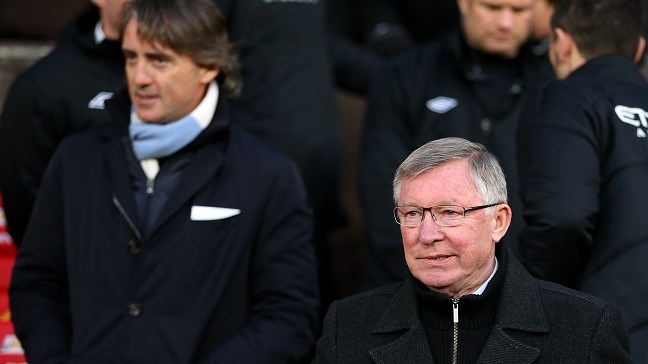
At last, a Premier League football manager has gone public and given voice to a dark suspicion that thousands of us fans have harboured for a long time now. Roberto Mancini, may his name be blessed, says that teams facing the Mighty Manchester United are infected with a fatal lack of belief which amounts a lot of the time to actual fear. This, says Mancini, explains a large proportion of the Red Devils’ domestic dominance. It’s not that they’re that good, he argues; rather it’s that a lot of the opposition simply fail to mount a robust challenge and end up meekly relinquishing league points that nobody really expects them to gain.

Predictably, Man U’s long-serving manager Alex Ferguson is having none of this, accusing the Italian coach of Manchester City of seeking “self-sympathy” – whatever that might be. But the Mancini case is quite persuasive, particularly for anyone whose second-favourite team is whoever the Champions-elect happen to be playing on any given occasion. For those people (and I am proud to count myself among their number) the ongoing spectacle is one of a succession of teams turning up to face Ferguson’s side, and doing very little apart from that – spineless capitulations being the industry standard or so it seems. Very unedifying for those with Manchester United’s worst interests at heart but also, I would strongly suggest, pretty bad for the game as a whole.

So what is the evidence for this alleged collective lack of bottle and professional application? And if it’s true, where does the fear come from? Whence, the lack of self-belief?

Let’s initially get down to cases. As I mentioned earlier, I am a steadfast watcher of the televised games of Manchester United (of which, courtesy of Mr Murdoch, a man who knows his markets, there are many.) I don’t watch with any real expectation of enjoyment; that outcome will only come about if Man U slips to an unexpected defeat or, rarely and joyfully, a real hammering. Much more often though, I sit there in an increasingly foul frame of mind as the latest feeble challengers to the Mighty Reds roll over to have their bellies tickled prior to succumbing politely, without much of a fight at all. All too often this process is aided by the dodgy decisions which famously tend to fall the way of Mr Ferguson’s men, or maybe by copious amounts of what has become known as “Fergie Time”, the perceived need for which varies according to whether his charges are winning or losing. However it happens, it’s all the more depressing because of this pitiful lack of resistance displayed by all too many opponents. You feel frustrated – on your own behalf because you want “Them” to lose – but also on behalf of all those who switch on just hoping to see a good competitive game, with both sides giving their all. That just doesn’t happen often enough, and you sit there and wonder why.

A big factor at play here could well be the psychological gap hinted at by Mancini. What exactly are teams up against Man Utd facing? Not merely eleven chaps clad in red, or whichever of their numerous other kits they might be sporting. In professional competition, especially at the very top level, at least half the battle is in the head; that’s well-established fact. Do these opposing players believe they can win, or do they enter the arena as lambs to the slaughter? Do they feel any real pressure to win from their fans, or do they suspect those fans will quite understand and accept a defeat? Not very much of this type of thinking is required to take that psychological edge off performance.

The particularly annoying thing is that this Man Utd team really aren’t all that good. They got found out twice in Europe last season, latterly by Atletico Bilbao, a team who finished well out of the running in La Liga, but who gave the Mancs the most terrible seeing-to in both legs of an extremely one-sided tie. They’ve been beaten by Chelsea – a side who are themselves in transition – in both domestic Cups this season, and chucked out of Europe this time around by a Real Madrid side who hardly let them have the ball at all.

The European element is of particular interest as it may well be significant that, outside of this country, opposing players aren’t subjected to the constant drip, drip, drip of Man U media adulation that is visited upon domestic foes. Everywhere a player might turn in this country, there’s another article or broadcast or pundit, invariably churning out copious praise of “United”, with emetic results for those of us who don’t buy into the popular legend. What is the cumulative effect of all this? Another dulling of that psychological edge, that’s what.

The media love to talk about Ferguson’s “mind games”, but they’ve never really been anything other than the ramblings of an ever older gentleman, notorious for his inability to see more than one point of view – his own. Greater and wiser exponents of psychological warfare exist in Mourinho, Wenger and Mancini himself – all continental chaps, significantly enough. The edge given to Man U in the battle of wits and wills tends to be provided by a complaisant media and that, I believe, is precisely what the astute Mancini is getting at.

Maybe this is why Ferguson felt the need to come out with such an immediate if not altogether fluent rebuttal. Other clubs have caught up with and perhaps surpassed his own in terms of talent on the field and punch in the transfer market. Ferguson is not likely to want to see any narrowing of the psychological advantage afforded to him by his yes-men in the Fourth Estate. If the Premier League were to be transformed – by such a relieving of the mental barrage – into a level playing field with some willingness on the part of current also-rans to compete and believe, then the current gulf at the top would be a heck of a lot smaller. And then, perhaps, we’d see Champions on merit; not merely winners by default as we will get this season, who have had almost literally nothing to beat for a large portion of the time.

Now that’s the kind of Premier League I’d like to see. Well said, Signor Mancini. Keep the pressure on.