Tag Archives: Don Revie

For Evans Sake, Leeds Utd Have the Right Man. Now Stick With Him – by Rob Atkinson

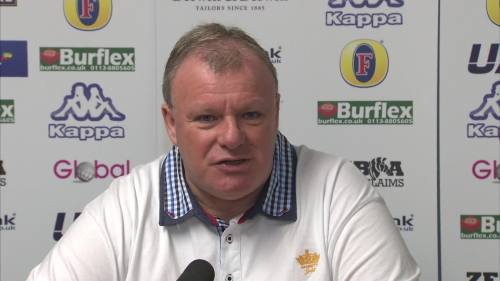
Leeds United Manager Steve Evans

Leeds United Manager Steve Evans

The unseen benefit of the scattergun, hire ’em and fire ’em recruitment approach adopted by Leeds United since the takeover of il Duce Cellino, is that at some point, unwittingly, you’re probably going to stumble haphazardly upon the right man for the job. And one of the obvious drawbacks of such an amateurish policy is that you’re all too likely then to dismiss him, either in a fit of Latin pique, or because you’ve been replaced by new owners who want their own man.

The evidence of the first few weeks of the Steve Evans era at Elland Road would seem to suggest that United have, for once in a very long while, got a square peg for their square hole. Having been lucky enough to do that, Leeds must not now, under whatever ownership, retreat back into their accustomed suicidal self-destruct mode – and dispense with a man and manager who might just be the best fit our maverick club could possibly wish or hope for.

The Steve Evans track record speaks for itself in both the best and worst of times. His human fallibility is evident from a brush with the law earlier in his career – but lessons learned from negative episodes in life can be instructive in the making of a highly effective professional. And it is this image that emerges from the Evans record of achievement at his previous clubs. It is an enviable record of unprecedented success at those clubs, by virtue of what the man himself succinctly refers to as “winning football”. He has no need or desire to elaborate on that two-word summary. He simply promises the fans just that – winning football. He knows and we know that everything good will flow from that.

The complexity and effect of the man is emerging little by little as a picture Leeds United fans have been wanting to behold for many, many years. There are echoes of the early Sergeant Wilko in the way Evans has breezed into the club with no fear on his own account, and the clear intention of doing things his way. Though not afraid himself, he appears to rule partly through fear – and partly by employing the encouraging “arm around the shoulder” approach. We hear that he can hand out rollickings to those who need it, as well as boosting those in need of a boost. It’s not rocket science – just horses-for-courses man-management, the type of thing that has produced results for the enlightened since time immemorial. The proof of the pudding, though, will be in the eating – but early indications are that certain Leeds United players, who had been under-performing, are now walking about with a new spring in their step. Long may that continue.

The danger now apparent is of yet another change; this one unwanted, unnecessary and foolish, with talk in various sections of the media that any possible new owner – a prospect widely perceived among Leeds fans as A Good Thing – could bring with him a change of manager, with Pride of Devon flop David Moyes touted as a likely contender for a job that really should be flagged up as unavailable. It may of course be that this is largely the not exactly Leeds-loving media being their usual mischievous and unhelpful selves. We can but hope.

What we have here is not yet a recovery, nor yet even a definite upward swing in the fortunes of our beloved Leeds United. The general stability of the club is far too fragile to make extravagant claims like that. But what we do seem to have are tentative green shoots emerging from what has too long been an arid desert of hopelessness. Little buds of confidence are emerging that just might flourish and bloom into full-on optimism – given the chance. Everywhere I’ve looked in the virtual world of Leeds United lately, I’ve seen surprised, almost bemused comments along the lines of “this bloke is really growing on me!” about our new manager. And one of the most noticeable things about Steve Evans is that he openly lays claim to that title. Leeds United manager – there’s a ring to it which the half-baked “head coach” thing lacks. It’s as if Evans knows he has ventured into shark-infested waters, and that he’ll have to be brave, bold and confident if he’s to succeed. He’s certainly making all the right noises, so far.

In Steve Evans – a man who swiftly acknowledged that he wouldn’t have been the first choice among Leeds fans (adding that he doubted he’d have been in the top ten) – we may just have the ideal candidate for the next holder of the Mr. Leeds United accolade. Steve Evans genuinely could be Mr. Leeds United, in a manner akin to earlier greats like Wilko, or even the as yet incomparable Don Revie. He reflects the club as those legends did – unprepossessing to outsiders, with a tendency to inspire fear and dislike among enemies. But there’s a steely determination there also, an unshakeable belief in his own ability that is likewise redolent of Leeds at its very best. That extra spring in the step of some of the young stars, those early results as they start to pick up – they’re down to that brash, ebullient presence rocking around the corridors of Elland Road and Thorp Arch. There seems little doubt of that.

I had my doubts too, at the start, though I was mainly preoccupied with being dismayed at yet another abrupt change of management. I heard of Steve Evans discussing his appointment to take over with no great enthusiasm. But first impressions are rarely all that reliable,  and I’ve never been so thrilled to have it demonstrated to me that, like thousands of others with the colours of this club running through their veins, I have good cause to believe team affairs are at last in safe hands. And, having accepted that – by hook or by crook and more by luck than good judgement – a bona fide appointment has at long last been made, I’m now in the same position as so many other fans, of being desperately concerned that – this time – we should stick with our man and see it through. See what kind of Leeds United Steve Evans can build. Hope that he will be given the time and the tools to finish the job, as he’s so successfully done elsewhere.

If, in a few weeks or months time, I’m writing another blog in bitter frustration and helpless anger, bemoaning yet more self-harming short-termism on the part of this crazy club – if, in short, Leeds United have lost their nerve yet again, and prematurely sacked yet another manager – then it’ll be with a sense of baffled despair about our club’s chances of ever making it back to the level of the game where they assuredly belong. It’s for Leeds now to stick with their man, back him through whatever high-level changes may be in the offing and try to ensure that, on the playing side of things at least, there is some stability and confidence. Those two advantages will come only with the security of a man in charge being given ample opportunity to do his job and earn success. For all our sakes, let this come to pass.

And if not – why then, the fans of this club will know for sure that they are the only stable and worthwhile thing about the place. They’ll know that the club can’t be trusted or relied upon to do anything but periodically make of itself a laughing stock before lesser clubs and lesser fans. It would be the only conclusion we could possibly draw – who could really blame us? The powers that be at Leeds United (whoever they might be on any given day) had better take warning; our faith in the direction of the club can only take so many hits before it crumbles into pieces. So don’t screw this up, guys.

Steve Evans has made it clear that he regards himself as privileged to be the Leeds United manager. He’s made it clear that he regards the fans as an asset unmatched elsewhere (If we played a five-a-side in Asia at three in the morning, they’d be there). Evans “gets” Leeds. He can see what the club – and the fans – are all about. You have the impression that he can sense a kinship – that he feels at home and wants beyond anything else to restore Leeds United to greater days. This blogger could listen to him talk about Leeds all day long – it makes the hairs on the back of your neck stand up.

You just can’t put a price on that feeling, and – for the first time in such a long time – I and many others believe we might just have a real Leeds United manager on our hands. Someone who appeared as a match summariser on Sky Sports Saturday earlier today, and made a point of giving the Leeds salute when on camera. I could barely believe my eyes. Now, that’s a real candidate for the next Mr. Leeds United.

So, for Evans’ sake – and for the sake of all of us and our turbulent love affair with football’s craziest club – let’s please see it through this time and go marching on together, back towards the top, behind a man who – given an even chance – just might make it all happen for us once again.

Happy Birthday Johnny Giles, the Greatest Manager Leeds Never Had – by Rob Atkinson

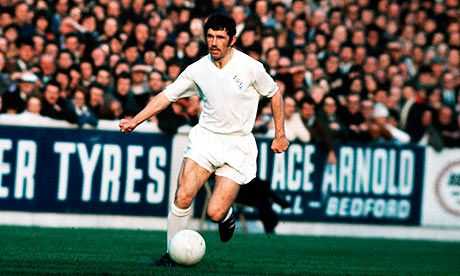
Johnny Giles - the Brains

Johnny Giles – the Brains

Another day, another birthday celebration for a United legend. This time it’s Johnny Giles, 75 today and famously one half of the best central midfield partnership of the last century. If Billy Bremner was the heart of Don Revie’s peerless team of stars, then surely John Giles was the brains and the vision, dictating and switching play, spraying passes all over the park with laser-guided accuracy and combining with Bremner in a way that many described as “telepathic”.

Johnny Giles was recruited by the wily Don Revie from under the nose of the great Matt Busby at Man U. He had shown his quality there, despite never really being played in the position where he could best influence matters on the field. Even at Leeds, his transformation from good winger to great schemer came about almost by accident, injury to the existing midfield general Bobby Collins influencing Revie’s thinking. Man U’s loss though was most definitely Leeds United’s gain over more than a decade as they rose to the top. Don Revie referred to his capture of Giles from Man U for a mere £33,000 as “robbery with violence”. Busby called it simply “my greatest mistake”.

Giles brought so much to Leeds United that it’s difficult to find the space to describe his impact. Put in on-field control of the play, he pulled strings and evolved strategy as each game progressed. His range of passing was legendary – TV commentators used to admire his latest pinpoint delivery by comparing it to the appropriate golf shot (that was the six iron). His ability on the ball, whether passing or shooting, was well-known and much admired; Gilesy was the acknowledged master.

What was often overlooked by the uninitiated was his steely efficiency in looking after himself in the warlike atmosphere of combat at home and abroad. Peter Lorimer tells the story of how Giles inflicted summary justice on a Turkish player who had persistently fouled him in the away leg of a European tie, and was then daft enough to crow in his face at the final whistle. John was miffed, and advised the Turk that he would see him in a fortnight at Elland Road. This was no idle threat.

Two weeks later, Giles asked Norman Hunter to drop the game’s first pass a couple of yards short – what is known as the “suicide ball” in football circles. Norman did as he was asked, the Turk eagerly jumped in to dispute possession – and Giles pounced, leaving his foot in to reduce his tormentor of the previous game to a grievously-injured heap, swiftly off on an urgent journey to the nearest hospital.

After the game, there was some puzzlement over how promptly the ambulance had arrived to assist Giles’ victim. The Elland Road switchboard operative swore blind that Giles had booked it for him before kick-off, something Johnny always denies. But the message was stark: mess with Giles or any other Leeds player at your peril. They looked after themselves and each other, and the bond thus forged endures to this day.

When Don Revie left for the England job, it was an open secret that he had nominated John Giles as his successor. The board were set fair to act on this recommendation, before backing down for fear, it is said, of upsetting Billy Bremner. It was an appointment that clearly should have been made, to ensure the kind of continuity Liverpool enjoyed after Bill Shankly stepped down. Who knows what the subsequent history of the club might have been? Giles had already had managerial experience with the Republic of Ireland and he went on to great success with the revival of West Bromwich Albion. In the event, he played on at Leeds for one more season under Brian Clough and then Jimmy Armfield. His last game for United should have crowned a glorious career with the top honour in club football. Sadly, thanks to the atrociously crooked display of referee Michel Kitabdjian for the 1975 European Cup Final in Paris, this was not to be.

Johnny Giles went on to enjoy a successful career after Leeds United, both as a manager and later in the media, where his eloquence and vast knowledge of the game served him well and earned him enormous respect in his native Ireland and further afield. He has gone down in Leeds United history as one of the true legends of the club – a great among greats. In terms of value transfers for Leeds, he has to be the top capture, despite the rival claims of Bobby Collins, Lucas Radebe and Gordon Strachan. It was a thief’s bargain, possibly the buy of the century.

Thanks for the memories, Johnny Giles, and a very happy birthday indeed.

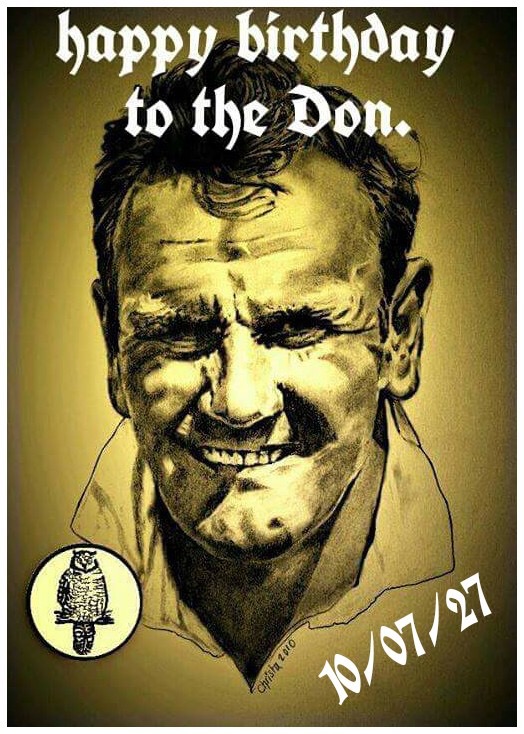
Happy Birthday to The Don: Simply the Best Ever  –   by Rob Atkinson

  
No need for any flowery prose here. No possible dispute about the sentiment in the title of this brief piece. 

Don Revie was the greatest English manager of all time. He single handedly raised Leeds United from mediocre nonentities, famous only for John Charles in the forty-odd years of their history, to the most feared and respected club side in the world. Leeds United were the last club to emerge from obscurity to attain the status of giants; there have been no additions to those ranks since. Don Revie brought this about, a success story from humble beginnings that no other manager can match. 

On the 88th anniversary of his birth, let all Leeds United fans raise a glass to The Don – The Greatest. Taken far too soon over 26 years ago, but still loved by those who matter, still revered by those who know – never forgotten. 

Don Revie – simply the best English football manager ever. 

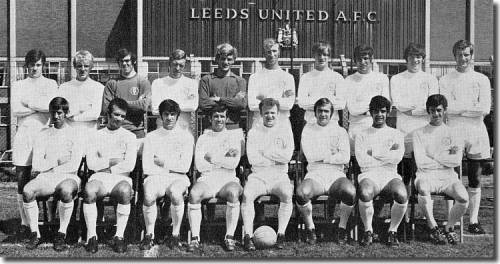
The Revie Boys: Super Leeds One to Eleven – by Rob Atkinson

Super Leeds

Sprake, the Viking, error-prone
Costly gaffes are too well-known
But brilliance too, in Budapest
Gritty show, Fairs Cup conquest
Outside the fold now, Judas jibes
Allegations, fixes, bribes

Reaney, swarthy, lithe and fine
Clears a rocket off the line
Always there to beat the best
Georgie, Greavsie and the rest
Speedy Reaney, right full back
Repelling every new attack

Top Cat Cooper, number three
Once a winger, then set free
From wide attacking, made his name
The best left back of World Cup fame
Scored at Wembley, League Cup dream
Got the winner for his team

Billy Bremner, black and blue
Red of hair, Leeds through and through
A tiny giant for the Whites
Semi-final appetites
Beat Man U, not once but twice
Billy’s goals, pearls of great price

Big Jack next, our own giraffe
World Cup winner, photograph
With brother Bobby, Wembley day
The lesser Charlton many say
Was Jack; but for the super Whites
He gave his all and hit the heights

Norman Hunter, hard but fair
Tackles ending in mid-air
Studs on shinpads, bone on bone
Take no prisoners, stand alone
With enemies strewn at his feet
Angelic Norm, that smile so sweet

Lorimer, the rocket shot
Lethal from the penalty spot
Lashed the ball from distance great
Fearsome pace he’d generate
90 miles an hour clocked
Keeper left confused and shocked

Clarkey next at number eight
A predator to emulate
The  greatest strikers anywhere
On the ground, or in the air
One chance at Wembley, snapped it up
Leeds United won the Cup

Mick Jones, the workhorse, brave and strong
Graft away the whole match long
But frequently a scorer too
A hat-trick blitzing poor Man U
Five-one, in nineteen seventy-two

The Irishman at number ten
Giles, a leader among men
Skill and strategy, world class
Struck a devastating pass
John and Billy, midfield twins
Hard as nails – for who dares, wins

Eddie “Last Waltz” Gray out wide
Beats three men in one sweet stride
Jinks and shimmies, deft of touch
Didn’t seem to matter much
Who might face him, come what may
Eddie beat him anyway

Eleven players, clad in white
Internationals, as of right
Ready to play, and battle too
Many the victories, losses few
Leeds United, Revie’s boys
Strength and power, skill and poise

Left with just sweet memories now
But even critics must allow
A squad of many talents great
Where every man would pull his weight
Cut one and find the whole team bleeds
A club United; Super Leeds


Super Leeds and “The Last Real Champions” – by Rob Atkinson

Image

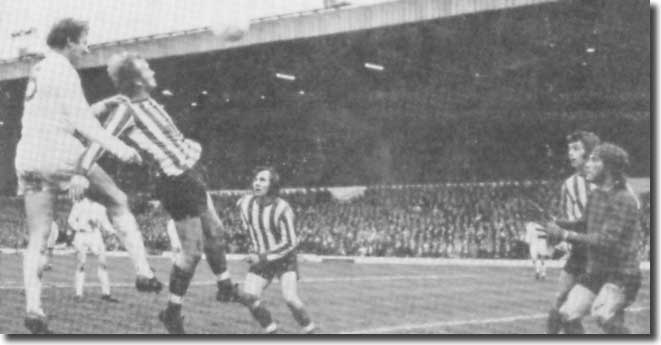
Big Jack Scores Against Sad Saints

If you should happen to be a football fan – as I am, and have been these many years, since days of yore with short shorts, middling ability and long sideburns – then you may well be in the habit of switching on the TV occasionally to watch the glitzy offerings of the munificently funded Premier League. With its incomparable array of prima donnas and fabulously wealthy superstars, prancing athletically around a pristine and manicured football pitch in the very latest state-of-the-art stadium (constructed courtesy of Meccano Inc.) – it’s a far cry from the heyday of The Football League, Divisions One to Four.

Back then, men were men, refs were nervous and physios routinely cured ruptured cruciates or shattered thighs with a damp sponge and hoarse exhortations to “gerron with it” – or so it seemed. Full-backs with legs of the type more usually to be found on billiard tables would careen through the mud at Elland Road or Anfield, some flash, quivering, overpaid at £200 a week winger in their merciless sights, destined to be afflicted with acute gravel-rash. Centre-backs with foreheads like sheer cliffs would head muddy balls clear to the halfway line, get up out of the mire, groggily shake their mighty frames, and then do it all over again – for the full 90 minutes, Brian. The good old days, without a doubt.

There is little that the modern game has in common with those far-off, non-High Definition times when some top-flight games weren’t even covered by a local TV camera for a brief clip on regional news. Now, every kick of ball or opponent is available in super slow-mo for in-depth analysis by a battery of experts, from a dozen different angles. The game today is under the microscope seven days a week, where then it was viewed only from afar, limited to highlights from a select few stadia every Saturday evening and Sunday afternoon. Even now, the smell of hot ironing and roast beef with Yorkshire Pud will take me back to Sabbath afternoons sat contentedly before “Sunday Soccer” as Bremner, Giles & Co dismantled the hapless opposition.

Image

Super Leeds

Leeds United was the team, back then. On their day, the lads would toy with their rivals as a particularly cruel cat might do with a half-dead mouse. Many will recall the spectacle of a mortally-wounded Southampton side – already seven goals to nil down near the end of the game – trying all they knew to get a touch of the ball as their tormentors in white passed it effortlessly between themselves, brazenly flaunting their catalogue of flicks, reverse balls and sublime long passes. The game was long since won and all Leeds’ energies were palpably focused on a very public humiliation of their exasperated victims. Some thought it was in poor taste, a shoddy way to treat fellow professionals. Leeds fans remember it 40 years on as the ultimate statement of an undeniably top team, proclaiming to the nation “Look at us. We are the best.”

This was 1972, when Leeds might well have won pretty much everything, but had to settle in the end for their solitary FA Cup triumph, missing out on the Title right at the death in typically controversial circumstances. Leeds won far less than they should have done; a combination of official intransigence, their own inherent self-doubt on certain big occasions, Don Revie’s crippling caution and superstition – together it must be said with some shockingly bad luck – limited their trophy haul to a mere trickle when it should have been a flood. But those flickering images of arrogant dominance and untouchable skill revealed also an unbreakable brotherhood and grisly determination that spoke of a very special team indeed. The resonance even today of that oft-repeated tag “Super Leeds” says far more about the status of Revie’s side than any mundane tally of trophies possibly could.

In those days, of course, the gulf in ability between Leeds United and Southampton, described by Match of the Day commentator Barry Davies as “an almighty chasm”, was just that. The gap in class was achieved on merit. It wasn’t backed up by any such gulf in the relative earnings of the men in white and the demoralised Saints, or players of any other club. The playing field back then was very much more level than it is now, when the top few clubs – in an apt metaphor for society at large – cream off the bulk of the income, leaving the rest to feed on scraps. The pool of possible Champions was consequently greater – Derby County won it that year of Southampton’s ritual humiliation, as Leeds faltered when required to play their last League game a mere two days after a gruelling Cup Final. Imagine the outcry if one of the major teams had to do that today! And ask yourself if a Derby County or a Nottingham Forest are likely to be Champions again in the near future, blocked off as they are from that status by the oligarchy at the Premier League’s top table.

There aren’t many more hackneyed phrases than “The Good Old Days” – but for those who like their sporting competition to have a wide and varied base, with the possibility of a good proportion of the participants actually having a chance to win in any given season – then the 60’s, 70’s and 80’s take some beating. Leeds United fans like to refer to their team of 1992 as “The Last Real Champions”, and a convincing case can be made for this, looking at the transformation which took place shortly thereafter, the explosion in finances for the chosen few, and the small number of clubs – invariably backed by mega-millions – who have been Champions since. Even the once-mighty Liverpool FC has been affected. Despite Leeds United’s current problems, they have been Champions more recently than the Anfield Reds.

It’s perhaps fitting that Leeds have a claim to the accolade of Last Real Champions. As Super Leeds, they dominated English Football for a decade, without ever winning their due. Now that we can look back to a turning point for the game 23 years ago when the Premier League broke away, and the cash registers started to make more noise than disillusioned fans, we can possibly consider those 1992 Champions, nod to ourselves, and say yes; they were the last of the old guard, the final Champions of the Good Old Days.

As epitaphs go, it’s not a bad one.

One Don Revie!! Why We Were RIGHT To Sing Through the Busby Silence – by Rob Atkinson

One Don Revie! There’s only ONE Don Revie!!

Twenty-five years to the day after we lost football’s greatest-ever manager, I’m irresistibly reminded of a tribute Leeds United fans paid to The Don of Elland Road, some time after his death.  It was a tribute paid in the face of compulsory mourning for Matt Busby, a manager rightly held in great esteem by the Establishment, and indeed by football as a whole – but this prescribed mourning was shoved at us as a fait accompli – like it or lump it.

We Leeds fans, deeply conscious of the fact that our own Don Revie’s death had been disrespectfully ignored by the FA, chose in our turn to ignore the official edict. So we paid our own tribute, singing the name of Don Revie instead of standing silent and resentful before an away game at Blackburn – and in so doing, we brought upon ourselves the self-righteous and sanctimonious disdain of many, many fools and hypocrites.

But the simple fact is that what we did at Blackburn that night in 1994 was absolutely right and proper.  It was not a calculated act of disrespect to a manager in Busby who had nothing to do with us.  Rather, it was a timely and positive tribute to our own legendary but marginalised manager, placed right in the face of official sanctimony, so that the whole world would know that it had been made – and why. Clearly, not everyone agrees with this point of view, many Leeds fans among those dissenters.  But here’s why they’re wrong to dissent.

The chanting of Revie’s name that night was admittedly pretty strong meat – it was a maverick stand to take at a time when the whole country seemed to have been brainwashed into accepting that one club’s heroes should be treated with a reverence denied to all others. Some misgivings I can understand – but I’m completely sick to death of hearing from those Leeds fans who profess still to be ashamed, all these years later, of the fact that we made the protest. The fact of the matter is, that this was the moment to stand up and be counted, collectively – and collectively, we’d not have been able to hold our heads up if some sort of gesture hadn’t been made at that game.

Look at the facts. The death of Busby was predictably and nauseatingly over-hyped by the scum-loving media. The FA-prescribed national minute’s silence was just the tip of the iceberg – there was also endless eulogising all over the TV and the sickeningly mawkish spectacle of the lone bloody piper at Old Trafford, beamed into all our front rooms whether we liked it or not.

On the other hand, the FA couldn’t even be bothered to send a representative to Don’s funeral, the hypocrites. So why the hell is there such a disparity, and more to the point, why the hell are we expected to just put up with it and go along with such blatant stinking hypocrisy and double standards? Are we supposed to have no pride? Well, I’m sorry, but sod ’em. Whatever anyone says – and I include the Leeds players of the time and those from Revie’s era who condemned what happened – the chanting of Revie’s name at Blackburn was a very necessary stand against the establishment view that Busby was a saint and Don was a sinner. It was a statement of our reverence for the Don, against a background of organised and compulsory national mourning for someone who was a hero only to Scum, City and possibly Liverpool fans. And it was an assertion of the fact that we are Leeds and nobody tells us when to show respect, especially when no bugger showed any respect for the Don in life or in death.

The players from any era who were wheeled onto camera to criticise the actions of the fans at Blackburn, have one thing in common. They haven’t got a bloody clue what it’s like to be a fan. They’re players, club employees, and they come and they go, even the best and most loyal of them. Strachan – not a clue. Eddie Gray – not a clue. Not one of them knows what it is to be a fan and continually to have the media’s favourite bloody club shoved down your throat, to the exclusion of everything and everyone you care about as a Leeds supporter.

I don’t give a toss for all the apologists who sit there bleating, oh it was a terrible thing, they dragged the name of our club through the mud. Well in case you haven’t noticed, the name of Leeds United is always being dragged through the mud, and not by us, but by the FA, by the buffoons of the Football League, by nonentities who work for or support other clubs, by the Daily bloody Mirror and other gutter rags, and by Uncle Tom Cobleigh and all. So sod ’em. We did the right thing at Blackburn, just as we did in the Galatasaray ground years later, turning our backs to the field of play. We showed pride for our club, respect for our dead, and a big fat V-sign to all those who are so overtly against us.

It’s all about pride and self-respect at the end of the day – well, I was proud of us in the Ali-Sami-Yen that night in 2000, and I was no less proud of us at Blackburn. I’ll always be glad we didn’t just meekly toe the line and do as the hypocrites in the establishment wanted us to do, as every other simple-minded donkey did. I’m glad and I’m proud that we were big and angry enough to be different and stand up for our point of view.

That’s what it means to be Leeds – we are United, and we are the best.  You know what you can do with the rest.


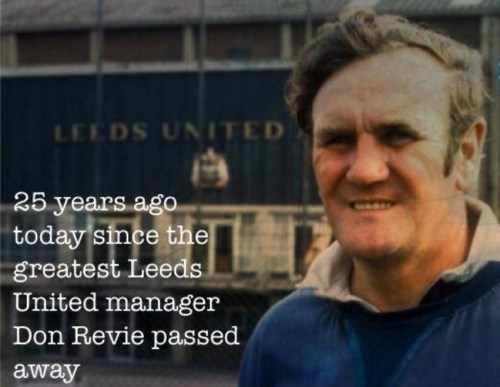
Taken From Us 25 Years Ago Today: Revie, The Don of Elland Road – by Rob Atkinson

The Don - the Greatest

The Don – the Greatest

They say that great players don’t always make great managers, and Bobby Charlton is a stand-out example of that essential truth.  His brother Jack, by common consent not anything like the player Bobby was, but ten times the bloke, was by far the more successful manager.  Then again – he learned from the best.

And they will twist the argument around to show that average players can make great managers. We’re usually invited by a brainwashed and indoctrinated media to take Alex Ferguson as an example of this; my own choice would be Arsene Wenger, a deeply average player but a highly superior coach, tactician and innovator who made a significant dent in the Man U monopoly of the Premier League – despite the vast off-field advantages of the Salford club. Remember Wenger’s “Invincibles”?  There is also, of course, Jose Mourinho – and many others who pulled up no trees as players, but blossomed into legendary managers.

But there are a select few examples of truly great players who went on to be truly great managers – the likes of Busby and Dalglish, for instance – and I will argue passionately to my last breath that the best of the best was Donald George Revie, who died of Motor Neurone Disease 25 years ago today.

Don Revie was an innovative, thinking footballer, the pivot of the famous “Revie Plan” at Manchester City when he was the first to exploit deep-lying centre-forward play to great effect as City hit the heights in the mid to late fifties. He was instrumental in the Wembley defeat of Birmingham City in the FA Cup Final of 1956, and also helped restore English pride after two batterings by Hungary – the Magnificent Magyars having trounced England 6-3 at Wembley and 7-1 in Budapest. Revie’s adapted attacking role helped the National team annihilate Scotland 7-2 and his reputation was made as a selfless team player who was adept at making the ball do the work while team-mates found space as he dropped deep, baffling the defences of the time.

Revie was clearly a thinker, and developed very definite ideas about the game during his playing career, ideas he would later put into practice to devastating effect as a club manager. It is undeniable that, during his thirteen years in charge at Leeds, he elevated them from simply nowhere in the game to its very pinnacle, preaching togetherness and the team ethic above all else. Respected judges within the game have described the football played by Leeds at their peak as unmatched, before or since. In the eyes of many, that Leeds United team were the finest English side ever, a unit of grisly efficiency and teak-hardness yet capable of football which was outstandingly, breathtakingly beautiful, intricate in its conception and build-up, devastating in its effect.

Here is the scale of Revie’s achievement: in an era before the advent of lavish sponsorship and advanced commercial operations, he built a club from the ground upwards – a club with an apathetic support, which had hardly two ha’pennies to rub together, and whose prime asset was a group of raw but promising youngsters. The way that Revie nurtured those youngsters, moulding them into a team of supreme talent and majestic ability, is the stuff of legend. In some cases, he had to ward off the threats of homesickness: a young Billy Bremner was determined to go home to his native Scotland and Revie arranged for his girlfriend to move to Leeds, helping the lad settle down. Sometimes he had to adapt a player from one position to another – Terry Cooper was an indifferent winger who was made into a world-class overlapping full-back. Examples of his inspirational and man-management skills are many; he wrote the modern managerial manual from scratch.

Revie raised almost an entire squad from the junior ranks through to full international status, but he also had an unerring eye for a transfer market bargain. He took Bobby Collins from Everton, and saw the diminutive veteran midfielder produce the best form of his career. He lured a disaffected John Giles from Old Trafford where he was an under-rated performer. Giles swore that he would “haunt” Matt Busby, the manager who let him go, and Revie enabled this vow to be realised, converting Giles to a more central role after the end of Collins’ first team career. Giles and Bremner would form an almost telepathic central midfield partnership for Leeds, carrying all before them over the muddy battlefields of Division One. Revie later described his recruitment of Giles from Man U as “robbery with violence”.

As the sixties wore on, the Don would add Mick Jones and Allan Clarke to his formidable squad while it grew up together in a family atmosphere at Elland Road. Rarely if ever before or since can a manager have been so involved in his team’s welfare and well-being, no mere tracksuit manager this. There would be flowers and chocolates when a girlfriend or wife celebrated a birthday, a listening ear and helping hand whenever problems threatened to affect a player’s form. Revie was a father figure to his players for over a decade, forming a bond of mutual loyalty and respect that still sets the standard for enlightened management today.

Don Revie has been described in scornful terms by the ignorant, as a dossier-obsessed and over-superstitious manager by some people of insight and judgement, and as simply the best by his players who still survive from that amazing period of Leeds United’s dominance at home and abroad. He was perhaps too reliant on lucky suits and the lifting of gypsy curses, and other such supernatural preoccupations. He could maybe have let his team “off the leash” a little earlier than he did – when given full rein, they were next door to unstoppable. But it’s hard to hold the caution and superstition of the man against him; this was a time unlike today when livelihoods depended on a bounce of the ball, when results mattered in a bread and butter way. There were no cossetted millionaires then, no examples of young men who could pack it all in tomorrow and live in luxury for the rest of their lives. It all meant so much more in those days and the word “pressure” had real resonance.

The modern coaches have greats among their number, there’s no doubt about that. It would be invidious to single out names; after all, the media in a misguided fit of uncritical and commercially-motivated hero-worship have been busily engaged for most of the last three decades in dubbing “S’ralex” as the greatest ever. But the legend that is Don Revie can sit comfortably on his laurels, the man who – more than any other – took a sow’s ear of a football club and made of it a purse of the very finest silk which yet concealed a core of Yorkshire steel.

Donald George Revie (1927 – 1989) – Simply The Best.

When the Anfield Kop Saluted our Leeds United Champions – by Rob Atkinson

Leeds United's Champions take the tributes of the Liverpool Kop

Leeds United’s Champions take the tributes of the Liverpool Kop

Each of Leeds United’s three Football League Championship titles was clinched at Anfield, home of Liverpool FC.  In 1992, the Reds were good enough to beat a demoralised Man U 2-0 which, added to our earlier triumph at Bramall Lane, saw us as Champions by 4 points in the last ever proper old-style league competition.  In 1974, Liverpool obliged at Anfield again, losing at home to Arsenal to ensure that they couldn’t overhaul us at the top.  I remember a TV programme going to an ad break and then an information board coming up which read “Football result: Liverpool 0, Arsenal 1 – LEEDS UNITED ARE THE CHAMPIONS”  That simple memory still sends a tingle down my spine, even forty years on.

And of course – probably best of all – Leeds United’s first ever title success at the top level of the game came after a showdown between the two deadly but mutually respectful rivals on April 28 1969 – almost exactly 45 years ago. Leeds had come to Anfield knowing that a point would clinch the league, and they set out their stall as only they could to obtain that point, in the toughest place possible.  They would go on to beat Nottingham Forest in the last game of that season to reach a record 67 points – a mark that wasn’t beaten until Liverpool themselves recorded 68 points, ironically with a 3-0 win at Elland Road, in their fabulous 1978/79 Championship year.

That legendary Leeds United squad of the sixties and seventies hung on Don Revie’s every word, they would follow him into the pit of Hell itself and they trusted him implicitly.  This was the cornerstone of the relationship between team and boss; the unit thus formed was formidable indeed and, on their day, there was no-one to touch them.  It was often said of that Leeds side that if you cut one, they all bled – and then you’d better watch out, because they’d be after you as one man to seek retribution. They would do anything for each other and anything for the legendary Don – but on that historic night at Anfield 45 years back, they must have come as near as they ever came to saying “You what, gaffer?  Are you bloody sure??”

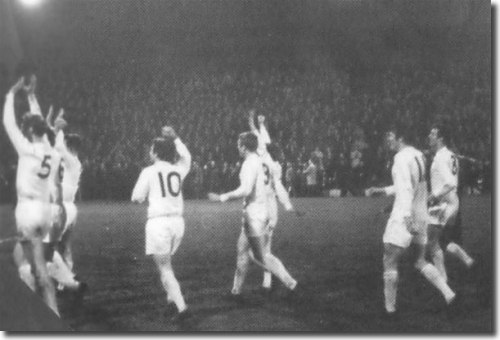
On the final whistle, as the Leeds players cavorted with joy in front of their delirious fans at this first delightful taste of being The Best – and as the weary Liverpool troops, having given their all in vain, sportingly congratulated the new Champions – Revie came over to Billy Bremner and confirmed to him that he was to lead his team over to the Kop. This, remember, was at a time when crowd violence was becoming very fashionable.  A similar gesture at the Theatre of Hollow Myths down Trafford way, and sundry other less-than-welcoming grounds around the country, might very well have got you a crack on the head with a pool ball or a dart in the eye. It did rather seem to be pushing things a bit – but Revie was insistent, and he was very definitely The Boss.

So it happened that Billy Bremner, captain of champions Leeds United, gathered his players together and led them on a long, slow walk to the legendary Anfield Kop.  When it was realised what was happening, a hush fell on the ground.  In near-silence, the heroes in white walked on, nearer and nearer to the most iconic terrace of them all.

On the night, Bremner had won the toss for Leeds, and had elected to make the Reds attack the Kop in the first half; a tactical ploy that went against the home side’s preference for a second half onslaught on their favourite end. So the Leeds players had to walk nearly the length of the pitch to approach the massed Liverpool fans behind the Kop goal, and with every passing second, the silence became more loaded – almost a solid thing you might cut with a knife.  Leeds United were asking for it – what would they get?

What they did get is now the stuff of legend and has passed deservedly into United and Liverpool folklore.  As the triumphant yet apprehensive Leeds warriors finally neared the Kop, the long silence was finally broken as the first cry of “Champions!” went up, swiftly echoed by others on the still-packed terrace – until finally the whole 27,000 population of that mighty hill were acclaiming the title-winners with the same shout, over and over again: “Champions! Champions! Champions!!”

This was completely unprecedented; a moment unparalleled before or since, something to raise the hairs on the back of your neck, the ultimate acknowledgement of respect and admiration even out of defeat – and a massive credit to the football fans of Liverpool FC.  It was the epitome of true rivalry between two crack teams, forged out of one of the grisliest on-field battles any football ground had witnessed for many a long year.  No finer tribute could have been paid by any fans, anywhere – and the Leeds players stayed out there, in front of the Kop, for a good quarter of an hour or more, paying their respects to both sets of fans.

Later, in the dressing room, Leeds celebrated anew with champagne provided by Bill Shankly, whose quote was short and to the point: ‘Leeds United are worthy champions,’ he said. ‘They are a great side.’  Revie responded by praising Liverpool, the club, the fans and their fine team. ‘The reception given us by the sporting Liverpool crowd was truly magnificent,’ he acknowledged, ‘and so, for that matter, was our defence tonight. It was superb in everything.’  The conduct and bearing of both managers was a mark of the relationship between the two top clubs in the land – and a marked contrast to the ungraceful reaction of Alex Ferguson at the same venue 23 years later, after the Leeds of 1992 had pipped his charges to the Last Championship Title and he, characteristically, dripped bile and acid all over the occasion.

Looking back from today’s perspective, with managers bitching about each other, players diving, cheating and trying to get each other into disciplinary trouble – and the stench of filthy lucre all-pervading – it seems far longer ago than 45 years to that Anfield night when the competition was so unremittingly fierce; white-hot, with no quarter given or asked for.   And yet after the battle was done, all that remained was respect from the teams for each other, of the staff for their opposite numbers, and of both sets of fans for an epic battle well fought.

Sadly, those days are gone, never to return.  But for those of us lucky enough to be able to remember, those images will never fade, the sound of those tributes can still be heard ringing out across the years.  It was a night of triumph and disaster, as these decisive nights tend to be, depending on whether you were White or Red; but it was also, let us not forget, a night of dignity, respect and utter, unalloyed class – not least from those 27,000 Liverpool fans on the Anfield Kop.    

So, Did Leeds United Ever REALLY Sort That Gypsy Curse?? – by Rob Atkinson

20140312-014348.jpg

I worship the memory of Don Revie.  He’s probably my all-time hero; he took over a nothing club with a nothing history, famous only as a stepping-stone for the World’s Greatest Footballer on his way to success with Juventus as Italian football’s finest-ever import (yes, step aside, Platini, Maradona, Law, Greaves et al – John Charles is still the King for the tifosi).  Don took over at Elland Road, instituted a scouting system second to none and – let’s cut to the chase here – gave us the finest club side these islands had ever seen.  But in one respect, Don’s effectiveness is open to doubt.  A notoriously superstitious man, he became convinced that Elland Road was under a malign curse – so he recruited a gypsy from Scarborough (I can personally confirm that the place is crawling with them) in order to exorcise the spell and ensure success.

The fact that Revie and his team achieved far, far less than they should have has been put down to various factors over the years, but the possibility that the lady from Scarborough was off-form the day she went about her curse-lifting cannot be excluded.  It would, perhaps, be the most likely cause of United’s managing to finish runners-up so often with easily the best team around.  Always the bridesmaids, never the brides, it was often and cruelly levelled at the peerless Whites – and while some trophies found their way to LS11, that legendary team – dominant during a viciously competitive decade – never won its proper dues.  And when the talent drained away from Leeds in the wake of Don’s departure – well, then the curse really bit.

From the perspective of a half-century on, it’s possible to argue the theory that Don failed in his efforts to rid Leeds United and Elland Road of supernatural barriers to success.  It’s even arguable that, since those halcyon times, the strength of whatever evil influence pervades LS11 has actually increased.  How else to explain the fact that so many players over the years have done well in elevated company, but arrive at Leeds United and are immediately transformed into bumbling failures?  Or, indeed, the number of players who have served a spell with the Whites, looked hopelessly out of their depth – and have then gone on to do distinctly OK elsewhere?

As a club, we do seem cursed in some vital particulars.  Look at the effect we have on centre-halves, for instance.  They come in, they look good, they earn a permanent deal – and then they start playing like Frank Spencer in the 1970’s sitcom “Some Mothers Do ‘Ave ‘Em“.  Likewise with managers.  Our last two were notable for the ease with which they have attained promotion from this league into the FA Barclays Promised Land.  But they come to Leeds, shine briefly before the Gypsy’s Curse gets under their skin – and they then start floundering horribly, unable to make a single coherent decision, at a loss to pick a winning team or choose effective tactics.  They end up at after match interviews or press conferences, looking like rabbits caught in the headlights.  It’s pitiful.

Never has this line of reasoning seemed so obvious to me as right now.  We’ve just had two home games against distinctly un-scary opposition – and we’ve contrived to lose both, heavily, with only late goals putting a rather flattering patina on the ugly landscape of abject failure.  We have an intimidating stadium, players who have been successful elsewhere – and who will doubtless be successful elsewhere in the future – we have the best fans in the world, we’ve had managers with proven track records.  And yet we’re still irretrievably, inexplicably crap.  What to do?

Maybe the Italian guy is the answer in more ways than just the obvious financial sense.  He’s quite a superstitious cove himself, is our Massimo.  Perhaps he will sense the malevolent ambience around the place and take steps of his own to get rid of any other-worldly nasties that Don’s Scarborough exorcist failed to blitz.  Maybe the key to Cellino’s revolution lies in his ability to follow his own superstitions, make whatever supernatural changes are necessary and see Elland Road emerge from under the cloud of an ancient curse and into a bright new future where we get a bit of bloody luck every now and then.  At least we can rest assured we won’t be sporting a purple strip, and we can hope against hope that Cellino’s lucky colour is all-white.

It’s got to be worth a try.  Let’s face it, we’ve tried just about everything else – and still the Gods have rarely smiled upon us.  Then again, they’re usually too busy sorting out a spawny late winner for Man U, damn them.  We’ll just have to hope it’s not too late to get rid of whatever shreds of curse are still left after Don Revie’s failed attempt to get us blessed back in the sixties.  And I still won’t have a word said against the Greatest Manager There Ever Was.  He may not have known how to pick an effective gypsy, but he sure as hell could build up a club from nothing.  How we could do with the Don of Elland Road now.

Football League Attitude to Leeds Still Tainted by Hardaker’s Hatred of Revie – by Rob Atkinson

Image

Shaun Harvey and his fellow Leeds-haters at the FL

Here we are, then. The deal is all but done.  Save only for what should really be the formality of Football League approval, Massimo Cellino is the new owner of Leeds United, having purchased a 75% stake in the club, the remaining 25% remaining in the hands of GFH and their various investors. A fairly complex management structure will be in place, seeing Haigh and Nooruddin retain executive positions, something that Cellino himself has at least initially set aside in favour of the non-executive President’s role.  But there is absolutely no doubt at all wherein resides the power behind the throne; Cellino has promised to re-purchase the Elland Road stadium and move to Yorkshire – he also intends to take the same hands-on approach to player recruitment as he took at Cagliari. How all this will pan out in practice remains to be seen.  The proof of the Yorkshire Pudding will be in the eating.

So, what of this Football League “formality”?  Well, guess what.  It now seems likely to be spun out for as long as those men in suits can feasibly manage.  On the face of it, neither Cellino’s existing convictions, regarded as “spent” under English law, nor his pending prosecution for embezzlement (innocent until proven otherwise) can currently be counted against him.  In the absence of any other apparent issues, the Football League (under their own tightly-defined rules) would seem to have little option other than to rubber-stamp this takeover.  But when this august body finally commented on the matter earlier on the Friday before the weekend of the Yeovil game, it was only to say that they required further information from Cellino and from GFH.  Until this information was forthcoming, it concluded tersely, the matter would not be progressed.  Oh, and you can’t have that Italian lad Tabanelli on loan either – it was all done against the rules. Oh dear, how sad, tough.

So, what should be a simple matter will drag on, it seems, for at least another week.  Meanwhile, the financial situation at Leeds United is becoming steadily clearer and the picture being painted is not a pretty one. It would seem that, until the eventual approval of our Italian saviour, we do not have the proverbial pot in which to do the proverbial.  It’s so hard to dismiss the image of pasty little men in grey suits rubbing their hands in glee over the way in which they have been able to prolong the discomfort of a club they have long treated as a pariah compared to the rest of the “football family”.  In this, they are acting very much in line with what the late unlamented Alan Hardaker, Football League Secretary back in the day, would have wanted and approved.

Alan Hardaker was a failed footballer turned successful bureaucrat, exhibiting the kind of pettifogging regard for rules and regulations, to the exclusion of common sense, observed in many such grey and rigid little men.  Once he had taken a dislike to United manager Don Revie – and admittedly, it was mutual – he seemed to allow this emotion to colour all of his dealings with Yorkshire’s premier club.  Decisions were made which seem utterly extraordinary now – the requirement to play a title decider 48 hours after the Cup Final win in 1972 stands out, but that frankly bizarre decision was no isolated example of official intransigence.  Hardaker was usually outspoken in defence of his position, leaning over backwards to justify himself whilst, in the same breath, explaining how the disputes were all Revie’s fault anyway.  He described the United boss as ” totally ruthless, selfish, devious and prepared to cut corners to get his own way”, stating also that “As secretary of the Football League I often found Don Revie, as the manager of Leeds United, to be a pain in the neck”.  In the light of such comments, it is no surprise that Leeds were usually lacking for friends in high places.  Their pursuit of every honour in the game left them in need of some breathing-space and consideration now and again – but none was to be had under Hardaker and this played a large part in United’s fate of being seen as always the bridesmaids, never the brides.

The late Alan Hardaker

The late Alan Hardaker

Alan Hardaker has been dead for almost 34 years now, but his memory is honoured in the eyes of Leeds-haters everywhere, every time an official decision is taken to the detriment of that much-maligned club.  Brian Mawhinney, loathsome Tory and willing tormentor of Leeds over the “Minus 15” debacle, was a worthy successor to the Hardaker legacy.  Now we have Shaun Harvey in the box seat, former Bates poodle and hardly free of prejudice where the interests of Leeds United are concerned.  Hardaker would be proud of them both; nobody standing at his graveside would be able to detect the sound of any spinning going on down there. Hull-born, Hardaker openly hated Don Revie’s Leeds United – and that rancid sentiment tainted all of his dealings with the club whilst he was in office. The current incumbents are rather less vocal than the late Alan, it must be said.  Brian Mawhinney, for instance, was much given to weasel words about Leeds being a valued member of the football family – but the underlying attitudes haven’t changed noticeably, as was demonstrated in the saga which developed around the 15 point deduction which – only just – managed to keep United back in League One after that first season, to the undeserved benefit of Nottingham Forest who copped fur a promotion they’d failed by some distance to merit on the field.  To this day, apparently, the Football League will still do Leeds United a bad turn if they possibly can.

It will be very interesting to see which way the League do eventually jump. Any decision to reject Cellino would seem hard to justify under the rules as they exist – but you get the feeling that, the more Leeds fans have realised they have a possible new era of financial muscle and security in prospect, the less keen those little grey men have been to give the deal that final seal of approval.  A week earlier, it all looked different; angry Leeds fanatics were horrified at the prospect of Cellino, barricading him inside Elland Road and seeing off all attempts at rescue. At that point, the Hardaker thing to do would have been to approve the Italian immediately.  Now, the Football League quite possibly perceive a dilemma.  How best to serve the worst interests of Leeds United??

It may be that I’m just being paranoid – but remember, that’s the natural psychological state of any Leeds fan of long service.  If you know yer history, you’ll be able to point to many instances where the game has dealt United a disgustingly scurvy hand.  So really, it’s no wonder we’re bleedin’ paranoid.  But for me at least, the suspicion won’t go away that somebody, somewhere is looking to see what spanners they can throw in the works of a deal that looks more and more likely to be Leeds United’s best hope of progress onwards and upwards. Indeed, given the parlous nature of matters as they stand, with the club living hand-to-mouth and surviving on ad hoc loans, Cellino may even be the only chance of the club surviving in a form recognisable to its legions of fans worldwide.  It could just be that serious. We’ll simply have to keep our fingers crossed that the next week can finally see things confirmed, letting us get on at long last with daring to dream and celebrating the purchase of our beloved Elland Road.

So come on, you Football League suits, get your finger out and do the right thing – if only to prove to me that all my dark suspicions have been groundless and that you really are an impartial and benevolent ruling authority with the best interests of ALL its members at heart.  Stand up, Shaun Harvey, and prove you’re a better man than you appeared when you were yapping obedience to Ken Bates. Let us start dreaming our dreams and debating whether or not we really want del Piero.  Can you actually show us, Shaun, that you have some atom of integrity after all?

I really, really hope so.  The sooner old Hardaker is angrily spinning away in his grave, the happier I and many thousands more Leeds United fans shall be.