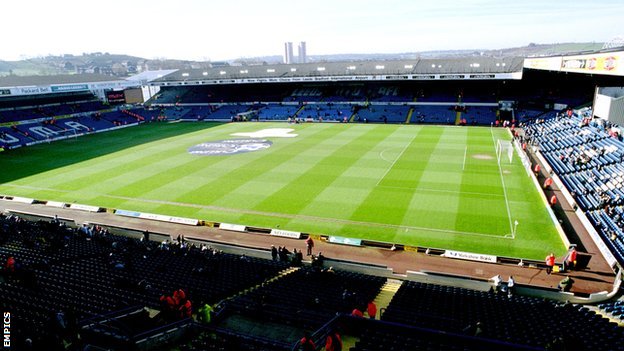
Leeds United’s Elland Road Stadium
Leeds United are officially up for sale again, just three months after GFH Capital completed their “bargain purchase” of the Club from cuddly Uncle Ken Bates on 21 December last year. This news might be received with joy, despair or indifference, depending on your current attitude to the low-budget kitchen-sink drama that is LUFC these days.
The joyous ones are the optimists, dreaming that – at last – a rich billionaire (as opposed to the sort of impoverished billionaires normally linked to the Club) will come steaming in on his souped-up camel, and purchase for us long-suffering fans the baubles we have craved ever since winning the Last Proper League Championship.
The pessimists meanwhile are withdrawing their heads back under the carapace of their impenetrable gloom, pausing only to remind the rest of us that they knew all this takeover talk was bollocks right from the start last May, that no-one with any dosh would come within a mile of Leeds United, and that we’ll now probably be sold back to Ken Bates for ten bob after a second administration, so that he can fulfill his stated aim of reducing us to the Ryman League, Division Three.
Personally, I’m languishing among the indifferent tendency, somewhere between these first two groups. I’ve quite frankly had enough of Leeds United this last year or so, especially after the battering all our psyches took with the roller-coaster TOMA* saga of last summer, and being roundly laughed at and suffering from chronic urine-extraction by dopey fans of daft little cobble-stone clubs (you know who you are.) It’s just not good for morale, and mine is shot through, thanks very much.
The thing is though, the Club has somehow to carry on its business of playing games of football with some appearance of trying to win them, and maybe in the process attracting what they are nowadays pleased to call “customers” through the computerised turnstiles. And this undertaking is not helped at all, not in the least, by any measure of uncertainty among the fanbase. Last summer was awful, and now – with GFH Capital apparently anticipating completion of a sale withing a window of between six and twelve months – we have more of the same in the offing. So another transfer window will pass without the urgent surgery needed to transform the current squad into a lean, mean winning machine. Another six months to a year during which the creeping disease of apathy will spread further throughout the body of support, once so vibrant and fanatically motivated. The manager is off, the latest boy wonder Super Sam is being tipped for a move to a proper football club and the fans are in the dark – as usual – regarding any long-term vision for our once-great Club.
Surely (you’d have thought) there must be some plan, some concrete strategy, for getting back to the Premier League, which is the only environment where a club like Leeds United – with its history, tradition, remaining infrastructure and global fanbase – can hope to survive and prosper. This has to be the minimum aim, and nobody with any ambitions of running the club should be under any illusions – once the Promised Land is reached, the support will not be content, like any old Wigan or Norwich, with mere survival. The Leeds fans will want to swagger in like they own the place, have a brief look around, and then win it. That’s what we did last time, 21 years ago, and the fact that it’s a totally different world nowadays will not stop that urgent demand for success, that imperious need to take on the game’s elite, and make them eat crow.
This demand, this greed and yearning for past glories to be repeated, can serve either as an inspiration for ambitious and visionary owners, or as a millstone around the neck of people who might want to come in, seek to have the club tick over in the lower reaches of the Premier League, and depart with some sort of profit. Obviously it’s to be hoped we might attract the former type, but they’ve not emerged as yet despite months of speculation about the shape of things to come post-Bates. The time is fast approaching when decisions need to be made for the good of Leeds United, about its strategy for success in the 21st Century, its model for progress in the new high-finance structure at the top end of the game and the picture it can justifiably paint for the fans of the type of club they’re going to have to support going forward. GFH Capital told us that they were here for the long haul, but now they’re jumping ship faster than the scarediest rat, making some of us wonder just how quickly that ship is sinking. What leadership can we expect from them now, what confidence can we have in them when they’re already yesterday’s men? Meanwhile we all remain firmly, blindly in the dark, where we’ve spent the bulk of the last decade, wondering what’s to become of our beloved Leeds.
Now that’s far, far too long a period of unhappiness and uncertainty for a group of people who have – mostly – continued to shell out their hard-earned, buy the tacky merchandise and roar their support from over-priced seats during a period of sustained failure and mostly crap football. The fact is that the Club is bang to rights on accusations of gross complacency and mistreatment of its prime asset – the highly vocal, passionate and still predominantly dedicated support, both immediate and match-going, and more generally in all parts of the globe. Fans want to know what’s going on at their club; quite understandably they want to be involved, they want to feel part of what’s going on. The Club have callously disregarded all of this for ages now, recent cosmetic gestures towards “fan engagement” notwithstanding, and despite welcome moves towards a more realistic pricing structure. There just hasn’t been enough transparency, and now we’re going to enter another disturbing period of uncertainty, to emerge eventually – well who knows in what shape we’ll emerge? Treat any group of “customers” (if we really must so term fans) with such blatant disregard and such arrogant refusal to consult them and address their concerns, and eventually – even with fanatics and people who live their lives through their obsession – you’ll lose them. I’ve been a fanatic, for 38 years, at some cost to my financial and social well-being, and yet they’ve damn nearly lost me. I’m starting to prefer my football wrapped in a film of nostalgia – it’s less painful than the current reality. But whatever defiant noises I might make, and however much I might warn of erosive apathy – I still care. Too deeply for my own good. And there remain thousands like me.
But we can’t carry on like this. It’s got way beyond a joke, and the jibes from opposing fans – all too well aware of our history, and nursing the standard anti-Leeds chip on their shoulders – are far less worrying than the grumbles of discontent from the ranks of the still-faithful. Get your act together, Leeds United, and do it soon, or preferably do it NOW. We’re still with you. But for how much longer?
*TOMA – For the uninitiated, this is an acronym referring to the perceived unlikelihood of Leeds United benefiting from a buyout to its advantage. Take Over My Arse.

 John Barnes, Liverpool’s lithe, lissom winger, chose that day to really turn it on – just as we’d all wished he would for England ever since his legendary goal against Brazil in the Maracanã – but his virtuosity for his club on this day was bad news for Leeds United. First, he dinked a dipping ball to the far post at the Kop End, and the roof of our net billowed as Ray Houghton finished. Next, he was involved in the award of a clear penalty, struck past John Lukic with power and precision by Liverpool’s wardrobe-shaped Danish scouser, Jan Molby.
 home off the crossbar. Then Chappers challenged for a high ball at the near post, and in it went – only for the ref to disallow it, his dismissive reaction to Chapman’s protests further enraging the hyped-up hordes on the Gelderd End. Hopes revived though as the ball sailed over a clearly-fouled Chapman from the left and landed in the area at the feet of Shutt, who swivelled to score competently. 2-4 now, and maybe an unlikely comeback was in the offing. But almost immediately, Ian Rush mugged Chris Whyte just outside our box, and back heeled into the path of Barnes who took it on and scored a brilliant fifth, to renewed home despair.











 Life, Leeds United, the Universe & Everything