Monthly Archives: December 2013

Exclusive: Bates in League With Mysterons for “Radio Control” of Leeds United – by Rob Atkinson

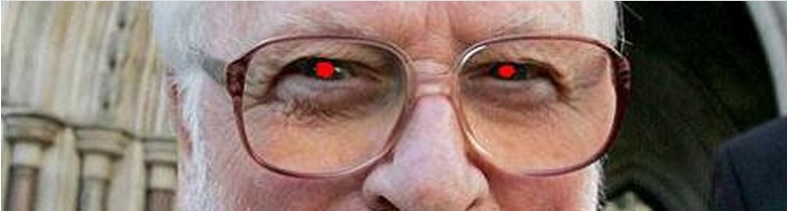
BatesEyes

Bates: Evil plot with Mysterons to control and destroy Leeds United

The news that former Leeds owner Ken Bates is to operate a “radio station” in the vicinity of United’s Elland Road stadium took on a more sinister aspect last night when it emerged that the former Chelsea supremo has actually entered into a pact with intangible extra-terrestrial arch-fiends The Mysterons.   The evil alien race, believed to originate on Mars, have a well-documented history of exerting control over our species, and are known to issue their threats and demands by radio.  Bates’ new venture, cunningly named “Radio Yorkshire” in an impenetrably sly effort to distance it from the now-defunct “Yorkshire Radio”, would obviously be an ideally-situated base from which the disembodied masterminds could assume control of Leeds United, a necessary precursor to their ambitions of world domination.

It is understood that Bates was earmarked as a suitable terrestrial agent of the Mysterons as far back as 1984, due to his expressed antipathy towards the Yorkshire giants while he was boss at Stamford Bridge.  Bates was quoted then as saying: ”I shall not rest until Leeds United are kicked out of the football league. Their fans are the scum of the earth, absolute animals and a disgrace. I will do everything in my power to make sure this happens.”  This forthright statement caused antennae to prick up on Mars, and moves were immediately set afoot to recruit Agent Ken to the Mysteron cause.

The masterplan has had a setback recently with Bates’ infiltration of the club having been brought to an end by forces of the counter-alien organisation GFH Capital, under its reclusive Chief, the legendary Colonel White – a man thought to have a strong personal interest in the success of Leeds United.   Bates, however, is allegedly under orders to maintain his evil programme and, to this end, advanced state-of-the-art extra-terrestrial communications and hypnotic control technology has been installed above Subway opposite the South Stand. Resistance, though said to be futile, is being co-ordinated within Leeds United by another Spectrum agent, Lieutenant Green – although tragically he has been on the injured list recently and thus has been prevented from active involvement against the Mysterons.

hansenscarlet

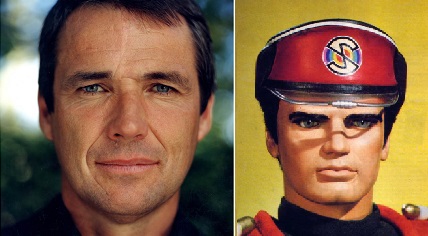
Scarlet (pictured, left) and Hansen (right)

Due to the obvious potential gravity of the threat posed by what lies behind Ken Bates’ new venture, speculation is now rife that Lt. Green may be replaced in the January transfer window by Captain Scarlet who, while lacking a final ball – or indeed any recognisable primary genitalia –  has the crucial advantage of being indestructible. Scarlet, famously the love-child of Alan Hansen and Cilla Black, is thought to be available on a Bosman from his current club Liverpool.

Detailed plans for the January window are still being drawn up, with the threat of Bates and the Mysterons very much in mind, by the Leeds United management team on Cloudbase (otherwise known as the East Stand Upper).  Club manager Brian McDermott has expressed a wish to add at least two new signings to his existing squad, emphasising that he is looking for quality above quantity.  “I’m very clear about what we need,” said McDermott.  “We’re looking for a mixture of youth, experience, talent, dedication and courage in the face of alien attack.”

Leeds fans will be wary of the threat on their doorstep but determined to see of Bates once and for all.  A spokesperson for LAMA (Leeds Against Martian Aggressors) said “We’ve seen off Ken before, and we can do it again.  Mysteron radio control is not something we’re worried about, quite frankly.  We all listen to Radio Leeds now, they’ve got Ben Parker and he’s much more positive than dear old Eddie Gray was.  Eddie’s pessimism and negativity used to make my ears bleed.  Leeds legend, though.”

Ken Bates is 106.

Link

Leeds United MD David Haigh on Transfers and Stadium Development

Click here:  Leeds United MD David Haigh on Transfers and Stadium Development

An upbeat interview from the charming and urbane Mr Haigh, who promises an exciting time ahead and commits to supporting manager Brian McDermott in the January transfer window.  Well worth listening to – and even an unabashed cynic such as myself couldn’t fail to be impressed by the enthusiasm in the man’s voice when he talks about the club which he has, apparently, supported since boyhood.  Developments in both the stadium and the transfer situation will be awaited with bated breath – and a certain amount of that very unfamiliar commodity as far as Leeds United fans are concerned – optimism.

How San Siro Dom Matteo Became a Leeds Legend – by Rob Atkinson

Matteo

Dom Matteo scores to become a United legend

However much pedants may argue about when the third millennium started – January 1, 2000, or a year later – the season 2000-01 was the first proper 21st Century season, and it was also my annus mirabilis European campaign; having never seen my beloved Leeds play abroad up to this point, I witnessed them competing at the highest level in three true cathedrals of continental football.  Incidentally, I’ve always favoured the Jan 1, 2000 date as the start of the millennium – that’s when the most spectacular fireworks kicked off, that’s when the magical sight of four numerals clicking over was seen – and most importantly that’s when Leeds United were heading the Premiership table, marking what will probably be football’s only thousand year threshold by sitting proudly at the top of the game – a position that the media had been frantically speculating might have been held by the lesser United from the wrong side of the Pennines.

More about other parts of this memorable season elsewhere, but my European experience started in a “sports bar” on Westgate in Wakefield, watching nervously on a big screen as Leeds negotiated the second leg of a tricky Champions League qualifying tie against 1860 Munich.  We were ahead 2-1 from the first leg in Leeds, and such a narrow lead was never that secure.  In the end though, Alan Smith scored the only goal in Munich to close out the tie 3-1 on aggregate.  The subsequent draw saw United pitted against giants Barcelona and Milan as well as Turkish side Besiktas in an incredibly tough first qualifying group.  I was on holiday with my wife and young daughter on a campsite in the South of France when the first game was played, in Spain.  Callously abandoning my ladies to their fate, I impulsively jumped on a train from St Raphael to Barcelona, installed myself in a hotel with a swimming pool on the roof, bought a ticket from a tout, and watched from the midst of the fanatical home support – the Boixos Nois (Crazy Boys) – as Leeds, fielding a side decimated by injuries, slid to a 4-0 defeat.

If you’d told me then that we were destined for the last four, I’d have laughed long and bitterly, but I did enjoy every moment of my first European away-day in the palatial surroundings of the Camp Nou.  I still have two souvenirs – a plastic seat cushion and a big St Georges flag with LUFC Oxford Whites printed on it, which a group of Barca fans had captured and were waving in triumph at the end.  Stupidly, I approached them, feeling that a 0-4 defeat was humiliation enough, and demanded it back (quite politely).  I was getting snarls and throat-slitting gestures, and I remember mumbling something along the lines of “Barcelona no es Galatasaray”, which they seemed to take to heart.  Some of the lads’ girlfriends were regarding me pityingly, obviously wondering if I was drunk, or mad, or both – and to my relief they urged their men to show restraint.  Luckily for me, the lads seemed to listen – they handed the flag over, anyway – but if they’d known that we were destined to eliminate them from the competition, I doubt they’d have been so conciliatory.

The group then ebbed and flowed – but most results after that first defeat went our way.  We beat Milan at home, courtesy of Lee Bowyer‘s late winner which slithered through the Milan keeper’s grasp like a bar of soap on that soaking wet night.  Interviewed afterwards, Bowyer confessed his surprise and delight in tones of pure Albert Square – he hadn’t expected his shot to count because it “weren’t in the cawner” – but United were firmly back on track.  Then, we came so, so close to beating Barça at Elland Road, denied only at the very death after a world-class display from our inexperienced but brilliant young ‘keeper Paul Robinson – and we absolutely thrashed Besiktas by 6-0.  When it came to the last round of group games, the equation was simple – if we could avoid defeat at the San Siro, we would be through to the next stage, whatever Barcelona did to Besiktas.

And so I found myself on an early-morning flight from Leeds Bradford Airport to Milan Malpensa, along with thousands of other Leeds fans intoxicated at the prospect of a famous evening in a truly magnificent stadium.  We would arrive in Milan with plenty of time to look around the place before meeting up with coaches to the stadium, and it proved an eventful day.  There had been violence the previous night, a Leeds fan had been attacked and wounded in an incident which evoked horrific memories of the awful scenes in Istanbul just a few months before.  The city of Milan had been declared “dry” for the day, so it was extremely difficult to find a bar which would serve an obvious Leeds fan.  I was contented enough though, just wandering around the amazing Cathedral Square where I met legend and Leeds fan Ralph Ineson, of “Harry Potter” movie fame, and also memorably “Finchy” in the BBC’s “The Office”.  He was happy to have a chat and a photo, and then I ambled off to have a peek at the world famous La Scala Opera House, where my wife’s great-grandfather had been a violinist, so that was my passing nod to family history.

Finally, with the afternoon stretching before me, I bumped into an old mate from home – we both exclaimed stupidly “What are you doing here?” – and we managed to find a bar that was open, and spent a couple of hours relaxing and happily anticipating the match ahead.  The bar owner was friendly – so much so that he felt able to pop out on some errand, leaving us in charge.  The fearsome reputation of some Leeds fans had evidently failed to penetrate this far into the bar culture of Milano.

The match itself is so famous that I barely need to recount the action kick by kick.  The Leeds fans at one end of the stadium were in fully, throaty voice for most of the proceedings, drawing incredulous glances from the attendant Carabinieri who were in full-on riot gear but friendly enough, muttering to each other about lunatic English tifosi (hooligans.)  The first half was a decent contest – Milan were through already, but not disposed to give Leeds an easy ride – especially after paranoid noises emanating from Barcelona, who – nervous about their own prospects – had done their best to warn Milan off taking it easy against Leeds.  So Milan pressed in front of a crowd of 52289, and their winger Serginho was causing Gary Kelly plenty of problems.  In the 26th minute, a slightly soft penalty was awarded to Milan at our end of the stadium, and 6000 Leeds fans held their collective breath as Andriy Shevchenko took careful aim only to rap Robinson’s right-hand post, the ball bouncing away to safety as the masses behind our goal celebrated as if we’d actually scored.  And then, miraculously, as the first half ebbed away, we did score.  A Lee Bowyer corner from the right found Matteo rising majestically at the near post to meet the ball with a punchy header which soared high into the net.  Cue utter pandemonium at the Leeds end as all the tension, passion and belief exploded in one almighty roar which almost lifted the hi-tec roof off the famous stadium.

The party went on throughout half-time and into the second half, drawing more bemused glances from the Italian police; there was only a brief hiatus in the 67th minute when the superb Serginho deservedly equalised, but then it was mounting fan fever again all the way to the final whistle and beyond as Leeds held out to qualify for an equally difficult second phase of the competition.  The scenes after the game are at least as famous as the events of the ninety minutes; the team coming back out onto the pitch in response to the demands of the faithful who were held back in the interests of crowd safety.  What followed was described by respected football commentators (plus Alan Green) as the best example of team/fan bonding they’d ever seen.  Fans and players – even a certain Chairman and tropical fish fan – swapped chants and songs in a spontaneous celebration of a joyous night.  The uncertain musical efforts of Lee Bowyer were greeted by a blast of friendly derision as he looked suitably embarrassed.  It was a unique experience, and the Latin cops were clearly by now utterly convinced that these English people were absolutely barking mad.  As football nights go, you’d have to travel a long way to find one more worthy of memory – only a trophy could have improved it, but the spectacle of the game and its aftermath is one I have seen imitated but never repeated.

Dom Matteo, the hero of the hour, was simply a likeable and committed defender before that night, clearly delighted to be Leeds; the kind of player the Kop takes to its heart.  But after that night, he was elevated to demigod status, a true Leeds legend with his own song and a place on a pedestal in the United Hall of Fame.  The choice last season of Dom as a Football Ambassador for the club seemed obvious – but really it was utterly inspired.  This beloved ex-player and respected press commentator, dispensing common sense when all about him has been hysteria, sends out only the most positive of vibes.  He is the sort of person we need to see closely associated with the club, so his involvement in any capacity was a move to be applauded.  Just get Lucas “The Chief” Radebe back on board now, and we’ll be cooking with gas.

Thanks, Dom.  Thanks for being a voice of sanity in the press these past few years, thanks also for coming back to reassert your love of the club.  And thanks most of all for that memorable night in Milan.

The Tory Approach to ‘Stock Management’ in Animal Farm UK

Image

The three Great Offices of State as represented by the current incumbents

George Orwell’s “Animal Farm“, written as an anti-communist allegory in 1943-44 at a time when, due in part to wartime alliances, Joseph Stalin was well-regarded in the UK, remains a classic of its kind. The allegory is a versatile literary device, and in the skillful hands of Orwell it painted a bleak picture of the events in Russia leading up to the Revolution of 1917 and those developments afterwards which brought about the Stalin era. Clearly, Orwell’s target had to be one easily identifiable through the clear vision of hindsight; he had in mind what had already come to pass and was making no predictions as to any future dystopia. But history has a way of reviving familiar themes and it is hard to look at the events that have been unfolding in the UK since the ConDem alliance of 2010 seized power sans mandate – and not to credit Mr Orwell with an uncanny prescience as his work assumes a new and chilling significance.

This coalition government assumed a power it was not elected to on the back of a welter of slogans and promises; those slogans have become sick jokes, perverted out of their original bright and shiny aspect, retailed now in the bitter coin of irony and disillusion. The promises, meanwhile, lay shattered into myriad fragments, reduced to dust to be blown away by the chill wind of austerity – while the original text of vows that became lies are being erased from political web servers, lest they be waved in righteous indignation at the lumpen Untermensch and thus perhaps foment rebellion.

The 21st Century reality of Tory-fabricated propaganda in ConDem Britain is, if anything, even sneakier than the crude tactics of Squealer, the mouthpiece pig of the allegorical Animal Farm. Where Squealer teetered on a ladder with a bucket of whitewash, the better to change the sense of the First Commandment “All animals are equal” by the addition of “…but some animals are more equal than others”, the Tory revisionism is unspoken, the whitewash job more subliminal. So, the internet records are abruptly wiped and old slogans or promises such as “We’re all in it together” are simply dropped quietly, used now only as satirical barbs by those who would counter the Big Lie. And meanwhile, the MP’s get an 11% rise while belts are being tightened among the hoi polloi, the bankers get their munificent bonuses while theplebs face the “heat or eat” dilemma and present themselves at food banks – because what were previously recognised as bare subsistence-level benefits have now been heavily cut from every direction – so harsh choices must be made courtesy of the Orwellian Pigs who banquet in the farmhouse, aloof and uncaring.

Some of the repugnant individual characters in the book hardly do justice to their modern-day counterparts. At least in Orwell’s work, the pigs – on a literal level – really are pigs. The farm stock, literally, are stock – cattle, sheep, horses; the unthinking, uncomprehending functionaries exploited all these years by humans and now hoping in their trusting way for a brighter future under an administration of their alleged peers. “All animals are equal”. But, lo and behold, in modern-day Britain, real life imitates the literal level of art. The Secretary of State for Work & Pensions no longer needs to bother referring to those under his benevolent care as human beings. To Iain Duncan-Smith, they are “stock“, we hear. So our deepest fears are realised: the ruling pigs really do regard us as dumb animals to be exploited for economic success and neglected to mitigate cost – the money saved to be devoted to improving the already lavish lot of the said pigs.

“These people”, trumpets IDS in response to murmurs of mild protest, “are referred to as “stock”. So, he’s emphatic about that, he can’t see that there’s any problem with it. It’s so hard to listen to for anyone who still retains any vestigial dream of a more equal society. People in caring professions are trained not to use terms like “these people”, because it sounds so pejorative, so demeaning – as if the human beings thus discussed are in a box labelled “Problem” or “Undesirable Element”. It’s almost too horrible for words, a litmus indicator of the contempt in which this privileged man, this latter day ruling pig, holds the millions of needy and vulnerable fellow human beings currently at the mercy of his incompetent tenure in office.

The “stock” is not to be trusted. They must be kept penned up and fed on rations, lest they gorge themselves and exhaust the farm’s resources. Any gorging to be done shall be done by the ruling pigs, because some animals are more equal than others. The stock cannot be trusted to have a work ethic, and so quotas are set (we call it Workfare) and sanctions are applied to those who are unable, for whatever reason, to make their contribution. These sanctions do not apply to the pigs, because the pigs are the sort of chaps who can be trusted to work given sufficient fiscal encouragement – so it’s all about incentives there. A bushel of apples in Orwell’s book – a seven figure bonus in 21st Century Britain – if, of course, you’re “one of us”. Incentives for the few – sanctions for the masses. Carrots and sticks – the Tory pigs find it easier to rule with the latter than the former. Easier – and cheaper too.

In Orwell’s book, when through sickness or age productive work is no longer possible, the consequences depend on whether you’re stock or stockman. Faithful servant Boxer, the once-mighty workhorse, is therefore taken away when finally exhausted, to be slaughtered and boiled down for glue, amid fanciful lies about a hospital bed and a peaceful end. The ruling pigs retire to the farmhouse, don the trappings of humanity and live the high life. As a parallel, in 21st Century Britain, thousands who have been found fit for work – when they clearly are not – have either died of their condition or have committed suicide. They have become “economically neutral” in official jargon; this government don’t like to talk about people dying as a result of their policies, so have rather conveniently stopped providing statistics relating to such matters as well as making it much more difficult to uncover such statistics. But Mark Byford, on the other hand, the former Deputy Director of the BBC, was paid an eye-watering £1 million over and above his contractual entitlement because – in Orwellian terms – he’s a pig. Certainly not “stock”, anyway. The ruling animals look after their own. Some animals are, after all, more equal than others.

It’s difficult to say what the future may hold – and it may well be that we’re faced with a sort of Devil’s Alternative, looking for the least bad option the next time we go to the polls – if, that is, such quaint and old-fashioned ideas as elections aren’t done away with in the next batch of nasty little surprises the ruling pigs have for us. I am speaking allegorically, of course. But to say we’re at a crossroads is to show a huge talent for wild understatement. At the moment, official figures are being manipulated to show what the government wants us to see – if they want us to believe that the threat of sanctions, or the effects of Workfare are helping people into jobs, then that’s what those figures will say – with an utter disregard for the truth and the casual brushing-aside of any peeps of protest from those who are aware of the truth. The mainstream media, also, can be relied upon to perpetuate the Big Lie, in all of its loathsome forms – and sadly, people appear happy to swallow this bilge as long as they themselves are not directly affected by the more swingeing examples of government policy. To the despair of those who wish to see transparency in government, and the interests of all strata of society advising policy – the opposite is happening, and that trend remains on the up and up.

What seems certain is that now is no time to be thinking of a new way, or some ballot-box chicanery based on the provision of a “none of the above” option. Nothing would be better calculated to succour our current rulers than such idealistic measures; instead, what is now needed is emergency pragmatism in the quest for that “least bad option” towards the desirable end of ushering out this unscrupulous and incompetent regime. So much damage has been done already, unwittingly forecast in uncanny detail by George Orwell in the mid-forties – and in such a relatively short time – that it’s too horrible to contemplate what might happen post 2015 if Napoleon, Squealer and Co actually manage to get elected next time around. More Workfare, more poverty for those at the bottom, more ostentatiously obscene wealth for those at the top – that could be the least of it.

And ultimately, there will be many thousands more poor, sick, disabled or simply old who will die for want of fair government for all. Perhaps they will reflect as their lights go out, on the essential truth of an old Latin tag: “Qui mori didicit, servire dedidicit” (Who has learned how to die has learned how not to be a slave). For many, that might quite literally be the only way out.

Happy Birthday to Leeds Utd & Arsenal Legend Lukic – by Rob Atkinson

Image

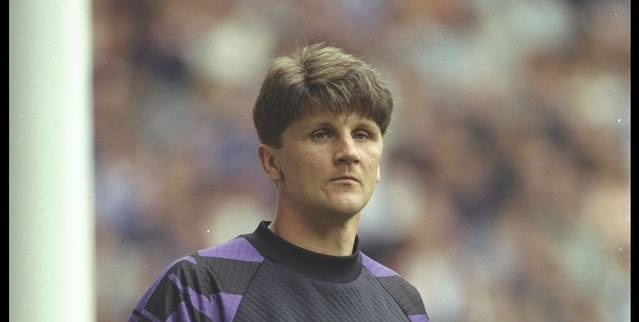
Cheer up, John, it’s your birthday!

A slightly belated “Happy Birthday” to newly-53 year old John Lukic, the only goalkeeper to win the League Title with two different clubs and a man who is frequently (and wrongly) cited as a survivor of the Munich Air Disaster whilst still in his mother’s womb.

To clear up that particular urban myth first, the story goes that John’s mum was a passenger on the ill-fated plane that crashed on take-off at Munich Airport, killing several of the legendary Busby Babes.  It’s a simple story to dismiss, as the date of the crash was 6th February 1958, almost three years before the birth of our erstwhile custodian.  Even if Mrs Lukic had been an elephant, the dates wouldn’t add up – as their gestation period is two years, and they’re not allowed in a passenger compartment anyway.

So John’s earliest possible claim to fame turns out to be so much hot air – but he did manage to create a few notable records in a long and successful career, consisting of two separate spells at both Leeds United and Arsenal. Lukic made his debut for Leeds in 1979 and played on until the age of almost 40, making his last appearance in his second spell at Arsenal on 11 November 2000 against Derby – he kept a clean sheet in a 0-0 draw.  This also makes Lukic one of only a very few players to have appeared in the top flight of English football in four consecutive decades.  In between 1979 and 2000, he won two league title medals, and also a winner’s gong in the Football League Cup of 1987, when Arsenal beat Liverpool 2-1 (becoming the first side to defeat Liverpool when Ian Rush had scored).

As with any goalkeeper, the odd mistake got a lot more coverage than the consistently good performances over many years – and the mistakes tend to be better remembered, too.  So it is that some Leeds fans can’t forget or forgive instances like the “blinded by the floodlights” goal at Ibrox in 1992, when playing for Leeds against Rangers in the European Cup.  But Leeds owed Lukic much over the years, for the games he saved and the points he earned.  A high point was his performance at Anfield in the latter stages of the 1991-92 season, when a series of fabulous saves preserved a vital point for United on the run-in to the league title.  Lukic had, of course, also figured in the last match of the season at Anfield when Arsenal triumphed by the required score of 2-0 to take the Championship Crown by the narrowest possible margin.

John must go down as one of United’s great goalkeepers, if only for the fact that he was the last line of defence in a team of Champions.  He had the dubious honour of being replaced at Arsenal by David Seaman, who had been his understudy at Leeds before being almost given away to Peterborough for a paltry £5,000.  When Seaman arrived at Arsenal for a seven figure fee, Lukic returned to Leeds for almost as much; rarely can one man have shuttled so often between only two clubs and still had such success.

Happy birthday then, to John Lukic, revered at two great clubs and unlucky to have been around when England were blessed with such quality in the goalkeeping department.  Some say he was the best never to play for England, which is an accolade of sorts.  Others cruelly dubbed him “Blind John” in the wake of a high-profile error.  But he served his clubs and his fans well and is assured of a place in the history of both Arsenal and Leeds United.  And that’s not a bad bottom line to any football career.

Leeds Lad James Milner Stars in Champions League “Tale of One City” – by Rob Atkinson

Image

Milner – star performance

It was a Tale of One City in the Champions League last night, as both Manchester clubs managed to overcome the odds and triumph in their last group games to progress into the knockout stage of the competition.  Leeds United fans – the ones who can cast their minds back to before the start of the nightmarish downhill run to near-oblivion – will have been pleased and not a little proud to see one of our own put in a dominant display against reigning European Champions Bayern Munich.

Milner’s excellent performance for City will have just slightly nibbled away at the extreme edge of exacting the tiniest morsel of revenge for a 38-year-old injustice. Paris 1975 – ’nuff said.  It’s only a crumb of comfort – but still, it was so good to see a lad with Leeds engraved on his heart sticking it up Bayern Munich, whatever shirt he was wearing.  And Milner’s performance last night in the Allianz Arena was one of his very, very best.

It had started out badly for City, patently out-played in the opening movement of what would turn out to be an opus of two halves. Within twelve minutes, Bayern were ahead by two goals – albeit that both were demonstrably offside – and looked in fair shape to inflict utter humiliation on the out-foxed Mancunians.  This pattern held for the first twenty minutes or so, but then City started to edge their way, inexorably, into a game that was becoming more of a contest as they gained some sort of hold in midfield.  On 28 minutes, James Milner made the first of his three crucial interventions, stooping to reach a deep cross beyond the far post and – somehow – angling himself to head it accurately back across the six-yard box where Silva was on hand to finish.  Half time arrived with City one behind, a situation they would have snatched your hand off for after the early lop-sided exchanges.

In the second half, City managed to retain control against a Bayern side who, on this evidence, seem to have a slight weakness for complacency. One of the main guilty parties in that respect was Brazilian defender Dante, an extravagantly-gifted individual who, nevertheless, seems less than keen on some of the one-to-one responsibilities of any effective defender.  He was guilty of a slapdash challenge on Milner deep inside Bayern’s penalty area on 53 minutes.  It would have been relatively simple to jockey the City player until he ran out of room and options, but Dante challenged, fouled – and it was a nailed-on penalty.  Kolarov’s conversion was a mix of placement and power, giving Neuer in the Munich goal not an earthly.  City were level at 2-2, needing an unlikely two further goals to top the group – and Bayern, unable to rid themselves of that two-nil complacency, were rattled and shaken.

In the event, City were doomed to fall just short of winning their group, but the victory that a third goal won them will be an enormous boost, possibly for their season as a whole.  Last season Arsenal won 2-0 here, and they have hardly looked back since.  Such is the size of the achievement; beating Bayern at home is not given to ordinary teams.  When that winner came it was Milner, naturally, who struck the decisive blow.  A right wing cross flew straight through the Munich area, confusing and bypassing two defenders. Milner, advancing from the left on a curving run, managed to open up his body shape to send a first-time right foot shot bending inside Neuer’s left hand post for a finish of beauty and a joy forever.

Bayern looked shattered and bewildered as they first pressed desperately for an equaliser and then played out time in the knowledge that a one-goal defeat would still see them win the group.  Even then, more casual and lackadaisical defending from Dante almost let in sub Negredo for a fourth to complete what would have been a disaster for the Germans.  On the night, they had deservedly been beaten by a City side that had got its act together to great effect – but there is little doubt that Bayern will address their shortcomings and come back strongly, as they did after the Arsenal defeat. Just ask Barcelona and Dortmund about that.

Meanwhile, back in England, the Tale of One City was playing itself out in much less glamorous vein as Man U managed to overcome a Shakhtar Donetsk side which unquestionably out-played them for the bulk of the ninety minutes.  One decisive finish from Phil Jones, a chance dispatched with a striker’s touch and assurance, was the difference between the teams at the final whistle, and Shakhtar went into the Europa League as Man U topped the group.  But this game had been about the away side failing to take advantage of its superior passing and movement, particularly in the first half when their hosts simply couldn’t get near them. Shakhtar had done everything but score, and you couldn’t help but wonder if they really were as good as Man U made them look.

It’s goals that count though and, consummate as they occasionally seemed, Shakhtar have disappeared from this year’s Champions League with only themselves to blame for that. Whether the Pride of Devon progress much further will depend on the draw – normally quite kind to them – and whether they can shake themselves out of the one-paced game they’re currently playing under an increasingly-anxious David Moyes.

On an evening when all of Manchester – as well as the Home Counties/West Country hotbeds of Man U support – had cause to celebrate victory in Europe, it was, more than anything, Jamie Milner’s night.  His display in helping City to a quite magnificent comeback victory was notable to say the least, and should serve to quell a few murmurings that he’s no long quite “at it” for this level. If Milner became available for transfer at any point in the next few years, there would be no shortage of takers – and on this evidence it would be a lucky club indeed that secured his services.  One fond dream of Leeds fans everywhere must be that – if we did secure promotion in the short-term – Milner would perhaps return to Elland Road to be our elder statesman.

How appropriate that would be for the former Elland Road Wunderkind – and what a welcome he would receive.  In the meantime, it did the hearts of the Leeds faithful good to see him battering Bayern, something that must be high on the bucket list of anyone with LUFC in their DNA.  Well played, James Milner – still a great lad and still a class act.

No More Dexter Blackstock for Leeds; Who Next? – by Rob Atkinson

Image

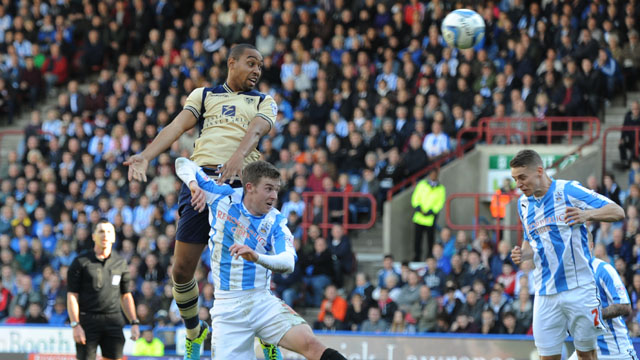
Dexter makes his mark for Leeds

Dexter Blackstock has apparently been ruled out for the season by a knee injury, which is particularly hard luck on the lad himself, but also obviously for Leeds United.  Dex wasn’t everyone’s cup of tea in the white shirt, but as was said in commentary for the Watford game, he did bring something to the team that we hadn’t got before, in terms of work off the ball and his movement, opening up options for others to profit rather than necessarily being a taker of chances himself – although I’m sure that would have come.

But hey-ho, he’s gone back to Forest and there’s no use crying over spilt milk.  The one thing we know for sure about poor old Blackstock is that he’s not an option for the rest of this season – so he therefore disappears from our radar altogether, and we must look forward – and it appears that we may do so whilst jingling a few shekels in our pocket.

The most likely addition to our forward line in January remains, in my opinion, one Señor Becchio.  He’s been here and done it before, and at this level too.  He’d be absolutely champing at the bit and determined to make an impact – I’m sure he’d be effective for Leeds United as the campaign enters its decisive phase.  I emphasise my own opinion here as it seems certain Leeds fans would see Bates ensconced in his old office at Elland Road before they’d accept Luciano back.  This absolutely baffles me – Becchio is a known quantity, he’s familiar with the club and the demands of playing in front of a demanding and somewhat truculent crowd – why on earth wouldn’t we give him a shot, if it really was an option?

Still, what do Brian McDermott OR I know?  I’m just glad that we appear to be of the same opinion, even if we’re wrong.  But what do others think?  I wrote an article a while back saying that the acquisition of Becchio and Gradel in January would guarantee us promotion; I still feel that’s most probably right, too.  But it’s not as if I’d be averse to Ince from Blackpool plus Doyle from Wolves, either – as long as the budget is there, post TOMA III.  What options would anyone else advance or deeply desire?  I’m seeking your views, ladies and gentlemen – please chip in with them below.

Kenyan Man U Fan’s Suicide Harks Back to Famous Shankly Quote – by Rob Atkinson

Image

Shanks – didn’t really mean it

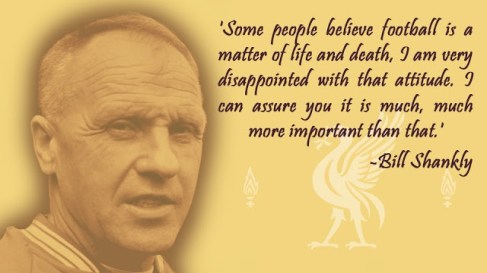
There are many famous sayings attributed to the late, great Bill Shankly that are still quoted to this day.  Some of them, he even actually said.  The one in the image above seems likely to have been genuine, actually uttered by the great man.  But wherever you hear it quoted, you’ll usually hear a hastily-added qualification too: “He didn’t actually mean it, of course.  It was part of his football-daft image…”  Quite so.  Shankly was football-daft – many are the anecdotes to illustrate this, and again, some of them are based on fact. But Shanks wasn’t daft in the wider sense and, certainly, if he did utter the words above, they’ll have been uttered with tongue firmly in cheek.

All of which sheds awfully little light on the baffling and tragic death in Kenya of local Man U fan John Jimmy Macharia, 23 or 28 (depending on which report you read), who plunged to his death from a multi-storey apartment block in Nairobi after David Moyes’ men suffered a second home defeat in four days, further denting the champions’ chance of retaining the Premier League title. “Macharia jumped from the seventh floor of an apartment at Pipeline Estate after realising that his team Manchester United lost 1-0 to Newcastle at Old Trafford and committed suicide,” Nairobi’s County Police Commander Benson Kibui told Reuters.

Commander Kibui went on to bemoan the role of the English game in this and at least one other suspected suicide in Kenya over the past few years. “All witness accounts suggest he committed suicide because the team lost but officers are still talking to those who were with him as part of the investigations into the incident”, he said. “It is not the first time we are losing a young man because of the football in England, which is far away from us. The football fans should enjoy the matches… but they need to know that is just a game and they should not commit suicide, since life is very precious.”  Undeniably true.

The fact that even one fan, anywhere in the world, could actually be moved to take his own life on the back of a pair of home defeats for a team thousands of miles away, seems mind-boggling.  It seems also to give an uncomfortable resonance to Shanks’ famous quote – but a soundbite nearly fifty years old can have little to do with what is an extreme phenomenon, born of a different type of football support to that tribal devotion typical of Shankly’s day.

As I wrote yesterday, this newish, different type of support has grown apace in the past decade or so.  Some call it “glory-hunting”, some merely refer to “global fanbases”.  But at its extreme margins, where tragedies of this sort are liable to occur – however infrequently – the motivations behind choosing to support a “megaclub” stand some examination.  Why, exactly do far-flung people choose to do this?  I believe that the answer to that depends on the type of club involved – but by far and away the most common reason is the wish to be identified with some perceived example of size, power and success.  This is “gloryhunting” in the raw, where a person of questionable self-esteem, lacking any other readily-apparent avenues for self-aggrandisement, will latch on to an institution regularly “bigged-up”  by the media, held up and put on a pedestal by such media as an example of success, something to be worshiped and revered, an institution which will reflect honour and glory onto its adherents, wherever they might come from.

There is seen to be some social cachet, therefore, in being recognised as a supporter of, say, Man U.  The opportunity is seemingly there for the otherwise pallid and ill-defined individual to bask in some reflected glory. For certain people of a perhaps less robust personality, this represents a relief from the humdrum routine of unregarded anonymity – it provides an escape route from their own feelings of inadequacy.  In extreme cases though, the pedestal that such a needy person builds for him or herself is more like a house of cards that can too easily come tumbling down, bringing with it the hapless fan who has pinned so much carefully-nurtured self-esteem on a seemingly invincible team that turns out, after all, to be fallible. The shock of this will be too much for some to bear; as they witness the downfall of their heroes, icons they had thought utterly reliable, what are they left with?  For the tragic few – seized upon as merchandising fodder by a voracious world game…and then let down with a bump – the answer would seem to be: nothing.

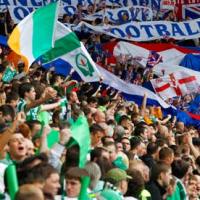
Better then, by far, to use football as a channel, not for some hopeless yearning for a boost in self-esteem, but rather for the kind of grisly defiance and bloody-mindedness that characterises – for instance – Leeds United fans. If there’s one thing you can be tolerably certain of, it is that, by and large, Leeds fans need to be made of stern stuff.  Not for them the lure of glory and triumph, not for them the warm glow of media hype and approval, or widespread cultural adoration.  The Leeds fan – especially the Leeds fan from far afield – has different motivations of an earthier and more non-conformist character.  Why else would so many travel literally thousands of miles per season, pay Premier League prices for what has been decidedly indifferent fare this past decade – and all of this to a background of contempt, disapproval, even hate?  It’s a conundrum – but some answers may well lie in some of the illuminating responses I received to yesterday’s article.

Whatever the reasons – and on the evidence of those replies, I would venture to suggest that most of them have to do with a desire to kick-out against the Establishment, the accepted way of things – the requirements to be a Leeds fan include a thick skin, strong shoulders, a philosophical personality and – above all – an unshakeable inner conviction that, against all visible evidence, they are right and the rest of the world is wrong.  Thus equipped, the Leeds United fan is able to roll with the punches, go with the flow and still feel able to hold their head up high and proclaim “We are Leeds and we are proud.  Marching On Together.”  This is not the stuff of which potential suicides are made – or at least not for such mundane reasons as a football result.

It’s the kind of inner serenity that fans of many clubs might well wish they could trade for a trophy or two.  It’s a state of mind, and not one that can simply be assumed.  It’s often said that fans don’t pick clubs – rather clubs tend to select fans of the mettle required to be worthy of supporting them. The media have a role to play in all of this, and it’s by no means a blameless one.  In their decades-long campaign of advancing the interests of one club – Man U – above all others, they have inflicted a certain amount of collateral damage, whilst at the same time strengthening the sinews of those already sinewy individuals who dare to swim against the tide and aspire to be Leeds United fans, or followers of other similarly proud but unregarded, unhyped clubs.

The damage done by the media to the weaker vessels who have opted to cling to the coat-tails of the mighty Man U has not been done intentionally. But suggestibility and the capacity to be brain-washed are functions of the strength, or lack thereof, of the human personality, the human ego.  It is the weaker ones who will be vacuumed up, wholesale by such a leviathan as Man U, with their publicity operatives in the press and media acting as recruitment agents.  Only the strong of character can resist such a siren call, only the willfully-defiant will survive the propaganda and tempting blandishments to be seen and read everywhere.  From these ranks – the ranks of the strong and the pugnacious – will emerge the Leeds United fans from every corner of the globe.  These are not people who will launch themselves off a high building after a couple of home defeats.  And fortunately so, as otherwise there might by now be sadly few of us left.

The tragic young man in Kenya who died last weekend can be seen as an extreme example of a victim of the myth that has grown up around the likes of Man U – and they are not alone.  A few years back, another Kenyan fan, this time of Arsenal, also took his life after a poor result, in the Champions League – ironically against Man U.  Never can the essential wrongness of that famously ironic Shankly quote have been more vividly illustrated than in these two wasteful and needless deaths, precipitated – almost certainly – by the meaningless outcome of mere games of football on foreign fields that neither victim would ever have visited.  This is when you start to question the degree to which football is hyped, when at bottom it remains mere sport, paling into insignificance besides the great issues of today or any other age.  It’s a pastime, a preoccupation – something to talk about or argue over in a bar or on a tea-break.  It beguiles many an idle hour, but it’s not – of itself – all that important.

Of course, there is always a place for pride in football, and even for people to use it as a vent for emotions that can’t find an outlet elsewhere.  But we must retain a sense of proportion, which is what that bemused police chief in Kenya was saying.  Passion and commitment must be tempered by realism and a sense of proportion.  The media should be playing a leading part in this, instead of grossly exaggerating over long periods the significance of games and competitions, or the standing and supposed invincibility of certain favoured clubs.  To perpetuate these hollow myths is to act irresponsibly, as there will always be fragile personalities that cannot define for themselves a sense of proportion, and to whom, ultimately, something as silly as a game of football might actually become as important as life or death itself – all at the behest of irresponsible journalists selling a commercially-motivated fairy-tale.  And when the ultimate tragedy happens, we’re all of us the poorer for it, even though it’s likely to affect fans directly only at that over-hyped and ridiculously puffed-up elite end of the world game.

As Bill Shankly would doubtless have been the first to admit, the whole institution of football everywhere on the planet is not worth even a fraction of one life.  It’s time that those responsible, in media and megaclub marketing departments, for pushing the hype, the hard-sell and the lies, got real, got back to what the game used to be all about and got back to reporting what happens instead of trying to lead the game by the nose in the direction of success and glory for the few and Devil take the hindmost.

Because when all is said and done – it’s only a game.
The Salvation Army starts War.

The Sally’s Army always did have a dodgy agenda going on. When I worked for the Citizens Advice Bureau, we were wary sometimes of sending people to them, as we were aware they might face judgemental attitudes and intrusive grilling. But this has shocked me – surely this person is a maverick and not representative of the SA* as a whole?  (*That’s Salvation Army, not a reference to Hitler’s Sturm Abteilung – although it would be easy to become confused)

Perhaps Major Andrew Craibe needs to be eased out of his position and put to some more appropriate work, such as cleaning toilets?

TJ Chase's avatarNews and reviews

Salvation Army says “Gays Need to Be Put to Death”

Christmas, it is the time of the year for holiday shopping, and also hearing the bell ringers for the Salvation Army collection donations. Those donations provide Christmas dinners, clothing, and Christmas toys for children in need. The charity collects millions of dollars in donations every year, and they distribute it to needy families, seniors, and the homeless in keeping with the spirit of the holiday season.

Large_4631.large

The Salvation Army has expressed their Christian beliefs in the past, stating that they do not accept the LGBTQ lifestyle, nor do they stand up for gay marriage. Salvation Army went on record recently, stating that LGBTQ parents should be put to death as the bible instructs. Major Andrew Craibe, a Salvation Army Media Relations Director, went on public radio hosted by journalist Serena Ryan, to discuss a recent call by LGBTQ parents for…

View original post 104 more words

Don’t Tar Leeds United Fans With the Man U Gloryhunters Brush – by Rob Atkinson

Image

Oh, dear…

A lot of Man U fans have to face quite a bit of stick for being southern-based gloryhunters who’ve hardly ever visited the Theatre of Hollow Myths, because – well, because they’re southern-based gloryhunters who’ve hardly ever visited the Theatre of Hollow Myths.  Fair enough then, really – for it does seem from all available evidence that these sorry types make up a significant portion of the fallen champions’ “support”.   Tune into any biggish Man U home game and, during Sky’s feverishly-excited build-up, you’ll probably see some home fans being interviewed outside the ground, making predictions for the match ranging between anything from a 4-0 win to a 7-0 win.  It’s the accents that strike you.  A thick Ulster brogue here, a lugubrious Brummie yow-yow there.  Norfolk, Suffolk, take your pick of the Home Counties, most will be represented.  North-easterners, Devonians, the distinctive sound of Cornwall.

gloryhunterShamefully, there will also be the familiar tones of Yorkshire here and there, South Yorkshire mainly, but you do get the hideous experience of warm, West Yorkshire dialect emerging from a smug face surmounting one of those awful red shirts.  It’s shudderingly disgusting. You get the obvious cockneys – and last (and distinctly least) you’ll get a smattering of Lancastrians.  And really very, very few actual Mancunians, who are normally identifiable by their distinctive speech defects – “lickle” for “little” – hosspickle, for hospital, keckle for kettle, and so on.  For anyone seeking justification for his or her own instinctive antipathy towards Man U, it’s a rich vein of compulsive, repulsive viewing – and as a sort of straw poll, it shows that the oft-quoted charge of Man U fans being largely out-of-town gloryhunters has plenty of merit.

The important thing here is not simply where all these fans come from, but wherein lies their motivation for following the team they follow.  The fact is that Man U are not the only club with a large proportion of fans from outside of their own city limits.  My own Leeds United also have a large and faithful body of support from all over the country, indeed, all over the world.  This leads many of a Man U bent to do their research and emerge, flushed and excited, with what they feel is a cast-iron rebuttal of the “Man U gloryhunter” stereotype, arguing that it’s a phenomenon common to many higher-profile clubs.  On the face of it, this is true.  But as regards the question of proportion, it’s undeniable that Man U have a greater degree of support from outside of its own immediate area than almost any other club you could name.  And, in any event, the “where” of it is really just a basic fact.  The interesting question is the “why” of it.  What motivates these eager aliens to travel so far to follow their club – or at least to lash out so much on a Sky subscription and a comfy armchair?  And this is where the “gloryhunting” factor can be seen in full play.  Moreover, the “glory” that’s being hunted is not just a matter of trophies and medals – a lot of it has to do with the “Love us because of Munich” line so relentlessly pushed by the Man U club itself over the past 55 years.

Other clubs have been successful in this period, during which the game has reached saturation point in the media, compared with the pre-Munich era when interest was confined largely to the cloth-capped working classes and the back page of the daily newspapers.  But no other club was adopted by the media to the extent of Man U after Munich, a relationship that started out with shock and compassion but has evolved and warped over the years so that – stronger today than ever – it is now more about the protection and exploitation of markets than it is about the mystique that allegedly surrounds the legacy of Munich.  Whatever the rights and wrongs about the furore that has ALWAYS surrounded the Munich disaster – leading many to believe that it was unique and the worst sporting disaster ever – there can be little doubt that many Man U supporters with no remote connection to the Manchester area can trace back the origins of their support to Munich, either directly or through a parent.

The out-of-town support of other clubs, most particularly Leeds United, have not had anything like the cushy ride accorded to the Man U gloryhunters. Whereas those of a red persuasion have read reams of copy glorifying their chosen club and giving them what might truthfully be described as an overwhelmingly positive press, the Leeds fans have had the opposite experience going back fifty years.  Hating Leeds in the press has been a national pastime for decades now, and it is against this background – and without the long periods of sustained success achieved, by hook or by crook, over at Man U – that Leeds fans of all backgrounds, from whatever point on the globe, have somehow sustained the fanatical and feverishly proud nature of their support.

No, there is no gloryhunting for those who make the pilgrimage to Elland Road.  A few peaks of success in fifty years, besides which all has been humdrum with spells of blackest despair as their beloved club plumbed the depths of the third tier, with long spells away from the top-flight limelight. For a Man U fan – feeling themselves slighted by accusations of gloryhunting, coming as they do from Torquay – to level a counter charge of gloryhunting at a Leeds fan from Norway or from East Anglia, is a shot in the dark, a wildly inaccurate attempt at a counterpunch which serves only to emphasise their own desperate culpability.  The Man U fan who has supported them from an armchair in Milton Keynes since 1993 – and there are many such – is bang to rights as a gloryhunter.  A “plastic”, as we say in the argot of football vitriol.  They may harp on about the Busby Babes, about the thirteen plastic titles on the sideboard since Uncle Rupert bought the game and gift-wrapped it for them – but their motives are transparently obvious and their local clubs look at them with contempt as traitors to the region.

It takes a certain sort of character to follow such a path, for such reasons. Some will be motivated by the need to be associated with perceived size and success, for whatever is lacking in their own lives that has left them with such a need.  Dr. Freud, it’s over to you on that one.  Some are best summed-up by a lady with a penetrating voice who rang in angrily to BBC 606 after a rare Man U defeat at the Theatre of Hollow Myths.  “That’s not what I buy my season-ticket and travel up from London for!” she screeched in indignant tones of equine distress. “Any more of that and I might as well follow Spurs.”  She’s not alone in her rage and dissatisfaction, and one can only hope on her behalf that wherever she ended up, the prawn sandwiches were adequate.

It takes a certain sort of character too, to support Leeds, to tread that difficult path in the face of virtually universal hatred with very little in the way of tangible reward, team success – anything that might be described as glory.  For those who follow this rocky path from afar – the stalwart supporters from Scandinavia, the Leeds nutters from Norfolk, from Ireland, from pretty well everywhere you can stick a pin into the map of the UK – and much further afield – that takes a character rich in dedication and the ability to keep going in adversity.  There isn’t one Leeds fan I know who isn’t proud to be Leeds, and that pride, that passion, has survived some incredibly frustrating times when the future looked bleak – even at one point, non-existent.  And there are many Man U fans of pride and passion too – misguided souls of course, but still – proud.  Respect to them, but there are many, many who are more like that angry caller to 606, who throw a tantrum every time the club has a blip, who threaten to desert the ship with other, similarly morally bankrupt rats, before that ship shows even a sign of foundering.  Their current situation may well turn into more than a blip; the ship may not be buoyed up by quite as much media support and official wariness as in Ferguson’s reign – and it will be interesting to see how many fall by the wayside if Man U do fall away.

The comparison in the two basic characters of support highlights the bizarre ridiculousness of Man U fans throwing the “gloryhunter” charge back in the faces of Leeds fans for whom the glory lies in following their team through thin and thinner, and in simply being proud to be Leeds.  Gloryhunting is not primarily about geography, it’s about motivation too, and perhaps most of all, it’s about your own innate character and what you expect of yourself. If Leeds United won promotion this year, the “Double” next year and then the “Treble” the year after, I’d have a hell of a lot more to crow about – but I couldn’t be more proud to be Leeds than I am right now.  And I’m a local boy – and yet I know, with utter certainty, that those lads and lasses from further afield feel as I do, that the hairs on their necks stand up when they see the ground or hear the songs – and most of them have never seen us win a thing, but they’ll always be there and always proud.

The Man U gloryhunters, on the other hand, have seen them win a lot – that’s why they’re there.  But what will happen if the glory dries up, as well it might?  Where will the Man U gloryhunters be then?  They could easily be at Stamford Bridge or White Hart Lane, that’s where – or at least be wearing a different replica shirt whilst ensconced in their Home Counties armchairs. That’s the the character of those who attach themselves to the most convenient example of success, and it’s also the difference between them – the gloryhunting, plastic legion of the damned – and the proud and defiant Marching On Together brigade of Leeds United.