Yearly Archives: 2013

Memory Match No. 2: Sheffield Wednesday 1, Leeds United 6 12.1.1992

Image

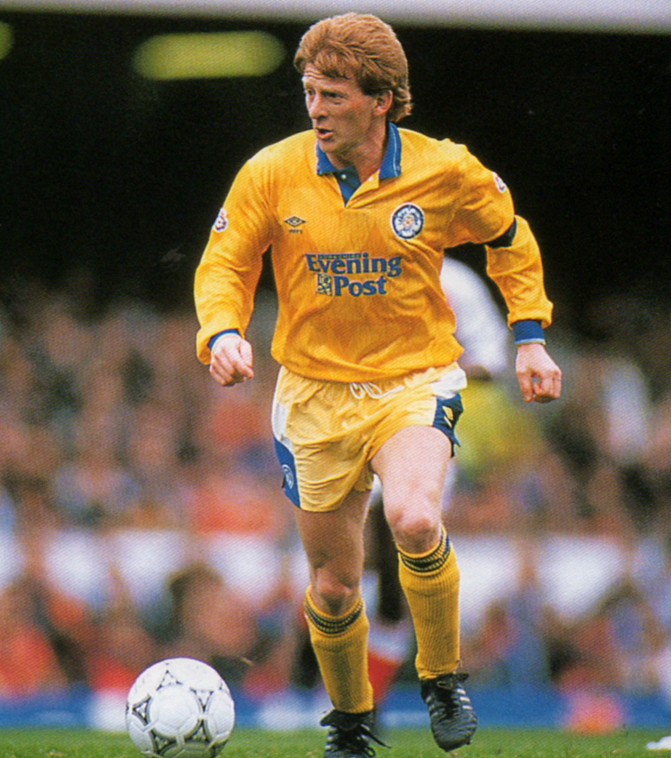
As 1991 turned into 1992, the two-horse English Title race was hotting up.  Man U had suffered a shocking reverse on New Year’s Day, capitulating 4-1 at home to QPR, and then later that January 1st, Leeds had won competently 3-1 at West Ham to remain well in the race for the ultimate domestic honour.  The scene was adequately set, then, for Wilko’s first return to Wednesday since he had quit Hillsborough to become Leeds boss in 1988.  This would also be Lee Chapman’s last game before his season-threatening FA Cup injury, which resulted in the drafting in of one Eric Cantona – with all the long term consequences that would entail.  But Chappy was destined to be sidelined only temporarily, and he went out in the most emphatic style.

There was a crowd of 32228 at Hillsborough, the usual vociferous contingent of travelling Leeds fans rivalling the home crowd for noise from the outset, and completely drowning them as the game went on.  Leeds United were weakened, so it seemed, by the absence of the injured Gordon Strachan and suspended David Batty, half of their legendary midfield Fantastic Four.  Any side, surely, would miss performers of such calibre.  Leeds, though, seemed determined to make light of the problem, and tore into their hosts from the start.  Full-back Tony Dorigo made an early darting run, cutting in from the left and making good progress down the centre of the pitch, before unleashing a right-foot thunderbolt that Wednesday ‘keeper Chris Woods had to tip over.  From the resulting Gary MacAllister corner, Chris Fairclough rose to head downwards, and found Chapman in splendid isolation four yards out; his finish swift and deadly for 1-0.

For a local derby, the contest had been decidedly one-way traffic – Chapman was to send two towering headers just wide before Carl Shutt had a scuffed shot smothered by Woods in the home goal.  Then, a true champagne moment as Mel Sterland fed the ball to Chapman on the right.  In a completely untypical burst of pace and control, Chappy surged between two hapless Wednesday defenders, raced into the area, and unleashed a shot that beat Woods completely, just clipping the frame of the goal to rapturous applause from the Leeds fans at the Leppings Lane End.  I remember thinking at the time that anything was possible now, if Lee Chapman could do something so utterly out of character.  And so it proved as, from a free kick awarded just right of centre some ten yards outside the box, Dorigo stepped up to absolutely hammer a left foot drive past the helpless Woods.  Cue mayhem and cavortings as the Leeds hordes behind the goal, celebrated as clean a strike as you could ever wish to see, the ball a blur as it arrowed into the far corner with deadly precision and power.

At 2-0 down, the home side were making increasingly desperate attempts to gain some sort of foothold in the match.  This desperation was adequately demonstrated when, from a harmless-looking ball into the Leeds area, Wednesday striker Gordon Watson ran in front of Chris Whyte, continued on for another step or two, and then hurled himself into the air, landing in agonised paroxysms of simulation between a bemused Whyte and Leeds ‘keeper John Lukic.  Such obvious fraud and villainy could have only one outcome, and the stadium held its collective breath for sentence to be passed on the miscreant.  Instead – amazingly – referee Philip Don pointed to the spot.  Whether none of the officials had seen the extent of Watson’s ham-acting, or whether they were moved by sympathy for the mauling Wednesday were taking from a rampant Leeds, it’s impossible to tell.  The outcome was the same either way.  Ex-Leeds hero John Sheridan stepped up, saw his penalty brilliantly saved as Lukic tipped it against his right-hand post, and then gleefully belted home the rebound to give Wednesday a massively unmerited lifeline.

This act of base and scurvy treachery required nothing less than a riposte of the utmost nobility and beauty, so we said to ourselves, though probably in more Anglo-Saxon terms.  And, happily, that’s just what came to pass.  Only six minutes after the home side’s ridiculous blagging of a comically unfair route back into the game, Leeds took effortless control again with a goal sublime in both its conception and execution.  Lukic bowled the ball out to Dorigo on the left flank; he sent it first time down the line to Gary Speed, who took one steadying touch before sending a beautiful flighted cross into the Wednesday area.  And there, inevitably, was Chapman, horizontal in mid-air, neck cocked to hammer the ball unanswerably past Woods, the perfect counterpunch to Watson’s knavish low blow.  It was a gorgeous goal, sweeping the length of the left side, taking the entire home team right out of the game, and re-establishing the two goal margin which was the least Leeds United deserved at half-time.

The second half that ensued was simply a story of how a blood-and-thunder Yorkshire derby turned into a stroll in the park for Leeds United.  It seemed as if all the life had been sucked out of the home team – a Wednesday side who, let’s not forget, were unbeaten at home since the opening day of the season, and who would go on to finish third in the table.  So they were no mugs, but Leeds United were absolutely irresistible on the day, and would have hammered far better teams than the hapless, bewildered Owls.

It’s possible that Wednesday were simply embarrassed about that cringe-worthy penalty, possibly they were dog-tired, having been run ragged since the start.  Whatever the case, their heads dropped steadily further and further as the game progressed, and they offered little resistance as Leeds proceeded to throttle the life out of them.  Chapman completed his hat-trick five minutes after the hour, heading in after Speed had struck the bar from a corner.  Poor Speedo was looking the other way, bemoaning his bad luck when the ball hit the back of the net after all, turning his frustration to joy.  Then, perennial bit-part player Mike Whitlow ventured forward, just because he could, and rose unchallenged to meet Rod Wallace’s right-wing cross and head easily over a stranded Woods.  It was left to little Wallace to administer the coup de grâce, striding clear after a shimmering exchange of passes in midfield to dink the ball over the advancing ‘keeper, and put the suffering home side finally out of their misery.

For Leeds, it had been their biggest away win in over 60 years as they returned to the First Division summit in the best possible manner – they got six, but they really could have had ten or a dozen.  The message had been sent out loud and clear to the watching millions in Live TV Land: United were deadly serious about their Championship challenge.  They would surely look back though after their eventual Title success, and identify this sumptuous display as one that defined them as potentially the best team in the land.  For Wednesday, it was total humiliation and – truth to tell – very difficult to sympathise.  Better by far to lose 6-0 than to be tainted as they were by such a crass and obvious example of cheating – and it hardly reflected much credit on the match officials, either.  But the cheats on this occasion failed utterly to prosper.

It was a massively impressive performance, a hugely significant victory, and the sweetest possible return for United’s ex-Owls contingent.  Mel Sterland always took great delight in beating the Blades, but this victory over his boyhood favourites would have only happy memories for him, as indeed for Chapman, Shutt and of course the triumphantly-returning prodigal Sergeant himself.  Leeds would march on to the Title, finishing four points clear with the most wins and least defeats, unarguably deserving Champions (although the usual suspects argued anyway).  Man U’s quarter-of-a-century wait for a Title would extend for another twelve delightful months before Mr. Murdoch ushered in an era of success for them, aided by our own enfant terrible.  And Sheffield Wednesday?  They would recover to finish impressively, despite another awful trouncing at deposed Champions Arsenal.

1991-92 was a season of nip-and-tuck, with titanic struggles in both Cup competitions adding spice to the League fare as the battle for honours raged on three fronts.  But there can be no doubt whatsoever that January 12th 1992 belonged entirely to Leeds United, who looked like Champions a full four months early with this five star, six of the best Masterclass display crowning them as Yorkshire’s finest – just as we, and indeed the Wednesday fans in their heart of hearts, had always known.

Next:  Memory Match No. 3:  Xmas Eve 1995 – Leeds United 3. Man U 1.  Join me again, for an early start to Christmas, a classic Yeboah finish, Brolin’s finest hour and an actual penalty against “Them, From There”.

Memory Match No. 1: Leeds United 4, Liverpool 5 (13.4.91)

The idea of a “Memory Match” series of articles is hardly original, but it can be fun, particularly when the present doesn’t offer us much to shout about – and let’s face it, there are loads of games in the Leeds United back-catalogue well worth recalling, and savouring anew.

Despite the encouraging win over Blackpool, it’s probably fair to say that this season is in danger of petering out, leaving us looking forward to a whole new campaign for our hopes of a fresh start post-Bates (who shall be known as President Irrelevant next season.) Things have been so dire at times, that the recollection even of a defeat can be preferable to gloomily contemplating our current prospects – as long as that defeat was a really special one, with gloriously redeeming aspects to it.

Such a match, such a defeat, was the home game with Liverpool in front of a 31460 crowd during our first Sergeant Wilko-flavoured top-flight season of 1990-91. It had been a good season – we were nicely established back at the right end of the top table. We’d had some tasty results and the name of Leeds United was well and truly back on the agenda, despite the slightly grudging attitude of the southern-based media.

I’d been anticipating the Liverpool game above most others. There was that satisfying all-White versus all-Red thing, against the green backdrop of the turf, which appealed to the eye of the beholder. But also, I had a real problem with Liverpool FC. They’d been the opposition in my first ever game at Elland Road, a traditional 3 pm Saturday kick-off in April 1975. I’d gone into the ground with my Dad and brother, all wide-eyed and expectant, and Elland Road blew me away, so much more vivid than it had ever been on the telly. I knew straight away that this was love, and that it would be for life. Then Liverpool callously spoiled my debut, beating us 2-0. The following season, they did it again, 3-0 this time. I didn’t even see us score against the Reds until Daisy McNiven’s late equaliser in 1977. By the time we got relegated, in 1982, it had got to the point where I expected nothing but a hiding from Liverpool games, and that’s invariably what I got. I hated Liverpool.

So, in that first post-promotion season, when we’d looked like a seriously top team again, I was all vengeful and ready for the Reds, who had recently been stunned by the resignation of Manager Kenny Dalglish, and I trusted the lads to be at least as committed as I was. And to be fair, they did look right at it, early on. Carl Shutt burst through down the right to sting the hands of their ‘keeper. Mel Sterland planted a free header wide from around the penalty spot, wee Gordon Strachan was buzzing about to good effect in midfield, Leeds were playing well. Then, the sky fell in.

John Barnes, Liverpool’s lithe, lissom winger, chose that day to really turn it on – just as we’d all wished he would for England ever since his legendary goal against Brazil in the Maracanã – but his virtuosity for his club on this day was bad news for Leeds United. First, he dinked a dipping ball to the far post at the Kop End, and the roof of our net billowed as Ray Houghton finished. Next, he was involved in the award of a clear penalty, struck past John Lukic with power and precision by Liverpool’s wardrobe-shaped Danish scouser, Jan Molby.

Leeds had been well in the game, but Liverpool had carved out and taken their chances, and my familiar Red nightmare was playing itself out yet again. Now, David Speedie – that unlikeliest of Liverpool players for their era of success – forced himself in on the act, first having a goal disallowed, then scoring at the far post after more good work from Barnes on the left. Leeds were ragged and despondent, and it was no surprise when Barnes again, after a nifty one-two near the halfway line, scorched clear to clip a fourth past a helpless Lukic, and leave me sitting drained and woeful on the terrace steps throughout half-time, head in hands, despairing at the four goal gap and fearing what might yet be to come. I’m sure too that this was the first time I ever heard Monty Python’s “Always Look on the Bright Side of Life” played over the tannoy – and taken up by a stunned home crowd who were even yet able to indulge in a bit of gallows humour.

When the second half started, I saw the Liverpool reserve ‘keeper Mike Hooper running towards us. Hooper had been standing in for a few games for the regular No. 1, Bruce Grobbelaar, and I was more than a little disappointed. I’d had this recurring wish-fulfilment dream about sneaking down off the Kop while play was up the other end and, with a hitherto concealed pair of scissors, neatly snipping off Bruce’s annoying little pony-tail. It was probably just as well that temptation had been moved out of my way, but I doubt I’d have really done it – ex-guerrilla Grobbelaar would have killed me anyway, and I’d most likely have got arrested, too.

Hooper was under pressure immediately, as Leeds had rediscovered their vim, and forced Liverpool back. The breakthrough came when the keeper could only push out a scuffed Gary MacAllister shot, and Lee Chapman was there to bundle the ball unconvincingly home off the crossbar. Then Chappers challenged for a high ball at the near post, and in it went – only for the ref to disallow it, his dismissive reaction to Chapman’s protests further enraging the hyped-up hordes on the Gelderd End. Hopes revived though as the ball sailed over a clearly-fouled Chapman from the left and landed in the area at the feet of Shutt, who swivelled to score competently. 2-4 now, and maybe an unlikely comeback was in the offing. But almost immediately, Ian Rush mugged Chris Whyte just outside our box, and back heeled into the path of Barnes who took it on and scored a brilliant fifth, to renewed home despair.

Leeds seemed to know that they had to hit back hard and swiftly, and the best goal of the game arrived when Dave Batty struck a wonderful bending, scything cross from deep on the right, and Chapman hurtled through mid-air to meet it with a bullet-header, beating the startled Hooper all ends up. Two behind now, and Liverpool looked as if they were just holding on, the pressure from a stoked-up Leeds incessant.

The match had become a breathless spectacle, surreal in its ebb and flow, more like some sort of high-class park game than your archetypal tight, defensively-sound First Division grapple. Leeds seemed always on the brink of total annihilation, and yet Liverpool, seasoned top-league campaigners, couldn’t quite manage to shake off these upstart newcomers, who kept on snapping relentlessly at their coat-tails like eager pups. Strachan typified the defiance and endeavour, popping up everywhere, probing and passing. Now he received the ball on the right corner of the Liverpool penalty area, and set off on one of those scampering little runs where he didn’t so much beat defenders for pace, as manoeuvre adroitly around them, like some pesky little tug in among ponderous oil-tankers. He did this now, beating two or three Liverpool defenders inside a few square yards, and then clipping a delightful ball to the far post, where Chapman towered to complete his hat-trick, the arrears reduced to one.

And that, gentle reader, is as good as it got. Try though they might, the gallant battlers in white could force no further concessions from a Liverpool team who had looked like running away with the game at half-time, but who were virtually on their knees by the final whistle. It was a defeat – glorious, inspiring even, but bringing with it the zero points haul of any other defeat. On the day though, the crowd weren’t counting league table points, and the buzz as the throng left the stadium was of a fantastic comeback against a top, top team – pride was in the air, loud and throaty and no-one was bemoaning the loss. As one person loudly declaimed emerging, from the Kop exit, “we gave ‘em a four goal start, then hammered ‘em 4-1!” Well, quite. It had been, by far, my best-ever Liverpool game, better even than the last-gasp draw we’d salvaged in 1977. It also told us all we needed to know about the battling qualities of Wilko’s Leeds United; an injection of quality the following year would garner the Champion’s crown for us, and also along the way, my long-awaited first victory over the Anfield Reds.

For that, the wait would prove worthwhile. But on this April day in 1991, those of us who had suffered through the wilderness years could see promising signs, even in defeat. United were most decidedly back.

Next: Memory Match No. 2: January 1992 – Sheffield Wednesday 1, Leeds United 6. Tune in for another Chappers hat-trick, and “The Worst Dive Ever”.

When Winifred Died

(Inspired by my Mum’s poem of the same name, which is reproduced with her kind permission below this article)

june11Sometimes, a seemingly normal day can turn suddenly significant, and mark a change in your life.

On June the 11th 1986, I went along to the poky offices of the Citizens Advice Bureau in Moorthorpe, between South Elmsall and South Kirkby in West Yorkshire, for my regular stint as a volunteer adviser. At the age of 24, I had two abortive stabs at Higher Education behind me, I’d gained a rather sketchy qualification in computer programming, and I’d worked as a hospital gardener and as an assistant school caretaker. The bright young lad from Ponte was off to an indifferent start to what has turned out an indifferent career. But I was still optimistic back then, and I assumed I’d serve a breezy apprenticeship in advice work, and then a CAB of my own would just drop into my lap, and I’d be set. CAB Manager somewhere, they’d promised; inspirational motivator and trainer of volunteers, solver of multifarious problems and crusading campaigner on burning social policy issues, that’d be me. Rob Atkinson: success.

That it didn’t quite work out that way is incidental to this tale, but such was the backdrop to this particular sunny morning. It was a watershed in my life for quite another reason though; for on that unsuspecting June day, my Nana Cawthorne died. She was not the first grandparent I’d lost – I’d already run out of Grandads. Nan’s husband, Walter Michael, had died relatively young in the early 70’s when I was a skinny rabbit of 10 or 11. He’d been an object of terrified fascination for me, prone to loud bellows, snapping his leather belt suddenly and shatteringly, rattling his false teeth at me with no warning, and holding forth stridently about his health problems, the ones that eventually got him (they stuck a tube up my arse, the buggers, and drained about two pints of blood out, two bloody pints!) When he died, my Mum was deeply upset, as you might expect, and we kids dashed upstairs in tears when we heard. For myself back then, I wasn’t quite sure how I felt, but it seemed polite to join in the weeping. I think I was too young to appreciate what a character Grandad Cawthorne was – he’d been a Regimental Sergeant-Major in the Army, and was a bit of a lad all round – so my main impression of him was his larger than life scariness. Years later, I wished I’d have known him when I was older and could have better appreciated him as a bloke, but at the time I felt more sympathy for my Mum than any real sense of loss myself.

My other Grandad – my Dad’s dad – had been a vaguely gentle sort of man, a pillar of his local Working Men’s Club and much given to pulling a wooden trolley behind him as he wandered around his neighbourhood. He’d bring it home laden with various bits and pieces which he’d then stash in his shed, hoping they’d be useful at some unspecified future date. He also used to draw busy farmyard scenes in blue biro, and I remember watching these take shape and being impressed in a one-step-removed sort of way – I was really more of a reader, myself. Harold Atkinson died in my mid-teens, his passing eased and attended by my Mum, dutiful daughter-in-law, through the wee small hours of a summer night. We boys were left at home, and my brother Gray and I got up really early, still unaware of Grandad A’s demise. We went for a walk down to the Rookeries to watch the sun rise – because we could – and nicked a pint of milk from someone’s doorstep on the way back, to make Angel Delight for breakfast. When I heard I was now Grandad-less, I once again felt a weird and slightly guilty sense of detachment – a feeling that this didn’t really involve me. They told me my Nana Atkinson’s reaction had been to say “Oh dear, who’s going to run my errands now?” which did evoke a regretful feeling that this wasn’t much of an epitaph.

So, two grandparents down, and I was starting to wonder if I had any finer feelings to hurt. I’d been more upset so far at the passing of various small pet rodents, than these actual bereavements where I’d lost close relatives who’d embellished all my childhood occasions. It seemed strange, and a bit worrying. I think I pondered over whether I was some sort of emotional black hole.

But my Nana Cawthorne was different. She’d always been my special ally in family squabbles, and we used to swap books and share our opinions. She’d sit me down in front of her chair when she came to visit, and tell me stories of her days as a young girl “in service”, as they called it – when she worked as a lowly maid in some rich house. She was from the south, and her accent was music to my ears – she’d talk away gently, knitting all the while, and I was mesmerised by the flow of her narrative, punctuated with knitting-needle clicks and the odd chesty cough – she was a compulsive smoker until her last days. Many, many afternoons passed happily by like this, and yet I can’t now, for the life of me, recall any of the tales she told. I think perhaps it was the tone of her voice, calm and soothing, with a gentle southern burr that delighted me. I just know I was always happy when she was around, content to sit on the rug before her bony knees, looking up occasionally at the thin face behind the flickering knitting-needles, with its folds of skin and rheumy eyes, the wispy cloud of grey hair. Yes, I certainly loved my Nana Cawthorne.

In the normal run of life, though, I saw less of her as I got older, and of course I was away from home for a couple of years, discovering that I was not cut out for academic life. Then there were various brushes with the world of work, and I was seduced by the twin Sirens of beer and amateur theatre which, between them, pretty much accounted for my social life in my young adulthood. There was football, too, and I was either playing it for a lot of the early 80’s, or rampaging around the country following Leeds United in a more or less well-behaved way. All this time Nan grew older and steadily more crotchety, so I heard. It felt natural that I saw less of extended family now I was busy with friends in different spheres, and it became an infrequent treat for me to see my Nan and catch up. After I’d stopped gardening and computing and caretaking, I drifted into voluntary work of various types as a reaction against the rigidity of the Thatcher government, always doing something connected to helping people in dire situations. As with most types of volunteering, the money was non-existent, but the satisfaction was great, and there were evidently prospects. I landed up in the Citizens Advice Bureau in my Nan’s village, so I’d see more of her into the bargain. Good move.

Nan had recently accompanied Mum and Dad on a camping holiday – I think it was shortly after she’d had to have a spell in a Residential Care Home because my aunt and uncle, with whom she was living, had been away. She hated the Home – and made no bones about the fact. She’d also been prevailed upon to stop smoking, because of the state of her lungs, and her generally frail condition. I still think that these two unavoidable factors were the beginning of the end for my Nan.

The camping holiday itself was not an unqualified success, as Nan was in a wheelchair by now, and needed a great deal of looking after. I think she also harboured a lingering resentment over her time in the Home – “that place” – and was not disposed, on that account, to be all sweetness and light. Whatever the whys and wherefores, it seems that all was not harmony, and my Mum was weary and disillusioned when they got home. The last time I saw my Nan properly – in an able-to-chat, compos mentis sort of way – was when she came to our house just as I was ready to go out somewhere. As she was getting through the front door, I was heading down the hallway, and I gave her a quick kiss and asked if she’d enjoyed the camping break.
“Not really, Rob,” she said. “It was all a bit too much.” I distinctly remember thinking this was a little ungrateful after all my parents’ efforts, and I brushed it off as I departed, saying, oh well, never mind, see you soon. How I’ve regretted that, ever since.

The next time I saw her was on that pleasant June day which proved to be Nan’s last. After getting to the CAB to start my advice session, I got a phone call from Mum, who was at my aunt’s house in the village – she told me that Nan was very ill, and I’d better get up there to say goodbye. In a bit of a daze, yet with a sense of occasion, I asked the manager, Joan – a very dear friend – if she’d come with me. And off we went to say a last goodbye to my lovely Nan, and again I had that unsettling worry over just how I was feeling.

When we got to the house, we were ushered straight up to Nan’s room, and there she was, in bed and virtually breathing her last. I looked down at her, and immediately felt the sting of tears in my eyes as I realised a big part of my life was about to slip over the edge into eternity. She was quite far gone, just about beyond the power of speech, but as I bent over her she opened her eyes slowly, and almost smiled. “Hello, Nan”, I whispered. Her eyes had closed again, and when I looked at Mum, she just shook her head slowly and sadly. Thinking there was not a great deal I could do, and wary of getting in the way of Mum and my aunts who were also gathered around in the small room, I edged towards the door, whispering to Joan that we might as well get back to the Bureau. “See you later, Nan”, I called softly. Her eyes didn’t open this time, but again there was almost a smile, and now she breathed a barely audible “Goodbye, Rob.”

My thoughts were tinged with slight embarrassment as I made my way downstairs, because I’d nearly cried in front of everyone, and that doesn’t sit easily at twenty-four. Suddenly though, I was aware of the most delightful, wonderful fragrance, really heady and overpowering, but absolutely beautiful. I turned to my aunt and smiled, “Blimey, Mags, that air-freshener’s gorgeous!” She gave me a puzzled smile back, but said nothing. Joan and I drove back to the CAB in that silence that you can have quite comfortably between good friends, and I got on with my day as best I could.

Later, in the afternoon, I got another phone call, from my Auntie Mags this time, telling me that Nan had passed away. No doubts now over how I felt, but neither the urge nor the need for showy tears. I just cuddled the hollow sense of loss, and thought back to that last time I’d seen her coming through the front door at our house. As I have many times since, I wished I could go back to that day and have a final good old chat with her, the way we’d done so many times before. It was my first real taste of the dry ashes of bereavement. I headed back to Mags’ house, alone this time I think. The time for goodbyes had been and gone, but I could hug my Mum and talk to everyone who’d been there as Nan faded out of this life. And I could see my Nan at peace. She looked, to me, almost unrecognisable. Her face had smoothed out completely, all the wrinkles and folds that a long hard life had written over her features had been relaxed away by death. She looked even smaller than she actually was, and very, very still. It was the first time I’d seen someone dead, and I was duly impressed by the sheer, awesome finality of it.

The following morning, I was back at the CAB, and Joan gave me a hug and asked if I was alright. I was fine, I said, and I was happy to be back at work, happy that my Nan was out of a life that had become onerous to her and happy that my Mum was preoccupied with sweet memories, rather than their occasional tiffs and fallings-out. Joan smiled, and then she asked me if I remembered the previous day, and going down the stairs after Nan had said goodbye. “You could smell flowers, or something just as nice, couldn’t you?” she said. I nodded my head; it was a vivid memory – I’d never known a scent like it. Joan smiled again, a little sadly. “Your aunt couldn’t smell anything you know, Rob, and neither could I. The hairs on the back of my neck stood right up when you said you could smell it. It’s supposed to be a sign that someone close to you is near to dying, but that they’re going on somewhere wonderful.”

It’s 27 years now, since my Nana Cawthorne died. From that day to this, it’s as close as I’ve ever been to a supernatural experience, and I’m still not quite sure I believe it – though it’s an experience that you can see has been shared by others, as a Google search will readily confirm. I can’t deny that I definitely did smell that overpoweringly beautiful scent, and that it took me aback – enough for me to remark upon it. I’ve known nothing like it, before or since. And I’m assured that it was an experience confined to me alone, undetected by anyone else. Was it my Nana saying goodbye, as she had in so many words just a minute before? Did she know that she was leaving us, and was she certain that she was heading off in glory to somewhere better? I just don’t know, but I like to think so.

What I am certain of is that my lovely Nan was at peace that day, and that she would have smiled that old familiar smile at me if she’d been able to – she tried, twice, but it was beyond her. That she somehow gathered the strength to say “Goodbye, Rob” is something amazing that I’ll always be grateful for. And I’d love to think that she’s somewhere beautiful right now, and that maybe I’ll see her again one day. These are things I just can’t make up my mind over – but being with Winifred the day she died has taken away from me any horror or fear of death itself. A gentler passing you could not have witnessed; I know this, even though I wasn’t there at the moment she left us.

Nan had it sorted, in the end. She always was of an independent spirit, and she seemed contented enough, that last day. She was ready, she’d had enough, and she went. Whatever the ins and outs of supernatural signs, and wherever she ended up, if anywhere, I honestly don’t think anyone could ask for more or better than Nan’s final moments, when their tide finally runs out.

Winifred’s still with me, too. Whenever I smell flowers on a warm summer’s day, I smile – and think of my Nan.

Image

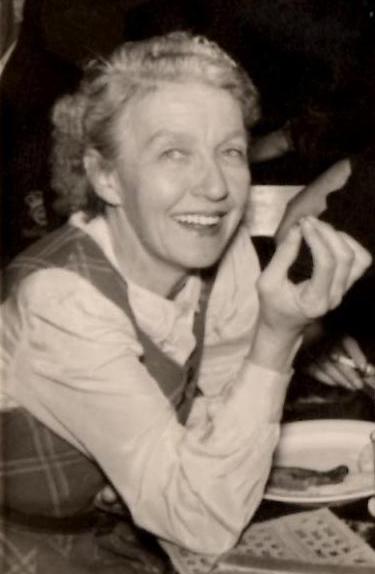
Winifred Margaret Laura Cawthorne

“When Winifred Died”

by Lesley Atkinson

On June the Eleventh, Winifred died

We sisters two, sat by her side

This is our mother, she’s dying we sighed

Our brother was waiting, our children were too

The cotton-wool clouds in the sky so blue

Were taking on shapes which blocked our view

Of eternity

Sometimes she was wicked, sometimes she was wise

Thinly-veined eyelids hid summer-blue eyes

She’s going, we said

She’s gone! we cried

The mother who tricked us so often, so sweetly

Had gone within seconds, and gone so completely!

We opened the window, her spirit rose free

Into the waiting sycamore tree

The sisters, the brother, the children all cried

The world lost a witch, when Winifred died

-o0o-

Thanks again, Mum xxx

City Preview – updated.

Only 22 hours to go now – and Arsenal are losing at home to Blackburn. Could we spring a shock after all??

Well, no. We got stuffed 4-0, and frankly, we were lucky to get Nil. Totally outclassed, ponderous in midfield, clueless up front, inept in defence. Apart from that, we weren’t too bad, and it was never a penalty, not in a million years.

Oh, well. Warnock out.

Rob Atkinson's avatarLife, Leeds United, the Universe & Everything

Sunday 17 Feb 2:00 pm (Etihad Stadium, Manchester)

Image

FA Cup 5th Round weekend is where a new ingredient starts to enter the much-vaunted “Romance of the Cup”. After the battles, scrapes and scares at previous stages of this most famous knockout competition, there is at last a genuine whiff of Wembley in the air.

This is much more the case these days of course, than in olden, golden times. Now, the need to accommodate sizeable contingents from all four semi-finalists dictates that the traditional last stop before Wembley is, erm, Wembley. So the 5th Round winners will be potentially a mere 90 minutes from a coveted appearance at the legendary venue. In other words, the competition is hurtling towards crunch time; all the teams that have survived so far can permit themselves a very private dream of ultimate glory, or at least of the chance to perish at…

View original post 736 more words

Guest blogspot: “Matron’s Cat” A short story by Lesley Atkinson

Nurse

Nurse Connolly

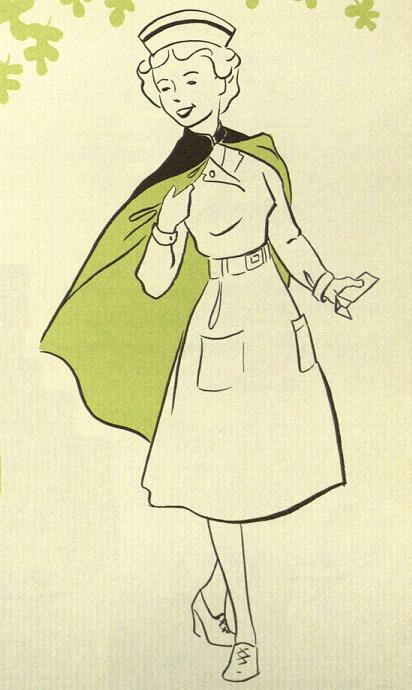
I first met Matron Pomfrey, in February, 1956. I had been nursing at a local village hospital in a mining area of Yorkshire when the Senior Sister, who was in charge of the small cottage hospital, suggested that I should make an appointment with the Matron of the main hospital in a nearby town and ask for an interview, with a view to training as a State Registered Nurse.

I hadn’t the heart to tell Sister Clarke that I had recently failed a nursing entrance exam in the City of Leeds. She smiled at me as she said, “You are working very well Nurse Connolly, and I shall be sorry to see you go, but I’m sure you will be much better off in every way if you enter the February Preliminary Training School (PTS) in Harrogate. You may use the telephone in my office, Nurse. Do it now, before I change my mind.”

I made the appointment, and re-lit Florence’s Lamp. I didn’t have time to worry about the interview because Matron agreed to see me the next day at 10 am. The following morning, I cadged a lift on the medical supply van. There were bottles of saline solution, and all kinds of pessaries and suppositories to study, and as the van driver seemed to be the strong silent type I contented myself by rehearsing the speech that I hoped would convince Matron I’d prove a worthy enough candidate for her to risk her shirt on me in the February PTS intake.

It was a short journey and when the van screeched to a halt, I emerged from the welter of surgical appliances and was helped out by a man who had quite forgotten that he was carrying a passenger. His voice was gruff as he said “Sorry Nurse, I clean forgot you were in’t back”. He stared at my legs, “D’you know that you’ve got a wicked ladder in yer stocking?”

I groaned. It had been a tiny ladder, which I thought I had stopped with some clear nail varnish before I’d set out. I looked over my shoulder at the back of my right leg. It was a very wicked ladder now and, unless I was prepared to stand in such a way that to onlookers I would have appeared deformed, there was nothing I could do – short of going into town to buy a new pair. I decided to say, if asked, that I had caught my stocking on a sharp edge in the supply van. I walked to the large main doors of the hospital thinking of various excuses for the ladder. “I’m most awfully sorry Matron, but it wasn’t really my fault…” No, too much like crawling…Take a firmer stand and pass the blame… “Matron…you really must do something about the interior of the medical supply van…look at the state of my best stockings!” Hopeless! Nurses are not allowed to take lifts in hospital vehicles unless they’re accompanying a patient. No, best to pretend that I hadn’t noticed it; after all, if the van driver had not pointed it out to me, I could have walked on in blissful ignorance.

There was a large woman standing at the Enquiries Desk and a younger woman, wearing jam-jar spectacles, was trying to deal with her as she remonstrated in a loud voice and refused to give details about her child. Her voice rose to a yell. “Bloody ‘ell lass, what’s ‘is date o’ birth got to do wi’ ’im bumping ‘is ‘ead? Eeh, poor little bugger could be dying! Ne’er mind abaht ‘is address, where’s bloody medical staff?”

The “poor little bugger” was tucking into a Mars Bar; he had a large head, but there was no visible sign of injury. His face was streaked with dry tear-stains and his mouth ringed with chocolate. I hoped that I would be there long enough to hear the outcome of the row, but a Staff Nurse walked over to the desk and asked if a Nurse Connolly had arrived. The large woman snapped at the Staff Nurse “Wait yer turn, my kid’s an emergency, I was ‘ere first!” The Staff Nurse looked loftily down her nose at the large woman. I volunteered my name, and she ushered me down a dark, winding passage. As we galloped discreetly along, she asked me in a whisper if I knew that I had a large ladder in my right stocking? I replied, also in a whisper, that I had laddered it on the way over. Her voice was almost oily, “Oh dear, you surely know Nurse that you shouldn’t take lifts in hospital vans?” She smiled, but the smile didn’t reach her eyes. She sighed. “It’s such a pity, you see Nurse. Matron and the Assistant Matron both set great store on neatness in uniform or mufti” (clothes other than uniform).

Mentally, I blew out Florence’s Lamp and resigned myself to life in the village hospital. Staff gave me another frosty smile and went on whispering about how strict the rules were and how high the standards of the hospital entrance exam. By this time we had arrived at a large office door with an enter sign, which was unlit. “I’ll let Miss Pomfrey know that you are here, Nurse.” She knocked gently on the door and went into the room, closing the door behind her.

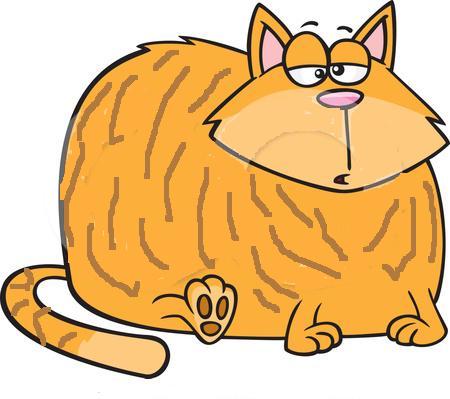
1045294-Royalty-Free-RF-Clip-Art-Illustration-Of-A-Cartoon-Really-Fat-Cat

Tangles, the Matron’s cat

I was seriously considering running away, when a huge rag-bag of a cat ambled round the chair legs. It yawned, showing a ferocious set of fangs, stretched its claws which were magnificently curved offensive weapons then, narrowing a pair of wicked amber eyes, it leapt up onto my lap where it turned round two or three times before settling down to pummel my thighs. Absentmindedly, I began to stroke its back and it set up a noise between a snore and a buzz-saw. As it wallowed in luxury, opening and closing its claws, I felt another run begin in my other stocking. “Well, thank You, God. You really know whose side You’re on today, don’t You? Cheers!” The door opened, and the Staff Nurse informed me that Matron would see me now. Her jaw dropped when she saw the cat on my knee. “Did Tangles get on your lap, or did you lift him up?” Her tone was surprisingly hostile. Before I could reply, the enter sign on the door lit up, telling me to go in. I tried to launch Tangles on to the floor, but he shot out a crafty paw and hooked himself to my shoulder. I shrugged and grinned at the Staff Nurse, “I think he loves me”. She glared at me, and walked swiftly away.

I turned the door knob and entered the office, the cat draped over my arm like a fox fur. Matron was attending to some paper work so she did not look up straight away. Tangles’ loud purring reverberated round the small room; it grew to a trill as I absentmindedly stroked his matted fur. Matron lifted her head and beamed, at me or at Tangles, I couldn’t be sure.

“Do sit down, Nurse Connolly; I see that you have met Tangles.” She clucked lovingly at the cat, who dug his claws ever more firmly into my arm, and narrowed his eyes affectionately at her. I seated myself carefully, and Tangles slid obligingly down on to my lap.

Matron smiled as she said, “Now my dear, I see from Sister Clarke’s letter that you recently failed an entrance exam in Leeds Would you like to tell me why you think that happened? Take your time.”

I could feel the blood rising in my face. So, Sister Clarke had known all the time! I felt shocked and betrayed. I played for time by fondling Tangles’ fur, he made himself ready for some serious petting by rolling onto his back and inviting me to tickle his tummy. Matron looked a little alarmed. “Oh do be careful Nurse, you touch his bits and bobs at your peril! He’s a sensitive creature and won’t hesitate to draw blood.” The cat’s fur was so thick and tangled that I couldn’t see any bits and bobs, but I slowed my petting and moved away from the danger zone. Smiling fatuously at Tangles, Matron handed me a paper. “Do you think you could cope with the mathematics paper, Nurse?” I skimmed through the form; thank You, God! There were fractions and decimals, but no logarithms. I was sure that I could manage the paper, if I could do some swift revision. It was my turn to beam. “I’m confident that I can tackle that, Matron.” The cat, sensing my happiness, wriggled joyfully and I saw a large flea leap from his neck to his ear. Matron pretended that she hadn’t seen it.

“Jolly good, Nurse! The English paper shouldn’t present you with any problems. I’ll write to Sister Clarke and let her know when you should attend here for the entrance exam. Good luck Nurse, I’m sure the test will be a mere formality. In the meantime, you may as well go and see Mrs Beavers in the sewing room, to get measured for your student uniform.” She rose to her feet and took Tangles from me. “Tangles approves of you Nurse, and he is seldom wrong.” I smiled reverently at Tangles’ rump, and as I reached the door Matron got a good view of my self destruct stockings. “Oh, and Nurse Connolly; please call at the Enquiry Desk, and ask Anne Fisher to reimburse you for a new pair of stockings.”

I left her crooning to Tangles, telling him he was a naughty, naughty darling, for laddering poor Nurse’s stockings. I floated on air all the way to the Enquiry Desk, where Anne Fisher turned out to be the girl in the jam-jar glasses. She gave me some money and also directions to the sewing room. The fat woman was still apparent, tucking into a Mars Bar and holding forth to all the other patients. She pointed to her little boy, who was busy trying to undo the wheel nuts on an invalid chair.

“’E’s ‘ad a hexray, I telled ‘em there were nowt broke, but yer know what they’re like, they allus know best, wasted an ‘ole morning fartin’ abaht wi’ doctors an’ nurses, they aren’t real doctors yer know, they’re learning on us, experimenting, that’s what!”

A Senior Sister detached herself from a group of colleagues and came over and asked the woman to please lower her voice. The large woman looked the sister in the eye, then, hands on hips, she retorted, “Shut yer rattle, you. I didn’t ask fer yer opinion, you might be Miss bloody Clever-clogs round ‘ere but I know yer aunt, they call her Lamplight Lil, down our end, an’ yer grandma were no better, every tally man fer miles around beat a path to ‘er door, yer cheeky sod!”

The Senior Sister retired wounded, and the triumphant fat woman stared delightedly round the Casualty Department. She grabbed her son, spat on her handkerchief and scrubbed his face; then, dragging him howling behind her, she sailed out of the main door. The fun was over, so I scampered off to the sewing room. On the way I almost collided with the whispering Staff Nurse, who gave me another glacial smile. I made a mental note to avoid her for the entire training period – always assuming that I passed the entrance exam!

THE END

Mum

Lesley K. Atkinson

Lesley Atkinson was born in Owlsmoor, Berkshire in November 1936. The second daughter of an Army family – her Dad was a Regimental Sergeant-Major – she grew up with her elder sister Pat and younger brother Terry in a variety of scattered locations across the South of England, Wales, Germany, and eventually, Yorkshire. Here she married Kenneth, and settled down to raise a family of three fine lads (the eldest being a particularly outstanding young man), and to pursue successive careers in nursing and teaching. Her mother, Winifred, was my favourite grandparent, a grand old lady who smoked like a chimney and told me amazing stories of her days in service.  “When Winifred Died”, to be found elsewhere on this blog, tells the story of the day Nan passed away.

Thanks to my wonderful Mum for being the first guest writer on my humble blog, and of course for so very much more than that. I really hope you’ll be back at the keyboard very soon xxx

FA Cup 5th Round Preview – Manchester City v Leeds United

Sunday 17 Feb 2:00 pm (Etihad Stadium, Manchester)

Image

FA Cup 5th Round weekend is where a new ingredient starts to enter the much-vaunted “Romance of the Cup”. After the battles, scrapes and scares at previous stages of this most famous knockout competition, there is at last a genuine whiff of Wembley in the air.
This is much more the case these days of course, than in olden, golden times. Now, the need to accommodate sizeable contingents from all four semi-finalists dictates that the traditional last stop before Wembley is, erm, Wembley. So the 5th Round winners will be potentially a mere 90 minutes from a coveted appearance at the legendary venue. In other words, the competition is hurtling towards crunch time; all the teams that have survived so far can permit themselves a very private dream of ultimate glory, or at least of the chance to perish at the final hurdle in auspicious surroundings.

Still, even at this relatively advanced stage of the competition, there remain giants to be killed, and also minnows, of all sizes, desperate to do the slaying. It was as “minnows” that my beloved Leeds United faced up to their last Cup trip to the North-West, thanks to some ill-advised pre-publicity on Manchester United’s mischievous official website. On that occasion, the underdogs proved that their bite lived up to their bark, and left the then Champions chastened and potless. Now Leeds must return, this time to Manchester City, again as underdogs, again pitted against the Title holders in their own backyard. Can United repeat their unlikely triumph of three years ago, this time against the Blue Mancunian majority? On the face of it, little could be less likely.

Leeds United are after all a club in turmoil, their season so far defined by bitterly disappointing under-achievement. After the long, drawn-out agony of the summer’s takeover saga, which actually dragged into the last couple of shopping days before Christmas, it’s perhaps understandable. But the league programme has been such a damp squib, the football has been so dire, and Neil Warnock, the supposed saviour of twelve months ago, has failed to live up to his promotion-speckled CV. Significantly though, the few bright spots have come in Cup competitions, where progress on two fronts has been embellished by the disposal of three nominal superiors from the Premier League. The most recent and by far the most impressive of these was the defeat of a Bale-powered Tottenham at Elland Road in the last round of the FA Cup. A second-half League Cup capitulation against Chelsea aside, Leeds’ knockout form this season has been rather good.

Manchester City meanwhile, reigning Champions and domestic Galácticos though they may be, look to have stumbled fatally in recent weeks. A run of pallid draws and then an awful capitulation at Southampton last week, and suddenly the gap between them and the Premier League summit is a chilling 12 point chasm. So, City head into the tie against Leeds in rather less than ideal shape. They will not have forgotten that their lowly opponents triumphed at Old Trafford a few short years back; neither will it have escaped them that they suffered a 2-5 reverse, last time these two met in the Cup on City’s patch. But these unwelcome omens may well put The Blues on their mettle, and the fact that their abject last performance so angered manager Roberto Mancini promises to be bad news for Leeds. Whatever the personnel in the Champions’ line-up on Sunday, they should not lack for motivation.

Leeds will expect to be under the cosh, but they have successfully bounced back from limp league performances on several occasions this season already. There has been an air of nonchalant relaxation in their Cup outings; no pressure to gain points towards a play-off berth, no real expectation of anything better than a battling performance and a glorious exit. Against this background, they have compassed the demise of Southampton, Everton and Spurs without ever being seriously troubled, and it will have crossed their minds that a deflated City might just be there for the taking.

There are, then, a number of imponderables that conspire to make this seemingly predictable tie that bit less clear-cut. Leeds will be up for it, and City may find the muck and bullets nature of the midfield battle is not quite to their more refined tastes. But if the Champions can impose their undoubted class early on, Leeds United will face a long and dispiriting afternoon. If, however, City struggle to break down a stubborn Whites defence, then the pressure of their own fans’ frustrations could sap them as the game progresses. In McCormack and Diouf, the Yorkshire giants possess sly and experienced campaigners who are liable to sniff blood and nip in for the kill.

My impartial, unbiased prediction? Well, both these sides owe their supporters after recent hapless performances, so I’ll call the motivation stakes even. My heart goes for a 2-2 draw, and a probably fruitless Elland Road replay. My head says City, possibly by three – and I’ll be happy with that, as long as the lads have put up a fight for the fans and the shirts.

Twist my arm then and I’ll predict, through gritted teeth: Manchester City 4, Leeds United 1

Another Day in the Death of Leeds United

Image

It’s not safe to identify any one day, defeat or disappointment as the nadir of Leeds United’s fortunes just now. At the moment, takeover and “fresh start” notwithstanding, we appear to be plummeting downhill faster than a greased pig. The loss of top scorer Luciano Becchio – to bloody Norwich City AGAIN – was another notable low point; but Leeds United has long had this unfortunate habit of losing top players in January transfer windows. Worse still, the results since Christmas have been appalling, in the league anyway. Beaten at home by Cardiff, as usual – chucking away a 2-1 lead at Wolves in injury time, and a poor performance to lose away at Middlesboro to a side which had lost several on the spin. In this last game, the Leeds fans were exhorting Neil Warnock, an increasingly isolated figure, to make a change and pep the team up, and he actually applauded them sarcastically, an absolutely fatal thing to do for a manager who was never the most popular. Bad, bad times. And yet, you somehow have that uncomfortable, chill feeling – even as a committed Whites fanatic – that, however bad things may seem, there’s plenty of scope for them to get worse.

Indeed, it’s arguable that things HAVE been worse – much worse – in the fairly recent past, than they are today. The run-up to the 2007/08 season, the club’s first in the third tier of English football, was catastrophic. Administration had brought about the unprecedented penalty of a 15 point deduction, leaving the beleaguered giants 5 wins short of zero points as the season started. But that season turned into a triumph of sorts – promotion was narrowly missed, and the whole points-deduction saga seemed to galvanise the support. On the pitch, the team delivered, particularly in the early part of the season, and a seemingly irresistible momentum was built up. Leeds really were United at this lowest ebb in their history.

At present, in some superficial measures, things are better – but in the most fundamental ways, they appear significantly worse. Obviously, the club now enjoys a higher status within the game – the dark days of League One football are receding into the past, at least for the time being. There have been high spots too, famous Cup victories, including the recent defeat of Spurs, and the odd satisfying away performance. At Elland Road, once a fortress notorious for intimidating opponents, form has been patchy. And yet other Premier League teams have been put to the sword, and generally speaking the team will give anyone a game on their own patch – apart from Cardiff, apparently. The underlying problem now though is more insidious than the acute emergencies immediately post-administration. It is the creeping cancer of apathy that pervades the club now.

It’s not difficult to see the signs of this. Read any of the fans’ forums, and a pattern swiftly emerges. The supporters, by and large, are sick of the way the club has been run over the past few years. Sick of paying top dollar for a distinctly second-rate product. Sick of the club’s habitual prevarications over transfer policy, of seeing our best players form a procession out of the exit door, sick to death of seeing lesser clubs easily out-match us for wages and transfer fees, despite the fact that our turnover and potential remain at the top end.

Leeds United, a great name in English football, by any measure, appears to have been run on the cheap for a long time now. Investment is minimal, the ability to retain promising players practically non-existent. The supporters’ expectations, born of great days in the past, remain high – and why shouldn’t they be? But those expectations show no sign of being met, or even approached. Last summer’s long drawn-out agony of a takeover saga descended too often to the depths of farce, as rumour countered rumour, and we all rode an internet-driven roller-coaster of optimism and despair, over and over again. But once concluded, that saga has not spawned a legacy of more investment and better club/fan relations. We appear to be stuck with more of the same; the changes appear to have been purely cosmetic.

On Saturday 12th January, Leeds United played Barnsley away, a fixture that had produced humiliating three-goal thrashings in the previous two seasons. This time around, it was only a two goal thrashing, but the manner of defeat – the abject failure to muster any real threat up front, and the spectacle of midfield players gazing skywards as the ball whistled to and fro far above them – was too much for the long-suffering band of away fans in Leeds United colours. They complained, loudly. They advised the manager to be on his way. They questioned the fitness of the players to wear the famous shirt. The FA Cup win over Spurs offered some brief respite, but now an almost identical scenario has been played out at Boro’s Riverside Stadium, a ground where we’d previously had a good record. After the match, Warnock spoke learnedly, but with that annoying chuckle in his voice, of the “need to win games” and of how he was baffled at how chances were being missed. We’ve heard a lot of this, all season. The supporters feel they are being taken for mugs, and they have had enough.

All this has been true for a while – but for much of the past year, change has been in the air, and it has seemed reasonable to expect that things might be about to get better. Some of us dared to dream. But after the final whistle at Middlesbrough, it was all of a sudden quite clear that the options for change have been exhausted, and that the future remains as bleak as it has been at any time since top-flight status was relinquished nine long years ago.

Some of the fans – not all, but some – feel that there is now no way back for Leeds – not to anywhere approaching the pre-eminence they once enjoyed in the game. If that’s the case, then the question arises: what is a reasonable aim? To gain promotion to the Premier League, and strive to survive? To become a yo-yo club, with promotion and relegation in successive years, never becoming established in the top-flight? That might be enough for many clubs, but at Leeds the memories of glory are that bit too vivid for the fans to settle for any such precarious existence, scratching around in the hinterland of old rivals’ success.

It may well be that, on a cold night on Teesside, realisation dawned that the club Leeds United once were is now dead and gone. What is left behind may well still be worth supporting, but it is likely to be a pale shadow of what we once knew. Recently, during the transfer window, there were rumours of high profile signings – and you knew, you just KNEW, that we were being softened up for more bad news. Then Becchio was off, swapped for a striker in Morison that Norwich didn’t want, and we heard reports that recent loanees didn’t want to stay “because of the money situation up there”. It all stinks of a club rotten to the core, and dead at the top.

Leeds United – one of the truly great names in English football. RIP.

Scrounging Graduate In “I Expect To Get Paid For Working” Scandal

Daily Fail” Leader Column

In what is being seen by wishy-washy commie pinko do-gooders as a landmark ruling, senior judges have ruled that a university graduate was correct to claim government back to work schemes were “legally flawed”. As part of an appalling betrayal of their fellow members of the ruling elite, the three bewigged buffoons have quashed regulations entitling the government to force benefit claimants to work for nothing. The decision, handed down by the Court of Appeal but still subject to further legal avenues, will be seen as a dark day for those who view a return to slavery as the only way of maximising the economic potential of the poor.

Nit-picking

Government sources were today taking comfort in the fact that the panel of judges were not critical of back-to-work schemes as such, but were merely nit-picking over the irritating principle that ”Proles expect to be paid”. Cate Reilly (24), the university graduate who brought the original case, had been required to work for multi-million pound High Street tat retailers Poundland, instead of pursuing her voluntary work in a museum. Ms Reilly was shockingly frank in her remarks after the decision was made public: “I don’t think I am above working in shops like Poundland”, she stated. “I now work part-time in a supermarket. It is just that I expect to get paid for working.”

Mercenary

It is the impact of those last seven words that will be worrying ministers today. It would seem that, on the back of the troublesome minimum wage legislation passed by the previous government, even benefit claimants will now expect to be paid actual money for their job experience opportunities. This is seen as deeply disturbing by the government. A stricken and tear-stained DWP junior minister, who did not want to be named, quavered: “These nasty, ungrateful peasants should be grateful for the chances we’re giving them. But oh, no – they want to be paid. This is the sort of mercenary attitude that we see all too often, even in these hard times when we should all be pulling together. Companies like Poundland create a lot of wealth, and that helps drive the economy and pay bankers’ bonuses. How are they supposed to fulfil their obligations to shareholders if they’re going to have to start paying people?”

Bullish

Employment Minister Mark Hoban was in a more bullish mood, stating, “Ultimately, the judgment confirms that it is right that we expect people to take getting into work seriously if they want to claim benefits”. The government’s position, then – thankfully – is likely to remain that claimants should prioritise obtaining work over more frivolous considerations like being paid for it. We should, perhaps, be grateful for small mercies.

Unwashed

The TUC, on the other hand, was taking a predictably wild and woolly line, claiming that mandatory back-to-work schemes “need to be looked at again”. This will be seen by worried Cabinet members as a direct challenge to the official line that poor, largely unwashed benefit scroungers should be marginalised, exploited for every penny possible. This type of economic resource is vital as the country fights its way back to a position where MP’s can ask for a 32% rise in pay without causing outrage in grim northern provincial centres of Marxism where no self-respecting Tory would be seen dead.

Dangerous

Anybody who fails to take this worrying development seriously should be warned as to possible consequences by the words of a partner at leading law firm, Manches. Tom Walker, the employment law partner, stated that “This judgment upholds what is perhaps the key tenet of employment, namely the ‘work wage bargain’. If someone gives their labour to a company, they should be paid for it. However well intentioned a workplace scheme may be, it is very dangerous to introduce compulsory unpaid labour into the UK employment market.”

Treason

It is precisely this kind of dangerously retrogressive, sentimental and frankly treasonous thinking that is liable to drag our country back to the dark days before the average pay of a Chief Executive Officer reached levels 400 times that of the average employee. There is a real danger that, without the Government’s forward-thinking and courageous plans to create a sector of society who will expect to work for no financial reward, we could return to a time when the top people were getting by on perhaps no more than ten times the salary of the man in the street.

Now if that doesn’t worry you, then all of Mr. Cameron’s good work so far has been a waste. We have to stand firm – it is no less than our God-given duty. We must remember who we are, where we’re from and get back to exploiting those untapped resources at the bottom of the pile. That’s the Tory way, and that, says the “Daily Fail“, is what we are all bound to protect.

Stand Up, If You Hate Man U – And Think It Might Be TV’s Fault

Hate Man U

On Saturday 8th January 2005, Manchester United played Exeter City in the 3rd round of the F.A. Cup. It was something of a mismatch on paper, but surprisingly a plucky Exeter team held out for a 0-0 draw, and took the holders to a replay. A significant achievement for the minnows, but this game was noteworthy for another reason; to date it remains the last F.A. Cup tie involving Manchester United not to have been shown live on TV.

Even on the face of it, this is a remarkable statistic. Particularly in the earlier rounds, there are many matches from which TV companies can take their pick, and traditionally the perceived likelihood of an upset is a big draw. Given the perennial dominance of Manchester United, it’s usually difficult to see much chance of a giant-killing, and the interest in games involving them, you might think, will be mainly for those occasions when they’re drawn against a Chelsea, or a Liverpool, or maybe even a Manchester City or an Arsenal.

Looking at the list of games included in this amazing run of uninterrupted TV spotlight, some of them really do make you wonder what the companies concerned hoped to achieve, with the chances of an embarrassingly one-sided contest surely outweighing by far any prospect of a surprise. It begs the question of whether broadcasters are putting too high a priority on audience over entertainment value. There may be a certain piquant charm in seeing the likes of Burton Albion gazing wide-eyed at the immensity of Old Trafford, but some of the ties televised have lacked even this saving grace. Middlesbrough or Reading at home? Hardly sets the pulse racing, does it?

Any hint of complaint about Manchester United will, naturally, bring anguished howls of protest from the direction of London and Devon, as hard-core Reds, some of whom may even have visited Old Trafford, loudly complain about this latest manifestation of “jealousy”. It’s become rather a knee-jerk reaction, but there’s really not a lot of foundation for it. Anyone truly motivated by envy (jealousy means something different, chaps, look it up) has a simple solution at hand – simply jump aboard the bandwagon. The prevalence of the Old Trafford club on our TV screens will certainly garner them increased “support” from those who just want to be identified with such a vulgar example of a club gorging on success. It is the more negative effect of blanket coverage that should be worrying, not so much for Manchester United, but for the sport itself.

For there is a danger here that the media have not only created a monster, but that they are actively encouraging that monster to eclipse all their rivals. The basis of any sport must be healthy competition, but there is disquieting evidence that the playing field has not been level for a long time now. It doesn’t take too much digging to unearth some unsettling trends. One study over a number of matches suggested that 88% of all marginal decisions went the way of Manchester United, and there was also a distinct lack of penalties awarded against them in league games at Old Trafford over a period of years. There have also been instances of referees who have displeased Alex Ferguson mysteriously disappearing for months from their fixtures. In a game of fine margins, as any game is at professional level, evidence that one club enjoys preferential treatment is a matter of concern. Such a trend, given the amount of money flowing into the game, could easily lead that one club into an unhealthy dominance, to the detriment, ultimately, of the spectacle as a whole. Fierce competition is so crucial to any healthy sport, that the importance of this principle is difficult to overstate.

Success, they say, is all about the steady accumulation of marginal gains. Manchester United as an institution appears fully to appreciate this, as any club should. But these days, the media are the game’s paymasters, particularly the TV companies – and when they start favouring one club above all others, then you have to fear for the ability of others to compete in the long term. It’s a matter of concern – and it could easily become a self-fulfilling prophecy, as more coverage (of an almost exclusively favourable nature) promotes more support ever further afield for “United” as the media love to call them. And the more support they gain, the more of a market there is which will feed on their success, so the more commercially desirable their success will become – and commercial pressure speaks volumes when knife-edge decisions are to be made.

It would be difficult to imagine that any other club should have such a long, unbroken run of live TV coverage in their F.A. Cup ties. In the 4th round of this year’s competition the other week, they figured in their 38th consecutive such event. The home game against Fulham followed its predictable, boring script – early penalty, spineless opposition, comfortable home win. Meanwhile, Brighton faced Arsenal, in what was, equally predictably, a much more exciting contest; two sides playing good football, and the prospect of a shock never far away. But this tie was not seen live. In the 5th round, Man U will face Reading at home, which will probably, let’s face it, be another Fulham-esque stroll. And, sure enough, yawn yawn, it’s live on the box again, despite the fact that there are murmurings of discontent now, from some sections of the press who evidently realise how boring it all is.

As a Leeds United supporter, I’ve had cause to bless the tendency of TV companies to cover even the games where “United” seem certain to roll over the opposition. On January 3rd 2010, Leeds, then of the third tier, triumphed at Old Trafford before a live ITV audience, sending the Champions spinning out of the Cup at the earliest possible stage. But satisfactory as this was, it’s the exception, not the rule – normally the colossus will trample the underdogs, and their millions of fans worldwide will be happy. But what about the rest of us? Are we to continue paying our satellite subscriptions, and buying our match tickets, for the privilege of watching Man U clean up as the stakes become higher, and the odds become ever more skewed in their favour?

At some point, worms will start turning and – at the risk of mixing metaphors – maybe the bubble will finally burst. Then, chill winds of reality will blast through the offices of the TV moguls. Don’t say you weren’t warned.

The Big Lie – David Cameron’s Divide And Rule Strategy

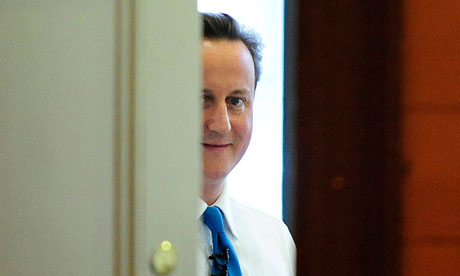
Image

The concept of The Big Lie as a propaganda technique has a long and well-documented, though tragically chequered history. It was a charge leveled at Jews by Adolf Hitler, with chilling irony as it turned out, accusing them en masse of laying the blame for Germany’s defeat in World War I at the feet of German General Erich Ludendorff.

Hitler’s definition of the Big Lie in his infamous “Mein Kampf” referred to a lie which is “so colossal that no-one would believe anyone could have the impudence to distort the truth so infamously”, and which would therefore, paradoxically, be accepted as true. “Mein Kampf” was published in 1925, but history tells us that both Hitler and his loathsome creature of propaganda, Josef Goebbels, would use the Big Lie technique in an attempt to justify the persecution and mass murder of six million Jews, many of them German citizens, during World War II. Historian Jeffrey Herf maintains that the Big Lie was employed by the Nazis to transform a long-standing antisemitism into a culture of acceptance for a programme of genocide, at least among the thousands of people required to collaborate or actually undertake the mass-slaughter of so many fellow human beings.

The Nazis’ euphemistic reference to a “Final Solution” was intended to mask a foul crime, perpetrated on a vast pan-continental scale, and justified by the Big Lie. It is the most extreme example conceivable of what can happen when such an effective propaganda tool is deployed and redeployed, over and over, a drip-feed of hate-fueled misinformation which sinks deeply into the public consciousness and breeds uncritical acceptance of dogmas that might otherwise be hotly disputed. But the identical technique continues in use today, and while the end result is not comparable to the fate of the Holocaust victims, the thinking behind modern propaganda, with its intent of marginalising an entire section of society, is directly analogous.

Image

Enter the Big Liar

The current Government’s presentation of its policies to tackle a massive public debt is an object lesson in the effective use of the Big Lie. Pathologically opposed to any measures which might unduly affect the “wealth-creating potential” of the better-off, they are nevertheless determined to make massive reductions in public expenditure, and have targeted the Welfare Budget as a potential source of great savings. The impact on household budgets, of which every penny is already earmarked, is readily foreseeable. Once you cut to the bone, any further cuts are likely to lead to collapse, and fears are being expressed by voluntary organisations like the Citizens Advice Bureau that the consequences for the poorest will be grave. It’s also realistic to fear that the creation of a sub-culture, helpless to resist the diminution of its resources and likely to be forced into dependence on food banks, is inimical to prospects for national recovery. Looked at in that light, how can such policies be presented as The Answer To All Our Problems?

Enter the Big Liar, stage right. Since the formation of Cameron’s Coalition ConDem government, it’s been noticeable how much we’ve heard, via every mouthpiece and interface of the media, about Benefit Cheats. Benefit Fraudsters. Welfare Scroungers. Shirkers, Not Workers. Now, any government worth its rhetorical mettle is good for the odd sound-bite, but Mr. Cameron’s administration are as hot as any in peddling its preferred take on the “issues that face us all”. And after all, who could have the impudence to distort the truth so infamously? So it must be true, then. Meanwhile, those responsible for the banking crisis, the Libor scandal, and other examples of fat cats acting criminally – or merely irresponsibly – in their frantic scramble to get even fatter, must be very grateful for where the spotlight is currently shining.

You have to listen very patiently to the more serious news outlets to hear about the depredations visited upon us by the rich and greedy. But it’s open season on those hampered by disability, poor employment prospects, sickness, infirmity and grinding poverty. Soft targets all, and there are plenty of establishment-friendly tabloids happy to feed us a daily diet of how tax money is wasted on affording such ne’er-do-wells a life of luxury, and the privilege of snoring behind drawn blinds whilst the industrious head off to work.

So how do these stories stand up to closer examination? Well, hardly at all, in truth. The “shirkers, not workers” myth is easily exploded – merely by looking at the proportion of the welfare budget spent on in-work benefits. These are benefits paid to those who have a job, but one where the wage is so pitifully low that it’s impossible for the family to subsist without an income supplement. Hardly shirkers, these people – exploited? Yes. Scroungers? It’s the Big Lie in action.

What about Benefit Fraud, then? Again, you’d be surprised to read the figures, given the loud and plaintive trumpeting of this “scandal” by the likes of the “Daily Mail”. It appears the Great British Public believe that 27% of the Welfare Budget is claimed fraudulently. The official UK Government figure? 0.7%. 2-0 to the Big Lie.

The latest manifestation of the way in which a section of society is marginalised now rears its ugly head. Thousands of people currently entitled to Disability benefits due to their care or mobility needs are going to be re-assessed under notably harsher entitlement tests, over the next few years. No improvement in their condition, no lessening of their needs will be required for their benefits to be stopped. The goal-posts are being moved, and a lot of helpless people, who previously managed to conduct their own lives assisted by the benefit payable for their condition, will be shown the red card and banished to the hinterland of dependence upon others. Extreme examples of families on £20,000 a year in benefits are quoted to justify swingeing cuts. Believe me, you just don’t want to know how disabled you’d have to be to qualify for anything like that level of help. The Big Lie rides again.

This administration is unfocused and incompetent, thrashing about horribly in its desperation to somehow prove itself worthy of re-election. A shoddy, unattractive and vindictive lot. riven by internal strife and barely suppressed internecine warfare, far more concerned by partisan interests than fair government for all. But, hey – credit where it’s due: there’s not a whole hell of a lot that Josef Goebbels or Adolf himself could teach them about propaganda, oppression of the vulnerable and the Big Lie.