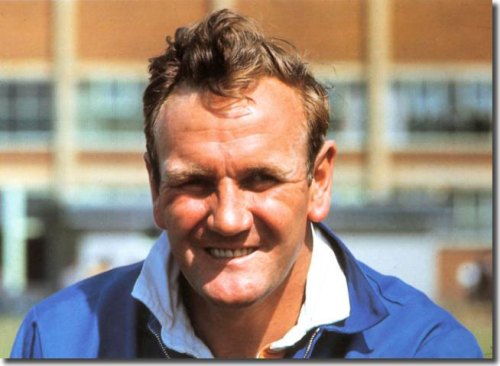
The Don of Elland Road – 30 years gone, but never forgotten
They say that great players don’t always make great managers, and Bobby Charlton is a stand-out example of that essential truth. His brother Jack, by common consent not anything like the player Bobby was, but ten times the bloke, was by far the more successful manager. Then again – he learned from the best.
And they will twist the argument around to show that average players can make great managers. We’re usually invited by a brainwashed and indoctrinated media to take Alex Ferguson as an example of this; my own choice would be Arsene Wenger, a deeply average player but a highly superior coach, tactician and innovator who made a significant dent in the Man U monopoly of the Premier League – despite the vast off-field advantages of the Salford club. Remember Wenger’s “Invincibles”?
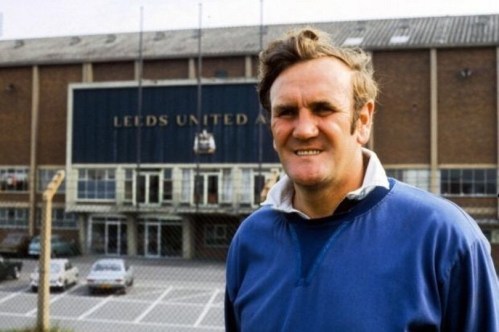
But there are a select few examples of truly great players who went on to be truly great managers – the likes of Busby and Dalglish, for instance – and I will argue passionately to my last breath that the best of the best was Donald George Revie, who died of Motor Neurone Disease 30 years ago this very day.
Don Revie was an innovative, thinking footballer, the pivot of the famous “Revie Plan” at Manchester City when he was the first to exploit deep-lying centre-forward play to great effect as City hit the heights in the mid to late fifties. He was instrumental in the Wembley defeat of Birmingham City in the FA Cup Final of 1956, and also helped restore English pride after two batterings by Hungary – the Magnificent Magyars having trounced England 6-3 at Wembley and 7-1 in Budapest. Revie’s adapted attacking role helped the National team annihilate Scotland 7-2 and his reputation was made as a selfless team player who was adept at making the ball do the work while team-mates found space as he dropped deep, baffling the defences of the time.
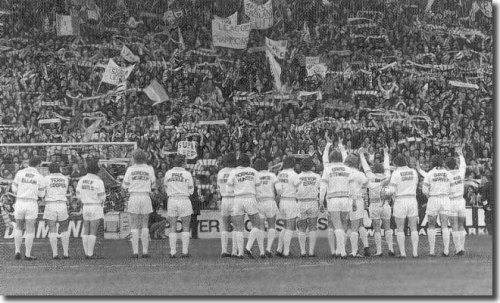
Revie was clearly a thinker, and developed very definite ideas about the game during his playing career, ideas he would later put into practice to devastating effect as a club manager. It is undeniable that, during his thirteen years in charge at Leeds, he elevated them from simply nowhere in the game to its very pinnacle, preaching togetherness and the team ethic above all else. Respected judges within the game have described the football played by Leeds at their peak as unmatched, before or since. In the eyes of many, that Leeds United team were the finest English side ever, a unit of grisly efficiency and teak-hardness yet capable of football which was outstandingly, breathtakingly beautiful, intricate in its conception and build-up, devastating in its effect.
Here is the scale of Revie’s achievement: in an era before the advent of lavish sponsorship and advanced commercial operations, he built a club from the ground upwards – a club with an apathetic support, which had hardly two ha’pennies to rub together, and whose prime asset was a group of raw but promising youngsters. The way that Revie nurtured those youngsters, moulding them into a team of supreme talent and majestic ability, is the stuff of legend. In some cases, he had to ward off the threats of homesickness: a young Billy Bremner was determined to go home to his native Scotland and Revie arranged for his girlfriend to move to Leeds, helping the lad settle down. Sometimes he had to adapt a player from one position to another – Terry Cooper was an indifferent winger who was made into a world-class overlapping full-back. Examples of his inspirational and man-management skills are many; he wrote the modern managerial manual from scratch.
Revie raised almost an entire squad from the junior ranks through to full international status, but he also had an unerring eye for a transfer market bargain. He took Bobby Collins from Everton, and saw the diminutive veteran midfielder produce the best form of his career. He lured a disaffected John Giles from Old Trafford where he was an under-rated performer. Giles swore that he would “haunt” Matt Busby, the manager who let him go, and Revie enabled this vow to be realised, converting Giles to a more central role after the end of Collins’ first team career. Giles and Bremner would form an almost telepathic central midfield partnership for Leeds, carrying all before them over the muddy battlefields of Division One. Revie later described his recruitment of Giles from Man U as “robbery with violence”.
As the sixties wore on, the Don would add Mick Jones and Allan Clarke to his formidable squad while it grew up together in a family atmosphere at Elland Road. Rarely if ever before or since can a manager have been so involved in his team’s welfare and well-being; no mere tracksuit manager this. There would be flowers and chocolates when a player’s girlfriend or wife celebrated a birthday, a listening ear and helping hand whenever problems threatened to affect a man’s form. Revie was a father figure to his players for over a decade, forming a bond of mutual loyalty and respect that still sets the standard for enlightened management today.
Don Revie has been described in scornful terms by the ignorant, as a dossier-obsessed and over-superstitious manager, then again as a coaching genius by some people of insight and judgement, and as simply the best by his players who still survive from that amazing period of Leeds United’s dominance at home and abroad. He was perhaps too reliant on lucky suits and the lifting of gypsy curses, and other such supernatural preoccupations. He could maybe have let his team “off the leash” a little earlier than he did – when given full rein, they were next door to unstoppable. But it’s hard to hold the caution and superstition of the man against him; this was a time unlike today when livelihoods depended on a bounce of the ball, when results mattered in a bread and butter way. There were no cossetted millionaires then, no examples of young men who could pack it all in tomorrow and live in luxury for the rest of their lives. It all meant so much more in those days and the word “pressure” had real resonance.
The modern coaches have greats among their number, there’s no doubt about that. It would be invidious to single out names; after all, the media in a misguided fit of uncritical and commercially-motivated hero-worship have been busily engaged for most of the last three decades in dubbing “S’ralex” as the greatest ever. But the legend that is Don Revie can sit comfortably on his laurels, the man who – more than any other – took a sow’s ear of a football club and made of it a purse of the very finest silk which yet concealed a core of Yorkshire steel.
After a season in which a number of high profile managers have conducted themselves disgracefully by rabble-rousing in the media – and I’m thinking mainly of the two opposing managers for Monday’s Championship playoff final – it’s fitting that we can remember with fondness and immense pride a true managerial giant.
Donald George Revie (1927 – 1989). Simply The Best.




















 Life, Leeds United, the Universe & Everything
From Milk Crate to Press Box, 42 Years at Leeds United’s Elland Road – by Rob Atkinson
Sitting where Frannie Lee wouldn’t dare – within right-hook range of Big Norm
My Elland Road history is one of a gradual progression that has seen me following the varied fortunes of Leeds United from many different vantage points within that famous old stadium. I started out in the much-lamented Lowfields Road stand, its venerable roof famously braced by cross wires to stop it being blown away by anything above a stiff breeze. My spectating debut was in the funny little “shelf” area that ran the length of the stand between the terraces below and the seats above. I attended a good few games there, with our Gray and, solemnly in charge, my Dad – who saw that our match-day equipment included milk crates for us kids to stand upon, thus enjoying some sort of view.
When I first started going to Elland Road independently, I stood on the Lowfields terraces, but found the passion and buffeting of that experience a little too much – softie that I was. So the next move was to the Boys’ Pen, in the North-East corner of the ground. I stayed there until a ticket mix-up meant that I faced a choice between missing a League Cup tie against Everton, and braving the rigours of the Kop. I screwed up my courage to make my debut on that mighty and cacophonous hill – and never looked back. From that time on, I was a dedicated Gelderd-Ender and the Kop years represent my golden era of United support.
When the Kop went all-seater in the wake of Hillsborough and the Taylor Report, it never felt quite the same to me, and I sympathise with those who never experienced the thrill and surge of a packed Gelderd. One moment I’ll always remember is when Dave Batty scored against Man City early in our League Title season of 1991/92. As Batty himself later admitted, he was never much of a goal-scorer “but, against City, I were prolific”. Over a hundred games after his previous goal, at City in the late 80s, Batts hit the back of the net against the same opponents in ’91 – and at the Gelderd End, too. The whole stadium erupted in joy unconfined; I believe injuries were sustained on the Kop that day but, trust me, nobody felt any pain. It was a magical moment, the stuff from which legends are woven.
When my time on the Kop came to an end, my attendance at Elland Road growing less frequent, I became something of a nomad, taking in the view from the South, West and East of the stadium. I was getting older and more curmudgeonly, less able and willing to tolerate the stresses of a packed crowd, or of bored kids making me get up and sit down all the time as they passed to and fro. I was becoming my grumpy Dad and, frankly, it had ceased to be fun. I was even considering a flirtation with Ponte Collieries, though my heart and soul belong to Leeds and always will. I just couldn’t hack it any more; I’d never got over the loss of the terraces, not that I’d last five minutes there, these days.
But now I’m back, a habitué of the press area courtesy of semi-regular Leeds United newspaper columns and, though I say it myself as shouldn’t, what has become a pan-global blog. Finally, I’m finding myself somewhat cossetted in experiencing an environment a bit kinder to middle-aged sensibilities. Last Saturday, I watched the Ipswich Town match beside one of my heroes, Norman Hunter, a legend of the Don Revie era at Leeds. I was utterly star-struck, but Big Norm was chatty and amiable – until the game started. Then he was kicking every ball, totally absorbed in the action, grievously upset at every United mistake (and there seemed to be a lot). It was an education for me in terms of what an old pro expects of the current crop, with the desk in front of us taking some punishment as Norm fulminated away. On my other side was erstwhile press-box doyen Don Warters, former Leeds United correspondent for the Yorkshire Evening Post. As Norman stumped off just before full-time, on his way to do his corporate bit in one of the lounges, I remarked that he didn’t seem too happy. Don grinned and replied, “He never is”.
I guess such hyper-involvement and the severely critical outlook goes with the territory for those guys who’ve been there and done it, especially at the level Norman, Billy and the rest played. But still, looking on the bright side – we did win on the day to stay top and, despite a couple of awayday blips recently, we’re still doing quite well overall. The football has been genuinely exciting so far this campaign, a real pleasure to watch and even to write about. What’s more, it’s a great view among all the scribes, the club kindly provides sandwiches, coffee and other such civilised comforts – and the company is amazing. All in all, just when I thought I was coming to the end of my Leeds United journey, it’s really wonderful to be back at Elland Road.
While you’re here – a gentle and polite reminder. Life, Leeds United, the Universe & Everything depends on your donations to keep going. Please click HERE to donate what you can – even a quid or two makes a big difference. This blog will never hide behind a paywall, so it relies on your generosity for its continued existence. Thank you – MOT.
Lowfields Road stand, towards the end of its life – but with the “Shelf” easily identifiable
Share this:
16 Comments
Posted in Football, Leeds United
Tagged commentary, Don Revie, Ipswich Town, Leeds United, Norman Hunter, Super Leeds, weblog, Wordpress