Tag Archives: England

England 2-0 Poland

So there we go – all that fuss over nothing. England made us sweat a bit, and Poland played their part – but it was the incentive of qualification that made the difference against a team with only (national) pride to play for. Now Woy’s Army march on to Bwazil – and a probable exit before the knockout phase.

Come on, Engerland!!

40 Years On, England Can Banish the Spectre of “Clown” Tomaszewski – by Rob Atkinson

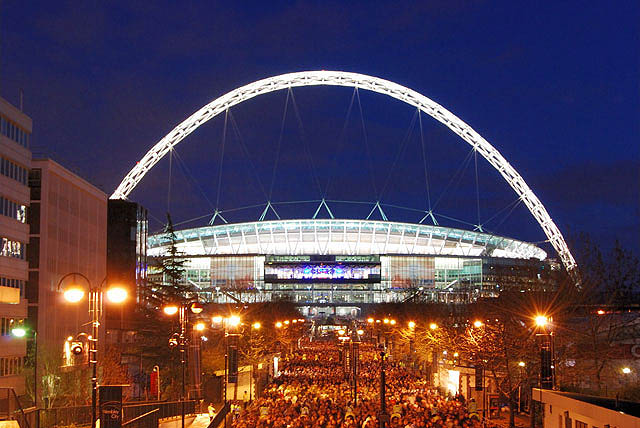
Wembley:  England Expects

Wembley: England Expects

Wembley on Tuesday will see England’s latest attempt to exorcise one of the troublesome ghosts that haunts their under-achieving past. The name of the spectre is Jan Tomaszewski, still happily alive and kicking his way through dual careers in Poland as football coach and legislator for justice. But the Polish keeper’s outstanding display in defying the big guns of England that far-off Wembley night had massive repercussions for the game in this country and a ripple effect that is felt even today.

Consider the myriad “what ifs” that radiate outwards from the impact crater of that momentous qualifying tie. What if…..England had won? First and most obviously, it is highly likely that Sir Alf Ramsey would have continued in his job, quite possibly after the 1974 World Cup Finals with a view to leading England in the European Championships of 1976, ten years after his triumphant World Cup campaign on home soil. Maybe then there would have been several more years of Don Revie at Leeds, and no catastrophic mismatch of talents with the frankly silly idea of a lonely Brian Clough, deprived of his mate Pete’s steadying influence, at a hostile Elland Road; possibly even an early renaissance for Brighton as Clough and Taylor worked their combined magic on the south coast – and would we ever have heard of Nottingham Forest again?

Such cause-and-effect speculation is an entertaining way to beguile an idle hour, and intriguing alternate reality scenarios readily conjure themselves up. Leeds were reigning Champions that 1974/75 season and still a force – but weakened and demoralised by the toxicity and rancour of Clough’s brief, turbulent reign. Who knows what benefits might have accrued from a few years more continuity? A European Cup, perhaps, in 1975 and a sympathetic transition from one great Revie side at Elland Road to another? A consequent lessening of Liverpool’s domination through the later seventies and the whole of the eighties? And on the international scene – success for England in the Euros of 76 with qualification for Argentina in 78 and a good chance of being the first European side to lift the World Cup in South America? The possibilities are almost endless and the fact that they failed to come about has its roots at Wembley in 1973.

Remember the key moment: Hunter misses a tackle near halfway and Poland spring forward. Shilton is beaten with uncharacteristic ease at his near post and England are one down in a game they must win. Now Tomaszewski, labeled a clown prior to the match by Clough – frankly Brian, it always was Taylor that was the better judge of a player – Jan Tomaszewski played the game of his life to thwart attack after Three Lions attack. Beaten only by an Allan Clarke penalty, the Clown left the field of battle triumphant, his country bound for West Germany ’74 while England dined on the bitter fruits of recrimination and disappeared from the world stage until 1982.

In many ways, the scene is set similarly forty years on. England must win to ensure qualification, though the possible safety net of a second-place play-off chance sways reassuringly below them. The press have the game as a must-win though, and doubtless a certain 65 year old former Polish goalkeeper will be invited to help with the build-up, recalling all those saves he made from Currie, Bell, Clarke and the rest, to ensure that clowns would haunt the nightmares of England fans for the foreseeable future.

The big difference of course is that four decades ago, it was dog eat dog and devil take the hindmost. Poland needed a draw to qualify, England needed to win. The stakes were high for both sides. On Tuesday at a newer Wembley and with England, needing the win, nicely warmed up by their demolition of Montenegro, their old adversaries will not be similarly motivated. Poland’s defeat in the Ukraine means that their hopes of progression even via the play-offs have disappeared; they have only pride to play for.

That should always be motivation enough in the nationalist fervour of representative football, but England’s more material incentives will probably see them carry the day. And there will after all be no stubborn clown between the Polish sticks on Tuesday to banish English hopes and break English hearts. 1973 and all that was a long, long time ago.

Januzaj for England? What a Farce!

An admirably clear-sighted and rational reaction to the usual media hype demanding that any new Man U player, whatever his nationality or playing position should be seen as:

(a) The New George Best;

(b) vital for England;

(c) the best thing since sliced bread (where are you, John Curtis??) and

(d) Oh, just the dog’s bollocks, honestly.

This is a blog I shall be following with interest from now onwards.

thetanmarcaroni's avatarPitch Pundit

View original post 591 more words

Neil Warnock: I’d rather watch Downton Abbey than an England match

The thoughts of Colin, as bizarre as ever – but does he have a point in claiming he’d rather watch Downton than England? Leeds fans would be able to confirm that the old boy has no more than a passing interest in football, so maybe this expressed preference isn’t all that much of a surprise…

History Made as Klingon Andros Scores for England – by Rob Atkinson

Image

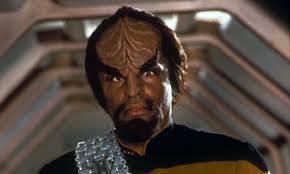
Andros “Worf” Townsend

History was made at Wembley on Friday night as Tottenham’s Andros Townsend became the first extra-terrestrial to score for England.

Townsend, though reported by some sources to have been born in Leytonstone, actually originated on the Klingon home-world Qo’noS. It is thought that he is the result of a committed relationship in the early nineties between a Klingon warrior who travelled through time and space through a wormhole to Earth, and a timid secretary from Waltham Forest.  The couple made the return journey to Qo’noS so that the young Andros should be able to absorb the culture of his paternal bloodline, but when the lad showed a preference for kicking a ball around instead of engaging in martial drills and studying the history of the Klingon warrior race, the family returned again to Earth and settled in North London where Spurs, attracted by his ability to score headed goals from inside his own half, signed Andros in 2009.

Klingons are known to have had sexual relations with humans, with the “Voyager” character B’Elanna Torres being an example of a Klingon-human hybrid.  However, Townsend is thought to be the first descendant of the male Klingon bloodline to have forced his way into the Tottenham Hotspur first team, though some have questioned whether Nayim was of Romulan descent.

Townsend’s first start for England, capped by his debut goal, has been identified as the dawn of a new era for the game in this country, exceeding in its cultural impact the international breakthrough of Viv Anderson who became the first black player selected by England in the late seventies.  An FA spokesman said “It was indeed an historic moment when Viv made his bow, and a massive step forward which was rightly hailed as such by the press at the time – with the notable exception of the Daily Mail who instead called for closer links with South Africa as practised by the England cricket team.  But tonight’s achievement by Andros – the first acknowledged member of a different species, with due deference to the claims of Wayne Rooney, to actually play for England – well, it opens up whole new worlds of possibilities.  If you’ll forgive the pun.”

The FA are now thought likely to investigate whether there might be other sources of extra-terrestrial talent available to the national team.  Enquiries so far have revealed nothing definite, though there are thought to be possibilities in the north-east.

Two of the other England goals against Montenegro were scored by human beings, Daniel Sturridge and an own goal from Boskovic. Wayne Rooney also got on the scoresheet as England swept aside their opposition by four goals to one.  They now require a victory against Poland next Tuesday to seal qualification for next year’s World Cup Finals in Brazil.  In the wake of Townsend’s feat in scoring the first alien goal for England, the FA have revealed a “good luck” message from the Klingon Empire which reads simply: Qapla’ .

International Break is as Important for Leeds as it is for England – by Rob Atkinson

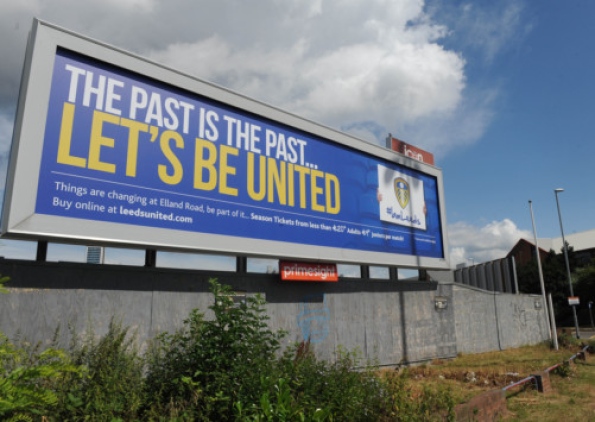
....or divided we fall

….or divided we shall most certainly fall

It’s no exaggeration to say that the next couple of weeks might very well make or break Leeds United’s season.  It’s as serious as that.  Not for any reasons of points or league placings, but to nip in the bud the deadly, creeping disease of apathy that can seize hold of a club’s supporter base and throttle all hope out of it.  Don’t get me wrong; the international break is clearly important for England too.  But all they have to do is win a couple of games at Wembley, with everything going for them and the cream of the country’s talent (such as it is) at their disposal.  Easy peasy.  Leeds United have no such simple task.  Leeds United must somehow conjure up a whole new philosophy, advance further down the road of securing significant investment and cheer up a moribund fan-base to the point where they can inspire the team again, instead of reducing it to nervy inefficiency.  No pressure, then.

Conflicting noises have come out of Elland Road this last week or so.  First we’re told that new players are on their way, but the existing squad should have won in the most hostile of Lions’ Dens.  Then there were glad tidings of “investment to take us to the next level”, but with the same breath we were told it was hard to secure such investment and that promotion was “a harsh target”.  Neither was the tantalising concept of “the next level” defined.  The next level of what?  Angry Birds?  Surely, they couldn’t have meant the next level up the league ladders, better known as the Premier League.  That is, after all, a harsh target. None of these pronouncements have come from the football side of the club, though you might be forgiven for thinking they had, what with learned opinions being offered about the capabilities of the existing squad vis-a-vis Millwall.  So confusion reigns, and the sickly stench of discouragement and resignation begins to drift among the fans in their expensive seats.  If promotion is a harsh target, they muse, aren’t these seat prices slightly harsh then?  What are we being invited to hope for, and at premium prices too?

Maybe, a mere two weeks hence, things will look better.  Perhaps, after we’ve sat and watched England cruise to qualification for Brazil 2014, we can turn our attentions back to Leeds United in a more positive frame of mind.  Will we have new faces to slot into our supporters’ team formations and post on Twitter? (Do I go traditional 4-4-2 or should I stick with the diamond? What about wing backs either side of a three in defence, eh? Hmmmm. Complicated, ain’t it.)  A couple of new faces could do a lot for morale out here, among all the armchair coaches and strategists, not to mention the galvanising effect on the team and its performances under the man who matters, Mr McDermott. And maybe there’ll be rumours of money coming into the club. There certainly should be, we’ve rarely been without them this past two years.  Rumours we have aplenty; pounds sterling, dollars or even shekels have been in somewhat shorter supply.  But you never know.  There’s no football for Leeds United for two long weeks. Surely something will happen in that time.  Perhaps even … something wonderful??

It’s to be hoped so.  The present mood out here is not positive, and the people responsible for those conflicting statements – and for what amounts to defeatist talk, dammit all – must hold their hands up for that.  If nothing else happens in the next fortnight while England’s millionaire playboys are poncing about at Wembley, it would at least be nice to see a more unified Leeds United emerge at the end of that time, singing the same song, or at least avoiding such excruciating discords.  A couple of high-class loans would do us all the power of good and maybe – just maybe – we could then go Marching On Together into the January market with a bit more hope than seems likely right now.  After all, we’re all Leeds, aren’t we?  Of course we bloody are. Fingers crossed it stays that way.

England Cruise to Routine Win Over Moldova

20130906-210655.jpg
FA Boss Greg Dyke may on reflection feel like claiming his dismissive remarks over England’s chances of success in next year’s World Cup were actually by way of reverse psychology motivation. That would certainly sit better with the current group of English Lions whose pride may well have been stung by suggestions that the nation’s next realistic chance of glory is 9 long years away in the searing heat of Qatar 2022. None of the stars of today can expect to be involved then; most will be football pensioners, studio pundits or embittered lower-league coaches.

If Dyke does claim in retrospect that his words were intended as a spur to greater effort and attainment, the performance against a clearly-outclassed Moldova will have him preening himself for the effectiveness of his barbed remarks. England tore into the red shirts from the off and could have scored on more then one occasion before Steve Gerrard fastened on to the juiciest of lay-backs from Frank Lampard – his 99th cap tonight – and sent an arrow of a shot in off the base of a Moldovan post. 1-0 after 12 minutes and the pressure on a creaking defence, hardly reassured by the evident nervousness of their keeper Namasco, was not about to let up.

Namasco it was, with a weak flap at a Theo Walcott snap shot, who set up Rickie Lambert with the easiest of headers, point-blank into an empty net for the second England goal on 26 minutes. Easy, easy, so it seemed – but only England had scored more than 2 against this outfit in the group so far with a 5 goal demolition in the away fixture.

When the third goal arrived on the stroke of half-time, it was Danny Welbeck’s hero act following hard on the heels of his hapless villain. First he earned a stupid if slightly unfortunate yellow card, firing in a shot after play had been halted for an offside call. That will cost England his services, at a time they are stretched for attacking resources, for the crunch game against Ukraine on Tuesday. Welbeck immediately made some amends by controlling a forward ball to round the keeper as he surged clear of the defence to finish routinely.

The second half began quietly, the previously-booked Ashley Cole having been replaced by Leighton Baines as Manager Roy Hodgson looked to protect his troops from further disciplinary action. But within 5 minutes of the restart England had four, Welbeck finishing well from a sublime through ball slid in by the impressive Lambert whose performance was making nonsense of his mostly humble pedigree.

England were building pressure well on the Moldovan penalty area, finding the time to pick their passes deep in opposition territory. As the second half wore on though, thoughts of Tuesday night’s date in Kiev evidently dominated more and more. The terrific Lambert was replaced by Jamie Milner with over twenty minutes to go, his forthcoming contribution against the Ukraine assuming greater significance in the enforced absence of Welbeck. England were still threatening and Everton’s Ross Barkley, on for Jack Wilshere, fizzed a shot just wide with quarter of an hour to go. A few more minutes and Frank Lampard’s vicious drive brought a scrambling save from the beleaguered Moldovan keeper.

The result was long since decided though and the game was established into a pattern of relentless attack against packed defence, England able to find space seemingly at will. As injury time ticked its sparse two minutes away, there was just time for Milner to balloon the ball wildly over the bar when he had the time and space to do much better.

A much sterner test lies in wait in Kiev next Tuesday. Ukraine warmed up for England with a 9-0 demolition of San Marino and they will be a real obstacle to the progress of the Three Lions. But it’s so far, so good for Hodgson’s troops and they will be in good heart after ramming at least some of Greg Dyke’s words back down his throat. Whether they can maintain that laudable defiance in such a crucial tie as next week’s remains to be seen, but for the moment England’s eyes are set however optimistically on glory much sooner than their ultimate boss predicts.

Beckham To Retire At Last

Beckham: Hanging Up Boots

Beckham: Hanging Up Boots

So, the day has arrived at last.  An icon is to depart the game.  England’s “Goldenballs”, the man with the most famous metatarsal the world has ever seen, he of the sculpted facial furniture with chiseled jaw and cheekbones to die for, David Robert Joseph Beckham OBE is finally to quit the game he has – more or less – adorned since 1995.  Everybody is sitting up and taking notice at what is the end of an era.  Leyton Orient have felt it necessary to remind the world in a timely tweet that the Coiffed One is to make his last appearance against French side Lorient – NOT the English League One denizens L.Orient.  Thanks for clearing that up, lads.

 My first memory of David Beckham is necessarily hazy – I was quite intoxicated, and stood high up in the away end at The Theatre of Hollow Myths as Leeds United’s all-conquering youth side trampled the budding superstars of Man U into the turf on their way to an eventual 4-1 aggregate FA Youth Cup win.  That was in 1993, and it was some small measure of compensation for the transition from our status of Last Real Champions to that of Man U as first holders of the Premier League Plastic Trophy.  As the new era dawned, an epic career was off to an inglorious start, but it was destined to contrast starkly with the doomed efforts of that night’s winners.

Since then, even so jaundiced an observer as I must admit that Beckham has scaled Olympian Heights, and on one foot, too.  No less a footballing authority than the late, grating George Best described him in less than glowing terms: “He cannot kick with his left foot, he cannot head a ball, he cannot tackle and he doesn’t score many goals. Apart from that he’s all right.”  Not that he was bitter or anything – but maybe the fact that Beckham’s earnings in any given calendar month eclipsed the entire career earnings of the self-styled “Greatest Ever” had touched a raw nerve or two.  Whatever Bestie might have thought of the shortcomings of Becks talent-wise, the London boy could surely have taught him a thing or two about application, dedication and – crucially – not being caught with his pants down before important semi-final matches.

That ability to dedicate himself and make it big, on the back of a less-than-completely full box of tricks, certainly redounds to Beckham’s credit.  His habit of creating the most spectacular results with one swing of that cultured right foot did him no harm either.  On loan at Preston as a youngster, he created a stir by scoring direct from a corner, and not too long afterwards, establishing himself in the Man U first team, he looked up from just inside his own half at Selhurst Park, and lobbed the ball mightily over the back-pedaling ‘keeper Neil Sullivan to score an outrageously long-range goal against long-ball merchants Wimbledon.  The most famous exponent of this type of effort up to that time had been a chap called Pele, who tried it in the World Cup; but Pele had missed.

The path to World Superstardom was not, however, always strewn with rose petals.  Attitude problems surfaced, petulance would be a problem throughout most of his career (not an uncommon problem among graduates of the Man U finishing school), there were run-ins with his irascible mentor Ferguson, and he could be impulsive too.  He saw a young lass on a pop video, and he decided on the spot to marry her.  His judgement on that occasion at least was reasonably sound, or so it seems; the marriage is still going strong and from tacky beginnings with a wedding that would have figured large in any style guru’s nightmares, the couple have built a family with their weirdly-named brood and two large fortunes securing a stable future for all concerned.

So how will Beckham best be remembered?  Some will say as the archetypal Man U fan – he was born and raised in London after all, which is a headline qualification for that status.  Others will remember his flirtation with the extreme edges of fashion – his famous experiment with girly clothing as he sported a sarong, for instance.  But whatever he did, whatever style he either aped or created, there were millions queuing up to follow his every footstep.  He had the knack of capturing the hearts of a whole generation with the totality of the Beckham package – the talent, the looks, the style, the pop-star wife.  Some of it was grossly kitsch, Beckingham Palace was the venue for many sins against the Manual of Good Taste.  Some of it took your breath away with the sheer, daring nerve of it – the revelation that his son Brooklyn was named after the site of his conception had people offering up prayers of thanks that the tender moment hadn’t taken place in Peckham.  Subsequent male children were named Romeo and Cruz and then a girl arrived to be lumbered with the curiously android-like Harper Seven.  There is, after all, no accounting for taste.

Some will remember the iconic free-kicks for England, the most famous of which secured his country’s automatic World Cup 2002 qualification.  What people forget is that, had we been doomed to the play-offs, we might have taken Germany’s easier route to the Final – but who ever knows what fate might hold?  In the end, England and Beckham, together with his famously bust metatarsal, appeared in the global tournament, but for once Beckham wasn’t really up to it, and it was his half-hearted, half-baked, half-fit attempt at a tackle which let Brazil in for the equaliser at the quarter-final stage, the Samba Stars going on to eliminate England 2-1.

But whatever you might think of Beckham, my fondest memories of him will be in that England shirt – not for his flashes of temper, leading to notorious dismissals, but for the massively evident pride with which he wore the Three Lions over his heart, the utter commitment and dedication with which he put himself about the pitch in the England cause, be it merely as a star player, or eventually as captain of his country.  Nobody set a better example of leadership than David Beckham when he had that international shirt on, and nobody could ever doubt on those occasions that everything else – the endorsements, the mansions, the publicity stunts, the lurid tales of his off-field life – all of that was secondary to his intense, burning patriotism.  If that alone had been enough, England may well have had three winners’ stars to embroider above the Three Lions on the Shirt, instead of that solitary one.

So it’s farewell, Goldenballs.  He was a player of his times, a man who would be a superstar  among superstars, someone who would attract fan fervour and inspire adulation and hero-worship out of all proportion to his essentially modest character – and some would say disproportionately to his talent too.  Be that as it may, it’s unlikely we will see such a phenomenon again, unless the ingredients are coming together even as we speak, and yet another cockney Man U fan is bubbling under up Salford way.  You just never know.

The Key To England’s Quest For World Cup Glory – Could It Be LESS Money?

It’s not been a good year for England’s international football team.  Of course, this is something that can be stated, quite accurately, most years.  It’s a recurring problem, the way we always seem to fail to punch our weight in the big tournaments.  The World Cup qualifiers this autumn 2012 were a case in point.

An over-riding concern, as far as the actual football goes, must be the depressing lack of quality in an England team made up, as usual, of multi-millionaires, millionaires, and perhaps two or three of the merely very rich.

Against San Marino, a motley crew of one lower-league pro and ten part-timers, the pride of England laboured mightily, but showed very little class or penetration, admittedly against opposition whose ambitions stretched no further forward than the halfway line. But still, the glass-half-full brigade will argue, we won by five – and so we did.  But it could and should have been better, and we can’t avoid the question of why it wasn’t.

Poland provided a higher class of opponent, but having taken the lead, somewhat fortuitously, England couldn’t build on it, couldn’t stem the tide of red flowing towards them, and couldn’t hold their lead.  Where, we are justified in asking, was the class and composure?  Where were the passing skills, why was possession so hard to win and to retain?

With the money in the game, the long-established infrastructure, and the size of our nation relative, say, to a country like Holland which produces excellence as a matter of course, we should be doing better.  Something is rotten in the state of England.  What are the missing ingredients?

Allow me to propose an old-fashioned answer: pride and passion.

Now, I’m not suggesting that the players who represent England are lacking totally in either commodity, but I would venture the opinion that this is no longer the over-riding motivation.  Money – oodles of it – looms far too large within the game.  To clear the players’ heads, to rid them of competing considerations and leave them focused on the job in hand, to nurture the mindset that they are representing their country, and carrying the hopes of millions, I would propose – quite seriously – that we abandon henceforth the practice of paying players to play for England.

This is not a new idea, not by any means.  Before World War Two, players selected for England were invited to choose a match fee or a souvenir medal – not both.  They invariably opted for the medal – and this in an era when professional football wages were capped at a level not far above those of a skilled worker.  But pride and passion motivated them.

Nowadays of course, footballers earn a vast amount, and some would say good luck to them – but do they really need to be paid over and above their club contracts for what is still a signal honour?  How does this affect the way we see them?

As things stand, the emotional distance between the crowd and the players is magnified by a patently enormous gulf in financial status, which breeds resentment among the fans when things aren’t going well on the field (look at him, fifty grand a week, and he couldn’t trap a bag of cement). Would the frequently toxic nature of that crowd/team relationship not be improved if the players were really playing for the shirt and the cap, and nothing else?

Removal of monetary rewards would not be universally popular among the players – but might this not help sort out the committed from the opportunist, and thus – to risk an archaic phrase – engender a more positive team spirit?

There would be no unpalatable need for the FA to profit by the players’ noble sacrifice.  The money that now goes on match fees and bonuses should instead be diverted to a charity of the players’ choice – and would this not only provide an additional incentive to win, but also enhance the team’s good-guy credentials?

They might feel, deep inside, that they’re a cut above the opposition – who are shamelessly, brazenly, doing it for the money.  It might even give them that crucial edge. Success is, after all, about the steady accumulation of marginal gains.

No match fees or any bonus, not a red cent – just an international cap.  No taint of lucre in the motivations of the players, who would in any case be set for life even if they never earned another penny.  No charge of “mercenary footballers” from a disgruntled crowd – rather it would be:  well done lads, you’re doing it for England and glory.  If you didn’t win – well, we know you were giving of your best, for love of the shirt and charitable causes.

Can there be a better incentive than national pride and sheer altruism, uncluttered by the financial bottom line?  Wouldn’t there just possibly be a whole new dynamic around the currently embattled England setup that might even take us onwards and upwards?  Am I being hopelessly idealistic or even naïve?  Perhaps – but I would humbly suggest that it’s got to be a better way, and is certainly worth a try.