Tag Archives: Football

Super Leeds: The Last Champions – by Rob Atkinson

Stand Up For The Last Champions

Stand Up For The Last Champions

If you should happen to be a football fan – as I am, and have been these many years, since days of yore with short shorts, middling ability and long sideburns – then you may well be in the habit of switching on the TV occasionally to watch the glitzy offerings of the munificently funded Premier League.  With its incomparable array of prima donnas and fabulously wealthy superstars, prancing athletically around a pristine and manicured football pitch in the very latest state-of-the-art stadium (constructed courtesy of Meccano Inc.) – it’s a far cry from the heyday of The Football League, Divisions One to Four.

Back then, men were men, refs were nervous and physios routinely cured ruptured cruciates or shattered thighs with a damp sponge and hoarse exhortations to “gerron with it” – or so it seemed.   Full-backs with legs of the type more usually to be found on billiard tables would careen through the mud at Elland Road or Anfield, some flash, quivering, overpaid at £200 a week winger in their merciless sights, destined to be afflicted with acute gravel-rash.  Centre-backs with foreheads like sheer cliffs would head muddy balls clear to the halfway line, get up out of the mire, groggily shake their mighty heads, and then do it all over again – for the full 90 minutes, Brian, giving it 110%.  The good old days, without a doubt.

There is little that the modern game has in common with those far-off, non-High Definition times when some top-flight games weren’t even covered by a local TV camera for a brief clip on regional news.  Now, every kick of ball or opponent is available in super slow-mo for in-depth analysis by a battery of “experts”, from a dozen different angles.  The game today is under the microscope seven days a week, where then it was viewed only from afar, limited to highlights from a select few stadia every Saturday evening and Sunday afternoon.  Even now, the smell of hot ironing and roast beef with Yorkshire Pud will take me back to Sabbath afternoons sat contentedly before “Sunday Soccer” as Billy Bremner and Co dismantled the hapless opposition.

Leeds United was the team, back then.  On their day, the lads would toy with their rivals as a particularly cruel cat might do with a half-dead mouse.  Many will recall the spectacle of a mortally-wounded Southampton side – already seven goals to nil down near the end of the game – trying all they knew to get a touch of the ball as their tormentors in white passed it effortlessly between themselves, brazenly flaunting their catalogue of flicks, reverse balls and sublime long passing.  The game was long since won and all Leeds’ energies were palpably focused on a very public humiliation of their exasperated victims.  Some thought it was in poor taste, a shoddy way to treat fellow professionals.  Leeds fans remember it 40 years on as the ultimate statement of an undeniably top team, proclaiming to the nation “Look at us.  We are the best.”

This was 1972, when Leeds might well have won pretty much everything, but had to settle in the end for their solitary FA Cup triumph, missing out on the Title right at the death in typically controversial circumstances.  Leeds won far less than they should have done; a combination of official intransigence, their own inherent self-doubt, Don Revie’s crippling caution and superstitions – together it must be said with some shockingly bad luck – limited their trophy haul to a mere trickle when it should have been a flood.  But those flickering images of arrogant dominance and untouchable skill revealed also an unbreakable brotherhood and grisly determination that spoke of a very special team indeed.  The resonance even today of that oft-repeated tag “Super Leeds” says far more about the status of Revie’s side than any mundane tally of trophies possibly could.

In those days, of course, the gulf in ability between Leeds United and Southampton, described by Match of the Day commentator Barry Davies as “an almighty chasm”, was just that.  The gap in class was achieved on merit.  It wasn’t backed up by any such gulf in the relative earnings of the men in white and the demoralised Saints, or players of any other club.  The playing field back then was very much more level than it is now, when the top few clubs – in an apt metaphor for society at large – cream off the bulk of the income, leaving the rest to feed on scraps.  The pool of possible Champions was consequently greater – Derby County won it that year of Southampton’s ritual humiliation, as Leeds faltered when required to play their last League game a mere two days after a gruelling Cup Final.  Imagine the outcry if one of the major teams had to do that today!  And ask yourself if a Derby County or a Nottingham Forest are likely to be Champions again in the near future, blocked off as they are from that status by the oligarchy at the Premier League’s top table.

There aren’t many more hackneyed phrases than “The Good Old Days” – but for those who like their sporting competition to have a wide and varied base, with the possibility of a good proportion of the participants actually having a chance to win in any given season – then the 60’s, 70’s and 80’s take some beating.  Leeds United fans like to refer to their team of 1992 as “The Last Champions”, and a convincing case can be made for this, looking at the transformation which took place shortly thereafter, the explosion in finances for the chosen few, and the small number of clubs – invariably backed by mega-millions – who have been Champions since.  Even the once-mighty Liverpool FC has been affected.  Despite Leeds United’s current problems, they have been Champions more recently than the Anfield Reds.

It’s perhaps fitting that Leeds have a claim to the title of The Last Champions.  As Super Leeds, they dominated English Football for a decade, without ever winning their due.  Now that we can look back with misty eyes to a turning point for the game 21 years ago when the Premier League broke away, and the cash registers started to make more noise than disillusioned fans, we can possibly consider those 1992 Champions, nod to ourselves, and say yes; they were the last of the old guard, the final Champions of the Good Old Days.

As epitaphs go, it’s not a bad one.

Brian McDermott in Frame For Irish Republic Job? – by Rob Atkinson

With the departure of Giovanni Trapattoni from the managerial hot-seat after the Republic of Ireland’s World Cup qualifying defeat to Austria this week, the gentlemen of the Press are busy compiling an initial list of names for an early guesswork list of candidates to replace the Italian. One name that has cropped up in this immediate bout of speculation is that of Leeds United’s still fairly new manager Brian McDermott.

The inclusion of the Leeds boss among the likely lads to succeed Trapattoni will not be welcome news at Elland Road and will revive unhappy memories for United fans of longer duration. Back in 1978, Leeds had dispensed with the services of Jimmy Armfield who had provided some stability after the 44 day maelstrom of Brian Clough. Armfield was replaced by a true legend of the game in Jock Stein, European Cup-winning giant of Glasgow Celtic and seen at the time as a suitably big name to revive United’s fortunes 4 years down the line from the glittering Revie era. But Stein too lasted only 44 days, departing to take over the reins of the Scotland international team after Ally McLeod’s turbulent reign ended in the wake of that summer’s World Cup disaster in Argentina. The loss of Stein hurt Leeds badly – he had started well at Elland Road but there were rumours that his wife failed to settle south of the border.

For Leeds, after Jock Stein, it was a downward spiral, through the tenure of Jimmy Adamson and then Revie old-boy Allan Clarke, to relegation from the top flight in 1982. Who knows what Jock Stein might have achieved with Leeds? He was an institution of the game, right up there with Shankly, Busby and Revie himself. He did well for Scotland right up to his sudden and untimely death at a World Cup qualifier in Wales.

Any attempt by the FAI to seduce McDermott from his burgeoning project at Leeds is likely to be stoutly resisted by United, though it would almost certainly come down to the personal preference of the man himself. Nobody can usefully hang on to an unhappy boss whose heart lies elsewhere, but there has been no suggestion of unhappiness in the Life of Brian since moving to LS11. On the contrary, he appears extremely happy to be in charge at Elland Road, being reported to have thanked Reading FC for sacking him and affording him the chance to take on such a massive club, about whom he has said all the right things since moving into Neil Warnock’s old office. The fans have taken to Brian as he seems to have taken to them – not many managers have stumped up their last 50 Euros on a pre-season tour to buy the lads on the terraces a drink. McDermott seems to relish the task he’s taken on at Leeds United.

It’s to be hoped then that the mention of Brian’s name is based on nothing more than lazy journalism, a concept not entirely unfamiliar where Leeds United reportage is concerned. Truly is it said that the grass is not always greener and despite the possible lure of international football, this applies as much to the Emerald Isle as it might to anywhere else.

20130911-150901.jpg

No Wins for Bolton, No Goals for Beckford – Banana Skin for Leeds United at the Weekend? – by Rob Atkinson

Beckford - Eager to Get Off the Mark

Beckford – Eager to Get Off the Mark

The game that faces Leeds on Saturday at Bolton’s Reebok Stadium is the kind of fixture guaranteed to bring out the inner pessimism at the core of the Leeds United fans’ collective psyche. Bolton Wanderers prop up the Championship table, winless and apparently hapless. Jermaine Beckford, a man with a permanent place in the affections of the Leeds support, has made only a handful of appearances in the league for his new club, failing to find the net and looking short on confidence as well as long on nerves. It’s the kind of opening to a season which puts Leeds’ own steady if unspectacular start into context – but are Bolton really that bad? And shouldn’t we maybe worry that the script is written here for Beckford to start endearing himself to a new set of fans?

That’s the glass-half-empty view. Really though, this game should provide a brilliant opportunity for the Whites to build upon a respectable away record this season. The victory at Ipswich was a bit of a smash-and-grab raid, with the home side having dominated plenty of the game. The match at Leicester was a battle of attrition, and both sides appeared that evening more intent on not losing, than inspired by any urgent desire to secure all three points. It’s time that Leeds hit the road with the express ambition of bringing home a victory and motivated to put in an emphatic performance to deserve the win. Brian McDermott has spoken this week of the need for Leeds to express themselves a little more; to get on the ball and “do their stuff”. This sounds like the kind of mindset which could start to produce a few more positive results, though obviously the instruction to start taking a few risks needs to be interpreted judiciously – we can’t afford to start shipping goals.

The prospect of facing Jermaine Beckford again is intriguing. He produced one less-than-committed performance against Leeds in Leicester colours, seeming more preoccupied by acknowledging the tributes from the Elland Road fans than by any genuine desire to score against us. Beckford has been a peripheral figure for his new club but – that Leicester performance apart – there is the feeling that he’s the kind of player who could find extra motivation against former employers. The lure of breaking his league duck for Bolton, giving them their first league victory in the process and easing the pressure on his manager, former Leeds loanee Dougie Freedman, might appeal to his striker’s sense of theatre. Fingers crossed that, if he does make an entrance, he’ll obligingly fluff his lines.

The other figure in the Bolton ranks that will interest Leeds fans more than somewhat would be Matt Mills, linked with a sentimental return to the guidance of Brian McDermott for most of the recently-closed transfer window. If anything, he’s even more of a bit-part player for Bolton than Beckford has been, rolled out only in the direst emergency and it seems certain that his future still lies elsewhere.

Leeds will not be too downhearted by the nature of their defeat last time out to likely champions QPR. Against a collection of players costing many times the value of the Leeds squad, they battled well and it would not have been a travesty had Rudy Austin’s late screamer earned them a point instead of careening off the crossbar. If the Whites can take encouragement from that game into the one at the Reebok, then a three-point haul from this game is distinctly possible, and they may well be worth a punt at realistic odds of 5-2. But still there is that hint of the banana skin about the match. McDermott’s exhortations towards more freedom of expression and a few more risks notwithstanding, Leeds will need to be careful and committed to avoid the embarrassment of falling victims to Bolton’s first win and Beckford’s first league goal.

Leeds United Glory Game – No 2: West Ham 1, Leeds 5 – May 1st, 1999

The 'Ome of the 'Appy 'Ammers, Innit

The ‘Ome of the ‘Appy ‘Ammers, Innit

The second in the “Glory Game” series features loveable, chirpy cockneys West Ham United, usually obliging victims for Leeds teams of most eras, and notable as lenders of a helping hand towards the end of the title run-in of 1992 when they defeated Man U in a game that turned Alex Ferguson the deepest shade of exasperated purple I’ve ever seen.  It’s fitting that I should write a little about the ‘Appy ‘Ammers; at least one irritatingly chirpy blog which claims to support them spends most of its time obsessing over our own beloved United, so perhaps here I can redress the balance a little.

This Mayday fixture in front of a packed Boleyn Ground crowd of 25997 found Leeds United in a rich run of form, ten games unbeaten since an early February reverse to Newcastle at Elland Road, after which they had reeled off seven consecutive league victories followed by three draws on the trot.  The Whites’ determination to get back to winning ways after those six dropped points was exemplified by the fastest possible start.  A mere twenty seconds had ticked by when the ball nestled in the West Ham net, put there emphatically by the ebullient Jimmy Floyd Hasselbaink who ran at a retreating Neil Ruddock before finishing neatly with a left-foot shot past Shaka Hislop.  And then the game went ever so slightly mad.

Jimmy’s goal apart, the first 15 minutes had seen both sides engaging in tackles which verged on the thuggish side of enthusiastic.  West Ham’s Eyal Berkovic was a victim early on, and Lee Bowyer was on the end of a clattering as the home side sought revenge.  Then Ian Wright, no stranger to controversy and the disciplinary attentions of referees, led with his elbow when challenging for a high ball, and copped for a yellow card that looked a lot more justified than the second yellow he got after only 15 minutes, following an altercation with Ian Harte, Harte, Harte.  So Wright was on his way back to the stand after a mere quarter of an hour, loudly protesting the injustice of the case and hell-bent, as it turned out, on venting his frustrations on the décor of the ref’s room.

For the next half-hour, leading up to the interval, Leeds proceeded to make a one man advantage look anything but as West Ham pressed them back, causing panic in the away defence as the promptings of Berkovic and Paolo di Canio created some decent chances to possibly level the game.  Leeds had managed to be distinctly the poorer side in that first half, and yet – as if to prove once again what a daft game football can be – they hit West Ham with a sucker punch in first half stoppage time.  David Batty appeared to have committed a foul in midfield which might well have justified a booking had the ref not totally ignored it and waved for play to continue.  Harry Kewell obliged, picking the ball up wide on the left and mesmerising the overstretched Hammers defence before cutting the ball back from the by-line for Alan Smith to convert gleefully.  2-0 at half time and – for once – it had pretty much all gone Leeds way.  They had been outplayed for most of the first forty-five minutes, but were somehow two goals and one man to the good; courtesy, it has to be said, of some not exactly even-handed refereeing.

The second half began much as most of the first had been spent, with Leeds on the back foot and defending precariously.  Straight away, the dangerous Berkovic bamboozled Jonathan Woodgate, turning him inside out before supplying di Canio with the perfect chance to pull a goal back.  2-1 to the visitors then, but the balance of the play had been with West Ham, and maybe now the momentum was theirs too.  None of us could feel over-confident despite a man and a goal advantage, because all of us could recall Leeds blowing such enviable positions many times in the past.  This time, for once, we were not to be let down.  A rare defensive slip just after the hour from the otherwise excellent Marc-Vivien Foé saw Hasselbaink sprint clear to round Hislop, who then brought him down.  Penalty to Leeds and, despite the presence of defensive cover, Hislop was sent off. It was a slightly unfortunate second red card for West Ham, who felt compelled to replace Berkovic with reserve keeper Craig Forrest as the calamities mounted for the home team.  Forrest’s first act was to pick Harte’s penalty out of the back of the net, and Leeds were 3-1 up and cruising against 9 men.  Foé, we will remember, sadly died four years later at the tragically young age of 28, from an unsuspected heart condition whilst representing his country in the FIFA Confederations Cup.

Now at last Leeds started to dominate as a two-man advantage would suggest they should.  The best goal of the game arrived on 78 minutes, Bowyer hitting an unstoppable right-footed shot from twenty-five yards, which curved slightly as it found the corner of Forrest’s net.  Just a minute later, Alf-Inge Haaland sprinted on to a Hasselbaink pass into a massive amount of space on the right hand side.  Unchallenged, he was able to advance into the penalty area and beat Forrest with an accurate shot just inside the far post.

The eight outfield players in claret and blue were clearly finding the pace too hot, and suddenly there was room aplenty all over the pitch for Leeds to exploit, and exploit it they did.  Aided by the fact that the Hammers – to their eternal credit – were still trying to attack Leeds in spite of their depleted resources, Leeds were granted the licence to ping the ball about, always able to find a man or two in space, making the tired home players work overtime to chase possession as the Upton Park faithful bayed their hate at the referee.  Truth to tell, we could easily empathise with the ‘Arrassed ‘Ammers; far too many times down the years had we been in their shoes, watching impotently enraged as some git of a ref casually destroyed our afternoon.  It was somewhat bizarre to watch the situation unfold in reverse – but what the hell.  We made hay while the sun was shining, and happily the team was doing the same.

The game had long been over as a contest and, at 5-1 up with no credible opposition to deal with, Leeds seemed intent solely on playing out time.  Smith still managed to miss a passable chance to make it 6-1 and Clyde Wijnhard contrived to get himself booked, eliciting gleefully ironic chants of “Who’s the bastard in the black” from the jubilant Leeds fans, displaying a gallows humour not altogether appreciated by the home supporters.  Finally, hothead Irons defender Steve Lomas allowed his mounting frustration to get the better of him, launching an agricultural challenge in the direction of Harte and duly collecting his marching orders to reduce the hapless, helpless Hammers to eight at the death.

Image

Dirty Den 1, Dirty Leeds 5

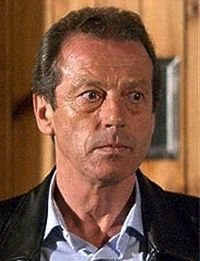
It had been a strange game, a romp for the Whites on the face of it – judging by the lop-sided score line anyway.  But it had never been quite like that; not that our awareness of having been outplayed for long stretches diluted our joy one tiny bit.  5-1 away wins do not come along every day, and we enjoyed this one to the full.  We enjoyed it for the whole of the slightly perilous walk back to the tube station, and we were still enjoying it when we beheld the distinctly pissed-off figure of Leslie Grantham heading down the stairway to the platform where we were celebrating noisily.  Leslie Grantham, soap-opera legend as Eastenders’ Dirty Den, Leslie Grantham who had done time for killing a German taxi-driver, Leslie Grantham, Hammers fanatic, who – despite being accompanied by his two young boys – bore a grim aspect which looked rather as if he wouldn’t mind adding a couple of Leeds fans to that record. 

Tactful and understanding to the last of private grief, we wisely kept our distance and refrained from seeking autographs.  It had been a memorably bizarre day for Leeds United and an equally happy summer evening awaited us in the sinful fleshpots of London, crap cockney beer and semi-hostile natives notwithstanding.

Dirty Den 1, Dirty Leeds 5. 

England Cruise to Routine Win Over Moldova

20130906-210655.jpg
FA Boss Greg Dyke may on reflection feel like claiming his dismissive remarks over England’s chances of success in next year’s World Cup were actually by way of reverse psychology motivation. That would certainly sit better with the current group of English Lions whose pride may well have been stung by suggestions that the nation’s next realistic chance of glory is 9 long years away in the searing heat of Qatar 2022. None of the stars of today can expect to be involved then; most will be football pensioners, studio pundits or embittered lower-league coaches.

If Dyke does claim in retrospect that his words were intended as a spur to greater effort and attainment, the performance against a clearly-outclassed Moldova will have him preening himself for the effectiveness of his barbed remarks. England tore into the red shirts from the off and could have scored on more then one occasion before Steve Gerrard fastened on to the juiciest of lay-backs from Frank Lampard – his 99th cap tonight – and sent an arrow of a shot in off the base of a Moldovan post. 1-0 after 12 minutes and the pressure on a creaking defence, hardly reassured by the evident nervousness of their keeper Namasco, was not about to let up.

Namasco it was, with a weak flap at a Theo Walcott snap shot, who set up Rickie Lambert with the easiest of headers, point-blank into an empty net for the second England goal on 26 minutes. Easy, easy, so it seemed – but only England had scored more than 2 against this outfit in the group so far with a 5 goal demolition in the away fixture.

When the third goal arrived on the stroke of half-time, it was Danny Welbeck’s hero act following hard on the heels of his hapless villain. First he earned a stupid if slightly unfortunate yellow card, firing in a shot after play had been halted for an offside call. That will cost England his services, at a time they are stretched for attacking resources, for the crunch game against Ukraine on Tuesday. Welbeck immediately made some amends by controlling a forward ball to round the keeper as he surged clear of the defence to finish routinely.

The second half began quietly, the previously-booked Ashley Cole having been replaced by Leighton Baines as Manager Roy Hodgson looked to protect his troops from further disciplinary action. But within 5 minutes of the restart England had four, Welbeck finishing well from a sublime through ball slid in by the impressive Lambert whose performance was making nonsense of his mostly humble pedigree.

England were building pressure well on the Moldovan penalty area, finding the time to pick their passes deep in opposition territory. As the second half wore on though, thoughts of Tuesday night’s date in Kiev evidently dominated more and more. The terrific Lambert was replaced by Jamie Milner with over twenty minutes to go, his forthcoming contribution against the Ukraine assuming greater significance in the enforced absence of Welbeck. England were still threatening and Everton’s Ross Barkley, on for Jack Wilshere, fizzed a shot just wide with quarter of an hour to go. A few more minutes and Frank Lampard’s vicious drive brought a scrambling save from the beleaguered Moldovan keeper.

The result was long since decided though and the game was established into a pattern of relentless attack against packed defence, England able to find space seemingly at will. As injury time ticked its sparse two minutes away, there was just time for Milner to balloon the ball wildly over the bar when he had the time and space to do much better.

A much sterner test lies in wait in Kiev next Tuesday. Ukraine warmed up for England with a 9-0 demolition of San Marino and they will be a real obstacle to the progress of the Three Lions. But it’s so far, so good for Hodgson’s troops and they will be in good heart after ramming at least some of Greg Dyke’s words back down his throat. Whether they can maintain that laudable defiance in such a crucial tie as next week’s remains to be seen, but for the moment England’s eyes are set however optimistically on glory much sooner than their ultimate boss predicts.

Merry International Break, Leeds Fans – and a Happy New Loan Window

Come On, Engerland

Come On, Engerland

No club football this weekend for the top two leagues, which are suspended for the purposes of allowing the England team to demonstrate its plodding progress towards the World Cup next year – oh, and I believe some other minor national teams will be in action as well.

Me? Well I’m taking the opportunity to head off to the wonderful and beautiful East Coast of Yorkshire for some much-needed R+R.  It’s a lovely day, and I understand the weather is due to take a vicious turn for the worse tomorrow, so I imagine we’ll be looking around the shops in the various coastal resorts as I try to get a decent 3G signal and keep up with all the groundless rumours of wingers arriving at Elland Road.  Brian McDermott has made noises of intent, and some interesting names are being bandied about – Burke of Birmingham and Dobbie of Crystal Palace, for instance.  Burke and Dobbie might sound like a firm of apothecaries from a minor Charles Dickens work, but either or both would enhance our current squad and provide that longed-for element we’ve all been craving.  Width, gentlemen! (and ladies).  The thing is, another striker is also needed to benefit from this wonderful new dimension to our play (if it ever comes about), so our demands of the “Emergency” Loan Window appear to be high.

There is, of course, the option of seeing what our existing resources might do if deployed further forward.  White and Byram are both instinctively flank players, both have assets desirable in a “winger”, as they used to be known, and both might well be available for selection and champing at the bit on the other side of this International hiatus.  White has something to prove, having decided he wants to stay and fight for his place rather than settling for the exotic delights of Oakwell, and Byram has demonstrated his potential effectiveness in a wide attacking role last season.  With the defence having established a reputation as “OK”, it could be that these two players might be spared for a more offensive role if Leeds are unable to free up wages to bring in loan recruits.  Well, it’s a thought.

I’m off to the seaside then.  But I’ll be keeping my ear to the ground – if it’s not flooded.

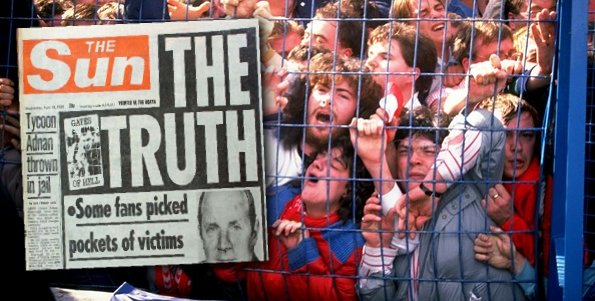
Hillsborough Disaster Police Sold Their Souls for £14.53

Hillsborough Disaster (Lies Inset)

Hillsborough Disaster (Lies Inset)

It has emerged in a report carried by the i newspaper that the police force charged with ensuring public safety on the occasion of the Hillsborough Disaster kept money found among the dead and dying, choosing to pay the amount found into the police bank account after they’d held it for a period of three years, rather than donating the sum to the disaster fund which had been set up to help victims and the bereaved.  The sum?  £14.53.

It’s perhaps because of the paltry amount involved, rather than in spite of it, that this is such a shocking story.  A full three years passed before the casual decision was made – without objection or reservation – to pay the money into the police account.  The cash was made up of loose change gathered from among the bodies of the dead and dying in the immediate aftermath of the tragedy, and it appeared as part of an inventory detailed in a memorandum dated January 1992, which also recorded the decision to bank the money.

In the midst of all the other negative findings about the conduct of the police at several levels that day, and in the light of the fact that they appeared complicit in the lies that were spread in the days and weeks after Hillsborough – notably by the Sun newspaper – the amount of £14.53 seems trifling enough.  And yet, understandably, the impact felt by the families of the victims at this unsavoury incident is likely to be out of all proportion to the actual size of the cash amount involved.

Only last month, it was reported that South Yorkshire Police attempted to apply to the disaster fund for a sum running into thousands, earmarked for the provision of microwaves, gym equipment and a holiday home for police use.  In conjunction with this new revelation about the fate of loose change picked up from among the dead, it really does beg the question of exactly what motivates those who make decisions like this, and what level of awareness they have of public opinion in such sensitive matters relating to a disaster that continues to reverberate almost a quarter of a century on.

If there is anybody in a position of authority in the police organisation with the slightest trace of decency, honour and plain good taste, then they will take a look at this latest disgrace, take careful note of the sum of £14.53, multiply it by one thousand – and donate that amount into the Hillsborough Disaster Fund.  That may still be a case of too little, too late – but better late than never and surely – surely – some gesture now needs to be made in the face of what has been nothing more or less than a 24 year public relations disaster for the South Yorkshire Police. 

RIP The 96.

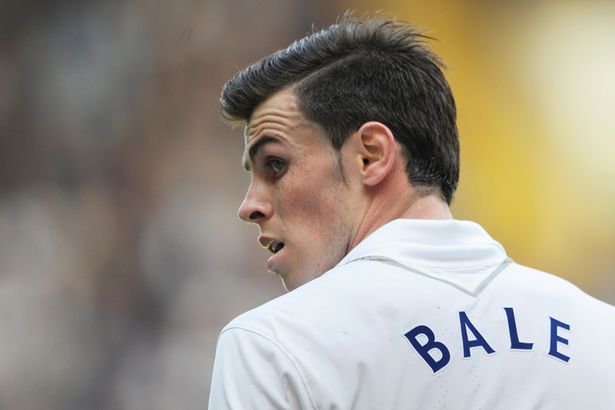
New Life in Madrid for Bale as Spurs Face Old Realities Nearer Home

Bale Bails Out

Bale Bails Out

The least surprising transfer of the summer has finally been completed as Gareth Bale secured his longed-for move to the Bernebeu to become Real Madrid’s latest galáctico and thus deprive Spurs of roughly 50% of last year’s total team effectiveness.  The price varies according to which source you read, but it’s an eye-watering figure which Spurs have already spent on half a dozen or so players in the hope that quantity may in some measure replace quality.  It remains to be seen how Bale will fare at a big club, but his is a spectacular talent which arguably deserves a much bigger stage.

Spurs meanwhile, having resigned themselves some time ago to the loss of their talisman, turned out at The Emirates yesterday with their friends in the media explaining to anyone who would listen that – despite their Bale-less attacking threat – they were now much better placed than opponents Arsenal to achieve success this season.  The new definition of success in these commercialised Murdoch days is, of course, a top four finish: gone are the days when fans might argue about who will win what trophy.  Now it’s all about whether your favourite club can qualify for the Champions League, and how many millions that will net.  That those millions will for the most part disappear into the bank accounts of their overpaid heroes is a point that apparently does not faze today’s Premier League fan.

The media as an entity appears to have a problem with Arsenal, and they seem disposed to address this by making more of a fuss of Tottenham than such a pallid power really merit.  The BBC in particular sound almost plaintive when they reflect on the fact that Arsenal’s recent Champions League qualifications have been at the expense of Spurs and their assertions that things might now be different – with a new-look Tottenham transcending tired old Arsenal – tend to be accompanied by a collective stamp of the foot and sullen pout. But all the media posturing in the world will not change a thing on the field, and it was on the immaculate turf of the magnificent home of Arsenal that Spurs yesterday received a lesson in how little things have changed where the balance of power in North London is concerned.

After an adrenalin-fueled bright opening, Spurs were never really at the races in this latest derby.  Once Arsenal had ridden out that initial flurry their own game took effortless control – helped by the fact that they had taken the lead while the tide was still slightly against them.  A gorgeous move from centre midfield across to the right found Tomas Rosicky in acres of space and he used it to full effect with a penetrating low cross into the box.  And there was Olivier Giroud darting towards the near post to beat Hugo Lloris with a sweet finish from the outside of his left foot, finding the tiniest gap between the hapless ‘keeper and the upright to give Arsenal the lead.

For the rest of the first half, Arsenal threatened to increase their advantage against a Spurs side knocked out of their early, optimistic stride.  After the interval, the away side began to make their presence more effectively felt, pressing Arsenal back in search of a point at least.  But although there were alarms, and despite quite intense late pressure as the the home team defended in depth, the breakthrough failed to appear.

Tottenham could have no real complaints about the result, and may reflect by way of consolation that at least they didn’t ship five this time, as on the last two visits to The Emirates.  Arsenal have an altogether more positive world view today; three derby points in the bag, ahead of Spurs in the table as they finished last season, and today they appear to have made a transfer statement as well, with the pending capture of Mesut Ozil from Real Madrid – a transfer that may, ironically, have been made possible by Tottenham’s failure to hang on to Bale.

Players come and players go as millions upon millions change hands in the transfer market.  But a happy Arsene Wenger may well reflect today that some things are less susceptible to change, Arsenal’s dominance of North London being one among them.  Ozil will add considerably to the Gunners’ ammunition and firing power, just as the loss of Bale will inevitably weaken Spurs.  It’s been a good weekend after all for the Gooners.

Leeds’ First Defeat a Timely Reminder for Owners GFH Capital

Image

The first defeat of any season is always a bitter pill to swallow, and when that defeat ends a decent unbeaten run which had created a bit of a feelgood factor and some useful confidence, then the taste is all the sourer still. There can be little doubt that QPR deservedly edged the game at Elland Road – they came north with a game plan as they had done to Bolton’s Reebok Stadium, and they went away having done the job. Rangers had been rather unlucky to see Joey Barton’s first half goal disallowed for a clearly inappropriate offside flag, just as in the end they enjoyed some good luck when Rudy Austin’s fulminating howitzer hit the angle and bounced to safety. It was a game of fine margins, as reflected by the scoreline.

As depressing as a home defeat is, however, there can be long-term benefit if the lessons of that defeat are learned and acted upon. This match was under the Sky TV microscope, but it is an open secret that the Leeds United squad is defined more by the gaps in it than by the several excellent players it boasts for this level of football. Another striker is still needed, at least one winger is still needed. At the moment, there is a lot right with any team that Brian McDermott puts out, but the vital missing ingredients are making it very difficult for that team to be as effective as it needs to be in the attacking third of the field. Impotence in attack has its consequences further back; there is more pressure on ball retention in midfield because the options up front are not what they should be.

Brian McDermott is a downy bird, and he knows what is needed. It is the growing urgency of that need which, with the end of the transfer window looming ever closer, is giving cause for concern if not alarm. From the outside, we just have to take it on trust that work is going on behind the scenes to secure the additional players which are clearly needed in order to give Leeds a chance of sustaining some sort of competitiveness this season. If not, then it could just be a long and depressing struggle, despite the best efforts of a manager who has said all the right things and has also done so much that is right since coming to the club – as indeed have the new owners GFH-C.
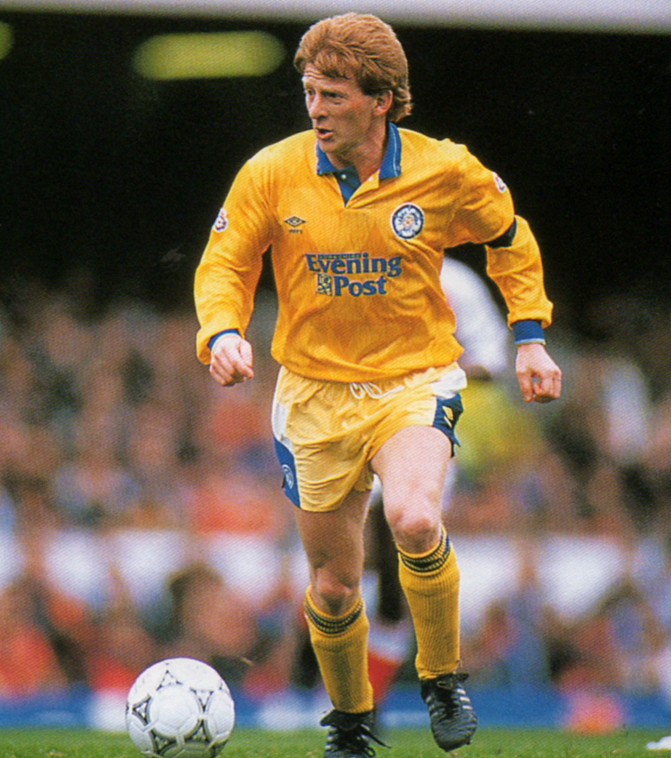
Monday could be a very significant day in this season for Leeds United, and maybe even in their history as a whole. Getting the ingredients right is that important when you’re looking for the recipe for success. The QPR game has demonstrated very clearly for us just where the areas of need are – if we don’t secure some decent wide options, then surely we’ll be placing too much reliance on the likes of Diouf, who showed in his cameo performance that he’s currently far and away the best we have where quality service from the wing is concerned. After Diouf we have Ryan Hall, who still seems to be struggling to make a real impression at this level.

As is often said in too many American TV shows of a dubious standard: “OK. You got 48 hours”. That’s about the size of it for Leeds United right now, and the clock is running down. Tick tock.

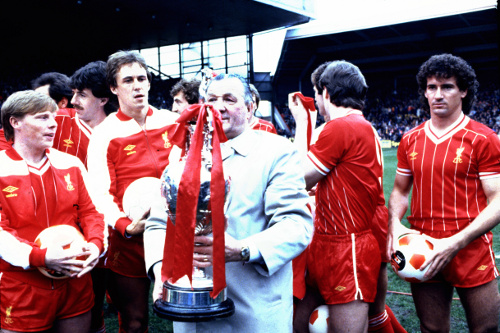
Why Liverpool Are Still the Greatest Champions

Liverpool: Champions of Champions

Liverpool: Champions of Champions

Liverpool entertain Man U at Anfield tomorrow (Sunday) in the latest meeting between clubs who, to say the least, aren’t exactly fond of each other.  Rivalry of that depth and bitterness tends to polarise opinion – there aren’t many fence-sitters when one of these fixtures crops up.  OK, so I’m a Leeds United fan – so what has this got to do with me?

Well, I’d have to start by declaring an interest – as a die-hard supporter of the One True United from the right (Yorkshire) side of the Pennines, I’m not exactly enamoured of Man U.  I never had much time for them, even before that awful, whisky-nosed Govan Git came down to pour his choleric bile all over what had, until then, been a relatively civilised (give or take Brian Clough and nearly all the fans) English football scene.  There was always an air of spurious arrogance about them, as well as this “you’ve got to love us because of the Busby Babes” thing – which all the media seemed to lap up so eagerly, much to the disgust of real fans everywhere.  So clearly, I don’t like them – never did.  That’s in my Leeds United DNA.  But I’m not just a Leeds fan, I’m a fan of football in its widest sense – and I mourn the game we once knew which seems to be gone forever, swept away by a grotty tide of filthy lucre

Time was when Man U were grudgingly respected, other than by determined haters like me and my fellow Whites.  Since Sir Alex Taggart landed at the Theatre of Hollow Myths though, they’ve gone from “quite easy to dislike” to “impossible to stand the sight of” faster than you could say “Envious of Liverpool”.  The Purple-Conked One made it clear from the off that he was determined to “knock Liverpool off their perch”.  What we didn’t realise when he started his vendetta in 1988, showing no immediate sign of being any more successful than any of the other post-Busby failures, was that the whole face of football would have to change to realise Ferguson’s warped dream.

In 1967, Man U won their last ever proper League Title, making seven in total – quite respectable.  Then – nothing, for 26 years.  Since 1993, when a greedy Aussie bought the game and gift-wrapped it for a curmudgeonly Scot, the title “race” has been more of a procession.  The honour has ceased to be about virtuosity on the field; now it’s mainly about money and markets, and Man U have had much more of both during the whole Murdoch era.  Result: thirteen plastic titles.

Football is now a tacky, merchandise-driven, unseemly drive for profit over pride, and the dominance by Man U of such a grubby era is undeniably apt.  But we are still close enough in time to the pre-greed days for those of us of a certain age to remember when the game was about glory, not greed; when the aim was winning, not wonga, when the important people were supporters, not shareholders.  In those days, the distribution of wealth was far more even, and the field of possible title-winners was far wider; the competition (over a grueling 42 match course, with un-manicured pitches and un-pampered pros) was far more fierce.  And yet, even in this environment of white-hot combat and intense rivalry, Liverpool reigned supreme, not for months, not years, but for literally two decades.  By 1992, they had compiled an honours list that seemed likely to see them at the top of the game for many years to come – unless someone sneaked in and moved the goalposts.  Cue Uncle Rupert.

Man U fans can crow all they want about 20 titles.  The evidence to confound them is there for all to see, like some geological stratum separating the dinosaurs from the mammoths.  That schism dividing the game up to ’92, from the showbiz shenanigans of ’93 onwards, stands out like a Tory at a Foodbank, exposing Man U as the wealth-backed, monopolising opportunists that they are.  And it has all been done with such bad grace, another indictment of this new and joyless age we’re plodding through.  No gentle wisdom of the Bob Paisley variety – instead we had the sour bile of Ferguson and now seemingly a Fergie-Lite clone in the newly growly and grouchy David Moyes.  No loveable old-style hard-man Desperate Dan type like Tommy Smith – we just had the manufactured machismo of Roy Keane, a supposed tough-guy with an assumed snarl and trademark glower, whose typical party trick was to sneak up behind wee Jason McAteer and fell that not-exactly-scary individual with a sly elbow.

The comparisons could go on all day, but the bottom line is that Liverpool at their peak – and it was a hell of a peak – typified all the values of football that some of us remember from a pre-Sky, pre-glitz, pre-greed age when it really was all about a ball.  Now, it’s all about money, and contracts, and egos, and snide bitching to the media if you don’t get all your own way – and lo, we have the champions we deserve.  In the home game against Chelsea towards the end of last season, they displayed a lack of respect for the Premier League competition, and discourtesy to other clubs who stood to gain or lose depending on whether Chelsea  won or lost, by fielding a much changed and weakened side, going down to a meek defeat and imperiling the Champions League prospects of Spurs and Arsenal.  Such is the measure of their attitude to the game where their own immediate interests are not affected.

To apply a conversion rate which sums up all the anger and disgust I feel for the way our game has been degraded – I’d say each Premier League (or Premiership, or whatever else it’s been marketed as) is worth maybe half – at the very most – of each proper Football League Championship from the days when the game still belonged to us and the world was a happier and more carefree place.

At that rate, Man U are still a good long distance behind Liverpool, which – judging by the paucity of spirit and sportsmanship they displayed against Chelsea – is precisely where they belong.  On the eve of the latest meeting between these two long-standing Lancashire rivals, it should be emphasised once and for all – Liverpool are still The Greatest.