Tag Archives: Manchester United

It Was the Man U Myth, NOT the Job, That Was Too Big for Moyes – by Rob Atkinson

Moyes - brought down by a myth

Moyes – brought down by a myth

So the dust is settling on David Moyes’ departure from the appropriately-dubbed Theatre of Hollow Myths. It was the increasingly poignant tragedy that had been waiting to happen as Moyes appeared to become progressively more haunted and helpless with every passing interview, following each successive, damaging defeat. Now, in the aftermath of his inevitable sacking, the media have gathered like a host of scavenging vultures and they’re asking one question above all. David Moyes: was he really clueless – or merely luckless?

The thing is, though – this has not really been about David Moyes at all. His sad fate would have been the natural destiny of any inheritor of what was clearly a poisoned chalice, made more poisonous by the addition of the lethal factor of self-delusion. Because Manchester United have succeeded in convincing themselves that they are something special; the Biggest Club in the World™. It is a problem that is unlikely to go away in the short term, whoever eventually succeeds the former Everton boss. The problem that Manchester United have is that the myth they have been complicit in building up could well now be the one single factor that reduces them to the ranks of also-rans.

Manchester United have willingly, eagerly saddled themselves with this “Biggest Club in the League/World/Universe” tag, one that they were only ever even apparently able to live up to through the – let’s say “unique” – approach of former manager Alex Ferguson. His intimidatory, choleric style and remorseless insistence on the accrual of each and every marginal advantage available, resulted in a domination of the rest of the pack. In a game of fine margins, Ferguson’s regime – his mind games, his fear factor, his volcanic tantrums – continually gave his club the edge over the rest. The truth of this is amply illustrated by the club’s title success last season – with a squad probably the fourth or fifth best in the league – and conversely by their hapless capitulation this season. A serpent with its head cut off is bound to find that its biting potential is not quite what it was.

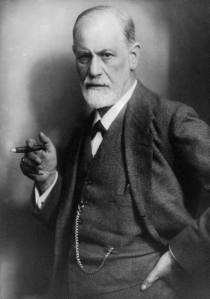
Even on the morning of Moyes’ sacking, as BBC radio went into debate and post-mortem frenzy, the usual suspects were still at it. Ex-Man U player Mickey Thomas talked fluent bollocks about Moyes taking charge of “the biggest club in the world”, having to cope with “the biggest job in the world”. This lazy tendency towards hyperbole has long caused hysterical laughter in places like Munich, Madrid, Barcelona, Milan and Turin – even in London and Liverpool – and understandably so. Take any empirical measure of the size of a club – stadium capacity, attendance records, trophies won – anything – and Manchester United would have to acknowledge, in the cold light of day, that they are not world leaders. And yet the myth has persisted, has thrived even, as the club and the media have deliberately nourished it. It has been an extremely useful marketing tool in the interests of encouraging the mass-delusion of the particular type of people – of whom Dr Freud would have had so much to say – that choose to support a club based on perceived size and power. There is now a nervous terror out there in Singapore, Nairobi, Bangkok and Milton Keynes, at the thought of not being the biggest and the best – and that is very much the product of expectations fostered by extravagant and untrue claims. But, perhaps fatally, it has become self-delusion on a grand scale too.

Some of the sound-bites from the morning of Moyes’ dismissal were risible – and frankly insulting to other institutions of the game. Moyes, it was said, “lacked big club experience”. This is a man, let us not forget, who was in charge for over a decade at Everton – an undeniably massive club of illustrious history and achievement; one which was able to win League Championships in the eighties on a pre-Murdoch, pre-Sky level playing field – something which conspicuously eluded the alleged “biggest club in the world”. This casual denigration of fine and dignified football clubs is very much a part of the modern Man U psyche, and it is something that – aided by a complaisant media and a gullible support – they were allowed and able to carry off under the bluster and tyranny of Ferguson. But it’s a dog that will no longer bark when reality sets in; when the tyrant is deposed and when the superior quality of rivals has consigned the fallen champions to the hinterland of mid-table mediocrity.

Manchester United today stand in dire need of a wake-up call. Like it or not, they are not the biggest club in the world, and a continued insistence on such a demonstrably groundless claim will do them more harm than good in the future. Whoever next ascends the hot-seat will find that he is playing catch-up as thoroughbreds like Liverpool, City, Chelsea, Arsenal, Spurs and – yes, Everton too – threaten to disappear over the horizon. One thing Man Utd do have going for them is a large and, in parts, fanatical support – but even this is an asset that will eventually be diluted by foolish attempts to perpetuate a dying myth. All football fans share a common “we are the greatest” delusion to a certain extent, but at Man U it’s been elevated to the level of brand identity – and that cannot be sustained in a harsh, post-Ferguson reality, where there is no longer a fulminating Govan Svengali to hold the rest of the game in thrall, and to inspire fear and terror in the corridors of power.

Man U is a huge club and one that should be able to sustain success along with the other huge clubs. But they have no divine right to that success, and certainly not to utter domination as they have rather stupidly come to expect. Whoever comes next will have the best chance of long-term recovery if they have the wisdom (and if they are granted the time) to introduce a modicum of humility and respect; two qualities that have been sadly lacking over the past two decades in this part of Greater Manchester.

A failure to embrace and deal with this new mid-table reality is going to mean that things will steadily get worse before they can feasibly get better. The days of domination – of a near-monopoly – have gone, and for the game of football as a whole, that is definitely A Good Thing. The current big four, and the pretenders just behind them, will not allow that situation to be repeated. Ferguson was a one-off and not in a particularly good or healthy way. His time is gone, and now football goes on without him – and without the skew effect his tenure imposed on the game’s honours list. Manchester United now have to learn to live with this – and if they are wise, they will commit to a manager who is capable of finding for them a place in a game where it’s a lot tougher at the top than they have been used to.

Who that man will be is a matter for speculation. But again, whoever comes in, it will be necessary to be realistic. This is still a poisoned chalice of an inheritance in terms of exaggerated expectations from a global, glory-hungry fan-base; yet there is no Champions League football, possibly no Europe at all next season. Will the top players come in at that price? Will the likes of Rooney, van Persie and even Mata relish at least a season out of the Champions League limelight?

Whoever the next manager of Man Utd might be, he certainly will have a job on his hands dealing with just these problems. To expect him to labour under the weight of a hollow myth as well, is likely to be too big an ask. The spurious label of “Biggest Club in the World” proved to be a fable too far for the hapless David Moyes. His successor will have to hope – probably in vain – that wiser and more realistic counsel will prevail from now on.

Would Leeds United Fans Welcome David Moyes? – by Rob Atkinson

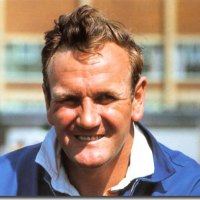
McDermott: miracle man

McDermott: miracle man

The unthinkable has happened.  It’s been the talk of football for the past few weeks, the subject of fevered speculation.  Debates in pubs and clubs up and down the country have raged white hot, with arguments put passionately on either side.  And now, after a comprehensive two goal defeat at the weekend, the sensational news can be confirmed:  Brian McDermott is still in his job at Leeds United.

In other news, Man U have sacked David Moyes.

On the face of it, these two facts have very little to do with each other.  But McDermott’s continued tenure at Elland Road is, if anything, much more unexpected and sensational news than even the sacking of Moyes.  The received wisdom has been than Man U are a club that do not subscribe to the hire and fire cycle common to – well, more common clubs.  This is all part of the Man U self-image as something special, the hollow “biggest club in the world” façade that is rapidly being eroded away by a new, post-Ferguson reality.  The news that Moyes has finally gone is, really, no surprise.  He had been struggling with a job at a club founded on self-delusion, the “Biggest & Greatest” myth. Anybody would have struggled. The next man will too, unless Man U wake up and smell the coffee.  But that’s their problem, and I wish them endless bad luck with it.

The point, as far as Leeds United are concerned, is that there is now a managerial high-roller on the market, at a time when our incumbent man – nice guy though he undoubtedly is – has a record which would normally have earned him a whole pile of P45s under previous regimes at Elland Road.  It might be that people would scoff at the idea of somebody like Moyes at Elland Road – and yet ex-England boss and former Dutchman Schteve McClaren has been in charge of comparative minnows Derby County this season, to good effect.  It may also be that Moyes himself, once bitten and twice shy, would not wish to work with a character like Massimo Cellino who appears to change managers on a whim, depending how he feels when he gets up that morning.  But the question is still there to be asked: would Leeds United fans welcome Moyes to Elland Road?

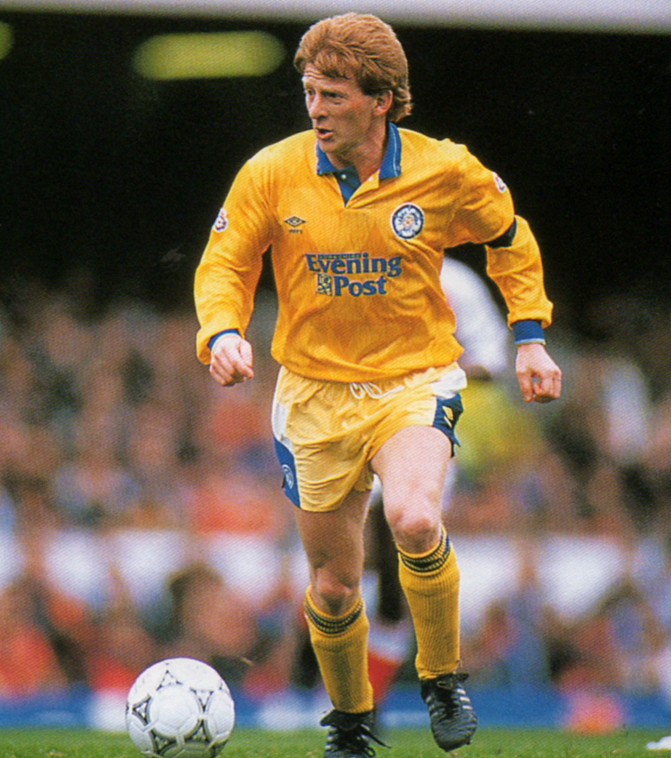
The immediate objection is the fact that he’s been in charge of “them”.  But really, the Man U pedigree is a non-factor.  Let’s not forget, two of our favourite sons in Johnny Giles and Gordon Strachan were denizens of the Theatre of Hollow Myths, until they saw the light and bettered themselves. And Moyes was a square peg in a round hole at Man U – he started out by trying to act like a Fergie-Lite, attempting to carry off a whinging and moaning act worthy of the Govan tyrant.  It wasn’t in him; he’s not that type of guy, and the Man U experience has worn him down to a twitching and Gollum-esque husk of a man, bug-eyed and hunted – it’s easy to feel relief for him that his misery there is over.

What could Moyes bring to Elland Road?  A reputation untarnished by his time with Man U, for a start – certainly among football people including the more enlightened fans.  He’s liable to have benefited from a massive pay-off from his former employers, who have torn up most of a six-year contract before his bewildered eyes.  It may well be a more relaxed and a happier Moyes that walks into his next job.  And he might possibly prefer, in the immediate aftermath of his Pride of Devon experience, to shun the Premier League limelight.  Again, this appears to have been the option favoured by McClaren, another former Man U man and another highly effective operator in more conducive circumstances.  Moyes did a solid job over many years with little money at Everton.  He was recognised as a highly competent coach before that, at Preston.

The hole that Brian McDermott currently finds himself in, following yet another abject display against Notts Forest, could well be too deep for him successfully to clamber out of.  His first year at Elland Road has been one of upheaval; takeovers protracted to a farcical degree, sackings and reinstatements, the whole nine yards.  Leeds United have been – along with possibly Blackpool – the Charlie Corrolli of the Championship, the laughing-stock of the league.  In these circumstances, it’s difficult for any manager to manage but – again, even acknowledging his undoubted good-guy credentials – the performances have been abject and now the excuses are beginning to have the dull ring of repetitive hopelessness.

This blog has been a supporter of Brian McDermott – but there comes a time when you just have to acknowledge that something isn’t working and that it urgently needs remedial action.  If the time is right for a change of management (or coaching) at Elland Road, then it’s also an appropriate time to be looking at who is out there, who might be available.  Malky Mackay is a name that many might advance, and with good cause.  Billy “Job Done” Davies?  No, thanks.  David Moyes – hmmm.  It’s a fascinating thought, not all that realistic on the face of it – but just imagine.  What if Moyes, not short of a quid or two after his Man U contract is settled, were to stroll into Elland Road and re-establish himself as a football man who knows what he’s doing?  What if he were to drag our club back up by the bootstraps and get us motoring into the Promised Land?  Giles came from Man U as a player and did it for us.  Strachan too.  Could Moyes be the latest Man U discard to find success in LS11?  Could he complete a hat-trick for us to relish?

Stranger things have happened.  If you want to identify just one – it’s the fact that, after Forest cruised to victory at Elland Road in second or third gear, Brian McDermott remains Leeds United manager.  Surely that is one ongoing miracle whose days are well and truly numbered.

Gerrard Rallies Whole Country Behind Kop Title Assault – by Rob Atkinson

Steven Gerrard inspires the troops

Steven Gerrard inspires the troops

Most football clubs have those quirky, curious “Did you realise…?” facts to relate, things that make you go “Really? Well, I never!”, or words to that effect. Leeds United, in all probability, have just as many as any other club, if not more. For instance: Did you realise… that Leeds United have been Champions more recently than mighty Liverpool, the greatest Champions of them all?  The way things are looking, this is one particular fact whose days might well be numbered.  And, although as a Leeds fan I’m rightly proud of such a pleasing statistic. it’s not before time for it to be consigned to the dustbin of history.

Liverpool were perennial champions for most of my teens and twenties, when my beloved Leeds were banished to the shadowy hinterland of the game, much as they are now.  It’s a sort of nostalgic feeling, then, to look at the top flight table and see them sat there again, on their accustomed perch, leading the way. A successful Liverpool is a reminder of happier days, when the game was not so estranged from the fans, when commercial interests still came second to battle and glory on the field.  Nowadays, the commercial tail wags the football dog quite mercilessly; everything is subordinate to the over-riding preoccupation with making more and more money – with the fans being fleeced left, right and centre.

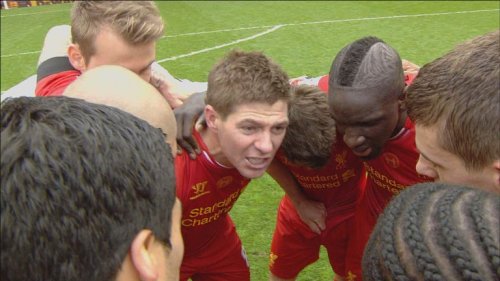
If the real Reds of Anfield do go on to clinch a first title for twenty-four years, then a large chunk of the credit must go to their long-serving skipper and midfield driving force, Steven Gerrard.  He was to the fore again last weekend as Liverpool beat Manchester City in a pulsating game of quality and character from both sides.  Gerrard played a captain’s part throughout the match and – significantly – directly after the final whistle.  As he gathered the players into a post-match huddle, you could plainly see him ramming home the message: the job is not done, we need the same performance again in the remaining games.  His face, contorted with fatigue and determination, had resolve and desire writ large in every line, his commitment radiating from every fibre of his being and into the less experienced team-mates around him.  It was a battle-cry, a rallying call. Gerrard will not permit performances to wane, nor heads to drop.  He will lead those lads to ultimate success, if he possibly can.  It was an inspirational sight to see.

There are not that many Steven Gerrards left in the game today.  Not enough warriors faithful to a cause, thinking not of the footballers’ notorious “bottom line”, but of being written into history as The Best, on behalf of a club they count it a privilege to serve.  It’s far more common to see spoiled prima donnas like Wayne Rooney, sulking on 250 grand a week until he’s mollified by a wage rise of a mere £2.6 million.  Or indeed my comparatively humble lot at Leeds United, who had the immense “stress” of wages deferral just a few weeks back, when the takeover was in flux – and found they simply could not kick a ball straight or even try a leg, most of them, because of this financial issue.  In the modern game, money is King – to a far greater extent than it ever used to be.  So, the fans can go hang, professional pride can whistle.  All that matters is making sure that money – thousands a week, even at Championship level – keeps rolling into those fat bank accounts.  When that’s sorted out, why – the players are prepared to try again, Blackpool are beaten, and what would have been a shameful, disgraceful relegation struggle is warded off.

Gerrard, in common with most footballers in the top two divisions, has more money than he will ever know what to do with.  Money – you can tell – was the very last thing on his mind as he exhorted his team-mates to a replication of their fantastic performance against City – first when Liverpool face Norwich, and then after that, in all the rest of their remaining games.  If anyone can inspire those players to the heights they hit at Anfield, then Gerrard is that man. The successful team pattern at Liverpool FC has been laid down by manager Brendan Rodgers – and he’s done a brilliant job.  But without his trusty lieutenant on the field – without that 90 minute motivator demanding effort and commitment from all around him – things might not look as rosy as they now do for the league leaders.

The midweek games were kind to them, too.  City slipped up at home to Sunderland in an unlikely lapse.  They and Chelsea remain a threat, but both have trips to Merseyside to negotiate and neither will be taking it for granted that they will now find it easy to deny Liverpool a long-awaited first Premier League crown.

As a Leeds United fan, I have no particular Premier League axe to grind.  As long as Man U don’t win it, I’m happy – and from that point of view, it looks as though I’ll be happy for a good while to come.  Arsenal are my favourites, generally speaking, from the élite end of football.  Until my own United return to the big-time, my interest in who wins what in the shake-up at the end of each season is generally limited to seeing who’s best able to deny the Pride of Devon more tarnished silverware.  But I have to say I’d love to see Liverpool win the league, and for a few reasons.  For their fans, who have suffered over the past two decades while their glory faded behind them; for the family and friends of the 96 who died at Hillsborough a quarter of a century ago, and for the 96 themselves – and for Steven Gerrard and his free-flowing, attacking team.

Liverpool as champions would be a credit to the English game.  Up front and in terms of the supply to their attackers, they have all the attributes and talent of a top-class international side.  Further back, they are merely good or very good – but in the creative and finishing part of the game, they have the stuff of greatness.  And the thing is, they’ll only get better.  So I shall look forward to the climax of this Title race with plenty of interest and in the hope that – just as things used to be when I was but a lad – Liverpool wind up on top again.  And I don’t mind in the least that I’d no longer be able to boast about my beloved Leeds being Champions more recently than the Reds.  Because it’s time for a return to the game’s real values – values that Gerrard epitomises better than perhaps any other current player.

Seriously – if there’s anybody out there who would begrudge Steve Gerrard a league title winner’s medal – I doubt that they have any real appreciation of what this game is all about.  If ever a team deserve a Title, it’s Liverpool this season.  And if ever a skipper deserved his medal – it’s Steven George Gerrard.

Leeds Forever – but Liverpool for the Title Would be a Feelgood Feast – by Rob Atkinson

Liverpool - climbing back onto their perch

Liverpool – climbing back onto their perch

Liverpool, having thrashed Man U at the Theatre of Hollow Myths last week, had to work a bit harder at Cardiff, going behind twice before emerging impressive 6-3 winners.  It will, however, have been the easy triumph over the Pride of Devon that provided the Real Reds with the most pleasure – these are two clubs who, to say the least, aren’t exactly fond of each other.  The last thing either wants to see is the other winning the league – which means that there are a lot of nervous plastics out there, sweating in their Devon armchairs right now; because Liverpool seem to mean business and they are currently rather handily-placed for a late title push.

For the neutral, things could hardly be better, with the tables so dramatically turned in this long-standing battle of Lancastrian one-upmanship.  Rivalry of that depth and bitterness tends to polarise opinion – there aren’t many fence-sitters when Man U and Liverpool meet.  For me, as a true white rose White, if Liverpool were to be Champions again at the end of this season, it would be an outcome second only to seeing my own beloved Leeds back on top.  OK, so I’m a proud Leeds United fan – so what has this got to do with me?

Well, I’d have to start by declaring an interest – as a die-hard supporter of the One True United from the right (Yorkshire) side of the Pennines, I’m not exactly enamoured of Man U.  I never had much time for them, even before that awful, whisky-nosed Govan Git came down to pour his choleric bile all over what had, until then, been a relatively civilised (give or take Brian Clough and nearly all the fans) English football scene.  There was always that irritating air of spurious arrogance about them, as well as this “you’ve got to love us because of the Busby Babes” thing – which all the media seemed to lap up so eagerly, much to the disgust of real fans everywhere.  So clearly, I don’t like them – never did.  That’s in my Leeds United DNA.  But I’m not just a Leeds fan, I’m a fan of football in its widest sense – and I mourn the game we once knew which seems to be gone forever, swept away by a grotty tide of filthy lucre

Time was when Man U were grudgingly respected, other than by determined haters like me and my fellow Whites.  Since Sir Alex Taggart landed at the Theatre of Hollow Myths though, they’ve gone from “quite easy to dislike” to “impossible to stand the sight of” faster than you could say “Envious of Liverpool”.  The Purple-Conked One made it clear from the off that he was determined to “knock Liverpool off their perch”.  What we didn’t realise when he started his vendetta in 1988, showing no immediate sign of being any more successful than any of the other post-Busby failures, was that the whole face of football would have to change to realise Ferguson’s warped dream.

In 1967, Man U won their last ever proper League Title, making seven in total – quite respectable.  Then – nothing, for 26 years, culminating in a deserved last-ever old-style Football League Championship triumph for Leeds United. But since 1993, when a greedy and ruthless Aussie bought the game and gift-wrapped it for a curmudgeonly and ruthless Scot, the title “race” has been more of a procession.  The honour has ceased to be about virtuosity on the field; now it’s mainly about money and markets, and Man U have had much more of both during the whole Murdoch era.  Result: thirteen plastic titles.

Football is now a tacky, merchandise-driven, unseemly drive for profit over pride, and the dominance by Man U of such a grubby era is undeniably apt.  But we are still close enough in time to the pre-greed days for those of us of a certain age to remember when the game was about glory, not greed; when the aim was winning, not wonga, when the important people were supporters, not shareholders.  In those days, the distribution of wealth was far more even, and the field of possible title-winners was far wider; the competition (over a grueling 42 match course, with un-manicured pitches and un-pampered pros) was far more fierce.  And yet, even in this environment of white-hot combat and intense rivalry, Liverpool reigned supreme, not for months, not years, but for literally two decades.  By 1992, they had compiled an honours list that seemed likely to see them at the top of the game for many years to come – unless someone sneaked in and moved the goalposts.  Cue evil Uncle Rupert.

Man U fans can crow all they want about 20 titles (and, true to their loathsome nature, they will).  But the evidence to confound them is there for all to see, like some geological stratum separating the dinosaurs from the mammoths.  That schism dividing the game as it was up to ’92, from the showbiz shenanigans of ’93 onwards, stands out like a Tory at a Foodbank, exposing Man U as the wealth-backed, monopolising opportunists that they are.  And it has all been done with such bad grace, another indictment of this new and joyless age we’ve been plodding through these last twenty-odd years.  No gentle wisdom of the Bob Paisley variety – instead we had the sour bile of Ferguson and now seemingly a Fergie-Lite clone in the newly growly and grouchy, yet undeniably Gollum-esque David Moyes.  No loveable old-style hard-man Desperate Dan type like Tommy Smith – we just had the manufactured machismo of Roy Keane, a supposed tough-guy with an assumed snarl and trademark glower, whose typical party trick was to sneak up behind wee Jason McAteer and fell that not-exactly-scary individual with a sly elbow.

The comparisons could go on all day, but the bottom line is that Liverpool at their peak – and it was a hell of a peak – typified all the values of football that some of us remember from a pre-Sky, pre-glitz, pre-greed age when it really was all about a ball.  Now, it’s all about money, and contracts, and egos, and snide bitching to the media if you don’t get all your own way – and lo, we have generally had the champions we deserve.

Only now, when Taggart has slithered into retirement, are we seeing anything like a level playing-field – and even then, it’s just among the moneyed elite of the Premier League.  Without Ferguson, we suddenly have a new Big Four, sans Man U, and all the better for that.  For all of this season, it has been the thoroughbreds of Liverpool, City, Arsenal and Chelsea dominating at the top, whilst Man U desperately cling to the coat-tails of Everton and Spurs, desperate even for the dubious compensation of Europa League qualification. Clearly, then, the era of Man U domination has been much more a function of the unique personality – to put it politely – of Ferguson, than any real superiority on the pitch.  In a game of fine margins, that crucial factor made such a difference. Hence, the whole record of the past 21 years would appear to have been slewed in one club’s favour, courtesy of one bile-ridden Glaswegian and a covey of co-operative referees.  The records, as they appear to stand, are grossly misleading.

To apply a conversion rate which takes account of the foregoing and sums up all the anger and disgust I feel for the way our game has been degraded – I’d say each Premier League (or Premiership, or whatever else it’s been marketed as) is worth maybe half – at the very most – of each proper Football League Championship from the days when the game still belonged to us and the world was a happier and more carefree place.

At that rate, Man U are still a good long distance behind Liverpool, which – judging by the paucity of ability and bottle they have displayed under Moyes this season – is precisely where they belong.  Now we’re witnessing a resurgence for the club which – under Shankly, Paisley and the other boot-room boys – dominated English football for most of my youth and early adulthood. A Liverpool title victory this season would be the closest we can now get to a return of those good old days.

Because of the Ferguson Factor, history and the record books are poor teachers for the modern student of football.  So as the Reds look to challenge strongly again at the very top of the English game, while a Fergie-less Man U, shorn of their X-factor, languish in their mighty wake – what better time than now to emphasise the simple truth once and for all? Liverpool are still The Greatest.

Man Utd Fans Descend to Millwall Level as Liverpool Triumph – by Rob Atkinson

Liverpool fans show what football banter really is all about

Liverpool fans show what football banter really is all about

As a Leeds United fan, I’ve long experience of bitter rivalry between mutually-hostile supporters of various clubs. There has been violence, there has been offensive chanting – it was a big part of the football landscape for far too long. Happily, there has been some improvement over the past couple of decades, but in a couple of isolated pockets, things are as bad as ever. Worse, in fact – because in addition to the unpleasant taste left behind by the revolting chants still in common use whenever you go to such beauty spots as Bermondsey or Stretford, there is now, from the animals who follow Millwall and Man U, the rank stench of hypocrisy.

The game between the fallen champions and Liverpool at the weekend brought this phenomenon into sharp focus.  Man U fans have problems with Liverpool. There’s an inferiority complex that won’t go away, for a start.  Then there’s what they describe as the Liverpool supporters’ appetite for mawkishness over things like Hillsborough, conveniently forgetting their own habit of taking out an onion every February 6th and weeping crocodile tears over Munich – surely the most profitable air disaster any club has ever struck upon.  Still, the Man U faithful turn a blind eye to any apparent inconsistency and continue to demand tributes to “the flowers of Manchester” whilst dubbing Liverpool the “City of Pity”.

In the latest meeting between these two old rivals, Liverpool ran out easy winners at the Theatre of Hollow Myths, the assembled Man U fans having come from the traditional hotbeds of Devon, Cornwall and Milton Keynes only to witness their favourites being given a footballing lesson.  This was clearly too much for them, and they reacted with a repeated chorus along the lines of  ‘The Sun was right, murderers’, with reference to that gutter tabloid’s disgraceful coverage at the time of the Hillsborough disaster. Classy, eh?  96 people went to the football in Sheffield in 1989, and never came home – and here are modern day football fans mocking  the bereaved because they’re losing a football match. Naturally, the media will refuse to mention this – the nastier habits of the Man U congregation tend to be swept hastily under the carpet, for sound commercial reasons.

Next weekend, Leeds United meet Millwall, another club whose fans enjoy mocking opposition fans over light-hearted matters like violent death; but those same fans become all self-righteous when it is suggested to them that their behaviour is that of inbred morons.  Their justification for their regular outpourings of hate-filled bile tends to boil down to “well you lot do it, innit”. Now, the shameful fact is that Leeds United did used to have a problem with a minority of their fans who enjoyed baiting rival supporters in just this way. That kind of thing was all the rage back in the vicious eighties, a time when United’s support was heavily infiltrated by racists and other such dross.  Things are much better at Leeds now, due in no small measure to supporters’ initiatives and anti-racist, anti-thug fanzines.  The whole of football has done much to clean up its act – with the notable but ill-publicised exceptions of Man U and Millwall.

The actions of a minority of Man U fans, in singing that sick and sickening song during their humiliation by Liverpool, puts them on a par with the thugs and Neanderthals of Millwall.  Both sets of fans glory in the misery, death and bereavement of others.  Both sets emit high-pitched squeals should anyone attempt to upbraid them about it.   Both sets come predominately from London (saving Man U’s west country brethren).  Both sets are also scum – pure and simple.

We at Leeds may not have to put up with the cretinous behaviour of Millwall fans again.  Next weekend’s game is at Elland Road, and Millwall tend to bring a following of maybe a couple of dozen to us, for some reason which, they will tell you, is totally connected with policing restrictions, and nothing at all to do with being a bit too chicken to venture up Norf.  And by next season, they’ll most probably be in League One – gone and forgotten, late and unlamented.

But it doubtless won’t be too long before our paths cross with Man U again, and inevitably they will bring their Turkish favours to Elland Road, heedless of the fact that Munich taunts from the home fans are largely a thing of the past. And, as usual, the media will fail to take them to task for it. But they’ve proved all over again in the Liverpool game, for all the world to see and hear, that they still have all the taste and decorum of a sty of diseased pigs – so we should perhaps expect such behaviour, and pity those who are simply too subhuman to conduct themselves otherwise.

It’s a shame, now that, Millwall apart, the rest of football has cleaned up its act a bit.  But really – and this is the nub of the issue – what else can you expect of such irredeemable, low-life scum? Let’s just thank the footballing Gods that they’re getting a long-overdue taste of what it’s like in the real world – now that their team has turned to dross in the absence of the Demented One.  Enjoy it, scummers.  It couldn’t happen to more a deserving set of morons.

A Premier League Leeds United: What Can They Really Achieve? – by Rob Atkinson

The Last Champions

The Last Champions

Here’s a conundrum for you.  What have Liverpool, Ipswich Town, Leeds United and Nottingham Forest got in common?

Give up?

Well, some of the better-informed anoraks out there (and it’s a noble fraternity of which I’m proud to be a member) tend to have the solution to riddles like this pretty much at their fingertips.  For the rest, the answer is that all of those clubs, since what I will loosely term the “modern era” of football started around 1960, have gained promotion to the top-flight and then gone on to win the actual title of Champions of England within a space of a mere one or two years.

Imagine that, if you will – a truly phenomenal achievement.  Arguably, Leeds are the ace in the pack, having achieved similar heights twice.  Revie’s promotion-winners of 1964 took five years to be Champions, but were contenders on all fronts from their very first season in the First Division.

Both Forest and Ipswich, some 16 years apart, stormed the First Division citadel in their very first season up. Leeds United, in 1992 and Liverpool, way back in 1964, each took just one year longer.  Leeds are not known as the Last Champions for nothing; their 1992 Title success marked a watershed in the English game.  Whatever the merits of the few Premier League era champions, it’s certainly true that Leeds will stand as the last club to muscle its way into the top flight as if they owned the place, breezing to the ultimate prize in such a very short time.  Since the Murdoch revolution, only Blackburn have come close to matching such a quick-fire achievement, and they followed the “spend, spend, spend” path to success in taking three seasons after promotion to edge their first title since before the Great War.

One thing that’s virtually certain about all of these achievements is that they won’t be emulated anytime soon.  And that regrettable fact is at the centre of everything that’s wrong with football today.  What we have now, as opposed to those exciting years when some batch of pretenders would upset the top-flight applecart, is a mere procession – with the cast varying only slightly from year to year.  The Premier League is often referred to as three divisions within one league, and that’s very difficult to argue with.

Firstly, there’s a cartel of the super-rich at the top, where the finances of the game dictate that a few established clubs will fight it out for the major honours every year.  Such are the favourable conditions for these elite clubs that it’s really very difficult for any of them to slip out of contention – it would take something approaching incompetent management for such a calamity to happen – yes, Mr Moyes, I mean YOU.  Take a bow, you’re a hero to thousands.

Then, of course, there’s the “dog-eat-dog” league at the bottom, where the same few clubs every year are hoping to finish just above last season’s promoted clubs and thus avoid relegation. Exciting – but not in a good way.

Lastly, in the middle, there’s that awful, bleak hinterland occupied by the likes of Stoke, Aston Villa, Newcastle and West Ham; clubs unlikely to affect the picture at the top or at the bottom, and who – you suspect – are happy just to continue making up the numbers, banking those Premier League payments year after year and settling for last spot on Match of the Day.  They’re happily riding the gravy train with no thoughts or ambitions for glory – and their fans appear to accept this.  But what a monochrome, depressing existence it must be. Is this what we want for Leeds United?

The fact is that, if and when United DO go up – and especially if we have a few quid in the bank courtesy of Signor Cellino – then this twilight, neither-here-nor-there, average, mediocre middle bit of the Premier League is likely to be the realistic upper limit of our ambitions. That’s if we’re rich and clever enough to haul our way clear of the grim struggle at the bottom, of course. Maybe also, there might be a run in the Capital Fizzy Carlsberg Milk Cup (or whatever it’s called) to look forward to with sweaty palms and fevered brow. Oh, the excitement of that – IF we don’t get knocked out early doors by the Under-17’s of Arsenal FC.

This question of how things would be when we finally gain entrance to the Promised Land is a relevant one that’s all too easy to overlook in our current mood of frustrated aspiration.  We’ve been wanting to get back up there for so long – and we’ve suffered so many setbacks and disappointments along the way – that the reality of what might await us once promotion is secured has not really occurred to us.  Sure, there have been some saying, well, we’ll budget for relegation, pick up the parachute payments and come back stronger – but look how often that’s actually worked.  Look at Wolves, look at Middlesbrough. They’ve come down rich and never really looked like getting back.  And how enjoyable is it up there if you’re sinking?  Do the fans of those struggling clubs look as if they’re enjoying themselves, shipping six goals here at Arsenal and maybe seven there at Man City?  It doesn’t look fun at all, not to me.  But these depressing scenarios have been off our radar, all the time we’ve been fighting vainly to make our mark one level below, thinking of the Premier League as the Holy Grail.   It hasn’t truly occurred to us that it might not be fun when we do get there.  It’s as if, preoccupied with our second-tier travails, we haven’t really thought about it too much.

Around twenty-five years ago, the feeling of anticipation generated by a run to promotion for Sgt. Wilko’s boys was a very much more positive thing. Sure, we looked at those opening fixtures with a slightly tremulous smile, noting that Everton away and then Man U at home was a rather stiffer proposition than the likes of Port Vale and Oxford.  But we girded our loins, so to speak, and went in with spirits and expectations high and – thanks to our redoubtable heroes in white – we were not disappointed.  But how optimistic would we be now about, say, Man City at home followed by a trip to Liverpool? Thanks to Mr Murdoch, it’s a case of lambs to the slaughter for any club going up against these top-end clubs – unless you have a lot of cash to splash out.  And even then, along comes Financial Fair Play to clip the wings of the “new money” boys, protecting the interests of those with established income streams from global markets.  The Cartel certainly intends to remain the Cartel.

For all of this, I blame one man above all others.  Mr Murdoch, je t’accuse.  At the time he bought the game, Man U hadn’t been champions since the days of black & white TV, and yet their careful marketing and packaging of their history – particularly the lucratively tragic parts – had garnered them a worldwide support and the status of everybody’s second-favourite club, along with massive overseas markets.  The restructuring of the game at the start of the 90s, with its abandonment of trickle-down economics, was a godsend for such a cash cow – despite its solid and consistent record of under-achievement since 1967.  Man U were the archetypal Premier League champions, a figurehead brand to lead the new League to the forefront of global sport and merchandising.  It was all so glitzy, glamorous and tacky, a festival of fireworks, cheerleaders and the twin misogynists who so aptly summed-up the spirit of the whole thing: overgrown guffawing schoolboys Andy Gray and his hairy  chum Richard Keyes.  All that glitter, all that sniggering sexism, all that tawdry scrambling for profit – and invariably champions to embody it all, except in those seasons when the likes of Arsenal stood up for the game’s soul. It was indeed a ‘whole new ball game’, as the marketing men would have it – but somewhere in the making of this revolution, a golden dream died – killed by Murdoch and buried under a vulgar heap of branded tat.

It is that golden dream we’re still missing today, nearly a quarter of a century on. Many thousands of football fans have grown up watching a game enslaved to this artificial agenda, shorn of the fiery ambitions which used to propel rejuvenated clubs from obscurity to the very top of the game. That type of overnight success almost literally cannot happen now; the bleak reality for promoted clubs is of a bitterly hard struggle before them, with survival the best prize they can really hope for. Should Leeds United succeed in gaining promotion, this season or next, then that is very much the reality that awaits us.  And, because we’re Leeds – because we’ve scaled the heights and reached the stars before – we’ve a duty to ask ourselves: is this really what we’re going to settle for – or can we (because we’re Leeds) expect and demand better?
The answer to much of this almost certainly lies with the man currently awaiting the League’s pleasure, as they mull over the question of whether he’s a fit and proper person (or at least as fit and proper as some of the crooks the League has previously sanctioned). If Massimo Cellino knows his history, and if he’s managed to suss out the character of the support while he was imprisoned inside Elland Road on that turbulent Transfer Deadline night, then he should by now have some awareness of the demands likely to be placed on his ownership post-promotion.  He should know that Leeds fans are never going to be childishly grateful just to be a part of things; that mere survival and the acceptance of regularly being ripped a new one by the Premier League big beasts – that’s never going to be enough.  If he does know all of that – if he takes it all on board and still wants to be the force behind the club going forward – if, moreover, he has a plan which will blow away all of the worries and fears of promotion in the Murdoch era – then every single Leeds fan must surely get right behind him.  These are very big ifs, as we all know – but it’s an apt enough time to raise all of this – because the new era of Massimo the First could well start as soon as Monday.  The Middlesbrough game could possibly be the last of this period of twitching uncertainty.  There are some signs pointing that way – the social media twitterings of the younger Cellinos and the fact of the signing (on loan) of a quality keeper in Butland, for instance.  Great changes may just be afoot.

Whether those changes are great enough to buck the trend of Premier League history and see us gatecrash the top end of the big time, remains to be seen. The summer between any promotion and our return to top-level action will be very interesting indeed and will tell us a lot about whether we’re going to make an all-out assault on success. It’s a very hard ask indeed.   But we are Leeds – and so that’s what we should expect and demand.
Arsene Wenger ‘met with Robin van Persie’s agent to discuss transfer back to Arsenal’

Even Leeds Fans are Laughing at Man U – Part II. Now van Persie wants a transfer back to a big club that can play in the Champions League. Could Man U be after Varney when his Blackburn loan expires??

Even Fans of “Crisis Club Leeds” are Laughing at Man U – by Rob Atkinson

Two typical "buzzin', mad for it" Man U fans

Two typical “buzzin’, mad for it” Man U fans

As a Leeds United fan, my sole motivation for watching any Man U game on TV is to see them lose, as heavily as possible.  The enlightenment provided for me by being a fan of the One True United from Elland Road enables me to see things as they are.  Thus I know for certain that Man U – the club, the hype, the glory-hunting “fans” – embody all that is worst about the game of football.  It is right and proper that they should be despised.  I’ve written before about the futility of hating a club because of mere geographical proximity – Newcastle and Sunderland fans waste such a lot of passion in this way.  Hatred should be reserved for those who earn it on merit.  Man U are intrinsically detestable, by any empirical standards – always have been, always will be.  So, although there are other clubs I’m not keen on, I only really hate Man U – and even there the hatred is tempered by the fact that I find them such a kitsch club, so utterly ridiculous.

Some find this rather odd.  With all of the goings-on at Elland Road – our decade of decline, the farcical situation surrounding successive takeovers – my beloved Leeds are, after all, not in much of a position to point the finger and laugh at an undeniably bigger and more successful club – are they?  Well, yes, they are.  WE are.  I’ll explain.

Dr Freud on the psyche of the Man U fan

Dr Freud on the psyche of the Man U fan

The thing about Man U, you see, is that despite the extensive honours list, the huge stadium, the supporters clubs on far-flung planets orbiting distant suns – they are simply a joke of a football club.  They are actually just as funny as they are detestable – especially now, when the evil influence of the Dark One from Govan is fading into the past.  Before, the determination to win at all costs, eschewing the innate class of clubs like Liverpool and Arsenal – this was easy both to hate and laugh at.  The comical desperation to be “biggest and best”, the feverish preoccupation with being Number One – it all smacked dismally of the psychiatrist’s couch and the inner yearnings of tragically inadequate and unfulfilled people.  Herr Doktor Sigmund Freud would have had such a lot to say about this motley collection of hang-ups and insecurities.  But, enough of the fans.

Now, in the post-Ferguson era, the reactions of those on the moral high-ground – i.e. myself and every other football fan who despises Man U – are somewhat different as compared to those Taggart days.  Then, when they let in a goal or slumped to the odd defeat, I and others like me would clench the fist in vicarious triumph, relishing the temporary discomfiture of the media’s champions.  Now, on the other hand, when poor David “Gollum” Moyes’ harrowed and failure-ravaged features grow more haggard with every passing defeat, when his helpless eyes grow ever more prominently buggy in that haunted, hunted face, the skin stretched as tight as his nerves, the lines of worry and insecurity etched ever deeper – it’s not quite as easy to feel triumphant glee.  Now, the reaction tends to be one of amusement, though sometimes tinged with an uncomfortably unfamiliar pity.  It’s stopped being a matter of fierce satisfaction when Man U fail.  It’s simply become funny, in an ever-so-slightly pitiful way.

My own reaction to two recent goals against them has brought this sharply home to me.  When Sunderland scored late on in the Capital One Cup semi at the Theatre of Hollow Myths – I simply collapsed laughing.  There were tears rolling down my face, my sides ached with mirth.  Alright, the nature of the goal was risible, de Gea flapping on his line like some nervous chorus girl – but then the same thing happened when Fulham got their late equaliser the other night.  I just could not stop laughing – it took the appearance of the twitching, suffering Moyes to tone down my riotous good humour into something more approaching sympathy for a man so clearly on the edge.

So what is it about the Pride of Devon that – despite everything they’ve won, and all of the damage they’ve inflicted on their rivals, by fair means and foul – they are still such an object of ridicule and derision?  And let’s not forget, this goes back even over their last couple of decades of success.  Their fans have grown wary even of admitting who they support, fearful of betraying themselves with wurzelly or cockney accents, scared of being laughed at as “glory-hunters” or plastic, armchair types from Devon or Kent.  All those trophies, all that gutter press adulation – and yet so little real pride.  That’s tragic.  But what’s really behind it?

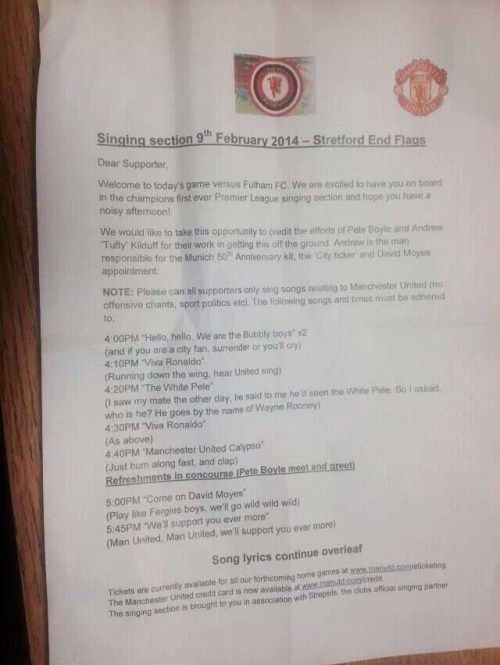
Part of the answer might be the pathological need that the whole shebang still has, despite a current status of also-rans, to promote and parade itself as God’s gift to sport and the last word in hugeness and greatness.  It applies to the club from the very top, this immense self-delusion, right down to those troubled people who are drawn to “support” them.  The most recent example of the lengths they will go to in order to give the outer appearance of confidence and attitude, is pictured below.  This, ladies and gentlemen, is (allegedly) the song sheet for the “Man U Singing Section“.

The Man U "Mutual Reassurance" songsheet

The Man U “Mutual Reassurance” songsheet

As you will see, it is full of earnest advice on how best for their well-drilled singers to comport themselves, with finger-wagging dos and don’ts and even a schedule minute-by-minute of exactly when each distinct song should be sung.  No advice is given as to what should happen if some event on the pitch should threaten to grab fans’ attention; perhaps this is deemed unlikely.  There are stern admonitions about the singing of undesirable, “offensive” songs – don’t do it, chaps, it’s not nice.  The songs and timings cited “must be adhered to”.  Have a look at it.  Some will ask whether it’s genuine – and part of even me hopes that it’s a wind-up.  For football fans to be shackled so, their spontaneous reactions crushed beneath a list of rules and regulations, with a script to rule them?  It’s got to be a sick joke, surely.  But judge for yourselves.  Fake or not, it is funny.  Let’s not kid ourselves either – there’s no smoke without fire.  This sort of thing, if it is a fake, needs a bit of reality to be hung on to; for a club that reckons itself to be the “biggest and best”, with fans to match, even the perceived need for a singing section is rank humiliation.  Do the bulk of the Man U fans really need this sort of sugar-coated reassurance, this spoon-fed “Don’t look at the League Table, guys, we’re still the best”?

At Leeds, the only thing that ever came even close to the ridiculous idea of a singing section was an ill-fated move to introduce a “band” shortly after that laughable notion had flourished into bizarre reality at Sheffield Wendies.  The idea was to get a bit of atmosphere going – which at Leeds was like pouring petrol on a blazing fire.  There may well have been a wistful undertone that the Board wished the Elland Road crowd was as “nice” as those simple Wendy souls at Hillsborough – the rank folly of that!  The Leeds fans wouldn’t have it, of course.  A few peeps were heard, immediately drowned out by a raucous “Stand up if you hate the band”, and the experiment died an early and unlamented death.

Now, if anyone had the sheer brass cojones to try the introduction of an actual singing section at Elland Road, one suspects they would be led firmly away by the throat – for those cojones to be removed with a blunt and rusty knife, braised lightly over a grill and fed to them morsel by morsel as they dangled helpless from the East Stand superstructure.  And quite right too.  There’s just something deeply inadequate and plain wrong about any club which needs such artificial backing – you can understand it happening at the Wendies.  But at Man U?  There used to be some grudging respect there, back in the day, but can any vestige of that survive such a laughable, pitiful initiative as this?

So, yes – Leeds may be a crisis club, we may just have gone through a month which makes a pantomime look like profoundly cerebral entertainment – but we can be tolerably certain that we’d never sink this low.  Whatever else may happen, we’ll still have our spontaneity, our pride.  These things tend to flourish in adversity – and we have plenty of that.  And I do even feel a bit sorry for the genuine Man U fans – there’s a hard core of them out there, somewhere, after all – though it’s much more fun, and better for my health too, that I can now simply laugh at them instead of resenting and hating them.  And of course I still do hate them, just in a different and mercifully less rabid way.  I still keenly want them to lose – but now that this happens with such metronomic frequency, the intensity of the actual hate is diluted to some degree.

And do you know what?  I really don’t miss that intensity.  I actually enjoy my football more now that I’m not feeling all anxious; now that I can usually rely upon them to fail.  And the continuing self-delusion of the whole lot of them – the club, the fans, their media lapdogs – makes it all the more sweetly satisfying every time those blessed defeats happen.

Let’s face it – pity and empathy notwithstanding – it’s still a hell of a lot of fun to laugh at Man U.

Man U Still Odds-On to Lose to City at Wembley – by Rob Atkinson

homer_simpson_manchester_united

It’s delicately poised in the League Cup semi-final as Sunderland take a narrow 2-1 lead to the Theatre of Hollow Myths in a fortnight. It’s all up for grabs as to who will get to Wembley to get stuffed by City in what will be seen, now that Man U are out of the FA Cup, as the most glamorous domestic cup final of the season.

This was a tense and scrappy affair, with the Pride of Devon at least able to claim the goal of the evening with Vidic’s header after the interval equalising a Giggs own goal in the first period.

The decisive moment came when ex-City flyer Adam Johnson surged into the Man U area where he was felled by Cleverley. Amazingly, the penalty was given, despite the fact that both Giggs and Rafael were on hand to explain politely to the ref that when Man U are playing, it’s never a penalty against them unless somebody is actually killed. Rafael picked up a yellow card for childish petulance.

Borini converted the spot kick, beating de Gea all ends up – though to be fair, how much penalty practice do Man U keepers get? Rafael was slightly lucky shortly after his petulance booking to escape a second yellow after a blatant foul on goalscorer Borini. The young Brazilian was only spared when the ref noticed what badge he was wearing.

So a narrow lead for Sunderland which they will do well to hang onto in the return leg. The tie is delicately poised at 2-1, but with the possibility of injuries clearing up for Man U and the probability of a penalty or two, you’d have to rank the Pride of Devon as marginal favourites to get handsomely thumped by Manchester’s finest in the showpiece at Wembley.

Just As Things Seem Bleak, Moyes’ Man U Cheers Up Leeds Fans – by Rob Atkinson

Image

Moyes – just not scary enough

There’s a new factor in play this season – something that can cheer you up, relieve the pain of a defeat, make things seem brighter in dark hours.  It’s a beautiful thing, a gift from divine providence – the kind of phenomenon that can make you believe that there is some benign quality to whoever it is that’s running things in this crazy world.  It only really applies to football so far – but maybe it’s the kind of thing we need to act more generally in a country suffering under the cosh of the coalition.  But it’ll do for the moment – it’s certainly made me feel better.  The name of this feel-good factor?  It’s David Moyes’ Man U.  What a wonderful Man U manager Moyes is making.  Long may he reign.  Today, his latest gift to me is a last-minute defeat at home to Swansea, knocking the media darlings out of the FA Cup – and a tasty red card into the bargain.  Delicious.

I’m not being wise after the event here.  I am on record as predicting that Moyes would not be able to carry off the Fergie act that brought Man U far more success than their various teams’ qualities merited.  It looks very much as though I was right as a veritable dynasty – albeit one founded on fear and oppression – is fading away, and we can but hope it will be replaced by something more admirable.  Yes, Arsenal, I mean YOU.  But the main thing is that the Evil Empire appears to be on the wane.  I thought that a failure to qualify for the Champions League was too much to hope for, but it looks as though even this may well be about to happen.  And if it does – then the shift in power at the top of the game will be of seismic proportions.

For a Leeds fan, the current problems afflicting Man U come as balm in Gilead.  For many years now, the state of our club has been a matter for concern and occasionally despair.  The odd calamity for Man U came as an infrequent but welcome relief from this pain.  Now – even at a time when disasters like Rochdale can happen, the comical collapse of the edifice Fergie built on foundations of threats and bullying, acts to cheer the soul of anyone with Leeds in their heart.  It’s a tonic, it really is.  At a time like this when the Leeds team is misfiring but there appear to be exciting developments off the field, this latest flop by the Pride of Devon has come like a ray of sunshine on a stormy day.  Believe me, I’m not ungrateful.

There’s quite a lot of this season still to go, and it is of course possible that – with the help of the usual outside forces – Man U may yet struggle back and secure at least a top four place to save themselves from meltdown.  And yet it’s difficult to see how even a return to form for the likes of Howard Webb can see them overhaul any of what are looking like the natural occupiers of those top four places, City, Chelsea, Arsenal and Liverpool.  All look streets ahead of Man U so far – and below that fantastic four, there are the not inconsiderable merits of Spurs and Everton.  Both of these latter two have won at the Theatre of Hollow Myths this season, and both would currently back themselves to finish above the ailing and seemingly plastic champions.

For a Leeds United fan such as myself, this was shaping up as a weekend to be crying into our beer and staying inside to sulk.  Thank you Swansea for your help and what you’ve done to the myth today.  Thank you Mr Moyes for essaying a Fergie-Lite style of management that appears to be working just as we anti-Dark Side sympathisers might wish.  Most of all thanks to the Man U owners for such an enlightened appointment.  Stick by Agent Moyes; hopefully he has much more to achieve yet in the dismantling of Man U.