Tag Archives: Manchester United

What’s Really Wrong at Man U: the Fear Has Gone – by Rob Atkinson

The Tyrant is Gone

The Tyrant is Gone

It’s difficult not to sympathise with the current plight of Man U.  Well, apparently it is for BSkyB, anyway.  Others seem to manage OK.  Gary Lineker, introducing Match of the Day, promised action featuring “all of the top four”. Then, smiling at the camera really quite maliciously, he added “And Man U as well.”  There appears to be an insidious tendency to poke fun at the wounded Champions, and it begs the question why.  As someone myself who never feels quite so alive, never quite so full of the sheer joy of living as when Man U are having their noses well and truly rubbed in it, I have an answer to offer.  The fear has gone.  It went with Ferguson, and people now feel happy to laugh at Man U.  All very petty, you might think – but this absence of fear might have far-reaching consequences for The Pride of Devon.

Steve Clarke, West Brom’s talented young(ish) manager, made for an interesting listen in post match interviews after his team’s 2-1 victory at the Theatre of Hollow Myths. Firstly, he demanded credit for his team’s marvellous display, based on self-belief and a determination to show little respect for reputations, rather than lazily blaming the under-par display of Man U.  He went on to say that he had spent four days talking to his team about the mind-set required to play away against Man U; advice on not sitting back, seizing the day, going for the throats of the opposition, showing no fear.  And West Brom responded to their manager’s mantra, tearing into a startled Man U from the off. Unlikely as it seems, and despite a late home flurry, this could have been one humbling home defeat for Man U.  The last time they lost at home in the league to West Brom it was a 3-5 reverse in 1978.  On this occasion, a 5-2 or 6-2 victory would not have flattered the away side.

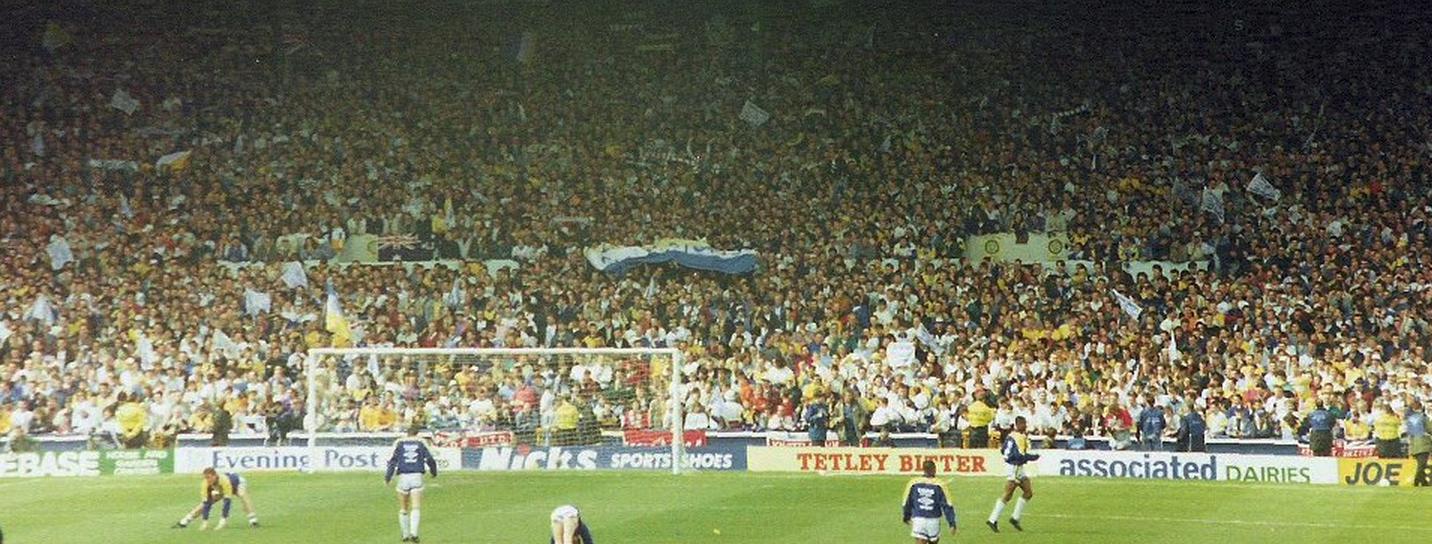
The thing is, that advice may well have been given to teams visiting Salford before, but it has rarely produced such positive gains for those teams down the years.  I remember well the performance of third-tier Leeds United in the den of the Champions in January 2010 for the FA Cup 3rd Round.  My favourites took the field as if they owned it, backed by 9000 raucous away fans and proceeded to out-play, out-fight and out-manoeuvre a team stratospherically above their humble level, winning 1-0 and rather unlucky it wasn’t 3-0. Leeds showed self-belief, faith in their own ability to dictate play and absolutely no fear or respect whatsoever.  It was the kind of display seen far too seldom by teams facing Man U, who tended over many seasons to be beaten before their boots had touched the turf at the start of the game.  And it’s this ingrained fear, this subconscious feeling of being beaten before a ball is kicked that has exaggerated the achievements of a club who, until Ferguson embarked upon his reign of terror, could only dream of Title success.

Football success, they say – or even football dominance – is cyclical.  Nobody stays at the top forever, the best of dynasties crumble and fall eventually.  This will not be a welcome concept for the bulk of the Man U support, who have long journeys from the south to justify somehow, who have only attached themselves to the embodiment of success and who will protest loudly if the run of glory ends.  But they can always seek their glory elsewhere – many of them will.  It’s in the nature of the beast.  Man U fans tend to be slightly inadequate and in Freudian need of the reassurance that identification with perceived size and success provides for them.  So off they’ll go and support Chelsea or Spurs or someone – the travel costs will be greatly reduced, anyway.  But what of those left behind?  What of the legions of armchair fans?  What of poor David Moyes, looking more and more like a latter-day Wilf McGuinness?  What, even, of the legions in the Far East who will find the whole reason for their devotion to Man U has dissipated – if they stop winning.

Then we have to look at the consequences for merchandising, the awful possibility that there might be a Champions League qualification failure, the chilling realisation that there is still all that debt.  The debt would have been even higher if Moyes hadn’t been so singularly ineffective in the transfer window.  The potential for things to get worse for Man U seems endless – and endlessly amusing.

None of this seemed remotely likely whilst Ferguson’s brooding presence was there, haunting the nightmares of referees and officials, causing ulcers in the FA Boardroom as they invented ever more specious reasons for failing to file disrepute charges, terrifying the hacks of the gutter and quality press alike with threats of cutting them off from the media circus that is Man U.  All Ferguson wanted was his own way, all the time and he set about getting it via the longest continual process of widespread intimidation the game has known.  Aided by the favourable market conditions provided when Murdoch bought the game, Man U flourished by this tyrannical dynasty – and the results are there in the trophy room where thirteen plastic replicas of Thunderbird One attest to a total domination of the Plastic Premier League.  Only Castro in modern times has out-done Ferguson as a successful tyrant and dictator.

But now Ferguson has gone – at least for the time being.  He may yet, of course, reappear on a Busby-like comeback rescue mission if Moyes is sacked as a failure – shades of the early seventies.  For now though, the tyrant is rendered impotent to assist Man U as they flounder and the whole atmosphere of the top flight has changed.  Referees feel empowered to be fair instead of giving every bloody 50-50 decision to Man U.  Opposition managers feel their charges freed from that psychological monkey on the back.  Press hacks – despite Moyes’ pallid efforts to ape the Ferguson abrasive approach – are not fooled; they know that a crabby old lion has been succeeded by a querulous pup.

All of these factors have conspired to reduce the advantages enjoyed by Man U these many years since Ferguson headed south.  It’s always been a game of fine margins, and any reduction in advantage tends to have a disproportionate effect on performance.  This is what is happening to Man U – and it’s like a breath of fresh air.  Not everyone will be happy, not everyone will want to see the dominant force of the past two decades rendered impotent.  But for many – if only it can last – this new Fergie-less era could be the very best of times, after the very worst.

It’s a Twitter Bad Taste Jamboree for Millwall Fans as Leeds are in Town – by Rob Atkinson

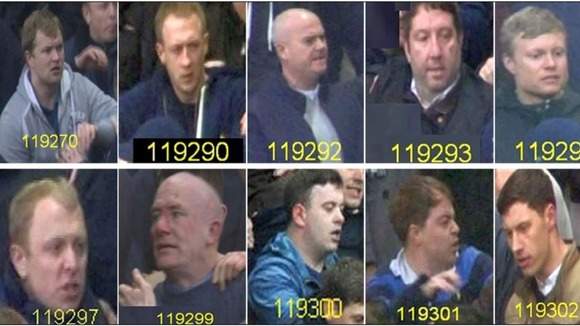
Millwall Beauty Queens Parade for Police Five

Millwall Beauty Queens Parade for Police Five

Twitter is a good place to avoid today for Leeds fans – or indeed for anyone whose idea of good taste precludes taunting rival supporters over two bloody murders thirteen years ago. Millwall fans are generally the exception to the rules of taste though, as they are to most rules – not excluding those governing grammar, basic hygiene and indeed evolution.

It’s not hard to find Millwall fans on Twitter today. Those of this dismal fraternity who are able to find their way around a computer are there in the ether, in force, to celebrate the first of Millwall’s two cup finals this season.  Their team face Leeds United, the cause of all those chips on rival fans’ shoulders everywhere.  The effect is accentuated with Millwall fans, for whom the chip on the shoulder invariably possesses a higher IQ than the diseased organ inside the skull.

It’s pointless to regale you here with the output of the South Bermondsey twitterati.  It’s all there, for those who might want to source it.  Hashtag #sickeningbile might be a useful route to go.  Strong stomachs are required; this is no place for the queasy. Youngsters who weren’t even born when Chris Loftus and Kevin Speight met their awful fate in Taksim Square Istanbul, are gleefully evident, aping their elders, glorying in the blood spilled by two lads who went overseas to watch a football match – and never came home.

Most football clubs suffer from a minority of this sort, people who genuinely seek approval for dragging their very souls through the gutter as they seek to out-do each other in aiming jibes at the misfortunes of others.  It’s been a blight on football for over 50 years, certainly since the time of the Munich Air Disaster.  Man U fans are only too well aware of the fashion down the years for tasteless chants and songs on that sad subject.  My own Leeds United have shameful form for it; Liverpool too and various other clubs.  Man U fans will climb on their high horse a few times every year over this, but they are not without sin, reveling in their own sick celebration over Hillsborough and Istanbul, plumbing the depths over the Heysel tragedy.  It’s hard to find a club that doesn’t attract a lunatic fringe of this kind of “support” – but it’s usually a minority and it’s been greatly reduced in recent years.  Only Millwall buck this trend.  There it’s most of them, most of the time.  There, civilised behaviour and rules of taste and respect seemingly don’t apply.

Millwall fans, rather than condemning the examples of pond-life in their midst, tend to glory in them.  “No-one likes us, we don’t care” they sing defiantly, happy with their grisly reputation, proud of a record that would sicken a psychopath.  They’re more famous of course for their tendency towards violence, usually in gangs of herd-instinct cowards seeking small groups of rival fans to attack.  When none such are available, they will be content to fight among themselves and disgrace the game in this country that way. They had a set-to at Wembley last April in the FA Cup semi-final.  Bewildered Wigan fans looked on as their team cruised to victory and the Millwall animals tore into each other like sharks drunk on blood.  Images of crying children caught up between bloodied “adults” lacing into their own kind shocked and revolted the nation.  As usual, nothing effective was done.

It’s about time, though, that something was done.  Millwall is the land that time forgot, a throwback to an uglier era that the rest of the game is doing reasonably well in leaving behind.  Only at Millwall does this anti-culture still flourish, by word and by deed.  In Leeds, the old men of the sixties and seventies Service Crew sit around swapping stories on internet forums these days, their boots hung up for good.  Even West Ham fans are emerging from their own savage past.  Man U fans are too busy travelling up and down between Devon and the Theatre of Hollow Myths to engage in fisticuffs – they’re an aging population too.

The modern football fan is a relatively peaceful person, obsessed with the media fishbowl of the Premier League, horrified by the price of everything, as likely as not to be a student, or a female; a far cry from the working man’s army of previous decades.  Not so at Millwall.  Millwall defies evolution, laughs at progress, dismisses a family atmosphere as “soft”, spouts poison on the internet, looks for easy targets down scary back-alleys. Millwall is the past in defiance of the present and the future.  Millwall should be consigned to that past, to the dustbin of football history – and their shrinking legion of “fans” left to lob half-bricks at each other.

It’s high time to get rid of Millwall.

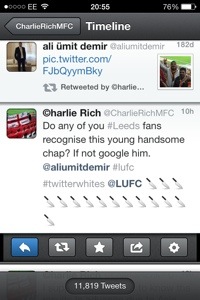
PS – see below for the evidence of one Millwall cretin glorying in his following the Twitter account of Turkish murderer Ali Umit Demir. Disgusting – but we shouldn’t apply normal human standards to some Millwall apes.

20130929-210755.jpg

Sky Sports Football Coverage Crisis Looms – by Rob Atkinson

Image

In the wake of this week’s Capital One Cup 3rd Round ties and the draw for the 4th round of the competition, a looming crisis for the BSkyB organisation – rights holders for live TV coverage – has been revealed.  The draw has thrown up ties between Newcastle and Manchester City, clearly a glamour tie – and also, before the determination of the West Bromwich versus Arsenal 3rd round game, the winners of that were pitted against Chelsea.  Arsenal duly went on to knock West Brom out on penalties, to confirm a London derby against Chelsea at the Emirates – and Sky TV were thrown into immediate crisis.

The problem lies in the unacknowledged Sky protocol known within the organisation by the secret code-phrase “Some Clubs Ultimately Matter” (SCUM).  The origin of this protocol goes back at least eight years in the case of the FA Cup.  Statistics for the secondary League Cup competition are not available owing to its comparative lack of importance. However, a Sky TV spokesperson admitted that the last Man U game not to have been broadcast live was “a bloody long time ago, like when Noah was a lad”.

The SCUM protocol is of such importance to Sky TV’s marketing and commercial departments that it is regarded as the prime reference document when live TV games are chosen.  Hence the dilemma now being faced by decision-makers, who normally at least attempt to put up some sort of justification for selecting yet another tedious Man U stroll at an embarrassingly quiet Theatre of Hollow Myths.  Off the record, a Sky commentator remarked, “We’ve got a problem this time.  People are going to want to see the two obvious stand-out ties in the next round.  Newcastle v City and Arsenal v Chelsea are both huge.  We’ll struggle to justify leaving one of those out to cover Man U reserves diving for penalties against a pallid side like Norwich”.

There was some glimmer of hope for the Sky executives in the short time between the draw being made and the end of the West Brom v Arsenal tie.  Sky Sports News covered the penalty shoot-out at the Hawthorns by remote reporting, and it would appear that pundit Alan McInally had failed to read the SCUM script.  Executives and studio presenters alike cringed as the Scot egged on Arsenal’s collection of spotty pubescent junior footballers to convert the penalties needed for victory.  It is expected that McInally may be carpeted and reminded of his responsibilities to shareholders.

“The problem is,” confirmed Sky’s un-named spokesperson, “if we failed to show a Man U cup game, we’d get flooded with complaints from Devon, Cornwall, the Home Counties – all over the south of England really.  That’s a lot of Sky subscriptions – we have to take our commercial survival seriously.  That’s why the SCUM protocol is so important to us.”

A high-level meeting is expected in the next few days to try and thrash out some acceptable fiction whereby either the game at Newcastle or the one at Arsenal can be omitted to allow the organisation to fulfill its obligations to SCUM and the Man U supporters, the bulk of whom live within easy travelling distance of Sky’s Isleworth HQ.  “We have to sort this out,” said one harrassed executive, “At the end of the day, SCUM is too vital to us all for considerations of mere football merit to prevail.”

Altered Priorities Ahead of Leeds’ Cup Date at Newcastle – by Rob Atkinson

Image

Sometimes, I appear to be bang to rights on a charge frequently leveled at me by friend and foe alike: namely that I hate Man U more than I love Leeds United.  This evening’s Capital One Cup fixtures would be a case in point; an occasion when I would have to hold my hands up and say: Yes – my priorities are altered tonight.  Given a choice between Leeds progressing and the Pride of Devon getting stuffed by the Scousers at the Theatre of Hollow Myths, then I’d have to go for the latter.  I know that is base treachery and quite the opposite of the way in which I should behave – but I’m too long in the tooth and perhaps too cynical to look at things through those old, stardusty, yellow white and blue-tinted specs I used to wear.  So fine – tie me up and burn me for a heretic – but I’ll be watching Man U v Liverpool tonight, and screeching for a Reds victory (the real Reds, not the plastic variety).  I may even forget there’s a game going on at St James Park, Newcastle.

Disgusting, the average, bone-headed, blinkered fanatic will bellow at me.  Leeds first, last and foremost.  Well, I can see that point of view, but you have to be a little bit pragmatic too.  Sure, it would be nice to progress in this Cup.  I have a very good friend who supports the Toon, and I just know he’ll give me hell if they beat us.  Despite his protestations that he’s not bothered about the result and indeed that he’s jaded with all things Newcastle right now, I can tell he’s nervous about this tie.  He knows he’ll have the bragging rights if the Toon prevail, even though that’s the way it really should pan out, given the relative strengths of the two squads.  Equally he knows that I’ll make his life a misery if Leeds happen to win.  And that would be nice.  But I won’t despair if we lose – we have bigger fish to fry, after all.

Look at last season in the League Cup. Joy unconfined when we beat two Premier League clubs at Elland Road.  The bunting hung out and street parties as we celebrated a home tie against old foes Chelsea.  Ecstasy as we led 1-0 at half time – and then the sky fell in and we got murdered 5-1.  When you’re at the current level of Leeds, the happiest of Cup runs ends in tears. Bradford City know that harsh lesson even better than we do.

With Cup competitions, the best attitude is to expect the worst and welcome any better than that with open arms – but there’s no point getting too upset about it, whatever happens.  Since I’ve been a Leeds fan, I’ve seen us lose in every cup competition we’ve entered, every season, for 38 years.  You get used to the incessant disappointment, and the pain becomes more of a numbness.  Every now and then though, you reach a semi-final and the pain of defeat is more acute.  Twice we even reached a final; they were the unkindest cuts of all.

The Germans have a word for the way I feel about nights like tonight.  Schadenfreude. For those who don’t know, it means taking delight in the misfortunes of others.  Every now and then, Man U serve me up a big, tasty dollop of Schadenfreude and I’m a happy man – quite as happy as I am with the occasional victories of Leeds United.  The lads from Salford were kind enough to oblige me in this way on Sunday as they meekly got murdered by their more illustrious neighbours City from over the boundary in Manchester itself.  Joy abounded in our house; we didn’t kill the fatted calf, but we did lash out on a celebratory takeaway. On January 3rd 2010 I got both sides of the bargain – humiliating defeat for Man U as well as an unlikely win for little old third-tier Leeds as the latter visited the former and won 1-0, dispatching the favourites from the FA Cup.  A whole herd of fatted calves wouldn’t have done justice to that occasion.

My career as a football fan hasn’t had too many positive highlights – that’s just the way the cookie crumbles; if you’re going to follow your local team instead of glory-hunting like those sad, inadequate Man U fans with their deeply compensatory behaviour recalling the teachings of Sigmund Freud – then you’re going to spend most of your time dealing with disappointment.  It’s the nature of the beast.  How much better then, to have a fall-back position, psychologically speaking. That’s what I have.  Every time Leeds let me down, I have a second chance of happiness that weekend or midweek.  Often, of course, I am let down again.  I happen to despise the most undeservedly successful team of the era, so disappointment is often my portion there too – I am usually denied my helping of Schadenfreude.  But when it comes around – oh boy, do I relish it. Through the thin and thinner of being a Leeds fan, it’s been those delightful occasions of Man U misery and despair that, frequently have kept me happy and ready for more.  Otherwise I suspect I’d have given up on football long ago, much as other aging former enthusiasts have.  There is a limit, after all.

So tonight, I have two shots at happiness and satisfaction – and due to the preferences of the TV companies in these matters I shall be concentrating on the negative side of things, hoping for more Man U misery, cheering on Liverpool as they aim to knock the Gloryhunters out.  If it happens, I will be happy, whatever has happened up in Newcastle. And if Leeds happen to have pulled off a surprise against the Mighty Barcodes I shall of course be happier still.  But you have to take your satisfaction where you can, and if Man U lose tonight, they’re OUT.  If Leeds win, we’ll simply postpone our own demise in the competition, but it’ll surely come sooner or later.  So good luck to both my teams tonight, but if I have to pin my colours onto one particular champion, it’ll be the Reds of Liverpool as the enter the lists looking to cheer us all up by ending the Capital Cup involvement of Man U.

Istanbul “Front Runner” for Euro 2020 Semis and Final – are UEFA Stark, Staring Mad? – by Rob Atkinson

Turkish Fans "Demonstrating Their Cultural Uniqueness"

Turkish Fans “Demonstrating Their Cultural Uniqueness”

As if eager to demonstrate once and for all that they are out-of-touch, irresponsible, lacking in judgement and foolhardy to the point of actual insanity – it would appear that UEFA are genuinely considering Istanbul as a host city for the semi-finals and final of the Euro 2020 Championships.  Our beloved FA, itself a body which has frequently demonstrated its own lack of fitness to run a piss-up in a brewery, stated today that it believes Istanbul is the “front runner” and main rival to Wembley’s own bid.  Istanbul lost out to Tokyo in its bid to host the 2020 Olympic Games, after all.  FA General Secretary Alex Horne said: “We’ve taken some soundings, there’s a sympathy for Turkey and it does feel like they are the front-runners.  We get the politics around Istanbul, having not got the Olympics.”

Demir

Demir

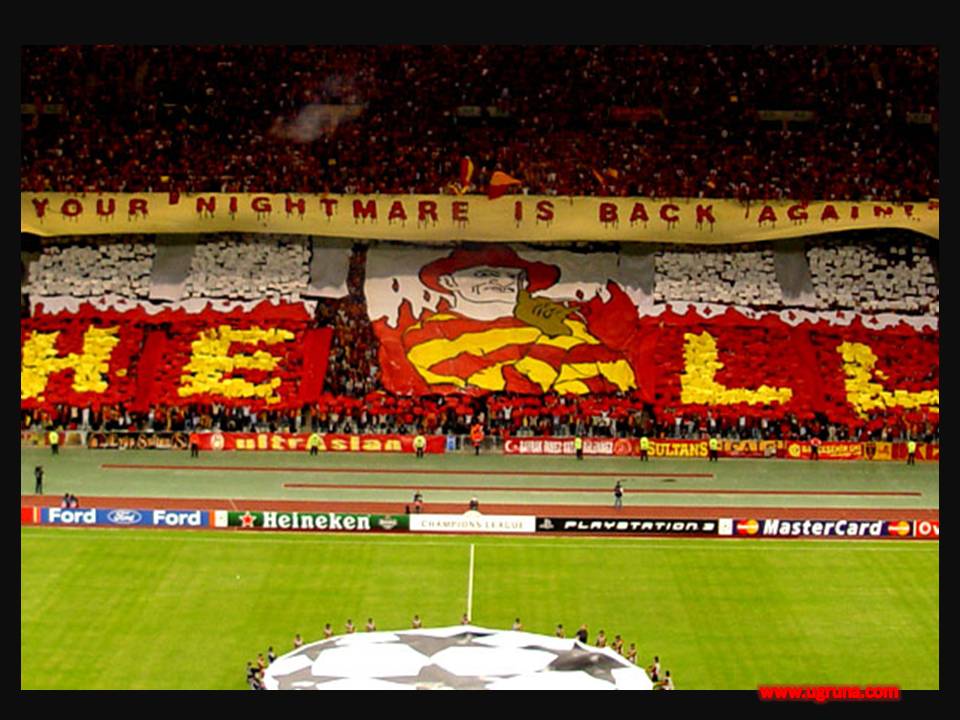
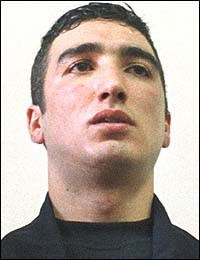
Well, forgive me, but I don’t “get” this at all.  Turkey has just about the most horrific history of football violence it’s possible to imagine.  Istanbul in particular is home to Galatasaray, whose fans’ party piece is to raise banners when “welcoming” visiting teams to the airport or to their bear-pit of a stadium, the banners bearing the warm and comforting message of “Welcome to Hell”.  Other touching signs of friendship and bonhomie include mimed throat-slitting actions performed en masse.  Sadly, these ugly manifestations of Turkish culture have been shown to be no mere gestures.  In the spring of 2000, two Leeds United fans – Chris Loftus and Kevin Speight – were brutally attacked and murdered in Istanbul’s Taksim Square. Ali Umit Demir and three other men were arrested for the killings, and Demir was jailed but released for retrial after a successful appeal.  When the four men first appeared in court, they were cheered by members of the public, Demir being described as a “patriot” by residents of Istanbul.

More than 13 years on, it is still unclear whether Demir will ever face an appropriate penalty for his admitted crime of stabbing Mr Loftus and Mr Speight.  Over the time since these tragic killings, fans of Turkish clubs have continued to disgrace themselves on numerous occasions with acts of violence and displays of hostility which UEFA have consistently failed to address, despite the alacrity with which they deal with lesser offences elsewhere.  It has been reported that certain UEFA officials regard knife-carrying and its concomitant perils as “part of the culture” in Turkey, and this may partly explain their casual attitude towards what goes on there – but it certainly does not excuse it.

No Leeds United fan and, for that matter, no Manchester United fan needs any instruction about the atmosphere and the dangers of following football in Istanbul. Personal experiences of fans from both clubs leave little room for doubt that it’s a place to visit and roam around in only with extreme reticence and caution.  The idea of masses of fans from different nations adding their high-spirits and nationalistic fervour to the cocktail of hatred and overt hostility which is so much a part of the fabric of Istanbul – it’s just too horrible to contemplate.  You’d have thought that even a pea-brained UEFA pen-pusher could have accumulated enough evidence, both anecdotal and empirical, to realise this.  But no.  Self-satisfaction and pompous idiocy rules in the corridors of UEFA, and they will seemingly be willing to compound their laxity of recent years in failing to deal with what has happened there, by a whole new level of crass stupidity in contemplating taking a major Championships to a murderous pit.

It is to be hoped that wiser counsel – if any should exist in the game’s higher authorities – will prevail, and some safer place will be found.  The idea of awarding the final stages of a prestigious tournament to Istanbul is a bit like inviting an arsonists’ self-help group to organise a bonfire in a petrol dump – only more so.  If the madmen of UEFA have their way in this, the consequences could be dire; you only have to ask the Man United fans ill-treated by the local police, or the Leeds fans who, heart-sick at their bereavement of the night before, turned their backs at the start of the match against Galatasaray, because that club had failed, along with UEFA, to postpone the game, or even to order that black armbands should be worn.

It may be that one day Istanbul will be a fit place for civilised football fans to visit, and maybe even for a tournament to be held. But that day is not yet, it won’t be here by 2020 and it won’t be for many more years after that.  Most sensible football fans would confirm that.  Now we just have to find a way to persuade the fools in UEFA, and in our own FA, what their own eyes and ears should have told them long ago.

Moyes Fluffing His Fergie-Lite Lines as the Mask Drops – by Rob Atkinson

Image

It sounded odd at the time. Leading up to the start of his first season at the Theatre of Hollow Myths, David Moyes chose to abandon his previous upright, downright, straightforward no-nonsense Evertonian demeanour and go for a good old-fashioned Fergie whinge with the requisite helpings of paranoia and self-righteousness. “They’re conspiring against us,” he grizzled, bitterly. “Three tough games against title contenders in the first five league outings.  It’s no’ fair.”  It was straight out of the Taggart Manual, from Chapter One: “Build a Siege Mentality”.  The thing is, however tried and trusted the lines are, you need the right kind of actor to convey them. Now that the Old Ham had gone off, could the relatively green Moyes carry on with the same old act?  Was it even such a good idea to try?

Whatever the whys and wherefores, the gambit appears to have blown up in the fledgling Man U manager’s face.  Yesterday’s humbling against Mancunian giants City was not only a salutary lesson on the field.  It also raised serious questions about the new man’s deportment off it.  On the face of it, the Moyes Whinge, as it has come to be called, looks in retrospect like a timely warning.  Of the three fixtures he was complaining about, the Pride of Devon have lost both away matches, at Liverpool and City, and gained a somewhat lucky point in a dour home struggle against Chelsea.  But the fact is that the fixtures are simply that: fixtures.  There’s a clue in the name, and while Sky may tamper slightly for TV requirements, the basic framework for the season is carved in stone.  To complain about them at the time Moyes chose to complain, and in the terms, moreover, he chose to employ in making that complaint, showed more weakness than foresight, more lack of confidence in himself and his team than lack of faith in the authorities. What message was sent out by the manager to his troops as they prepared for combat? Would they have been inspired by their leader’s belief in them?  Or would they, instead, have had a subliminal fear implanted of facing three formidable teams early in the season?  Were they, in short, afraid?

A hindsight version of the Moyes Whinge emerged this morning on the radio.  He referred again to the perceived unfairness of the fixtures arrangement.  As an exponent of psyching his team up and psyching opponents out, Fergie was tiresome, he was tedious, he was annoying and detestable in the eyes of his enemies.  But it clearly worked more often than not in the bunker that was Man U’s dressing room.  Moyes, by contrast, seemed to have waved a white flag and called for stretcher-bearers before a shot had been fired. Certain of his players, van Persie for one, are already emitting rumbles of discontent. You can imagine them asking themselves: who would we rather have as our leader as we enter the trenches?  The margins between victory and defeat are incredibly fine, one iota of backsliding by the historically dominant force, one iota of improvement in the fortunes of his enemies (the football term for “iota”, interestingly, is “Özil”) – and the tables can be well and truly turned.

It may also be that Moyes’ emergence from the comfort zone of Goodison into the fishbowl glare of the Theatre of Hollow Myths has been particularly ill-timed.  The gene-pool at the top of the Premier League appears to have expanded dramatically over the summer.  Arsenal have improved by probably more than just one Özil.  Tottenham seem to have contrived to have lost a golden nugget and replaced it with the equivalent weight in gold-dust, and to have improved in the process.  Chelsea have wound the clock back to the reign of the Special One, and you just know he will weave his magic again whilst laughing sardonically at his carping critics in the media, embittered journalists all of whose significant others are unanimous in fancying Jose.  Liverpool have looked “at it” again, despite a dip in the last two games.  Everton are unbeaten, with a new style and belief under Martinez.  The whole landscape at the top of the game has a new and, from the Man U point of view, dangerously unfamiliar look about it.

Maybe one craggy and purple-faced individual in particular foresaw this sea-change, and perhaps this explains the abruptness of his departure from the hot-seat in Salford.  There must, after all, be a significant danger that the still debt-ridden Evil Empire will finish outside of the top six this season, favourable ref decisions notwithstanding; and on that subject – what on earth happened to Howard Webb in the Derby?  He failed utterly to live up to his Man U Player of the Season form, and must now be worried about his place in the team.  Moyes has a lot on his plate, and – sallow-faced and bug-eyed compared to the smug, well-fed, puce sleekness of his tyrannical predecessor – he frankly does not look as though he has the appetite for it.

The noisy neighbours across the border in Manchester will be well aware, as they leap and cavort in celebration in the sullen faces of Manchester’s Red minority, of the problems that are stacking up for the hapless current incumbent of Salford Towers. But those happy fans will care not one jot, as is the case with thousands of other equally happy fans the country over, outside of Devon and Cornwall.  They can see golden horizons ahead, and a game reinvigorated by true competition across a well-matched group of clubs vying for the ultimate prize.  If Man U do end up outside in the cold, there will be millions who feel it’s a reckoning that’s arrived not a minute too soon.

Aside

“We’re not famous any more” sing the fans of Leeds United FC, quite regularly and demonstrating a neat grasp of irony in a medium too often dominated by the literal and the just plain crass.  The point is, of course, … Continue reading

Super Leeds: The Last Champions – by Rob Atkinson

Stand Up For The Last Champions

Stand Up For The Last Champions

If you should happen to be a football fan – as I am, and have been these many years, since days of yore with short shorts, middling ability and long sideburns – then you may well be in the habit of switching on the TV occasionally to watch the glitzy offerings of the munificently funded Premier League.  With its incomparable array of prima donnas and fabulously wealthy superstars, prancing athletically around a pristine and manicured football pitch in the very latest state-of-the-art stadium (constructed courtesy of Meccano Inc.) – it’s a far cry from the heyday of The Football League, Divisions One to Four.

Back then, men were men, refs were nervous and physios routinely cured ruptured cruciates or shattered thighs with a damp sponge and hoarse exhortations to “gerron with it” – or so it seemed.   Full-backs with legs of the type more usually to be found on billiard tables would careen through the mud at Elland Road or Anfield, some flash, quivering, overpaid at £200 a week winger in their merciless sights, destined to be afflicted with acute gravel-rash.  Centre-backs with foreheads like sheer cliffs would head muddy balls clear to the halfway line, get up out of the mire, groggily shake their mighty heads, and then do it all over again – for the full 90 minutes, Brian, giving it 110%.  The good old days, without a doubt.

There is little that the modern game has in common with those far-off, non-High Definition times when some top-flight games weren’t even covered by a local TV camera for a brief clip on regional news.  Now, every kick of ball or opponent is available in super slow-mo for in-depth analysis by a battery of “experts”, from a dozen different angles.  The game today is under the microscope seven days a week, where then it was viewed only from afar, limited to highlights from a select few stadia every Saturday evening and Sunday afternoon.  Even now, the smell of hot ironing and roast beef with Yorkshire Pud will take me back to Sabbath afternoons sat contentedly before “Sunday Soccer” as Billy Bremner and Co dismantled the hapless opposition.

Leeds United was the team, back then.  On their day, the lads would toy with their rivals as a particularly cruel cat might do with a half-dead mouse.  Many will recall the spectacle of a mortally-wounded Southampton side – already seven goals to nil down near the end of the game – trying all they knew to get a touch of the ball as their tormentors in white passed it effortlessly between themselves, brazenly flaunting their catalogue of flicks, reverse balls and sublime long passing.  The game was long since won and all Leeds’ energies were palpably focused on a very public humiliation of their exasperated victims.  Some thought it was in poor taste, a shoddy way to treat fellow professionals.  Leeds fans remember it 40 years on as the ultimate statement of an undeniably top team, proclaiming to the nation “Look at us.  We are the best.”

This was 1972, when Leeds might well have won pretty much everything, but had to settle in the end for their solitary FA Cup triumph, missing out on the Title right at the death in typically controversial circumstances.  Leeds won far less than they should have done; a combination of official intransigence, their own inherent self-doubt, Don Revie’s crippling caution and superstitions – together it must be said with some shockingly bad luck – limited their trophy haul to a mere trickle when it should have been a flood.  But those flickering images of arrogant dominance and untouchable skill revealed also an unbreakable brotherhood and grisly determination that spoke of a very special team indeed.  The resonance even today of that oft-repeated tag “Super Leeds” says far more about the status of Revie’s side than any mundane tally of trophies possibly could.

In those days, of course, the gulf in ability between Leeds United and Southampton, described by Match of the Day commentator Barry Davies as “an almighty chasm”, was just that.  The gap in class was achieved on merit.  It wasn’t backed up by any such gulf in the relative earnings of the men in white and the demoralised Saints, or players of any other club.  The playing field back then was very much more level than it is now, when the top few clubs – in an apt metaphor for society at large – cream off the bulk of the income, leaving the rest to feed on scraps.  The pool of possible Champions was consequently greater – Derby County won it that year of Southampton’s ritual humiliation, as Leeds faltered when required to play their last League game a mere two days after a gruelling Cup Final.  Imagine the outcry if one of the major teams had to do that today!  And ask yourself if a Derby County or a Nottingham Forest are likely to be Champions again in the near future, blocked off as they are from that status by the oligarchy at the Premier League’s top table.

There aren’t many more hackneyed phrases than “The Good Old Days” – but for those who like their sporting competition to have a wide and varied base, with the possibility of a good proportion of the participants actually having a chance to win in any given season – then the 60’s, 70’s and 80’s take some beating.  Leeds United fans like to refer to their team of 1992 as “The Last Champions”, and a convincing case can be made for this, looking at the transformation which took place shortly thereafter, the explosion in finances for the chosen few, and the small number of clubs – invariably backed by mega-millions – who have been Champions since.  Even the once-mighty Liverpool FC has been affected.  Despite Leeds United’s current problems, they have been Champions more recently than the Anfield Reds.

It’s perhaps fitting that Leeds have a claim to the title of The Last Champions.  As Super Leeds, they dominated English Football for a decade, without ever winning their due.  Now that we can look back with misty eyes to a turning point for the game 21 years ago when the Premier League broke away, and the cash registers started to make more noise than disillusioned fans, we can possibly consider those 1992 Champions, nod to ourselves, and say yes; they were the last of the old guard, the final Champions of the Good Old Days.

As epitaphs go, it’s not a bad one.

Man United – Why Always Them?

Former Manchester City maverick Mario Balotelli will be remembered in the English game for many things, but prominent among those various goals, skills and misdemeanours will be his famous celebration after scoring against Manchester United at Old Trafford last season in City’s 6-1 eclipsing of their local rivals.  Balotelli slotted the ball home calmly at the Stretford End, turned away with no sign of emotion on his face, and lifted his City shirt to reveal a t-shirt on which was printed the heartfelt plea “Why Always Me?”.  The message, after a series of incidents culminating in a row with the emergency services when he set off a firework in his bathroom at home, clearly indicated a feeling that he was being scapegoated to a certain extent.  To add insult to his perceived injury, he was booked for the t-shirt display.
Recent events, on top of a long history of prominent stories figuring the controversy and fuss that attend one football club above all others, might lead us to ask a somewhat wider version of the same question.

Why is it always Manchester United?

The furore surrounding their Champions League exit on the 5th March is fairly typical of the controversy the Champions-elect seem to attract, like flies to a bad piece of meat, on such a regular basis that you tend to wonder whether it’s just coincidence or a Machiavellian form of press-management.  So “enraged” was manager Alex Ferguson after their defeat, which turned on the dismissal of Nani for what might charitably be termed a high tackle; that he refused to appear before the assembled press after the game.  He was “too distraught” apparently, to fulfil his mandatory duties in that regard.  To the media of course, a story about a no-show from Ferguson is a much bigger scoop than anything most managers might say in adhering to their agreed obligations.  But Manchester United and controversy have gone together like port and nuts for a long, long time now.

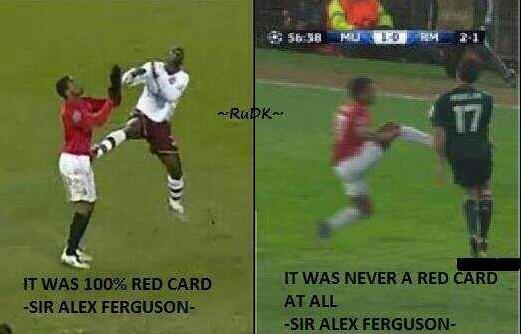
ImageCloser examination of the incident in focus this time reveals a worrying lack of consistency in Ferguson’s emotional reactions over remarkably comparable incidents.  Nani’s liver-high tackle was described dogmatically as “definitely not a red card”, paving the way for Man Utd claims of ill-treatment and bias.  A virtually identical tackle some time before, by Arsenal’s Eboue on Ferguson’s own player Evra, was also punished by a red card, but that one drew praise from the choleric Scot, who stated that the decision was “100% correct”.  This apparent self-contradiction is nothing new in the world of Alex Ferguson, or indeed in the wider manifestations of the club who like to brand themselves “The Greatest in the World”.

At the end of the Real Madrid match, enraged home defender Rio Ferdinand saw fit to get up close and personal with the referee who had dared dismiss Nani, sarcastically applauding him at point-blank range.   This is a widely-recognised form of dissent, and would normally merit a yellow card.  The referee did nothing, and UEFA have since confirmed that no action will be taken against Ferdinand.  It would be tempting to ask what sort of message this sends out to aspiring young players, if the answer were not so glaringly obvious.  That message is, as ever:  Man Utd can basically do just as they like, the game’s ruling authorities being so much in thrall to the club’s global profile – and the markets dependent upon its prosperity – that they will often turn a Nelsonian blind eye to such flouting of the rules, in the fond hope that nobody will notice when other clubs are dealt with more severely for like offences.

It has been said, with some justification, that one of the more hackneyed clichés in today’s game is the regular statement from the Football Association along the lines of “We have looked into (insert name of misdemeanour perpetrated by the Man Utd club or employee here), and can confirm that no further action will be taken.”

This sort of thing has been going on for many years, and while most clubs might shy away from such regular media attention of a not entirely positive nature, Man Utd as an entity appear to subscribe to the old maxim that there’s simply no such thing as bad publicity.  They have displayed a talent for remaining newsworthy, certainly on the back pages and not infrequently on the front as well, more or less continually, and dating back to well before their current era of success.  The incidents are many, and mostly quite unsavoury – Rooney elbowing a Wigan player and getting off scot-free, dodgy penalties too many to number, the legendary difficulty of seeing a penalty awarded against them and so on and so forth – and yet the default press position remains that the club are pre-eminent in the game for reasons of skill, charisma and courage, an apparent myth lapped up eagerly by the global fan-base, most of whom have never seen the team play in the flesh.

We hear far too much also of Ferguson’s so-called “mind-games”, a phenomenon particularly beloved of the media in this country, but one which appears to consist largely of an elderly gentleman having great difficulty sticking to the path of veracity at those press-conferences he deigns to attend.  Madrid manager Jose Mourinho is one who prospers in these psychological duels – in Ferguson’s petulant absence after the game last Tuesday, he stated that “the better team lost”, and walked off, content at having fanned the flames of the Man Utd manager’s fury.

It seems though that UEFA are after all to look into Ferguson’s failure to turn up for the press after this latest controversial occasion.  Presumably they will investigate fully, and a technical charge of “Sulking” might just possibly ensue.  But it would be unwise to place too much money on such an outcome; it may well be that we’ll yet again hear those old, familiar words “no further action will be taken”.

Stand Up, If You Hate Man U – And Think It Might Be TV’s Fault

Hate Man U

On Saturday 8th January 2005, Manchester United played Exeter City in the 3rd round of the F.A. Cup. It was something of a mismatch on paper, but surprisingly a plucky Exeter team held out for a 0-0 draw, and took the holders to a replay. A significant achievement for the minnows, but this game was noteworthy for another reason; to date it remains the last F.A. Cup tie involving Manchester United not to have been shown live on TV.

Even on the face of it, this is a remarkable statistic. Particularly in the earlier rounds, there are many matches from which TV companies can take their pick, and traditionally the perceived likelihood of an upset is a big draw. Given the perennial dominance of Manchester United, it’s usually difficult to see much chance of a giant-killing, and the interest in games involving them, you might think, will be mainly for those occasions when they’re drawn against a Chelsea, or a Liverpool, or maybe even a Manchester City or an Arsenal.

Looking at the list of games included in this amazing run of uninterrupted TV spotlight, some of them really do make you wonder what the companies concerned hoped to achieve, with the chances of an embarrassingly one-sided contest surely outweighing by far any prospect of a surprise. It begs the question of whether broadcasters are putting too high a priority on audience over entertainment value. There may be a certain piquant charm in seeing the likes of Burton Albion gazing wide-eyed at the immensity of Old Trafford, but some of the ties televised have lacked even this saving grace. Middlesbrough or Reading at home? Hardly sets the pulse racing, does it?

Any hint of complaint about Manchester United will, naturally, bring anguished howls of protest from the direction of London and Devon, as hard-core Reds, some of whom may even have visited Old Trafford, loudly complain about this latest manifestation of “jealousy”. It’s become rather a knee-jerk reaction, but there’s really not a lot of foundation for it. Anyone truly motivated by envy (jealousy means something different, chaps, look it up) has a simple solution at hand – simply jump aboard the bandwagon. The prevalence of the Old Trafford club on our TV screens will certainly garner them increased “support” from those who just want to be identified with such a vulgar example of a club gorging on success. It is the more negative effect of blanket coverage that should be worrying, not so much for Manchester United, but for the sport itself.

For there is a danger here that the media have not only created a monster, but that they are actively encouraging that monster to eclipse all their rivals. The basis of any sport must be healthy competition, but there is disquieting evidence that the playing field has not been level for a long time now. It doesn’t take too much digging to unearth some unsettling trends. One study over a number of matches suggested that 88% of all marginal decisions went the way of Manchester United, and there was also a distinct lack of penalties awarded against them in league games at Old Trafford over a period of years. There have also been instances of referees who have displeased Alex Ferguson mysteriously disappearing for months from their fixtures. In a game of fine margins, as any game is at professional level, evidence that one club enjoys preferential treatment is a matter of concern. Such a trend, given the amount of money flowing into the game, could easily lead that one club into an unhealthy dominance, to the detriment, ultimately, of the spectacle as a whole. Fierce competition is so crucial to any healthy sport, that the importance of this principle is difficult to overstate.

Success, they say, is all about the steady accumulation of marginal gains. Manchester United as an institution appears fully to appreciate this, as any club should. But these days, the media are the game’s paymasters, particularly the TV companies – and when they start favouring one club above all others, then you have to fear for the ability of others to compete in the long term. It’s a matter of concern – and it could easily become a self-fulfilling prophecy, as more coverage (of an almost exclusively favourable nature) promotes more support ever further afield for “United” as the media love to call them. And the more support they gain, the more of a market there is which will feed on their success, so the more commercially desirable their success will become – and commercial pressure speaks volumes when knife-edge decisions are to be made.

It would be difficult to imagine that any other club should have such a long, unbroken run of live TV coverage in their F.A. Cup ties. In the 4th round of this year’s competition the other week, they figured in their 38th consecutive such event. The home game against Fulham followed its predictable, boring script – early penalty, spineless opposition, comfortable home win. Meanwhile, Brighton faced Arsenal, in what was, equally predictably, a much more exciting contest; two sides playing good football, and the prospect of a shock never far away. But this tie was not seen live. In the 5th round, Man U will face Reading at home, which will probably, let’s face it, be another Fulham-esque stroll. And, sure enough, yawn yawn, it’s live on the box again, despite the fact that there are murmurings of discontent now, from some sections of the press who evidently realise how boring it all is.

As a Leeds United supporter, I’ve had cause to bless the tendency of TV companies to cover even the games where “United” seem certain to roll over the opposition. On January 3rd 2010, Leeds, then of the third tier, triumphed at Old Trafford before a live ITV audience, sending the Champions spinning out of the Cup at the earliest possible stage. But satisfactory as this was, it’s the exception, not the rule – normally the colossus will trample the underdogs, and their millions of fans worldwide will be happy. But what about the rest of us? Are we to continue paying our satellite subscriptions, and buying our match tickets, for the privilege of watching Man U clean up as the stakes become higher, and the odds become ever more skewed in their favour?

At some point, worms will start turning and – at the risk of mixing metaphors – maybe the bubble will finally burst. Then, chill winds of reality will blast through the offices of the TV moguls. Don’t say you weren’t warned.