Tag Archives: soccer

Goalden Boy Billy Sharp: Bound for Leeds United at Last? – by Rob Atkinson

...and you'd do for Leeds, mate

…and you’d do for Leeds, mate

The article that follows first saw light of day last September, when it seemed possible that Billy Sharp might be a loan-window option for Leeds. Sadly, it didn’t happen – but as the text shows, I was all for it at the time. Now, the Sharp to Leeds rumours are back, and stronger than ever. Could Leeds United finally get their man – the right man to provide the goals we’ll surely need in the season ahead?

Never one to get carried away by mere Twitter rumours, I am nevertheless fairly happy not to say excited at the loan window prospect – however remote – of Leeds United signing Southampton’s Billy Sharp, who spent most of last season on loan at Forest, but who certainly deserves a bigger move than that.

This is one that’s been mentioned in the past, and it’s always seemed like a good fit for all parties concerned, yet it’s never quite happened.  At first glance, Billy does seem an unlikely striker signing for United – he’s only 27 for a start, and we have historically looked to the superannuated end of the market – though things have improved in this respect under Brian McDermott.  And he scores goals.  My, does he score goals.  At Championship level, he’s a pretty reliable provider of that most valuable and sought-after commodity.  Billy Sharp just loves to hit the back of the net.

Any player – and most especially any striker – joining Leeds United needs to have one quality over and above the obviously desirable playing skills, fitness and application.  He needs to be strong-minded, a good character who’s resilient enough to step up to the demands of playing for a very demanding and sometimes unforgiving crowd.  This is a test that’s been failed by some pretty decent-looking performers over the years.  Elland Road has been something of a graveyard for strikers who have arrived with big reputations, but have failed to deliver and have ended up slinking off, beaten and broken men, into anonymous obscurity – or even worse, in the tragic case of Billy Paynter, into the first team at Doncaster Rovers.

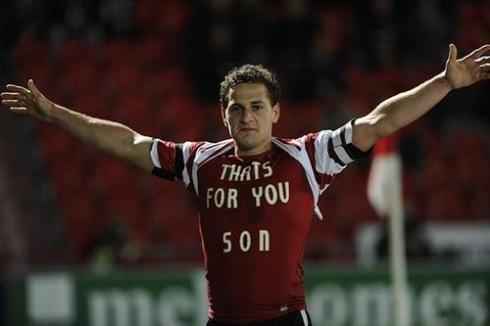
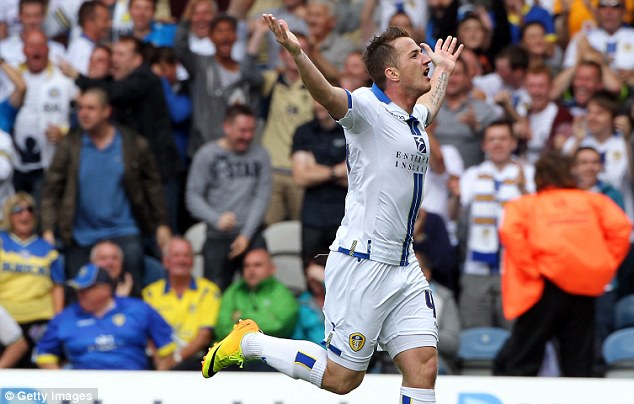
Billy Sharp though seems to be a man of different mettle.  It’s impossible to comprehend a more tragic and shattering blow for a parent than the death of a baby.  Sharp, and his girlfriend Jade, suffered this awful calamity in November 2011 and the striker could readily have been excused if he’d felt unable to play professional football in the immediate aftermath of such a shattering bereavement.  Yet a mere two days after the death of his baby son Luey, Sharp played against Middlesborough and scored a brilliant volley, raising his Doncaster shirt to reveal the message “That’s For You, Son” (Pictured above). Thankfully, a more than usually understanding referee decided not to book the emotional Sharp, when normally a yellow card would have been applicable. Such a very courageous and professional response to tragedy speaks of a very strong character indeed, and this would seem to be the type of man that many a club would seek to have among their playing staff, not only for footballing reasons, but for the example of courage in adversity that will be set by such amazing resilience and fortitude.

I don’t know if Sharp will end up in a Leeds United shirt, but I’d love it if he did. He’s demonstrably what people used to call “The Right Stuff”, and his goal-scoring credentials are fully in order too.  I could see him being a massive part of any play-off push this season, and really it’s good to be linked with any player of this character and calibre. Twitter rumours towards the end of last season said he’s “in talks and a deal looks likely”. Well, we know that these stories float about and are often without foundation, but they seem to be surfacing again – and it’s definitely a case of fingers crossed for this one.  It might just be a match made in heaven, and the kind of signing which could see us challenging for a long-overdue return to the top table of English football.

The sticking-point could be wages – Sharp is rumoured to be on £15000 a week at Southampton, and it’s likely that the Saints would be reluctant to subsidise any of this. Often though, doing a deal is all about reaching an agreeable compromise even when one party is initially unwilling to play ball.

So, almost a year on, the Billy Sharp story still refuses to go away. The equation seems simple enough; Leeds need a hit-man, Sharp wants to return to Yorkshire, he’s the right age, the price looks right – could it finally all come together??

Fingers crossed here.

Millwall’s Danny Baker: Redemption of a Leeds-Hater – by Rob Atkinson

Baker: Machiavellian Machinations

Baker: Machiavellian Machinations

Last August I was forced to publish the shameful revelation that Danny Baker – word-smith extraordinary and the planet’s only intelligent Millwall fan – was guilty of the heinous crime of match-fixing, blatantly fixing his show’s legendary “Sausage Sandwich Game” such that the hapless Leeds United fan got beat by the evil, sneering, plastic Man U armchair supporter he was up against.

Today, though, another Leeds fan was on the show and, glory be, he won through to the whitewashing extent of 3-0.  Not against a glory-hunter this time, but a humble Cambridge United fan.  Still, even though it was through gritted teeth, Mr Baker ended up congratulating Leeds on a clean-sweep victory. On this occasion of Danny’s redemption, then, I publish again my account of last year’s tawdry and shameful event, together with my appreciation of a Millwall fan who has somehow managed to climb out of that gutter and give us an irreverent and entertaining view of football and the world in general that elevates him above the common herd.  Read on now, as Baker was bang to rights as a Leeds-hating match fixer – for shame, Danny!

(Article below originally published 31 August, 2013)

This week’s Danny Baker show on BBC Radio Five Live thankfully lacks the sinister Machiavellian overtones of last week’s offering.  This week, all is sweetness and light, fun and games with the characteristic chirpy wit of Britain’s favourite Millwall fan. It’s Baker’s Banter that makes his show such required listening every Saturday morning and which makes the task of the boys from Fighting Talk, the unfortunate forced comedy offering which follows DB, so very difficult and thankless.  Fighting Talk lacks the effortless knockabout originality of Baker, so it has to settle for a gang of moderately famous, moderately funny desperadoes, sound effects so that the listening audience knows when to smile wanly, and of course some mutually supportive, falsely raucous studio laughter as they congratulate each other in those special “comedy voices” that so make the teeth curl. It’s pretty unedifying stuff, particularly straight after the unique offerings of Danny and his cohorts. So Baker rules the Saturday morning airwaves – and rightly so.

But last week, a serpent entered this light entertainment Eden.  The iconic and pivotal “Sausage Sandwich Game” (SSG) has been the comedy mainstay of Danny’s show for many a moon now.  Last Saturday, though, as the competing fans in the SSG metaphorically donned the rival colours of Leeds United and Man U – a horrible reality dawned on the minds of those attuned to examples of media prejudice where Leeds United are concerned.  At first, it was just too distasteful to contemplate, or to allow to grow into a fully-formed conclusion.  But ultimately, there was no escaping the dismal truth.  The Sausage Sandwich Game – humorous cornerstone of the whole Danny Baker legend – was FIXED.  (Sensation, gasps of horror).

I forget all the grisly details.  It may well be that my mind has blotted out the finer points of the dastardly deed.  That’s quite understandable, as my innocent appreciation of a regular Saturday morning humour-fix was being corrupted into something foul and repellent.  Suspicion turned to certainty and my paranoia circuit glowed into activity.  The Leeds lad hadn’t a chance – the game was bent against him, warped so that there was no possibility that the Man U contestant – smug, complacent article that he was – might have to walk away empty-handed.  And so it panned out; Man U won 2-1 in last week’s thoroughly rotten-to-the-core SSG, and my child-like belief in Danny Baker and all his ways collapsed into a pile of rubble, ruined beyond hope of reconstruction.

Well – not really.  It’s still Sir Dan for me, Millwall fan that he is and his frantic game-fixing activities notwithstanding.  Seldom can there have appeared such a thoroughly original wit from the ranks of genuine old-school football fans, and long may he continue to thrive.  A cancer survivor and irreverent observer of the game of football’s many quirks and blots, he has my admiration and esteem on both counts. It’s a shame he has to be devoted to that particular Bermondsey club, and therefore has to be counted among its not-so-pleasant (on the whole) supporters – but we’re none of us perfect, and each of us has our idiosyncrasies. Overall, Danny Baker adorns the airwaves in a way that most other BBC “comedy” personalities signally fail to do.  He’s a breath of fresh air to start our Saturdays, before all the self-important nonsense of the Premier League gets underway again.  He hasn’t always been the BBC’s favourite son, but they must know, down the Corporation, that he’s by far the best they have when it comes to raising the giggles and snorts that pay the Light Entertainment rent.

Danny Baker – cockney wide-boy, cheeky and chirpy as any jellied eel-reared costermonger cliche, you are gold-dust on our wireless sets.  Do keep it up – but take it easy next time a Leeds fan is up against one of them lot from Devon that supports the Forces of Darkness from the Theatre of Hollow Myths.  We Leeds fans have a sense of humour – honest – but we take that kind of thing very seriously.

Leeds’ Master Blaster Tony Yeboah – Which Scorcher Was His Best?

Tony "Master Blaster" Yeboah

Tony “Master Blaster” Yeboah

Mention the name Tony Yeboah to any Leeds fan – in fact to any football fan with a memory long enough to stretch way back to the mid-nineties, and you can bet that a faraway look will come into their eyes, and they’ll say “Ah, yes – that incredible goal against Liverpool.  Goal of the season, that.”  It’d be difficult to find anyone to argue the point.  But as a fanatical Leeds United fan who has a very special place in his Hero File for Anthony Yeboah, I’m going to try.

The Liverpool goal certainly was a brilliant technical piece of finishing; volleys from outside the box against a class goalkeeper invariably have to be.  At Leeds over the years, we’ve been lucky enough to see a fair few of these bazookas, and Yeboah’s late effort against the Anfield men stands comparison with any of them.  The fact of the goal being at the Kop End of Elland Road was of some assistance to the spectacle, but any way you look at it, this was a hell of a strike.  It wasn’t the first goal of this type in front of the Leeds Kop and against the Reds though.  A few years before, Gary MacAllister, a future Anfield hero, scored another fizzer, the ball being played to him in mid air from the left; he let it go across his body before wrapping his right foot round it to thunderous effect, the ball scorching into the net before the ‘keeper (the same David James beaten by Yeboah) could even move.

Yeboah’s strike though was probably marginally better.  It came from a headed knock-down forcing the Ghanaian to adjust his body shape slightly as the ball descended towards him, and he caught it so sweetly and with such ferocity that James was probably slightly lucky he didn’t get a hand to it; broken wrists have been known in similar situations.  It was a violent, arcing shot, the ball dipping slightly in its trajectory and just clipping the underside of the crossbar before bouncing down to rest, relieved, in the back of the net.  David James can perhaps count himself unlucky to have been beaten by two of the finest volleys I’ve ever seen at Elland Road, then again he might reflect they’d probably have beaten any two keepers on Earth.

The thing is though – tie me up and burn me for a heretic, but I don’t think Yeboah’s howitzer against Liverpool that balmy August night was his best goal for Leeds.  In my humble opinion, that came a few weeks later at Selhurst Park, temporary home of Wimbledon FC, when the phenomenal Yerbugger struck an even more vicious blow.  Reliable witnesses, standing close by as the man from Ghana hit his shot, swore blind that they actually heard the ball squeal in pain.   I am supported in citing this strike as Tony’s best by Guardian writer Dominic Fifield who, writing in 2011, saw it as his favourite Premier League goal.  He described it thus:

“Watching the ball cannon up from a series of scrappy headers and attempted clearances clearly tested the Ghanaian’s patience. Yeboah snapped on to the loose ball, controlled it on his chest then instep, exploded away from an opponent and lashed a glorious half-volley in off the underside of the bar from distance. It is the ferocity which is most impressive; a blistering effort.”

Sadly, I only saw this goal on television, though I’d planned to attend the match at Selhurst as I was due to be in London that weekend.  Four days previously though, I’d seen a pallid performance against Notts County in a 0-0 League Cup draw – and I just thought, well sod it, I’m not wasting my London time and money watching that sort of crap.  So I was exploring the delights of Selfridges when Yeboah broke Sky TV’s velocity-measuring equipment, and serve me right for a lapse of faith.  At least my wife found it funny, but I was understandably not amused.  Leeds won 4-2 as well, with Yeboah completing a hat-trick, and Carlton Palmer scoring a goal that might well have been Goal of the Month any other day, but which paled into insignificance next to the awesome might of Yeboah.

There are several YouTube videos devoted to paying tribute to Tony’s goals in his too-brief stay at Elland Road, and I’d heartily recommend a search, they’re well worth watching over and over.  I’d be interested to know what others think – I suspect that most will feel his effort against Liverpool was the best; it was a late winner after all, and scored in front of a packed Kop.  I should think this really, because I was actually there, stood right behind the line of the shot as it ripped past the startled James.  But I just can’t help harking back to what I think was an even greater goal, albeit in humbler surroundings.  How I wish that I’d been there for that one.  Tony Yeboah: thanks for the memories – and a belated Happy 48th Birthday from last Friday.

Getting Promoted the Leeds United Way – by Rob Atkinson

Image

Leeds United have achieved promotion to the top League of English football (Football League Division One of blessed memory) on two occasions within my lifetime – 1963/64 and 1989/90.  Both promotions followed significant lower status periods – we don’t really do “bounce-back” promotions – and here we are again, a decade away from the game’s shop window, and this time we actually plumbed the depths of the third tier for the first time in our illustrious history. So – talking about history – do those last two promotion successes have anything to teach us today?  The answer seems to be: yes, quite a bit.  But sadly, there’s not necessarily all that much encouragement to be derived from the lessons of yesteryear.

The fact appears to be that the last two Leeds United sides to have achieved promotion to the top flight both did it with quality to spare.  Both finished as Division Two Champions, and both squads included a number of players who would go on to help add to the Club’s Honours Board.  In 1990, the team that pipped Sheffield United for the Second Division title included as mainstays Gordon Strachan, Gary Speed, Lee Chapman, Chris Fairclough, Mel Sterland and David Batty.  That’s over half a team, and all of those players figured heavily in the squad that won the last Football League Championship title in 1992.  Also appearing in that “Last Real Champions” line-up were four more survivors of the 1990 promotion side: Carl Shutt, Imre Varadi, John McClelland and Mike Whitlow.  So TEN members of the promotion squad were good enough to figure in the season that brought the ultimate League honour back to Elland Road.  All but Batty and Speed were incoming transfers, some costing what was significant money for the late eighties.

In 1964, the picture was similar, though with more of a bias towards home-grown talent – unsurprisingly given the quality of the youngsters coming through from an outstanding youth policy. The names trip off the tongue:  Gary Sprake, Paul Reaney, Billy Bremner, Jack Charlton, Norman Hunter, Paul Madeley, Terry Cooper and Peter Lorimer.  The ultimate success took longer to achieve for Revie’s boys, but all eight of these players, plus the genius of Johnny Giles – purchased for a song from Man U in a transfer Revie described as “robbery with violence” – were major contributors to the side which proved itself the best-ever in 1969. The later transfers in of Mick Jones and Allan Clarke, with the emergence of Eddie Gray from that legendary youth setup, simply applied the final coat of gloss to what was a very fine side indeed. The makings of Champions were there in the 1964 promotion team, just as they were for that of 1990.

So what does all this tell us about the here and now?  Nothing very happy, to be sure.  The squad we have today might – with a few judiciously-selected additions – have some sort of chance of achieving promotion, though you’d have to say the lottery of the play-offs would be the likeliest route.  And as a club, we’re famously poor at play-offs.  But if we DID scramble promotion – what sort of foundation would there be for becoming a successful Premier League side? Hardly any, in truth.  Look through the playing staff we have, and name players who might figure in a Premier League winning side in the next few years.  Sam Byram, maybe – and probably, almost certainly – NOT in a Leeds United shirt. So we’re in danger of becoming the Leeds United side least well-equipped in living memory to go up, and stay up to do well. Much more likely though is that – with the element of quality currently so sadly lacking – we’d just bob around in mid-table in the Championship, and listen to a load of excuses every week or so.

History shows that, on both the occasions we’ve won promotion in my lifetime, there has been relatively major investment in the team to make that possible.  It was more the case in 1990 than in ’64, but the whole game was much more about money by the 90’s – and of course vastly more so today.  But even in 1964, players had been added to the squad to see us over that promotion-winning line – Alan Peacock was an England-capped forward, bought for decent money from Middlesbrough.  Bobby Collins commanded a fee even as a “veteran” when he moved to Leeds from Everton.  In the 1990 side, Strachan, Fairclough, Chapman and Sterland all cost well into the six figures, as did John Hendrie and Vinnie Jones. This was proper investment, speculating to accumulate.

There is as yet no real indication of the path that might be trodden by the Leeds of today, under the guidance of new owner Massimo Cellino.  We are given to understand that he has inherited an almighty mess from a list of previous owners, who can only be distinguished one from the other by the slightly varying degrees of their wretched crookedness.  Some will say, serves you right Massimo for foolishly dispensing with the need for due diligence – others will simply be glad that the Italian’s on board – despite the vicious attempts by the senile and dithering old fools of the Football League to block him – and looking to sort things out.

Cellino appears determined to be faithful to his own methods and philosophy – and it’s fairly clear that we won’t find out very much about on-field recruitment until he’s laid the foundations for a properly-run club.  The Head Coach appointment seems likely to be the next significant step, and from that will flow the rest of the preparations for next season.  By now, Cellino must be aware of the fans’ voracious appetite for success – a term to be defined by the Leeds United history of the past fifty years, as opposed to the yardstick of just any old club.

The fans’ expectations are extravagant but understandable, having their roots in a proud and glorious tradition, from eras past when this club did things properly.  Where expectations such as these are dashed, sooner or later there will be rebellion – even in what might still be, relatively speaking, a honeymoon period for the new owner. Whether such rebellion would come in the form of apathy over match-day attendance, or some more incendiary form whereby dissatisfaction might be expressed by marches and sit-ins, or by the owner being barricaded inside Elland Road (Massimo has had some experience of this already) – this would depend upon the depth of supporter anger or unhappiness.

Cellino’s staff would be well-advised to do plenty of rooting about in Leeds United Football Club’s history, both to see how things were managed when the people in charge knew what they were doing, and also to advise themselves of what happens with the support – and indeed the staff and management – when they feel they’re having the urine taken out of them.  That feeling has been abroad too often for comfort in the past few years, and what is needed right now is a campaign of relative harmony.  From that point of view as much as any other, there may well be advantages in the appointment of a head coach with an intimate working knowledge of the club and its traditions and character – and of the fan-base.  This is not just any club – and we need someone at a high level in the organisation, who is acutely aware of that fact.

Former skipper and manager Gary MacAllister’s name is evidently on Cellino’s very short short-list – and if anyone can pick up the reins effectively at Elland Road right now, then maybe Macca can. He should not, in my view, be judged too harshly in the light of his previous stint in charge – he was not working under the most favourable circumstances, or indeed the most favourable owner. Even so, some of his signings turned out to be legends of their time; his eye for a player, certainly an attacking player, seems reliable – as witness Becchio and Snodgrass.

But it is Gary MacAllister’s Leeds United DNA that we probably need as much as anything else right now, when one major priority should be the re-establishment of a definite Leeds United identity, now that Bates has gone, and now that GFH have been reduced to the role of mere parasites.  The club needs to hold its collective head up high, and march on saying We Are Leeds.  That was the spirit in which those previous two promotions were earned, and it is that spirit which needs to be rekindled over this summer, so that we come out fighting – and Keep Fighting – for the season ahead.

I would say – get MacAllister in, let him surround himself with people he can work with (including, please God, a defensive coach and someone with a Plan B) – and let him put his stamp back on the club.  To me, this would also add to Cellino’s credibility. Anybody who has read McAllister’s book, or who has seen how he has conducted himself throughout his career, will know that here is a real football man.  This would not be a Massimo’s yes-man type of appointment.  That would be a very important message to send out, bearing in mind the lessons of Cardiff City under Vincent Tan. One thing we could do with is the reassurance that Cellino is not cut from that cloth.

Next week might just be the start of a positive summer for Leeds – if the right appointment is made and some sort of recruitment programme can then commence.  Let’s sincerely hope so – it’s been too long since we had any really good news at Elland Road.  A feel-good factor would be a long-forgotten but welcome visitor to the club – and who knows?  If we can achieve that, then surely anything is possible.  A promotion charge next season?  England winning the World Cup with a 30 yard volley by Leeds lad Jamie Milner?  Why not?

If we’re going to dare to dream – then let’s make it a good one.  MOT – We Are Leeds.

That unquenchable Leeds United spirit

That unquenchable Leeds United spirit

Taken From Us 25 Years Ago Today: Revie, The Don of Elland Road – by Rob Atkinson

The Don - the Greatest

The Don – the Greatest

They say that great players don’t always make great managers, and Bobby Charlton is a stand-out example of that essential truth.  His brother Jack, by common consent not anything like the player Bobby was, but ten times the bloke, was by far the more successful manager.  Then again – he learned from the best.

And they will twist the argument around to show that average players can make great managers. We’re usually invited by a brainwashed and indoctrinated media to take Alex Ferguson as an example of this; my own choice would be Arsene Wenger, a deeply average player but a highly superior coach, tactician and innovator who made a significant dent in the Man U monopoly of the Premier League – despite the vast off-field advantages of the Salford club. Remember Wenger’s “Invincibles”?  There is also, of course, Jose Mourinho – and many others who pulled up no trees as players, but blossomed into legendary managers.

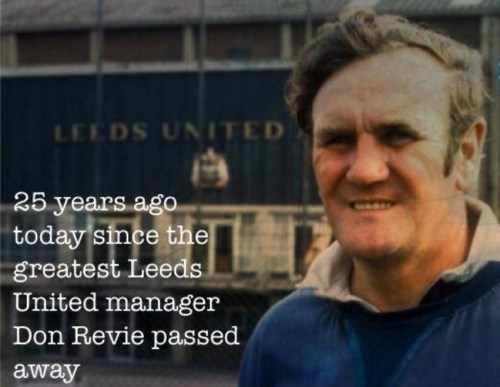
But there are a select few examples of truly great players who went on to be truly great managers – the likes of Busby and Dalglish, for instance – and I will argue passionately to my last breath that the best of the best was Donald George Revie, who died of Motor Neurone Disease 25 years ago today.

Don Revie was an innovative, thinking footballer, the pivot of the famous “Revie Plan” at Manchester City when he was the first to exploit deep-lying centre-forward play to great effect as City hit the heights in the mid to late fifties. He was instrumental in the Wembley defeat of Birmingham City in the FA Cup Final of 1956, and also helped restore English pride after two batterings by Hungary – the Magnificent Magyars having trounced England 6-3 at Wembley and 7-1 in Budapest. Revie’s adapted attacking role helped the National team annihilate Scotland 7-2 and his reputation was made as a selfless team player who was adept at making the ball do the work while team-mates found space as he dropped deep, baffling the defences of the time.

Revie was clearly a thinker, and developed very definite ideas about the game during his playing career, ideas he would later put into practice to devastating effect as a club manager. It is undeniable that, during his thirteen years in charge at Leeds, he elevated them from simply nowhere in the game to its very pinnacle, preaching togetherness and the team ethic above all else. Respected judges within the game have described the football played by Leeds at their peak as unmatched, before or since. In the eyes of many, that Leeds United team were the finest English side ever, a unit of grisly efficiency and teak-hardness yet capable of football which was outstandingly, breathtakingly beautiful, intricate in its conception and build-up, devastating in its effect.

Here is the scale of Revie’s achievement: in an era before the advent of lavish sponsorship and advanced commercial operations, he built a club from the ground upwards – a club with an apathetic support, which had hardly two ha’pennies to rub together, and whose prime asset was a group of raw but promising youngsters. The way that Revie nurtured those youngsters, moulding them into a team of supreme talent and majestic ability, is the stuff of legend. In some cases, he had to ward off the threats of homesickness: a young Billy Bremner was determined to go home to his native Scotland and Revie arranged for his girlfriend to move to Leeds, helping the lad settle down. Sometimes he had to adapt a player from one position to another – Terry Cooper was an indifferent winger who was made into a world-class overlapping full-back. Examples of his inspirational and man-management skills are many; he wrote the modern managerial manual from scratch.

Revie raised almost an entire squad from the junior ranks through to full international status, but he also had an unerring eye for a transfer market bargain. He took Bobby Collins from Everton, and saw the diminutive veteran midfielder produce the best form of his career. He lured a disaffected John Giles from Old Trafford where he was an under-rated performer. Giles swore that he would “haunt” Matt Busby, the manager who let him go, and Revie enabled this vow to be realised, converting Giles to a more central role after the end of Collins’ first team career. Giles and Bremner would form an almost telepathic central midfield partnership for Leeds, carrying all before them over the muddy battlefields of Division One. Revie later described his recruitment of Giles from Man U as “robbery with violence”.

As the sixties wore on, the Don would add Mick Jones and Allan Clarke to his formidable squad while it grew up together in a family atmosphere at Elland Road. Rarely if ever before or since can a manager have been so involved in his team’s welfare and well-being, no mere tracksuit manager this. There would be flowers and chocolates when a girlfriend or wife celebrated a birthday, a listening ear and helping hand whenever problems threatened to affect a player’s form. Revie was a father figure to his players for over a decade, forming a bond of mutual loyalty and respect that still sets the standard for enlightened management today.

Don Revie has been described in scornful terms by the ignorant, as a dossier-obsessed and over-superstitious manager by some people of insight and judgement, and as simply the best by his players who still survive from that amazing period of Leeds United’s dominance at home and abroad. He was perhaps too reliant on lucky suits and the lifting of gypsy curses, and other such supernatural preoccupations. He could maybe have let his team “off the leash” a little earlier than he did – when given full rein, they were next door to unstoppable. But it’s hard to hold the caution and superstition of the man against him; this was a time unlike today when livelihoods depended on a bounce of the ball, when results mattered in a bread and butter way. There were no cossetted millionaires then, no examples of young men who could pack it all in tomorrow and live in luxury for the rest of their lives. It all meant so much more in those days and the word “pressure” had real resonance.

The modern coaches have greats among their number, there’s no doubt about that. It would be invidious to single out names; after all, the media in a misguided fit of uncritical and commercially-motivated hero-worship have been busily engaged for most of the last three decades in dubbing “S’ralex” as the greatest ever. But the legend that is Don Revie can sit comfortably on his laurels, the man who – more than any other – took a sow’s ear of a football club and made of it a purse of the very finest silk which yet concealed a core of Yorkshire steel.

Donald George Revie (1927 – 1989) – Simply The Best.

Forget Man U “Class of ’92” – Salute the Leeds MASTERS of ’92 – by Rob Atkinson

Super Jon Newsome

Super Jon Newsome

There’s been a lot of talk this past couple of days about the “Class of ’92”, a somewhat disingenuous reference to Man U’s FA Youth Cup winners of that year, what with Giggsy Wiggsy taking over as temp. manager at the Theatre of Hollow Myths, with Scholesy Wolsey and Butty Wutty on board as well.

The media, bless ’em, love this sort of thing – and they’re seemingly eager to ignore the fact that 1992 was, actually, all about another United – Leeds United, the one and only United – as they won the last ever proper Football League Championship, four points clear of you-know-who and their rabidly frothing Scotch git of a manager.

It all happened 22 years ago today, actually – so let’s have a nostalgic look back and, while we’re at it, set the record straight about all of this “Class of ’92” crap. Because we’re not talking pupils here, we’re talking masters.

The 26th April 1992 was not just a normal Sunday morning like any other; for all fans of Leeds United it would turn out to be a date with destiny, the unlikely culmination of a footballing journey that had started in October 1988.  Howard Wilkinson’s move from First Division Sheffield Wednesday to take over as boss at Second Division strugglers Leeds United had been – perhaps unwisely – summed up by the Sheffield Wednesday chairman as “a chance we couldn’t deny Howard to better himself.”   That must have fallen like rocks on the ears of the Wednesday fans who nevertheless could not have envisaged their rivals’ subsequent meteoric rise at a time when the Wednesday star was on the wane.  Such is life.

History will show that Wilkinson breezed into Leeds United, seized the place by the scruff of its neck and shook it up good and proper.  Remnants of his legacy are still visible in the club’s world-class Academy and training complex not to mention the gigantic East Stand, but it is for the phoenix-like resurrection of The Whites that the fanatical Leeds support will best remember Sergeant Wilko.  Leeds were promoted in 1990 after Wilkinson’s first full season, trading places with Sheffield Wednesday as they dropped into the Second Division – bittersweet irony there.  A season of consolidation followed, and then the full-on assault on the Football League Championship itself, a challenge unexpectedly sustained right to the sweetest of ends.  By April 20th 1992, Leeds were still clinging on in the title race, but Man U were clear favourites with a points lead and a match in hand.  That day though was the start of the turning of the tide in Leeds’ favour.  As fans gathered on the Kop for the late afternoon visit of Coventry City, radios were clamped to anxious ears as news was awaited from Man U’s home game against Nottingham Forest.  Two explosions of joy from the swelling Elland Road crowd signalled two Forest goals and a defeat for the leaders that Leeds were to capitalise on, beating Coventry 2-0 in front of a live TV audience.

Now it was game on in earnest, and I vividly remember a nervous evening at home that midweek as West Ham played host to Man U who were finally playing their remaining game in hand.  Win, and they would be in the box seat – but, as I frantically tidied and re-tidied my bedside table drawer to save myself from chewing my nails down to my elbows, they lost, wonderfully, miraculously lost to leave Leeds in charge of their own destiny. Choleric Man U manager Alex Ferguson must have bitterly tasted the sourest of grapes as he described the already-relegated Hammers’ effort levels in beating his charges as “obscene”.  His lack of grace drew a stark contrast with the phlegmatic Wilko, who was calmly reminding the world that Leeds had secured a place in Europe, his main aim for the season, and that anything more would be “a bonus.”

But Leeds now knew that if they won their last two games – away at Sheffield United and at home to Norwich City – they would be English Champions in the last old-style Football League programme – a signal honour.  Everybody thought it would go down to the last game of the season, that Norwich would be the big game.  Yet if Leeds were to win at Bramall Lane, Man U would then face the formidable task of winning at Anfield to take the Title race to its last day.

Back to April 26th, and as I walked up the hill into Wakefield that mid-morning, I saw cars trailing the colours of Leeds United, the scarves fluttering bravely – and I felt a sense of occasion but still could not quite comprehend that this might just be The Day.  I met up with my mate Dave, and we shared a tense journey to Sheffield, not much said, both knowing that this was a Sunday that could equally easily end up being triumph or disaster.  Parked up in the scruffy environs of Bramall Lane, just about the first thing Dave did as we walked to the ground was to drag me back out of the path of a careering van as I stepped out to cross a road, oblivious of traffic, lost in thought.  We both grinned at my narrow escape and agreed: good omen.  And then we were high up in the seats of the upper tier behind the goal at the away end of Sheffield United’s quaintly ill-designed stadium.  The day was gusty, and so the football would prove to be.  It was a match of ebb and flow, the Sheffield faithful eager to deny Leeds their chance of clinching the title, Leeds fans loud and defiant with self-belief.

If you’re a Leeds supporter, you’ll have seen the goals from that game hundreds, thousands of time.  It plays through now, all these years later, in the Football Highlights studio of my mind; joy for the home side as Alan Cork, gleaming of bald pate, pokes the ball home to give Sheffield the lead.  Then, a midfield tussle in the swirling wind, as Leeds try valiantly to come back.  A late first-half free kick, which Gordon Strachan races to take before the home defence can set themselves, he finds Rod Wallace in the area who tips the ball past home keeper Mel Rees’s attempt to save, defenders scramble to clear, only to hit Gary Speed who pings the ball back to ricochet off Wallace – into the net.  Pandemonium in the away end.   Level at half time, we’re breathless with drama and the hurly-burly of it all, raucous with United anthems, nervous of what’s yet to come.

In the second half, though we don’t know it, human tragedy unfolds: Sheffield ‘keeper Mel Rees, injured in the melee leading to Leeds’ leveller, his thigh heavily strapped, can hardly move and is hampered for the second Leeds goal as Jon Newsome stoops to head in at the far post.  Mel Rees, who was due an international call-up for Wales the next day but has to pull out because of his injury.  Mel Rees, who would never play football again because he was to develop cancer and die a year later, tragically young at 26.  RIP Mel Rees.

The crazy game continues crazily.  A dangerous ball across the Leeds box is retrieved by home defender and future Leeds man John Pemberton, who turns it back towards the goal-line where Lee Chapman sticks out a leg for an own-goal greeted with horrified stupefaction by the Leeds fans behind the goal and we’re level again.  Then enfant terrible Eric Cantona enters the fray, and within a few minutes he is chasing a loose ball into the Sheffield half, with Rod Wallace scampering alongside and home defender Brian Gayle lumbering back in a desperate attempt to clear the danger.  And it’s Gayle, former Man City man, who finally slays Man United.  From my vantage point at the opposite end of the ground I see him get his head to the ball, and the action is suddenly slow motion.  Gayle has headed the ball, poor Mel Rees is stranded far out of his goal, the ball goes over his head in a slow, slow loop, and bounces tantalisingly towards the unguarded net…

Then I’m watching at full speed from the far end as Cantona and Wallace raise their arms in triumph, wheeling away in delight, and even as I wonder what they’re up to I realise that the ball has nestled in the Sheffield United net.  A red mist descends, and I am utterly outside of my skull and beside myself in delirious joy and fevered madness, looking around me, roaring like a demented bull, face congested with blood, eyes bulging; I grab a tiny and helpless St John’s Ambulance man by his lapels and scream beer and spittle into his terrified face “Get me some oxygen!!!”, I bellow. “I’m going to have a bloody heart attack!!!”  The mad moment passes, I drop the ashen medic and some measure of sanity returns, but we’re still cavorting and diving all over each other, a seething, sweating mass of Leeds, because we know it’s over, we know that Sheffield are beaten, and we know that Man U don’t have an earthly at Anfield, not a prayer.  We were going to be Champions; on that windiest and gustiest of days, a Gayle from Manchester City has blown the Scum away and decided in an instant the fate of all three Uniteds from Manchester, Sheffield and Leeds.

And so, of course, it panned out.  Later I watched mesmerised on TV as Liverpool beat a demoralised Man U, Denis Law and Ian St John trying to put a brave face on it, Elton Welsby’s foot bobbing away in thwarted anger as the script turned out just as none of them wanted.  Ian Rush scored his first ever goal against Them, and it was settled late on as Man U conceded a second.  “And now the title goes to Leeds without any doubt at all” intoned Brian Moore in the ITV commentary as I sat there with tears of joy streaming down my unashamed face.  Gary Lineker had called into the studio earlier to complain that Rod Wallace’s goal had been offside (it was).  St John and Moore bemoaned that Man U had had no luck at all, and Welsby ground his teeth in the studio as the Man U fans outside hurled abuse at him, heedless of the fact that he shared their bitter disappointment.  All was frustration in the media and the rest of football and Leeds fans everywhere utterly failed to give a toss.

Twenty-two years on from that nutty day, when Leeds reached the summit of the game, the images are all still vivid and clear for me.  I’ve worn out four video tapes and at least three DVD’s, but I don’t need them, I don’t need YouTube, I can see it all any time I choose just by relaxing and closing my eyes.  Mel Rees is no longer with us, nor is Gary Speed and Brian Moore has passed away too.  Rest in peace, all.  And my mate Dave who shared that memorable day with me, he’s gone as well, taken far too young by cancer in 1999.  I have a picture of us both, taken before the home game with Norwich a week after we’d won the league, triumphant in our freshly-purchased “Champions” t-shirts, happily blind as to what the future would bring.  RIP, Dave mate.  We celebrated hard that day as little Rod Wallace won that last game with a sublime goal, rounding off our greatest season.  We’d earned it, me and Dave, tramping around the second division grounds of the eighties as Leeds struggled to come back.  Thousands of us had earned it.  Now we were top dogs, and boy did we enjoy it while it lasted.

United were back, as Champions of England.  The Last Real Champions. One of our unique, unbeatable accolades, like being at the top of the League when the Millennium clicked its four digits over.  Something that can never be taken away from us: Immortality, pure and simple.  Happy Memories, Champs.
25 Years Today Since Gordon Strachan Signed for Leeds – by Rob Atkinson

"Have you ever seen a better goal?  Have you ever seen one better timed??" John Helm, YTV

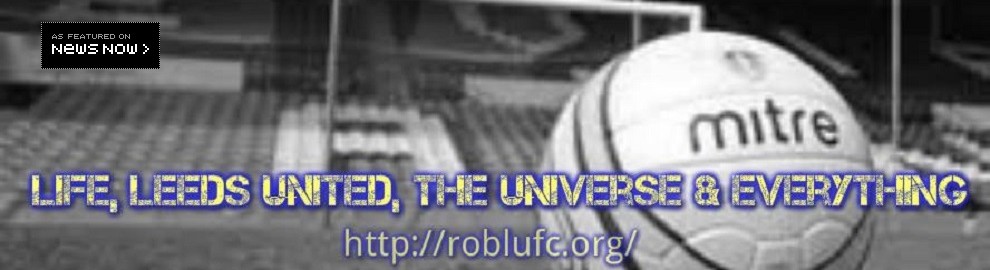
Amazingly, for those of us who remember the breaking of the news so well, it’s a quarter of a century today since Leeds United made the historic signing of Gordon Strachan from a minor club over the Pennines.  Over the next seven seasons as the Whites skipper, there were many, many memorable occasions for United’s second-most famous ginger Scottish captain.  Not least among these, of course, was hoisting the last ever Football League Championship Trophy, as well as scoring the first goal in the Stuttgart play-off at the Nou Camp in 1992.

But, as I’ve done before, I thought I’d look back to the famous Leicester City game in 1990 and what was probably Strachan’s defining moment as the man who did more than just about anyone to reinvent Leeds as a post-Revie force in English football.  It had been a long time coming since Don’s Glory Boys dispersed to pastures new and a Golden Era faded into the dim haze of memory.  We had been eight years in the second division doldrums and had almost forgotten what it was like to be a top team.  But – finally! – it looked as though the nightmare was ending as Sergeant Wilko and Captain Strachan were set to lead United back to the Promised Land at long last.  A home fixture against Leicester City was the penultimate hurdle to overcome, and expectations were soaring at Elland Road.

Twelve days before the Leicester game, United had appeared to strike a decisive blow, battering closest rivals Sheffield United 4-0 at Elland Road. But any hope that promotion could be clinched early was dashed over the next two fixtures, a draw at Brighton where the lead was squandered to sacrifice two points, and then a home defeat to a relegation-threatened Barnsley who even then had the ability to put one over on us with an inferior team.  So the nerves were jangling for this home date with the Foxes.

Leicester breezed into town with no pressure on them at all as they bobbed about serenely in mid-table, but Leeds just had to win. A victory could possibly clinch promotion; anything else and we would be relying on others to give us that final leg-up – not an attractive prospect. The atmosphere at Elland Road that day was something to behold as 32,597 packed the stands and terraces, the Kop a seething mass of bodies, a solid wall of sound. If the weight of support counted for anything, then it seemed Leicester might just as well turn around and go home – but to their eternal credit they fought the good fight and played their part in a memorable afternoon.

It all started well. Leeds pressed hard, this had been their preferred approach all season long. No opponent was allowed the luxury of untroubled possession as Leeds snapped at ankles and harried the enemy, hungry for the ball and well able to use it productively. At their best, United had proved a match for any team in the Division; as ever though it was the off days that had let us down. On this particular occasion, attacking the Kop End in the first half, the forward momentum seemed irresistible. Before long, the overlapping Mel Sterland fastened on to a ball at the right corner of the penalty area and fired low and hard into the net to open the scoring. The overwhelming relief was as evident as the unconfined joy around the packed stadium; surely now United would go on to consolidate their advantage and seal the promotion we’d wanted for so long.

It was not to be. Despite further pressure, Leeds failed to make another breakthrough before half-time and Leicester – relaxed and pressure-free – were looking more and more ominously like potential party-poopers. These fears solidified in the second half as the away side pressed an increasingly nervous Leeds back, and eventually – inevitably – they drew level. The blow when it came was struck by a rumoured transfer target for Leeds, promising young Scot Gary McAllister. He proved that he packed some punch by belting a fine strike past veteran Mervyn Day to shock the Kop rigid and momentarily silence Elland Road. Worse was so nearly to follow as McAllister almost did it again, another superb shot coming within an ace of giving Leicester the lead, something which would doubtless have produced the unedifying spectacle of grown men crying in their thousands. It may well be that McAllister sealed his move to Leeds with this performance and those two efforts, but I could have seen him far enough from LS11 that day. Leeds were rocking, looking at each other, scratching heads and clenching fists in the time-honoured “come on, let’s bloody sort this out” gesture. Slowly, by sheer force of will, the lads in White regained the initiative and it looked at least as though the danger of further damage was receding. The football was still nerve-shredding stuff, all urgency and little fluency, a desperate battle to eke out the extra two points that would make promotion so much more likely.

Time was ebbing away fast now, as Leeds hurled themselves time and again into the defensive barrier of red Leicester away shirts. Panic was setting in, the biggest enemy of constructive football. It was looking like a draw, which would not be enough. Then, a throw halfway inside the Leicester half in front of the West Stand, under the eyes of a bleakly worried Wilko. Sterland gathered himself and hurled a massively long throw deep into the away penalty area, only for it to be headed out from around the near post. McAllister attempted to complete the clearance with an overhead effort to get rid, but the ball hit Gordon Strachan to bounce back into the box. And there was Gary Speed to lay that ball back instantly to the still-lurking Strachan who simply lashed it, left-footed, into the net. The ball had gone in like a bullet; Strachan – too tired to control it and try to work a yard of space to dink one of those cute little far-post crosses as he might normally – settled instead for catching the ball right on the sweet spot and it arrowed home to a positive explosion of noise from all around Elland Road – the sudden release of what had been unbearable tension produced a massive roar to buffet the ear drums of innocent bystanders miles away.

It was one of those occasions when several things seem to happen at once. The crowd behind the goal at the South Stand end seemed to boil with passion and relief, a maelstrom of delighted celebration which was echoed across the whole stadium. Strachan himself ran to the byline, face contorted, weary limbs pumping in triumphant exultation as he took the plaudits of the faithful. A lone copper is visible on the TV footage between Strach and the cavorting hordes, a grin on his face as he moves to quell any ambitious pitch-invaders. In the commentary box, John Helm unwittingly propelled himself into immortality, not for the last time that afternoon. “Have you ever seen a better goal?” he demanded. “And have you ever seen one better timed?” It was a good question, and right then, right there, I doubt you’d have found a Leeds fan to answer “yes” to either part of it. The rest was a blur; Leeds held out, and we had won – and seemingly gained promotion. Rumours were flying around that Newcastle had failed to win, sending us up. But John Helm was at it again, more iconic words: “Is that confirmed…?” When the confirmation arrived, it was of a late Toon win; we still had it all to do at Bournemouth the following week. But Strachan’s late cracker had kept us in a race that we were ultimately destined to win.

My final memory of that day is of walking down off the Kop and onto the pitch as the masses there were starting to disperse. We crossed the sacred turf from goal-line to goal-line, eventually exiting the ground into Elland Road at the south-west corner, where the Jumbotron big screen now stands. I can still remember the heady scent of stud-holed mud and trodden turf, my head was still buzzing as I walked over the spot where wee Gordon had made that perfect half-volley contact to send us all into delirium. It had been an atmosphere the like of which I have rarely seen before or since, only the mayhem at Bramall Lane when Gayle scored that own-goal title-clincher coming anywhere near, or maybe that ankle-busting semi-riot of a celebration when Dave Batty broke his long goal drought against Man City in 1991.

For the sheer relief of it however – the absolute nerve-shredding, tension-breaking release of it – this was definitely THE one. Without Strachan’s sublime strike, we could well have missed out on automatic promotion, and we all know only too well that there’s a law against us succeeding in the play-offs. Gordon’s Golden Goal had kept the dream alive and made possible all that followed up to the League Championship triumph two years later. Make no mistake – it was THAT important. Thank you, wee man – 25 years on, Leeds United have yet to make another signing so vital and important in the history of a great club. Chances are, they never will.

Wounded Leeds to be Mauled by Foxes? – by Rob Atkinson

Ross the Boss

Ross the Boss

The Foxes are on the prowl in Leeds this weekend, looking for easy prey, slavering and snapping at the tell-tale scent of blood which betrays the presence of a wounded and defenceless beast – or at least of some hapless chickens come home to roost. The potential victim of choice is Leeds United, mortally savaged last weekend when a soft underbelly was ruthlessly exposed as they rolled over and surrendered at Hillsborough. Slinking away to lick their wounds, Leeds have spent the week since trying to marshall spent energies for a last-ditch defence of their territory, readying themselves for an attack from the top pack out there. Sadly, it promises to be an unequal battle.

But now we’ll leave behind us this already over-stretched “battle of nature” metaphor, before it gets too gory and messy for the requirements of good taste. We all know we’re up against it this weekend, and that if things go anywhere near as spectacularly wrong as they did in darkest Sheffield last week, it could be bloody carnage in LS11. And yet there is hope springing from out of the mists of time, and the one thing above all that any beleaguered team or manager needs is a little hope.

That historical glimmer of light shining wanly through the gloom takes us back to the last time we let in half a dozen at Wednesday. On that pre-Christmas 1995 occasion, having capitulated 6-2, Leeds were required to bounce back swiftly as Man U rolled into town seeking to take advantage of our reduced state. Well, we won 3-1 (see here) on that memorable Christmas Eve, with tomorrow’s opposition keeper’s dad in goal and with our strike-force serving us well, so who’s to say we can’t spring a comparable shock just over 18 years later? Alright, common-sense and the formbook are two that spring to mind, but let’s not abandon ALL hope – not just yet.

Whatever recent form or historical precedent might tell us, there’s little doubt that Leeds United are the underdogs this weekend – and perhaps, after failing against nominal inferiors last time out, this is just what they need. There is also the small matter of a change of leadership on the field – or, as some would bitterly point out, the introduction of some leadership, a quality notable by its absence in the last two craven performances.

Ross McCormack has long been identifiable as a man who carries the club in his heart and wears that heart on his sleeve. Striker or no, there can be no better candidate among the current crop for a captain’s role – and there may even be a bonus in the shape of a return to form for Rudy Austin, freed to concentrate simply on playing. If Austin could produce a performance comparable to his single-handed subduing of Birmingham City a while back, then all bets are off. Rudy was almost unplayable that day, as the rest of the team benefited from his industry and commitment. So the change of skipper could be a double-edged and beneficial sword – and we may look also for the galvanising effect of a “clear the air” meeting in the wake of humiliation.

A change of formation could also be on the cards, now that we have two wingers to (we hope) create havoc down both flanks. The downside to that is the loss of battering-ram Matt Smith, who is suspended after an appeal against his red card last week was, unsurprisingly to anyone who has followed United’s run-ins with authority, summarily dismissed. So Smith is out, and there is a vacancy in attack alongside Captain Ross if we ARE to go 4-4-2. Whispers are abroad that the mystery transfer target Brian McDermott was having a chat with today might just be a certain Argentinean who left us to become Becchio the Benchwarmer of Carrow Road – and that would certainly solve a problem or two, though it’s a little late in the day now for new blood to be available for the Leicester test.

There is, on the other hand, new blood in the Leicester City ranks – though that new blood is of the distinctly old variety as veteran Kevin Phillips arrives from Crystal Palace to threaten Leeds’ wobbly defence. It is this factor that worries me above all; Phillips is the kind of man who you suspect will make an instant impact, even if it’s off the bench. Elland Road before the TV cameras is a scenario made in heaven for the lethal finisher, and you wouldn’t bet against him harming our heroes at some point. Recent form is as good for Leicester as it is bad for Leeds, with the Foxes having slain the Rams last week, City beating Derby by a convincing four goals to one.

So, there are many reasons to worry about this home fixture – though we should bear in mind that we already have a point in the bag from Leicester in an early-season stalemate that we could even have won near the end. You suspect that all of a Whites persuasion would be happy to see another point tomorrow; it’s an outcome some optimistic urge in me is tempted to forecast. But taking everything into account, with a determined Son of Schmeichel in goal for the Foxes and prepared to throw himself at everything to avenge his dad’s defeat in that Christmas Eve win over Man U; with the X-Factor of Finisher Phillips in the mix and with all of the trauma currently surrounding Leeds United – I will reluctantly go for a routine away win as the Whites battle hard but are undone by a frankly better squad.

0-2 for me, a goal at some point for Old Man Kevin, fresh from the Palace – and some honour in defeat to be garnered from what I confidently expect to be a much-improved performance. Now come on, Leeds – you proved me wrong with last week’s result prediction. Get those sleeves rolled up, fight for the shirts and prove me wrong again!

Back to Basics for Leeds United: Move On & Keep Fighting – by Rob Atkinson

Image

Never mind yer Latin mottos

One thing those defeated Leeds players will be sharply aware of today; most of the football world will be laughing at them for their abject surrender at Hillsborough.  That’s not a pleasant thing to know, it’s even less pleasant for a Leeds fan to say.  But it’s a fact and one we have to acknowledge before, as a collective, we can put the horror of this new year so far behind us, and start to move onwards and upwards.

I say “as a collective” because it’s not just the players who have to recover from a shattering blow such as this.  It’s the fans too – we’ve all been getting it in the neck from delighted followers of other clubs ever since the final whistle blew to signal United’s worst defeat for 55 years.  The problem for the fans is that we have no means at our disposal whereby we can address the matter directly – if sleeves are to be rolled up, if air is to be cleared, if basics are to be got back to – then it’s the players and the coaching staff who will have to grasp those nettles, bite those bullets and somehow drag themselves up from historical depths of despair and defeat.  The fans just have to hope that this will happen, and happen soon.  It’s left to us to exhort our heroes onto greater efforts, or possibly just to squabble among ourselves as has been seen on various internet forums.  But whatever the limitations in our options, the fans are hurting and the fans are humiliated – it’s to be hoped that the players are being reminded of this salient point at some stage of today.

“Back to Basics” is a fairly obvious mantra to be chanting today, and it’s what Brian McDermott seems be running with.  That’s understandable, particularly for anyone who witnessed the full horror of United’s display against a team in Wednesday they should have beaten with something to spare.  Leeds played as if they thought ball control was a discipline to be exercised in a monastery.  They looked about as comfortable in possession as a shell-shock victim trying to juggle live hand grenades.  It did very much look as though the basics of the game at this level – passing, trapping a ball, getting rid – were indecipherable mysteries to the men in those tacky “gold” shirts.  Is all of this truly down to a lack of confidence?  Or is there a deeper malaise?

Leeds United at the moment are a living, breathing contradiction in terms.  One part of the organisation oozes confidence and optimism, churning out new initiatives and new ideas, communicating messages of hope and a brighter future through numerous social media outlets.  This is the vibrant, innovative United that is announcing link-ups with the 49ers and hinting at redeveloping the stadium for our inevitable return to the top.  The relentless message of positivity and optimism has so far yielded only two loan deals to enhance the squad – but there is still that tantalising promise of more to come.  Possibly.  But not before the Leicester game.

The other side of United is the ugly duckling that waddled its way unhappily around Sheffield Wednesday’s manor yesterday, shot at from all sides, uncomfortably aware of its own hideousness and unable to do anything about it.  There were no signs that this ugly duckling might ever grow into a beautiful swan, as the fable tells us it should.  We’re left with the feeling that, being Leeds, fables don’t apply.  The contrast of this self-loathing, pessimistic, on-field United with the public face of the post-Bates Leeds is as stark as it is puzzling.  If we’re on our way back with a bright future ahead of us – why isn’t this remotely reflected by the product on the park?  Why do the players look as if they’ve forgotten how to pass, how to defend, how to tell one end of a football from the other?

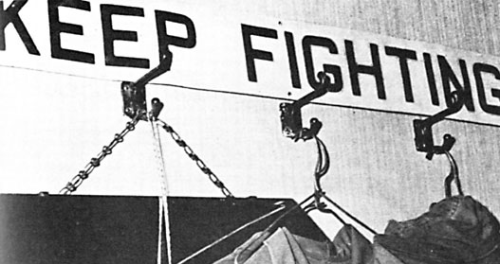
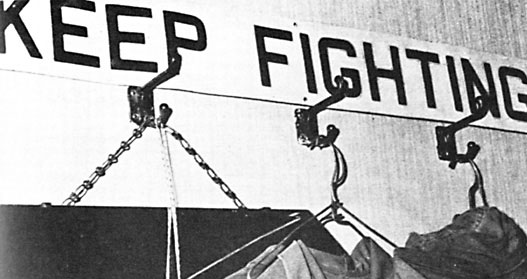
So, it’s back to basics – to get these matters thrashed out.  Presumably, if any of the brighter sparks in the squad have their own ideas about the tactics being employed, then now is the time to air them.  We appear to be on the brink of playing in a whole new way anyway, with all our eggs so far this window being placed in the “attacking width” basket.  The two wingers recruited to that end rather sank without trace yesterday – understandably so, given the way the game went – particularly with what happened to Smith, who might otherwise have given the new lads someone to play to.  It really was all most unfortunate.  Back to basics, then – and see if the air can be cleared.  But I would hope that, as well as the manager’s three-word mantra, somebody will think to revive the older, two word motto in the picture at the head of this article, that hung so famously for so many years on the Elland Road home dressing room wall.  Keep Fighting, it told the players – and for the decade and more of Revie’s reign, that is exactly what the United players did, to devastating effect.

“Fight” was something visible only in the briefest of flashes yesterday.  Smith was perhaps over-zealous in the challenge that got him sent off.  Byram showed the right idea when he clattered into Kirkland in the second half.  Michael Brown epitomises “fight” when he plays, but he’s sadly prone to getting into trouble early and recklessly – and then walking a tightrope for most of any appearance he might make.  Fight, if it’s to be helpful, has to be shown with a moderating layer of common-sense – but no Leeds team will get far if it is so totally lacking as it appeared yesterday in those fighting qualities which, allied to world-class skill and unflinching togetherness, made the club a  global name almost half a century ago.  I suspect that the sign which once adorned the dressing room wall disappeared long, long ago – but that image is still as iconic as ever it was.  It’s something that the players of today need to look at and adopt if they are to equip themselves to avoid a repetition of yesterday’s spineless and clueless performance, so lacking in skill, technique, attitude and, above all, fight.

Whatever emerges from today’s meeting, we need to see a radically different Leeds United take the field against Leicester next weekend.  Let’s not kid ourselves – the players in our squad can play.  They can pass, they can retain possession, they can mark the opposition.  Yesterday, it just looked as though they couldn’t.  Next weekend is about correcting any such misleading impression – and it’s about fighting for the shirts, for the badge and for the fans.  Back to basics, fair enough.  But above all, Keep Fighting.

Link

Leeds United MD David Haigh on Transfers and Stadium Development

Click here:  Leeds United MD David Haigh on Transfers and Stadium Development

An upbeat interview from the charming and urbane Mr Haigh, who promises an exciting time ahead and commits to supporting manager Brian McDermott in the January transfer window.  Well worth listening to – and even an unabashed cynic such as myself couldn’t fail to be impressed by the enthusiasm in the man’s voice when he talks about the club which he has, apparently, supported since boyhood.  Developments in both the stadium and the transfer situation will be awaited with bated breath – and a certain amount of that very unfamiliar commodity as far as Leeds United fans are concerned – optimism.