Monthly Archives: February 2013

Scrounging Graduate In “I Expect To Get Paid For Working” Scandal

Daily Fail” Leader Column

In what is being seen by wishy-washy commie pinko do-gooders as a landmark ruling, senior judges have ruled that a university graduate was correct to claim government back to work schemes were “legally flawed”. As part of an appalling betrayal of their fellow members of the ruling elite, the three bewigged buffoons have quashed regulations entitling the government to force benefit claimants to work for nothing. The decision, handed down by the Court of Appeal but still subject to further legal avenues, will be seen as a dark day for those who view a return to slavery as the only way of maximising the economic potential of the poor.

Nit-picking

Government sources were today taking comfort in the fact that the panel of judges were not critical of back-to-work schemes as such, but were merely nit-picking over the irritating principle that ”Proles expect to be paid”. Cate Reilly (24), the university graduate who brought the original case, had been required to work for multi-million pound High Street tat retailers Poundland, instead of pursuing her voluntary work in a museum. Ms Reilly was shockingly frank in her remarks after the decision was made public: “I don’t think I am above working in shops like Poundland”, she stated. “I now work part-time in a supermarket. It is just that I expect to get paid for working.”

Mercenary

It is the impact of those last seven words that will be worrying ministers today. It would seem that, on the back of the troublesome minimum wage legislation passed by the previous government, even benefit claimants will now expect to be paid actual money for their job experience opportunities. This is seen as deeply disturbing by the government. A stricken and tear-stained DWP junior minister, who did not want to be named, quavered: “These nasty, ungrateful peasants should be grateful for the chances we’re giving them. But oh, no – they want to be paid. This is the sort of mercenary attitude that we see all too often, even in these hard times when we should all be pulling together. Companies like Poundland create a lot of wealth, and that helps drive the economy and pay bankers’ bonuses. How are they supposed to fulfil their obligations to shareholders if they’re going to have to start paying people?”

Bullish

Employment Minister Mark Hoban was in a more bullish mood, stating, “Ultimately, the judgment confirms that it is right that we expect people to take getting into work seriously if they want to claim benefits”. The government’s position, then – thankfully – is likely to remain that claimants should prioritise obtaining work over more frivolous considerations like being paid for it. We should, perhaps, be grateful for small mercies.

Unwashed

The TUC, on the other hand, was taking a predictably wild and woolly line, claiming that mandatory back-to-work schemes “need to be looked at again”. This will be seen by worried Cabinet members as a direct challenge to the official line that poor, largely unwashed benefit scroungers should be marginalised, exploited for every penny possible. This type of economic resource is vital as the country fights its way back to a position where MP’s can ask for a 32% rise in pay without causing outrage in grim northern provincial centres of Marxism where no self-respecting Tory would be seen dead.

Dangerous

Anybody who fails to take this worrying development seriously should be warned as to possible consequences by the words of a partner at leading law firm, Manches. Tom Walker, the employment law partner, stated that “This judgment upholds what is perhaps the key tenet of employment, namely the ‘work wage bargain’. If someone gives their labour to a company, they should be paid for it. However well intentioned a workplace scheme may be, it is very dangerous to introduce compulsory unpaid labour into the UK employment market.”

Treason

It is precisely this kind of dangerously retrogressive, sentimental and frankly treasonous thinking that is liable to drag our country back to the dark days before the average pay of a Chief Executive Officer reached levels 400 times that of the average employee. There is a real danger that, without the Government’s forward-thinking and courageous plans to create a sector of society who will expect to work for no financial reward, we could return to a time when the top people were getting by on perhaps no more than ten times the salary of the man in the street.

Now if that doesn’t worry you, then all of Mr. Cameron’s good work so far has been a waste. We have to stand firm – it is no less than our God-given duty. We must remember who we are, where we’re from and get back to exploiting those untapped resources at the bottom of the pile. That’s the Tory way, and that, says the “Daily Fail“, is what we are all bound to protect.

Stand Up, If You Hate Man U – And Think It Might Be TV’s Fault

Hate Man U

On Saturday 8th January 2005, Manchester United played Exeter City in the 3rd round of the F.A. Cup. It was something of a mismatch on paper, but surprisingly a plucky Exeter team held out for a 0-0 draw, and took the holders to a replay. A significant achievement for the minnows, but this game was noteworthy for another reason; to date it remains the last F.A. Cup tie involving Manchester United not to have been shown live on TV.

Even on the face of it, this is a remarkable statistic. Particularly in the earlier rounds, there are many matches from which TV companies can take their pick, and traditionally the perceived likelihood of an upset is a big draw. Given the perennial dominance of Manchester United, it’s usually difficult to see much chance of a giant-killing, and the interest in games involving them, you might think, will be mainly for those occasions when they’re drawn against a Chelsea, or a Liverpool, or maybe even a Manchester City or an Arsenal.

Looking at the list of games included in this amazing run of uninterrupted TV spotlight, some of them really do make you wonder what the companies concerned hoped to achieve, with the chances of an embarrassingly one-sided contest surely outweighing by far any prospect of a surprise. It begs the question of whether broadcasters are putting too high a priority on audience over entertainment value. There may be a certain piquant charm in seeing the likes of Burton Albion gazing wide-eyed at the immensity of Old Trafford, but some of the ties televised have lacked even this saving grace. Middlesbrough or Reading at home? Hardly sets the pulse racing, does it?

Any hint of complaint about Manchester United will, naturally, bring anguished howls of protest from the direction of London and Devon, as hard-core Reds, some of whom may even have visited Old Trafford, loudly complain about this latest manifestation of “jealousy”. It’s become rather a knee-jerk reaction, but there’s really not a lot of foundation for it. Anyone truly motivated by envy (jealousy means something different, chaps, look it up) has a simple solution at hand – simply jump aboard the bandwagon. The prevalence of the Old Trafford club on our TV screens will certainly garner them increased “support” from those who just want to be identified with such a vulgar example of a club gorging on success. It is the more negative effect of blanket coverage that should be worrying, not so much for Manchester United, but for the sport itself.

For there is a danger here that the media have not only created a monster, but that they are actively encouraging that monster to eclipse all their rivals. The basis of any sport must be healthy competition, but there is disquieting evidence that the playing field has not been level for a long time now. It doesn’t take too much digging to unearth some unsettling trends. One study over a number of matches suggested that 88% of all marginal decisions went the way of Manchester United, and there was also a distinct lack of penalties awarded against them in league games at Old Trafford over a period of years. There have also been instances of referees who have displeased Alex Ferguson mysteriously disappearing for months from their fixtures. In a game of fine margins, as any game is at professional level, evidence that one club enjoys preferential treatment is a matter of concern. Such a trend, given the amount of money flowing into the game, could easily lead that one club into an unhealthy dominance, to the detriment, ultimately, of the spectacle as a whole. Fierce competition is so crucial to any healthy sport, that the importance of this principle is difficult to overstate.

Success, they say, is all about the steady accumulation of marginal gains. Manchester United as an institution appears fully to appreciate this, as any club should. But these days, the media are the game’s paymasters, particularly the TV companies – and when they start favouring one club above all others, then you have to fear for the ability of others to compete in the long term. It’s a matter of concern – and it could easily become a self-fulfilling prophecy, as more coverage (of an almost exclusively favourable nature) promotes more support ever further afield for “United” as the media love to call them. And the more support they gain, the more of a market there is which will feed on their success, so the more commercially desirable their success will become – and commercial pressure speaks volumes when knife-edge decisions are to be made.

It would be difficult to imagine that any other club should have such a long, unbroken run of live TV coverage in their F.A. Cup ties. In the 4th round of this year’s competition the other week, they figured in their 38th consecutive such event. The home game against Fulham followed its predictable, boring script – early penalty, spineless opposition, comfortable home win. Meanwhile, Brighton faced Arsenal, in what was, equally predictably, a much more exciting contest; two sides playing good football, and the prospect of a shock never far away. But this tie was not seen live. In the 5th round, Man U will face Reading at home, which will probably, let’s face it, be another Fulham-esque stroll. And, sure enough, yawn yawn, it’s live on the box again, despite the fact that there are murmurings of discontent now, from some sections of the press who evidently realise how boring it all is.

As a Leeds United supporter, I’ve had cause to bless the tendency of TV companies to cover even the games where “United” seem certain to roll over the opposition. On January 3rd 2010, Leeds, then of the third tier, triumphed at Old Trafford before a live ITV audience, sending the Champions spinning out of the Cup at the earliest possible stage. But satisfactory as this was, it’s the exception, not the rule – normally the colossus will trample the underdogs, and their millions of fans worldwide will be happy. But what about the rest of us? Are we to continue paying our satellite subscriptions, and buying our match tickets, for the privilege of watching Man U clean up as the stakes become higher, and the odds become ever more skewed in their favour?

At some point, worms will start turning and – at the risk of mixing metaphors – maybe the bubble will finally burst. Then, chill winds of reality will blast through the offices of the TV moguls. Don’t say you weren’t warned.

The Big Lie – David Cameron’s Divide And Rule Strategy

Image

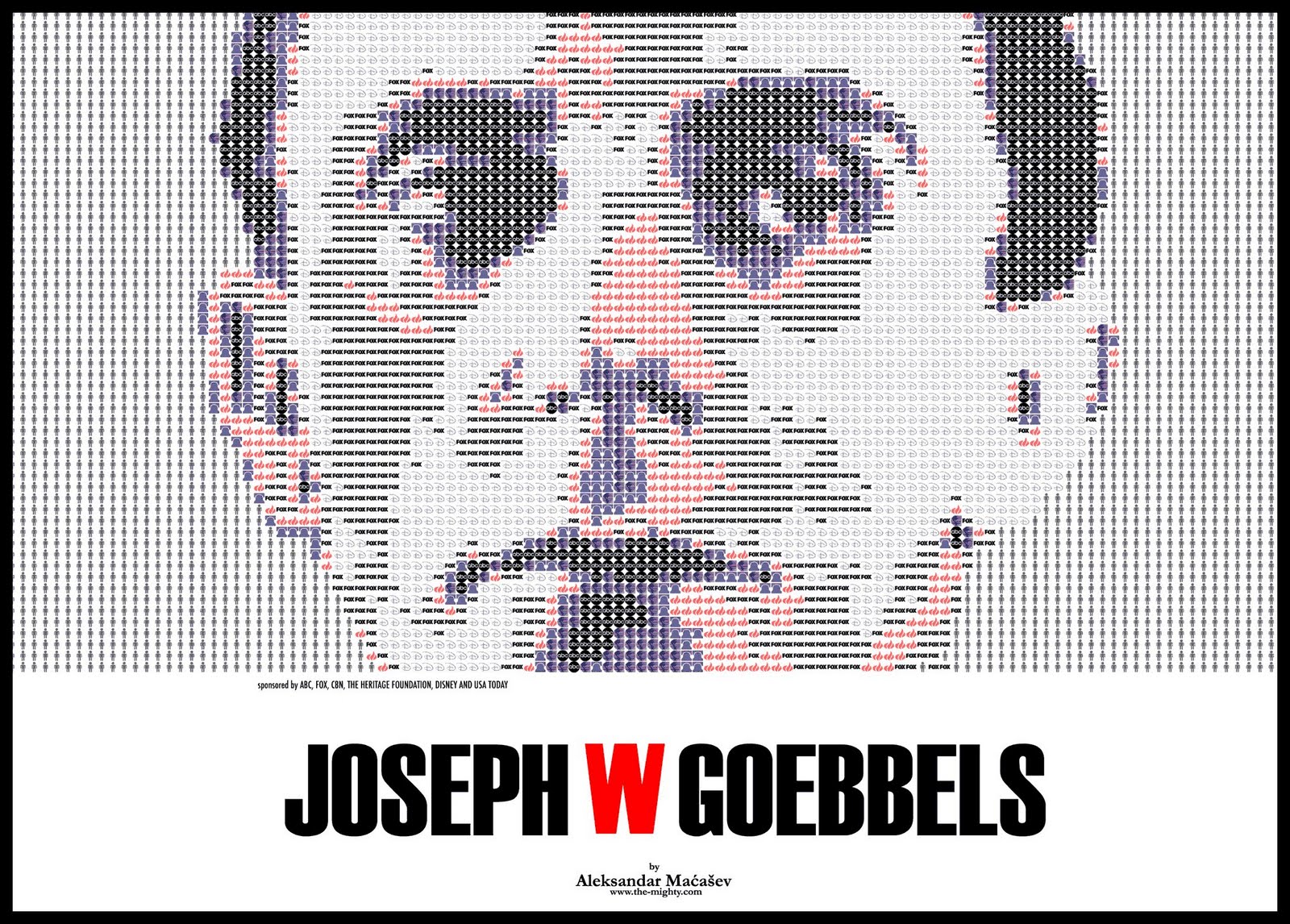
The concept of The Big Lie as a propaganda technique has a long and well-documented, though tragically chequered history. It was a charge leveled at Jews by Adolf Hitler, with chilling irony as it turned out, accusing them en masse of laying the blame for Germany’s defeat in World War I at the feet of German General Erich Ludendorff.

Hitler’s definition of the Big Lie in his infamous “Mein Kampf” referred to a lie which is “so colossal that no-one would believe anyone could have the impudence to distort the truth so infamously”, and which would therefore, paradoxically, be accepted as true. “Mein Kampf” was published in 1925, but history tells us that both Hitler and his loathsome creature of propaganda, Josef Goebbels, would use the Big Lie technique in an attempt to justify the persecution and mass murder of six million Jews, many of them German citizens, during World War II. Historian Jeffrey Herf maintains that the Big Lie was employed by the Nazis to transform a long-standing antisemitism into a culture of acceptance for a programme of genocide, at least among the thousands of people required to collaborate or actually undertake the mass-slaughter of so many fellow human beings.

The Nazis’ euphemistic reference to a “Final Solution” was intended to mask a foul crime, perpetrated on a vast pan-continental scale, and justified by the Big Lie. It is the most extreme example conceivable of what can happen when such an effective propaganda tool is deployed and redeployed, over and over, a drip-feed of hate-fueled misinformation which sinks deeply into the public consciousness and breeds uncritical acceptance of dogmas that might otherwise be hotly disputed. But the identical technique continues in use today, and while the end result is not comparable to the fate of the Holocaust victims, the thinking behind modern propaganda, with its intent of marginalising an entire section of society, is directly analogous.

Image

Enter the Big Liar

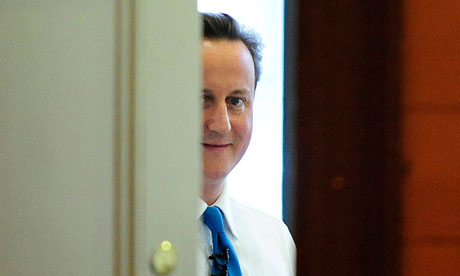
The current Government’s presentation of its policies to tackle a massive public debt is an object lesson in the effective use of the Big Lie. Pathologically opposed to any measures which might unduly affect the “wealth-creating potential” of the better-off, they are nevertheless determined to make massive reductions in public expenditure, and have targeted the Welfare Budget as a potential source of great savings. The impact on household budgets, of which every penny is already earmarked, is readily foreseeable. Once you cut to the bone, any further cuts are likely to lead to collapse, and fears are being expressed by voluntary organisations like the Citizens Advice Bureau that the consequences for the poorest will be grave. It’s also realistic to fear that the creation of a sub-culture, helpless to resist the diminution of its resources and likely to be forced into dependence on food banks, is inimical to prospects for national recovery. Looked at in that light, how can such policies be presented as The Answer To All Our Problems?

Enter the Big Liar, stage right. Since the formation of Cameron’s Coalition ConDem government, it’s been noticeable how much we’ve heard, via every mouthpiece and interface of the media, about Benefit Cheats. Benefit Fraudsters. Welfare Scroungers. Shirkers, Not Workers. Now, any government worth its rhetorical mettle is good for the odd sound-bite, but Mr. Cameron’s administration are as hot as any in peddling its preferred take on the “issues that face us all”. And after all, who could have the impudence to distort the truth so infamously? So it must be true, then. Meanwhile, those responsible for the banking crisis, the Libor scandal, and other examples of fat cats acting criminally – or merely irresponsibly – in their frantic scramble to get even fatter, must be very grateful for where the spotlight is currently shining.

You have to listen very patiently to the more serious news outlets to hear about the depredations visited upon us by the rich and greedy. But it’s open season on those hampered by disability, poor employment prospects, sickness, infirmity and grinding poverty. Soft targets all, and there are plenty of establishment-friendly tabloids happy to feed us a daily diet of how tax money is wasted on affording such ne’er-do-wells a life of luxury, and the privilege of snoring behind drawn blinds whilst the industrious head off to work.

So how do these stories stand up to closer examination? Well, hardly at all, in truth. The “shirkers, not workers” myth is easily exploded – merely by looking at the proportion of the welfare budget spent on in-work benefits. These are benefits paid to those who have a job, but one where the wage is so pitifully low that it’s impossible for the family to subsist without an income supplement. Hardly shirkers, these people – exploited? Yes. Scroungers? It’s the Big Lie in action.

What about Benefit Fraud, then? Again, you’d be surprised to read the figures, given the loud and plaintive trumpeting of this “scandal” by the likes of the “Daily Mail”. It appears the Great British Public believe that 27% of the Welfare Budget is claimed fraudulently. The official UK Government figure? 0.7%. 2-0 to the Big Lie.

The latest manifestation of the way in which a section of society is marginalised now rears its ugly head. Thousands of people currently entitled to Disability benefits due to their care or mobility needs are going to be re-assessed under notably harsher entitlement tests, over the next few years. No improvement in their condition, no lessening of their needs will be required for their benefits to be stopped. The goal-posts are being moved, and a lot of helpless people, who previously managed to conduct their own lives assisted by the benefit payable for their condition, will be shown the red card and banished to the hinterland of dependence upon others. Extreme examples of families on £20,000 a year in benefits are quoted to justify swingeing cuts. Believe me, you just don’t want to know how disabled you’d have to be to qualify for anything like that level of help. The Big Lie rides again.

This administration is unfocused and incompetent, thrashing about horribly in its desperation to somehow prove itself worthy of re-election. A shoddy, unattractive and vindictive lot. riven by internal strife and barely suppressed internecine warfare, far more concerned by partisan interests than fair government for all. But, hey – credit where it’s due: there’s not a whole hell of a lot that Josef Goebbels or Adolf himself could teach them about propaganda, oppression of the vulnerable and the Big Lie.

The Big Lie – David Cameron’s Divide And Rule Strategy

Image

The concept of The Big Lie as a propaganda technique has a long and well-documented, though tragically chequered history.  It was a charge leveled at Jews by Adolf Hitler, with chilling irony as it turned out, accusing them en masse of laying the blame for Germany’s defeat in World War I at the feet of German General Erich Ludendorff.

Hitler’s definition of the Big Lie in his infamous “Mein Kampf” referred to a lie which is “so colossal that no-one would believe anyone could have the impudence to distort the truth so infamously”, and which would therefore, paradoxically, be accepted as true.  “Mein Kampf” was published in 1925, but history tells us that both Hitler and his loathsome creature of propaganda, Josef Goebbels, would use the Big Lie technique in an attempt to justify the persecution and mass murder of six million Jews, many of them German citizens, during World War II.  Historian Jeffrey Herf maintains that the Big Lie was employed by the Nazis to transform a long-standing antisemitism into a culture of acceptance for a programme of genocide, at least among the thousands of people required to collaborate or actually undertake the mass-slaughter of so many fellow human beings.

The Nazis’ euphemistic reference to a “Final Solution” was intended to mask a foul crime, perpetrated on a vast pan-continental scale, and justified by the Big Lie.  It is the most extreme example conceivable of what can happen when such an effective propaganda tool is deployed and redeployed, over and over, a drip-feed of hate-fueled misinformation which sinks deeply into the public consciousness and breeds uncritical acceptance of dogmas that might otherwise be hotly disputed.  But the identical technique continues in use today, and while the end result is not comparable to the fate of the Holocaust victims, the thinking behind modern propaganda, with its intent of marginalising an entire section of society, is directly analogous.

Image

Enter the Big Liar

The current Government’s presentation of its policies to tackle a massive public debt is an object lesson in the effective use of the Big Lie.  Pathologically opposed to any measures which might unduly affect the “wealth-creating potential” of the better-off, they are nevertheless determined to make massive reductions in public expenditure, and have targeted the Welfare Budget as a potential source of great savings.  The impact on household budgets, of which every penny is already earmarked, is readily foreseeable.  Once you cut to the bone, any further cuts are likely to lead to collapse, and fears are being expressed by voluntary organisations like the Citizens Advice Bureau that the consequences for the poorest will be grave.  It’s also realistic to fear that the creation of a sub-culture, helpless to resist the diminution of its resources and likely to be forced into dependence on food banks, is inimical to prospects for national recovery.  Looked at in that light, how can such policies be presented as The Answer To All Our Problems?

Enter the Big Liar, stage right.  Since the formation of Cameron’s Coalition ConDem government, it’s been noticeable how much we’ve heard, via every mouthpiece and interface of the media, about Benefit Cheats.  Benefit Fraudsters.  Welfare Scroungers.  Shirkers, Not Workers.  Now, any government worth its rhetorical mettle is good for the odd sound-bite, but Mr. Cameron’s administration are as hot as any in peddling its preferred take on the “issues that face us all”.  And after all, who could have the impudence to distort the truth so infamously?  So it must be true, then.  Meanwhile, those responsible for the banking crisis, the Libor scandal, and other examples of fat cats acting criminally – or merely irresponsibly – in their frantic scramble to get even fatter, must be very grateful for where the spotlight is currently shining.

You have to listen very patiently to the more serious news outlets to hear about the depredations visited upon us by the rich and greedy. But it’s open season on those hampered by disability, poor employment prospects, sickness, infirmity and grinding poverty.  Soft targets all, and there are plenty of establishment-friendly tabloids happy to feed us a daily diet of how tax money is wasted on affording such ne’er-do-wells a life of luxury, and the privilege of snoring behind drawn blinds whilst the industrious head off to work.

So how do these stories stand up to closer examination?   Well, hardly at all, in truth.  The “shirkers, not workers” myth is easily exploded – merely by looking at the proportion of the welfare budget spent on in-work benefits.  These are benefits paid to those who have a job, but one where the wage is so pitifully low that it’s impossible for the family to subsist without an income supplement.  Hardly shirkers, these people – exploited?  Yes.  Scroungers?  It’s the Big Lie in action.

What about Benefit Fraud, then?  Again, you’d be surprised to read the figures, given the loud and plaintive trumpeting of this “scandal” by the likes of the “Daily Mail”.  It appears the Great British Public believe that 27% of the Welfare Budget is claimed fraudulently.  The official UK Government figure?  0.7%.  2-0 to the Big Lie.

The latest manifestation of the way in which a section of society is marginalised now rears its ugly head.  Thousands of people currently entitled to Disability benefits due to their care or mobility needs are going to be re-assessed under notably harsher entitlement tests, over the next few years.  No improvement in their condition, no lessening of their needs will be required for their benefits to be stopped.  The goal-posts are being moved, and a lot of helpless people, who previously managed to conduct their own lives assisted by the benefit payable for their condition, will be shown the red card and banished to the hinterland of dependence upon others.   Extreme examples of families on £20,000 a year in benefits are quoted to justify swingeing cuts.  Believe me, you just don’t want to know how disabled you’d have to be to qualify for anything like that level of help.  The Big Lie rides again.

This administration is unfocused and incompetent, thrashing about horribly in its desperation to somehow prove itself worthy of re-election.  A shoddy, unattractive and vindictive lot. riven by internal strife and barely suppressed internecine warfare, far more concerned by partisan interests than fair government for all.  But, hey – credit where it’s due:  there’s not a whole hell of a lot that Josef Goebbels or Adolf himself could teach them about propaganda, oppression of the vulnerable and the Big Lie.

Should ‘Richard Crookback’ – The Vanquished Richard III – Be Welcomed “Home” To Yorkshire?

Image

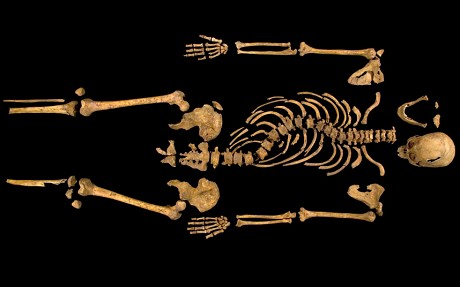
The late King Richard’s remains.  Note the pronounced spinal curvature.

The news that ancient remains, discovered under a Leicester car park, have been positively identified as those of King Richard III of England has led, predictably, to a bit of a tiff over where the late King should be re-interred.  There are some calls from traditionalists for the royal bones to find a final resting place at Westminster Abbey, where so many of our rulers are whiling away eternity.  Then again, there are those who argue that Richard’s own desire was to find a resting place at York Minster; and he was indeed the last king of the House of York – but he left no explicit instructions, and the sudden, violent nature of his demise would have made it difficult to be certain of the Royal Prerogative.

The argument for the remains to travel “home” to York may, in any event, be a little dubious, as the identification of the House of York with the geographical area of Yorkshire is less than completely accurate.  Those who see the Wars of the Roses as a battle between factions equivalent to modern-day Lancashire and Yorkshire, are somewhat wide of the mark – the alignments were more upon ancient heraldic lines than any local rivalry.  So estates and houses of the Duchy of York were spread throughout England and the Welsh Marches, rather than being confined to the Broad Acres.

In any event, it has to be said that some of Richard’s alleged activities during his lifetime would not reflect well upon any region claiming him as an Old Boy.  On the death of his older brother, Edward IV in 1483, Richard was named Lord Protector, with responsibility for the 12 year old King Edward V and his younger brother Richard.  However, our potential fellow Tyke acted swiftly to have his late brother’s marriage to the boys’ mother declared invalid, resulting in their illegitimacy – and meaning young Edward was ineligible for the throne.  Richard was subsequently crowned King, and the two young princes were never again seen in public.  Accusations were rife that Richard had fatally disposed of them, thus creating the legend of the Princes in the Tower.

Richard’s reign proved to be short – only two years – and tempestuous.  After suppressing a rebellion led by supporters of the late Edward IV, including the Second Duke of Buckingham who was then executed at Salisbury, Richard was less fortunate when Henry Tudor challenged for the throne, and he eventually became the last English king to die in battle, slain on Bosworth Field in 1485.  Due to the manner of his death, he was afforded only a cursory battlefield burial, and there he remained until he was recently unearthed from beneath that Leicester car park.

So Richard’s place in history owes much to a fairly negative press over the centuries since his death.  The taint of innocent royal blood on his hands has never really gone away, despite many scholarly efforts to discover the fate of the lost princes.  The identification of his remains will do little to solve that particular mystery, though it does now seem clear that Shakespearian references to a withered arm were false, though poor Richard did indeed have a distinct curvature of the spine – but again, not the “hunchback” of popular legend.

It would seem that the late king’s supposed wishes as to his long-term home after his death are unlikely to bear fruit, just as his ambitions in life were doomed to be thwarted, and perhaps that is no bad thing   It seems after all more than likely that he was a fairly unscrupulous sort of chap, and given to the sort of behaviour in his own interests that we’d like to think ill befits a proper Yorkshire lad.

In any event, it would appear that the Ministry of Justice license permitting the excavation to proceed in the first place also provides that the legal partners, Leicester City Council and Leicester University, have the right to choose where Richard will end up; so a reburial with all due ceremony at Leicester Cathedral is set for early next year.

It is not yet known whether any of the present-day Royal Family plan to attend.

Aside

1. I have played Daddy Warbucks on stage twice, and shaved my head both times 2. I love Gilbert & Sullivan with a deep and abiding passion 3. I’ve been married to Tracy for the thick end of a quarter … Continue reading

Sir David Attenborough – How To Make The Very Most of a Life on Earth

Image

 If there were only a course or qualification entitled “How to Get The Most out Of Life” – and, by golly, shouldn’t there be? – then who better, I earnestly enquire, to act as mentor or role-model than Sir David Frederick Attenborough, OM, CH, CVO, CBE, FRS?

Not content with his outstanding work fronting the BBC’s recent series “Africa”, I heard on the radio today that Sir David had just returned from China, where he’s been looking at fossils (they’ve got some great fossils in China, feathered dinosaurs, wonderful stuff). Still globe-trotting at the age of 86, it’s fair to say with only a slight risk of being accused of generalising, that he’s been everywhere, and done everything, most of it more than once. He’s our “Man For All Seasons”; certainly he’s produced stunning wildlife documentaries in every conceivable climate and environment, and he does it all with that gentle, “favourite uncle” air of calm and informative authority.

Attenborough was born in London, but grew up in the Midlands, younger brother of Richard, the world famous actor. He was fascinated by fossils from an early age, and became a passionate collector. An adoptive sister gave him a piece of amber, and half a century later, it formed the basis of his documentary “The Amber Time Machine“, focusing on the prehistoric life preserved within the fossilised tree resin. In the interim period, he gained a degree in natural sciences at Cambridge, and served in the Royal Navy as a national serviceman.

Although he’s renowned for being highly active in the area of wildlife documentary, Sir David also served a stint as Controller of BBC2, during which time he commissioned a wide variety of programming in an effort to make the then fledgling channel’s output more diverse. He took advantage of BBC2’s pioneering of colour transmission to introduce coverage of Snooker and also had a hand in the airing of such widely-ranging offerings as Monty Python’s Flying Circus, The Old Grey Whistle Test, and The Money Programme.

But it is as a wildlife presenter that he is best known, and his gentle, perhaps quirky personality seems to lend itself to this field in a uniquely watchable, entertaining and informative way. His distinctive voice, too, resonates with the empathy he feels towards the subjects of his many and varied documentaries. You listen to him, and you can feel how much he cares for the well-being of all the species he has encountered, how acutely aware he is of being a member of that species – Man – most inimical to the interests of our fellow travellers on Spaceship Earth, and how passionate he is about conservation and the need to keep ecosystems ticking over. Not in the least squeamish, he acknowledges and defends the role of the predator in the food chain, and manages to present the plight of hunter and hunted with equal sympathy.

Quite apart from all of his achievements though – and they are many – what a life this man has led, and continues to lead. A computation of all the miles he has travelled, covering the globe, ascending peaks and diving depths, would produce a very big number indeed. He’s witnessed most facets of life, from the intricate behaviour of micro-organisms, to the mighty progress of the blue whale, and just about everything in between. To see him completely accepted by apes in their natural habitat, having painstakingly gained their trust over a long period – just that we might see them go about their daily routines through the camera’s eye – is to see a consummate professional at work. And he’d certainly be the first to acknowledge that he is in fact a pro among pros; the worth of the team behind the cameras is acknowledged at the end of each programme in the “Africa” series. But there’s no doubt who the star is (apart from the animals themselves, of course) – and thankfully, there’s not the remotest sign that his powers are as yet on the wane.

Presenters come, and presenters go, and the general trend is for the quality of wildlife programming output to improve in leaps and bounds as the cameras and TV’s become more sophisticated. But you need an exceptional human being behind all that technology (and in front of it, too) – and as has been proved time and again over a career exceeding sixty years, Sir David Attenborough is simply the best.

NB – anybody who wants to check out Sir David’s online BBC Nature Archive, click here.

The Greatest Goal I Ever Saw Against Leeds United – Roy Wegerle’s Mazy Run and Finish for QPR

Elland Road

For any football fan asked to nominate a favourite goal, the prospect opens of a pleasurable half an hour recalling all those wonderful strikes down the years, mentally compiling a short-list, and then proudly revealing to the questioner that golden shot, header, volley or back-heel, possibly prefaced by the two runners-up in time-honoured reverse order.  Bliss.

The challenge of naming the best goal ever scored AGAINST your favourites, however, is obviously not quite so enjoyable.  Most of us like to think of ourselves as football purists, at least in a neutral sense, so that we can appreciate the beauty of a goal scored in a game not involving our club, even one by a despised rival.  But a goal in your own team’s net is never completely free of attendant pain, and however wonderfully executed it might have been, you can’t actually enjoy it.  You wince as it goes in, you home in on a possible offside flag, or any infraction of the rules that might lead to it being chalked off.  When it counts, your mood sinks.  You’re in no state to acknowledge the brilliance of it all.  You just want your lot to set about redressing the balance.

But the fact remains; you will have seen many terrific goals scored against your own beloved side.  You may possibly find that one amongst them tops even the best goal you can ever recall your lot scoring, though you will not, of course, admit that.  As a Leeds United fan, I’d certainly never concede I’ve seen better opposition goals than Yeboah’s howitzers against Liverpool and Wimbledon, Strachan’s belter against Leicester, Currie’s banana shot against the Saints, Eddie Gray’s pleasure ride through the Burnley defence or any half-dozen you might care to name from Lorimer’s ferocious back catalogue.

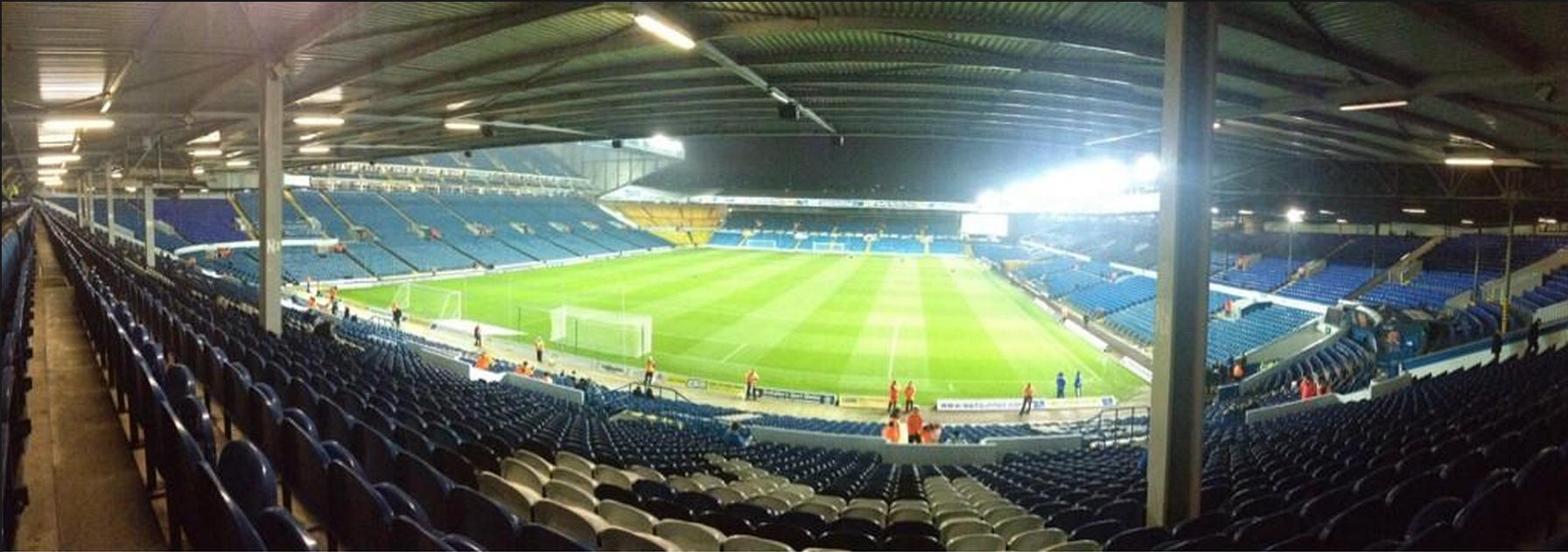
Looked at without the partisan blinkers, though, my mind’s eye recalls some very memorable goals scored against Leeds, particularly at my end of Elland Road; the Gelderd End, or Kop.  Jeremy Goss blasted home a fulminating volley for Norwich in 1993 that drew gasps of admiration.  The crisply-struck blockbusters do tend to stick in the memory, and I’ve often complained that we seem to cop for more than our fair share of goal-of-the-season contenders that fly into our top corner, when they might so easily have zipped into the back row of the stand.

The one opposition goal that I’ll truly never forget, though, was in a category all of its own.  In the early part of the 1990-91 season, Leeds had made a decent start to their first year back in the top flight since relegation in 1982.  Consolidation of higher status was the name of the game, but United appeared to be capable of more, and would, in fact, achieve a top four finish as a prelude to actually winning the Title the following season.  In these early days back in the big time, though, it was wonderful just to be there and holding our own.  A visit from Queens Park Rangers wasn’t expected to present any real problems, and there was a relaxed and content air around Elland Road when Leeds moved into an early two goal lead.

Then, it happened, as it’s frankly happened too often in my time watching Leeds.  We managed to salvage, from the jaws of victory, an unlikely 2-3 defeat.  But one of those goals was scored by Roy Wegerle, South African-born U.S. international, now a golf pro, but then Leeds United’s latest nemesis.  He picked the ball up wide on the right about halfway inside the Leeds half, executed a ridiculously mazy run on a by-no-means direct route to the edge of the area, during which he went past five Leeds players as if they just weren’t there, before shifting the ball finally onto his right foot and dispatching it past a flailing John Lukic.  It was one of those moments when, despite your love of your own team, you just stopped for an instant, transfixed in wonder, before exclaiming “I say, what an absolute corker of a goal that was!”, or words to that effect.

It was a beautiful goal, a wondrous, marvelous gem of a goal.  I’ll certainly never forget it, and seemingly new generations of QPR fans are always finding out about it, and wishing they could have seen it live.  Well, I did see it, and although I may not have appreciated it at the time, it certainly gets my nomination for “best ever against Leeds”.  I’m not alone in that, either – one other thing I recall from that day is the loud and generous applause Wegerle’s effort elicited from the notoriously parochial Leeds support.

It takes a very special goal indeed to get that reaction at Elland Road, and this was definitely as special as it gets – worthy of Maradona, perhaps … or even Eddie Gray.

Take a bow, son.